

Aftercare After Fibroblast Plasma Treatment: Crusts, Cleansing and the Week Without Makeup
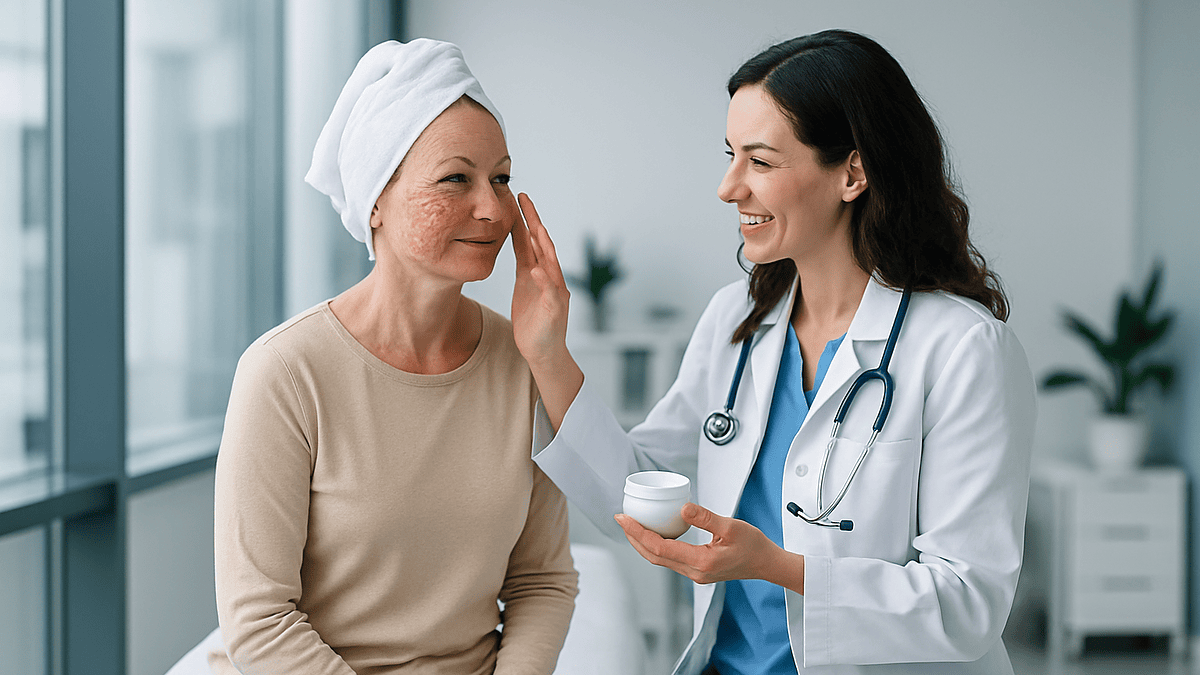
Key Takeaways
- Each plasma dot is a controlled micro-wound whose crust protects new skin forming beneath it, so crusts should shed on their own rather than be removed.
- MedlinePlus describes wound repair as inflammation over the first days, tissue building over roughly three weeks, and remodeling that continues for months, which is why visible tightening lags well behind crust shedding.
- The Mayo Clinic's one-to-two-week skin closure window after ablative resurfacing is the closest well-documented reference for how long the no-makeup, no-soaking phase typically lasts.
- Post-inflammatory hyperpigmentation is more common in medium and deep skin tones and can take months to fade, according to the Cleveland Clinic, making sun protection the longest-running aftercare rule.
- Once the skin has closed, the NHS advises at least SPF 30 with good UVA protection, reapplied regularly, alongside shade in the middle of the day.
- No controlled trials show that serums, supplements or light masks shorten plasma healing; avoiding smoking, sweat, soaking and picking is what the evidence supports.
Fibroblast treatment aftercare centers on leaving the small carbon crusts alone until they fall off on their own, cleansing gently with lukewarm water and a mild non-fragranced wash, avoiding makeup, sweat and soaking for roughly a week, and protecting the skin from sun for months afterward. Timelines vary with the person and the treated area, so follow the specific instructions from the practitioner who treated you.
The mirror does the talking on the first morning. A neat grid of tiny brown dots across the upper eyelid, a puffiness that makes one eye look sleepier than the other, and a question that arrives before coffee: was this supposed to look like this? For most people who have had fibroblast plasma treatment, the answer is yes, and the more interesting question is what to do next.
Fibroblast treatment aftercare is unusual among cosmetic procedures because the visible part of healing happens on your face, in public, over about a week. There is no bandage to hide behind. Each dot is a micro-wound that needs to close without help, and the temptation to pick, scrub, cover or hurry is enormous.
This explainer walks through what those crusts are doing, how to wash around them, why makeup waits, what the evidence can and cannot promise about tightening, and which signs mean a phone call to your care team rather than another day of patience.
What actually happens to your skin during fibroblast plasma treatment
A plasma device holds a fine tip a hair’s breadth above the skin. The electrical charge ionizes the gas in that tiny gap, producing a brief arc of plasma, which is simply a superheated, electrically charged gas. The arc vaporizes a pinpoint of the outermost skin layer, the epidermis, and delivers a pulse of heat into the layer beneath, the dermis, where collagen lives.
Each pulse leaves a small dark crust. Practitioners space these crusts in a pattern across loose skin, most commonly the eyelids, crow’s feet, upper lip and neck. The dots you see are not burns in the everyday sense; they are controlled thermal spots where surface skin has been removed and the tissue below has been heated enough to contract.
The intended biology sits in the name. Fibroblasts are the cells in connective tissue that manufacture collagen and the supporting matrix around it, and they are central to wound repair, as the Cleveland Clinic explains. Injury triggers them to lay down new collagen. The theory behind plasma treatment is that hundreds of tiny, tidy injuries recruit fibroblasts across the treated area, producing gradual firming as that collagen matures.
Two mechanisms are therefore at work at once. The first is immediate: heat shrinks existing collagen fibers, which is why skin looks tighter on the day, partly from that contraction and partly from swelling. The second is slow, unfolding over weeks to months as new tissue forms and remodels. Aftercare exists to protect the second mechanism. A crust that is torn off early, a dot that gets infected, or a patch that is sun-exposed while healing can all turn a planned micro-wound into an unplanned mark.
Who fibroblast plasma is usually for, and who is usually asked to wait
Candidates tend to share a particular profile: mild to moderate skin laxity in a small area, realistic expectations, and a skin type that heals without a strong tendency to darken. The eyelids are a common request precisely because the skin there is thin and responds to small changes, and because surgical alternatives involve incisions.

Some people are usually asked to postpone or reconsider. Anyone with an active skin infection, cold sore or open eczema in the area is generally deferred until it settles, since plasma creates hundreds of tiny entry points for bacteria. People who form keloid or hypertrophic scars, meaning thick raised scars that outgrow the original wound, are at higher risk of a poor cosmetic result. Practitioners are also cautious with medium and deep skin tones, because inflammation in these skin types more readily leaves dark patches, a pattern the Cleveland Clinic describes for post-inflammatory hyperpigmentation.
Medical circumstances matter too. Conditions or treatments that slow wound healing, such as poorly controlled diabetes, immune suppression or a recent course of skin-thinning medicines, change the risk calculation. Retinoid medicines for acne, whether topical or oral, are typically paused before and after skin-wounding procedures because they affect how the epidermis rebuilds; the timing of any pause belongs to the clinician who prescribed them. Pregnancy and breastfeeding usually mean waiting, not because harm is proven but because safety has not been studied.
Honest framing helps here. Plasma treatment is elective. The decision to proceed, to wait, or to choose an alternative such as surgical eyelid lifting, laser resurfacing or simply doing nothing sits with you and the treating clinician together, after a face-to-face assessment of your skin.
The first 48 hours after fibroblast plasma treatment
Expect heat first. The treated area often feels like a mild sunburn for the rest of the day, and swelling builds overnight rather than immediately. Around the eyes this can be dramatic: some people wake with lids so puffy the eye barely opens, especially on the second morning. The swelling is fluid moving into loose tissue and is part of the inflammatory phase of healing, which MedlinePlus describes as the body’s first response over the initial days after any wound.
Several habits make those two days easier without interfering with healing. Sleeping with the head raised on an extra pillow lets gravity drain fluid away from the face. A cool compress wrapped in a clean cloth, held near rather than pressed onto the dots, eases the heat. Cold packs applied directly to fresh crusts are best avoided, since moisture and pressure can lift them.
The dots themselves change quickly. Within hours they darken from tan to deep brown as the vaporized tissue dries into a firm carbon crust. Some weep a little clear fluid at first; this is serum, the watery part of blood, and it is normal. Yellow, thick or foul-smelling discharge is a different matter and is covered in the red-flag section below.
Your practitioner may have applied a thin protective layer immediately after the session. Whether to reapply a product, and which one, is a question for them, because protocols differ and some deliberately keep the area dry for the first day or two. The one universal instruction is negative: do not touch the dots with unwashed fingers, do not rub, and do not test whether a crust is loose.
Plasma pen scabs falling off: what the crusts are doing and why you should not help
A crust is a lid on a construction site. Underneath each dark dot, new skin cells are migrating inward from the edges to close the gap, and fibroblasts are beginning to lay down the scaffolding for repair. MedlinePlus describes this stage of wound healing as the period, over roughly the first three weeks, when the body builds new tissue beneath the protective scab. Removing the lid before the work is finished exposes raw tissue, restarts inflammation and raises the odds of a pale or dark mark.

Crusts loosen when the skin beneath them is ready. On thin eyelid skin this often happens sooner than on the thicker skin of the neck or jawline, and dots at the edge of a treated area may lift before those in the center. Timing differs from person to person, and the honest position is that specific day counts for plasma treatment come from practitioner protocols rather than from controlled research. The nearest well-documented comparison is ablative laser resurfacing, where the Mayo Clinic notes that new skin typically covers the treated area within one to two weeks.
What speeds crusts off safely is, unglamorously, nothing at all. Picking, scratching, rubbing with a towel, steaming in a hot shower and applying exfoliating acids all shorten the timeline in the wrong direction: the crust comes away before the skin beneath is sealed. A crust that catches on a pillowcase or glasses arm and comes off early is not a disaster, but the spot should be kept clean and shown to your practitioner if it looks raw or weeps.
Itching in the last day or two before shedding is common and is one of the more reliable signs that the process is close to finishing.
How to cleanse treated skin without disturbing the crusts
The instinct to keep a healing face spotless collides with the need to leave it alone. The resolution is a technique rather than a product: minimal contact, lukewarm water, and no friction.
Wash your hands first. Wet the area by cupping water or using a soft, clean cloth as a compress rather than wiping. If your practitioner permits a cleanser, choose one without fragrance, alcohol, exfoliating beads or acids, work it into a light lather on your fingertips, and lay it on with the pads of your fingers using no more pressure than you would use on a closed eyelid. Rinse the same way. Pat dry with a fresh soft towel or let the skin air-dry; do not rub.
Frequency matters less than gentleness. Once or twice a day is what most protocols describe, and more often is rarely helpful. Between washes, the goal is to keep the area clean and dry unless you have been told to apply a specific healing balm. Cotton pads and cotton buds shed fibers that snag on crusts and are best avoided. Facial cleansing brushes, electric or manual, stay in the drawer until every crust has gone and the skin beneath has settled.
Hot water is the most common mistake. Long, steamy showers soften crusts and swell the skin around them, encouraging premature lifting. Keep showers short, keep the spray off your face, and turn the temperature down. Swimming pools, hot tubs and open water carry both a soaking problem and a bacterial one; most aftercare guidance keeps people out of them until the skin is fully closed.
If a cleanser stings sharply rather than tingling mildly, stop using it and ask your care team what to substitute.
Plasma pen aftercare and the week without makeup
The makeup ban is the part of fibroblast treatment aftercare that people most want to negotiate, and it is the part least open to negotiation. Foundation, concealer and powder do three unhelpful things at once on a healing grid of micro-wounds. They introduce pigments, preservatives and oils into open skin; they require rubbing to apply and rubbing to remove; and they trap moisture and debris beneath a film that sits directly on the crusts.
The practical rule most practitioners give is simple: no cosmetics on the treated area until every crust has shed on its own and the new skin beneath is smooth and dry. For many people that is about a week; for thicker skin or larger areas it can be longer, and the Mayo Clinic’s one-to-two-week window for skin closure after ablative resurfacing is a sensible reference range. Makeup elsewhere on the face is generally fine, provided brushes and fingers stay well clear of the treated zone.
Eye makeup deserves a special note when the eyelids have been treated. Mascara wands and liner pencils are hard to use without touching the lid, and removing them means solvents and rubbing exactly where you should not rub. Many people find the simplest approach is to skip eye makeup entirely and return to it gradually, starting with lashes only.
When cosmetics do return, mineral-based or fragrance-free formulas are gentler on skin that is still pink, and a clean brush or sponge is non-negotiable. If a product stings or the area flushes after applying it, remove it gently and give the skin another few days. Fresh skin is thin skin, and irritation at this stage can prolong redness for weeks.
Fibroblast healing time: what the weeks after treatment usually look like
Healing after plasma treatment follows the same three broad phases as any superficial wound, which MedlinePlus lays out as inflammation over the first days, tissue building over roughly three weeks, and remodeling that can continue for months and in some cases longer. What varies is how visible each phase is on your face.
| Phase | What you typically see | What you typically do |
|---|---|---|
| Days 1–3 | Heat, swelling (often peaking on day two around the eyes), dark crusts forming | Head elevated at night, cool compresses near the area, hands off, no makeup |
| Days 3–10 | Swelling subsides, itching begins, crusts loosen and shed from edges inward | Gentle lukewarm cleansing, no picking, no sweating or soaking, no makeup |
| Weeks 2–6 | Pink, smooth new skin; possible temporary darkening in some skin tones | Daily broad-spectrum sunscreen, bland moisturizer if advised, cautious return to cosmetics |
| Months 2–6 | Pinkness fades, collagen remodels, gradual change in firmness becomes apparent | Ongoing sun protection, review with practitioner about whether a further session is appropriate |
The ranges are typical, not promised. Eyelid skin often moves through the first two rows faster than neck skin. People with a strong inflammatory response may see pinkness persist longer, and the Mayo Clinic notes that redness after ablative resurfacing can last for months.
The most common surprise is the gap between crust shedding and visible tightening. Once the dots are gone the skin can look almost the same as before, or slightly puffy, and disappointment sets in. The collagen work is only beginning at that point. Most practitioners schedule a review at around the six- to twelve-week mark for exactly this reason, so that judgments about results and about any repeat session are made once remodeling is well under way rather than in the raw fortnight after treatment.
Sun protection after fibroblast plasma: the rule that outlasts every other
Every other aftercare instruction expires when the crusts fall off. This one does not. New skin has less pigment, a thinner outer layer and an inflamed dermis, and each of those makes it more likely that ultraviolet light will leave a lasting brown mark. The Cleveland Clinic lists sun exposure among the main drivers of post-inflammatory hyperpigmentation, the darkening that follows skin injury, and notes that it can take months to fade.
While crusts are present, shade and physical barriers do the work: a wide-brimmed hat, sunglasses over treated eyelids, and staying out of direct sun. Sunscreen on open micro-wounds is generally discouraged because of the rubbing and the ingredients, so the strategy is avoidance.
Once the skin has closed, sunscreen becomes daily and non-negotiable. The NHS advises a product of at least SPF 30 with good UVA protection, applied generously and reapplied regularly, alongside seeking shade in the middle of the day when UV is strongest. Mineral formulations based on zinc oxide or titanium dioxide tend to be less irritating on freshly healed skin, though this is a comfort preference rather than a proven advantage.
How long this vigilance should last is where honesty matters. There are no controlled studies setting a specific sun-avoidance period after plasma treatment. The Mayo Clinic advises avoiding unprotected sun exposure for up to a year after ablative laser resurfacing, and many practitioners borrow that timeframe for plasma. A shorter window may be reasonable for small eyelid treatments in fair skin, and a longer one for deeper skin tones, but that judgment belongs to your practitioner.
Tanning beds are excluded entirely during healing. A tan is, by definition, a pigment response to injury, and freshly treated skin does not need a second one.
Pink, itchy, dark: how color settles after the crusts are gone
The skin that emerges beneath a shed crust is usually a shade pinker than its surroundings, smooth, and slightly shiny. This is normal new epidermis with a rich blood supply feeding the repair underneath. Over weeks the pink dulls toward your usual tone as the blood vessels that fed healing retreat. The Mayo Clinic notes that after ablative resurfacing this redness can persist for months, and plasma follows a similar arc on a smaller scale.
Itch travels with pinkness. Nerve endings regrow into the healing tissue, and mild itching in the weeks after shedding is a common report. A cool compress and a bland, fragrance-free moisturizer, if your practitioner has approved one, take the edge off. Scratching does not, and it can reopen skin that is only days old.
Darkening is the change people fear most, and with reason. Post-inflammatory hyperpigmentation occurs when injured skin produces extra melanin, the pigment that colors skin, in response to inflammation or ultraviolet exposure. The Cleveland Clinic describes it as more common in people with medium to deep skin tones and notes that it often fades over months but can be slow. If the dot pattern appears as brown spots rather than pink ones, or the whole treated patch looks darker than before, tell your practitioner promptly. Early sun protection and, where a clinician judges it appropriate, prescription lightening treatments can influence how long it lasts.
Lightening is the rarer opposite problem, where treated spots end up paler than surrounding skin. It is more likely when crusts are pulled off early or when energy settings were too high for the area, and it can be permanent, which is one more reason the hands-off rule matters so much.
Can you speed up plasma pen healing? What the evidence actually says
The short answer is that you can avoid slowing it, which is not quite the same thing. Wound healing runs on a biological clock that responds poorly to acceleration and generously to protection.
Some things reliably slow healing and are within your control. Smoking constricts the small blood vessels that carry oxygen to repairing tissue; MedlinePlus lists it among the factors that impair wound healing. Heavy alcohol has a similar effect on inflammation and hydration. Poor sleep and high stress raise cortisol, a hormone that dampens the immune and repair response. Sweaty exercise in the first week soaks crusts and introduces bacteria, which is why most protocols pause the gym until the skin is closed.
Other things are widely sold as accelerators and have thin evidence for plasma-treated skin specifically. Topical vitamin C, growth-factor serums, collagen drinks and light-therapy masks each have laboratory rationales and, in some cases, small studies in other contexts, but none has been shown in controlled trials to shorten crust shedding or reduce pigmentation after plasma treatment. Applying active serums to open micro-wounds carries a real risk of irritation for an unproven benefit. Applying them once the skin has closed is a conversation for your practitioner.
Nutrition sits in the middle. Adequate protein, and enough vitamin C and zinc from a normal varied diet, are genuinely required for collagen synthesis, as the NIH Office of Dietary Supplements describes for those nutrients. There is no evidence that taking more than your body needs speeds healing in someone who is not deficient, and high-dose supplements can cause their own problems. If you suspect a deficiency, that is a question for your doctor rather than a reason to buy a tub of pills.
The most effective accelerator remains patience.
Does fibroblast really tighten skin, and can you restore fibroblasts? Fibroblast skin tightening recovery in perspective
Both parts of this question deserve a straight answer, and the honest one is layered.
Can plasma treatment tighten skin? In principle, yes: controlled heat contracts existing collagen and triggers fibroblasts to produce new collagen, the same rationale that underpins ablative laser resurfacing, which the Mayo Clinic describes as stimulating the growth of new collagen fibers. Published evidence for plasma devices specifically consists largely of small studies and case series, many focused on the upper eyelids, without the large randomized comparisons that would allow anyone to quote a reliable percentage improvement. Results vary with skin thickness, age, the practitioner’s technique and how well the healing phase is protected. Some people see a change they value; some see little. No one can promise you which group you will be in, and any provider who does is overreaching the evidence.
Can you restore fibroblasts? Fibroblasts do not disappear with age; they become less active and produce collagen more slowly, while existing collagen is broken down faster by sun exposure and, as MedlinePlus notes on skin aging, by smoking. You cannot add fibroblasts with a cream. What is well supported is protecting the ones you have: daily broad-spectrum sun protection, not smoking, and a diet that supplies the protein and micronutrients collagen synthesis requires. Prescription topical retinoids have the strongest evidence among skin-care ingredients for increasing collagen production over months of use, but whether and when to use one, particularly around healing skin, is a decision for a prescribing clinician.
Recovery and result are therefore linked. A well-protected healing phase gives new collagen the best chance of maturing cleanly. A picked, sunburned or infected one spends the body’s repair effort on damage control instead.
What people often get wrong about fibroblast treatment aftercare
Myths cluster around any procedure that heals in public, and plasma treatment has collected its share.
“Once the scabs are off, I’m healed.” The surface is closed; the deeper work has barely begun. MedlinePlus describes remodeling continuing for months after a wound closes. Sun protection and gentleness matter as much in week three as in week one.
“Antiseptic keeps the dots cleaner.” Harsh antiseptics, rubbing alcohol and hydrogen peroxide damage the very cells trying to close the wound. Clean water and, if advised, a mild wash are enough for intact crusts.
“A thick layer of ointment speeds healing.” A moist wound environment can help many wounds, but heavy occlusion over plasma crusts can soften them, lift them early and trap bacteria. Whether to apply anything, and how much, follows your practitioner’s protocol rather than a general rule.
“Darker skin just needs extra sunscreen.” Sunscreen helps, but the elevated pigmentation risk in medium and deep skin tones described by the Cleveland Clinic is about the inflammatory response itself, not only ultraviolet light. The decision to treat at all, and at what energy, is the safeguard.
“The swelling means something went wrong.” Eyelid swelling that peaks around day two and then recedes is expected. Swelling that spreads, hardens, reddens or comes with fever is the version that needs a call.
“I can wear makeup if I’m careful.” Careful application still requires removal, and removal requires rubbing. The week without makeup is about the second step as much as the first.
“More sessions always mean more tightening.” Repeat treatments are sometimes offered, but each one is another round of injury on skin that may still be remodeling. Spacing and necessity are clinical judgments made at review, not on the day of the first session.
Questions to ask your care team before and after fibroblast plasma treatment
Good aftercare starts with a conversation, ideally before the device is switched on. These are the questions that tend to matter most, in plain language you can take into the room.
- Which exact areas will be treated, and how many dots roughly, so I know what to expect in the mirror?
- Given my skin tone and history, what is my personal risk of dark or pale marks, and what would you do if either appears?
- Should I pause any of my current skin-care products or prescribed medicines beforehand, and who decides that?
- What, if anything, should I apply to the crusts, and how often? Should I keep them dry instead?
- Which cleanser do you want me to use, and when can I start using it?
- How will I know the difference between normal swelling and a problem, and what is the fastest way to reach you if I am unsure?
- When is it safe to exercise, swim, wear makeup and use eye makeup specifically?
- How long do you want me to avoid direct sun, and which sunscreen do you suggest once the skin has closed?
- When is my review appointment, and what will you be assessing at it?
- If I see little change, what are the realistic options: another session, a different approach, or leaving it?
- What are your qualifications and insurance for this procedure, and what happens if a complication needs medical treatment?
Write the answers down. The instructions that seem obvious in the consulting room become hazy at two in the morning when an eyelid is throbbing. A practitioner who welcomes these questions and answers them without promises is giving you useful information about their approach as well as about the treatment.
When to call your doctor after fibroblast plasma treatment
Most healing after plasma treatment is uneventful, and most worries resolve with a day’s patience. A small number of signs should not wait.
Infection is the main concern in the first two weeks. The NHS describes the warning signs of cellulitis, a bacterial infection of the skin and the tissue beneath it, as an area that becomes red, hot, swollen and painful, sometimes with blistering or a spreading edge, along with fever, chills or feeling generally unwell. Around a plasma treatment, that translates into redness that spreads outward beyond the dot pattern, warmth that increases rather than fades after the first days, thick yellow or green discharge, a foul smell, or crusts that turn soft and wet rather than dry and dark.
Eye-related symptoms need same-day attention when the eyelids have been treated: eye pain, sensitivity to light, blurred vision, discharge from the eye itself, or a lid so swollen it cannot close over the eye.
Skin-level signs that warrant a call, though usually less urgently, include a crust that comes off to reveal a deep or bleeding wound, a raised firm scar forming as the skin heals, blotchy darkening that is deepening rather than fading, or a rash or intense itching that suggests a reaction to an aftercare product.
General signs override everything else. Fever, spreading redness with streaks, rapidly worsening swelling, or feeling unwell with a healing wound mean urgent medical assessment, not a message to the practitioner’s booking line.
Contact your treating practitioner first for cosmetic concerns and your own doctor or urgent care for anything that feels medical. If you are ever unsure which category a symptom falls into, treat it as medical. Every decision about antibiotics, wound care or further treatment then sits with the clinician who examines you.
Frequently asked questions
How long does it take to heal from a fibroblast plasma treatment?
Surface healing, meaning crusts shedding and new skin closing over, typically takes about a week to two, a range that mirrors the Mayo Clinic’s timeline for ablative laser resurfacing. Pinkness can persist for weeks to months, and collagen remodeling continues for months after that. Eyelid skin usually heals faster than neck skin, and your own timeline depends on skin type, the area treated and how carefully the crusts are protected.
How do I speed up plasma pen healing safely?
You cannot reliably speed healing, but you can avoid slowing it. Not smoking, sleeping with your head raised, keeping the area clean and dry, avoiding sweat and soaking, and leaving every crust alone all protect the repair process. Active serums, supplements beyond a normal diet and light-therapy devices lack controlled evidence for plasma-treated skin and may irritate open micro-wounds. Ask your practitioner before applying anything.
What is the fibroblast healing time for eyelids compared with the neck?
Eyelid skin is among the thinnest on the body and usually sheds its crusts sooner, often within the first week, while thicker neck or jawline skin can take longer. Swelling is more dramatic on eyelids, typically peaking around the second day. These are typical patterns reported in practice rather than figures from controlled trials, so treat them as guides and follow the review schedule your practitioner sets.
What should I do if plasma pen scabs are falling off early?
Leave the exposed spot alone, keep it clean with lukewarm water, and do not cover it with makeup or heavy ointment unless your practitioner advises. A single crust knocked off by a pillow or glasses is common and usually heals without a mark. If the spot bleeds, weeps thick discharge or looks deeper than its neighbors, photograph it and contact your practitioner so they can advise on wound care.
When can I wear makeup after fibroblast treatment?
Most practitioners advise waiting until every crust has shed on its own and the new skin is smooth and dry, which for many people is around one to two weeks. Makeup on healing skin introduces pigments and preservatives into open wounds and requires rubbing to apply and remove. When you do restart, use clean tools and fragrance-free products, and stop if the area stings or flushes.
How should I cleanse my face during fibroblast treatment aftercare?
Wash your hands, then use lukewarm water applied by cupping or with a soft clean cloth laid on rather than wiped. If your practitioner permits a cleanser, choose a fragrance-free one without acids or beads, apply it with fingertip pads using minimal pressure, rinse the same way and pat dry. Avoid hot water, steam, cleansing brushes and cotton pads, all of which can loosen crusts prematurely.
Does fibroblast plasma really tighten skin?
It can produce some tightening through heat contraction of existing collagen and stimulation of new collagen, the same rationale as ablative laser resurfacing. The evidence for plasma devices specifically comes mainly from small studies and case series, mostly on eyelids, so no reliable percentage improvement can be quoted. Results vary widely between people, and no practitioner can honestly promise a particular outcome.
How do you restore fibroblasts in your skin?
Fibroblasts do not vanish with age; they become less active while collagen breaks down faster from sun exposure and smoking. You cannot add them with a cream, but you can protect their output with daily broad-spectrum sun protection, not smoking and a diet providing adequate protein, vitamin C and zinc. Prescription topical retinoids have the strongest evidence for boosting collagen production over months, a decision for a prescribing clinician.
Why is my skin darker where the plasma dots were?
This is likely post-inflammatory hyperpigmentation, extra melanin produced in response to skin injury, inflammation or sun exposure. The Cleveland Clinic notes it is more common in medium and deep skin tones and can take months to fade. Strict sun protection is the main safeguard. Tell your practitioner promptly, since a clinician may consider prescription lightening treatments and can rule out other causes.
What does fibroblast skin tightening recovery feel like week by week?
The first days bring heat and swelling, often peaking on day two. Over the following week the crusts itch and shed from the edges inward. Weeks two to six show pink, smooth skin that gradually dulls toward your usual tone. From about the second month onward, collagen remodeling makes any change in firmness more apparent, which is why reviews are usually scheduled six to twelve weeks after treatment.
References
- MedlinePlus – How wounds heal
- NHS – Sunscreen and sun safety
- Cleveland Clinic – Hyperpigmentation
- NHS – Cellulitis
This article is for general information only and is not a substitute for professional medical advice. Please consult a qualified doctor about your individual situation.

More from the Blog
Timing Reconstruction After Skin Disease: Why Active Infection or Tumor Must Settle First
Reconstruction after skin cancer is usually timed to two conditions rather than a calendar date: the pathology report must confirm the tumor has been…
Scar Treatment Side Effects: Temporary Darkening, Redness and What to Report to Your Doctor
Most scar treatment side effects are temporary: redness, swelling, tenderness, itching and a period of darkening (post-inflammatory hyperpigmentation) that usually fades over weeks to…
Skincare After a Chemical Peel: Sunscreen, Simple Moisturizer and When Actives Can Return
After a chemical peel, most care teams advise gentle cleansing with lukewarm water, a plain fragrance-free moisturizer or the ointment they provide, and daily…

When Pigmentation Returns After Treatment: Sun, Hormones and What the Next Step Looks Like
Pigmentation often comes back after treatment because creams, peels and lasers reduce or remove existing pigment without switching off the pigment-making cells underneath. Ultraviolet…
Plexr Plasma Exeresis vs Surgical Blepharoplasty: Which Eyelids Suit a Non-Surgical Lift?
Plasma exeresis and surgical blepharoplasty address different problems. Plasma exeresis vaporizes tiny points of eyelid skin so it contracts, which suits mild skin laxity…
Who Should Wait Before Mesotherapy: Health Factors Your Dermatologist Will Ask About
People usually asked to wait before mesotherapy include anyone who is pregnant or breastfeeding, taking blood thinners or living with a bleeding disorder, carrying…