

Autonomic Neuropathy in Diabetes: Why Glucose Control Sits at the Center of the Plan

Key Takeaways
- Autonomic neuropathy damages the nerves that run automatic functions such as heart rate, blood pressure on standing, stomach emptying, bladder signaling and sweating, and it can appear on heart-rate testing before any symptom is felt.
- Glucose control is the only part of the plan that acts on the cause rather than the effects, and the NIDDK identifies it as the most important step in preventing or delaying further nerve damage.
- Orthostatic hypotension is defined by a fall of at least 20 mmHg systolic or 10 mmHg diastolic within three minutes of standing, and staged rising, leg-muscle tensing and compression garments are tried before medicines.
- For a slow-emptying stomach, the NHS advises smaller, more frequent meals that are low in fat and fiber, the opposite of the high-fiber advice most people with diabetes have followed for years.
- When the body loses its low-glucose warning signals, a slightly higher individualized glucose target with continuous monitoring can be safer than the tightest possible number.
- The A1C test reflects average glucose over roughly the previous three months, so the benefit of changes made now shows at the next quarterly review, while nerve stability is judged over a year or more.
Diabetic autonomic neuropathy treatment begins with keeping blood glucose, blood pressure and cholesterol within the ranges your care team sets, because steady glucose is the measure with the strongest evidence for slowing further nerve damage. Individual problems, such as dizziness on standing, slow stomach emptying, bladder or sexual difficulties and abnormal sweating, are then managed one at a time with positioning, diet, bladder routines and, when needed, prescribed medicines.
He stood up from the sofa to answer the door and the hallway went gray at the edges. Not a faint, exactly. More like the world dimming for two seconds and then coming back, the way it had at the kitchen sink last week and in the shower before that. His wife noticed he had started gripping the counter before he moved.
Fourteen years into type 2 diabetes, he assumed nerve trouble meant tingling feet. Nobody had told him it could also mean a stomach that holds dinner until midnight, or a heart that no longer speeds up and slows down the way it should. When his physician said the words diabetic autonomic neuropathy, his first question was the one everyone asks: what is the treatment?
The honest answer is that there are many treatments, one for each system the nerves have stopped managing, and one plan sitting underneath them all. That underlying plan is glucose control. Here is why it earns the center seat, and what surrounds it.
What is diabetic autonomic neuropathy, in plain language?
Your body runs thousands of background jobs without asking you: nudging your heart rate up when you stand, squeezing your stomach after a meal, telling your bladder it is full, opening sweat glands when a room is warm. The wiring that runs these jobs is the autonomic nervous system, the part of the nervous system that works automatically, outside conscious control.
Diabetic autonomic neuropathy is damage to those automatic nerves caused by long-standing diabetes. It is a cousin of the better-known peripheral neuropathy, the numbness and tingling in the feet, but it lives in a different place and causes different problems. According to the National Institute of Diabetes and Digestive and Kidney Diseases, autonomic nerve damage can affect the heart and blood vessels, the digestive tract, the bladder, the sex organs, the sweat glands and the eyes, and it can blunt the warning signs of low blood glucose.
Two features make it different from most diabetes complications. First, it is quiet. The nerves fail gradually, and the body compensates for a long time, so the earliest changes often show up only on a test rather than as a symptom. A resting heart rate that no longer varies with breathing, for instance, can be measured years before anyone feels dizzy. Second, it is scattered. One person’s stomach is affected while their blood pressure is fine; another faints on standing but digests without trouble. That patchiness is why treatment is built system by system rather than from a single prescription.
The Mayo Clinic describes autonomic neuropathy as a possible complication of several conditions, but diabetes is the most common cause, particularly when glucose has run high for many years. That link between years of high glucose and damaged nerves is the whole reason glucose sits where it does in the plan.
Why does glucose control sit at the center of diabetic autonomic neuropathy treatment?
Think of the plan as a wheel. The spokes are symptom treatments: something for dizziness, something for a slow stomach, something for the bladder. Each spoke matters, but none of them touches the reason the nerves are failing. The hub does. Glucose control is the one intervention aimed at the driver rather than the consequences.
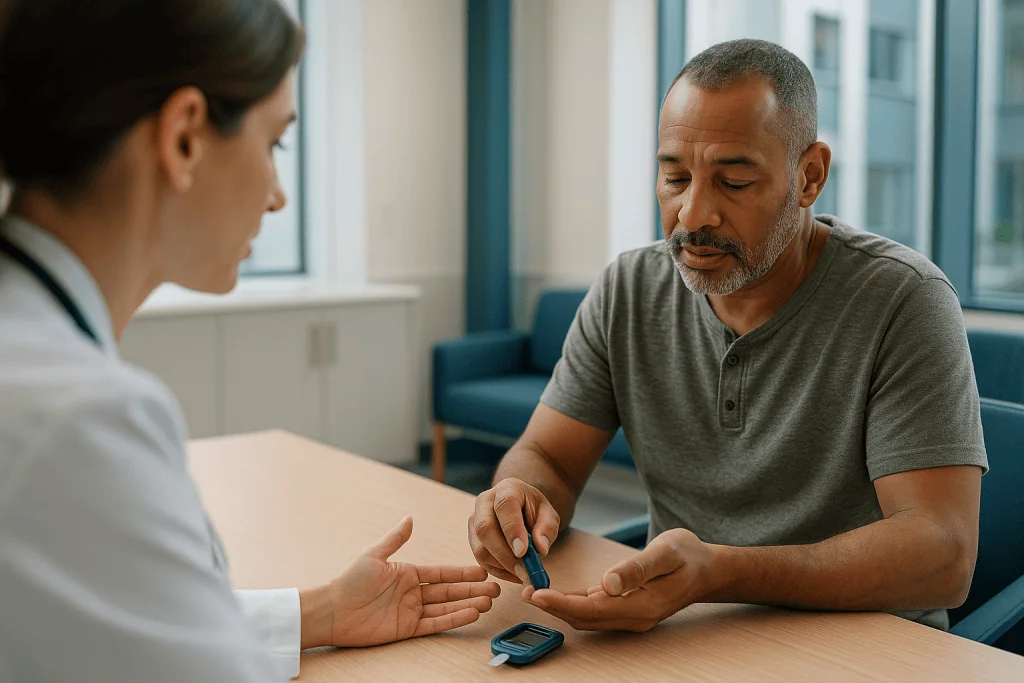
The evidence behind this is strongest in type 1 diabetes, where long-running trials found that keeping glucose closer to the normal range reduced the development of autonomic dysfunction over time. The NIDDK puts it plainly: managing blood glucose is the most important step in preventing or delaying nerve damage from diabetes, and it can help stop existing damage from getting worse. In type 2 diabetes the picture is more mixed, because heart disease, blood pressure, cholesterol and weight all pull on the same nerves and blood vessels. That is why guidelines treat glucose, blood pressure and lipids as a bundle rather than glucose alone.
There is a second, less obvious reason glucose belongs at the center. No medicine currently available repairs autonomic nerves. The drugs discussed later in this article make a slow stomach empty faster or hold blood pressure up when you stand; they do not rebuild nerve fibers. Glucose control is therefore the only lever that changes the trajectory of the disease, even when it changes nothing about how you feel this week.
One caution belongs here, because it is a genuine paradox. Autonomic damage can erase the sweating, trembling and racing heart that normally warn of low glucose, a problem called hypoglycemia unawareness. That makes very tight targets riskier for exactly the people who might benefit from them. The target is therefore individualized by the treating team, often with continuous glucose monitoring to catch lows that the body no longer announces. Center of the plan does not mean lowest possible number.
How does high glucose actually damage these nerves?
Nerves are long, thin cells with an enormous appetite for energy and an unusually fragile blood supply. Autonomic fibers are among the thinnest of all, many without the insulating myelin sheath that protects larger nerves, which leaves them exposed to whatever is circulating around them.
Over years, excess glucose does several things at once. Inside the nerve, glucose is shunted into side pathways that produce sugar alcohols and other byproducts, which upset the cell’s chemical balance and generate oxidative stress, a kind of chemical rusting. Glucose also sticks to proteins throughout the body, forming compounds that stiffen tissues and disrupt normal function. Around the nerve, the tiny blood vessels that feed it thicken and narrow, so a fiber that already struggles for oxygen gets less of it. The Mayo Clinic summarizes the process as high blood sugar damaging nerves and the small blood vessels that supply them.
The longest fibers are hit first and hardest, which explains the pattern of symptoms. The vagus nerve, which runs from the brainstem to the gut and carries much of the signal that slows the heart and squeezes the stomach, is the longest autonomic nerve in the body. Its early failure is why a persistently fast resting heart rate and slow stomach emptying are often the first measurable changes.
Why does this matter for treatment? Because the damage is cumulative and metabolic, not sudden and structural. There is no torn ligament to repair. The realistic goal is to stop adding to the injury, which is a different and more patient kind of medicine. Improving glucose does not reverse years of change quickly, but it removes the chemical pressure that keeps the process moving, and that is the most any treatment currently offers.
What is chronic autonomic neuropathy, and which symptoms do doctors ask about?
Chronic autonomic neuropathy is the slow-onset, long-lasting form, in contrast with the rare sudden forms that follow infections or immune reactions. In diabetes, it is nearly always chronic. The nerves have been failing for years, the body has adapted around the loss, and the picture that finally reaches a clinic is a mix of things that have quietly become normal.

Clinicians organize what they ask about by body system. The Cleveland Clinic and Mayo Clinic group the effects this way:
- Heart and blood vessels: lightheadedness or blurred vision on standing, a resting heart rate that stays fast, unusual tiredness or breathlessness with exertion, and a reduced ability to feel the chest pain that normally signals heart strain.
- Digestion: feeling full after a few mouthfuls, bloating, nausea, heartburn, constipation, or diarrhea that comes and goes, sometimes at night.
- Bladder: needing to strain, incomplete emptying, leaking, or repeated urinary infections.
- Sexual function: erectile difficulty in men; vaginal dryness and reduced arousal in women.
- Sweat and temperature: dry, cracked feet, heavy sweating on the face or trunk during meals, or trouble tolerating heat.
- Glucose warning signals: lows that arrive without the usual shakiness or sweating.
- Eyes: pupils that adjust slowly, making night driving or leaving a bright room uncomfortable.
This list is a map of what a clinician explores, not a scoring sheet for diagnosing yourself. Nearly every item on it has other, more common causes, from medicines to thyroid problems to ordinary aging, and sorting those out is the job of the testing described next. What tips a clinician toward autonomic neuropathy is the combination: someone with long-standing diabetes, often with peripheral neuropathy already present, reporting problems in two or more of these systems at once.
What tests are used to diagnose autonomic neuropathy in people with diabetes?
There is no single blood test. Diagnosis rests on measuring how the automatic systems respond to a challenge, one system at a time, and on ruling out other explanations. The Mayo Clinic outlines the main tools.
For the heart and blood pressure, the workhorse is heart rate variability testing. A healthy heart speeds up slightly on breathing in and slows on breathing out; a damaged vagus nerve flattens that rhythm. You breathe deeply at a set pace, bear down as if straining, and stand up, while an ECG records the changes. Blood pressure is measured lying down and then after standing. A fall of at least 20 mmHg in the top number or 10 mmHg in the bottom number within three minutes of standing meets the definition of orthostatic hypotension, the medical term for blood pressure dropping when you rise. A tilt-table test, in which you lie strapped to a bed that is tilted upright while your heart rate and pressure are tracked, gives a controlled version of the same challenge.
For sweating, a quantitative sudomotor axon reflex test stimulates sweat glands with a mild electrical current and measures the output, while a thermoregulatory sweat test coats the skin with a powder that changes color where sweat appears. For the stomach, a gastric emptying study tracks a small radioactive tracer in a meal to see how quickly food leaves. For the bladder, an ultrasound after voiding measures how much urine remains, and urodynamic testing records pressures as the bladder fills and empties.
Alongside these, the team looks for other causes. The Mayo Clinic lists vitamin deficiencies, alcohol, certain medicines, autoimmune diseases and other conditions among the alternative explanations a clinician considers. Guidelines encourage asking about autonomic symptoms at routine diabetes reviews precisely because the early stage is silent and the tests, not the symptoms, catch it first.
Who is usually treated now, and who is usually asked to wait and watch?
Not everyone with an abnormal test needs a new prescription. The decision turns on whether the nerve damage is causing harm, whether something else is the more likely cause, and whether a fix elsewhere in the plan would do more.
People usually offered active symptom treatment straight away include those who are fainting, falling or near-fainting on standing; those losing weight or vomiting from a stomach that will not empty; those whose glucose has become erratic because meals are absorbed unpredictably; those with a bladder that retains urine and keeps breeding infections; and anyone with hypoglycemia unawareness, for whom glucose targets and monitoring are adjusted promptly to prevent a dangerous low. In these situations the harm is present and the treatment addresses it directly.
People usually asked to wait, in the sense of watching rather than adding medicines, include those with early changes on heart rate testing but no symptoms. For them the plan is the hub of the wheel: glucose, blood pressure, lipids, activity, and a repeat check at the next review. Adding a blood pressure medicine to someone who is not dizzy would trade a theoretical benefit for real side effects.
A third group is asked to pause while something else is sorted. Several common medicines lower blood pressure on standing or slow the stomach, including some diabetes drugs, and adjusting those with the prescriber may resolve the problem without any new treatment. Low vitamin B12 and thyroid disorders are checked and corrected first. Alcohol intake is discussed frankly.
Procedures sit at the far end. Devices that stimulate the stomach wall or bladder exist for severe cases that have not responded to other measures, but they are uncommon, carry surgical risks, and are decided by specialists after other options have been tried. Every one of these placements is a judgment call for the treating team, informed by your symptoms and preferences.
What is the best treatment for autonomic neuropathy? An honest answer
People type this question into search engines expecting a name. The evidence does not offer one. The best treatment is a layered plan, and the honest way to describe it is by how strong the evidence is for each layer.
Layer one, with the strongest evidence, is prevention of further damage: glucose in the range your team sets, blood pressure and cholesterol treated to target, no smoking, and alcohol kept low. The NIDDK and Mayo Clinic both identify managing the underlying diabetes as the foundation, and this is the only layer that acts on the disease rather than its effects.
Layer two is non-drug symptom management: how you stand up, what and when you eat, how you empty your bladder, how you protect dry feet. These measures have modest supporting studies but almost no downside, and for many people they are enough.
Layer three is medicine by symptom. Each drug class described in the sections that follow has been tested in relatively small trials, often in mixed groups of patients rather than people with diabetes specifically. They can help considerably, and they can also cause side effects that need monitoring, which is why the prescriber weighs each one individually.
Layer four is procedures and devices, reserved for severe, refractory cases.
Notice what is missing: any treatment that restores the nerves. Supplements sold as nerve repair formulas are not in this hierarchy because the evidence does not put them there, a point covered later in this article. When someone promises a single best treatment, the useful question is which layer they are describing and what the evidence for that layer actually shows.
The realistic aim, in the words most clinicians would use, is to stop things getting worse and to make each affected system work well enough that it stops shaping your day.
How are the heart and blood pressure problems managed?
Standing up is a small feat of engineering. Gravity pulls blood toward the legs, and healthy autonomic nerves respond within a heartbeat by tightening blood vessels and speeding the pulse. When those nerves fail, blood pressure sags and the brain briefly runs short of flow. That is orthostatic hypotension, and it is the cardiovascular symptom most likely to change someone’s life.
Treatment starts with mechanics, because mechanics work quickly. The Mayo Clinic and Cleveland Clinic describe the same set of measures: rise in stages, sitting on the edge of the bed for a minute before standing; tense the calf and thigh muscles or cross the legs when standing still; wear waist-high compression garments or an abdominal binder to push blood back toward the chest; raise the head of the bed slightly at night to reduce the pressure swing on waking; drink enough fluid; and be cautious with heat, alcohol and very large meals, all of which widen blood vessels. Your prescriber will also review every medicine you take, since blood pressure drugs, water tablets, antidepressants and some prostate medicines all lower standing pressure.
If symptoms persist, two drug classes are commonly considered. One works by tightening blood vessels directly, raising the pressure available when you stand; the other is a hormone-like medicine that makes the kidneys retain salt and water, expanding blood volume. Both carry the same trade-off: pressure that is comfortable on standing can be too high lying down, so monitoring includes lying and standing readings and, sometimes, swelling and potassium checks. The choice and the balance belong to the prescribing clinician.
The quieter cardiac issue is that damaged nerves can hide chest pain. Someone with autonomic neuropathy may experience heart strain as breathlessness or unusual fatigue rather than the classic pressure. For that reason, teams often arrange a heart assessment before someone begins a new vigorous exercise program, and they treat exertional breathlessness as a symptom to investigate rather than dismiss.
How are the stomach, bowel, bladder and sexual symptoms treated?
Gastroparesis, a stomach that empties slowly without any physical blockage, is the digestive face of autonomic neuropathy. The difficulty is not only discomfort. Insulin or tablets taken before a meal can act before the food arrives in the bloodstream, driving glucose down and then up hours later. Diet is the first tool. The NHS advises smaller, more frequent meals, foods low in fat and fiber (both of which slow emptying further), thorough chewing, soft or liquid options on difficult days, and a gentle walk after eating. Medicines called prokinetics speed the stomach’s contractions; antiemetics settle nausea. Some newer glucose-lowering drugs slow stomach emptying as part of how they work, so the prescriber may review these. Meal-time insulin timing is adjusted by the team, never independently.
Bowel symptoms swing between constipation and diarrhea, sometimes in the same week. Fluid, fiber adjusted to which direction the bowel is leaning, and regular activity come first; medicines for either direction follow if needed.
For the bladder, the NIDDK recommends emptying on a schedule rather than waiting for a signal that may not come, since the nerve that reports fullness is often the damaged one. Double voiding, waiting a moment and trying again, reduces the residue that breeds infection. Medicines can help a bladder squeeze harder or, when the problem is urgency, relax an overactive one. If retention is severe, learning to pass a small catheter at set times protects the kidneys.
Sexual difficulties are common and under-discussed. In men, the medicine class that increases blood flow to the penis is often considered first, with vacuum devices and other options for those who cannot take it because of heart medicines. In women, lubricants and vaginal moisturizers address dryness, and counseling helps with the relationship strain that often accompanies both. Sweating problems are approached similarly: rich moisturizers for dry feet, cooling strategies for meal-time sweating, and an anticholinergic medicine class for heavy sweating when it interferes with daily life.
Diabetic autonomic neuropathy treatment at a glance: a symptom-by-symptom table
Because the condition is scattered across body systems, it helps to see the whole plan on one page. This table summarizes the approach described by the Mayo Clinic, Cleveland Clinic, NIDDK and NHS. It shows categories, not prescriptions; which items apply to you is decided with your care team.
| System affected | What goes wrong | Non-drug measures usually tried first | Medicine classes sometimes prescribed | Typical monitoring |
|---|---|---|---|---|
| Blood pressure on standing | Pressure falls when rising; lightheadedness, dimmed vision | Rise in stages, leg-muscle tensing, compression garments, head-of-bed elevation, fluids, review of other medicines | Vessel-tightening agents; salt- and water-retaining hormone-like agents | Lying and standing pressures, swelling, potassium |
| Heart | Fast resting rate; blunted warning of heart strain | Heart assessment before vigorous exercise; graded activity | Directed at underlying heart disease if found | ECG, exercise testing as advised |
| Stomach | Slow emptying; fullness, nausea, erratic glucose | Small frequent low-fat, low-fiber meals; liquids on bad days; walking after meals | Prokinetics; antiemetics | Weight, glucose patterns, meal-time insulin timing |
| Bowel | Constipation, diarrhea, or both | Fluid and fiber adjusted to direction; activity | Laxatives or antidiarrheals as directed | Bowel pattern, weight |
| Bladder | Weak signal of fullness; retention, infections | Timed voiding, double voiding | Bladder-stimulating or bladder-relaxing agents; catheterization if needed | Post-void residual, urine infections, kidney function |
| Sexual function | Erectile difficulty; vaginal dryness | Lubricants, vacuum devices, counseling | Agents that increase blood flow (men) | Interaction check with heart medicines |
| Sweat glands | Dry feet; meal-time facial sweating | Moisturizers, foot checks, cooling | Anticholinergic agents for severe sweating | Skin integrity of the feet |
| Glucose warning | Lows arrive without symptoms | Individualized targets, continuous glucose monitoring, education for household | Regimen adjusted by prescriber | Frequency and depth of lows |
Two things stand out when the plan is laid out this way. Almost every row begins with something that does not come from a pharmacy, and every row ends with monitoring, because these treatments are adjusted over time rather than set once. Underneath the whole table, unlisted because it applies to every row, sits glucose, blood pressure and cholesterol control.
What do the first weeks and months of treatment usually look like?
The first appointments are mostly about subtraction and measurement. Your prescriber goes through every medicine looking for ones that lower standing blood pressure or slow the stomach. Blood tests check vitamin B12, thyroid function and kidney function. Tests from the diagnosis section are scheduled, and you are shown the mechanical measures: how to stand, how to structure meals, when to empty your bladder. If lows without warning are part of the picture, glucose targets are revised and a continuous monitor is often arranged early, because that risk cannot wait.
Within the first weeks, positional and dietary changes are usually the first things you notice. Compression and staged standing act on physics and can make a difference in days. Meal changes for a slow stomach take longer to judge, partly because appetite and glucose patterns take time to settle and partly because it takes a few weeks of consistent eating to know whether nausea is genuinely less frequent. Any medicine started for a specific symptom is typically reviewed after a short trial, with lying and standing pressures or symptom diaries brought to the visit.
The glucose side moves on a slower clock. The A1C blood test reflects average glucose over roughly the previous three months, according to the NIDDK, so the effect of changes made this month becomes visible at the next quarterly review rather than next week. Nerve function is slower still; the aim over the first year is that repeat testing shows stability rather than decline.
What most people find hardest is that feeling better and being better run on different timelines. Dizziness may improve within a month while the underlying nerve picture is unchanged, or glucose may be beautifully controlled while the stomach remains stubborn. Both are expected. Follow-up is therefore built around two questions asked side by side: are the symptoms manageable, and is the hub of the wheel holding?
How to balance the autonomic nervous system: what the evidence supports and what it does not
Search for this phrase and you will find cold plunges, vagus nerve resets, humming exercises, and a shelf of supplements labeled nerve support. Some of this is harmless. Some of it is expensive theater. Almost none of it has been shown to repair diabetic nerve damage, and it deserves a plain sorting.
Slow breathing, meditation and gentle yoga do shift the balance between the stress and rest branches of the autonomic system in the moment; that is measurable. What is not shown is that this repairs nerves damaged by years of high glucose. These practices are reasonable for sleep and stress, and they are safe. They are not a treatment for the neuropathy, and they should not replace one.
B vitamins help only if you are deficient. Low vitamin B12 is one of the alternative causes of neuropathy that the Mayo Clinic lists for doctors to check, and some diabetes medicines can lower B12 over time, so testing is sensible and replacement is prescribed when levels are low. Taking B12 with normal levels does nothing for the nerves. Alpha-lipoic acid, an antioxidant, has been studied mainly for the pain of peripheral neuropathy with mixed results; evidence for autonomic symptoms is thin. Any supplement should be declared to your prescriber because interactions with blood pressure and glucose medicines are real.
The evidence-supported way to influence the autonomic system in diabetes is less glamorous: glucose in range, blood pressure treated, regular aerobic activity cleared by your team, alcohol kept low, no smoking, consistent sleep, and adequate fluids. Regular physical activity improves fitness and blood pressure regulation in ways that support the same systems the nerves are struggling to run. If a product claims to balance your nervous system, the question to ask is the one this article keeps returning to: which layer of the plan does it belong to, and where is the evidence that puts it there?
What people often get wrong about diabetic autonomic neuropathy
Some misunderstandings do real harm, and correcting them is part of treatment.
My feet feel fine, so my nerves are fine. The two neuropathies overlap but do not require each other. Autonomic changes can appear on heart rate testing before any tingling, which is why clinicians ask about dizziness, digestion and bladder habits even when the feet are normal.
Dizziness means my blood pressure is too high. In autonomic neuropathy the opposite is usually true: pressure falls on standing. Guessing wrong and skipping a dose, or taking an extra one, is dangerous. Lying and standing measurements settle the question; the prescriber acts on them.
Eat more fiber for a slow stomach. Fiber is excellent advice for most people with diabetes and unhelpful for gastroparesis, where it slows emptying further. The NHS gastroparesis guidance points toward lower fiber and lower fat, which surprises people who have spent years being told the reverse.
Tighter glucose is always better. Not when the body has lost its low-glucose alarm. Targets are individualized, and for someone with hypoglycemia unawareness a slightly higher range with fewer lows can be the safer choice. That is a clinical decision, not a failure of discipline.
Once nerves are damaged, nothing I do matters. Progression is not fixed. The NIDDK notes that glucose management can help stop existing damage from getting worse, which is a meaningful outcome even if it feels less satisfying than reversal.
Sexual problems in diabetes are in the head. Nerve and blood vessel changes are well-documented physical causes. Emotional strain compounds them, but treating the physical component is legitimate medicine and worth raising.
It is just aging. Some overlap exists, but a fast resting pulse, fainting on standing and unexplained bloating in someone with long-standing diabetes deserve testing, not a shrug.
Questions to ask your care team
A good consultation about autonomic neuropathy is a conversation about trade-offs, and the right questions help you take part in it rather than receive it. Consider bringing some of these.
- Which of my symptoms do you think are from autonomic nerve damage, and which might have another cause we should rule out first?
- Which tests are you planning, what will each one tell us, and what happens if the results are borderline?
- Do any of my current medicines lower my blood pressure on standing or slow my stomach, and is adjusting them an option before adding anything new?
- Given that my body may no longer warn me of low glucose, what glucose range are you aiming for, and would a continuous monitor change how we manage it?
- Should I have a heart assessment before I increase my exercise, and what kind of activity is reasonable for me now?
- If we start a medicine for dizziness, how will we check that my lying-down blood pressure is not going too high, and how long is the trial before we review?
- How should my meal-time insulin or tablets change if my stomach empties slowly, and who adjusts that?
- Is a timed bladder schedule right for me, and how do we check that my bladder is emptying properly?
- Is there anyone on the team, or a referral you can make, for the sexual side of this?
- What would make you want to see me sooner than the next planned review?
- Are any of the supplements I take worth continuing, and could any of them interact with my prescriptions?
Write the answers down, or bring someone who will. Autonomic neuropathy plans have many moving parts, and the people who manage best are usually those who understand not just what they have been asked to do, but why each piece is there and how the team will know whether it is working.
When to call your doctor
Most of this condition is managed at scheduled reviews. A few situations should not wait for one.
Call your care team promptly, the same day where possible, if you have fainted or nearly fainted, especially if you fell or hit your head; if you have had a low glucose episode you did not feel coming, or one that needed someone else’s help; if you have been vomiting repeatedly or cannot keep fluids down; if you notice you are losing weight without trying; if you cannot pass urine, or your lower abdomen feels tight and painful; if you develop a fever along with burning or cloudy urine; or if you find yourself newly short of breath or unusually exhausted during activity you used to manage, since damaged nerves can hide the chest pain that normally signals heart strain.
Call emergency services, rather than your clinic, for chest pain or pressure, sudden severe breathlessness, a faint from which someone does not recover quickly, a severe low glucose that does not respond to treatment or comes with confusion or a seizure, black or bloody stool, or signs of serious dehydration such as very little urine, a racing pulse and confusion.
Between these extremes, use the review schedule you agreed, and bring a record: standing and lying blood pressures if you have a home cuff, a note of any dizzy spells and what you were doing, meal and nausea patterns, bathroom habits, and your glucose data. The Mayo Clinic’s guidance on this condition emphasizes that treatment is adjusted over time, and that adjustment depends on what you report.
None of the treatments described in this article should be started, stopped or changed on your own initiative. Every decision about medicines, glucose targets and testing sits with the team that knows your history, your other conditions and the full list of what you take. Their job is to weigh the trade-offs; yours is to give them the information to do it well.
Frequently asked questions
What is the best treatment for autonomic neuropathy in diabetes?
There is no single best treatment; the strongest evidence supports controlling glucose, blood pressure and cholesterol to slow further nerve damage, while each affected system is managed separately. Positional measures, diet changes and bladder routines come first, followed by medicine classes chosen for specific symptoms such as dizziness on standing or slow stomach emptying. Procedures are reserved for severe cases. The combination is tailored by your care team.
What tests are used to diagnose autonomic neuropathy in people with diabetes?
Heart rate variability testing during deep breathing, straining and standing, together with lying and standing blood pressure measurements, are the core tests. Depending on symptoms, clinicians add a tilt-table test, sweat tests, a gastric emptying study for the stomach, and bladder ultrasound or urodynamic testing. Blood tests for vitamin B12, thyroid and kidney function rule out other causes of the same symptoms.
What is chronic autonomic neuropathy?
Chronic autonomic neuropathy is the slowly developing, long-lasting form of damage to the automatic nerves, as opposed to rare sudden forms that follow infections or immune reactions. In diabetes it is almost always chronic, building over years of high glucose and affecting several systems at once, such as blood pressure regulation, digestion, bladder control and sweating. Because it develops gradually, early changes are usually found on testing rather than felt.
How do you balance the autonomic nervous system if you have diabetes?
The evidence-supported approach is keeping glucose in your agreed range, treating blood pressure and cholesterol, regular aerobic activity cleared by your team, low alcohol, no smoking, adequate fluids and consistent sleep. Breathing exercises and meditation can ease stress in the moment but have not been shown to repair diabetic nerve damage. Supplements help only when a deficiency such as low vitamin B12 has been confirmed.
Can diabetic autonomic neuropathy be reversed?
Current evidence does not show that established autonomic nerve damage reverses with any available treatment. What glucose control can do, according to the NIDDK, is help prevent further damage or stop existing damage from getting worse. Symptoms themselves often improve substantially with positional measures, dietary changes and targeted medicines, so feeling better is realistic even though the underlying nerve picture changes slowly.
What does a diabetic autonomic neuropathy diagnosis test day involve?
Most autonomic testing is done in a single outpatient visit lasting a few hours. You lie on a bed with ECG and blood pressure monitoring, breathe deeply at a set pace, bear down as if straining, and stand or are tilted upright. Sweat testing may involve small electrodes or a color-changing powder. You may be asked to pause certain medicines and avoid caffeine beforehand; your team will give specific instructions.
Why does my blood pressure drop when I stand up with diabetes?
Standing shifts blood toward the legs, and healthy autonomic nerves respond within a heartbeat by tightening vessels and speeding the pulse. When diabetes damages those nerves, the response is delayed or absent, blood pressure falls and the brain briefly receives less flow, producing lightheadedness or dimmed vision. Some medicines worsen this, so your prescriber will review everything you take before considering a treatment for the drop.
How does autonomic neuropathy affect blood sugar control?
It complicates it in two ways. A slow-emptying stomach means food reaches the bloodstream late, so meal-time insulin or tablets may act before the glucose arrives, causing a low followed by a delayed high. Separately, nerve damage can remove the shaking and sweating that warn of a low, called hypoglycemia unawareness. Both are reasons your team may adjust targets, timing and monitoring rather than simply aiming lower.
Which chronic autonomic neuropathy symptoms most need medical attention?
Fainting or falls on standing, repeated vomiting, unexplained weight loss, inability to pass urine, fever with urinary symptoms, and unusual breathlessness or exhaustion on exertion should be reported promptly, because the last can signal heart strain that damaged nerves are hiding. Chest pain, a faint without quick recovery, or a severe low glucose that does not respond to treatment warrant emergency services rather than a clinic call.
Is autonomic neuropathy the same as peripheral neuropathy?
No. Peripheral neuropathy affects the sensory and motor nerves, producing numbness, tingling or weakness, usually in the feet and hands. Autonomic neuropathy affects the nerves that run automatic functions such as heart rate, digestion, bladder and sweating. Both share the same cause in diabetes and often occur together, but one can be present without the other, which is why clinicians ask about autonomic symptoms even when foot sensation is normal.
References
This article is for general information only and is not a substitute for professional medical advice. Please consult a qualified doctor about your individual situation.

More from the Blog

Which Hearing Devices and Vision Aids Help With Deafblindness, and How Are They Fitted?
Hearing devices for deafblindness include hearing aids, cochlear implants, bone-conduction devices, remote-microphone systems and vibrating alerting devices; vision aids include prescribed magnifiers, electronic video…

CBT-I or Sleep Medication for Insomnia: How the Two Approaches Compare Over Time
For chronic insomnia, major guidelines recommend cognitive behavioral therapy for insomnia (CBT-I) as the first treatment because its benefits usually persist after the course…

Insomnia and Daily Routine: Wake Times, Caffeine and Screens in a Personalized Sleep Plan
A personalized insomnia daily routine sleep plan is built around three anchors that research supports most strongly: a fixed wake time kept seven days…

When to Call Your Surgeon After Chiari Malformation Surgery: Fluid Leakage, Fever and Redness
After Chiari malformation surgery, call your surgical team the same day if you notice clear or watery fluid leaking from the incision, a fever,…

How Brain Shunt Surgery Is Done: The Ventricular Catheter, the Valve and the Abdominal Tunnel
VP shunt surgery is done under general anesthesia in about one to two hours. A neurosurgeon makes a small opening in the skull and…

Which Changes in a Neuromuscular Disease Need a Prompt Call to Your Neurology Team?
In a neuromuscular disease, call your neurology team promptly for any new or faster-than-usual weakness, trouble swallowing or choking, shortness of breath or a…