

Basal Cell Carcinoma in Older Adults: How Treatment Is Tailored to Health and Skin
Key Takeaways
- Basal cell carcinoma is the most common cancer of any type, with roughly 3.6 million US diagnoses each year according to the Cleveland Clinic, and it almost never spreads to distant organs.
- Treatment choice in older adults is driven first by the tumor's subtype, size and location, and second by stamina, other illnesses, medicines and home support, not by chronological age.
- Mohs surgery removes the tumor one thin layer at a time with same-day microscope checks, which is why a single visit can take several hours, most of it waiting.
- Radiotherapy, topical creams, freezing and photodynamic therapy are recognized non-surgical options, mainly for superficial or low-risk tumors or for people who cannot have surgery.
- Active monitoring with photographs and scheduled reviews is an evidence-informed option for slow-growing, symptom-free tumors in people whose other illnesses dominate, but it is not the default for otherwise well patients.
- Having one basal cell carcinoma raises the chance of developing another, so regular skin checks and sun protection remain part of care at every age.
Basal cell carcinoma treatment in older adults is tailored to the tumor's size, location, subtype and growth rate, and to the person's overall health, mobility and wishes, rather than to age alone. Surgery, including Mohs surgery, remains the most common approach, but radiotherapy, topical treatments, freezing and, for slow-growing low-risk tumors, careful monitoring are all recognized options. The treating team makes the decision together with the patient.
Ruth noticed it while helping her father put in his hearing aid: a small, pearly bump on the rim of his ear, shiny enough to catch the kitchen light. He was 86 and had brushed it off for months as a scab that never quite finished healing. The biopsy came back as basal cell carcinoma, and within a week the family had three opinions from three relatives and no idea which one mattered.
That confusion is common, because basal cell carcinoma treatment for older adults is not one procedure but a set of choices. A tumor on the ear of an active 86-year-old who drives to the shops is a different problem from the same tumor on someone living with advanced heart failure who finds a two-hour appointment exhausting.
This explainer walks through how clinicians weigh those differences: what the tumor is doing, what the skin around it can tolerate, and what the person in the chair actually wants from the next few years.
What basal cell carcinoma treatment for older adults is meant to achieve
Basal cell carcinoma, usually shortened to BCC, starts in the basal cells, the small round cells that sit at the bottom of the outer skin layer and produce new skin as old cells shed. It is the most common form of cancer of any kind. The Cleveland Clinic puts the figure at roughly 3.6 million cases diagnosed each year in the United States alone, and a large share of them appear in people past retirement age, on skin that has spent decades in the sun.
Two features shape every treatment conversation. First, BCC grows slowly, often over months or years. Second, it almost never spreads to distant organs; the Mayo Clinic describes metastasis as rare. What it does do, if left alone, is grow outward and downward, and on the face that can mean invading cartilage, bone or the structures around the eye.
So the goals are plain. Remove or destroy the whole tumor. Protect function, whether that is an eyelid that still closes or an ear that still holds glasses. Keep the burden of treatment proportionate to the benefit. For older adults there is a fourth goal that clinicians increasingly say out loud: match the plan to the person’s other medical conditions, their stamina and their priorities, not to the number on their birth certificate.
That last goal is where most of the tailoring happens. The tumor decides which treatments are possible. The person decides which of those possibilities make sense.
Why age by itself is rarely the deciding factor
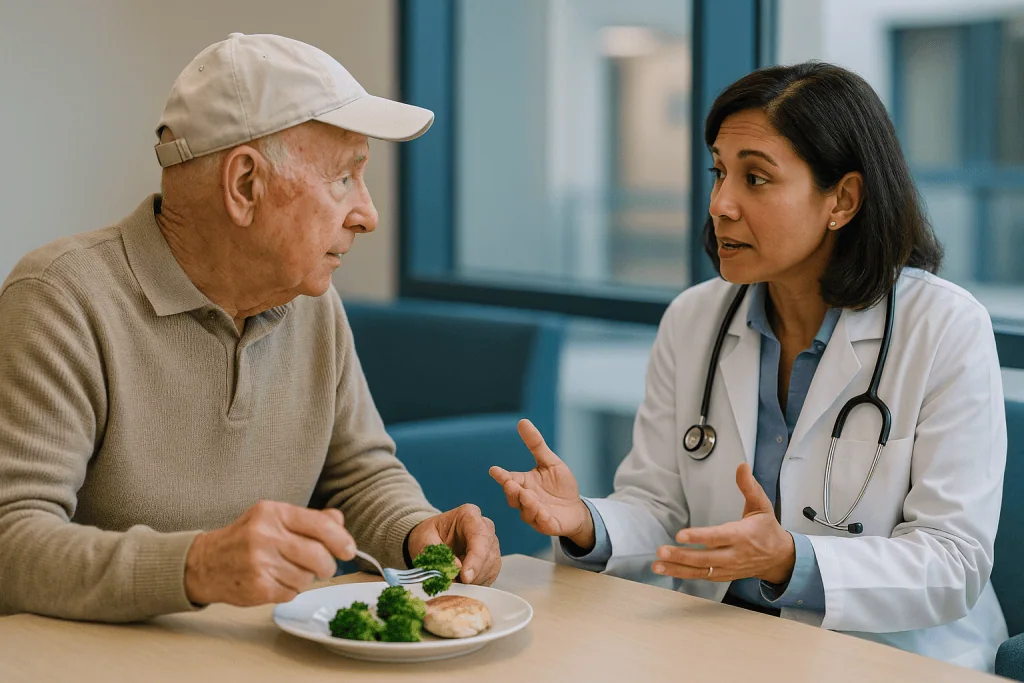
Ask a skin cancer surgeon whether an 88-year-old should have surgery and the honest answer is a question back: which 88-year-old? Clinicians distinguish chronological age, the years lived, from biological age, the state of the heart, lungs, kidneys, memory and muscles. A fit octogenarian who gardens daily may tolerate a long procedure better than someone twenty years younger with unstable angina.
Several practical factors carry more weight than age:
- Frailty and stamina. Mohs surgery and multi-session radiotherapy both demand time in a clinic chair. Someone who becomes exhausted or confused after an hour may do better with a shorter procedure.
- Blood thinners and other medicines. Many older adults take anticoagulants for atrial fibrillation or clotting history. Skin surgery is usually still possible; the team plans around bleeding risk rather than stopping essential medicine, and any change is the prescriber’s call.
- Skin quality. Older skin is thinner, less elastic and slower to heal, which affects how a wound is closed and how long it takes to settle.
- Cognition and support. Applying a cream twice daily for weeks, or keeping a dressing dry, depends on memory, eyesight, dexterity and whether someone is at home to help.
- Life expectancy and goals. A tumor expected to grow a few millimeters over several years may not need treatment in someone whose other illnesses are advanced, if it causes no symptoms.
None of these is a reason to withhold care. They are reasons to choose the right care. Guideline bodies for skin cancer consistently recommend an individualized plan, and the most useful thing a family can bring to the consultation is a clear picture of how the person actually lives day to day.
How doctors size up a basal cell carcinoma before choosing treatment
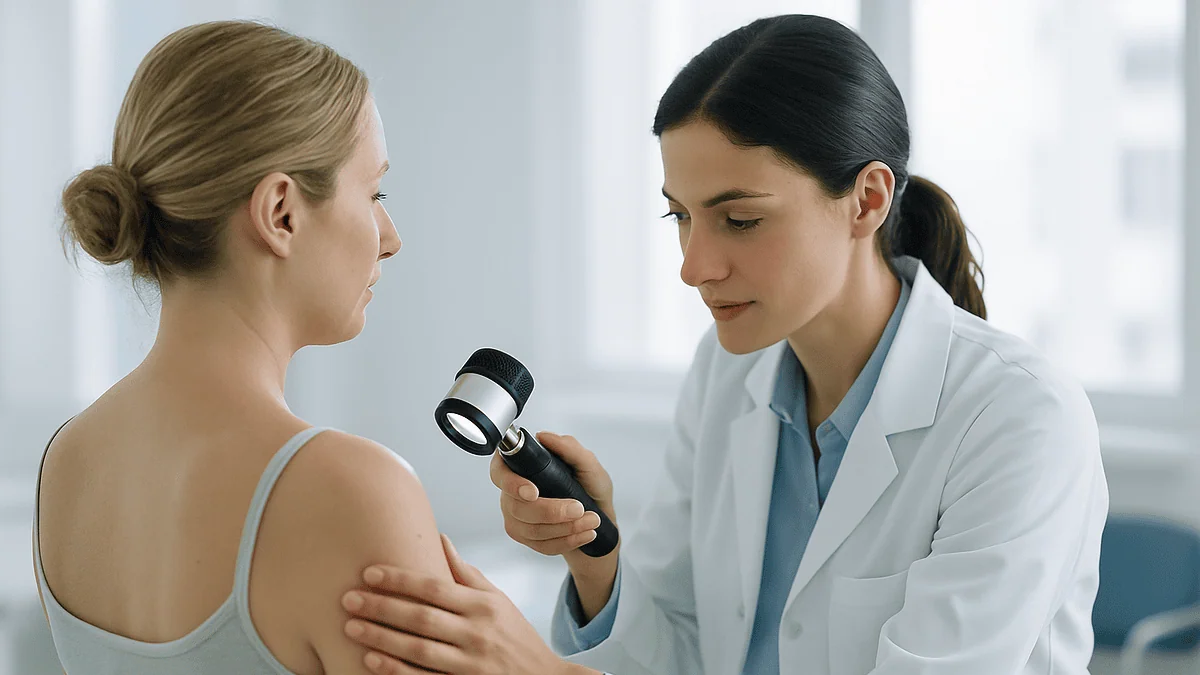
Before anyone talks about scalpels or creams, the tumor gets a profile. It starts with a biopsy, a small sample of the lesion removed under local anesthetic and examined under a microscope. The Mayo Clinic notes that a skin examination plus biopsy is how BCC is confirmed; a bump that looks classic is still not treated as BCC until the pathologist says so.
The pathology report answers questions that steer everything afterward:
- Subtype. Nodular BCC, the pearly bump with visible blood vessels, tends to have relatively clear edges. Superficial BCC forms a flat, scaly, pink patch and often responds to non-surgical options. Infiltrative or morpheaform BCC, which can look like a pale scar, sends fine strands under the skin far beyond what the eye sees and is treated more aggressively.
- Size and location. Tumors on the nose, ears, eyelids, lips and around the eyes sit in what clinicians call the high-risk zone, where there is little spare tissue and where hidden extension matters most.
- Borders. A lesion with poorly defined edges is harder to remove completely in one attempt.
- History. A BCC that has come back after previous treatment, or one growing in skin that was irradiated years ago, is classed as higher risk.
- Symptoms. Bleeding, pain or numbness suggests the tumor is bothering nerves or growing quickly.
The result is a rough sorting into low-risk and high-risk tumors. A low-risk superficial BCC on the back of a shoulder opens up nearly every option on the menu. A recurrent infiltrative BCC beside the eye narrows the menu sharply, regardless of how old the patient is. Understanding which category you are in explains most of what your team recommends next.
What actually happens during surgical treatment, from excision to Mohs
Most BCCs are removed surgically, and almost always under local anesthetic as an outpatient. The two main techniques differ in how they check that the edges are clear.
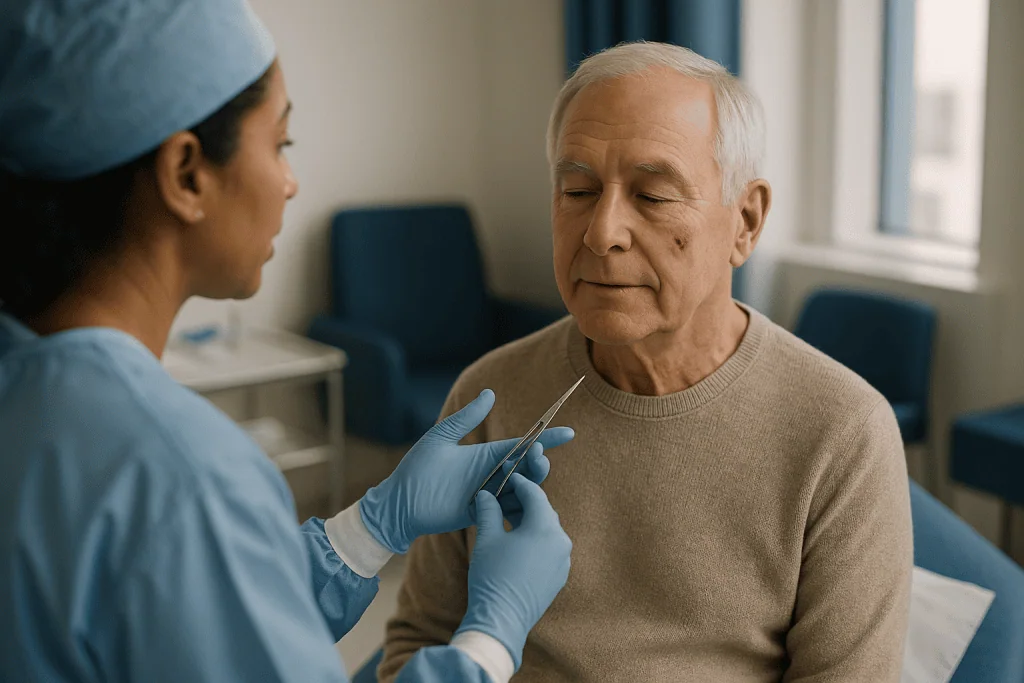
Standard excision means the surgeon cuts out the visible tumor along with a rim of normal-looking skin, called the margin, then closes the wound with stitches. The specimen goes to a laboratory, and the report comes back over the following days. If the margin contains tumor cells, a second procedure may be needed.
Mohs surgery, named after the surgeon who developed it, removes the tumor one thin layer at a time. After each layer the surgeon maps and stains the tissue and examines it under a microscope while the patient waits in a nearby room with a temporary dressing. If cancer cells remain at any edge, only that precise spot is removed next. The cycle repeats until the last layer is clear. The Mayo Clinic explains that this is why the whole visit can take several hours, most of it waiting, and why Mohs removes as little healthy tissue as possible.
Once the tumor is out, the wound is repaired. Options include stitching the edges together, moving a flap of neighboring skin across the gap, placing a skin graft taken from elsewhere, or simply letting a small wound heal on its own under a dressing. On older skin, surgeons often favor repairs that avoid tension because thin skin tears and heals slowly.
A third surgical option, electrodesiccation with scraping, uses a spoon-shaped instrument to scrape away the soft tumor and an electric needle to destroy the base. It is quick and needs no stitches, but there is no margin to examine, so it is reserved for small, low-risk tumors on the trunk or limbs (Mayo Clinic).
Mohs surgery for elderly patients: who it is usually for, and who is asked to consider alternatives
The question families type most often is some version of “Should a 90-year-old have Mohs surgery?” The evidence-based answer is that Mohs is chosen by tumor features first, and that many people in their nineties have it without difficulty.
Mohs is usually recommended when:
- The tumor sits in a high-risk area of the face where every millimeter of spared tissue protects function or appearance, such as the nose, eyelids, ears or lips.
- The BCC has recurred after earlier treatment.
- The subtype is infiltrative or otherwise aggressive, with edges the eye cannot judge.
- The lesion is large or poorly defined.
Alternatives are more often discussed when:
- Sitting for several hours, even with breaks, would be physically or mentally distressing; this is common with advanced dementia or severe breathing difficulty.
- Heart or lung disease is unstable enough that the team would rather not schedule a long outpatient day until it is better controlled.
- The tumor is small and low-risk and on the trunk or a limb, where a simple excision achieves the same goal in a fraction of the time.
- The person, fully informed, says the tumor does not trouble them and they would rather monitor it.
Being asked to wait is not the same as being turned down. Sometimes the wait is for a cardiology review, sometimes for a home carer to be arranged so the dressing can be managed afterward. Sometimes the team suggests radiotherapy or a cream instead because the total burden is lighter. What matters is that the reasoning is explained, that the tumor is not simply ignored, and that the plan is revisited if it grows or starts to bleed. That decision belongs to the treating team and the patient together, and it can change.
Basal cell carcinoma treatment options for older adults, compared
Seeing the options side by side helps families ask sharper questions. The table below summarizes how the main approaches are generally used, drawing on the Mayo Clinic and NHS descriptions of BCC treatment. It is a map, not a menu; which routes are open depends on the tumor profile described earlier.
| Approach | What it involves | Typically considered for | Points that matter for older adults |
|---|---|---|---|
| Standard excision | Tumor cut out with a margin, stitched, sent to lab | Most low- and some high-risk BCCs | Single short visit; results take days; may need a second procedure |
| Mohs surgery | Layer-by-layer removal with microscope checks the same day | Face, recurrent or aggressive tumors | Several hours in clinic; spares tissue; needs stamina for waiting |
| Electrodesiccation with scraping | Scraping plus electric destruction of the base | Small low-risk tumors on trunk or limbs | Fast, no stitches; no margin check; leaves a pale scar |
| Radiotherapy | Focused X-rays over several sessions | Those who cannot or prefer not to have surgery; add-on after high-risk surgery | Repeated visits over weeks; no wound; skin reaction settles gradually |
| Topical creams | Immune-stimulating or chemotherapy cream applied at home | Superficial BCC only | Depends on eyesight, dexterity and memory; causes weeks of redness |
| Cryotherapy | Freezing with liquid nitrogen | Small superficial lesions | Quick; blistering afterward; less precise |
| Active monitoring | Scheduled reviews with photographs | Slow-growing, symptom-free tumors when other illness dominates | Avoids procedures; requires reliable follow-up |
| Targeted or immune medicines | Oral or infused drugs | Locally advanced or metastatic BCC | Side effects can be significant; specialist supervision |
Notice how often the right-hand column mentions time, visits and hands-on care rather than the tumor itself. For older adults that column frequently tips the balance between two medically reasonable choices.
When radiotherapy, creams or freezing make more sense than a scalpel
Surgery is the default, but not the only sound choice, and for some older adults it is not the best one.
Radiotherapy uses precisely aimed X-rays to destroy tumor cells. The NHS lists it as an option when surgery is not suitable, when a person prefers to avoid an operation, or after surgery when the risk of the tumor returning is judged high. Treatment is spread over a series of sessions across several weeks, each lasting minutes. There is no wound and no stitches, which appeals to people on blood thinners or with fragile skin. The trade-offs are the travel involved in repeated visits, a skin reaction that reddens and peels toward the end of the course, and long-term changes in the treated skin, which is one reason clinicians have historically favored it for older rather than younger patients.
Topical treatments suit superficial BCC only. Imiquimod is an immune response modifier; it prompts the body’s own immune cells to attack the abnormal cells. Fluorouracil is a chemotherapy cream that interferes with the division of rapidly growing cells. Both are applied at home over a period of weeks and both produce inflammation, crusting and soreness as they work (Mayo Clinic). That reaction is expected, but it needs someone who can see the lesion, reach it and remember the routine. How often and for how long a cream is used is set by the prescribing clinician.
Photodynamic therapy pairs a light-sensitizing cream with a strong light source in clinic to destroy superficial tumors. Cryotherapy freezes small lesions with liquid nitrogen; a blister forms and the treated skin sloughs away over the following days.
None of these gives the pathologist a margin to examine, so follow-up skin checks matter more than they do after surgery.
Active monitoring: when doing less is a genuine plan, not neglect
For a small group of older adults, the most sensible response to a basal cell carcinoma is to watch it. Clinicians call this active monitoring or watchful waiting, and the word “active” is doing real work.
The reasoning rests on BCC’s biology. Because these tumors grow slowly and almost never spread, a low-risk lesion that causes no bleeding, pain or functional problem may change very little across the remaining lifespan of someone living with advanced heart failure, dementia or another serious illness. In that setting, a procedure brings its own risks and disruption for a benefit the person may never experience.
What active monitoring actually looks like:
- The lesion is measured and photographed at the first visit so change can be judged objectively rather than from memory.
- Review appointments are scheduled at set intervals, often with a nurse or dermatologist, and the family is told exactly what changes should prompt an earlier call.
- Treatment remains on the table. If the tumor starts growing faster, bleeds or begins to trouble the person, the plan switches to one of the options above.
The evidence here is more modest than for surgery. Observational studies of monitored BCCs in frail older patients report that many lesions grow slowly, but the approach has not been tested in the large randomized trials that underpin surgical care, and it is not the default in any major guideline for people who are otherwise well. That is the honest picture: monitoring is a reasonable, evidence-informed choice for a specific group, not a universal alternative to treatment.
Families sometimes hear “we’ll keep an eye on it” as a brush-off. It is worth asking the team to spell out the monitoring schedule and the triggers for action, so everyone knows what watching means.
What targeted medicines do for advanced or hard-to-treat tumors
A small minority of basal cell carcinomas become locally advanced, meaning they have grown so large or so deep that surgery or radiotherapy would cause unacceptable damage, and a very small number spread to lymph nodes or distant organs. Older adults who have avoided care for years because a lesion “never hurt” are among those most likely to reach this stage.
For these situations there is a class of oral medicines called hedgehog pathway inhibitors. The hedgehog pathway is a chain of chemical signals that tells cells when to grow; in most BCCs a fault in this pathway is stuck in the “on” position. Vismodegib and sonidegib, the two generic medicines in this class, block the signal. The Mayo Clinic describes them as options for BCC that has spread or that cannot be treated with surgery or radiation.
Their side effects deserve frank discussion, especially with older patients. The Mayo Clinic lists muscle spasms, hair loss, altered taste, weight loss and fatigue as common. For someone already frail or eating poorly, taste changes and weight loss are not minor inconveniences. These medicines also carry a serious warning about harm to a developing baby, which is less relevant in this age group but reflects how potent they are.
When hedgehog inhibitors stop working or cannot be tolerated, an immunotherapy medicine that blocks a protein called PD-1, which normally acts as a brake on immune cells, may be considered. It releases the brake so the immune system can attack the tumor, and it is given by infusion under oncology supervision.
Whether any of these medicines is appropriate, when to start and when to stop, and how side effects are managed are decisions for the prescribing specialist. This section explains what the medicines do; it is not a recommendation to seek them.
What the following days and weeks usually look like after treatment
Recovery from most BCC treatment is undramatic, which surprises people who have braced for something worse. Still, knowing the typical rhythm helps older adults and carers plan.
After surgery. The local anesthetic wears off within hours and the site feels sore and tight. Ordinary pain relief, as advised by the surgical team, is usually enough. A pressure dressing stays in place for the first day or so, and the team gives written instructions on when it can be changed and whether the area may be wetted. Stitches on the face are commonly removed within one to two weeks, later on the trunk or legs, on a timeline the surgeon sets (Mayo Clinic). Bruising around the eyes after eyelid or nose surgery can look alarming and settles over about a week. Wounds left to heal on their own take several weeks and look worse before they look better. The scar keeps softening and fading for many months.
After radiotherapy. The skin reaction builds during the course and often peaks in the days after the final session, then settles over the following weeks (NHS). The area may later stay paler or show small visible vessels.
After creams. Expect redness, weeping and crusting during treatment; this is the medicine working, not an allergy, though the team should be told if it becomes severe. The skin calms over the weeks after the course finishes.
For everyone, two things follow. First, a results conversation: for excision, the pathology margin; for Mohs, confirmation on the day. Second, a follow-up schedule of skin examinations, because the Mayo Clinic notes that people who have had one BCC are more likely to develop another. Practical details matter for older adults: arranging transport for the stitch removal visit, checking that someone can reach the dressing, and keeping the wound out of the sun.
Why do I keep getting basal cell carcinomas?
Few things frustrate older patients more than clearing one BCC only to find another a year later on the other cheek. The explanation is not bad luck, and it is not usually a sign that treatment failed.
Ultraviolet light damages the DNA in skin cells, and that damage accumulates across a lifetime. The Mayo Clinic lists long-term sun exposure, fair skin that burns easily, increasing age and a history of previous BCC as leading risk factors. Sun-exposed skin on the face, scalp, ears, neck and hands becomes a field of cells carrying decades of small mutations. Any one of them can tip over into a tumor, so a new BCC beside an old one is usually a new tumor arising from the same damaged field rather than the original growing back.
Other factors raise the odds further:
- Immune suppression. People taking medicines after an organ transplant, or with conditions that weaken immunity, develop skin cancers more readily because the immune system normally clears many abnormal cells before they become tumors.
- Previous radiation to the skin, including treatments given decades ago for acne or other conditions.
- Arsenic exposure, historically through contaminated well water or some occupations.
- Inherited syndromes such as basal cell nevus syndrome, in which many BCCs appear from a young age.
Recurrence at the original site is different from a new tumor. It is more likely after non-surgical treatments and with aggressive subtypes, which is why the pathology report and the follow-up schedule matter.
The practical response is not resignation. Regular skin checks catch new lesions while they are small and easy to treat. Sun protection still counts at 85: the CDC recommends shade, protective clothing, wide-brimmed hats and broad-spectrum sunscreen for everyone, and older skin has less reserve to absorb further damage, not more.
What people often get wrong about basal cell carcinoma in the elderly
Misunderstandings about BCC lead some older adults to over-treat and others to ignore a tumor until it is a real problem. A few corrections, grounded in what the evidence shows:
“It’s not real cancer.” It is cancer. The reassuring part is behavior: it grows slowly and rarely spreads. The unreassuring part is that, untreated, it keeps growing into whatever is underneath, including cartilage and bone (Mayo Clinic).
“At my age it’s not worth treating.” For most older adults, a short procedure under local anesthetic removes a problem that would otherwise become larger, more disfiguring and harder to treat. Monitoring is appropriate for some people, but only as a considered plan, not as a default for anyone past a certain birthday.
“Mohs is only for younger patients.” Mohs is chosen by tumor location and subtype. Age enters the decision through stamina and other illnesses, not as a cut-off.
“Once it’s removed, I’m done.” Having had one BCC raises the chance of another. Follow-up skin checks are part of treatment, not an optional extra.
“Sunscreen is pointless now.” New damage still causes new tumors. Protection reduces the ongoing risk at any age (CDC).
“If it doesn’t hurt, it’s fine.” Most BCCs are painless until they are large. A sore that bleeds, scabs and reopens over weeks is the more typical warning.
“What is the life expectancy after Mohs surgery?” This question comes up constantly online. Mohs is a local skin procedure; it does not itself change how long someone lives, and because BCC so rarely spreads, the tumor is very unlikely to shorten life either. Life expectancy after Mohs is shaped by a person’s heart, lungs and other conditions, which is exactly why those conditions, rather than the tumor, drive so much of the treatment planning.
Questions to ask your care team before deciding
A good consultation about basal cell carcinoma in an older adult should feel like a conversation about a person, not just a lesion. These questions help steer it there. Bring a family member or friend if possible; a second set of ears catches details that are easy to miss when the word “cancer” is in the room.
- What subtype is this BCC, and does the pathology report classify it as low-risk or high-risk?
- Which treatment options are realistic for this particular tumor, and which would you rule out?
- Why are you recommending this option over the others for me specifically?
- How long will the procedure or course take, how many visits are involved, and how much waiting is there on the day?
- Should any of my regular medicines, including blood thinners, be adjusted, and who makes that decision?
- What will the wound or treated area look like at one week, one month and six months?
- What help will I need at home afterward, and for how long?
- If we chose to monitor rather than treat, how often would you review it, and what changes should prompt an earlier appointment?
- What is the chance this tumor comes back at the same site with this treatment, and how will we check?
- How often should I have a full skin examination afterward, and with whom?
- If the wound heals poorly or something worries me, who do I contact, and how quickly?
- Is there anything about my other health conditions that makes one option safer than another?
Write the answers down. Older patients often report that they understood everything in the room and remembered half of it by the time they reached the car park. A written summary from the team, if offered, is worth asking for.
When to call your doctor
Basal cell carcinoma itself is rarely an emergency, but there are moments before, during and after treatment when a prompt call to the treating team is the right move. Make contact the same day if any of the following occurs.
After surgery or a procedure:
- Bleeding that soaks through the dressing and does not stop with firm, steady pressure applied as your team instructed.
- Spreading redness, increasing warmth, swelling, pus or a foul smell at the wound, or a fever; these suggest infection.
- The wound edges pulling apart or a skin graft turning dark or lifting.
- New numbness, weakness or drooping in the face beyond what the surgeon warned about.
- Sudden change in vision, severe eye pain or an eyelid that will not close after surgery near the eye; seek urgent care.
During radiotherapy or cream treatment:
- Skin that breaks down, blisters extensively or becomes so painful that dressing or sleeping is difficult.
- Signs of infection in the treated area as above.
While taking targeted medicines:
- Severe muscle cramps, rapid weight loss, persistent vomiting or any new symptom that stops you eating or moving normally; the prescriber needs to know before the next dose is due.
At any time, treated or not:
- A sore that bleeds, scabs and reopens over several weeks and does not heal.
- A treated site that develops a new lump, ulcer or shiny patch.
- A lesion that is growing noticeably, becoming painful or affecting function, such as an eyelid or nostril.
None of these signs means something has gone badly wrong; most have straightforward explanations. What they share is that they are easier to sort out early. Keep the team’s contact details somewhere visible, and if you are the carer of someone who cannot easily describe symptoms, err on the side of calling.
Frequently asked questions
Should a 90-year-old have Mohs surgery for basal cell carcinoma?
Many people in their nineties have Mohs surgery without difficulty, because the decision rests on the tumor’s location and subtype rather than age. Mohs is typically recommended for facial, recurrent or aggressive tumors. Alternatives are discussed when several hours in a clinic chair would be distressing, when heart or lung disease is unstable, or when the person prefers monitoring. The treating team weighs these factors with the patient and family.
What is the life expectancy after Mohs surgery?
Mohs surgery is a local skin procedure and does not itself change life expectancy. Because basal cell carcinoma very rarely spreads, the tumor is also unlikely to shorten life. Life expectancy after Mohs is determined by a person’s overall health, including heart, lung and other conditions, which is why those conditions, not the skin cancer, shape much of the treatment planning in older adults.
Why do I keep getting basal cell carcinomas?
Decades of ultraviolet damage leave whole areas of sun-exposed skin carrying mutations, so new tumors can arise anywhere in that field. The Mayo Clinic lists previous BCC, fair skin, long-term sun exposure and age as key risk factors, with immune suppression, past radiation and certain inherited conditions adding further risk. A new lesion is usually a new tumor, not the old one returning, and regular skin checks catch them early.
How did other people fully treat their basal cell carcinoma?
Most people have their basal cell carcinoma removed surgically under local anesthetic, either by standard excision or Mohs surgery, and the pathology report confirms whether the edges are clear. Others with superficial tumors use prescribed creams, radiotherapy or freezing. Online accounts of home remedies are not supported by evidence, and delaying proven treatment allows the tumor to grow deeper. The right method depends on the tumor’s profile.
What are the basal cell carcinoma treatment options for someone who cannot have surgery?
Radiotherapy is the main alternative, delivered over a series of short sessions across several weeks, with no wound to manage (NHS). Superficial tumors may respond to prescribed immune-stimulating or chemotherapy creams, photodynamic therapy or freezing. For slow-growing, symptom-free tumors in people with serious other illness, active monitoring is sometimes chosen. Locally advanced tumors may be considered for hedgehog pathway inhibitor medicines under specialist care.
Is basal cell carcinoma in the elderly more dangerous than in younger people?
The tumor itself behaves the same way at any age: slow growth and very rare spread. What changes in older adults is context. Tumors are sometimes larger at diagnosis because they were ignored for years, healing is slower on thinner skin, and other illnesses complicate long procedures. Those factors influence which treatment is chosen, but they do not make the cancer itself more aggressive.
Do blood thinners have to be stopped before basal cell carcinoma surgery?
Usually not. Skin surgery is generally performed with anticoagulants continued, because the risk of a clot from stopping them typically outweighs the manageable bleeding risk of a skin procedure. The surgeon may take extra steps to control bleeding on the day. Any decision about pausing or adjusting a prescribed medicine belongs to the prescribing clinician and surgical team, never to the patient alone.
How long does it take to recover from basal cell carcinoma surgery in older adults?
Soreness settles over a few days, and stitches on the face are commonly removed within one to two weeks, later on the trunk or legs, on a timeline the surgeon sets (Mayo Clinic). Wounds left to heal on their own take several weeks, and scars keep fading for months. Older skin heals more slowly, so the team may advise a longer period of protecting the site.
Can basal cell carcinoma be left untreated in a very frail older person?
Sometimes, as a deliberate plan called active monitoring. It suits slow-growing, symptom-free, low-risk tumors in people whose other illnesses are advanced, and involves photographs and scheduled reviews with clear triggers for treatment if the lesion grows or bleeds. The evidence is observational rather than from large trials, and it is not recommended for otherwise well patients. The treating team should set out the schedule explicitly.
Does sun protection still matter for older adults who already have basal cell carcinoma?
Yes. New ultraviolet damage continues to cause new tumors regardless of age, and older skin has less reserve to absorb it. The CDC recommends shade during peak hours, protective clothing, wide-brimmed hats, sunglasses and broad-spectrum sunscreen for everyone. Protecting a healing wound or treated area from the sun also helps the scar mature with less discoloration.
References
- NHS: Non-melanoma skin cancer, treatment
- MedlinePlus: Basal cell skin cancer
- CDC: Preventing skin cancer
This article is for general information only and is not a substitute for professional medical advice. Please consult a qualified doctor about your individual situation.

More from the Blog
Follow-Up After Thyroid Cancer: What Blood Tests and Ultrasound Track Over Time
After treatment for differentiated thyroid cancer, follow-up usually rests on three blood tests, thyroglobulin, thyroglobulin antibodies and TSH, paired with a neck ultrasound. Thyroglobulin…
Rash and Diarrhea on Targeted Therapy: Why They Happen and When to Contact the Team
Rash and diarrhea are common side effects of targeted cancer therapy because the molecular switches these drugs block, such as EGFR, also keep skin…
Who May Be a Candidate for SBRT for Early-Stage Lung Cancer When Surgery Is Not Planned
SBRT for early-stage lung cancer is usually considered for people with a small non-small cell lung cancer that has not spread to lymph nodes…
Why a PSMA PET Scan Comes Before Lutetium-177 PSMA Therapy and What It Has to Show
A PSMA PET scan comes before lutetium-177 PSMA therapy because the treatment only works on cancer cells that display the PSMA protein, and the…
Eating After Pancreatic Cancer Surgery: Enzyme Replacement, Blood Sugar and Small Meals
After pancreatic cancer surgery, many people need enzyme replacement because the remaining pancreas cannot release enough digestive enzymes; the capsules are taken with food…
Infection Prevention During Lymphocytic Leukemia Treatment: Vaccines, Habits, Warning Signs
CLL infection prevention during treatment rests on four layers: non-live vaccines timed around therapy (ideally before B-cell-depleting drugs, then again once the immune system…