

Bowel Prep Before Robotic Colorectal Surgery: Colonoscopy, Blood Thinners and the Day Before

Key Takeaways
- Mechanical bowel prep works by osmosis: unabsorbable salts or polymers pull water into the colon and flush it through, which is why restricting fluids makes the prep less safe, not more effective.
- The strongest current evidence supports laxative prep combined with oral antibiotics before elective colon resection, while laxatives alone showed no clear benefit in randomized trials.
- A preoperative colonoscopy is often about location and completeness rather than diagnosis: it lets the endoscopist tattoo the site and rule out a second growth elsewhere in the colon.
- Warfarin's effect builds and fades over days while direct oral anticoagulants act over hours, so the pause before surgery is set individually by the prescriber, never by the patient.
- The NHS describes typical pre-anesthesia fasting as about six hours without food and about two hours without clear fluids, with the exact cut-off set by the anesthesia team.
- MedlinePlus gives a typical hospital stay of roughly three to seven days after large bowel resection, with early walking and early eating now standard parts of recovery pathways.
Bowel prep before colorectal surgery usually means a colonoscopy to confirm and mark the site, a clear-liquid day with an osmotic laxative and often oral antibiotics, and a planned pause of some blood thinners under the prescriber's direction. Robotic operations use the same preparation as other keyhole approaches. Every detail of timing, medicines and fasting is set individually by the surgical team, so the written instructions from that team take priority.
The instruction sheet is three pages long, stapled at the corner, and by Tuesday evening it has been read so many times that the fold has gone soft. A jug sits on the counter. Beside it, a small pile of pill bottles has been sorted into two groups: the ones with a sticky note that says ask, and the ones with a note that says keep. Someone in this kitchen has robotic colorectal surgery booked, and the operation itself is not the part keeping them awake. The day before is.
That anxiety is reasonable. Bowel prep before colorectal surgery touches three things at once: a colonoscopy that may need to be repeated, a laxative regimen that reorganizes an entire day, and medicines that were never meant to be interrupted casually. Each has its own logic and its own evidence.
This explainer walks through all three, in the order they usually arrive, and stays honest about where the science is settled and where surgeons still disagree.
What is bowel prep before colorectal surgery, and how does it actually work?
Bowel preparation, in plain terms, is the process of emptying the large intestine of stool before an operation on it. Surgeons call the part done with laxatives mechanical bowel preparation, to separate it from the antibiotic part discussed later.
The mechanism is straightforward physics. Most prep solutions belong to the osmotic laxative class: they are salts or large sugar-like molecules that the gut cannot absorb, so water follows them into the bowel and the contents are flushed through. Polyethylene glycol-based solutions and sodium-salt solutions are the two broad families your team may mention. The Mayo Clinic describes the same principle for colonoscopy preparation: a large volume of fluid, taken over hours, that produces watery stools until what passes is nearly clear.
Why does a surgeon want an empty colon? Four practical reasons come up again and again in operating rooms:
- A stool-laden colon is heavy and stiff, which makes it harder to lift, rotate and inspect through keyhole instruments.
- If the bowel is opened deliberately to remove a segment, less stool means less spillage into the abdomen.
- A clean colon lets the surgeon look inside with a scope during the operation if the exact site of a growth needs checking.
- Some surgeons find it easier to feel or see small tattoo marks placed at an earlier colonoscopy on a decompressed bowel.
None of that changes the tumor or the disease. Prep is about making the operation cleaner and more controllable; it is not a treatment in itself. Where the medical literature has argued, and it has argued for decades, is over whether an empty colon translates into fewer infections and leaks afterward. That evidence gets its own section below, because the answer depends on whether laxatives are paired with oral antibiotics.
Why do I need a colonoscopy before colon surgery if I already have a diagnosis?
A colonoscopy is an examination of the whole large bowel with a flexible camera passed through the rectum. Most people facing colorectal surgery have already had one, which is often how the problem was found in the first place. Surgeons frequently ask for the report, the images, or occasionally a repeat examination, and the reasons are more specific than double-checking.
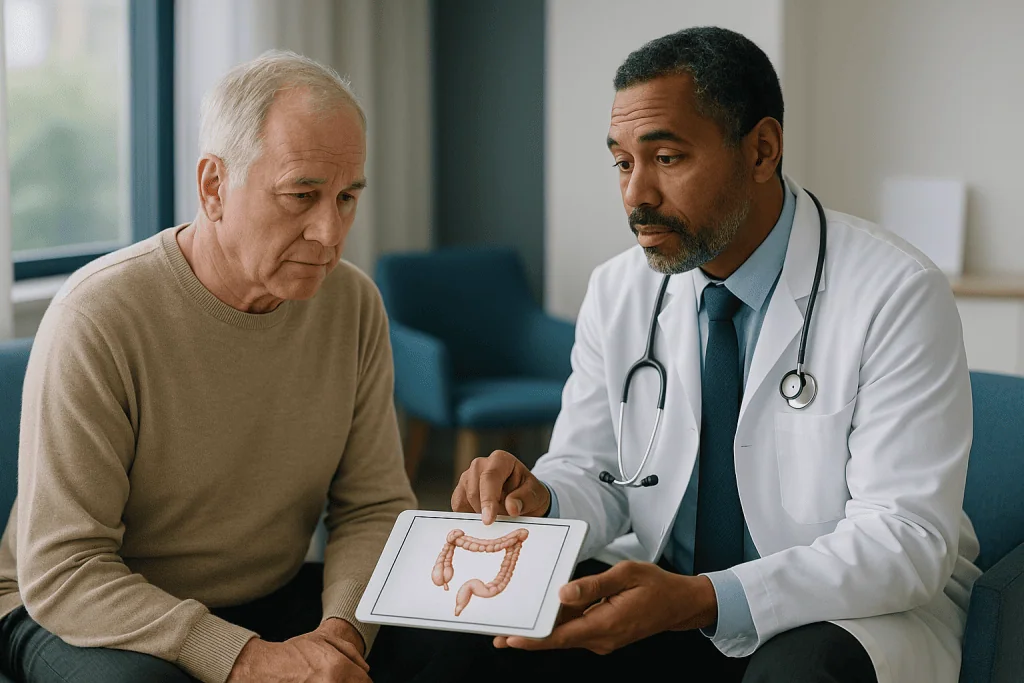
First, location. Colonoscopy is excellent at seeing a lesion and less reliable at saying exactly how many centimeters from the anus it sits, because the bowel folds and stretches around the scope. A growth reported in the descending colon may prove to be in the sigmoid. To fix that, the endoscopist often injects a small amount of sterile ink into the bowel wall near the lesion, a tattoo, which shows through to the outer surface and can be seen with the robotic camera.
Second, completeness. The NHS notes that colonoscopy examines the entire colon, and that matters because a second, separate growth elsewhere in the bowel, called a synchronous lesion, would change the operation. Removing one segment while leaving an unknown polyp behind is exactly what surgeons want to avoid. If an earlier examination was incomplete, perhaps because the scope could not pass a narrowing, the team may order a CT-based scan of the colon or plan to check the remaining bowel during or after surgery.
Third, tissue. If the original biopsy was small or inconclusive, a repeat sample can clarify what is being treated.
The Mayo Clinic describes colonoscopy prep as a day without solid food, with clear liquids and a laxative solution. If the colonoscopy is scheduled close to the operation, some teams combine the two preps so the bowel is cleaned only once. Others prefer them separate. Ask which applies to you before you book anything else.
Who is usually asked to do a full bowel prep, and who is asked to wait?
Not every colorectal operation involves the same preparation, and the differences are worth understanding so that a neighbor’s experience does not become your expectation.
Full mechanical prep with oral antibiotics is most commonly used for planned removal of a colon segment where the two ends will be joined, an anastomosis. It is also standard before most rectal operations, particularly when a temporary stoma is planned and the surgeon wants the downstream bowel empty.
People who are often not given a full laxative prep include:
- Anyone with a suspected or known bowel obstruction. Pushing liters of fluid into a blocked colon risks severe distension or perforation, so these operations are done without laxatives.
- Emergency operations, where there is no time.
- Some people having a right-sided colectomy in units that use antibiotics alone, though practice varies and surgical society guidance still favors the combination.
- People with significant kidney disease, heart failure or electrolyte problems, for whom certain salt-based preps are unsuitable. A gentler solution, or a different plan, is usually chosen.
Being asked to wait is different from being excluded. Surgery is sometimes deferred when a blood thinner cannot yet be safely paused, when a recently placed heart stent needs more time, when anemia or nutrition needs correcting first, or when an infection is active. The Mayo Clinic’s colectomy overview describes these preoperative assessments as routine rather than alarming; they exist to lower risk on the day.
A small but important group: people who already have a stoma or who have had part of the colon removed before. Prep instructions for them are individualized, because the anatomy that needs emptying is not the standard one. If your body has been operated on before, say so early, and do not assume the printed sheet was written with you in mind.
Oral antibiotics bowel prep: what the evidence actually shows
Here is where a seasoned patient deserves a straight account, because the story has reversed twice.

For most of the twentieth century, emptying the colon before surgery was unquestioned. Then, through the 1990s and 2000s, a series of randomized trials compared laxative prep with no prep and found no clear reduction in infections or leaks from the laxative alone. Guidelines in several countries softened, and some centers abandoned prep entirely.
The pendulum moved again when researchers separated two things that had been tangled together. In the older era, laxative prep was almost always accompanied by antibiotics taken by mouth the day before, drugs that stay largely in the gut and lower the bacterial load in the stool. When the antibiotic component was dropped in the no-prep years, the possible benefit went with it. Large observational registries and later trials suggested that mechanical prep combined with oral antibiotics was associated with fewer surgical site infections and possibly fewer anastomotic leaks than either no prep or laxatives alone. Enhanced recovery programs and major colorectal surgery societies now recommend the combination for elective colon resection.
What remains uncertain, stated plainly:
- Whether oral antibiotics alone, without laxatives, perform as well as the combination. Trials are ongoing, and the evidence is not yet decisive.
- Whether the benefit is the same for right-sided and left-sided operations.
- The best antibiotic choice and timing, which vary between units.
Two clarifications matter. Oral antibiotics taken at home do not replace the intravenous dose given in the operating room just before the first incision; both are used together. And these are prescribed medicines with a specific schedule set by your team, not something to source or adjust yourself. If you are allergic to an antibiotic class, tell the team at the first appointment, not the night before.
Stop blood thinners before surgery? How anticoagulants and antiplatelets are handled
The single most common source of confusion, and the one with the least room for improvisation, is medication that affects clotting. Two categories exist. Anticoagulants slow the chemical cascade that forms a clot; antiplatelets stop blood cells called platelets from sticking together. Both are often called blood thinners, and both are paused, continued or bridged only on the instruction of the prescribing clinician and the surgeon working together.
Warfarin, a vitamin K antagonist, has a slow on-and-off profile: its effect builds and fades over days rather than hours, which is why the American Heart Association advises anyone taking it to tell the prescriber about any planned procedure well ahead. Its effect is measured with a blood test, the INR, and the surgical team will usually want a recent value before proceeding.
Direct oral anticoagulants, which block a single clotting factor such as thrombin or factor Xa, wear off faster. Because the kidneys clear several of them, the pause length is adjusted to kidney function. There is no universal number; the timing comes from the prescriber.
For people at high clot risk, such as those with a mechanical heart valve or a recent clot, the team may prescribe a short-acting injectable heparin to cover the gap, a strategy called bridging.
Antiplatelets follow their own rules. Aspirin is frequently continued through colorectal surgery in people with coronary stents, because stopping it carries its own danger. Stronger agents such as clopidogrel are more often paused, and a recently placed stent may lead the cardiology team to ask that surgery wait.
The mechanism-level point to hold onto: stopping a blood thinner trades bleeding risk for clot risk, and only the people who know your heart history and your operation can weigh the two. Never stop, restart or skip a dose on your own initiative. If the instruction sheet is unclear, call before acting.
Which other medicines and supplements need a review before colorectal surgery?
Beyond blood thinners, several ordinary medicines interact with fasting, anesthesia or the prep itself. Bring a complete list, including anything bought without a prescription, to the preoperative appointment.
Diabetes medicines get particular attention. Sodium-glucose co-transporter 2 inhibitors, a class that makes the kidneys excrete sugar, can trigger a dangerous acid build-up when a person is fasting and stressed by surgery, so they are commonly held for a period beforehand. Glucagon-like peptide-1 receptor agonists slow stomach emptying, which raises the concern that food may still be present at anesthesia; anesthesia teams increasingly ask about them. Insulin is usually adjusted rather than stopped. Each plan is individual and belongs to the prescriber.
Blood pressure medicines are mostly continued, though some teams hold ACE inhibitors or angiotensin receptor blockers on the morning of surgery because they can deepen the blood pressure drop under anesthesia. Non-steroidal anti-inflammatory painkillers affect platelet function and kidney blood flow, so many teams ask about them. Hormonal contraception and hormone replacement raise clot risk and may be discussed, not automatically stopped.
Supplements deserve a candid word. The NIH Office of Dietary Supplements notes that products such as fish oil, vitamin E, ginkgo, garlic and ginseng can affect bleeding, and that St John’s wort interacts with many drugs used around anesthesia. Herbal products are not regulated like medicines, so their strength varies between bottles. The usual advice is to declare them all and follow the team’s instruction on pausing.
A practical safeguard: ask for the medication plan in writing, with the date and time for each change. Verbal instructions given in a busy clinic are easy to misremember, and this is the one area where a misunderstanding can postpone an operation on the morning it was meant to happen.
What should I eat the week before surgery, and what is prehabilitation?
The laxative day gets all the attention, but the week leading up to it quietly shapes how well the prep works and how quickly recovery begins.
Many teams ask for a low-residue diet in the final two or three days: fewer seeds, skins, nuts, whole grains and raw vegetables, because these leave fibrous material that a laxative struggles to clear. The Mayo Clinic gives similar guidance for colonoscopy preparation. White bread, eggs, well-cooked skinless vegetables, yogurt and lean protein are typical choices. Your own sheet will list specifics; follow it over any general list, including this one.
Hydration matters more than most people expect. Osmotic laxatives pull water from the body into the bowel, and arriving at surgery dehydrated makes blood pressure harder to manage during the steep head-down tilt used in robotic pelvic operations. Drinking steadily in the days before, rather than only during the prep, helps.
Prehabilitation is the newer idea. The word simply means building physical reserve before an operation rather than only rebuilding it after. Enhanced recovery programs, which the Mayo Clinic describes as part of modern colectomy pathways, encourage:
- Daily walking, even short distances, to keep lungs and legs conditioned.
- Deep-breathing practice, which lowers the chance of chest complications afterward.
- Protein-rich meals, since healing tissue is protein-hungry.
- Stopping smoking, which the NHS notes improves wound healing and lung function even when started only weeks ahead.
- Limiting alcohol, which affects bleeding, medication metabolism and the stomach.
If blood tests show iron deficiency, the team may treat it before surgery so the body is not starting a recovery already short of red cells. This is an example of the surgical team and the medical team working in parallel; it is not a delay for its own sake, and it is another decision that rests with them rather than with the calendar.
Does robotic surgery change the bowel prep compared with laparoscopic or open surgery?
Robotic colorectal surgery is keyhole surgery in which the surgeon sits at a console and controls instruments held by robotic arms. The robot does nothing independently; it translates the surgeon’s hand movements with wristed instruments and a magnified three-dimensional view. In terms of preparation, it is best thought of as a variant of laparoscopic surgery, and the bowel prep instructions are generally the same.
Where the approach does shape the day before is in emphasis rather than substance.
Working space is one issue. Keyhole operations inflate the abdomen with carbon dioxide, a pneumoperitoneum, to create room. A colon full of stool takes up more of that room and is heavier to retract with fine instruments, so surgeons who operate this way tend to value a thorough prep.
Position is another. Pelvic robotic operations often use a steep head-down tilt so gravity moves the small bowel out of the way. Prolonged tilt affects breathing mechanics and blood pressure, which is why hydration before the laxative day, and careful management of fluid loss during it, come up in preoperative conversations.
Joining the bowel inside the abdomen, an intracorporeal anastomosis, is more common with robotic instruments. Because the colon is opened within the abdominal cavity rather than lifted out through a larger incision, surgeons prefer minimal stool at that moment.
Open surgery through a long incision uses the same laxative and antibiotic principles; the difference is that a heavier colon is easier to handle with hands than with instruments, so some open-surgery teams have historically been more relaxed about prep.
Neither approach is presented here as better. Whether an operation is done robotically, laparoscopically or open depends on the location of the disease, previous surgery, body habitus and the surgeon’s training, and that choice belongs to the treating team. What you can control is arriving with the bowel prepared as instructed and the body well hydrated.
The day before colon surgery: what usually happens, hour by hour
Every unit’s sheet is different, and yours overrides this one. That said, the shape of the day before a planned robotic colorectal operation is recognizable enough to describe, and knowing the rhythm removes some of the dread.
| Part of the day | What commonly happens | Why it is done |
|---|---|---|
| Early morning | Light, low-residue breakfast or clear liquids only, depending on the team’s instruction | Reduces solid material the laxative must clear |
| Late morning | Clear liquids continue; regular medicines taken or held exactly as written on the plan | Keeps hydration up and avoids unplanned medication gaps |
| Early afternoon | First portion of the laxative solution begins | Osmotic action starts producing watery stools within hours |
| Afternoon and evening | Oral antibiotics, if prescribed, taken at the scheduled times; clear fluids between | Lowers bacterial load in the colon while it empties |
| Evening | Antiseptic skin wash if instructed; second laxative portion in a split regimen may start | Split dosing tends to produce a cleaner colon |
| Night | Clear fluids until the fasting cut-off given by anesthesia | Balances hydration against aspiration safety |
Two habits make the day easier. Chill the solution if permitted and sip through a straw; taste fatigue is real. Stay near a bathroom and use a barrier cream on the skin around the anus, because repeated watery stools irritate it.
Clear liquids, in most instructions, include water, clear broth, strained juices without pulp, plain tea or coffee without milk, and gelatin. The Mayo Clinic’s colonoscopy guidance advises avoiding red or purple liquids, which can be mistaken for blood inside the bowel. Anything you cannot see through is not a clear liquid.
If a stoma is possible, a specialist nurse usually marks the best skin site in the days before, while you are standing, sitting and bending. That mark is part of preparation too, and it should not be washed off during the antiseptic shower.
How long do I need to fast, and why do some teams give a carbohydrate drink?
Fasting before anesthesia exists for one reason: an empty stomach lowers the chance that food or fluid comes back up and enters the lungs while reflexes are suppressed. The rule is not about the bowel operation itself.
The NHS describes the typical pattern for most planned operations: no food for about six hours before anesthesia, and no fluids for about two hours before, with clear fluids allowed until that two-hour point. Chewing gum and sweets count as food. Your anesthesia team sets the exact times, and they may differ from these ranges if you have diabetes, reflux, a hiatal hernia, or take a medicine that slows stomach emptying.
Old advice to stop everything at midnight has largely gone. Long fluid fasts leave people thirsty, headachy and slightly dehydrated, which does no favors to blood pressure on the operating table, especially after a laxative day that has already drawn water out of the body.
Enhanced recovery programs add a specific step: a clear carbohydrate drink the evening before and again close to the fluid cut-off. The reasoning is metabolic. Surgery pushes the body toward a starvation-like state in which insulin works less well; a measured carbohydrate load shortly before shifts the body into a fed state, which several trials have associated with less post-operative insulin resistance and less thirst and anxiety. The Mayo Clinic lists these enhanced recovery elements as part of modern colectomy care. People with diabetes may be given a modified version or none at all, depending on their control and medicines.
What the drink is not: it is not a meal replacement, it does not shorten the laxative day, and it is not something to buy independently and add to the plan. If it is part of your pathway, it will be on the sheet with a time beside it.
One more fasting-adjacent point. Essential morning medicines are often taken with a small sip of water even inside the fasting window, but only the ones the team has ticked. That list is theirs to write.
What do the days and weeks after robotic colorectal surgery usually look like?
Preparation is easier to tolerate when you know what it is leading to, so here is the typical arc after a planned colon or rectal resection, drawn from mainstream sources and stated as ranges, not promises.
MedlinePlus describes a hospital stay of roughly three to seven days after large bowel resection; keyhole and robotic approaches often sit toward the shorter end, but individual recovery varies. Enhanced recovery care starts within hours: sitting out of bed the same day, walking the corridor the next, sips of fluid early and light food soon after, with the urinary catheter removed as soon as safe. Chewing gum is sometimes offered because it appears to nudge the bowel back into motion.
The bowel itself is the slow partner. After being handled, it often pauses, a state called ileus, which brings bloating and a lack of wind or stool for a day or two. That is expected. Ileus that drags on with vomiting is not, and it is one of the red flags in the final section.
If a stoma has been formed, the stoma nurse teaches bag changes before discharge, and most people are managing independently within the first couple of weeks, with community support.
At home, the Mayo Clinic describes recovery in terms of weeks rather than days. Common milestones include:
- Walking a little further each day, with rest when tired.
- Avoiding heavy lifting while the internal and skin wounds knit.
- Eating small, frequent meals; bowel habit often changes, especially after rectal surgery, and can take months to settle.
- Driving again only when able to brake sharply without pain and when any strong painkillers have stopped.
A follow-up appointment reviews the pathology report and wound, and it is where any further treatment discussion begins. That conversation, like every other decision described here, sits with the treating team.
What people often get wrong about bowel prep before colorectal surgery
Some misunderstandings repeat so reliably that correcting them in advance saves phone calls and, occasionally, a cancelled operation.
“Robotic means no prep.” The opposite is closer to true. Keyhole and robotic surgeons work in a confined, gas-filled space and generally want the colon as light and clean as possible.
“I had a colonoscopy prep recently, so I am already clean.” The colon refills within days. Unless the colonoscopy is scheduled to run directly into the operation, a fresh prep is needed.
“Skipping fluids will make the prep work harder.” Osmotic laxatives draw water from the body. Restricting fluids produces dehydration and dizziness, not a cleaner bowel.
“Clear liquid means water only.” Broth, strained juice, plain tea, coffee without milk and gelatin are usually allowed, and variety makes the day far more tolerable. Red and purple dyes are the exception, as noted by the Mayo Clinic.
“I will stop my blood thinner early just to be safe.” Stopping too early lengthens the window in which a clot can form. The safest course is the prescriber’s timeline, exactly as written.
“Home antibiotics mean I will not need any in hospital.” Oral antibiotics before surgery and intravenous antibiotics at the start of the operation are used together, for different reasons.
“If nothing has happened after the first hour, the prep failed.” Laxative solutions commonly take a few hours to produce a result. Severe pain or swelling without any bowel movement is a different matter and belongs in the call-your-team category.
“A stronger or extra dose will make sure.” Prep is prescribed at a measured quantity for a reason; taking more risks electrolyte disturbance and is never a decision to make alone.
The pattern in every one of these is the same: the printed plan from your team is more reliable than intuition, a relative’s story, or a general article, including this one.
Questions to ask your care team before robotic colorectal surgery
Preoperative appointments move quickly. Writing questions down beforehand turns a fifteen-minute slot into a useful one. These are the ones that tend to matter most for bowel prep and the day before.
About the colonoscopy:
- Was my previous colonoscopy complete, and was the whole colon seen?
- Has the lesion been tattooed, or will that be done before or during surgery?
- Do I need a repeat examination, and if so, will its prep be combined with the surgical prep?
About the prep itself:
- Which type of laxative solution am I being given, and is it suitable for my kidney and heart history?
- Are oral antibiotics part of my plan, and exactly when should each be taken relative to the laxative?
- What counts as a clear liquid on your sheet, and what should I avoid?
- Is a carbohydrate drink part of my pathway, and does my diabetes change that?
About medicines:
- Which of my medicines should I take, hold or change, and on which days? Could I have that in writing?
- Who is coordinating my blood thinner plan, and whom do I call if I am unsure on the day?
- Do any of my supplements need to stop, and when should I restart them?
About the operation and after:
- Is a stoma possible, and if so, has the site been marked?
- What is the fasting cut-off for food and for clear fluids, by the clock?
- What should recovery look like in the first week, and what would prompt you to want a call?
One last question that patients rarely ask and clinicians rarely mind: “If something about the prep goes wrong on the day before, what number do I ring, and who answers it after hours?” Knowing the answer before you need it is the difference between a calm evening and a frightened one.
When to call your doctor: red flags during prep and after surgery
Most bowel preps are uncomfortable and uneventful. A small number of situations need a phone call to the surgical team, and a few need emergency care. Use the contact numbers on your instruction sheet; they are there precisely for this.
During the prep day, contact the team promptly if you notice:
- Repeated vomiting that means you cannot keep fluids or the prep solution down.
- Severe or worsening abdominal pain, or a hard, swollen abdomen, especially with no bowel movement several hours after starting the laxative; this can signal a blockage.
- Dizziness, fainting, a racing heart, confusion or muscle cramps, which may indicate dehydration or a salt imbalance.
- Any bleeding, or black stools.
- A missed or doubled dose of a blood thinner or diabetes medicine, so the plan can be corrected rather than guessed at.
Seek emergency care without waiting for a callback if you develop chest pain, sudden breathlessness, one-sided weakness or difficulty speaking, or a collapse. These are not prep side effects and must not be waited out.
After surgery, MedlinePlus and the Mayo Clinic list warning signs that warrant a same-day call:
- Fever or shaking chills.
- Abdominal pain that is getting worse rather than better, or a belly that is swelling.
- Vomiting, or no wind or stool together with nausea, beyond the first couple of days.
- Redness, warmth, increasing pain or discharge from a wound.
- Calf pain or swelling in one leg, or new breathlessness, which can indicate a clot.
- A stoma that turns dark, dusky or black, or that stops producing output.
- Bleeding from the rectum, the stoma or a wound that does not stop with light pressure.
When in doubt, call. Surgical teams would far rather answer a question that turns out to be nothing than hear about a problem a day late. Every judgment about whether to proceed, pause or come back in belongs to them, and they can only make it if they know.
Frequently asked questions
Do I really need a colonoscopy before colon surgery if I already had one?
Often the earlier colonoscopy is enough, provided it examined the whole colon and the report is available. A repeat is requested when the first examination was incomplete, when the lesion was not tattooed for the surgeon to find, or when biopsy results were inconclusive. Some teams schedule the colonoscopy to run straight into the operation so the bowel is prepared once. Your surgeon decides based on your reports.
How long before surgery do I stop blood thinners?
There is no single answer, because it depends on the drug, your kidney function and why you take it. Warfarin wears off over days; direct oral anticoagulants over hours to a day or two; aspirin is often continued in people with coronary stents. Your prescriber and surgeon set the timeline together, sometimes with a bridging heparin injection for high clot risk. Never change the schedule yourself.
What can I eat the day before colon surgery?
Most instruction sheets allow clear liquids only from the morning or midday of the day before, sometimes after a light low-residue breakfast. Clear liquids usually include water, clear broth, strained juice, plain tea or coffee without milk, and gelatin. The Mayo Clinic advises avoiding red or purple liquids, which can resemble blood inside the bowel. Follow your own team’s list over any general one.
Is oral antibiotics bowel prep the same as the antibiotics I get in hospital?
No. Oral antibiotics taken at home the day before act mainly inside the gut to reduce the bacterial load in stool. The intravenous antibiotic given in the operating room just before the incision protects the wound and abdomen during surgery. Current surgical society guidance uses both together for elective colon resection. Tell your team about any antibiotic allergy well in advance.
Does robotic surgery mean the bowel prep is easier or shorter?
The prep is the same as for laparoscopic surgery and follows the same laxative and antibiotic principles. If anything, keyhole surgeons value a thorough prep because a heavy, stool-filled colon is harder to handle with fine instruments in a gas-inflated abdomen. What robotic surgery may shorten is hospital stay and recovery for some people, but that varies and is never guaranteed.
What if the prep solution makes me vomit?
Pause, sip clear fluids slowly, and call the number on your instruction sheet. Repeated vomiting that stops you keeping fluids down needs a same-day conversation with the team, because arriving dehydrated or with an incompletely prepared bowel may change the plan. Chilling the solution and using a straw helps many people. Do not double up later to catch up without being told to.
Can I take my regular morning medicines on the day of surgery?
Some yes, some no, and the list is individual. Blood pressure, thyroid and many heart medicines are often taken with a small sip of water inside the fasting window; certain diabetes drugs, some blood pressure classes and blood thinners may be held. The preoperative team should give you a written plan naming each medicine. If a medicine is not on it, ask before the morning.
Why do some teams give a sugary drink before surgery when I am supposed to fast?
Clear carbohydrate drinks are part of enhanced recovery pathways. Taken the evening before and again close to the fluid cut-off, they shift the body into a fed state, which trials have linked to less insulin resistance, thirst and anxiety after surgery. They are clear liquids, so they fit within standard fasting rules. People with diabetes may receive a modified plan or none.
How will I know if the bowel prep has worked?
The usual sign is that what you pass becomes watery and clear or pale yellow, without solid material. Laxative solutions typically take a few hours to start working. If nothing has happened after several hours and you have severe pain or a swollen abdomen, call your team, because that pattern can suggest a blockage. If in doubt on the morning of surgery, tell the admitting nurse.
What are the warning signs after colorectal surgery that mean I should call?
Fever or chills, abdominal pain that worsens rather than eases, vomiting or a swollen belly, wound redness or discharge, calf pain or new breathlessness, a stoma that turns dark or stops working, and bleeding that does not settle with light pressure. MedlinePlus and the Mayo Clinic list these as reasons for a same-day call. Chest pain or sudden breathlessness needs emergency care.
References
This article is for general information only and is not a substitute for professional medical advice. Please consult a qualified doctor about your individual situation.

More from the Blog

Why Does Your Shoulder Hurt After Robotic Gallbladder Surgery? Gas Pain and Relief
Shoulder pain after robotic gallbladder surgery is usually referred pain from carbon dioxide gas used to inflate the abdomen. The gas irritates the diaphragm,…

Why Might Pain Continue After Gallbladder Removal? Retained Stones and What Comes Next
Pain that persists or returns months after gallbladder removal is usually not caused by the surgery itself. Common explanations include a stone left behind…

Preparing for Hepatopancreatobiliary Surgery: Scans, Blood Thinners and Diabetes Medicines
Preparing for liver, pancreas or bile duct surgery usually involves detailed contrast scans to map the anatomy, blood tests and a fitness assessment, and…

Managing Pain After Hemorrhoidectomy: Sitz Baths, Anesthesia Choices and the First Week
Pain after hemorrhoidectomy is expected because the wounds sit in nerve-rich skin at the anal opening, and it usually peaks in the first two…

Fecal Incontinence Treatment Ladder: Diet and Pelvic Floor Therapy Before Any Surgery
Fecal incontinence treatment options usually follow a stepped ladder. Most people start with diet changes, fiber adjustment, a regular toilet routine and, where needed,…

Fecal Incontinence After Childbirth: Why It Happens and How Pelvic Floor Specialists Help
Fecal incontinence after childbirth usually happens because delivery stretches or tears the anal sphincter muscles or the nerves that control them, most often after…