

CAR-T Cell Therapy Step by Step: Leukapheresis, Manufacturing, Lymphodepletion and Infusion

Key Takeaways
- CAR-T cells are your own T cells given a new gene that builds a receptor recognizing a cancer marker such as CD19 or BCMA, so the treatment is manufactured individually for each patient.
- Leukapheresis takes several hours in a reclining chair; the most common sensation is lip and fingertip tingling from the anticoagulant, which nurses can relieve.
- Manufacturing typically takes several weeks, and many patients receive bridging therapy during that time to hold the cancer steady until the cells return.
- Lymphodepletion chemotherapy lowers existing lymphocytes so the incoming engineered cells face less competition for growth signals, which is different in intensity and purpose from transplant conditioning.
- Cytokine release syndrome is defined by fever and graded by how much blood-pressure and oxygen support is needed, with onset most often in the first week or two after infusion.
- Because CD19-directed cells also remove healthy B cells, antibody levels can stay low for months, which is why infection precautions, immunoglobulin monitoring and vaccination review continue long after discharge.
The CAR-T cell therapy process has five stages: evaluation, leukapheresis (collecting your own T cells from the blood), laboratory manufacturing that genetically equips those cells to recognize a cancer marker, a short course of lymphodepletion chemotherapy, and a single infusion of the engineered cells. From collection to infusion typically takes several weeks, followed by close monitoring for side effects and a recovery period measured in months.
The apheresis chair is more comfortable than it looks, and that is almost the problem. For four or five hours there is nothing to do but watch your own blood loop out through one arm, pass through a humming centrifuge, and return through the other, a little paler for the trip. A nurse hands over a warm blanket and says the sentence every patient remembers: “We’ll call you when your cells are back.”
That waiting is the strange heart of the CAR-T cell therapy process. Unlike a chemotherapy drug that arrives in a bag from the pharmacy, this treatment is made from you, for you, one batch at a time. Understanding each stage, what is being collected, what happens in the lab, why chemotherapy comes before the infusion, and what the first weeks afterward feel like, turns an intimidating acronym into a sequence you can follow.
This explainer walks through that sequence step by step, using the language your care team uses, and is honest about what the evidence shows and where it is still thin.
How does the CAR-T cell therapy process actually work?
CAR-T stands for chimeric antigen receptor T-cell therapy. T cells are white blood cells whose job is to find and destroy infected or abnormal cells. A chimeric antigen receptor is a laboratory-built protein, added to the surface of those T cells, that lets them lock onto a specific marker, called an antigen, found on cancer cells. In most approved therapies that marker is CD19, a protein on B cells, or BCMA, a protein on the plasma cells that drive multiple myeloma.
The idea is simple to state and difficult to execute. Your own T cells are collected from your blood, sent to a manufacturing facility, and given a new gene using a disabled virus (called a vector) that can deliver genetic instructions without causing infection. That gene tells the cell to build the receptor. The cells are then multiplied into the hundreds of millions, tested, frozen, and shipped back. After a brief course of chemotherapy that lowers your existing immune cell count, the engineered cells are infused through a vein, much like a blood transfusion.
What happens next separates CAR-T from every drug that came before it. Ordinary medicines are cleared by the liver and kidneys within hours or days. CAR-T cells are alive. Once they find their target they divide, expand, and can remain in the body for months or, in some people, years, which is why clinicians sometimes call them a “living drug.” According to the National Cancer Institute, therapies built on this platform are approved for certain leukemias, lymphomas and multiple myeloma, and are being studied in clinical trials for other cancers, including solid tumors, where results so far are less consistent.
Who is CAR-T usually for, and who is usually asked to wait?
Current approvals cover a fairly specific group of blood cancers: B-cell acute lymphoblastic leukemia in children and young adults whose disease has come back or has not responded to standard treatment; several types of B-cell lymphoma, including large B-cell lymphoma, mantle cell lymphoma and follicular lymphoma; and multiple myeloma after earlier lines of therapy. The National Cancer Institute keeps an updated summary of these indications, and for some lymphomas the therapy is now used earlier in the treatment sequence than it was at first.
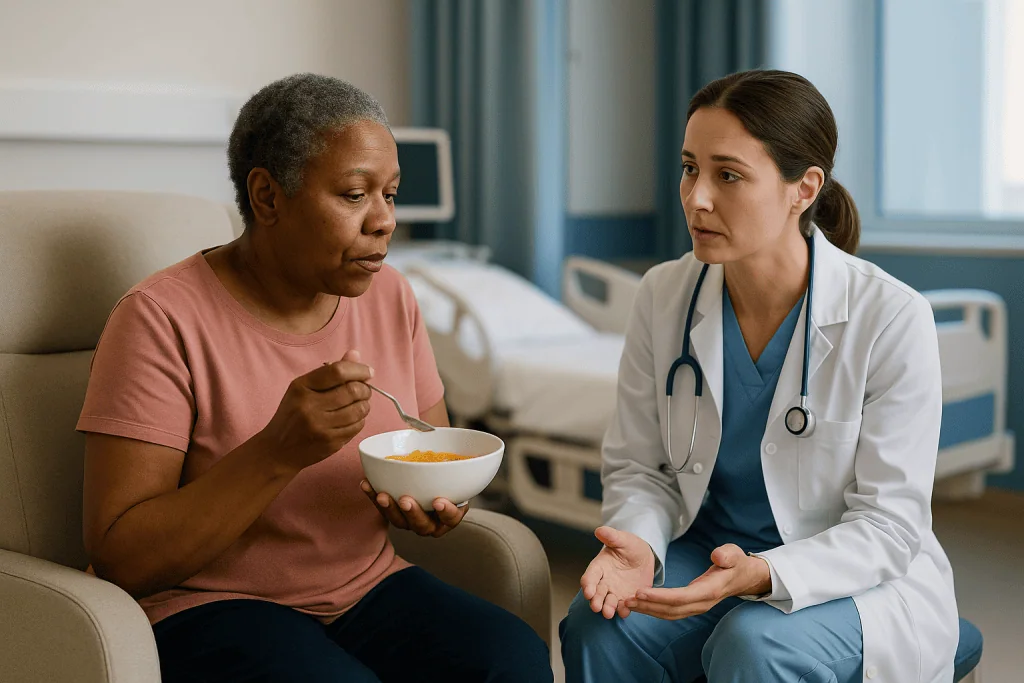
Eligibility is not only about the diagnosis. Teams look at how fast the cancer is growing, because manufacturing takes weeks and the disease must be controllable in the meantime. They assess heart, lung, kidney and liver function, since the side effects described later in this article put real strain on those organs. They check that there are enough healthy T cells to collect; some prior treatments, particularly certain chemotherapies and steroids, temporarily deplete the very cells the lab needs.
Being asked to wait is common and rarely means never. An active infection must be treated first. A recent therapy may need a washout period so it does not damage the collected cells. Blood counts may need to recover. Someone whose disease is progressing rapidly may receive other treatment first and be reassessed.
Practical requirements matter, too. Most programs require a caregiver who can stay with the patient around the clock during the early weeks and lodging close to the treatment center, because neurologic side effects can appear suddenly and the patient may not recognize them. None of these judgments can be made from an article. The treating team weighs them together and revisits them as circumstances change.
Before collection: the checks, the consent conversation and the caregiver plan
The weeks before leukapheresis are busy in an unglamorous way. Expect blood tests that measure organ function and lymphocyte counts, screening for viruses such as hepatitis B, hepatitis C and HIV (required before cells can enter a manufacturing facility), imaging or a bone marrow biopsy to document where the disease stands, and often a heart ultrasound to confirm the heart can tolerate a period of low blood pressure if it arises.
A vein assessment happens at the same time. Leukapheresis needs blood to flow out and back at a steady rate, so the team decides whether your arm veins are large enough for two needles or whether a temporary central catheter, a soft tube placed in a large vein near the neck or chest, is safer.
The consent conversation is longer than most. It should cover the two hallmark side effects, cytokine release syndrome and neurologic toxicity, the likelihood of prolonged low blood counts and infections, the possibility that manufacturing fails or yields too few cells, and the label warnings regulators have added about rare secondary cancers that require long-term follow-up. Ask for this information in writing; there is a great deal of it.
Then comes logistics. Someone will need to be your designated caregiver, learn the warning signs, and be reachable at all hours. You will be given a wallet card identifying you as a CAR-T recipient, to show any clinician you meet for months afterward. Sorting out time off work, childcare and a place to stay near the center before collection day means the medical part, when it comes, has your full attention.
Step 1: Leukapheresis, what collecting your T cells feels like
Leukapheresis is a procedure in which blood is drawn out of the body, passed through a machine that spins it to separate white blood cells, and returned minus the fraction the team wants to keep. Everything else, red cells, platelets, plasma, goes straight back to you. The word comes from the Greek for “taking away white cells,” which is an accurate description of a fairly gentle process.
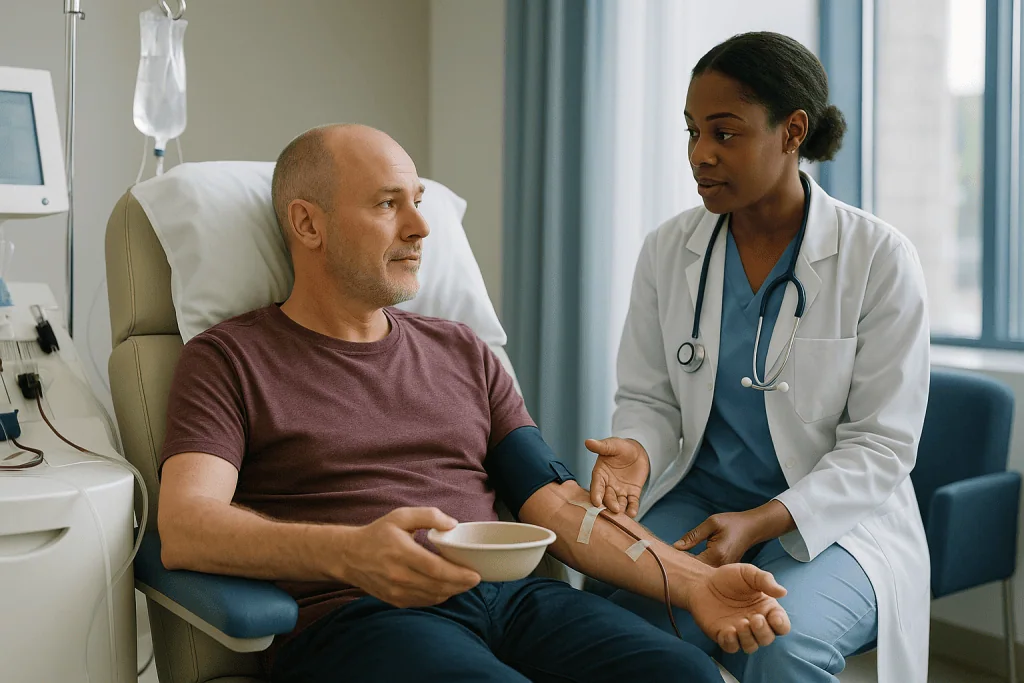
You lie or sit in a reclining chair with a needle in each arm, or a single central line doing both jobs. The Cleveland Clinic describes the collection as taking several hours, and most patients spend the better part of a morning or afternoon in the unit. You are awake throughout. Pediatric patients may have a parent beside them and, depending on age, comfort measures the team explains beforehand.
The most common sensation is tingling around the lips and fingertips. The machine adds an anticoagulant to keep blood from clotting in the tubing, and that anticoagulant temporarily binds calcium in the blood. Tell the nurse; they can adjust the flow or offer calcium, and the feeling fades. Some people feel chilled, some feel lightheaded when the procedure ends and they stand up too fast. Eat a proper breakfast, drink water, and use the restroom before you are connected, because disconnecting mid-run is inconvenient.
When the machine finishes, the bag of collected cells is labeled, checked, and either processed fresh or frozen for shipping to the manufacturing site. Occasionally a second day of collection is needed to reach the required cell number. From this point, your job is mostly to wait.
Step 2: Manufacturing, how long does CAR-T therapy take from collection to infusion?
Inside the manufacturing facility, technicians first isolate the T cells from the other white cells in your bag. The cells are activated, essentially woken up, and then exposed to the vector, the disabled virus carrying the gene for the chimeric antigen receptor. The vector inserts that gene into the cell’s own DNA, so every daughter cell inherits the receptor when it divides.
Division is the point of the next phase. The engineered cells are placed in culture and fed growth signals until a small starting population has expanded into hundreds of millions. Quality control follows: tests for sterility, for the proportion of cells actually carrying the receptor, for viability, and for the absence of leftover virus. Only a batch that passes is frozen in liquid nitrogen and shipped back to your center.
How long does this take? The National Cancer Institute describes manufacturing as taking several weeks, and the Cleveland Clinic gives a similar range. Clinicians call the interval from collection to infusion the “vein-to-vein time,” and it varies with the product, the facility’s schedule, and whether the first attempt yields enough cells. Manufacturing does sometimes fail, most often because the collected cells did not grow well; your team will have discussed in advance what happens then.
The waiting period is rarely empty. Many patients receive bridging therapy, treatment given specifically to hold the cancer steady until the cells return. Depending on the disease this might be chemotherapy, radiation to a troublesome area, a targeted drug, or steroids. The choice is a balancing act between controlling disease and preserving your fitness for the infusion, and it belongs to your oncologist.
Step 3: What is lymphodepletion chemotherapy, and why do you receive it?
The name puts patients off, so start with what it is not. Lymphodepletion is not a transplant conditioning regimen designed to wipe out the bone marrow. It is a short course of chemotherapy given in the days before infusion whose purpose is to lower the number of lymphocytes, the family of immune cells that includes T cells, already circulating in your body.
Why would you want fewer immune cells right before receiving immune cells? Think of a crowded meadow. Newly planted seedlings struggle when established plants take the water and light. Your existing lymphocytes compete with the incoming CAR-T cells for the same growth signals, chemical messengers called cytokines, particularly interleukin-7 and interleukin-15. Lowering the resident population frees up those signals, and it also reduces regulatory cells that might dampen the new arrivals. The result is more room and more fuel for the engineered cells to expand once infused.
Both the Cleveland Clinic and Johns Hopkins describe the course as lasting a few days and finishing shortly before infusion day. The specific agents, their sequencing and any adjustments are the prescribing team’s decisions and are not something to compare across centers or patients.
Side effects resemble those of other chemotherapy at moderate intensity: nausea that anti-nausea medicines usually control, fatigue, a temporary drop in blood counts that raises infection and bleeding risk, and sometimes hair thinning. Because your counts fall, this is often the point at which you are asked to avoid crowds and be meticulous about hand hygiene. Fertility can be affected by chemotherapy; if this matters to you, raise it before lymphodepletion, not after.
Step 4: Infusion day: a small bag with a long story
After the weeks of preparation, infusion day is anticlimactic for most people, and clinicians consider that a good thing. The frozen bag is brought to the bedside in a portable liquid-nitrogen container, checked against your identification by two staff members, and thawed in a warm water bath. The cells are then infused through your IV line or central catheter. The Cleveland Clinic notes the infusion itself is quick, usually under an hour, and it looks and feels much like a blood transfusion.
Beforehand, you will typically receive premedication from two familiar classes, an antihistamine and a fever reducer, to lower the chance of an immediate reaction. Many patients notice a peculiar taste or smell, often compared with garlic or creamed corn. That is the preservative used to protect cells during freezing, called DMSO, leaving through your breath. It is harmless and passes within a day.
Whether you stay in the hospital afterward depends on the product, your center’s protocol and your individual risk. Some programs admit patients for a week or more of observation; others run outpatient pathways with daily clinic visits and strict caregiver requirements. Either way, nurses begin the monitoring routine that continues for the coming weeks: temperature, blood pressure, oxygen level, and a brief neurologic check.
Nothing dramatic is expected on day one. The engineered cells need time to find their targets and begin dividing, and the expansion that produces both benefit and side effects peaks over the following week or two. Patients often describe the day as quiet and slightly surreal, months of effort delivered in a bag the size of a paperback.
The first two weeks: cytokine release syndrome, the most common CAR-T side effect
Cytokines are messenger proteins immune cells use to coordinate an attack. When CAR-T cells recognize cancer and multiply, they and the surrounding immune cells release a surge of these messengers. In modest amounts that surge produces flu-like symptoms; in larger amounts it causes blood vessels to leak and widen, dropping blood pressure and oxygen levels. This is cytokine release syndrome, usually shortened to CRS.
Fever is the entry ticket. Under the consensus grading system published by the American Society for Transplantation and Cellular Therapy, CRS is defined by fever and then graded from 1 to 4 according to how much support the blood pressure and breathing require: none for grade 1, fluids or oxygen by nasal cannula for grade 2, medication to raise blood pressure or higher-flow oxygen for grade 3, and intensive support such as a ventilator for grade 4. The National Cancer Institute and Cleveland Clinic both describe onset most often within the first week or two after infusion, though timing differs between products.
Treatment is layered. Mild cases are managed with fluids, fever control and close observation. If symptoms escalate, teams commonly use tocilizumab, an antibody that blocks the receptor for interleukin-6, one of the key cytokines driving the syndrome, and corticosteroids, which broadly quiet immune activity. When and whether to use these is a clinical judgment made hour by hour by the treating team.
A myth worth addressing here: a high fever does not mean the therapy is “working better.” Studies have looked for that link, and the relationship between CRS severity and cancer response is inconsistent. The absence of fever is not a bad sign, and its presence is not a good one; it is simply a signal that needs managing.
Neurologic side effects (ICANS): what nurses are checking when they ask you to write a sentence
Several times a day after infusion, a nurse will ask you what year it is, name a few objects, ask you to count backward, follow a simple command and write a sentence on a card. This is the ICE score, Immune Effector Cell-Associated Encephalopathy, and it screens for the second hallmark toxicity of CAR-T, called ICANS, short for immune effector cell-associated neurotoxicity syndrome.
ICANS is thought to arise when cytokines and immune cells disturb the barrier between blood and brain. Early signs are subtle: hunting for words, slightly disorganized handwriting, unusual drowsiness or a tremor. More severe forms bring confusion, difficulty speaking, seizures and, rarely, brain swelling. The same consensus grading paper that defines CRS grades ICANS by the ICE score together with level of consciousness, seizures, movement changes and signs of raised pressure in the brain.
Timing tends to overlap with or follow CRS, again within the first weeks. Many patients never develop it; those who do usually recover fully as the inflammation settles. Corticosteroids are the main treatment, and some teams give an anti-seizure medicine preventively during the highest-risk window. Both are decisions for your clinicians.
Two consequences follow for daily life. First, you are asked not to drive or operate machinery for a period the Cleveland Clinic puts at roughly eight weeks after infusion, because a neurologic change can arrive without warning. Second, your caregiver becomes a monitoring device. Confusion is invisible from the inside; the person who notices that you cannot find the word for “cup” is the person sitting beside you. That is why the caregiver requirement is not paperwork but part of the safety system.
The CAR-T cell therapy process timeline at a glance
Timelines vary with the product, the cancer and the individual, so the ranges below are typical rather than promised. They draw on descriptions from the National Cancer Institute, the Cleveland Clinic and Johns Hopkins and are meant to help you see the shape of the journey.
| Stage | What happens | Typical timing | Where you usually are |
|---|---|---|---|
| Evaluation | Blood tests, imaging, organ-function checks, consent, caregiver plan | Days to a few weeks | Outpatient clinic |
| Leukapheresis | Your T cells are collected from the blood | Several hours, occasionally a second day | Apheresis unit |
| Manufacturing and bridging | Cells engineered, expanded, tested, frozen; cancer held steady meanwhile | Several weeks | Home, with clinic visits |
| Lymphodepletion | Short course of chemotherapy to make room for the new cells | A few days, ending shortly before infusion | Clinic or hospital |
| Infusion | Thawed cells given through a vein | Usually under an hour | Hospital or infusion unit |
| Close monitoring | Daily checks for CRS and ICANS | First weeks after infusion | Inpatient or near the center with caregiver |
| Recovery and follow-up | Blood counts recover, infection precautions, response assessment | Months, with long-term follow-up for years | Home, with scheduled visits |
Two things stand out. The infusion, the moment everyone pictures, is the shortest step. The waiting, during manufacturing and again during recovery, is the longest, and it is where practical preparation pays off. Plan for the months, not the hour.
CAR-T cell therapy recovery time: what the following weeks and months usually look like
The acute phase ends, but recovery does not follow a switch. The Cleveland Clinic and Johns Hopkins both describe a requirement to remain close to the treatment center for about four weeks after infusion, with a caregiver present, so that a late fever or a neurologic change can be assessed within hours. During this window life is deliberately small: temperature checks, daily or near-daily visits, and rest.
Blood counts are the next hurdle. Low white cells, red cells and platelets, together called cytopenias, can persist for weeks and sometimes months after CAR-T, longer than lymphodepletion alone would explain. Transfusions and growth-factor injections are used when the team judges them necessary. Fatigue tracks these counts and often outlasts them; many people describe needing an afternoon rest well into the third or fourth month.
There is a specific immune cost to CD19-directed therapy. Because healthy B cells carry the same marker as the cancer, the engineered cells remove them too. B cells make antibodies, so antibody levels fall, and infection risk rises. Teams monitor immunoglobulin levels and may recommend replacement infusions of pooled antibodies; they will also decide when it is appropriate to give or repeat vaccinations, since a body without B cells cannot respond to them.
Assessing whether the treatment is working happens through imaging or bone marrow tests in the first months, on a schedule your oncologist sets. Returning to work or school depends on the job, the blood counts and the person, and is a conversation rather than a date. Long-term follow-up continues for years, both to watch for relapse and because regulators require monitoring of anyone who has received a gene-modified cell product.
What people often get wrong about CAR-T
The first misunderstanding is that CAR-T is a single event. The infusion takes less than an hour, but the process spans months and demands more logistical planning than most chemotherapy regimens. Patients who expect a one-day treatment are blindsided by the caregiver requirement and the weeks near the center.
The second is that it is a transplant. It is not. The cells are your own, so there is no donor search and no graft-versus-host disease, the complication in which donated immune cells attack the recipient’s body. The chemotherapy before infusion is lighter than transplant conditioning and serves a different purpose.
Third, “it’s my own cells, so there are no side effects.” Cytokine release syndrome and neurologic toxicity are direct consequences of the cells doing their job, and prolonged low blood counts and infection risk are the rule rather than the exception.
Fourth, “fever means it’s working.” As discussed above, the evidence does not support using side effects as a scorecard.
Fifth, “it works for every cancer.” Approved uses are confined to specific blood cancers. Solid tumors present obstacles, finding a marker unique to the tumor, getting cells into dense tissue, overcoming a suppressive tumor environment: that remain active research problems, according to the National Cancer Institute.
Sixth, and most delicate: the belief that a good early response settles the matter. Some people achieve remissions that last for years. Others relapse, sometimes because the cancer stops displaying the target marker, sometimes because the cells do not persist. Honest teams describe the treatment as one that can control disease, with follow-up designed precisely because no one can yet predict which path an individual will take.
Questions to ask your care team
A consultation about CAR-T covers an unusual amount of ground, and it is easy to leave with more paper than clarity. Bringing a written list, and someone to take notes, helps. The questions below are a starting point; your own situation will add others.
- Which marker will the engineered cells target, and what happens if my cancer stops displaying it?
- How long do you expect the interval from collection to infusion to be, and what bridging therapy, if any, would you recommend during that time?
- What is your plan if the manufacturing attempt does not produce enough cells?
- Will my infusion and early monitoring be inpatient or outpatient, and how far from the center do I need to stay, for how long?
- What exactly should my caregiver watch for, and whom do they call at 3 a.m.?
- How will lymphodepletion chemotherapy affect my blood counts, fertility and daily life in the week before infusion?
- How do you grade and treat cytokine release syndrome and neurologic toxicity, and what would prompt an intensive care admission?
- How long might my blood counts and antibody levels stay low, and how will infections be prevented and monitored?
- When will vaccinations be reviewed, and which ones will I need again?
- How and when will you assess whether the treatment is working, and what are the options if it is not?
- What long-term follow-up is required, and for how many years?
- Is there a clinical trial relevant to my situation, and how would it differ from standard treatment?
None of these questions has a universal answer. The value lies in hearing how your team reasons about your case, and in making sure the plan on paper matches the life you will be living while it unfolds.
When to call your doctor: red-flag signs after CAR-T
The single most important rule after infusion is this: a temperature of 100.4°F (38°C) or higher is a phone call to your CAR-T team, immediately, at any hour. Do not take a fever reducer first unless you have been specifically told to; it can mask the sign the team needs to grade what is happening. Fever is the defining feature of cytokine release syndrome and also the earliest sign of infection in someone with low white cells, and both need urgent assessment.
Call just as promptly for chills or shaking, shortness of breath or a new cough, dizziness, fainting or a racing heartbeat, which can indicate falling blood pressure. Any change in thinking or behavior belongs on the list: confusion, trouble finding words or speaking clearly, handwriting that suddenly looks different, unusual sleepiness, tremor, a severe headache, or a seizure. These are the early signs of ICANS, and caregivers should be told to call on the patient’s behalf rather than wait to be asked.
Bleeding that does not stop, widespread bruising, blood in urine or stool, persistent vomiting or diarrhea, or a new rash also warrant a same-day call, given how low platelet counts and immune defenses can fall.
If you develop these symptoms while away from your center, which is why teams ask you to stay within reach for the first weeks, go to the nearest emergency department and show your wallet card. It tells clinicians you have received CAR-T and that ordinary treatment pathways for fever or confusion may not apply. Emergency staff can then contact your team, who remain the people making every decision about your care.
Frequently asked questions
How long is the whole process of CAR-T cell therapy?
From first evaluation to the end of close monitoring, the CAR-T process usually spans two to three months, though every stage varies. Evaluation takes days to weeks, manufacturing typically takes several weeks according to the National Cancer Institute, lymphodepletion lasts a few days, and most centers ask patients to stay nearby for about four weeks after infusion. Recovery of blood counts and energy continues for months beyond that.
How long does it take to recover after CAR-T cell therapy?
Most people need several months before energy and blood counts return to a stable baseline, and some effects on the immune system last longer. The first four weeks involve daily monitoring near the treatment center. Fatigue commonly persists into the third or fourth month, low blood counts can take weeks to months to recover, and antibody levels may remain low for many months, requiring infection precautions and follow-up.
Can CAR-T cell therapy get rid of cancer for good?
No one can promise that for an individual patient. Some people achieve remissions that last years, while others relapse, sometimes because the cancer stops displaying the target marker or because the cells do not persist. Clinicians describe CAR-T as a treatment that can control certain blood cancers, and long-term follow-up is built into every program precisely because outcomes cannot yet be predicted in advance.
What are the downsides of CAR-T cell therapy?
The main downsides are cytokine release syndrome, neurologic toxicity, prolonged low blood counts and infections, plus the practical burden of weeks near a treatment center with a full-time caregiver. Manufacturing can fail, the disease can progress during the wait, and regulators have added warnings about rare secondary cancers. Your care team will weigh these against the alternatives for your specific situation.
What are the most common CAR-T cell therapy side effects in the first week?
Fever is the most common early sign and marks the start of cytokine release syndrome, followed by chills, low blood pressure, fast heart rate and low oxygen in more significant cases. Neurologic changes such as word-finding difficulty, confusion or drowsiness can appear alongside or after these. Nausea and fatigue from lymphodepletion chemotherapy often overlap with the first days after infusion.
Is leukapheresis painful?
Leukapheresis is generally not painful beyond the needle placement, which feels like a blood draw. The main sensations are tingling around the lips or fingertips from the anticoagulant, feeling cold, and stiffness from sitting for several hours. Patients with a central catheter avoid arm needles entirely. Tell the nurse about tingling promptly; adjusting the flow or giving calcium usually resolves it.
What is lymphodepletion chemotherapy and does it cause hair loss?
Lymphodepletion is a short course of chemotherapy given over a few days before infusion to reduce existing immune cells so the engineered cells can expand. Hair thinning is possible but usually milder than with intensive chemotherapy regimens, and nausea, fatigue and a temporary drop in blood counts are more typical. Specific drugs and schedules are decided by your prescribing team.
Why do I need a caregiver and why can't I drive after CAR-T?
Neurologic side effects can begin subtly and without the patient noticing, so a caregiver serves as an early warning system and a driver to urgent assessment. Confusion or a seizure behind the wheel would be dangerous, which is why the Cleveland Clinic and other centers advise against driving for roughly eight weeks after infusion. Your team will tell you when it is safe to resume.
What happens if my cells cannot be manufactured?
Manufacturing occasionally fails, most often because the collected T cells did not grow well enough or the product did not pass quality tests. Options may include a second collection, an alternative treatment plan, or a clinical trial, depending on how the disease has behaved in the meantime. Teams discuss this possibility during consent so that a backup plan exists before collection begins.
How long do CAR-T cells stay in the body?
Persistence varies widely between people and products. Some engineered cells remain detectable for years and continue to keep healthy B cells suppressed, while in others they fade within months. Longer persistence is generally associated with ongoing B-cell aplasia and low antibody levels, which is one reason teams monitor immunoglobulins and infection risk long after the acute phase ends.
This article is for general information only and is not a substitute for professional medical advice. Please consult a qualified doctor about your individual situation.

More from the Blog

Targeted Therapy for Chronic Myeloid Leukemia: How Daily Treatment and Monitoring Work
Targeted therapy for chronic myeloid leukemia uses daily oral tyrosine kinase inhibitors (TKIs) that block BCR-ABL1, the abnormal enzyme driving the disease. Treatment is…
Why a Dental Assessment Comes Before Head Cancer Radiotherapy and What It Involves
A dental assessment before head and neck radiotherapy is a specialist check of the teeth, gums and jaw carried out before treatment starts. Radiation…

What Happens After TURBT? How Pathology Results and Follow-Up Cystoscopy Guide the Next Steps
After TURBT, the removed tissue goes to a pathologist, whose report on stage, grade and the presence of bladder muscle in the sample decides…
Bone Marrow Transplant in Older Adults: Reduced-Intensity Conditioning and What Age Changes
Older adults can and do receive bone marrow transplants; fitness, organ function and the specific blood cancer matter more than a birthday. Reduced-intensity conditioning…

Who May Be a Candidate for HIPEC? Peritoneal Spread, Imaging and the Surgical Evaluation
People considered for HIPEC usually have cancer confined to the lining of the abdomen, a primary tumor type where the approach is supported by…
Your First Chemotherapy Infusion Day: Check-In, Blood Work, Pre-Medication and the Infusion
On a first chemotherapy infusion day, most people check in, have weight and vital signs recorded, give a blood sample, and wait for results…