

Cavities in Adults: Why They Still Happen and Whether Early Decay Can Reverse

Key Takeaways
- Enamel starts dissolving below a plaque pH of about 5.5, and every sugary sip or bite restarts a 20 to 30 minute acid attack, so frequency of sugar matters more than total amount.
- About 90 percent of US adults aged 20 to 64 have had cavities and roughly one in four has untreated decay, so a new filling in midlife is common rather than a sign of failure.
- Early decay with an intact enamel surface can remineralize and arrest; once the surface breaks or decay reaches dentin, no paste, diet or supplement can reverse it.
- Fluoride toothpaste has high-certainty trial evidence for roughly one-quarter fewer cavities, while hydroxyapatite pastes rest on a few small, low-certainty studies.
- Root surfaces begin to dissolve at a pH near 6.2 to 6.7, which is why receding gums and dry mouth make cavities accelerate after 60.
- Spitting out toothpaste without rinsing leaves fluoride on enamel for hours, a free habit the NHS specifically recommends.
Cavities still happen in adults because bacteria in plaque turn sugars into acid, and when acid attacks outnumber saliva's repair cycles, enamel loses mineral faster than it regains it. Early decay, the chalky white-spot stage with an intact surface, can remineralize and arrest with fluoride, daily plaque removal and fewer sugar exposures. Once the surface breaks or decay reaches dentin, it cannot reverse and needs a dentist.
The search spike started with a toothpaste. Through 2025 and into early 2026, short videos promising that fluoride-free pastes “regrow enamel,” a change in community water fluoridation policy in several US states, and a widely shared October 2024 Cochrane review on fluoridated water all collided in the same feeds. The result, as of early 2026, is a wave of adults asking two questions at once: why do I still get cavities at 38, and can a small one heal on its own?
Picture the appointment. You floss most nights, you gave up soda years ago, and the hygienist still taps a shadow on the X-ray between two molars. It feels like a verdict on your discipline. It usually is not.
Cavities in adults follow a chemistry that cares very little about effort and a great deal about frequency, saliva and time. This piece walks through that chemistry, grades what the trials actually show, and draws the honest line between early decay that can remineralize and decay that cannot.
What changed recently with cavities, fluoride and viral toothpaste claims
Three threads knotted together. First, an October 2024 update of the Cochrane review on water fluoridation reported that studies conducted after 1975, when fluoride toothpaste became widely available, show a smaller added benefit from fluoridated water than the mid-century studies did, and it graded that newer evidence as low certainty. Second, during 2025 several US states changed laws on community water fluoridation, and in May 2025 the US Food and Drug Administration announced a review of prescription fluoride drops and tablets meant to be swallowed by children. Those are ingestible products, a different category from toothpaste, mouth rinse and the varnish a dentist paints on teeth, none of which were part of that announcement.
Third, and loudest, came the toothpaste videos. Pastes built around hydroxyapatite, the calcium phosphate mineral that makes up roughly 96 percent of enamel by weight, were presented as a fluoride-free way to “regrow” teeth. Some clips went further and claimed any cavity can be healed with the right paste and diet.
What did not change is the guidance adults actually receive. The CDC still describes community water fluoridation as a safe and effective public health measure, and the NHS, MedlinePlus and Mayo Clinic continue to recommend brushing twice a day with a fluoride toothpaste as the foundation of preventing cavities. The National Institute of Dental and Craniofacial Research reports that about 9 in 10 US adults aged 20 to 64 have had decay in their permanent teeth, a figure that has barely moved in a decade. The backdrop, then, is a very common disease, an unusually noisy information environment, and a public asking better questions than the videos are answering.
What is the main cause of a cavity?
A cavity is the end product of a tug-of-war that your teeth lose slowly. The players are bacteria, fermentable carbohydrate and time. Plaque, the sticky film that forms on teeth within hours of brushing, is a living biofilm, a structured community of bacteria glued to the surface by sugars they make themselves. When you eat or drink anything containing sugar or refined starch, species such as Streptococcus mutans and lactobacilli ferment it and release acid directly against the enamel.
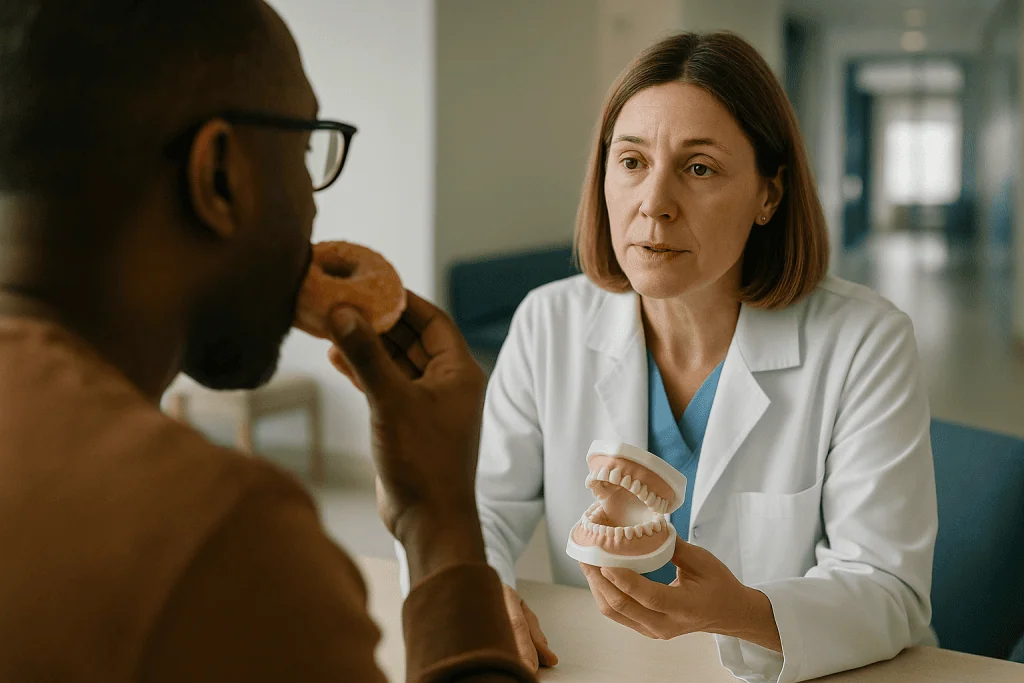
Enamel begins to dissolve when the pH at its surface drops below about 5.5. After a sugary mouthful, plaque pH falls under that line within minutes and typically takes 20 to 30 minutes to climb back, a pattern dentists call the Stephan curve. During that window calcium and phosphate leach out of the crystal structure, a process called demineralization. Once saliva neutralizes the acid, the same minerals drift back in, which is remineralization. Teeth are not inert; they lose and regain mineral every day.
The main cause of a cavity is therefore arithmetic rather than any single food. When acid attacks arrive more often than saliva can repair them, mineral loss accumulates until the surface collapses. Someone who sips a sweetened coffee across a whole morning can do more damage than someone who eats a dessert in five minutes: the first triggers a fresh half-hour acid attack with every sip, the second triggers one. Starchy foods that linger, crackers and chips especially, behave like slow-release sugar once salivary enzymes break them down. Frequency, stickiness and the health of your saliva matter more than the number on a nutrition label.
What causes cavities in adults who brush twice a day?
Adults who brush well still get cavities for reasons that have little to do with willpower. A toothbrush reaches three of the five surfaces on a back tooth; the two that touch neighboring teeth, called interproximal surfaces, are cleaned only by floss or interdental brushes, and most adult cavities seen on X-rays start exactly there. The grooves on molar chewing surfaces are narrower than a single bristle.
Older dental work creates new edges. A filling placed in your twenties can develop a microscopic gap at its margin by your forties, and bacteria colonize that gap as happily as any groove. Decay around existing restorations is among the most common findings in adult mouths.
Gums recede with age and past gum disease, exposing root surfaces that have no enamel at all. Saliva, the mouth’s built-in repair system, declines with many common medicines, with stress and with mouth breathing. Clear aligners worn 22 hours a day trap whatever you drink against the teeth. Reflux softens enamel chemically, which is erosion rather than caries, but softened enamel gives bacteria a head start. Some people inherit thinner enamel or saliva that buffers acid less efficiently; genetics plays a real but modest role.
The strongest single predictor of a new cavity, in study after study, is having had one recently. Past decay signals a mouth where the balance currently favors acid. That is useful rather than discouraging, because a cluster of fillings becomes a prompt to look for a changeable cause: a new medicine, a new snacking habit, a lost retainer, a dry mouth you had not noticed. Dentists call this caries risk assessment, and it matters more than any single product.
How do cavities form, stage by stage?
Decay is a process, not an event, and the stage determines what is possible. Enamel is the hard outer shell; dentin is the softer, tubule-filled layer beneath it; the pulp is the living core of nerve and blood vessels. The table follows a lesion from first mineral loss to abscess.

| Stage | What is happening | Can it reverse? | Usual approach |
|---|---|---|---|
| Initial lesion (white or chalky spot) | Mineral lost beneath an intact enamel surface | Yes: can remineralize and harden | Fluoride, plaque control, fewer sugar exposures, monitoring |
| Enamel cavitation | Surface has broken; a tiny hole exists | No regrowth; progression can often be arrested | Dentist chooses sealing, infiltration or a small filling |
| Dentin involvement | Decay reaches softer dentin and spreads sideways | No | Removal of soft decay, filling |
| Deep dentin near pulp | Sensitivity to cold and sweet; pulp inflammation likely | No | Larger restoration, sometimes a crown or pulp treatment |
| Pulp infection or abscess | Bacteria reach the nerve; pus collects at the root | No | Root canal treatment or extraction |
The pivotal line sits between the first two rows. While the surface is intact, the lesion behaves like a sponge that has lost some stuffing: minerals can be pushed back in through the pores. Once the surface collapses, the sponge is torn, and nothing outside a tooth can lay down new enamel, because the cells that make it disappear before the tooth erupts.
Dentists stage lesions visually and with bitewing X-rays, the small films that show the sides of back teeth. A shadow confined to enamel is often watched rather than drilled, since many such lesions never progress. The decision to intervene depends on depth, your risk profile and whether the surface is cavitated, which an X-ray alone cannot show.
Can cavities reverse? What early tooth decay can and cannot do
The honest answer is yes, within limits, and the limits matter more than the yes. Early tooth decay, meaning the white or chalky spot stage with an intact surface, can remineralize. Fluoride speeds this in two ways: it draws calcium and phosphate back into the weakened crystal lattice, and it converts some hydroxyapatite into fluorapatite, a mineral that does not start dissolving until the pH drops to roughly 4.5 rather than 5.5. A remineralized spot is often more acid-resistant than the enamel around it.
What “reverse” looks like in a mirror is less satisfying than the word implies. An arrested lesion usually stays visible as a white, brown or glossy patch, a kind of scar, because the surface layer repairs first and the deeper porosity fills slowly or incompletely. It is no longer active, it will not become a hole if conditions stay favorable, and it needs no drilling. That is a win, even if it is not a vanishing act.
Three things have to happen for early decay to stop. Acid attacks must become less frequent, the biofilm over the spot must be disrupted daily, and mineral must be available, which in practice means fluoride toothpaste and reasonable saliva flow. Remove any one and the lesion resumes.
What cannot reverse is a cavity in the everyday sense: a break in the surface, or any lesion that has reached dentin. Dentin can lay down a little reparative tissue on its pulp side, but the hole on the outside stays. Claims that a diet or a paste “filled in” a visible cavity describe a misread X-ray, a stained arrested lesion, or a lesion that was never cavitated. Dentists track these spots across visits precisely because active and arrested can only be told apart over time.
How fast do cavities spread?
Slower than fear suggests in enamel, faster than comfort suggests in dentin. Enamel is about 96 percent mineral and extremely dense, so an initial lesion between two teeth typically takes years to work through it. Studies that tracked serial X-rays in fluoridated populations found many enamel lesions needed three to four years or longer to reach dentin, and a sizable share never did. That slow march is why a dentist can responsibly say “let’s watch that one.”
Dentin changes the math. It is roughly 70 percent mineral, the rest collagen and water, and it is threaded with microscopic tubules running toward the pulp. Acid and bacteria travel along those tubules, and the lesion also spreads sideways beneath the enamel, undermining the hard shell above. A pinhole on the surface can hide a cavity the size of a lentil, and a tooth can feel fine right up until a cusp fractures on something soft.
Speed depends on the mouth more than the tooth. Dry mouth after radiation to the head and neck can turn a healthy dentition into widespread decay within a year. Someone sipping sweetened drinks through the day, or a shift worker snacking at 3 a.m. when saliva flow naturally drops close to zero, moves through the stages far faster than someone who eats three meals and drinks water between them.
Bacteria do not jump from tooth to tooth the way a cold spreads between people, but the conditions that caused one cavity act on every tooth at once. Dentists therefore talk about caries as a disease of the whole mouth, and the recall interval they suggest, anywhere from three months to two years under NHS guidance, is a personal risk estimate rather than a universal rule.
What the evidence actually says about preventing and reversing cavities
Grading matters because the word “proven” gets attached to interventions with wildly different support.
Fluoride toothpaste. Dozens of randomized controlled trials involving tens of thousands of participants, pooled in Cochrane reviews, show roughly one-quarter fewer new cavities than non-fluoride paste. This is high-certainty evidence, the strongest in dentistry, and the effect grows with twice-daily rather than once-daily brushing.
Community water fluoridation. Older controlled community studies showed large reductions. The October 2024 Cochrane update found a smaller added benefit in studies since 1975 and rated that contemporary evidence low certainty, largely because the studies are observational. Public health bodies including the CDC continue to recommend it: strong historical evidence, more modest recent evidence.
Fluoride varnish and sealants. Randomized trials, mostly in children and adolescents, show moderate-certainty benefit. Adult-specific trial data are thinner, so adult use rests on extrapolation and expert consensus.
Silver diamine fluoride. Randomized trials in children and in older adults with root decay show it arrests a majority of active lesions: high certainty for primary teeth, moderate for root surfaces. It stains treated decay black.
Hydroxyapatite toothpaste. A handful of small randomized trials, several industry-funded, report similar remineralization of early lesions to fluoride. Certainty is low; no large independent trial exists and no major guideline recommends it over fluoride.
Sugar frequency. Consistent observational data and a WHO systematic review link frequent free-sugar intake to decay. Randomizing people to sugar is not ethical, so this is moderate-certainty observational evidence backed by a well-understood mechanism.
Xylitol gum, probiotics, oil pulling. Low to very low certainty, from small inconsistent trials or none. Any benefit from gum comes mostly from saliva stimulation.
Is having 7 cavities a lot, and are cavities serious?
Seven cavities found at one visit is a lot in the sense that counts: it signals a mouth where the balance has tipped firmly toward acid, and it should trigger a proper risk assessment rather than seven fillings and a handshake. It is not unusual, and it is not a moral failing. Federal survey data show that about 90 percent of US adults aged 20 to 64 have had decay in permanent teeth and roughly one in four has untreated decay at any moment. A cluster often follows a life change: a new antidepressant, a pregnancy, a job with a snack drawer, months of grief when flossing fell away.
Context changes the meaning. Seven tiny enamel lesions on a first visit after eight years without X-rays is a different story from seven dentin cavities in a 30-year-old who was clear 18 months ago. The first may mostly be monitored; the second demands a search for a cause, usually dry mouth or a sipping habit.
Are cavities serious? Individually, early ones are not. Left untreated, they are. Decay that reaches the pulp causes inflammation that ranks among the most intense pains people report, and a dead pulp becomes a reservoir of bacteria at the root tip. From there infection can spread into the jaw, the soft tissues of the face and, rarely, the floor of the mouth or the bloodstream. Dental problems account for roughly two million emergency department visits in the United States each year, visits that can ease pain but cannot repair the tooth.
Beyond acute risk, tooth loss changes how people eat and speak, and poor oral health tracks with worse diabetes control in observational studies. None of that justifies panic. It justifies treating seven cavities as information.
How to prevent cavities as an adult: what matters most
If you change one thing, change how often your teeth meet sugar, not how much. Two coffees with syrup, a mint after lunch, dried fruit at three and a sports drink at the gym add up to eight or more separate acid attacks, each lasting half an hour. Folding the same intake into mealtimes can cut that to three. Water, plain tea and black coffee between meals carry no penalty.
The second priority is fluoride at the right moments. Brush twice a day with a fluoride toothpaste, last thing at night and one other time, for two minutes. Spit out the foam and do not rinse with water afterward; the NHS advises this because rinsing washes away fluoride that would otherwise sit on the enamel for hours. A fluoride mouthwash used at a different time of day adds a third exposure for people at higher risk.
Third, clean between the teeth once a day with floss or interdental brushes, because that is where adult cavities begin and no bristle reaches. Technique matters more than the tool; ask a hygienist to watch you once.
Fourth, protect saliva. Chewing sugar-free gum after meals sharply raises flow for a short period. Stay hydrated, breathe through your nose when you can, and get reflux treated. If a medicine dries your mouth, raise it with the prescriber rather than stopping it.
Fifth, keep the checkups even when nothing hurts. Early lesions are invisible to you and, with risk-based recall and bitewing X-rays, visible to a dentist while they can still remineralize. People at higher risk may be offered varnish, prescription-strength fluoride toothpaste or sealants; those are decisions for the clinician who has seen your mouth.
Dry mouth, medicines and cavities: the hidden midlife risk
Saliva does more than keep food moving. It buffers acid, delivers calcium and phosphate, carries fluoride to the tooth surface and physically rinses away sugar; an adult produces around half a liter to a liter and a half each day. Xerostomia, the medical term for dry mouth, strips that protection away, and it is the single most powerful accelerator of cavities in adults.
Medicines are the commonest reason. Several hundred prescription and over-the-counter drugs list dry mouth as a side effect, among them many antidepressants, antihistamines, decongestants, bladder medicines, some blood pressure treatments and medicines for Parkinson’s disease. The effect stacks: a person taking three such medicines may have markedly less saliva than someone taking one. Radiation therapy to the head and neck can permanently damage salivary glands, and autoimmune conditions such as Sjögren’s syndrome attack them directly. Diabetes, anxiety, dehydration and mouth breathing during sleep all contribute.
The pattern is distinctive. Cavities appear where decay normally spares: along the gumline, on root surfaces, on the smooth front surfaces of lower teeth that saliva usually bathes. They can go from nothing to several teeth within a year, which bewilders patients who have never had a filling.
What helps, in evidence terms, is frequent sips of water, sugar-free gum or lozenges to stimulate whatever gland function remains, a bedside humidifier, avoiding alcohol-based mouthwashes and tobacco, and more frequent fluoride exposure under a dentist’s direction. Saliva substitutes offer comfort more than protection.
What does not help is quietly stopping the medicine. Untreated depression, allergies or high blood pressure carry risks of their own. Tell both your dentist and the prescriber that your mouth is dry; sometimes a change in timing or an alternative within the same class makes a difference, and that call belongs to the prescribing clinician.
Why root cavities rise after 60
Decay has a second act. The National Institute of Dental and Craniofacial Research reports that about 96 percent of US adults aged 65 and older have had cavities, and that roughly one in five has untreated decay. A growing share of it sits not on the crown of the tooth but on the root.
Roots are covered by cementum, a thin layer far softer than enamel, over root dentin. Neither was designed to face the mouth; they are exposed only when gums recede, which happens with age, past gum disease and decades of vigorous brushing. Root surfaces begin to dissolve at a pH of around 6.2 to 6.7, much closer to neutral than the 5.5 threshold for enamel. Acid that enamel shrugs off eats into a root.
Older adults also carry more of the risk factors from the previous section. Medicine lists lengthen, saliva declines, the dexterity needed for flossing can fall with arthritis or stroke, and partial dentures hold plaque against the teeth that support them. Someone who went 40 years without a filling can develop six root cavities in two.
Treatment is harder on roots. Fillings at the gumline are difficult to keep dry while placing and fail sooner. This is where silver diamine fluoride has changed practice. A liquid brushed onto the lesion, it kills bacteria and hardens the decayed surface, arresting most root lesions in randomized trials of older adults without drilling or anesthetic. In the United States it is cleared by the FDA as a tooth desensitizer; using it to arrest decay is a clinical decision the dentist makes with the patient, and it leaves treated decay permanently black, which matters more on a front tooth than a molar.
The quieter lesson is prevention: fluoride that reaches the root, gentle brushing, and a dentist who looks at the gumline, not only the X-ray.
How do dentists treat cavities at each stage?
Modern dentistry treats cavities on a sliding scale, and the first rung is not a drill. An enamel-only lesion in a low-risk mouth is usually recorded, photographed or X-rayed, and reassessed at the next visit. Fluoride varnish painted on at that appointment, plus a change in home habits, often tips it toward arrest.
For lesions that are a little deeper but still uncavitated, two conservative techniques exist. A sealant, a thin resin coating flowed into grooves or over a smooth-surface spot, starves the bacteria beneath of sugar; decay sealed this way stops progressing in trials lasting years. Resin infiltration draws a very fluid resin into the pores of an early lesion between teeth and sets it with light, blocking the pathway for acid without removing tooth structure.
Once the surface has broken or dentin is involved, soft decayed tissue is removed and the space restored, usually with a tooth-colored composite bonded in place. Dentists increasingly leave a thin layer of firm, affected dentin near the pulp rather than drilling to clean hard tooth, because that approach lowers the chance of exposing the nerve. Large cavities that undermine a cusp may need a crown or an onlay to keep the tooth from splitting.
When bacteria have reached the pulp, the options narrow to root canal treatment, which removes the infected pulp and seals the canals, or extraction. Antibiotics have a role only when infection is spreading beyond the tooth; they do not treat the tooth itself.
Which option fits depends on depth, whether the surface is cavitated, your overall risk and your preferences about appearance and longevity. Ask your dentist to show you the X-ray and point to where your lesion sits on this ladder. A good answer will include the word “watch” at least once.
Common myths about cavities
“Only children get cavities.” Adults get more. Decay rates per tooth surface are higher after 50 than in the teenage years, driven by root exposure and dry mouth.
“If it does not hurt, it is not a cavity.” Enamel has no nerve supply and dentin pain is intermittent. Most cavities found on X-rays have caused no symptoms; by the time a tooth aches persistently, the pulp is often already involved.
“Fluoride-free hydroxyapatite paste regrows enamel better than fluoride.” Enamel does not regrow with any paste. Hydroxyapatite has a small number of low-certainty trials suggesting similar remineralization of early lesions; fluoride has decades of high-certainty trials showing fewer cavities. No major guideline recommends abandoning fluoride.
“A cavity can be healed with diet, oil pulling or bone broth.” Cutting sugar frequency genuinely helps early enamel lesions arrest. No diet refills a hole, and oil pulling has no trial evidence for cavities. Nutrition shapes teeth while they form in childhood, not a cavitated adult tooth.
“Sugar-free drinks are safe for teeth.” Safe from caries, since there is nothing to ferment. Many are acidic enough to erode enamel directly, a separate problem that also leaves teeth more vulnerable.
“Brushing harder removes more plaque.” Pressure scrubs away gum and root surface, not biofilm. Plaque is soft; it yields to light pressure applied thoroughly for two minutes.
“Charcoal or baking soda prevents decay.” Both are mild abrasives. Neither adds mineral, and charcoal pastes often contain no fluoride, quietly removing the one proven ingredient.
“A one-time probiotic can make you immune to cavities.” A genetically modified oral bacterium promoted on social media for this purpose has no published randomized trial in humans and no regulatory approval for preventing decay. It is not an approved treatment and not something to self-administer.
When to see a doctor or dentist about cavities
Routine cavities belong to a dentist, and a risk-based recall interval agreed with that dentist, anywhere from three months to two years, is the right rhythm for most adults. Some situations should move you to the front of the queue.
Book a dental appointment promptly if you notice a sharp twinge with cold, sweet or hot that fades within seconds, a visible hole or dark spot, a chipped filling or a rough edge your tongue keeps finding, food packing between two particular teeth, a persistent bad taste, or new sensitivity along the gumline. Each can be an early lesion that is still simple to manage.
Treat the following as urgent, meaning same day or an emergency dental service: toothache that wakes you or lingers for minutes after the trigger is gone, pain on biting, a swelling in the gum beside a tooth, pus or a foul taste, or a tooth that suddenly feels tall.
Go to an emergency department, not a dental office, if facial swelling is spreading toward the eye or down the neck, if swallowing or breathing feels difficult, if you cannot fully open your mouth, or if a dental infection comes with fever, confusion or a racing heart. These signs mean infection has moved beyond the tooth and can escalate within hours.
Tell a physician, not only a dentist, when cavities arrive in a cluster alongside a new medicine, when your mouth is dry enough to wake you at night, when you also have unexplained dry eyes, or when you are starting cancer treatment involving the head and neck. The decision to adjust any medicine for the sake of your teeth rests with the clinician who prescribed it; the dentist’s role is to raise the flag, and yours is to make sure both of them hear it.
Frequently asked questions
What is the main cause of a cavity?
The main cause is repeated acid attacks that outpace saliva’s repair. Bacteria in plaque ferment sugars and refined starches into acid, which pulls calcium and phosphate out of enamel for 20 to 30 minutes after each exposure. When those episodes come more often than remineralization can keep up, mineral loss accumulates until the surface collapses. How often you eat sugar matters more than how much.
Can cavities reverse on their own?
Only the earliest stage can. A white or chalky spot with an intact surface can remineralize and harden when sugar exposures drop, plaque is removed daily and fluoride is available, usually leaving a visible but inactive patch. A cavity with a broken surface or decay in dentin cannot reverse and needs a dentist, who may still be able to arrest it without a large filling.
Is having 7 cavities a lot?
Seven cavities at one visit is a lot in the sense that it signals a high-risk mouth, though it is not rare. It should prompt a search for a cause such as a new medicine causing dry mouth, frequent sipping of sweet drinks or a lapse in flossing, alongside the repairs. Seven shallow enamel lesions and seven deep dentin cavities carry very different meanings.
Are cavities serious if they don't hurt?
Painless cavities can still be serious because enamel has no nerves and most decay is found on X-rays before symptoms appear. Untreated, decay reaches the pulp, causing severe pain and infection that can spread into the jaw and face. Early, painless lesions are the easiest to manage, which is the strongest argument for checkups when nothing feels wrong.
How do I stop my cavities from getting worse?
Reduce how often sugar touches your teeth, brush twice daily with fluoride toothpaste and spit without rinsing, clean between teeth once a day, and protect saliva with water and sugar-free gum. Those steps can arrest early enamel lesions. Lesions already into dentin will not stop on their own; a dentist can seal, infiltrate or fill them before they deepen.
What causes cavities in adults with good oral hygiene?
Most adult cavities start between teeth, where brushing does not reach, or around the edges of older fillings. Dry mouth from medicines, receding gums that expose roots, all-day sipping of sweetened drinks, reflux-softened enamel and clear aligners worn with drinks all raise risk regardless of how well someone brushes. Having had a recent cavity is itself the strongest predictor.
How to prevent cavities between teeth?
Clean between teeth once a day with floss or interdental brushes, because the surfaces that touch neighboring teeth are invisible to a toothbrush and are where most adult cavities begin. Fluoride toothpaste used twice daily without rinsing, fewer sugar exposures and regular bitewing X-rays, which show those surfaces, complete the approach. Early lesions there often arrest if caught.
How fast does a cavity spread?
In enamel, typically over years; studies following X-rays found many lesions took three to four years or more to reach dentin, and some never did. Once decay enters softer dentin it spreads faster and sideways beneath the enamel. Dry mouth, frequent sugar and night snacking can compress that timeline into months, which is why recall intervals are tailored to risk.
Does hydroxyapatite toothpaste work as well as fluoride?
The evidence is not strong enough to say so. A few small randomized trials, several industry-funded, suggest hydroxyapatite can remineralize early lesions comparably, but certainty is low and no large independent trial exists. Fluoride toothpaste has decades of high-certainty trials showing roughly one-quarter fewer cavities. No major guideline recommends switching away from fluoride.
Can early tooth decay be fixed without a filling?
Often, yes. Early tooth decay confined to enamel with an intact surface may be monitored and treated with fluoride varnish, sealants or resin infiltration, none of which involve drilling. For root lesions in older adults, silver diamine fluoride can arrest decay without anesthetic, though it stains the spot black. Which option fits is a decision for the dentist who has examined the tooth.
References
- NHS: Tooth decay
- MedlinePlus: Tooth Decay
- CDC: About Community Water Fluoridation
- NIH NIDCR: Dental Caries (Tooth Decay) in Adults (Ages 20 to 64 Years)
This article is for general information only and is not a substitute for professional medical advice. Please consult a qualified doctor about your individual situation.

More from the Blog

Mouth Ulcers: Why They Recur and When They Need a Doctor
Mouth ulcers, often called canker sores, are shallow breaks in the lining of the mouth that usually heal on their own within one to…

Mouthwash: Does It Help or Harm the Oral Microbiome?
Mouthwash can help or disturb the oral microbiome depending on its active ingredient. Fluoride rinses strengthen enamel without killing bacteria and have the strongest…

Eye Vitamins and Lutein: What the AREDS Trials Actually Showed
The AREDS trials showed that a specific antioxidant and zinc formula modestly slows progression in people who already have intermediate age-related macular degeneration, and…
Electric Toothbrushes, Water Flossers and Floss: What Dental Trials Show
Randomized trials pooled in a Cochrane review found that electric toothbrushes remove modestly more plaque and reduce gum inflammation slightly more than manual brushes,…

Receding Gums: Causes, Whether They Grow Back and the Treatments That Help
Receding gums happen when gum tissue pulls away from a tooth and exposes more of its root, most often because of gum disease, aggressive…
Earwax Removal: Safe Methods, the Cotton-Bud Problem and Why Ear Candling Is Dangerous
Earwax removal is rarely necessary because the ear canal cleans itself, but when wax blocks hearing or causes discomfort, the safest home approach is…