

Diabetes and Dental Implants: What Good Glucose Control Makes Possible

Key Takeaways
- Implant survival in people with well-controlled diabetes typically exceeds 95 percent at five years, statistically similar to people without diabetes in multiple systematic reviews.
- A1C measures your average glucose over roughly three months, so the preparation window before implant surgery starts about 90 days out, not the week before.
- Dental implants are not 'rejected' like transplanted organs; titanium is biologically inert, and failures trace to infection or incomplete bone integration instead.
- In studies of elevated A1C, implants often still integrated successfully but needed up to twice the usual healing time, which is why surgeons extend timelines rather than refuse outright.
- Peri-implantitis, not early failure, is the bigger long-term threat with diabetes, with pooled analyses reporting risk roughly 50 percent higher or more when glucose runs high.
- Fever above 100.4°F, spreading swelling, a loose implant, or pus at the site warrants a same-day call, and unexplained glucose spikes can signal an oral infection before the mouth feels wrong.
Most people with diabetes can receive dental implants successfully when blood glucose is well managed. Studies report implant survival above 90 percent over several years in people with well-controlled diabetes, approaching rates seen in people without the condition. Poorly controlled glucose slows bone healing and raises infection risk, so dental teams generally ask for a stable A1C and a coordinated plan with your physician before scheduling surgery.
The question usually arrives quietly, somewhere between the glucose log and the dinner dishes: a molar that finally gave out, a consultation brochure on the counter, and a nagging worry that the word diabetes on your chart will end the conversation before it starts. A generation ago, it often did. Many dentists treated diabetes as a near-automatic no.
The evidence has moved on, and it’s worth saying plainly: the deciding factor was never the diagnosis. It was the number attached to it. Bone cells, gum tissue, and the tiny blood vessels that feed them all behave differently at an A1C of 6.8 than at 9.5, and the research on implant survival reflects that difference with surprising consistency.
What follows is the honest version of the story, where glucose control genuinely opens doors, where real limits remain, and which warning signs deserve a same-day phone call rather than a wait-and-see shrug.
Can you get dental implants if you have diabetes?
Yes, in most cases, and that answer is grounded in decades of clinical follow-up, not optimism. Diabetes was once listed among the classic contraindications for implant surgery, alongside heavy smoking and jaw radiation. Long-term studies gradually dismantled that blanket rule. When researchers tracked implants in people with well-managed diabetes, survival rates repeatedly landed in the same neighborhood as everyone else’s: typically above 90 percent at five years, and often above 95 percent.
The modern consensus, reflected in guidance from institutions such as the Cleveland Clinic and Mayo Clinic, treats diabetes as a modifiable risk factor rather than a disqualifier. That distinction matters. A risk factor invites a plan, stabilize glucose, treat gum disease first, extend healing time, tighten follow-up. A disqualifier ends the discussion. For the large majority of people with diabetes, the discussion stays open.
There is a genuine exception, and it deserves equal honesty: persistently uncontrolled hyperglycemia. When A1C runs high month after month, the biological machinery an implant depends on, bone formation, immune defense, small-vessel circulation, works measurably worse. Most surgeons will pause, not because they doubt you, but because the odds of early failure and infection climb in ways the data makes hard to ignore.
So the practical question isn’t “Do I have diabetes?” It’s “Where has my glucose been living for the past three months, and what am I willing to do about it before surgery?” The rest of this article unpacks exactly that.
Why blood sugar and bone healing are so tightly linked
A dental implant succeeds through a process called osseointegration, living bone growing directly onto the titanium surface until the post is locked in place like a fence post set in concrete. That process is metabolically expensive. It demands well-fed bone-building cells (osteoblasts), brisk blood flow, and an immune system sharp enough to keep bacteria out of a fresh surgical site in the wettest, most microbe-rich environment in your body.
Chronically elevated glucose interferes on all three fronts:
- Bone cells slow down. High glucose impairs osteoblast function and encourages the formation of advanced glycation end products, sticky, sugar-modified proteins that stiffen bone matrix and disrupt normal remodeling.
- Small vessels underperform. The same microvascular changes that threaten eyes and kidneys in diabetes also reduce blood supply to healing gum and jawbone, delivering less oxygen and fewer nutrients exactly when demand peaks.
- Immune cells lose their edge. Neutrophils, the first responders against oral bacteria, move, engulf, and kill microbes less effectively in a high-glucose environment, which is one reason the CDC flags gum infections as more common and more severe in people with diabetes.
None of this is destiny. These effects track with glucose levels, not with the diagnosis itself. Bring average glucose into a healthy range and bone metabolism, circulation, and immune function all improve, which is precisely why the research on well-controlled diabetes reads so differently from research on uncontrolled diabetes.
What the research actually shows about implant survival
Here is where honesty beats marketing. Systematic reviews pooling thousands of implants in people with diabetes report survival rates roughly between 86 and 98 percent across follow-up periods of one to several years. The spread is wide because the studies mix everything together, tight control and poor control, smokers and nonsmokers, meticulous flossers and reluctant ones.
Separate the data by glucose control and the picture sharpens considerably:
- Well-controlled diabetes: Multiple reviews find no statistically significant difference in implant survival compared with people who don’t have diabetes. Five-year survival commonly exceeds 95 percent.
- Poorly controlled diabetes: Early failures rise, infections at the surgical site occur more often, and osseointegration takes longer. In some studies, implants in people with elevated A1C needed roughly twice the usual time to reach full stability in bone.
One nuance worth knowing: several studies of moderately elevated A1C found that implants still integrated eventually: the timeline simply stretched. That finding has pushed many clinicians away from rigid cutoffs and toward individualized planning: longer healing periods, delayed loading of the crown, and closer monitoring rather than outright refusal.
The evidence is weaker on very long horizons. Ten- and fifteen-year data specific to diabetes remain limited, and what exists suggests the bigger long-term threat isn’t the implant failing to take: it’s peri-implantitis, the slow inflammatory bone loss around an established implant, which we’ll cover shortly. The takeaway from the literature is neither “perfectly safe” nor “too risky.” It’s conditional: control the glucose, and the numbers move decisively in your favor.
Is there a magic A1C number for implant surgery?
People want a single threshold, and clinicians resist giving one, for a defensible reason. The evidence doesn’t reveal a cliff where success suddenly collapses at one specific A1C. It shows a gradient: risk creeps upward as average glucose rises, steepening noticeably once A1C climbs past the 8 percent range. Still, patterns in common clinical practice are worth knowing before your consultation.
| A1C range | What it generally reflects | How dental teams commonly respond |
|---|---|---|
| Below 7% | Average glucose near 154 mg/dL or lower; healing capacity close to normal | Standard implant protocol, routine follow-up |
| 7% to 8% | Moderate elevation; healing may be somewhat slower | Often proceed, with extended healing time and closer monitoring |
| Above 8% | Sustained hyperglycemia; higher infection risk, delayed bone integration | Frequently recommend improving control first, in coordination with your physician |
Two caveats keep this table honest. First, A1C is a three-month average, so a single reading taken after a recent lifestyle change may not reflect the glucose environment your bone experienced. Second, A1C isn’t the whole file: a person at 7.4 percent with healthy gums and no tobacco use may be a stronger candidate than someone at 6.9 percent with untreated periodontitis. Ask your surgeon how they weigh the full picture, and expect them to want a recent lab result, not last year’s.
Does type 1 or type 2 diabetes change the picture?
Less than most people assume. The bone and the bacteria don’t check which type of diabetes appears on your chart; they respond to the glucose actually circulating in your blood. Research comparing implant outcomes by diabetes type finds that glycemic control predicts success far better than the diagnostic label does.
That said, a few practical differences exist. Type 1 diabetes typically begins earlier in life, which can mean more cumulative years of glucose exposure by the time implants become relevant, and duration of diabetes correlates with microvascular changes that affect healing. People with type 1 also face a different set of glucose-management challenges around surgery itself, since fasting, stress hormones, and altered eating after oral surgery can swing blood sugar in both directions. Coordinating the surgical schedule with your endocrinologist or primary care physician matters more, not less.
Type 2 diabetes brings its own frequent companions, higher rates of gum disease at diagnosis, and sometimes years of undetected hyperglycemia before treatment began. A thorough periodontal exam before implant planning catches problems that quietly undermine implants later.
The encouraging bottom line comes up in study after study: a person with type 1 diabetes and an A1C of 6.8 is, from the implant’s perspective, a better bet than a person with type 2 at 9.2. Control is the currency. Type is mostly a footnote.
What disqualifies you from dental implants?
Genuine disqualifiers are rarer than the internet suggests, but they exist, and pretending otherwise helps no one. Factors that lead most surgeons to decline or postpone implant surgery include:
- Uncontrolled diabetes. Sustained A1C well above the 8 percent range, especially with recent infections or poor wound healing, typically means improving control comes first.
- Active, untreated gum disease. Placing an implant into a mouth with ongoing periodontitis is like building on a flooded foundation; the same bacteria attack implants.
- Insufficient jawbone that can’t be rebuilt with grafting, though grafting solves this more often than not.
- Certain medications that alter bone turnover, including some prescribed for osteoporosis or cancer, which carry a risk of serious jawbone healing problems after oral surgery. Your surgeon needs your complete medication list.
- Prior radiation therapy to the jaw, which permanently reduces the bone’s blood supply.
- Heavy smoking, which impairs blood flow and roughly doubles failure risk in many studies, and multiplies risk further when combined with diabetes.
- Conditions or treatments that significantly suppress the immune system, or serious illnesses that make elective surgery unwise until stabilized.
- Still-growing jaws. Implants are generally deferred until skeletal growth is complete, usually by the late teens.
Notice what’s on that list and what isn’t. Age alone doesn’t appear, healthy people in their eighties receive implants routinely. Diabetes appears only with the modifier uncontrolled. Most items are either treatable, temporary, or manageable with planning, which is why a “no” from one consultation is often a “not yet” in disguise.
Who should wait, even if they technically qualify?
There’s a meaningful gap between “eligible” and “ready,” and the people who respect that gap tend to keep their implants for decades. Consider waiting if any of the following describes you right now:
- Your A1C has been drifting upward. Even if today’s number squeaks under a clinic’s threshold, an unstable trend suggests the healing months ahead may unfold in a worse glucose environment than the surgery itself.
- You’re within a few months of major diabetes treatment changes. New medication regimens, new continuous glucose monitors, and new routines all need time to settle before adding surgical stress.
- Your gums bleed when you brush. Bleeding gums signal active inflammation. Periodontal treatment first, implants second: the order isn’t negotiable if you want the long-term numbers on your side.
- You smoke and intend to quit “eventually.” Quitting before surgery, even weeks before, measurably improves healing. Doing it afterward forfeits the benefit during the most vulnerable window.
- You can’t commit to follow-up visits. Implants in people with diabetes do best with professional cleanings and monitoring every three to six months. If life circumstances make that impossible for the next year, a temporary solution may serve you better.
Waiting isn’t failure. An implant placed six months later into a healthier mouth routinely outperforms one rushed into a struggling one, and the bone doesn’t care about the calendar.
How diabetes changes healing after implant surgery
Expect the same milestones, on a potentially slower clock. In a person without diabetes, soft tissue over an implant site typically closes within one to two weeks, and osseointegration solidifies over three to six months. With well-controlled diabetes, that timeline often holds. With moderate elevation, studies have documented integration periods stretching notably longer: the bone gets there, but it takes the scenic route.
Three healing realities deserve particular attention:
- The first two weeks matter most for infection. High glucose blunts the immune response exactly when bacteria have their best access to the surgical site. This is when meticulous hygiene, per your surgeon’s instructions, pays its biggest dividend, and when glucose monitoring deserves extra vigilance, since surgical stress itself can push blood sugar upward.
- Dry mouth compounds the problem. Diabetes and several common medications reduce saliva, and saliva is the mouth’s built-in rinse cycle. Less of it means more bacterial buildup around healing tissue. Frequent water, and saliva substitutes if your dentist recommends them, are small habits with outsized impact.
- Loading may be delayed on purpose. Many surgeons wait longer before attaching the final crown to an implant in a patient with diabetes, giving bone extra time to lock in. A slower schedule here is a feature, not a criticism.
Eating also requires a plan. Soft foods for days to weeks can disrupt carbohydrate routines, so talk with your physician or diabetes educator beforehand about adjusting meals around surgery, improvising afterward is how glucose swings happen.
Peri-implantitis: the long-game risk that deserves more attention
Most articles about diabetes and implants fixate on whether the implant will “take.” That’s the wrong place to spend all your worry. Early failure is uncommon with reasonable glucose control; the quieter, longer threat is peri-implantitis, chronic bacterial inflammation around an established implant that gradually destroys the supporting bone.
Think of it as gum disease’s cousin, adapted to titanium. It starts as peri-implant mucositis: red, swollen, bleeding tissue around the implant, still reversible with professional cleaning and better home care. Left alone, it advances into the bone, and lost bone around an implant does not regenerate on its own. Advanced peri-implantitis is the leading reason implants are removed years after successful placement.
Diabetes tilts this battlefield. Elevated glucose feeds the inflammatory response, weakens the immune counterattack, and, through reduced saliva, helps bacterial plaque accumulate. Analyses pooling multiple studies have reported peri-implantitis rates roughly 50 percent higher, and in some datasets nearly double, in people with hyperglycemia compared with people without. The risk tracks with control: someone holding a healthy A1C for years looks far more like the general population than those numbers suggest.
The defense is unglamorous and effective. Twice-daily brushing, daily cleaning between teeth and around the implant, professional maintenance visits every three to six months, and glucose management as the ongoing foundation. An implant is not a fire-and-forget purchase; it’s a structure you maintain. People with diabetes who accept that framing keep their implants at rates the early skeptics never predicted.
What are the signs that my body is rejecting dental implants?
First, a correction that genuinely matters: your body does not reject dental implants the way it can reject a transplanted organ. Titanium is biologically inert: the immune system doesn’t recognize it as foreign tissue and mount an attack. True titanium allergy is extraordinarily rare. When an implant fails, the culprit is almost always infection or a failure of bone to integrate, not “rejection.” That distinction changes what you watch for and what can be done about it.
Signs of trouble worth reporting to your dental team promptly:
- A loose or shifting implant. A properly integrated implant should feel as immovable as a natural tooth root. Any perceptible movement is significant.
- Pain that persists or returns. Discomfort in the first days after surgery is expected. Pain that continues beyond the timeline your surgeon described, or that appears weeks or months later, is not.
- Swelling, redness, or gum recession around the implant, especially if metal becomes visible where gum tissue used to sit.
- Bleeding or pus when brushing near the implant: the hallmark of peri-implant infection.
- Persistent bad taste or bad breath localized to the implant area.
- Difficulty chewing or a bite that suddenly feels different.
For people with diabetes, one addition: unexplained glucose elevations can accompany a brewing oral infection before the mouth itself feels obviously wrong. If your readings drift upward without a dietary or medication explanation, and an implant site feels even slightly off, mention both facts to your dentist. Caught early, at the mucositis stage, most peri-implant problems are treatable. Caught late, options narrow quickly.
When to see a doctor or dentist right away
Most post-surgical days are boringly uneventful, and boring is the goal. But a short list of symptoms should skip the wait-and-see phase entirely. Contact your dental surgeon the same day if you notice:
- Fever above 100.4°F (38°C) after implant surgery, with or without chills
- Swelling that spreads toward your eye, neck, or the floor of your mouth, or that keeps growing after the third day
- Bleeding that won’t stop with steady gauze pressure after 30 minutes
- An implant that feels loose at any point, early or years later
- Pus, foul taste, or worsening pain at the surgical site
- Numbness or tingling in your lip, chin, or tongue that persists beyond the anesthetic wearing off
Seek emergency care immediately, not a dental appointment, if swelling makes it hard to swallow or breathe. Deep oral infections can move fast, and diabetes raises the stakes.
Loop in your physician or diabetes care team as well if blood glucose becomes hard to control after surgery. Persistent readings well above your usual range can signal infection even before local symptoms declare themselves, and surgical stress alone sometimes warrants a temporary adjustment to your management plan: a decision that belongs to your prescriber, never to guesswork. One phone call made early is worth ten made late; dental teams universally prefer a false alarm to a missed infection.
How to prepare in the three months before surgery
Three months isn’t an arbitrary window: it’s the lifespan of the red blood cells your A1C measures. What you do starting now literally becomes the number your surgeon reads at the pre-operative visit. A practical sequence:
- Month one: get the baseline. See your physician for a current A1C and a candid conversation about whether your management plan needs tuning before elective surgery. Simultaneously, book a comprehensive dental exam and cleaning; if gum disease turns up, periodontal treatment starts here.
- Month two: build the habits the implant will live with. Twice-daily brushing, daily interdental cleaning, and, if you smoke, a serious quit attempt with your doctor’s support. Smoking cessation before surgery improves oral blood flow within weeks.
- Month three: coordinate logistics. Ask your surgeon and physician to communicate directly about the surgical day: timing of meals, glucose monitoring, and any adjustments to your routine. Morning appointments often work well because they minimize disruption to eating schedules, but your team should decide together.
Small details earn their keep. Stock soft, diabetes-friendly foods before surgery day, eggs, yogurt, soups, cottage cheese, so recovery eating doesn’t devolve into whatever’s easiest. Confirm how you’ll monitor glucose during the first week, when readings deserve extra attention. And bring your complete medication and supplement list to the surgical consultation; interactions and bone-affecting medications are far easier to plan around than to discover mid-treatment.
None of this is exotic. It’s the same discipline that manages diabetes well, aimed for ninety days at a specific target.
What recovery actually looks like with diabetes
Here’s the realistic timeline, assuming reasonable glucose control:
- Days 1–3: Swelling and soreness peak, then begin retreating. Soft, cool foods; no vigorous rinsing; follow your surgeon’s specific care instructions to the letter. Check glucose more often than usual, surgical stress and altered eating both move the needle.
- Days 4–14: Gum tissue closes over. This is the highest-risk window for infection, so gentle but consistent hygiene matters most right now. Any fever, spreading swelling, or worsening pain gets a same-day call.
- Weeks 2–8: Life feels normal again on the surface while bone quietly does the real work underneath. Keep follow-up appointments even when nothing hurts, early integration problems are often visible on imaging before you’d ever feel them.
- Months 3–6 (sometimes longer): Osseointegration completes. With diabetes, surgeons frequently extend this phase deliberately before attaching the final crown, and studies support the patience, bone in a higher-glucose environment reaches the same destination on a slower schedule.
Two recovery truths specific to diabetes: hydration fights the dry mouth that feeds bacterial growth, so keep water within reach constantly. And glucose stability is not separate from implant healing: it is implant healing. A week of erratic readings during early integration does more harm than most people realize, which makes your glucose meter or CGM as much a piece of surgical aftercare as the ice pack.
If implants aren't right for you now: honest alternatives
Sometimes the responsible answer is “not yet,” and occasionally it’s “not this option.” Neither leaves you without a functioning smile. The main alternatives:
- A fixed dental bridge replaces a missing tooth by anchoring to the neighbors. No surgery, no bone-healing dependency, and glucose control barely enters the equation. The trade-off: adjacent teeth must be reshaped to hold the bridge, and the jawbone beneath the gap will slowly resorb without a root to stimulate it.
- A removable partial or complete denture restores chewing and appearance without any surgical risk. Modern versions fit far better than the ones your grandparents complained about, though people with diabetes should know that dry mouth can make dentures less comfortable and gum tissue beneath them needs regular checks.
- A staged planoften the smartest path. A temporary restoration holds the space while you spend six to twelve months improving glucose control, treating gum disease, or quitting smoking, then revisit implants with the odds rewritten in your favor.
The staged approach deserves the last word because it reframes the whole question. Diabetes rarely closes the implant door permanently; it sets conditions for opening it. Patients who treat a postponement as a project, measurable A1C target, periodontal treatment completed, follow-up scheduled, very often end up with implants that outlast the ones placed in a hurry. The bone rewards preparation. So, in the long run, does the mirror.
Frequently asked questions
Can I get dental implants if I have diabetes?
Yes, in most cases. Diabetes is considered a manageable risk factor, not a disqualifier. Research shows implant survival rates in people with well-controlled diabetes are statistically similar to those without the condition, often above 95 percent at five years. Dental teams typically want a recent, stable A1C, healthy gums, and coordination with your physician before scheduling surgery. Persistently uncontrolled glucose is the main reason to postpone.
What disqualifies you from dental implants?
True disqualifiers include persistently uncontrolled diabetes, active untreated gum disease, jawbone too thin to support an implant and unsuitable for grafting, certain medications that affect bone turnover, prior radiation therapy to the jaw, and significant immune suppression. Heavy smoking greatly raises failure risk and may lead a surgeon to decline. Many of these are treatable or temporary, so a refusal today often becomes an approval after preparation.
Who should avoid dental implants?
People with sustained uncontrolled hyperglycemia, active periodontitis, jaws still growing (typically under the late teens), prior jaw radiation, or medications carrying jawbone-healing risks should avoid or postpone implants. Waiting is also wise if your A1C is trending upward, you’ve recently changed diabetes treatment, you smoke and haven’t quit, or you can’t commit to maintenance visits every three to six months. Age alone is not a reason to avoid implants.
What are the signs that my body is rejecting dental implants?
True rejection doesn’t occur, titanium is biologically inert. What people call rejection is actually infection or failed bone integration. Warning signs include a loose or shifting implant, pain that persists or returns after healing, swelling or gum recession around the post, bleeding or pus when brushing nearby, persistent bad taste, or trouble chewing. In people with diabetes, unexplained glucose elevations can accompany an oral infection early. Report any of these to your dentist promptly.
What A1C level do I need for dental implants?
There’s no universal cutoff, but common practice offers a pattern: below 7 percent, teams typically proceed normally; between 7 and 8, many proceed with extended healing time and closer follow-up; above 8, most recommend improving control first with your physician. Evidence shows risk rises gradually with glucose rather than at a single cliff, and clinicians weigh gum health, smoking status, and A1C stability alongside the number itself.
Do dental implants take longer to heal if you have diabetes?
They can. With well-controlled glucose, healing timelines are usually normal, soft tissue closes in one to two weeks and bone integration completes in three to six months. With moderately elevated A1C, studies have documented integration taking notably longer, in some cases roughly twice the standard time. Surgeons often extend the waiting period before attaching the final crown deliberately, and the evidence supports that patience.
Does type 2 diabetes lower dental implant success rates?
Not by itself. Research comparing outcomes by diabetes type finds that glycemic control predicts implant success far better than whether someone has type 1 or type 2. A person with type 2 diabetes and a stable A1C in a healthy range faces success rates close to the general population. Type 2 does carry higher rates of coexisting gum disease, so a thorough periodontal exam before implant planning is especially important.
Can uncontrolled diabetes cause an implant to fail years after placement?
Yes. The main long-term threat is peri-implantitis, chronic bacterial inflammation that gradually destroys bone around an established implant. Elevated glucose fuels this inflammation and weakens immune defenses, and pooled studies report the risk is roughly 50 percent higher or more with hyperglycemia. Because lost bone around an implant doesn’t regrow on its own, ongoing glucose control, daily cleaning, and professional maintenance every three to six months protect the investment.
Should I stop my diabetes medication before implant surgery?
Never adjust or stop any medication on your own before surgery. The right approach is coordination: your dental surgeon and the physician who manages your diabetes should communicate directly about surgical timing, meal schedules, and whether any temporary adjustments are needed. Altered eating and surgical stress can both affect blood glucose, so most teams also recommend more frequent monitoring in the days surrounding the procedure. Bring your complete medication list to the consultation.
How long do dental implants last for people with diabetes?
With good glucose control and consistent maintenance, implants in people with diabetes can last decades, and five-year survival commonly exceeds 95 percent in studies of well-controlled patients. Long-term data beyond ten years specific to diabetes is more limited, but the evidence points to peri-implantitis prevention, daily hygiene, regular professional cleanings, and stable A1C, as the deciding factor in longevity, more than the diabetes diagnosis itself.
References
- Dental implants: MedlinePlus Medical Encyclopedia
- Dental Implants: Cleveland Clinic
- Diabetes & Oral Health: National Institute of Dental and Craniofacial Research (NIH)
This article is for general information only and is not a substitute for professional medical advice. Please consult a qualified doctor about your individual situation.

More from the Blog
Who Benefits Most From Dental Robotics? Tight Spaces, Full-Arch Cases and Limited Bone
Dental robotics most often helps when the margin for error is thin: a single narrow gap between healthy teeth, a full-arch case where several…
How Inlays and Onlays Are Placed: Shaping, Impressions, Lab Fabrication and Bonding Explained
An inlay onlay procedure usually takes two visits. First, the dentist numbs the tooth, removes decay or an old filling, and shapes the cavity…
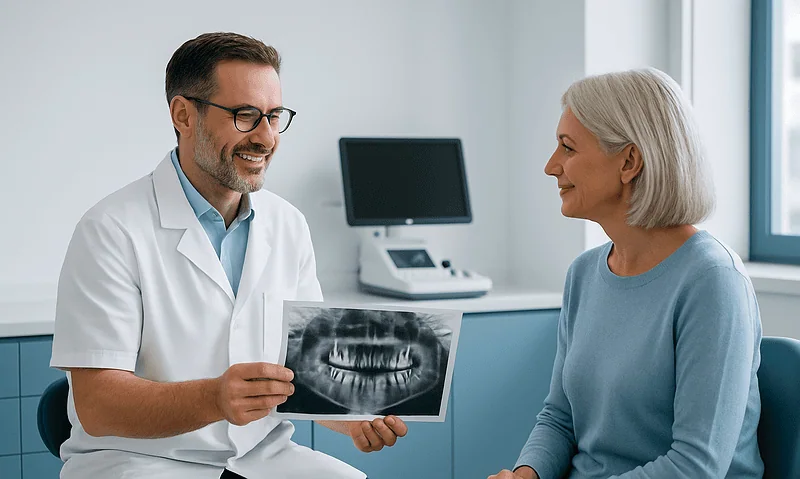
Imaging in Implantology: How Panoramic X-Rays and 3D Scans Guide Implant Position and Depth
Implantology imaging combines two-dimensional dental X-rays, most often a panoramic film, with a three-dimensional cone beam CT (CBCT) scan when the clinician needs to…

Why Jaw Growth Decides When Implantology Can Place an Implant in a Younger Patient
Dental implants for teenagers are usually postponed until the jaw has stopped growing, because an implant fuses to bone and cannot move with the…
How Mini Implants Are Placed: Flapless Insertion, Same-Day Denture Fitting and What to Expect
A mini implant procedure places one or more narrow titanium posts into the jawbone, usually through a small pierce in the gum rather than…

All On 4 Healing Timeline: Soft Diet Weeks, Bone Integration and the Final Bridge Switch
All-on-4 healing usually unfolds in stages. Swelling and soreness peak in the first two to three days and settle over one to two weeks,…