

Does Radiotherapy Come Before or After Sarcoma Surgery? How the Sequence Is Chosen
Key Takeaways
- In the randomized limb-sarcoma trial, wound complications occurred in about 35% of people who had radiation before surgery versus about 17% who had it afterward, while local recurrence rates were similar.
- Longer follow-up of the same trial found more permanent fibrosis, joint stiffness and lymphedema after postoperative radiation, because the treated area and course are larger.
- A conventional preoperative course runs about five weeks of weekday sessions; a postoperative course typically runs six to seven weeks, since disturbed tissue is thought to need more radiation.
- Surgery after preoperative radiation is usually scheduled roughly 3–6 weeks after the final session so the acute skin reaction can settle before an incision is made.
- Preoperative radiation is not meant to shrink the tumor; a scan showing no change in size after treatment is common and does not indicate failure.
- Small, low-grade sarcomas above the deep fascia removed with wide clear margins may need no radiation at all, which is why a full pathology report can change the plan.
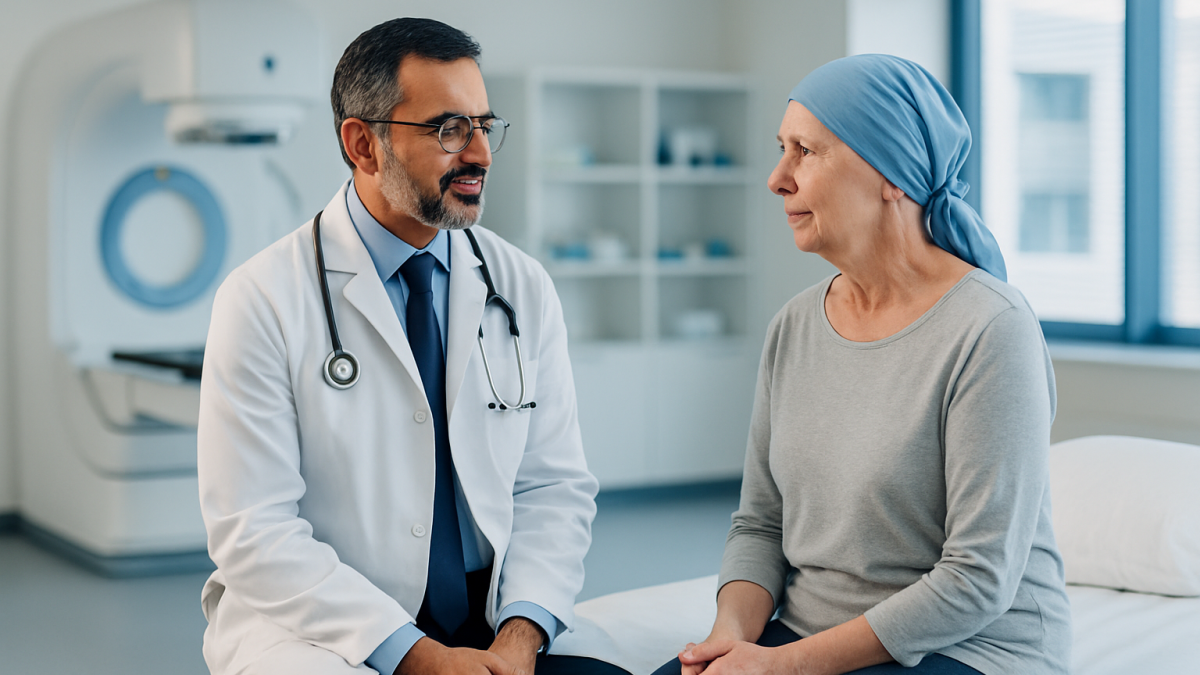
Radiation can be given either before or after sarcoma surgery, and both sequences are accepted practice. Giving it before typically means a shorter course and a smaller treated area, with fewer long-term problems such as stiffness and swelling, but a higher chance of wound-healing complications. Giving it after protects the wound at first but usually needs a longer course over a larger area. A specialist sarcoma team weighs tumor size, location, planned surgery and your general health to choose.
Two appointment letters sit side by side on the kitchen table. One is from a surgeon, one from a radiation oncologist, and the dates are close enough that it is not obvious which comes first. The person holding them has just been told the lump in their thigh is a sarcoma, and the question that keeps surfacing is simple: does radiation come before or after sarcoma surgery, and who decides?
It is a fair question, and the honest answer is that there is no single right order. Both sequences are used in specialist centers around the world, and both are supported by evidence. What differs is the trade they make: one shifts risk toward the first few weeks after the operation, the other toward the years that follow.
This explainer walks through how that trade is weighed, what actually happens in each sequence, and which questions are worth bringing to the team who will make the call with you.
Why the order of radiation and surgery matters more than most people expect
A sarcoma is a cancer that starts in the body’s connective tissues: muscle, fat, blood vessels, nerves, tendons or the lining of joints. Soft tissue sarcomas are uncommon, making up roughly 1% of adult cancers according to the Cleveland Clinic, and there are dozens of subtypes. That rarity is the first reason the sequencing question matters. Most general hospitals see only a handful of cases a year, and the pattern of care is different from more common cancers where a fixed pathway exists.
Surgery remains the central treatment for a sarcoma that has not spread. Radiotherapy, which uses precisely aimed high-energy beams to damage the DNA of cancer cells so they cannot keep dividing, is added for many deep or large tumors to lower the chance that the cancer returns in the same place.
Here is the part that surprises people: the radiation is not primarily about shrinking the lump. It is about treating the invisible margin, the rim of apparently normal tissue where microscopic cancer cells may be hiding. Whether that rim is treated while the tumor is still in place, or after it has been removed, changes how much tissue is irradiated, how long the course runs, and which side effects are more likely.
My view, grounded in the trial evidence discussed below, is that the sequence itself is less important than who chooses it. Guidance from the NHS and Mayo Clinic is consistent that sarcoma care should be planned by a multidisciplinary team, a group of surgeons, oncologists, radiologists and pathologists who review each case together, before any tissue is removed. When that happens, either order can work well.
How radiation before or after sarcoma surgery actually works
Picture the tumor as a stone dropped in wet sand. The stone is easy to see and remove; the damp ring around it is not. Radiotherapy targets that ring. The mechanism is the same in both sequences, but the geometry is different.
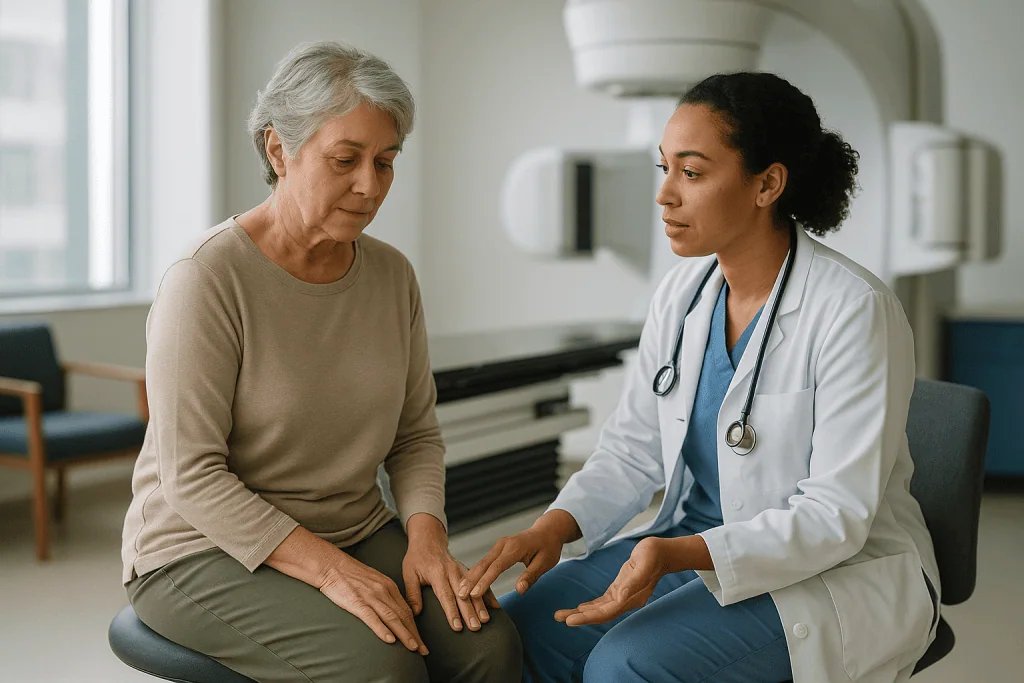
When radiation is given before surgery, the tumor is still in place and shows clearly on planning scans. The radiation oncologist draws a target that includes the tumor plus a margin of surrounding tissue. Because the target is well defined, the treated volume is comparatively compact. The tumor’s cells are also still receiving their normal blood supply, and oxygenated cells are more sensitive to radiation. Over the course of treatment the tissue around the tumor often thickens into a firmer rind, which some surgeons find makes the edges of the operation more distinct.
When radiation is given after surgery, the target is no longer a visible mass. It is the entire operative bed: everywhere the surgeon’s hands, instruments and drains have been, plus the scar and any drain sites, since cells can be carried along those tracks. That volume is almost always larger than the original tumor. The postoperative course in the landmark randomized trial comparing the two approaches was also longer, roughly six to seven weeks of weekday treatments compared with about five weeks before surgery, because tissue disturbed by surgery is thought to need more radiation to achieve the same effect.
Each daily treatment is called a fraction. Spreading treatment over many fractions gives healthy tissue time to repair between sessions while cancer cells, which repair less efficiently, accumulate damage. That is why a course takes weeks rather than a single visit.
Preoperative vs postoperative radiotherapy for sarcoma: what the trial evidence shows
Much of what we know about sequencing comes from a randomized trial of people with soft tissue sarcoma of the limbs, published in The Lancet and indexed on PubMed. Participants were assigned to radiation either before or after surgery, and the two groups were followed for how often the cancer came back locally and how their wounds and limbs fared.
The headline finding was about wounds. Complications such as delayed healing, infection or the need for a further procedure occurred in about 35% of people treated before surgery, compared with about 17% of those treated afterward. The difference was concentrated in the thigh and lower leg, where skin is under tension and blood supply is less generous.
The rate of the cancer returning in the treated area was similar in both groups. In other words, the sequence did not appear to change how well the radiation did its main job.
Longer follow-up of the same participants told the second half of the story. People who had radiation after surgery, and therefore a larger treated volume over a longer course, were more likely to develop fibrosis (a permanent stiffening and scarring of soft tissue), joint stiffness and lymphedema (chronic swelling from disrupted lymph drainage). These are the effects that shape daily life years later: how far a knee bends, whether a shoe fits, how a limb feels at the end of a working day.
The evidence, then, describes a genuine trade-off rather than a winner. Early wound trouble that is usually treatable, versus late tissue changes that are usually permanent. Reasonable teams weigh those differently for different people, which is why you will hear of both approaches from different centers.
Who is usually offered radiation before surgery, and who is asked to wait
Because the trade-off is real, the choice tends to follow the tumor and the person rather than a rule.
Radiation first is commonly considered when a tumor is large and deep, particularly in an arm or leg, and the surgeon expects the margin to be tight. That happens when the tumor sits against a major nerve, artery or bone, where taking a wide rim of healthy tissue would cost function. Treating the tumor in place lets the team use a smaller field and may make the edges of the operation clearer. It is also considered when the planned reconstruction is extensive, because a longer postoperative course over a large area would compound the burden on already stressed tissue.
Radiation after surgery, or a decision to defer the question, is common in several situations. One is when a sarcoma is discovered only after a lump was removed on the assumption it was benign, sometimes called an unplanned excision. The tumor is already out, so the only option is to treat the bed afterward, often following a second operation to clear the margins. Another is when the biopsy is inconclusive and the team wants a full pathology report before committing to radiation at all. A third is when the risk of poor wound healing is judged too high for preoperative radiation, for example in someone who smokes heavily, has poorly controlled diabetes, or has a tumor in the lower leg.
Some people are asked to wait for reasons unrelated to the tumor: an active infection, an unhealed wound from a biopsy, or a medical condition that needs stabilizing first. Waiting in these cases is not neglect. It is the team protecting the tissue that has to heal.
Neoadjuvant radiation for soft tissue sarcoma: what the weeks before the operation look like
Neoadjuvant is the medical word for a treatment given before the main treatment, in this case radiation before surgery. The weeks unfold in a fairly predictable rhythm.
It starts with a planning appointment. You lie on a CT scanner in the exact position you will hold for every treatment, and the team may make a custom cushion or mold to keep the limb still. Small skin marks or tiny tattoos act as alignment points. The radiation oncologist and a physicist then design the beams, a process that takes days rather than hours.
Treatment itself is quick. Each session lasts minutes, most of it positioning, and you feel nothing during the beam. Sessions run on weekdays with weekends off, and a conventional preoperative course lasts about five weeks, the schedule used in the randomized trial cited above. Weekly reviews check the skin and ask about fatigue.
Toward the end of the course the skin over the treated area often reddens, darkens or feels dry and tender, and tiredness builds. MedlinePlus and Mayo Clinic describe these as the expected acute effects of external radiation, and they generally ease over the weeks after treatment stops.
Then comes a pause. In the trial protocol, surgery followed roughly 3–6 weeks after the last fraction. That gap is deliberate: it lets the acute skin reaction settle before an incision is made through it, while not waiting so long that the tissue begins to stiffen. Imaging is often repeated during this window so the surgeon knows exactly what they are removing. The tumor may look the same size, or even slightly larger on the scan; that is common and does not mean treatment has failed.
Radiation before or after sarcoma surgery: the trade-offs side by side
Tables flatten nuance, but this is one place where seeing the two sequences next to each other genuinely helps. The figures come from the randomized limb-sarcoma trial indexed on PubMed; the descriptive rows reflect mainstream guidance from Mayo Clinic and the NHS.
| Feature | Radiation before surgery | Radiation after surgery |
|---|---|---|
| Typical course length | About five weeks of weekday sessions | About six to seven weeks of weekday sessions |
| Area treated | Tumor plus a margin; usually smaller | Entire operative bed, scar and drain sites; usually larger |
| Wound complications | Higher, about 35% in the trial | Lower, about 17% in the trial |
| Late stiffness, fibrosis, swelling | Less common | More common |
| Local recurrence | Similar between groups | Similar between groups |
| Pathology certainty before radiation | Based on biopsy only | Full report from removed tumor |
| Time from diagnosis to operation | Longer | Shorter |
Read across the rows and the pattern is clear. The preoperative column carries its risk early and in a form that surgeons can usually manage: extra dressings, a wound revision, occasionally a delay. The postoperative column carries its risk late, in a form that physical therapy can soften but rarely reverse.
Which column is better depends on where you sit. Someone with a tumor in the upper arm, where wounds heal readily, may lean toward earlier radiation. Someone with a small tumor in the lower leg and a history of slow healing may reasonably lean the other way. Neither is wrong, and the table is a conversation starter, not a decision tool.
How soon after surgery should radiation start?
People searching for how soon after surgery radiation begins usually want a number. The truthful answer is that the wound sets the schedule.
Radiation to a fresh incision interrupts the cells that are laying down new collagen and blood vessels. Starting too early risks the wound reopening or failing to close, which then delays everything further. Teams therefore wait until the incision has sealed, drains are out, and any swelling or fluid collection has settled. In practice this is measured in weeks rather than days, and the exact timing is a clinical judgment made by the surgeon and radiation oncologist together after examining the wound.
There is a countervailing pressure. Any remaining microscopic cells continue to divide while the team waits, so nobody wants an open-ended delay. The usual approach is to book the planning scan as soon as healing looks reliable, so treatment can begin promptly once the surgeon gives the go-ahead. If healing is slow, the team may involve a plastic surgeon or wound specialist to speed it along.
One less common technique deserves a mention because it changes the timing question entirely. Brachytherapy places thin hollow tubes in the tumor bed during the operation itself; a radioactive source is later passed through them for short periods while you are in hospital, and the tubes are removed afterward. It allows radiation to be delivered within days of surgery to a very local area. It is used only in selected cases and only in centers with the expertise to do it, and whether it suits a particular tumor is again a team decision.
If your team tells you to wait, ask what specifically they are waiting for. The answer is almost always concrete: a particular part of the incision, a drain site, a scan.
How long does it take to recover from sarcoma removal surgery?
Sarcoma surgery recovery time varies enormously, because the operations themselves do. Removing a small tumor just beneath the skin of the forearm and removing a large one wrapped around the femoral vessels are both called sarcoma surgery, and they are not comparable experiences.
Most operations for limb sarcoma today are limb-sparing, meaning the tumor and a margin of tissue are removed while the arm or leg is kept. The NHS notes that amputation is now uncommon and reserved for tumors that cannot be safely removed any other way. Limb-sparing surgery may involve removing part of a muscle group, moving tissue from elsewhere to fill the gap, or reconstructing a nerve or vessel. Each of those adds recovery time.
A reasonable way to think about it is in three overlapping phases. The first is the hospital stay, which the treating team will estimate for your specific operation. The second is wound healing and early mobility, when physical therapy begins, often within days, to keep joints moving and prevent the treated limb from stiffening. The third is functional recovery: rebuilding strength, adapting to any permanent change in how a muscle group works, and returning to work or driving. Mayo Clinic and the NHS both describe this last phase in months rather than weeks for larger operations.
Sequence affects recovery in specific ways. After preoperative radiation, the wound is the vulnerable point and may need longer, closer attention. After surgery-first, the wound usually heals well but radiation then follows, extending the total treatment period and adding a second stretch of fatigue.
Ask your team for their expected range for your operation, and ask what would make it longer. Both answers will be more useful than any general figure.
What the following weeks usually look like in each sequence
Laying the two paths out as a timeline makes the practical differences concrete.
With radiation first, the early weeks are structured around daily visits. Life carries on in between; many people continue working, though fatigue tends to accumulate. Skin changes appear in the later weeks. After the final session comes the planned pause of a few weeks, during which the skin recovers and imaging is repeated. Surgery then follows, and the period after the operation is the one where wound care matters most. Dressings, drain checks and a low threshold for reporting redness or leakage are the priorities. Physical therapy starts once the surgeon is happy with the incision.
With surgery first, the operation comes within a shorter time of diagnosis. Wound healing is typically more straightforward. Once the incision has sealed and the pathology report is back, the team meets again to confirm whether radiation is still recommended; occasionally a report showing a low-grade tumor with a wide clear margin means it is not. If it is, planning begins and a course of roughly six to seven weeks follows, during which the operated limb is being both rehabilitated and irradiated. Physical therapy continues through treatment to keep the joint moving.
In both paths, the months after all treatment ends are when late effects, if they occur, begin to show: tightness in the treated tissue, some swelling below the treated area, reduced range at a nearby joint. This is also when regular imaging surveillance begins, at intervals set by the team based on the tumor’s grade and size.
Neither path is short. Being told the total span at the outset, rather than one appointment at a time, is something many people wish they had asked for.
What are the hardest days after radiation treatment?
People often expect the first session to be the worst. It is usually the least eventful. Radiation’s effects build, and the difficult stretch tends to arrive late.
Fatigue is the most common complaint and it is cumulative. Mayo Clinic describes it as distinct from ordinary tiredness: rest helps less than expected, and it can persist for weeks after the last session. The final week or two of a course, and the two or three weeks that follow, are typically when it peaks.
Skin reactions follow a similar curve. The treated area may redden, darken, itch, peel or, in skin folds and under tension, break down and weep. Both MedlinePlus and Mayo Clinic note that skin effects often continue to worsen for a short time after treatment finishes before they begin to settle, because the cells damaged in the last sessions take time to show it. This is why a preoperative course is followed by a planned gap rather than immediate surgery.
For those treated after surgery, the operated limb is being asked to do two things at once: heal and tolerate radiation. Stiffness can feel worse during the course, and physical therapists often adjust exercises around skin tenderness.
Emotionally, the end of treatment can be harder than people expect. The daily structure and contact with staff disappear at the same moment the physical effects peak. Naming that in advance helps.
Acute effects are managed with skin care advice, activity pacing and, where needed, medicines prescribed by the team; the specifics belong in that conversation. What matters for planning is knowing that the low point is usually around the end of treatment, not the beginning, so that support at home can be arranged for the right weeks.
When radiation may not be part of the plan at all
Not every sarcoma needs radiation, and a plan that omits it is not necessarily a lesser plan.
Small, low-grade tumors that sit above the deep fascia (the tough sheet of tissue that wraps muscle groups) and are removed with a wide, clear margin often carry a low enough risk of local recurrence that the team judges radiation would add side effects without meaningful benefit. Grade, a pathologist’s assessment of how aggressive the cells look under the microscope, drives much of this decision, which is one reason a full pathology report after surgery can change the recommendation.
Location matters too. Sarcomas in the retroperitoneum, the space at the back of the abdomen, sit close to bowel, kidneys and spinal nerves. Radiation there is harder to deliver safely, and the evidence for its benefit is weaker and more debated than in the limbs. Some teams offer it before surgery in selected cases; others do not.
Chemotherapy, which uses drugs that circulate through the whole body to attack dividing cells, occupies a different role. For most adult soft tissue sarcomas it is not routine alongside surgery and radiation, though certain subtypes and high-risk situations are exceptions. Whether it is discussed depends on the subtype and stage, and that judgment sits with the oncology team.
The alternative that people fear most, amputation, is now uncommon. Combining limb-sparing surgery with radiation is precisely what allows most limbs to be kept. When amputation is recommended, it is because the tumor involves structures that cannot be removed while leaving a functioning limb, and the conversation should include a rehabilitation specialist from the start.
If radiation is not offered, ask why. The reasons are usually specific and reassuring.
What people often get wrong about radiation and sarcoma surgery
Several misunderstandings come up repeatedly, and each can add anxiety that the facts do not support.
The first is that being offered radiation before surgery means the cancer is more advanced. It does not. It usually means the tumor is in a place where the surgeon wants the smallest possible radiation field and the clearest possible operating edge. Stage and grade are assessed separately.
The second is that preoperative radiation is meant to shrink the tumor so the operation is smaller. Shrinkage is not the goal and often does not happen; some sarcomas look unchanged or slightly larger on the post-radiation scan because of swelling and internal changes. The aim is to treat the microscopic margin and firm up the tissue around the tumor. A scan showing no shrinkage is not a sign of failure.
The third is that radiation could replace surgery. For a localized soft tissue sarcoma, mainstream guidance from the NHS and Mayo Clinic is that surgery is the main treatment and radiation supports it. Radiation alone is generally reserved for situations where surgery is not possible.
The fourth is that one sequence is simply correct and the other is out of date. The randomized evidence shows similar local control with different side-effect profiles. A center that favors one approach is expressing a judgment about trade-offs, not a scientific disagreement about whether radiation works.
The fifth is that a wound complication means the treatment has gone wrong. Wound problems after preoperative radiation are a known, expected risk, occurring in roughly a third of limb cases in the trial. They are unpleasant and sometimes need a further procedure, but they were anticipated in the decision.
The last is that a shorter, more intense course is now standard. Compressed schedules are being studied and early reports are encouraging, but the evidence is still maturing and they are not yet routine everywhere.
Questions to ask your care team about sequencing
A good sarcoma team will welcome these. Write down the answers; the details blur quickly.
- Has my case been reviewed by a multidisciplinary sarcoma team, and who was in the room?
- Which sequence are you recommending for me, and what about my tumor’s size, depth or location tipped the balance?
- If radiation comes first, how many weeks will the course run, how long is the planned gap before surgery, and what will you look for on the repeat scan?
- If surgery comes first, what in the pathology report could change whether radiation is still recommended?
- What is my personal risk of a wound complication, and what would you do if one happened?
- What long-term effects on movement, swelling or sensation should I expect from the radiation field you are planning?
- Will a physical therapist be involved from the beginning, and when will I start?
- Is brachytherapy or a shorter radiation schedule something you would consider for me, and why or why not?
- What is the total expected span from today to the end of active treatment?
- Who do I call, at any hour, if something about the wound or the treated skin worries me?
Two further questions are less about medicine and more about life. Ask what the treatment period will mean for driving, work and lifting, since a leg wound or a fatigued arm affects each differently. Ask, too, whether there is a nurse specialist or coordinator who will be your consistent contact, because sequencing decisions involve several departments and a single named person makes the path far easier to follow.
If any answer feels rushed, it is entirely reasonable to ask for a second discussion, or a second opinion from another sarcoma team, before the first treatment begins.
When to call your doctor
Both sequences carry a period when something can go wrong quietly, and early contact makes most problems easier to manage. Your team will give you a direct number; use it rather than waiting for the next scheduled visit.
Call promptly, the same day, if you notice any of the following around a surgical wound or treated skin:
- The incision opening, gaping or leaking fluid, particularly fluid that is cloudy, thick or smells unpleasant.
- Spreading redness, heat or swelling around the wound or the treated area, especially if it is getting worse over hours.
- A fever, shaking chills, or feeling suddenly and generally unwell.
- Skin in the treated area that has broken down, is bleeding, or has become severely painful despite the care advice you were given.
- New numbness, weakness or a change in color or temperature in the hand or foot below the operated area.
Seek emergency care immediately, without waiting for a callback, for any of these:
- Sudden pain, swelling or warmth in a calf or thigh, which can indicate a blood clot after surgery or reduced mobility.
- Sudden shortness of breath, chest pain or coughing up blood.
- Bleeding from the wound that soaks through a dressing and does not slow with firm pressure.
- Collapse, confusion or a fever accompanied by a racing heart and rapid breathing.
None of these signs means the cancer treatment has failed. They are signals that the tissue needs attention, and the people best placed to give it are the surgeon and radiation oncologist who know exactly what was done and where. This article can explain the landscape; every decision about your treatment, its timing and any change to it belongs with them.
Frequently asked questions
Is radiation usually given before or after sarcoma surgery?
Both are standard, and neither is considered superior for controlling the cancer locally. Radiation before surgery uses a smaller field and shorter course with fewer long-term stiffness and swelling problems but more early wound complications. Radiation after surgery protects the wound initially but needs a longer course over a larger area. A multidisciplinary sarcoma team chooses based on tumor size, depth, location and your healing risk.
How soon after surgery should you start radiation?
Radiation after sarcoma surgery starts once the wound has sealed, drains are out and any fluid collection has settled, which the surgeon and radiation oncologist judge by examining the incision. This is measured in weeks rather than days. Teams try not to delay longer than healing requires, so planning is often arranged as soon as the wound looks reliable.
Can radiation alone treat sarcoma without surgery?
For a localized soft tissue sarcoma, surgery is the main treatment and radiation supports it by lowering the chance of the cancer returning in the same place. Radiation on its own is generally reserved for situations where an operation is not possible or safe. Whether that applies to a particular tumor is a decision for the treating team after full assessment.
What are the hardest days after radiation treatment?
Usually the final week or two of the course and the two to three weeks after it ends. Fatigue accumulates and skin reactions often worsen briefly after the last session before settling, because damaged cells take time to show it. Planning extra support at home for that window, rather than the first week, tends to match how people actually feel.
How long does it take to recover from sarcoma removal surgery?
It depends heavily on the operation. Removing a small superficial tumor is very different from limb-sparing surgery involving muscle, vessels or reconstruction. Early wound healing and mobility work take weeks; rebuilding strength and returning to full activity after larger operations is typically described in months. Ask your surgeon for the expected range for your specific procedure and what could extend it.
What is neoadjuvant radiation for soft tissue sarcoma?
Neoadjuvant means given before the main treatment, so it refers to radiation delivered before the operation. It involves a planning scan, a course of daily weekday sessions lasting about five weeks in the standard schedule, and then a pause of several weeks before surgery so the skin can recover. Its purpose is to treat the microscopic margin around the tumor, not to shrink it.
Does preoperative vs postoperative radiotherapy for sarcoma change how much tissue is removed?
Not directly. The surgeon still aims for a clear margin of healthy tissue around the tumor in either sequence. Preoperative radiation can make the tumor’s edges firmer and more distinct, and it treats a smaller volume of tissue with radiation. Postoperative radiation must cover the whole operative bed, so more tissue is irradiated even though the amount removed is similar.
Why is there a wait of several weeks between radiation and sarcoma surgery?
The pause lets the acute skin reaction from radiation settle before an incision is made through that skin, which lowers the risk of the wound failing to heal. In the randomized trial that compared sequences, surgery followed roughly 3–6 weeks after the last session. Waiting much longer is avoided because irradiated tissue gradually stiffens, which can make the operation harder.
Do all sarcomas need radiation after surgery?
No. Small, low-grade tumors above the deep fascia that are removed with wide, clear margins often carry a low enough recurrence risk that radiation is not recommended. Some tumors in the abdomen are also treated without it because of nearby organs. The pathology report after surgery frequently informs this decision, which is one reason some teams prefer to operate first.
Is a shorter course of radiation for sarcoma proven to work as well?
Not yet in the way conventional schedules are. Compressed courses that deliver treatment over days rather than weeks before surgery are being studied, and early reports on safety and wound outcomes are encouraging, but long-term data on local control and late effects are still accumulating. Whether a shorter schedule is offered depends on the center and the specific case.
References
This article is for general information only and is not a substitute for professional medical advice. Please consult a qualified doctor about your individual situation.

More from the Blog

HIPEC Recovery in Hospital: Pain Control, Bowel Recovery, Walking and Returning to Eating
HIPEC recovery in hospital usually means one to two weeks after the operation, often starting with a planned night or two in intensive care.…
Can Graft Disease (GVHD) Be Prevented? Donor Matching and Early Medication Plans Explained
Graft-versus-host disease cannot be prevented with certainty, but its risk can be lowered substantially. The two main levers are choosing the closest available tissue…
Cytokine Release Syndrome After CAR-T: Why Fever Is Watched So Closely in Hospital
Cytokine release syndrome after CAR-T is an inflammatory reaction that happens when the infused CAR T cells attack cancer and release large amounts of…
Nutrition During Liver Cancer Treatment: How Dietitians Support a Working Liver
Nutrition during liver cancer treatment focuses on protecting muscle, keeping calories steady and easing side effects such as nausea, taste changes and fluid buildup,…
What Conditioning Before a Stem Cell Transplant Does and How Those Days Are Planned
Conditioning before a stem cell transplant is the course of chemotherapy, sometimes combined with radiation or antibody treatment, given over roughly a week before…
Thyroid Cancer Treatment for Women Planning Pregnancy: How Timing Is Discussed
Women who have had thyroid cancer treatment can usually plan a pregnancy once the care team confirms two things: enough time has passed since…