

Easing Epididymitis Pain Safely: Scrotal Support, Cold Packs and Rest Your Urologist Recommends
Key Takeaways
- Mayo Clinic draws the line between acute and chronic epididymitis at six weeks of symptoms, which changes the whole approach to pain management.
- The CDC recommends bed rest, scrotal elevation and anti-inflammatory medicines until fever and local inflammation have subsided, and re-evaluation if symptoms have not begun to settle within 3 days of starting antibiotics.
- Cold packs are the evidence-aligned choice in the acute phase because they narrow blood vessels and slow pain-nerve conduction; warm baths have no trial evidence for epididymitis and can increase throbbing early on.
- Supportive underwear works by removing traction on the spermatic cord, which is why it eases pain whether the cause is infection, urine reflux or post-vasectomy congestion.
- Sexually transmitted bacteria are the most common cause in men under 35, while gut bacteria from the urinary tract dominate in older men, and the antibiotic choice differs accordingly.
- Sudden, severe scrotal pain may be testicular torsion, and Mayo Clinic notes the testicle is most likely to be saved if treated within about six hours.
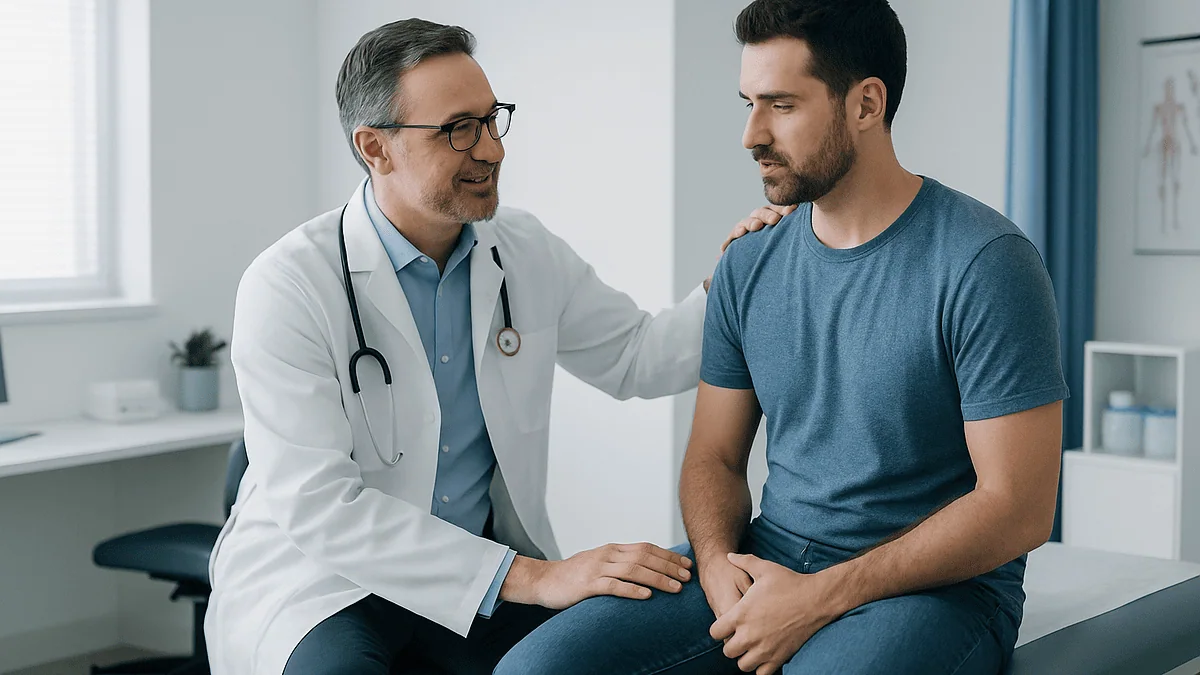
Epididymitis pain relief rests on three measures that urology guidelines consistently list: supporting and elevating the scrotum with snug underwear or a jockstrap, applying a wrapped cold pack for short periods during the first few days, and resting until fever and swelling settle. Anti-inflammatory medicines and antibiotics are prescribed case by case. Sudden, severe testicular pain needs same-day emergency assessment to rule out torsion.
It usually starts as a dull ache that a man puts down to a long drive, a hard workout or a bad night of sleep. By the next morning one side of the scrotum is heavier, warmer and tender enough that the walk from the bed to the bathroom becomes a careful shuffle. He searches for epididymitis pain relief on his phone, finds a dozen pages telling him what the condition is, and almost nothing telling him what to actually do with the next few hours.
That gap matters. Epididymitis, inflammation of the coiled tube that stores sperm behind each testicle, is one of the most common reasons adult men visit a urologist with scrotal pain. The treatment is usually straightforward. The comfort measures around it are less well explained, and that is where myths about hot baths, stress and toughing it out take root.
This explainer walks through what the swelling is, why support, cold and rest sit in the guidelines, and which signs mean the search has to stop and a phone call has to start.
What is actually happening inside an inflamed epididymis?
The epididymis is a tightly coiled tube, roughly 6 meters long if it were stretched out, folded into a crescent that sits along the back of each testicle. Sperm mature and are stored there before they travel up the vas deferens. Because the tube is so long and so compactly packed, even a small amount of inflammation makes the whole structure swell and press against the tough outer coat of the testicle, the tunica. That pressure, rather than the infection itself, is what most people feel as pain.
In younger adults the trigger is most often a sexually transmitted bacterium, typically chlamydia or gonorrhea, that has travelled backwards from the urethra. In men over 35, and in anyone with an enlarged prostate, a recent catheter or urinary surgery, the usual culprits are gut bacteria such as E. coli that have reached the epididymis from the bladder. The CDC treatment guidelines describe both patterns. Less commonly, the inflammation is not infectious at all: reflux of sterile urine after heavy lifting, certain heart medicines, tuberculosis or a chronic pain syndrome can produce the same swelling.
Whatever the cause, the body’s response is the same. Blood flow to the area increases, immune cells flood in, fluid leaks into the tissue, and the scrotal skin on that side may turn red and warm. If the inflammation spreads into the testicle itself, clinicians call it epididymo-orchitis. Understanding this sequence explains why every comfort measure in this article is really a way of reducing pressure, limiting swelling or calming irritated nerve endings while the underlying cause is treated.
Why epididymitis pain relief starts with ruling out torsion
Before any discussion of cold packs or supportive underwear, one point outranks the rest. Scrotal pain that comes on suddenly, often within minutes, and is severe from the start may be testicular torsion, a twisting of the spermatic cord that cuts off blood supply to the testicle. Torsion is a surgical emergency. Mayo Clinic notes that the testicle is most likely to be saved if the cord is untwisted within about six hours of the pain beginning, and the odds fall steeply after that.

Epididymitis tends to build over a day or two, often with urinary burning, discharge or fever. Torsion tends to strike abruptly, sometimes waking a person from sleep, and the testicle may sit higher than usual or lie at an odd angle. Teenagers and young men are the group most often affected by torsion, which overlaps with the age group most affected by sexually acquired epididymitis. The two cannot be reliably told apart at home, and clinicians themselves use a Doppler ultrasound, a scan that shows blood flow, when the history is unclear.
This is why reputable guidance treats self-directed pain relief as something that follows a diagnosis rather than replaces it. Cold packs and rest will ease an inflamed epididymis. They will also mask the pain of a twisted cord while tissue is dying. If the pain arrived like a switch being flipped, the right response is emergency care, not a search for comfort tips. Once a clinician has examined the scrotum and, where needed, confirmed blood flow on ultrasound, the measures below become safe and genuinely useful.
Scrotal support: the simplest epididymitis pain relief measure
Ask a urologist what to do first and the answer is often a single word: support. The scrotum is suspended by the spermatic cord, a bundle of blood vessels, nerves and the vas deferens. When the epididymis is swollen and heavy, gravity pulls on that cord with every step, and the cord’s nerves register the drag as a deep, dragging ache that radiates into the groin and lower abdomen.
A snug pair of briefs or an athletic supporter, sometimes called a jockstrap, lifts the scrotum toward the body and takes that tension off the cord. Both the CDC guidelines and NHS guidance list scrotal support and elevation among the core comfort measures. The mechanism is mechanical, not pharmacological, which is why it works regardless of whether the cause turns out to be infection, reflux or post-surgical congestion.
A few practical details make the difference between support that helps and support that chafes:
- Choose cotton or a soft wicking fabric; the inflamed skin is often hot and sensitive, and seams can rub.
- Snug is the goal, not tight. Compression that leaves marks can worsen swelling by slowing drainage.
- Wear support during the day and when walking; many people find a loose fit more comfortable at night, with a rolled towel under the scrotum instead.
- Lying down with the scrotum resting on a folded towel achieves the same elevation without any garment.
Support will not shorten the course of an infection. What it does is make the days until antibiotics take effect far more bearable, and it is the one measure almost every guideline agrees on. Expect the benefit to be immediate and partial: the heaviness eases, the throb from inflammation does not.
Epididymitis ice or heat: which one, and when?
Cold is the evidence-aligned choice in the acute phase. A cold pack causes the small blood vessels in the scrotal skin and underlying tissue to narrow, which limits the leakage of fluid that drives swelling. Cold also slows the conduction speed of pain-signalling nerves, so the same amount of inflammation registers as less discomfort. Mayo Clinic and MedlinePlus both include cold packs in their lists of self-care measures for epididymitis.
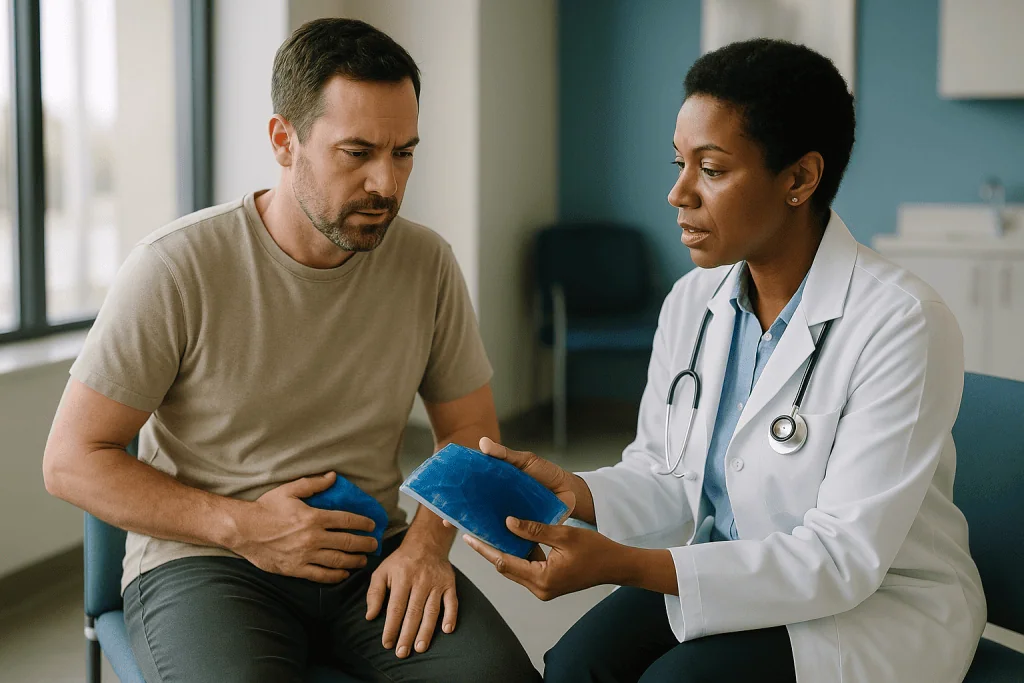
The scrotal skin is thin and the testicles are temperature-sensitive, so the technique matters more here than almost anywhere else on the body. Wrap the pack, a bag of frozen peas or a gel pack in a thin towel; never place ice directly on the skin. Apply for short periods, typically around 15–20 minutes at a time as suggested in general cold-therapy guidance, then let the skin return to normal temperature before repeating. Someone with reduced sensation, such as from diabetes-related nerve damage, should check with their clinician before using cold at all, because they may not feel the warning tingle of cold injury.
Heat is the more complicated story. Warmth increases blood flow and relaxes muscle, which can feel soothing for a chronic, nagging ache once the acute swelling has gone. In the first few days, when the tissue is already hot and engorged, adding more heat tends to increase throbbing. There is no trial evidence that warm baths speed recovery from epididymitis; the frequent online claim that they do is extrapolated from other conditions. A warm bath is unlikely to cause harm for most people, but if it increases the throbbing, that is the body’s answer. Cold first, warmth later if it helps, and neither as a substitute for treatment of the cause.
Rest and elevation: why putting your feet up is in the guidelines
The CDC guidelines are unusually specific: bed rest, scrotal elevation and anti-inflammatory medicines are recommended until fever and local inflammation have subsided. Rest is listed first for a reason that goes beyond comfort. Walking, standing and lifting all increase pressure inside the abdomen and pelvis, which pushes more blood into the engorged tissues and increases the pull on the spermatic cord. Lying flat with the scrotum elevated reverses that gradient, letting fluid drain back toward the body through the veins and lymph channels.
Rest in this context does not mean a week in bed. It means the first two or three days spent mostly reclining, with short walks rather than long ones, no heavy lifting and no cycling, running or contact sports until the tenderness has clearly eased. NHS guidance advises avoiding sex until treatment is complete and, where an STI is the cause, until partners have been treated too, partly to prevent reinfection and partly because ejaculation briefly increases pressure in the epididymis.
Elevation is easy to get wrong. The aim is to raise the scrotum above the level of the groin, not to raise the whole pelvis. A folded hand towel placed under the scrotum while lying on the back does this neatly. Sitting upright in a hard chair for long periods is often the most uncomfortable position of all; if desk work is unavoidable, a soft cushion and regular breaks to lie down help.
Drinking enough fluid to keep urine pale is sensible when the source is a urinary infection, since it helps flush bacteria from the bladder. Beyond that, no particular diet, supplement or herbal preparation has evidence for shortening epididymitis, and reputable sources do not recommend any.
Can I take ibuprofen for epididymitis? Anti-inflammatories explained
This is one of the most searched questions about the condition, and the honest answer is that it depends on the person, not the condition. Non-steroidal anti-inflammatory drugs, the class that includes ibuprofen and naproxen, work by blocking cyclooxygenase enzymes that produce prostaglandins, the chemical messengers that widen blood vessels and sensitize nerve endings during inflammation. Less prostaglandin means less swelling and less pain. That is why the CDC and NHS both list anti-inflammatory medicines among the standard supportive measures for epididymitis.
The same mechanism carries risks that have nothing to do with the scrotum. Prostaglandins protect the stomach lining and maintain blood flow through the kidneys. People with a history of stomach ulcers or bleeding, chronic kidney disease, heart failure, uncontrolled high blood pressure, or who take blood thinners or certain blood pressure medicines may be advised to avoid this class entirely. Someone who has had an allergic reaction to one anti-inflammatory should not assume another is safe.
Acetaminophen, known as paracetamol in many countries, eases pain through a different pathway and does not reduce inflammation, which is why clinicians sometimes suggest it when anti-inflammatories are unsuitable or alongside them. Which medicine, how much and for how long are decisions for the prescribing clinician or pharmacist, who can check interactions with everything else a person takes.
Two cautions deserve emphasis. First, pain medicines treat the symptom; if the cause is bacterial, they do nothing to clear it, and feeling better on painkillers alone is not a reason to skip the appointment. Second, if pain is severe enough that over-the-counter options barely touch it, that is information the clinician needs, because it may point to an abscess or torsion rather than uncomplicated epididymitis.
Antibiotics and comfort: what the first 72 hours usually look like
When a clinician suspects a bacterial cause, antibiotics are usually started on the day of the visit, often before test results are back, because delay risks abscess formation and spread to the testicle. The choice of antibiotic is driven by the most likely organism. CDC guidance distinguishes between regimens for sexually acquired infection in younger men, for enteric organisms in older men or those practising insertive anal sex, and for men with recent urinary instrumentation. The clinician matches the regimen to the history; the patient’s job is to take it as prescribed and finish the course.
The CDC sets a clear benchmark: if symptoms have not begun to subside within 3 days of starting treatment, the diagnosis and the therapy need re-evaluation. In practice, many people notice the fever and the sharp edge of the pain easing within the first couple of days, while the swelling lags behind. NHS guidance notes that pain usually improves within a few days of starting antibiotics but that scrotal swelling can take several weeks to resolve fully.
During those first three days the supportive measures carry most of the load. A reasonable rhythm looks like this: support worn whenever upright, cold packs several times a day for short periods, most of the day spent reclining with the scrotum elevated, and pain medicine as agreed with the clinician. Fever should be tracked. A temperature that stays high, climbs or returns after settling is a reason to call.
Where a sexually transmitted infection is confirmed or strongly suspected, recent partners need to be told and treated. This is not optional etiquette; without it, reinfection is common and the pain cycle restarts. Many clinics offer partner notification services that keep the process confidential.
Comfort measures compared: what each one does and where the evidence sits
People often ask which of the standard measures matters most. The honest answer is that they address different parts of the problem and work best together. The table below summarises the mechanism, the strength of the evidence behind each measure and the practical cautions, drawing on CDC, NHS and Mayo Clinic guidance.
| Measure | What it does | Evidence basis | Cautions |
|---|---|---|---|
| Scrotal support and elevation | Removes traction on the spermatic cord; aids venous and lymph drainage | Listed in CDC, NHS and Mayo Clinic guidance; mechanistic rationale, limited trial data | Avoid tight compression; soft fabric to protect inflamed skin |
| Cold packs | Narrows vessels to limit swelling; slows pain-nerve conduction | Listed by Mayo Clinic and MedlinePlus; standard acute-inflammation care | Always wrap; short applications; caution with reduced sensation |
| Rest | Lowers pelvic pressure; reduces mechanical irritation | CDC recommends bed rest until fever and inflammation subside | Short walks still advisable; prolonged immobility is not the aim |
| Anti-inflammatory medicines | Block prostaglandin production, reducing swelling and pain | Recommended as a class by CDC and NHS | Not suitable for everyone; prescriber decides |
| Antibiotics | Clear the bacterial cause where one exists | Core of CDC treatment guidelines for infectious epididymitis | Finish the course; re-evaluate if no improvement at 3 days |
| Warm baths | Increases blood flow; relaxes pelvic muscles | No trial evidence for epididymitis; anecdotal comfort in chronic phase | May increase throbbing in the acute phase |
Reading down the right-hand column makes a useful point. The measures with the strongest guideline backing are also the least glamorous. There is no device, supplement or special diet in the evidence base, and anyone selling one for epididymitis is selling ahead of the data.
Who these measures suit, and who is usually sent down a different path
Support, cold and rest are appropriate for almost every adult with a confirmed diagnosis of uncomplicated epididymitis, whether the cause is sexually acquired, urinary or non-infectious. They are also the mainstay for men with chronic epididymitis where no infection is found, and for congestive discomfort after vasectomy. In each case the measures are safe, cheap in effort and compatible with whatever medicine the clinician chooses.
Several groups are asked to wait on self-care and come in promptly instead, or are managed on a different pathway from the start:
- Anyone whose pain began suddenly and severely. Torsion must be excluded first, usually with examination and Doppler ultrasound, before any comfort measure is relevant.
- Boys and teenagers. Torsion is more common in this age group, and epididymitis in children sometimes points to a structural problem in the urinary tract that needs imaging. Parents should seek same-day assessment rather than start home care.
- People with fever, chills or feeling systemically unwell. These can signal an abscess or spread of infection, and Mayo Clinic notes that abscesses may need drainage and that severe cases may require hospital treatment.
- People with weakened immunity, including those on chemotherapy, with poorly controlled diabetes or living with HIV, because atypical organisms such as fungi or tuberculosis are more likely and the standard antibiotic choices may not cover them.
- Men with a recent catheter, prostate biopsy or urinary surgery, where the organism and the antibiotic choice differ and a urologist may need to look for a drainage problem.
For everyone in these groups, the comfort measures still help once the diagnosis is secure. The difference is sequence: assessment first, support second. A clinician who knows the full picture can also say when it is safe to return to exercise, sex and work, which varies far more between individuals than any article can capture.
How long does epididymitis last? A realistic timeline
The question people most want answered is also the one with the most honest range. Mayo Clinic draws the line between acute and chronic epididymitis at six weeks: symptoms that have lasted less than that are acute, those that persist beyond it are chronic. Within the acute category, the course depends on the cause and how quickly treatment started.
For bacterial epididymitis treated promptly, a typical pattern described in NHS and CDC guidance runs roughly as follows. Fever and the sharpest pain often ease within the first few days of antibiotics, which is why the CDC uses 3 days as its re-evaluation checkpoint. Tenderness to touch usually fades over the following one to two weeks. Swelling is the slowest to go; NHS guidance notes it can take several weeks for the scrotum to return to its normal size, and some men notice a small, firm, painless lump in the epididymis for months afterwards, which is scar tissue rather than ongoing infection.
Non-infectious epididymitis caused by reflux of urine after straining or lifting often settles within one to two weeks with support and anti-inflammatories alone, though this range comes from clinical experience rather than trial data and should be treated as indicative.
Two things stretch the timeline. The first is delay: the longer the inflammation runs before treatment, the more scarring forms and the longer discomfort lingers. The second is reinfection from an untreated partner, which can make a two-week illness feel like a two-month one. If pain is still present at six weeks, the label changes to chronic epididymitis and the approach changes with it, which the next section covers.
Chronic epididymitis pain and congestive epididymitis after vasectomy
Chronic epididymitis is defined by Mayo Clinic as pain or discomfort in the epididymis lasting six weeks or more. In many of these men no bacteria are ever found, and the pain is thought to arise from a mixture of residual scarring, nerve sensitization and pelvic floor muscle tension rather than active infection. Repeated courses of antibiotics in the absence of a proven organism are generally discouraged, since they add side effects without addressing the cause.
Congestive epididymitis is a specific form that can follow vasectomy. After the vas deferens is sealed, sperm continue to be produced but have nowhere to go, and the epididymis can become distended and tender. Most men notice nothing, or a mild ache that fades over weeks as the body absorbs the backlog. A minority develop a persistent ache that clinicians group under post-vasectomy pain syndrome. There is no single agreed figure for how long congestive epididymitis typically lasts; reputable sources describe weeks to months, with wide variation, and persistence beyond six weeks places it in the chronic category.
Management of chronic epididymal pain shifts away from infection and toward pain modulation. Supportive underwear remains useful. Some men find warmth more soothing than cold at this stage. Anti-inflammatory medicines are often used in courses rather than continuously. Pelvic floor physiotherapy, nerve-targeting medicines and, in selected cases, nerve blocks or surgical options such as epididymectomy may be discussed by a urologist, with the understanding that evidence for each is modest and that outcomes vary.
Stress deserves a mention here because it is where the question Can stress cause epididymitis belongs. Stress does not cause the inflammation. It does lower the threshold at which chronic pain is felt, and it increases pelvic muscle tension, which is why addressing sleep, anxiety and muscle tension often forms part of a chronic pain plan.
What people often get wrong about epididymitis
Some of the most persistent ideas about this condition come from forums rather than evidence. A few are worth correcting plainly.
A hot bath will draw the infection out. Nothing is drawn out. Heat increases blood flow, which can feel pleasant for a chronic ache but tends to worsen throbbing in the acute phase. No study shows warm baths shortening epididymitis. Cold is the evidence-aligned choice early on.
It is always an STI. In men under 35 sexually transmitted bacteria are the most common cause, but urinary bacteria, reflux after straining, certain medicines and post-surgical congestion all cause the same picture. A man in a long-term monogamous relationship can develop epididymitis without anyone having been unfaithful, and assuming otherwise causes real harm.
Stress caused it. There is no evidence that psychological stress inflames the epididymis. Stress can amplify how chronic pain is perceived, which is a different and manageable problem.
If the pain is gone, the antibiotics can stop. Pain often settles before the bacteria are cleared. Stopping early invites relapse and abscess formation. Any change to a prescribed course should be agreed with the prescriber.
It will damage fertility. Uncomplicated epididymitis that is treated promptly rarely affects fertility. Repeated or untreated episodes can scar the tube on that side; even then, the other testicle usually compensates. Cleveland Clinic lists infertility as an uncommon complication, not an expected outcome.
Walking it off is manly. Standing and walking increase the drag on the spermatic cord and prolong the swelling. Rest in the first days is the faster route back to normal activity, not a sign of weakness.
Each of these myths delays the right action. The common thread is that epididymitis is a diagnosis to be made and treated, not an inconvenience to be managed around.
Questions to ask your care team
A ten-minute appointment goes further when the right questions are ready. These are the ones urologists say patients most often wish they had asked.
- Have you ruled out testicular torsion, and do I need an ultrasound to be sure?
- What do you think is causing this in my case: a sexually transmitted infection, a urinary infection or something non-infectious?
- Which tests are you sending, and when and how will I get the results?
- If this is an antibiotic, what should I notice improving, and by when should I call if it has not?
- Is an anti-inflammatory medicine suitable for me given my other health conditions and medicines, or should I use something else for pain?
- How long should I keep wearing supportive underwear and using cold packs?
- When is it safe for me to return to work, exercise, cycling and sex?
- Do my recent partners need to be tested or treated, and can the clinic help contact them confidentially?
- If this is related to my prostate or a recent catheter, do I need further investigation of my urinary tract?
- What would make you want to see me again urgently?
Bringing a list of current medicines, including over-the-counter painkillers and supplements, saves time and prevents interactions. If a partner is present, asking whether they can stay for the part of the conversation about transmission and testing often helps both people act on the advice.
Finally, ask what the plan is if symptoms are still present at the six-week mark. Knowing in advance that chronic pain has its own pathway, and that it does not simply mean more antibiotics, removes a great deal of anxiety if recovery turns out to be slower than hoped.
When to call your doctor
Most epididymitis improves steadily once treatment begins, and supportive measures make the interim manageable. Some signs, however, mean the plan is not working or the diagnosis needs revisiting, and they warrant a same-day call or emergency care rather than another cold pack.
Seek emergency care immediately if:
- Severe scrotal pain started suddenly, within minutes, particularly in a teenager or young man; this may be torsion, where the testicle is most likely to be saved within about six hours.
- The testicle sits noticeably higher than usual or at an unusual angle.
- Pain is accompanied by nausea and vomiting.
- There is a high fever with shaking chills, confusion or feeling very unwell, which can indicate a spreading infection.
Contact your clinician the same day if:
- Pain, swelling or fever has not started to ease within 3 days of beginning antibiotics, the CDC’s re-evaluation point.
- Symptoms improved and then returned or worsened.
- The scrotal skin becomes increasingly red, shiny, tight or develops a soft, fluctuant area, which may suggest an abscess.
- You develop new difficulty passing urine, blood in the urine or back pain.
- You experience a rash, severe diarrhea, breathing difficulty or any reaction you think might be linked to a prescribed medicine.
- A persistent lump remains in the scrotum after the inflammation has settled; this is usually scar tissue but should always be examined.
If you are unsure whether a symptom counts, call anyway. Clinicians would far rather hear about a scrotum that turned out to be fine than see a torsion or abscess that waited overnight. Every decision about changing, adding or stopping treatment belongs with the team who examined you.
Frequently asked questions
Can I take ibuprofen for epididymitis?
Anti-inflammatory medicines such as ibuprofen are listed by the CDC and NHS as standard supportive care for epididymitis, but whether they are right for you depends on your other health conditions. People with stomach ulcers, kidney disease, heart failure or who take blood thinners are often advised to avoid this class. Ask the prescribing clinician or pharmacist which pain medicine suits you and for how long.
Can taking a warm bath help with epididymitis?
There is no trial evidence that warm baths shorten epididymitis, and in the first few days the added heat often increases throbbing in tissue that is already hot and swollen. Cold packs are the evidence-aligned choice in the acute phase. Once swelling has settled, some men with a lingering ache find warmth soothing. If a bath increases the pain, stop; if it eases it, there is no harm in continuing.
How long does congestive epididymitis typically last?
There is no single agreed figure. Congestive epididymitis after vasectomy, caused by a backlog of sperm distending the tube, often eases over several weeks as the body absorbs it, but reputable sources describe a range from weeks to months with wide individual variation. Pain persisting beyond six weeks falls into Mayo Clinic’s definition of chronic epididymitis, and a urologist can then discuss a pain-focused plan.
Can stress cause epididymitis?
No. Epididymitis is caused by infection, urine reflux, certain medicines or post-surgical congestion, and there is no evidence that psychological stress inflames the epididymis. Stress does lower the threshold at which chronic pain is felt and increases pelvic muscle tension, so it can make an existing ache feel worse. That is why sleep, anxiety and muscle relaxation often feature in plans for chronic epididymal pain.
What is the best epididymitis home treatment while waiting for antibiotics to work?
Guidelines point to three measures: supportive underwear or a jockstrap whenever upright, wrapped cold packs applied for short periods several times a day, and resting with the scrotum elevated on a folded towel. Pain medicine agreed with your clinician completes the picture. Drink enough to keep urine pale if the source is urinary, avoid lifting and sex until advised, and watch for the red flags described above.
Epididymitis ice or heat: which is better?
Ice, wrapped in a towel and applied for short periods, is better in the acute phase because cold narrows blood vessels, limits swelling and dulls pain-nerve signals. Heat increases blood flow and can worsen throbbing while the tissue is actively inflamed. Later, once swelling has gone, gentle warmth may ease a residual ache. Never apply ice directly to the skin, and check with your clinician if you have reduced sensation.
How long does epididymitis last once treatment starts?
Fever and the sharpest pain often ease within the first few days of antibiotics, which is why the CDC uses 3 days as its checkpoint for re-evaluation. Tenderness usually fades over one to two weeks. Swelling is slowest; NHS guidance notes it can take several weeks to resolve. Symptoms lasting beyond six weeks are classed as chronic epididymitis and are managed differently.
How tight should supportive underwear be for epididymitis?
Snug enough to lift the scrotum toward the body and stop it swinging when you walk, but not so tight that it leaves marks or feels like compression. Over-tight garments can slow drainage and increase swelling. Soft cotton or wicking fabric protects the inflamed skin. At night many people prefer looser clothing with a rolled towel under the scrotum to provide elevation without pressure.
Can I exercise or have sex while I have epididymitis?
Most clinicians advise avoiding running, cycling, contact sports and heavy lifting until tenderness has clearly eased, because these increase pelvic pressure and drag on the spermatic cord. NHS guidance advises avoiding sex until treatment is finished and, where an STI is the cause, until partners have been treated as well. Your clinician can give a personal timeline based on how quickly your symptoms settle.
Why do I still feel a lump after my epididymitis has healed?
A small, firm, painless lump in the epididymis after an episode is usually scar tissue left behind by the inflammation, and it may persist for months. It is not a sign of ongoing infection. Even so, any new or persistent scrotal lump should be examined by a clinician, who can confirm what it is by examination and, if needed, ultrasound rather than leaving the question open.
References
This article is for general information only and is not a substitute for professional medical advice. Please consult a qualified doctor about your individual situation.

More from the Blog

Renal Pharmacotherapy Explained: How Medicines Are Adjusted When Kidneys Filter Less
Medication management in kidney disease means adjusting medicines because the kidneys clear many drugs from the blood, and when filtration falls those drugs can…
Ureteral Stent or Nephrostomy Tube: Which Drainage Route Suits Your Hydronephrosis?
A ureteral stent and a nephrostomy tube both relieve hydronephrosis by letting trapped urine escape, but by different routes. A stent is an internal…

After an Enlarged Prostate Procedure: Catheter Care, Fluids and the First Weeks of Recovery
After an enlarged prostate procedure such as TURP, a urinary catheter is usually left in for about one to three days to drain the…

How Kidney Function Tests Guide Renal Pharmacotherapy and Why They Are Repeated
Kidney function tests before medication measure how well the kidneys filter blood, usually through serum creatinine, an estimated glomerular filtration rate (eGFR), and a…

After Peyronie’s Injection Treatment: Bruising, Discomfort and the Follow-Up Schedule
After a Peyronie's injection, bruising, swelling and tenderness of the penis are expected and usually fade over about one to two weeks, while the…
What Does the Surgeon Actually See in Robotic Urology? The View the Patient Never Notices
In robotic urology, the surgeon sits at a console a few feet from the patient and looks into a magnified, high-definition, three-dimensional view sent…