

Eating Safely After a Stem Cell Transplant: The Low-Microbial Diet and When It Relaxes

Key Takeaways
- Randomized trials found the strict neutropenic diet did not reduce infections compared with a normal diet prepared using ordinary food-safety practices, which is why joint oncology and infectious-disease guidance now emphasizes safe handling over blanket bans.
- The foods with the strongest evidence of harm for immunocompromised people are raw sprouts, unpasteurized dairy and juices, soft and blue-veined cheeses, deli meats, refrigerated smoked seafood and undercooked meat, eggs and shellfish, mainly because of Listeria and Salmonella.
- Listeria keeps growing at refrigerator temperatures, so the fridge should be verified at or below 40°F (4°C) with an appliance thermometer, and refrigerated leftovers eaten within three to four days.
- Neutrophil recovery after transplant typically occurs over several weeks, but allogeneic recipients remain at raised infection risk while on immunosuppressive medicines, and full immune recovery can take a year or more.
- Probiotic supplements and unpasteurized fermented foods are usually paused after transplant because live organisms can cross a damaged gut lining into the bloodstream, and several herbs alter blood levels of immunosuppressive medicines.
- Fever after transplant is treated as an emergency; call the team before taking anything to lower it, because a masked temperature removes the sign clinicians rely on most.
After a stem cell transplant, most teams ask patients to follow a low-microbial or neutropenic diet: fully cooked foods, pasteurized dairy and juices, washed or peeled produce, and strict kitchen hygiene, while avoiding raw or undercooked meat, eggs, seafood, sprouts, unpasteurized products and deli foods. Trials have not shown the strict diet prevents infection better than careful food safety, so many centers now emphasize safe handling. The diet typically relaxes as blood counts recover and immunosuppressive medicines are reduced, on a timeline set by the transplant team.
The first grocery run after discharge is a strange errand. A woman who has just spent five weeks on a transplant unit stands in front of the salad bar she used to love and realizes she has no idea whether the cucumbers are allowed. Her discharge folder says one thing, an online forum says another, and her sister-in-law swears by a probiotic yogurt that the folder specifically forbids.
That confusion is not a personal failing. Advice about diet after stem cell transplant has genuinely shifted over the past two decades, as researchers tested whether the strict old rules actually kept people out of the hospital. The honest answer is more nuanced than either camp online admits: some restrictions rest on solid microbiology, others on habit.
This explainer walks through what the low-microbial diet is for, which foods carry real risk and why, how the evidence stacks up, and how transplant teams decide when a patient can stop peeling every apple.
What is the diet after stem cell transplant actually trying to do?
Every food you eat arrives with a passenger list of microbes. A healthy gut and immune system handle that traffic without notice. A stem cell transplant, which replaces damaged or diseased blood-forming cells with healthy ones after high-dose chemotherapy and sometimes radiation, temporarily removes both lines of defense at once.
The conditioning treatment wipes out the bone marrow, so neutrophils, the white blood cells that swallow bacteria and fungi, drop to almost nothing until the new cells settle in. The same treatment strips the lining of the mouth, stomach and intestines, the physical barrier that normally keeps gut bacteria on the inside of the pipe. According to MedlinePlus, this period of very low blood counts leaves the body with little ability to fight infection.
The diet sits in that gap. Its single aim is to reduce the number of live, potentially harmful organisms that reach a gut with no bouncer and no wall. Nothing about it speeds recovery, feeds the new cells or changes the outcome of the transplant itself. It is a bridge, not a treatment.
That framing matters because it explains both the rules and their expiration date. Foods that carry a known load of dangerous bacteria, such as Listeria, Salmonella and certain E. coli strains, or that harbor molds, are paused. Foods that are simply raw but low-risk are handled differently from center to center. And when the neutrophils return and the lining heals, the rationale for the bridge fades, which is why the diet is designed to relax rather than to last forever.
Understanding the why also makes the rules easier to follow in the moments the discharge sheet does not cover, whether that is a neighbor’s homemade pie or a new brand of hummus.
Low-microbial diet versus neutropenic diet: is there a difference?
The two names are used almost interchangeably, and that is part of the confusion. Historically, the neutropenic diet was the stricter of the two, developed in cancer wards from the 1960s onward with long lists of banned items: fresh fruit, raw vegetables, pepper, yogurt, aged cheese, even tap water in some versions. Neutropenia simply means an abnormally low neutrophil count, so the diet was named for the lab value that triggered it.
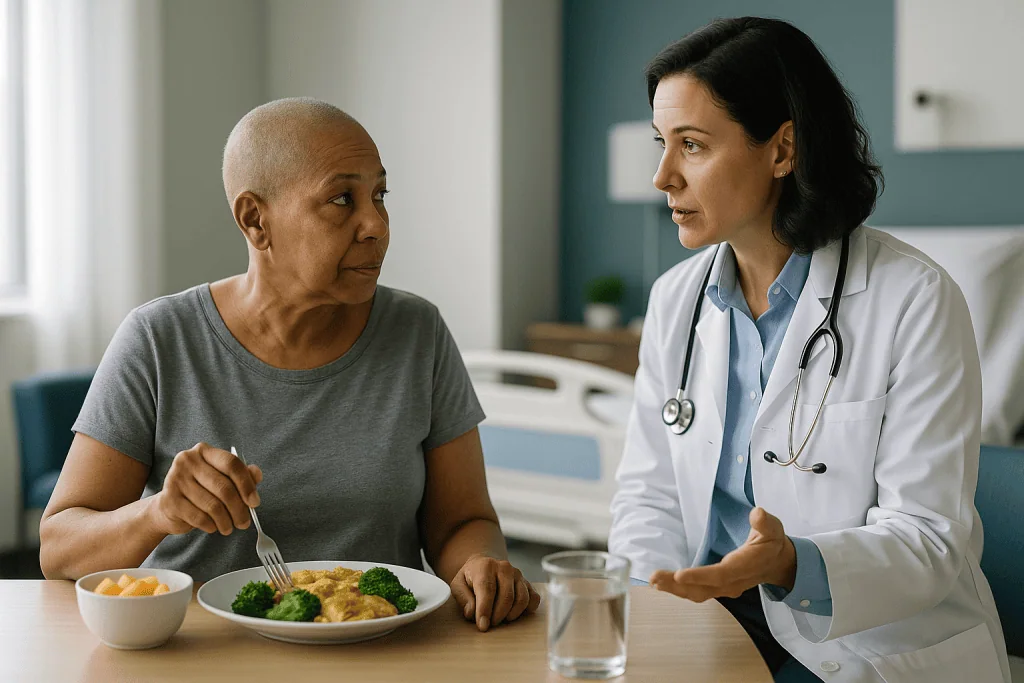
The low-microbial diet is the more modern label. It keeps the goal, fewer live organisms on the plate, but narrows the list to foods with documented contamination risk and adds the food-safety steps that studies suggest do most of the protective work. Under a low-microbial approach, a firm apple that has been washed and peeled is usually fine, while raw bean sprouts remain off the menu because the warm, damp conditions used to grow them favor bacterial growth, a risk the CDC specifically flags for people with weakened immune systems.
In practice, what your center calls the plan matters less than the specific instructions it gives. Some units still hand out a traditional neutropenic list; others have moved to a food-safety-first sheet that reads more like general guidance for pregnancy or older adulthood. Both are trying to protect the same patient during the same vulnerable weeks.
The shift in naming reflects a shift in evidence, covered below. A useful way to think about it: the neutropenic diet asks what could possibly carry a microbe, and bans it. The low-microbial diet asks what has actually made immunocompromised people sick, and focuses there. When you read your own instructions, it helps to know which question the author was answering.
Why does infection risk rise so sharply after transplant?
Three things happen in sequence, and the diet responds to each.
First comes the count drop. Mayo Clinic describes the days after conditioning as the period when blood cell counts fall to their lowest, with the new cells typically beginning to produce neutrophils over the following several weeks. During that window, a foodborne bacterium that a healthy person would clear without symptoms can seed the bloodstream.
Second is the barrier problem. Mucositis, painful inflammation and ulceration of the digestive lining caused by chemotherapy, is common after transplant. Open sores in the mouth and gut give organisms a shortcut into tissue and blood. This is why oral hygiene instructions arrive alongside the diet sheet; they are two halves of the same barrier plan.
Third, and specific to allogeneic transplants, are the immunosuppressive medicines. An allogeneic transplant uses cells from a donor; an autologous transplant uses the patient’s own stored cells. Donor cells can attack the recipient’s tissues, a condition called graft-versus-host disease, so medicines that dampen the new immune system are given for months. Those medicines blunt the very cells that would otherwise fight a food-borne infection, long after neutrophil counts look normal on paper. The NHS notes that the immune system can take a year or more to recover fully after a transplant.
The organisms that worry clinicians most are the ones that thrive in refrigerated ready-to-eat foods and cause severe illness in immunocompromised people. Listeria grows at refrigerator temperatures and is linked to unpasteurized dairy, soft cheeses, deli meats and refrigerated smoked fish, according to the CDC. Salmonella rides on raw eggs, undercooked poultry and sprouts. Molds and environmental fungi live on aged cheeses, dried fruit and unwashed produce. Each restriction on the sheet maps to one of these.
What does the evidence say about the neutropenic diet after transplant?
Here is the part most patient leaflets leave out. When researchers finally tested the strict neutropenic diet in randomized trials, comparing it with a standard diet prepared using ordinary food-safety practices, they did not find fewer infections in the restricted group.
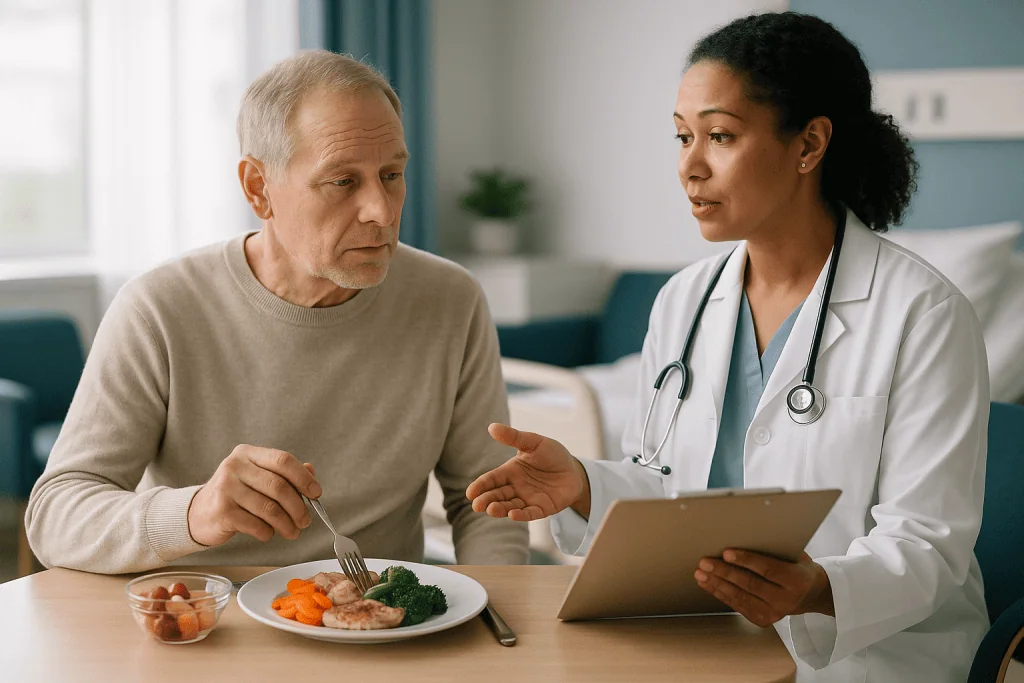
The pattern held across several trials in leukemia and transplant patients, and the joint fever-and-neutropenia guideline from the American Society of Clinical Oncology and the Infectious Diseases Society of America, indexed on PubMed, states that a neutropenic diet is not recommended, while safe food-handling practices are. Later systematic reviews pooling these trials reached the same conclusion: no clear reduction in major infection or death, and some evidence that patients on strict diets ate less and enjoyed food less.
Why might the strict diet fail to help? Several plausible reasons. Most serious infections during neutropenia come from the patient’s own gut bacteria crossing a damaged lining, not from a new organism on a salad leaf. Hospital and home kitchens practicing basic hygiene already remove much of the food-borne risk. And a diet that is hard to follow may be quietly abandoned, or may cause weight loss that carries its own harms.
None of this means anything goes. The trials compared the strict diet with careful food safety, not with carelessness. Raw oysters, unpasteurized milk and sprouts still make immunocompromised people seriously ill, and the guidelines that stepped back from the neutropenic diet stepped toward, not away from, cooking food thoroughly and avoiding high-risk items.
So the evidence-based position is a middle one: the blanket ban on fresh produce and every fermented food is not supported, but the core avoidance list and rigorous kitchen practice are. If your center’s sheet is stricter than that, it is not wrong, just cautious, and the right response is a conversation rather than a quiet rebellion.
Low-microbial diet foods to avoid, and what usually replaces them
Lists vary between centers, and yours takes precedence. The table below shows the items that appear on nearly every version, the reason each is paused, and the swap most dietitians suggest. The reasons draw on CDC food-safety guidance for people with weakened immune systems.
| Usually paused | Why | Common alternative |
|---|---|---|
| Raw or undercooked meat, poultry, fish, shellfish | Salmonella, E. coli, Vibrio, parasites | Cooked to safe internal temperature, served hot |
| Raw or runny eggs, homemade mayonnaise, raw cookie dough | Salmonella | Eggs cooked until yolk and white are firm; pasteurized egg products |
| Unpasteurized milk, juice, cider; soft and blue-veined cheeses | Listeria, molds | Pasteurized dairy and juice; hard cheeses; processed cheese |
| Deli meats, hot dogs, refrigerated smoked seafood, pâté | Listeria grows in the fridge | Heated until steaming; canned or shelf-stable versions |
| Raw sprouts of any kind | Seeds germinated in warm, damp conditions | Cooked sprouts or omit |
| Unwashed produce, damaged or moldy fruit, pre-cut melon | Surface bacteria, mold | Washed, peeled or cooked; whole fruit cut at home |
| Salad bars, buffets, street food | Time at unsafe temperature, shared utensils | Freshly cooked meals served immediately |
| Raw honey, raw nuts, unpasteurized fermented foods | Spores and live cultures | Pasteurized honey; roasted nuts; wait for team guidance |
Two groups of items divide centers. Fresh fruit and vegetables are permitted by many units if washed under running water and, for thin-skinned items, peeled; others ask patients to cook everything until engraftment. Pasteurized yogurt with live cultures is allowed by some and paused by others, an inconsistency that reflects genuine uncertainty rather than one side knowing better. Ask your team which camp your unit is in, and why.
Tap water is another question that varies by region. Where municipal water meets safety standards, most centers allow it; those on private wells are often asked to boil or use bottled water until counts recover.
Who follows the diet, and who is usually asked to keep it longer?
Nearly everyone leaving a transplant unit is given some version of the diet. What differs is the length of the runway, and three factors set it.
The type of transplant comes first. After an autologous transplant, where the patient’s own cells are returned, there is no donor immune system to suppress and no graft-versus-host disease to treat. Once neutrophils recover, which Mayo Clinic describes as occurring over several weeks, the main reason for the diet has passed. Many centers relax it soon after engraftment, the point at which the new cells are reliably producing blood cells, or at a set early follow-up visit.
Allogeneic transplant recipients are typically asked to wait longer. Their neutrophils may return on a similar schedule, but they remain on immunosuppressive medicines that weaken the response to infection. Common practice is to continue the diet until those medicines are being tapered, with many centers anchoring the first review to the standard checkup around three months after transplant and the fuller relaxation to whenever immunosuppression ends. The NHS observes that full immune recovery after a transplant can take a year or more, which is why some allogeneic patients carry certain restrictions well past the first review.
Complications extend the timeline for anyone. Active graft-versus-host disease of the gut, a return to hospital for infection, steroid treatment, or a second course of chemotherapy all reset the clock because each one either lowers counts again or deepens immunosuppression.
Children follow the same logic. Pediatric teams tend to focus on practical comfort, working with families to find safe versions of familiar foods rather than handing a young child a long list of forbidden items, and to schedule the relaxation around the same milestones.
Whatever category you fall into, the decision to loosen the diet belongs to the transplant team, who can see the counts, the medicines and the trajectory together.
What can I eat after a bone marrow transplant in the first weeks?
The honest answer for many people in the first two to three weeks is: not much, and that is expected. Mucositis, nausea and taste changes often make eating a chore before it is a pleasure again. MedlinePlus notes that during the period of low counts, patients may need help meeting nutrition needs, sometimes including nutrition delivered by tube or into a vein.
On the unit, meals arrive already vetted, so the diet is invisible. The learning curve begins at home. A typical week-one pattern looks like this: small, frequent meals rather than three large ones; soft, bland, well-cooked foods such as scrambled eggs cooked firm, oatmeal, rice, cooked vegetables, toast, and pasteurized dairy if tolerated; and fluids in steady sips through the day to protect the kidneys from the medicines being processed.
Protein is the nutrient teams watch most closely, because the body is rebuilding blood cells and repairing a damaged gut lining. Cooked chicken, fish, eggs, tofu, beans and pasteurized dairy all count. Cold protein foods, such as cottage cheese or a pasteurized yogurt where permitted, can be easier to swallow when the mouth is sore.
Food temperature deserves a specific note. Leftovers should be refrigerated within two hours of cooking and reheated until steaming hot throughout; the CDC advises eating refrigerated leftovers within three to four days. A kitchen thermometer takes the guesswork out: poultry to 165°F (74°C), ground meats to 160°F (71°C), whole cuts of beef and pork to 145°F (63°C) with a rest.
By week three or four, as counts rise, appetite often begins to return and the menu widens to washed and peeled fruit, cooked salads and firmer textures. Weight is usually checked at each visit, and a dietitian can adjust the plan if the scale keeps falling.
How long is the neutropenic diet after BMT, and what signals tell the team to relax it?
There is no universal number, and any source that gives one without qualification is oversimplifying. The typical ranges, drawn from how transplant centers structure follow-up, look like this: for autologous recipients, the diet often relaxes once engraftment is confirmed, which Mayo Clinic describes as happening over several weeks; for allogeneic recipients, restrictions commonly continue until the standard review around three months and may extend until immunosuppressive medicines have been stopped. The NHS timeline of a year or longer for full immune recovery explains why a few precautions, such as avoiding raw shellfish and unpasteurized products, sometimes remain even after the formal diet ends.
The team is watching several signals rather than a calendar.
- Neutrophil count: sustained recovery, not a single good day, is the first gate.
- Gut lining: resolution of mucositis and diarrhea suggests the barrier has healed.
- Immunosuppression: reduction or withdrawal of medicines that dampen immune response.
- Graft-versus-host disease: absence of active gut involvement.
- Recent infections: a clear stretch without fever or hospital readmission.
- Vaccination progress: re-immunization schedules that begin months after transplant mark rising immune competence.
Relaxation is usually staged rather than sudden. A common sequence is fresh washed produce first, then pasteurized soft cheeses and yogurts, then restaurant meals from kitchens with visible hygiene standards, and finally the items on the permanent caution list only if the team is comfortable. Some patients are surprised to find that a few items, particularly raw oysters and unpasteurized cheeses, stay off the list indefinitely; these carry outsized Listeria and Vibrio risk for anyone with reduced immunity, and many clinicians never see a reason to reintroduce them.
If you are unsure whether a milestone has been reached, ask at the next visit. The counts are in the chart, and the team would rather field the question than treat the infection.
Safe food handling at home: the steps that carry most of the weight
If the trials are right that food safety, not food bans, does the protective work, then the kitchen routine deserves more attention than the forbidden-foods list. The CDC organizes it into four steps: clean, separate, cook, chill.
Clean. Hands for twenty seconds with soap before cooking and after touching raw meat or eggs. Surfaces, boards and knives washed in hot soapy water between tasks. Produce rinsed under running water and scrubbed if firm, even when it will be peeled, since a knife drags surface bacteria through the flesh.
Separate. Raw meat, poultry, seafood and eggs kept apart from ready-to-eat food in the cart, the fridge and on the counter. A dedicated board for raw meat is the simplest fix. Marinades that touched raw meat are discarded, not reused as sauce.
Cook. A food thermometer, not color, decides when meat is done. Eggs cooked until firm. Leftovers and deli meats reheated until steaming throughout. Microwaves heat unevenly, so food should be stirred and rested before checking temperature.
Chill. The refrigerator at or below 40°F (4°C) and the freezer at 0°F (-18°C), verified with an appliance thermometer, since a dial setting is not a temperature. Perishables refrigerated within two hours, or one hour if the room is hot. Refrigerated leftovers eaten within three to four days.
Restaurant meals are a separate risk category because you cannot see the kitchen. Many centers ask patients to avoid dining out until counts recover and to skip buffets, salad bars and street food for longer, since holding food at room temperature is the common thread in outbreaks. When restaurants return to the menu, ordering freshly cooked hot dishes and asking for no raw garnish is a reasonable compromise.
Shared kitchens need a household plan. The person doing the cooking, whoever that is, should understand these steps as well as the patient does.
Appetite, taste changes and sore mouths: getting enough calories in
A restrictive diet is only a problem if it leaves you undernourished, and after transplant that risk is real. Chemotherapy alters taste, sometimes making everything metallic or bland; mucositis makes chewing and swallowing painful; nausea narrows the window when food appeals. Weight loss in this period is common and is one reason transplant dietitians push back against overly strict lists.
Practical strategies help more than willpower. Eating six small meals rather than three large ones keeps intake steady when a full plate is overwhelming. Cold or room-temperature foods often taste less metallic than hot ones and are gentler on a sore mouth. Adding calories to what is already tolerated, such as stirring pasteurized cream, cheese or nut butter into cooked foods, raises energy intake without increasing volume.
Texture matters when the mouth is raw. Smooth soups, mashed vegetables, well-cooked pasta, soft scrambled eggs, custards made with pasteurized ingredients, and smoothies blended from washed, peeled fruit and pasteurized dairy are staples on most transplant dietitians’ lists. Acidic, spicy, crunchy or very salty foods are usually set aside until the lining heals.
Taste changes have their own workarounds. Plastic cutlery can reduce a metallic taste from metal utensils. Marinating meat in fruit juices or sauces, and adding herbs rather than salt, helps when food tastes flat. Rinsing the mouth before eating clears lingering flavors.
Oral nutrition supplements, the shelf-stable drinks that deliver protein and calories in a small volume, are frequently used during this phase and are compatible with the low-microbial diet when stored and opened as directed. Whether you need them, and which formulation suits any kidney or blood sugar issues, is a decision for the dietitian and medical team.
If eating remains impossible for more than a day or two, or weight keeps falling, that is not a failure to report but a clinical problem the team expects and can address.
Graft-versus-host disease of the gut and the diet after stem cell transplant
For allogeneic recipients, the diet has a second job that has nothing to do with microbes. Graft-versus-host disease, the reaction in which donor immune cells attack the recipient’s tissues, commonly targets the skin, liver and gut. When it involves the intestine, it causes watery diarrhea, cramping, nausea and difficulty absorbing nutrients. Mayo Clinic lists it among the most significant complications of a donor transplant.
Gut GVHD changes what the body can tolerate, and dietitians respond with a staged approach that runs alongside the low-microbial rules rather than replacing them. In an active flare, the bowel may be rested with fluids only or with nutrition given intravenously, so the inflamed lining is not asked to work. As symptoms settle, foods are reintroduced in stages, typically starting with low-fiber, low-fat, lactose-free, mild options and working back toward a fuller diet as tolerance returns.
Lactose intolerance is common during and after gut GVHD because the enzyme that digests milk sugar lives in the damaged lining. Pasteurized lactose-free dairy or plant-based alternatives fortified with calcium usually fill the gap. Fat malabsorption may also occur, so very rich or fried foods are often held back.
Treatment for GVHD usually involves corticosteroids, medicines that broadly suppress immune activity, along with other immunosuppressive drugs. These extend the period of infection risk and therefore the low-microbial precautions, and they can also raise blood sugar and appetite, which the dietitian factors in. How long any of these medicines continue, and how quickly they are reduced, is decided by the transplant team based on how the GVHD responds.
Patients sometimes feel they are following two contradictory diets at once, one that limits raw foods and another that limits fiber and fat. In practice the dietitian merges them into a single plan, revised at each visit as the gut heals.
Probiotics, herbal teas and supplements: what is actually known
This is where well-meaning advice most often collides with transplant reality.
Probiotics, live bacteria or yeasts taken to influence gut flora, are the clearest example. In a healthy person they are generally harmless. In someone with a damaged gut lining and almost no neutrophils, there are published case reports of the very organisms in probiotic products being cultured from the bloodstream. For that reason most transplant centers ask patients to avoid probiotic supplements and unpasteurized fermented foods until immune recovery, and to check before reintroducing them. Whether probiotics could eventually help restore gut flora after transplant is an active research question, not an established benefit.
Herbal teas and botanical supplements raise two separate concerns. Dried plant material can carry mold spores and bacteria, which is why some centers ask for commercially packaged tea bags rather than loose leaf and boiling water rather than steeping in warm water. The bigger issue is interaction. Immunosuppressive medicines used after allogeneic transplant are processed by liver enzymes that several common herbs, including St. John’s wort and grapefruit constituents, can speed up or slow down, changing blood levels of the medicine in ways that can be dangerous. The NIH Office of Dietary Supplements maintains fact sheets on individual botanicals, and the transplant pharmacist is the right person to review anything you are considering.
Vitamins and minerals sit in a middle ground. Deficiencies are common after transplant because intake falls and absorption is impaired, and teams do check levels and replace what is low. Taking high-dose supplements without that testing can be counterproductive; some, such as iron, are actively unhelpful in patients who have received many transfusions.
The short version: nothing sold as a supplement should enter the routine during the low-microbial period without the team’s knowledge. That includes items a family member is confident are natural and therefore safe.
What people often get wrong about eating after transplant
Myth: the diet helps the new cells grow. It does not. Engraftment depends on the transplanted cells and the marrow environment, not on menu choices. The diet’s only job is to keep microbes out during a vulnerable window.
Myth: if strict is good, stricter is better. Randomized trials found the strict neutropenic diet did not lower infection rates compared with a normal diet prepared safely, and stricter diets were linked to eating less. Undernutrition slows healing of the very gut lining the diet is meant to protect.
Myth: all fresh fruit and vegetables are dangerous. Many centers allow washed and peeled produce even during neutropenia. The genuinely high-risk items are sprouts, pre-cut melon and anything bruised or moldy, because those conditions favor bacterial growth.
Myth: yogurt is essential to restore the gut. Live-culture products are exactly what many teams pause, because live organisms in a leaky gut can reach the bloodstream. Pasteurized yogurt without added live cultures is a different product, and your center will say which, if either, is permitted.
Myth: once counts are normal, everything is fine. Neutrophil recovery is the first gate, not the last. Allogeneic recipients on immunosuppressive medicines remain at raised risk for months, which the NHS timeline of a year or more for full immune recovery reflects.
Myth: the diet ends on a fixed day. It ends when the team judges that counts, gut healing, immunosuppression and complication history all point the same way, and it can be reinstated if any of those change.
Myth: organic or homemade means safer. Growing method has nothing to do with Salmonella or Listeria. Homemade mayonnaise with raw egg is riskier than a commercial pasteurized version. Safety comes from pasteurization, cooking temperature and handling, not from the label.
Questions to ask your care team about the low-microbial diet
Discharge conversations are rushed and the diet sheet rarely anticipates your actual kitchen. Bringing a short list of questions turns a leaflet into a plan. These are the ones dietitians and transplant nurses say they wish more patients asked.
- Is our unit’s version of the diet a traditional neutropenic list or a food-safety-based low-microbial plan, and what is the reasoning behind the items that differ from other centers?
- Which fresh fruits and vegetables are allowed now if washed and peeled, and which stay off the list until a specific milestone?
- What is the first milestone at which you expect to review the diet, and what will you be looking at in my blood work or medicines when you decide?
- Are there any foods you would prefer I avoid for the long term even after the formal diet ends, such as raw shellfish or unpasteurized cheeses?
- Is my tap water considered safe, or should I boil or use bottled water, and for how long?
- Is pasteurized yogurt permitted, and does that include products labeled as containing live cultures?
- Which of my current medicines interact with foods, juices or herbal products, and is there a list I can keep on the refrigerator?
- Who do I contact if I accidentally eat something on the avoid list, and what symptoms should prompt that call?
- Can I see a dietitian before discharge, and how do I reach one if my weight drops or eating becomes difficult at home?
- If I develop diarrhea or a sore mouth, how does the plan change, and do I wait for a visit or call first?
Write the answers down or ask whether they can be added to your discharge summary. The person cooking at home, if it is not you, should be present for this conversation or receive the same notes, since consistent handling in the kitchen matters more than any single food choice.
When to call your doctor
Food-borne infection in a transplant recipient can move quickly, and the early signs are easy to mistake for ordinary treatment side effects. Transplant teams would rather hear from you unnecessarily than late. MedlinePlus and Mayo Clinic both emphasize that fever after transplant is treated as an emergency until proven otherwise.
Contact your transplant team or the emergency number you were given immediately if you notice any of the following:
- A temperature at or above the threshold your team specified, or chills and shaking even without a measured fever.
- Diarrhea that is new, worsening, bloody, or accompanied by severe abdominal pain or cramping.
- Vomiting that prevents you from keeping down fluids or medicines for more than a few hours.
- Signs of dehydration: dizziness on standing, very dark or scant urine, dry mouth, confusion.
- New or spreading mouth ulcers, white patches, or pain severe enough to stop you swallowing.
- Sudden headache with stiff neck, sensitivity to light or confusion, which can signal Listeria infection of the nervous system.
- A rash, yellowing of the skin or eyes, or rapidly increasing fatigue and breathlessness.
- Any illness after eating a food you later realize was on your avoid list, even if symptoms seem mild.
Do not wait to see whether a fever settles on its own, and do not take medicines to bring it down before calling, since that can mask the sign the team needs to see. Keep a thermometer, the team’s contact details and your medication list together somewhere visible.
Less urgent but still worth a call within a day or two: steady weight loss, an inability to eat more than a few mouthfuls at meals for several days, persistent nausea, or confusion about whether a specific food is allowed. These are the situations in which the dietitian and nurse can adjust the plan before a small problem becomes a readmission.
Frequently asked questions
How long is the neutropenic diet after BMT?
There is no single duration; it depends on transplant type and complications. After an autologous transplant, many centers relax the diet once engraftment is confirmed, which typically occurs over several weeks. After an allogeneic transplant, restrictions commonly continue until immunosuppressive medicines are being tapered, often past the three-month review. Full immune recovery can take a year or more, so a few precautions may last longer. Your team sets the timeline.
What can I eat after a bone marrow transplant in the first month?
Well-cooked foods served hot, pasteurized dairy and juices, washed and peeled fruit where your center allows it, cooked vegetables, and plenty of fluids. Soft, bland options such as oatmeal, rice, firm scrambled eggs, cooked chicken or fish and smooth soups are easier on a sore mouth. Small frequent meals help when appetite is low. Protein is the priority nutrient because the body is rebuilding blood cells and gut lining.
What are the main low microbial diet foods to avoid?
Raw or undercooked meat, poultry, fish and shellfish; raw or runny eggs; unpasteurized milk, juice and cider; soft and blue-veined cheeses; deli meats and refrigerated smoked seafood unless heated until steaming; raw sprouts; unwashed or damaged produce and pre-cut melon; buffets and salad bars; raw honey and unpasteurized fermented foods. Each item is linked to Listeria, Salmonella, other bacteria or molds that cause severe illness in people with weakened immunity.
Is the neutropenic diet after transplant still recommended?
The strict traditional version is no longer recommended by the joint ASCO and IDSA fever-and-neutropenia guideline, because randomized trials did not show fewer infections compared with a standard diet prepared safely. What remains recommended is rigorous food safety and avoidance of specific high-risk foods. Many centers now call this a low-microbial diet. Your center’s instructions take precedence, and stricter versions are cautious rather than wrong.
Can I eat fresh fruit and salad after a stem cell transplant?
Often yes, with conditions. Many centers permit fresh fruit and vegetables that are washed under running water and, for thin-skinned items, peeled, even during neutropenia. Raw sprouts, pre-cut melon, and bruised or moldy produce stay off the list because they favor bacterial growth. Some centers ask for cooked produce only until engraftment. Check which approach your unit follows before eating anything raw.
Why can't I have yogurt or probiotics after transplant?
Because they contain live organisms. In a person with a damaged gut lining and very low neutrophils, those bacteria or yeasts can pass into the bloodstream, and this has been documented in case reports. Most centers pause probiotic supplements and unpasteurized fermented foods until immune recovery. Pasteurized yogurt without added live cultures is a different product and is allowed by some centers; ask which applies to you.
Can I drink tap water after a stem cell transplant?
Where municipal water meets safety standards, most centers allow tap water. Patients on private wells, or in areas with water advisories, are often asked to boil water or use bottled water until counts recover. Ice from machines in public places is sometimes discouraged because of handling. Your team knows the local situation and will give a specific instruction, which is worth confirming before discharge.
Can I eat at restaurants after transplant?
Usually not until counts have recovered, and buffets, salad bars and street food are often discouraged for longer because food held at room temperature is the common factor in outbreaks. When restaurants are reintroduced, freshly cooked hot dishes without raw garnish are the safer choice. The timing depends on your counts, medicines and complications, so ask your team when eating out can resume.
Does the diet change if I develop graft-versus-host disease of the gut?
Yes. During an active flare the bowel may be rested, then foods are reintroduced in stages, typically low-fiber, low-fat and lactose-free at first. Steroids and other immunosuppressive medicines used to treat GVHD extend the infection-risk period, so low-microbial precautions continue alongside the GVHD plan. The dietitian merges both into one plan that is revised as the gut heals.
What should I do if I accidentally ate something on the avoid list?
Do not panic, but tell your team, and watch closely for fever, chills, diarrhea, vomiting, abdominal pain or headache with a stiff neck over the following days. A single exposure does not mean infection, yet transplant recipients are at higher risk and early treatment matters. If any symptom appears, call the emergency number you were given rather than waiting for a scheduled visit.
References
- MedlinePlus: Bone marrow transplant – discharge
- MedlinePlus: Safe eating during cancer treatment
- NHS: Stem cell and bone marrow transplants
- CDC: Four Steps to Food Safety
This article is for general information only and is not a substitute for professional medical advice. Please consult a qualified doctor about your individual situation.

More from the Blog
Partial or Radical Nephrectomy for Kidney Cancer: How Surgeons Decide What to Remove
Surgeons choose between partial and radical nephrectomy for kidney cancer mainly on tumor size, where the tumor sits in the kidney, how well both…
What Staging Tests for Head Cancer Reveal: Biopsy, Imaging and Endoscopic Examination
Head and neck cancer staging tests combine three things: a biopsy, which confirms what the cells are; an endoscopic examination, which lets the team…

Planning Your Stay in Istanbul for HIPEC: Hospital Days, Follow-Up and When to Fly Home
After cytoreductive surgery with HIPEC, most people spend roughly one to two weeks in hospital, often beginning with a day or more in intensive…
Vulvar Cancer Surgery Explained: Organ-Sparing Excision and Wider Procedures
Vulvar cancer surgery removes the tumor together with a rim of healthy tissue. It ranges from a wide local excision that preserves most of…

How Neck Cancer Treatment Is Planned When Lymph Nodes Are Involved
When neck cancer involves lymph nodes, a multidisciplinary team plans treatment after biopsy, imaging and staging establish how many nodes are affected, their size,…
How Ureteroscopy With Biopsy Confirms a Ureteral Tumor and Sets the Treatment Plan
Ureteroscopy with biopsy passes a thin telescope through the bladder into the ureter so a urologist can see a suspected tumor directly, collect urine…