

Facial Aesthetic Surgery Preparation: Photographs, Blood Tests and the Smoking Question
Key Takeaways
- WHO reports that stopping tobacco at least four weeks before surgery improves outcomes, with each additional smoke-free week associated with roughly a 19% further fall in complications.
- For facial surgery, most teams ask you to stop all nicotine, including vapes, patches and gum, because nicotine itself narrows the small vessels a lifted skin flap depends on.
- Pre-operative photographs are standardized for planning and fair comparison, and any use beyond your medical record requires separate consent you can refuse.
- Blood tests before cosmetic surgery are chosen according to your health and the procedure rather than from a fixed list, and results are read as a whole by the anesthesia clinician.
- Aspirin, anti-inflammatory pain relievers and supplements such as fish oil, ginkgo and vitamin E can raise bleeding risk, but any pause in a prescribed medicine is decided by the prescriber.
- The NHS puts the window for feeling comfortable in public after a facelift at roughly two to four weeks, with scars and final contour settling over months.
Preparing for facial aesthetic surgery usually means three things in the weeks before the operation: standardized photographs so the surgeon can plan and later compare, blood tests and a health review to confirm you are fit for anesthesia, and stopping all nicotine, because smoking narrows the small blood vessels that facial skin depends on to heal. Your surgical team sets the exact timeline and confirms which medicines you may continue.
The envelope arrives about a month out. Inside is a checklist: a clinic appointment for photographs, a form for blood tests, a reminder about the anesthesia phone call, and one line in bold that asks about smoking. Most people skim the rest and stop at that line. It feels personal in a way a blood draw does not.
That reaction is understandable, and the line is there for a reason. Preparing for facial aesthetic surgery is less about a special diet or a shopping list than about giving the skin of the face the best possible blood supply on the day a surgeon lifts and repositions it. Photographs, lab work and the nicotine question are the three pieces of that preparation people ask about most, and each has a plainer explanation than the paperwork suggests.
This explainer walks through what actually happens, why each step exists, what the evidence supports, and which decisions belong to your treating team rather than to a checklist.
What actually happens when you start preparing for facial aesthetic surgery
Facial aesthetic surgery is an umbrella term for operations that change the appearance of the face rather than treat an injury or disease: a facelift (repositioning skin and deeper tissues of the lower face and neck), eyelid surgery, brow lift, rhinoplasty (reshaping the nose) and chin or cheek work. Preparation follows a similar shape for all of them.
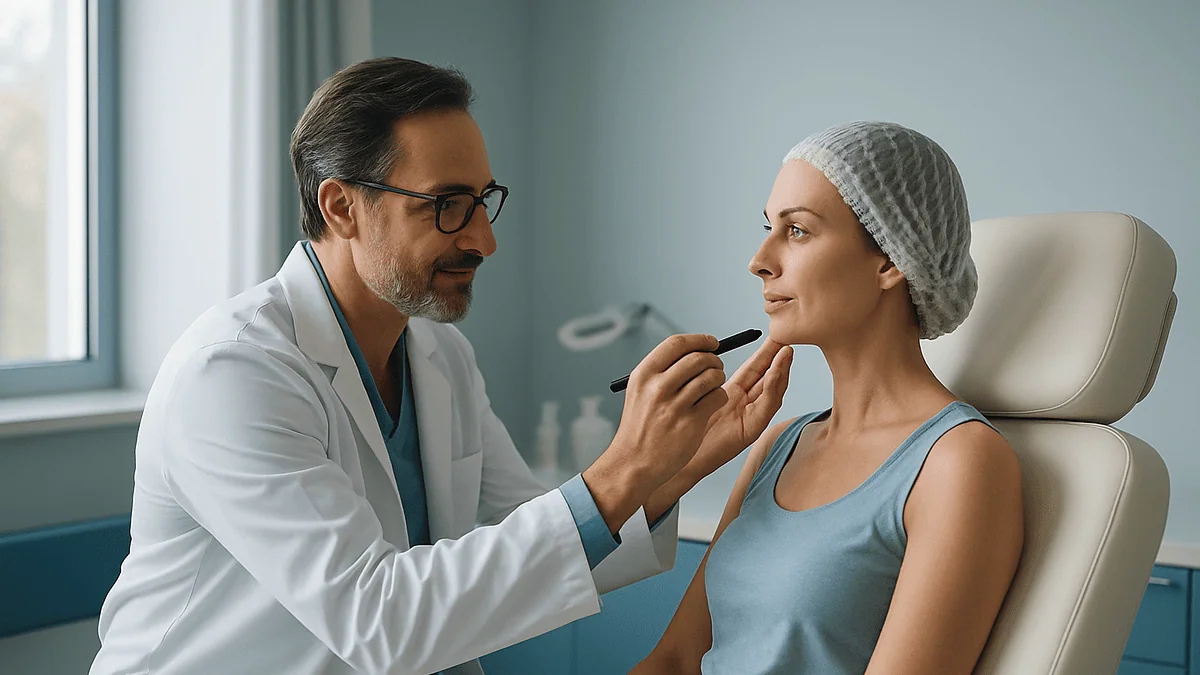
It begins with a consultation, where the surgeon examines skin thickness, how it moves, bone structure and any asymmetry, then talks through what surgery can and cannot change. Somewhere in that first or second visit, a set of standardized photographs is taken. A separate pre-assessment, often run by nurses and an anesthesia clinician, reviews your medical history, current medicines and allergies and orders any blood tests or heart tracing that history suggests. The NHS describes this pre-operative assessment as the point where the team decides whether you are fit for the planned anesthetic and what, if anything, needs adjusting first.
Then comes the part that lives at home: the weeks of preparation. That means stopping nicotine, pausing any supplements or over-the-counter products the team flags, arranging someone to collect you and stay the first night, and following fasting instructions the day before. Mayo Clinic’s facelift guidance lists these same elements: a medical evaluation, a medication review, stopping smoking, avoiding certain blood-thinning products on the team’s advice, and planning help for recovery.
Nothing about this sequence is unique to cosmetic work. It is the same safety architecture used before any planned operation under anesthesia, applied to a part of the body where healing is visible to everyone you meet.
Who is usually a good candidate for facial surgery, and who is asked to wait
Surgeons think about candidacy in two layers: is this person medically safe for an elective operation, and is this person likely to be well served by it?
On the medical side, the qualities that matter are unglamorous. Blood pressure that is controlled. Blood sugar that is controlled if you have diabetes, because high glucose slows wound healing. A body weight that has been stable for months, since large swings after a facelift can loosen the result. No active skin infection on the face. And, above all for facial work, no current nicotine use. The NHS facelift page states plainly that you should stop smoking before the operation and that smokers face a higher risk of complications.
On the second layer, surgeons look for realistic expectations. A facelift can reposition sagging tissue in the lower face and neck; it does not change skin texture, remove all wrinkles or make anyone look like a different person. Mayo Clinic notes that results are not permanent and that facial skin continues to age afterward.
People are commonly asked to wait, rather than declined, when something can be improved first: unstable blood pressure, a recent major illness, a planned significant weight change, active smoking, or a period of acute stress or grief. Some teams also ask for a pause when a person’s distress about their appearance seems out of proportion to what others see, because surgery does not reliably relieve that distress and a conversation with a mental health professional may help more.
None of this is a judgment. It is the team trying to line up the operation with the moment your body and life can best absorb it.
Why does the surgeon take so many pre-op photos before plastic surgery?
Expect more photographs than feel comfortable: front view, both profiles, both three-quarter angles, sometimes eyes closed, smiling, looking up. Usually there is a plain background, fixed lighting, no makeup, hair pulled back and no jewelry. People often assume these are for marketing. They are not, and you can decline any use beyond your own record.
The first purpose is planning. A surgeon studies asymmetry more reliably in a still image than in a moving face across a desk. Photographs reveal that one brow sits a few millimeters higher, that the jawline is fuller on one side, or that a nose deviates slightly at rest. Those observations shape the operative plan and the honest conversation about what can be corrected and what cannot.
The second purpose is memory. Swelling and bruising change the face for weeks, and by the time the result has settled, most people have forgotten exactly what they looked like before. Standardized pictures taken in identical conditions are the only fair comparison. Mayo Clinic’s facelift guidance lists facial photography among the standard pre-operative steps for exactly this reason.
The third purpose is the medical record. If a question arises later about healing, a nerve, or a scar, the photographs document the starting point.
Standardization matters more than flattering angles. A photograph taken in good light and another under a fluorescent tube can make the same face look years apart, which is one reason the before-and-after images circulating online are so unreliable. Ask how your images are stored, who can see them, and how consent for any wider use works. That is a reasonable request, and the answer should be clear.
Which blood tests are done before cosmetic surgery, and what they show
There is no fixed panel for facial surgery. The tests ordered depend on your age, medical history, the length of the operation and the type of anesthesia. The NHS notes that pre-operative tests are chosen according to your health and the procedure, and that a healthy person having a shorter operation may need very few.
When tests are ordered, they commonly include:
- A full blood count, which measures red cells, white cells and platelets. Low hemoglobin (the oxygen-carrying protein in red cells) can mean the team wants to understand why before you bleed at all; platelets are the small cells that plug wounds.
- Clotting studies, which time how quickly blood forms a clot, useful if you take anticoagulants (medicines that slow clotting) or have a history of unusual bleeding.
- Kidney function and electrolytes, salts such as sodium and potassium, which affect how the body handles anesthetic drugs and fluids.
- Blood glucose or HbA1c, a three-month average of blood sugar, if you have diabetes or risk factors for it.
- A pregnancy test where relevant.
Some people also have an electrocardiogram, a tracing of the heart’s electrical rhythm, based on age or symptoms rather than routinely.
Results are read as a whole rather than as pass or fail. A mildly low iron level does not cancel surgery; it prompts a conversation about timing and whether treatment first would make healing smoother. A very high blood sugar or an unrecognized clotting issue can lead the team to postpone, which is the system working as designed. The anesthesia clinician, not the lab report, makes the final call.
Why do surgeons ask you to stop smoking before a facelift?
Nicotine causes small blood vessels to constrict. Carbon monoxide from burning tobacco displaces oxygen from red blood cells. Together they mean less oxygen reaching the skin at the exact moment it needs the most.
A facelift makes that vulnerability acute. The surgeon lifts a flap of facial skin away from the tissue beneath and repositions it. Until new vessels grow in, that skin survives on a thinner blood supply than it had before. Reduce the supply further and the edges of the flap, typically in front of and behind the ears, can break down, producing delayed healing, thicker scars, and in the worst cases, skin loss that needs further treatment. Wound infection is also more likely when oxygen delivery is poor.
The evidence here is not a matter of surgical folklore. WHO, drawing on a joint review with anesthesiology and surgical bodies, reported that people who smoke are significantly more likely than non-smokers to have post-surgical complications, including impaired heart and lung function, infection and delayed or poor wound healing, and that stopping at least four weeks before surgery improves outcomes, with every additional tobacco-free week beyond that associated with roughly a 19% further reduction in complications. MedlinePlus advises that quitting even shortly before an operation still helps, because carbon monoxide levels fall within a day or two.
Four weeks is the figure many facial surgeons anchor to, and some ask for longer before a facelift specifically. Your team sets the requirement. Many will decline to operate on someone actively smoking, and a few test for nicotine metabolites on the day. That is not moralizing. It is a surgeon refusing to take a risk with your face that the evidence says is avoidable.
Do vapes, nicotine patches and cannabis count when you are told to stop smoking?
This is the follow-up question almost everyone asks, and the answer surprises people: for facial surgery, most teams treat nicotine in any form as the problem, not just cigarettes.
Vaping delivers nicotine without combustion, so it removes the carbon monoxide burden. It does not remove the vasoconstriction, because nicotine itself narrows vessels. The same applies to nicotine patches, gum and lozenges, which is why facial surgeons often ask people to be free of all nicotine products for the pre-operative window rather than switching to a replacement. That is a stricter position than in general surgery, where nicotine replacement is widely used to help people quit, and it reflects how dependent a lifted skin flap is on blood flow. If you are using replacement products to quit, tell the team; they will advise how to handle the final weeks, and non-nicotine approaches such as behavioral support and certain prescription medicines exist for exactly this situation. Decisions about those medicines belong with your prescribing clinician.
Cannabis is a different concern. Smoked cannabis carries combustion products and irritates the airway, which matters for anesthesia. Cannabis in any form can also alter heart rate and blood pressure and interact with anesthetic drugs, so anesthesia clinicians ask about it directly. Honesty here changes how you are cared for, not whether you are judged.
Secondhand smoke is worth mentioning too. Living with a smoker means continuous low-level carbon monoxide exposure; asking household members to smoke outside during your recovery is a reasonable step that costs nothing.
The practical summary: when a facial surgeon says stop smoking, they usually mean stop nicotine altogether, and the safest move is to ask exactly what your team includes.
What should I do 2 weeks before a facelift?
Two weeks out is when preparation shifts from decisions to logistics. By now, nicotine should already be behind you if your team asked for a four-week window. What remains is mostly practical.
Confirm the medicine plan. Bring the team a written list of everything you take, including over-the-counter pain relievers, vitamins and herbal products. They will tell you which prescribed medicines to continue on the morning of surgery and which products to pause. Do not stop a prescribed medicine on your own, particularly blood pressure or blood thinning treatment; the prescribing clinician makes that call, sometimes in consultation with the surgeon.
Arrange your first 48 hours. You will need an adult to drive you home after general anesthesia and to stay the first night, which the NHS lists as standard for day-case surgery. Stock soft foods, set up a place to sleep with your head raised on several pillows, and clear your calendar. The NHS facelift page describes bruising and swelling that take roughly two to four weeks to settle enough for most people to feel comfortable in public.
Sort the small things that become large after surgery: button-front shirts rather than pullovers, a supply of clean pillowcases, ice packs or frozen peas wrapped in cloth, prescriptions collected in advance if the team gives them to you early.
Look after the skin. Avoid new skincare products, aggressive treatments or sunburn in these two weeks; irritated skin is harder to operate on and heals less predictably.
Finally, protect your general health. A cold or chest infection in the last week is one of the most common reasons an operation is postponed. Wash hands, sleep, and avoid crowded sick rooms where you can.
What not to do 2 weeks before surgery: medicines, supplements and alcohol
The don’t list is shorter than most online versions suggest, and every item on it has a mechanism.
Blood-thinning products are the main concern. Aspirin and other non-steroidal anti-inflammatory drugs (a class of pain relievers that also reduce platelet stickiness) can increase bleeding during and after surgery. Bleeding under a facial skin flap forms a hematoma, a collection of blood that can compromise the skin above it and is the most common early complication after a facelift. Mayo Clinic advises avoiding aspirin, anti-inflammatory pain relievers and certain herbal supplements before a facelift on the surgeon’s instructions. If you take these for a medical reason, the prescribing clinician decides whether and when to pause.
Supplements are the group people forget. Fish oil, vitamin E in high amounts, ginkgo, garlic supplements, ginger and ginseng have all been associated with increased bleeding tendency; St John’s wort can interact with anesthetic drugs. The NIH Office of Dietary Supplements is clear that supplements are not inert and should be disclosed before surgery. The usual approach is to stop them for the pre-operative window your team specifies.
Alcohol deserves a plain word. Heavy drinking impairs clotting, dehydrates tissue and complicates anesthesia; most teams ask for little or none in the final week or two. Alcohol also interferes with sleep, which you will want in reserve.
Skip crash diets. Rapid weight loss before a facelift reduces the fat the surgeon uses for contour, and calorie restriction starves healing tissue of protein.
And avoid booking anything that cannot be moved. Surgery dates shift for reasons outside anyone’s control, and a rigid schedule adds stress that helps nothing.
Preparing for facial aesthetic surgery: the timeline at a glance
Timelines vary by surgeon, procedure and your own health, so treat the table below as a typical pattern rather than a rule. Where a figure appears, it comes from the referenced NHS, WHO or Mayo Clinic guidance; your team’s written instructions override anything here.
| Timing | What usually happens | Why it matters |
|---|---|---|
| First consultation | Examination, discussion of goals and limits, standardized photographs | Planning and a fair baseline for later comparison |
| Pre-assessment (weeks before) | History, medicine review, blood tests as indicated, sometimes a heart tracing | Confirms fitness for anesthesia; flags anything to optimize first |
| At least 4 weeks before | All nicotine stopped | WHO: quitting 4+ weeks ahead reduces complications; each further week adds benefit |
| About 2 weeks before | Pause supplements and non-prescribed blood-thinning products as instructed; arrange support and supplies | Lowers hematoma risk; recovery logistics in place |
| Final week | No alcohol or new skincare; avoid infection exposure; confirm which prescribed medicines to take on the day | Prevents last-minute postponement |
| Night before | Follow fasting instructions; shower; remove nail polish and jewelry | Safe anesthesia; clean surgical field |
| Day of surgery | Arrive without makeup or contact lenses; consent re-confirmed; markings drawn | Final checks with surgeon and anesthesia team |
| First 2–4 weeks after | Swelling and bruising settle; sutures removed; gradual return to activity | NHS: most people feel comfortable in public within this window |
Two points are worth pulling out. The nicotine step comes earlier than everything else, which is why it needs to be the first decision rather than the last. And the fasting instruction is not negotiable; anesthesia with food in the stomach carries a risk of it entering the lungs, which is why a missed fast means a cancelled slot rather than a delayed one.
Do they cover your privates during surgery? What the operating room is actually like
Yes. This question is asked far more often than people admit, so it deserves a straight answer.
You will change into a hospital gown and, depending on the unit, disposable underwear. Once you are asleep or sedated, the team positions you on the operating table and covers you with warmed blankets. Sterile drapes are then placed so that only the surgical field, meaning the face and often the neck, is exposed. Everything else stays covered throughout. For a facelift, the drapes typically leave the face and ears visible and nothing below the collarbones.
Small monitoring pads are attached to the chest for the heart tracing, a clip goes on a finger to measure oxygen, and a cuff on the arm tracks blood pressure. A cannula, a thin tube in a vein of the hand or arm, delivers fluids and medicines. Compression sleeves may be wrapped around the calves; they inflate rhythmically to keep blood moving and lower the chance of a clot in the legs during a longer operation.
Facial procedures may be done under general anesthesia, where you are fully asleep with breathing supported, or under sedation with local anesthetic, where you are drowsy and the face is numbed. Mayo Clinic notes that facelifts can be performed either way depending on the surgeon and the person. The anesthesia clinician explains which is planned and why.
Dignity policies in surgical units are explicit: the minimum number of people present, exposure limited to the operative area, and the same care taken while you are unconscious as when you are awake. If you have specific concerns about who is in the room, about a chaperone, or about students observing, say so at pre-assessment. These are ordinary requests.
What the first days and weeks after facial surgery usually look like
Preparation is easier to sustain when you know what it is for, so here is the honest shape of recovery.
The first day is about rest and observation. After a facelift, a soft dressing wraps the head and small drains may sit behind the ears to prevent blood collecting under the skin. The face feels tight rather than sharply painful for most people; numbness around the ears and cheeks is expected and can persist for weeks or months as small sensory nerves recover. Someone must stay with you overnight after general anesthesia.
Days two to seven bring the peak of swelling and bruising, often worst around day two or three and then receding. Sleeping with the head raised and applying cool packs as instructed helps. Sutures around the ears and in the hairline are usually removed over the first one to two weeks, and the surgeon checks the skin edges for healing.
By two to four weeks, the NHS notes, most people feel comfortable returning to work and social settings, though residual swelling can linger, especially in the neck and around the eyes. Strenuous exercise, heavy lifting and anything that raises blood pressure sharply are typically held back until the team clears them, because a pressure spike can start bleeding under the flap.
Scars mature slowly. They are pink and slightly raised at first and soften over many months; sun protection on healing skin matters throughout that period. Mayo Clinic describes the final appearance as taking several months to settle and reminds people that the face keeps aging afterward.
None of these timelines is a promise. They are the typical arc, and your own will be tracked at follow-up.
What people often get wrong about preparing for facial aesthetic surgery
Some myths cost people nothing. Others cost them a good result.
“Switching to vaping is the same as quitting.” It is not, for facial skin. Nicotine, not smoke alone, constricts the vessels a lifted flap depends on. Most facial surgeons want all nicotine gone, and the WHO evidence on complications concerns tobacco use broadly, with the four-week threshold as the point where benefit becomes clear.
“Herbal means harmless.” Several common supplements increase bleeding tendency, and one, St John’s wort, alters how the liver processes anesthetic and other drugs. The NIH Office of Dietary Supplements urges disclosure of every supplement before surgery. If it is in a bottle, tell the team.
“I should stop my blood pressure medicine so I’m not on anything.” The opposite is usually true. Uncontrolled blood pressure on the morning of surgery raises bleeding risk and can lead to cancellation. Continue prescribed medicines unless the prescribing clinician tells you otherwise.
“A juice cleanse will help me heal.” Healing tissue needs protein and calories. A balanced diet in the weeks before surgery does more than any cleanse, and rapid weight loss changes the very facial volume the surgeon planned around.
“The photos are for advertising.” Standardized photographs exist for planning, comparison and your medical record. Any other use requires separate consent that you can decline.
“If the blood tests are normal, nothing can go wrong.” Tests screen for specific problems; they do not guarantee an uneventful operation. Preparation lowers risk. It never removes it, and a surgeon who says otherwise is not describing the evidence.
“I’ll look finished in a week.” The NHS puts the comfortable-in-public window at two to four weeks, with final settling over months.
Questions to ask your care team before facial surgery
Consultations run faster than anyone expects. Writing questions down beforehand turns a nervous conversation into a useful one. These are the ones that tend to matter most.
- Exactly what do you mean by stopping smoking, and for how long before and after? Does that include vaping, patches and gum?
- Which blood tests are you ordering for me, and what would change the plan if a result came back abnormal?
- Which of my prescribed medicines should I take on the morning of surgery, and who decides about any blood-thinning treatment I am on?
- Which supplements or over-the-counter products should I pause, and from what date?
- Will this be under general anesthesia or sedation, and who will be giving it?
- How are my photographs stored, who can see them, and what consent covers any use beyond my record?
- What does a realistic result look like for my face specifically, and what will this operation not change?
- What are the most common complications for this procedure, how often do they occur in your practice, and how are they managed?
- How long should I plan to have someone with me, and when can I expect to drive, work and exercise?
- What is the follow-up schedule, and how do I reach the team out of hours if I am worried?
- If you found something on the day that changed the plan, how would that be handled?
Notice what is not on the list: nothing about guarantees. A careful team will talk about ranges, typical courses and how problems are handled, not about certainty. If you leave a consultation feeling you have been promised an outcome rather than offered a plan, that is worth a second conversation.
Bring a companion if you can. Two sets of ears retain more, and the person who will help you at home benefits from hearing the instructions directly.
When to call your doctor before or after facial aesthetic surgery
Most of the preparation period is uneventful, and most recoveries are too. A small number of situations should prompt a call to your surgical team, or in the most serious cases emergency services, without waiting for the next scheduled appointment.
Before surgery, contact the team if you develop a cold, cough, fever or chest infection in the final week; if a new skin infection, cold sore or rash appears on the face; if you have a bleeding episode such as a nosebleed that is hard to stop; if you have been unable to stop nicotine as agreed; or if you realize you took a product you were asked to pause. None of these is a failing on your part, and all of them are safer disclosed than hidden.
After surgery, call promptly if you notice rapidly increasing swelling or tightness on one side of the face, especially with sharp pain, because this can indicate a hematoma that may need draining; if bleeding soaks through a dressing; if a wound edge turns dark, dusky or white; if you have spreading redness, warmth or pus around an incision; or if you develop a fever. Mayo Clinic lists hematoma, infection and skin loss among the recognized complications of facelift surgery, and early review changes how they are managed.
Seek emergency care for chest pain, sudden shortness of breath, calf pain with swelling (possible blood clot), a severe headache unlike any you have had, weakness or drooping on one side that is new, or any difficulty breathing or swallowing.
Your team would far rather hear from you about something that turns out to be normal than miss something that was not. Every judgment about what happens next, from a change of dressing to a return to the operating room, rests with the clinicians looking after you.
Frequently asked questions
What should I do 2 weeks before a facelift?
Two weeks before a facelift, confirm your medicine plan with the team, pause any supplements or non-prescribed products they flag, arrange an adult to drive you home and stay the first night, and prepare soft foods, extra pillows and button-front clothing. Nicotine should already have been stopped by this point if your surgeon asked for a four-week window. Avoid new skincare, sunburn and exposure to infections.
What not to do 2 weeks before surgery?
In the two weeks before facial surgery, avoid aspirin and anti-inflammatory pain relievers unless a prescriber tells you to continue, stop supplements known to affect bleeding such as fish oil, ginkgo and high-dose vitamin E, and cut out alcohol as your team advises. Do not use any nicotine, do not start crash diets, and never stop a prescribed medicine on your own.
How long do I need to stop smoking before a facelift?
Many facial surgeons ask for at least four weeks without nicotine before a facelift, and some ask for longer, plus a further period afterward while the skin heals. WHO reports that quitting at least four weeks before surgery improves outcomes and that each additional week adds benefit. Your surgeon sets the exact requirement, and it usually includes vaping and nicotine replacement products.
Which blood tests are done before cosmetic surgery?
Blood tests before cosmetic surgery depend on your health and the procedure. Commonly ordered tests include a full blood count, clotting studies if you take blood thinners or have a bleeding history, kidney function and electrolytes, blood glucose or HbA1c if diabetes is a concern, and a pregnancy test where relevant. A healthy person having a short operation may need very few tests.
Why are pre op photos taken before plastic surgery?
Pre-operative photographs are taken in standardized lighting and angles so the surgeon can study asymmetry, plan the operation and later compare the result against a fair baseline. They also form part of your medical record. They are not for marketing by default; any use beyond your record requires separate consent, and you are entitled to decline that.
Do they cover your privates during surgery?
Yes. You wear a gown, and once you are asleep or sedated the team places warmed blankets and sterile drapes so that only the surgical field, the face and sometimes the neck, is exposed. Everything else stays covered throughout. Surgical units follow dignity policies that limit exposure and the number of people present, and you can ask about chaperones or observers beforehand.
Does vaping count as smoking before facial surgery?
For facial surgery, most surgeons treat vaping as equivalent to smoking because nicotine itself constricts the small blood vessels that a lifted skin flap relies on, even without the carbon monoxide from burning tobacco. Nicotine patches and gum are usually included in the same restriction. Ask your team exactly what they want stopped and for how long.
What do I wish I knew before getting a facelift?
People who have had a facelift most often say they underestimated the numbness around the ears, the length of visible swelling, and how much the nicotine rule mattered. The NHS describes two to four weeks before most people feel comfortable in public, with scars maturing over months. Many also say they wished they had asked more about realistic limits rather than results.
Can I take my regular medicines on the morning of surgery?
Usually many prescribed medicines are continued, particularly blood pressure treatment, but the anesthesia team gives you a specific list at pre-assessment. Blood-thinning medicines and some diabetes treatments need individual decisions made by the prescribing clinician in consultation with the surgeon. Take only what you have been told to take, with the small sip of water permitted under your fasting instructions.
What happens if my blood test results are abnormal before surgery?
An abnormal result usually prompts a conversation rather than an automatic cancellation. Mildly low iron, for example, may lead to treatment first and a later date, while an unrecognized clotting problem or very high blood sugar may lead the team to postpone until it is controlled. The anesthesia clinician and surgeon decide together; the aim is to operate when your body can heal best.
References
This article is for general information only and is not a substitute for professional medical advice. Please consult a qualified doctor about your individual situation.

More from the Blog

Buccal Fat Removal Recovery Week by Week: Liquids, Soft Foods and When Cheeks Settle
Buccal fat removal recovery time is usually measured in weeks for the visible part and months for the final shape. Most people manage daily…
How a Combined Neck and Face Lift Is Performed: Incisions, Deeper Tissue Work and Closure
A combined neck and face lift is one operation, usually under general anesthesia and typically lasting two to four hours or longer. The surgeon…
Do Facial Augmentation Results Last? Implants vs Fat Transfer Over the Years
Facial augmentation results vary by method. Solid cheek and chin implants are designed to stay in place indefinitely and usually keep their shape for…
Preparing for Face Aesthetics Surgery: Blood Tests, Anesthesia Review and Medicine Changes
Preparing for facial surgery usually means a pre-assessment visit where blood tests check clotting, blood count and kidney function, an anesthesia review covers your…
Supporting Someone After a Neck and Face Lift: Drains, Dressings and the First Days Home
In the first days after a neck and face lift, a helper's main tasks are keeping the head raised, emptying and recording any drains,…
Facial Augmentation With Fat Transfer or Implants: Which Option Suits Which Face?
Facial fat transfer uses a person's own fat, taken by gentle liposuction and injected into the face, to add soft, natural-looking volume; facial implants…