

Facial Augmentation With Fat Transfer or Implants: Which Option Suits Which Face?

Key Takeaways
- Facial fat transfer replaces lost volume with a person's own fat, while implants add fixed skeletal projection, so the two answer different questions about a face.
- A portion of grafted fat is reabsorbed in the first months and the surviving share cannot be predicted, which is why surgeons overfill slightly and sometimes plan a second session.
- Surviving fat behaves like the fat it came from, shrinking with weight loss and enlarging with gain, whereas implants stay constant while the face ages around them.
- A recessed chin is a bone problem, and fat rarely produces the firm projection it needs; the realistic choice there is an implant or moving the bone itself.
- Nicotine narrows the small blood vessels a fat graft depends on, so smokers and vapers are almost always asked to stop before fat transfer surgery.
- Many surgeons combine both techniques in one operation, using an implant for structure and a thin layer of fat to soften its edges and blend the result.
Facial fat transfer uses a person's own fat, taken by gentle liposuction and injected into the face, to add soft, natural-looking volume; facial implants are shaped solid pieces placed on the bone to add firm, defined structure. Fat suits diffuse hollowing in cheeks, temples or under the eyes, while implants suit a small chin or flat cheekbones. Many people combine both, and a surgeon assesses which fits their anatomy.
A woman in her early fifties turns her phone toward the mirror, then back again. The photo from a family gathering shows a face she recognizes but does not quite feel: the cheeks a little flatter, the shadows under the eyes a little deeper, the jawline softer than she remembers. She is not chasing a different face. She wants the one she has, with the fullness the years have quietly taken.
When she starts reading, the same two phrases keep appearing: fat transfer and implants. One promises volume from her own body. The other promises structure from a shaped piece placed on bone. Both are described as answers, yet they are answers to different questions. Understanding facial fat transfer vs implants means understanding what has actually changed in a face, and whether it is softness that has been lost or shape that was never there.
This explainer walks through both options as the evidence describes them, without a sales pitch, and with the decision left firmly where it belongs: in a conversation with a qualified surgical team.
Facial fat transfer vs implants: what each term actually means
Facial fat transfer, also called fat grafting or autologous fat transfer, is a procedure in which fat is removed from one part of a person’s body, usually the abdomen or thighs, prepared, and injected into the face to restore volume. Autologous simply means the tissue comes from the same person. Because the material is living fat, some of it develops a blood supply in its new home and stays for years, while some is reabsorbed in the first months.
Facial implants are solid, pre-shaped pieces made from biocompatible materials, most often medical-grade silicone or porous polyethylene, that a surgeon places on top of the facial bones through small incisions. Biocompatible means the body tolerates the material without rejecting it. Implants do not shrink, shift with weight change, or fade; they add a fixed amount of projection wherever they are placed, most commonly the chin, the cheekbones or the angle of the jaw.
The distinction matters because the two procedures address different kinds of change. Aging faces tend to lose fat in specific compartments: the temples hollow, the cheeks deflate, the under-eye area develops a trough, and the folds beside the nose deepen as the tissue above them descends. That is a volume problem, and volume is what fat replaces. A recessed chin or a flat midface, by contrast, is a skeletal shape that was present at twenty and is still present at fifty. That is a structural question, and structure is what implants provide.
Mayo Clinic groups both approaches under cosmetic surgery, procedures that reshape normal structures to improve appearance rather than to treat disease, and stresses that outcomes depend heavily on realistic goals and the surgeon’s assessment of individual anatomy. Neither is a better technique in the abstract; each is better for a particular kind of face.
How does facial fat transfer work, step by step?
The procedure has three stages, and each affects how much fat survives.
Harvesting comes first. Under local anesthesia with sedation or a general anesthetic, the surgeon numbs a donor area and removes fat with a thin cannula, a hollow tube attached to gentle suction. Cleveland Clinic describes this as a low-pressure form of liposuction; the point is to keep fat cells intact rather than to slim the donor site, so only a modest amount is taken.
Processing follows. The harvested fat is a mixture of fat cells, blood, anesthetic fluid and broken cell debris. Surgeons separate the usable fat by letting it settle, spinning it in a centrifuge, or filtering and rinsing it. Different teams favor different methods, and current evidence does not show one processing technique to be clearly superior for facial grafting.
Injection is the stage that demands the most skill. The purified fat is loaded into small syringes and placed through tiny entry points in many fine threads across several layers, from deep against the bone to just under the skin. Spreading the graft thinly gives each parcel of fat a better chance of reaching a blood supply from surrounding tissue, which is what allows it to survive. Fat dumped in a single large pocket is more likely to die in the center, leaving lumps or oil cysts.
The surgeon deliberately places slightly more fat than the final result requires, because a portion will be reabsorbed over the first few months as the graft settles. How much stays varies from person to person and from one area of the face to another, and no surgeon can predict the figure precisely in advance. The final shape is generally judged once swelling has resolved and the graft has stabilized, which the NHS notes can take several weeks to months after any facial surgery.
How do facial implants work, and where are they placed?
Placing an implant is more like carpentry than sculpting. The surgeon chooses a shape and size, usually from a range of standard designs, sometimes trimmed or custom-made from imaging, and creates a snug pocket directly on the bone for it to sit in.
For a chin implant, the incision is either inside the lower lip or in the natural crease beneath the chin. The surgeon lifts the soft tissue off the bone, slides the implant into position along the lower edge of the jaw, and closes the incision. Cheek implants are typically placed through an incision inside the mouth, above the upper teeth, or occasionally through the lower eyelid. Jaw angle implants also go in through the mouth. Because the incisions are hidden inside the mouth or under the chin, visible scarring is minimal.
Once in place, the body forms a thin capsule of scar tissue around the implant, which holds it. Some designs are secured with a small screw or suture to reduce the chance of shifting during the healing weeks. Porous materials allow tissue to grow into the surface, which anchors the implant more firmly but also makes later removal more involved; smooth silicone is easier to remove or exchange, which some surgeons see as an advantage if tastes or faces change over decades.
Implants are usually done under general anesthesia or deep sedation, often taking one to two hours on their own, though many people have them alongside a facelift, rhinoplasty or neck lift. Mayo Clinic’s facelift guidance describes the typical pattern for such combined operations: same-day discharge is common, with bruising and swelling that peaks in the first days and eases over the following weeks.
The defining feature is predictability. What the surgeon places is what the person has, unchanged, for as long as the implant stays in.
Who is facial fat transfer usually for, and who is asked to wait?
Fat grafting tends to suit people whose main complaint is deflation rather than shape. That includes sunken temples, flattened cheeks that once were full, a hollow under the eyes, deepened lines from the nose to the mouth, and a gaunt look that follows significant weight loss or illness. It also appeals to people who want a soft, blended result and are uncomfortable with a foreign object in the face. Surgeons often recommend fat when the goal is to restore youthful fullness across several areas at once, since one harvest can supply the whole face.
Fat also requires a donor site. Very lean people may not have enough easily accessible fat, and what is available can be more fibrous and harder to process, which some surgeons believe lowers survival. That is a common reason to steer toward fillers or implants instead.
Several groups are typically asked to pause. People who smoke or vape nicotine are almost universally asked to stop well before surgery, because nicotine narrows small blood vessels and the graft depends entirely on new blood supply to survive. The NHS and Mayo Clinic both list smoking among the factors that raise complication rates and slow healing after cosmetic surgery. Anyone planning substantial weight loss is usually advised to reach a stable weight first, since transferred fat behaves like the fat it came from and shrinks when the person does.
Uncontrolled diabetes, active skin infection, bleeding disorders, and certain blood-thinning medicines all prompt a conversation before scheduling; the surgeon and the prescribing clinician decide together how to manage them. People with unrealistic expectations, or who are seeking surgery during a period of acute personal distress, are also often asked to wait. Reputable teams treat that pause as protective rather than dismissive.
Who are facial implants usually for?
Implants shine where the underlying skeleton is the issue. The classic example is a weak or receding chin, sometimes called microgenia, in which the chin sits behind a vertical line dropped from the lower lip. No amount of soft-tissue volume gives that face a crisp jawline; it needs projection at the bone, and a chin implant supplies exactly that. Flat or low cheekbones, an indistinct jaw angle, and asymmetry after injury or congenital difference fall into the same category.
Younger people who are not yet losing facial fat but dislike the shape of a feature are more often implant candidates than fat candidates. So are people who want a durable, single-procedure answer and are willing to accept a foreign material for the sake of predictability. Someone whose face has already been treated repeatedly with fillers to build a chin, and who is tired of the cycle, is a common example.
Implants are less suited to people whose complaint is diffuse hollowing across the whole midface, since an implant adds shape in one defined spot rather than softness across a region. They are also a poor choice when the skin over the area is thin and the person has very little fat cover, because implant edges may become visible or palpable over time.
A history of dental or sinus infection matters for cheek and chin implants placed through the mouth, as does any tendency toward slow wound healing. People with significant bite or jaw alignment problems may be better served by a discussion with a maxillofacial team about moving the bone itself, a procedure called genioplasty, rather than covering it with an implant. Those are precisely the distinctions a thorough consultation is meant to draw.
Cheek implants vs fat transfer: the midface question
The cheeks are where the debate is most active, because both techniques can improve them and they do so in different ways.
A cheek implant sits on the zygoma, the cheekbone, and lifts the overlying tissue outward and slightly upward from a fixed point. The result is a defined, angular contour that reads as high cheekbones. It suits a person whose bony structure is genuinely flat, and it stays constant regardless of weight, age or hormonal change.
Fat transfer in the midface is more like refilling a cushion. Fat is layered into the deep compartments over the bone and into the more superficial layers beneath the skin, restoring the rounded fullness that a youthful cheek has and an aging one loses. It can also soften the transition from lower eyelid to cheek, an area implants do not address at all, and it can be feathered into the temples and nasolabial folds in the same session. The trade-off is that some of it will not survive, and the final contour is less precisely controlled.
Surgeons often frame the choice with a simple question: has this face lost something, or did it never have it? A woman who had full, high cheeks at thirty and flat ones at fifty-five has lost fat, and fat is the logical replacement. A man who has always had a flat midface and wants angularity is asking for a change in structure, and an implant answers that more reliably.
Many surgeons combine the two in the midface, using an implant for skeletal projection and a thin layer of fat over and around it to soften edges and blend the result. Neither the NHS nor Mayo Clinic identifies one approach as superior for cheeks; both stress individual assessment.
Chin implant vs fat grafting: when structure has to win
The chin is the one area where the evidence and surgical consensus lean clearly in one direction. A recessed chin is almost always a bone problem, and bone problems are answered by projection at the bone.
Fat can be grafted into the chin, and it will add a little fullness. What it cannot do is push the soft tissue forward in a firm, defined way. Fat is soft; it spreads, it settles, and a portion of it is reabsorbed. Trying to build several millimeters of forward projection with fat tends to produce a rounded, doughy chin rather than a sharp one, and the amount of fat required raises the risk of lumps and uneven survival. Most surgeons reserve chin fat grafting for very minor softening or for blending the edges of an implant.
A chin implant, by contrast, is one of the most established procedures in facial surgery. It sits along the lower border of the jawbone, adds a fixed amount of projection, and can be shaped to extend along the jawline for a stronger, more defined lower face. Placed through a small incision under the chin or inside the lip, it usually heals with a barely visible scar.
The main alternative is not fat but genioplasty, in which the chin bone itself is cut and moved forward, then fixed with small plates. Genioplasty is more involved and involves a longer recovery, but it uses no foreign material and can also correct vertical height or asymmetry that an implant cannot. It is generally done by a maxillofacial or craniofacial surgeon and may be the better route when the chin problem is linked to jaw alignment or bite.
For anyone weighing these, the honest answer is that fat rarely competes at the chin. The realistic choice is implant versus bone surgery, and that decision belongs to a surgeon who has examined the whole lower face.
Facial fat transfer vs implants at a glance
Tables flatten nuance, but they also make the core differences easy to hold in mind during a consultation. The rows below summarize what mainstream guidance from Mayo Clinic, the NHS and MedlinePlus describes for each approach.
| Feature | Facial fat transfer | Facial implants |
|---|---|---|
| Material | Person’s own fat, harvested by liposuction | Solid medical-grade silicone or porous polyethylene |
| Best suited to | Diffuse volume loss: cheeks, temples, under-eyes, folds | Skeletal shape: recessed chin, flat cheekbones, weak jaw angle |
| Type of result | Soft, rounded, blended fullness | Firm, defined projection at a fixed point |
| Predictability | Variable; a portion of fat is reabsorbed, amount not predictable | High; implant size and position are chosen before surgery |
| Durability | Surviving fat is long-lasting but changes with weight and age | Does not change; may need revision if the face changes around it |
| Reversibility | Difficult; excess fat requires further procedures | Removable or exchangeable through the original incision |
| Donor site | Required; adds a second small area of healing | None |
| Foreign material | None | Yes; small lifelong risk of infection, shifting or capsular change |
| Typical setting | Local anesthesia with sedation or general anesthesia | General anesthesia or deep sedation, often combined with other surgery |
| Touch-up likelihood | Fairly common; second session sometimes planned from the outset | Less common; revision usually for size, position or asymmetry |
Two points deserve emphasis beyond the grid. First, these are not competitors so much as tools, and a growing number of surgeons use both in the same operation. Second, none of the rows says which is right for a particular face. That comes from examination, not from a table.
How long does facial fat transfer last, and do implants last forever?
Longevity is where the two options diverge most sharply, and where marketing language tends to blur the truth.
Fat that survives the first few months has established its own blood supply and is, in principle, permanent tissue. It will not dissolve the way a hyaluronic acid filler does. What it will do is behave like the fat it came from. Lose a significant amount of weight and the grafted cheeks shrink along with the abdomen the fat came from; gain weight and they may enlarge. The face also keeps aging around the graft, so the person who looks fuller at one year may want more at ten. How much fat survives the initial settling period is genuinely unpredictable and varies by person, by area of the face and by technique; published estimates span a wide range, and no reputable surgeon quotes a guaranteed retention figure. That variability is exactly why some teams plan a second, smaller session from the outset rather than overfilling in one go.
Implants do not shrink, dissolve or fade. Medical-grade silicone and porous polyethylene are stable for decades in the body, and many people keep the same implant for life. That permanence is a double-edged quality. The implant stays the same while the face around it does not: skin thins, fat descends, and an implant that was perfectly proportioned at forty may look more prominent or slightly displaced at seventy. Revision, repositioning or removal is then possible, usually through the original incision, but it is another operation.
Neither option freezes a face in time. The NHS is blunt on this point across its cosmetic surgery guidance: the effects of aging continue, and further procedures may be wanted later. The right question is not which lasts longer but which ages more gracefully with a particular face, and that is a judgment call.
Fat grafting face recovery time: what the days and weeks usually look like
Recovery differs between the two procedures, mostly because fat transfer involves two healing sites and a great deal of swelling, while implants involve one site and a defined pocket.
After fat grafting, the face swells noticeably in the first two to three days, often more than people expect, because the surgeon has placed extra fat and because the many fine injection passes cause bruising. The donor site, typically the abdomen or thighs, is sore and bruised as after any liposuction, and a compression garment is usually worn there for a period the surgeon specifies. The NHS describes the general pattern for facial cosmetic surgery: bruising and swelling that is most pronounced in the first week and continues to settle over several weeks. Many people feel presentable in about one to two weeks, though the true contour is not visible until the swelling has fully resolved and the graft has stabilized, which the NHS and Mayo Clinic describe as taking weeks to months.
After implant surgery, the face is swollen and tight over the implant, and eating may be uncomfortable for a few days when incisions are inside the mouth. Careful oral hygiene, soft foods and keeping the head elevated are standard instructions. Numbness or tingling around a chin implant is common early on and usually improves as the nerves settle, though the surgeon should be told if it persists. Mayo Clinic’s facelift guidance, which often applies when implants are combined with other surgery, describes stitches or clips being removed within roughly the first week and most people returning to ordinary activities within a few weeks.
With either procedure, strenuous exercise, sleeping face-down, and anything that raises blood pressure or risks a knock to the face are typically restricted for the period the surgeon advises. Those timelines are individual, and the surgical team’s instructions override any general figure.
What are the risks of facial fat transfer and facial implants?
Both procedures are surgery, and both carry the risks the NHS lists for all cosmetic operations: bleeding, infection, blood clots, adverse reaction to anesthesia, scarring and an outcome the person is unhappy with. Beyond that shared list, each has its own profile.
Fat transfer’s most common problems are cosmetic. Uneven survival can leave asymmetry, small lumps, or firm areas where fat has died and formed an oil cyst or calcification. Overcorrection, where more fat survives than intended, produces puffiness that is hard to reverse without further procedures. Undercorrection is more common and usually means a second session. Under the thin skin of the lower eyelid, even slight irregularity can be visible, which is why many surgeons place fat there sparingly. The donor site can develop contour irregularity or prolonged bruising. Rarely, fat injected into a blood vessel can travel and block it; this is a recognized, serious complication of any facial injection and is the reason experienced injectors use blunt cannulas, small volumes and slow technique.
Implants introduce a foreign body, and that brings its own possibilities. Infection may occur early or, less commonly, years later, and an infected implant usually has to be removed. Shifting or rotation can leave the implant asymmetrical or palpable. Over time the implant may erode slightly into the bone beneath it, or the capsule around it may tighten. Nerve irritation is a specific concern at the chin, where the mental nerve supplying lip sensation runs close to the implant pocket; most numbness is temporary, but permanent change is possible. Visible edges can appear if overlying tissue thins with age.
None of these risks is a reason to avoid either procedure, but each is a reason to choose a surgeon who discusses them openly and has a plan for managing them.
What people often get wrong about fat transfer and implants
Several beliefs come up in nearly every consultation, and most of them point people toward the wrong procedure.
The first is that fat transfer is permanent in the way an implant is permanent. Surviving fat is durable, but it is living tissue that changes with weight and age, and an unpredictable share of the graft is lost in the early months. Anyone told that every gram injected will stay forever is hearing marketing, not medicine.
The second is the reverse: that implants are dangerous or outdated because they are foreign objects. Medical-grade facial implants have a long track record, and mainstream guidance from Mayo Clinic and the NHS describes them as established options with a known risk profile. Foreign is not the same as unsafe; it simply means a small, lifelong possibility of infection or displacement that fat does not carry.
Third, people often assume fat can build a chin or jawline. As the chin section explained, fat adds softness, not projection. Trying to force structure out of fat usually disappoints.
Fourth is the idea that fat transfer is a good way to lose weight from the donor area. The volumes taken for the face are modest, chosen to protect the fat cells rather than to slim the abdomen, and the donor site rarely looks meaningfully different.
Fifth, many believe the two are rivals and one must be chosen. In practice, combining an implant for structure with fat for softness is common and often gives a more natural result than either alone.
Finally, there is the belief that stem cells in transferred fat rejuvenate the skin. Fat does contain cells with regenerative potential, and this is an active research area, but current evidence does not support claims that facial fat grafting reliably improves skin quality beyond the volume it adds. Anyone promised a skin-renewing effect should ask what the evidence actually shows.
Questions to ask your care team before choosing
A good consultation should feel like a shared examination rather than a pitch. These questions help steer it that way.
- Looking at my face, is the change you see mainly lost volume, underlying shape, or both? Which would you address with fat, which with an implant, and why?
- What are your qualifications and how often do you perform each of these procedures? Which one do you personally do more?
- If you recommend fat, how do you harvest, process and place it, and how do you decide how much to overfill? Do you often plan a second session?
- If you recommend an implant, which material and design, and how will it be secured? How would it be removed or exchanged if I wanted that in the future?
- What would the result look like if I gain or lose a significant amount of weight?
- What are the specific risks for the areas we are discussing, particularly under the eyes or near the chin nerve, and how do you manage them?
- What kind of anesthesia will be used, where will the procedure take place, and who will be monitoring me?
- What does recovery look like week by week for me, and when could I realistically return to work, exercise and social events?
- How do you handle asymmetry, undercorrection or a result I am unhappy with, and what is your revision policy?
- Are there non-surgical options, such as fillers, that would achieve a reasonable version of what I want, and what are their trade-offs?
The NHS advises taking time between consultation and decision, seeking a second opinion where anything feels rushed, and confirming that the surgeon is appropriately registered and the facility is regulated. Mayo Clinic adds a quieter point: be honest with the team about your motivations and expectations, because that conversation predicts satisfaction more reliably than any technique does.
When to call your doctor after facial fat transfer or implant surgery
Most recovery is uneventful, and swelling, bruising, mild pain and tightness are expected in the first weeks. Certain signs are different, and they should prompt a call to the surgical team the same day, or emergency care where indicated.
Seek urgent help if you develop sudden, severe or rapidly worsening pain on one side of the face, especially with tight, shiny swelling, since this can indicate a collecting hematoma, a pocket of blood under the skin that may need draining. Call promptly for increasing redness, warmth, spreading swelling or pus at an incision or injection site, or a fever, as these can signal infection; an implant infection in particular needs early assessment. After fat grafting, any patch of skin that turns white, mottled, dusky or purple, or a new area of severe pain out of proportion to the rest of the face, warrants immediate attention because it can indicate compromised blood supply. Sudden vision change, eye pain, a droop in part of the face, difficulty speaking or weakness in a limb are emergencies and call for emergency services rather than a clinic phone line.
Also report persistent or worsening numbness around the chin or lip beyond what the surgeon described, an implant that feels as though it has moved or become sharply visible, a wound that opens or bleeds persistently, calf pain or swelling, chest pain or shortness of breath, since the last three can point to a blood clot, a recognized risk after any surgery.
Beyond the acute period, contact the team if firm lumps develop and enlarge, if asymmetry becomes more pronounced rather than less as swelling fades, or if anything about the result is causing distress. None of these should be managed with over-the-counter remedies or online advice; the treating team knows what was done and is the right first call.
Frequently asked questions
Which is better for cheeks, fat transfer or cheek implants?
Neither is better in general; it depends on whether the cheeks have lost fullness or were always flat. Fat transfer suits cheeks that have deflated with age and can also soften the under-eye transition. Cheek implants suit a genuinely flat cheekbone and give a defined, angular contour that does not change with weight. Surgeons often combine both in the midface, and a clinical examination decides which fits.
How long does facial fat transfer last?
Fat that survives the first few months has its own blood supply and is long-lasting tissue, not a temporary filler. It does, however, change with weight and continue to age with the rest of the face. The share of fat that survives varies widely between people and areas and cannot be guaranteed in advance, which is why some surgeons plan a modest second session rather than overfilling in one procedure.
Can a chin implant be replaced with fat grafting?
Usually not with the same effect. A chin implant provides firm forward projection at the bone; fat adds soft fullness and tends to spread and partly reabsorb, so it cannot reliably create a sharp, projected chin. Fat is sometimes used to soften the edges of an existing implant or to add minor fullness. If someone wants to avoid an implant entirely, moving the chin bone itself, called genioplasty, is the alternative surgeons usually discuss.
What is the fat grafting face recovery time?
Swelling and bruising are most pronounced in the first few days and settle over several weeks, with many people feeling presentable in about one to two weeks, according to the general recovery patterns the NHS and Mayo Clinic describe for facial cosmetic surgery. The final contour is not visible until swelling fully resolves and the graft stabilizes, which takes longer. The donor site is sore and bruised for a period as well, and the surgical team sets individual activity limits.
Do facial implants feel unnatural or can people tell?
A well-sized implant placed snugly against bone generally feels like firmer bone rather than a separate object, and it is not usually visible or palpable through healthy overlying tissue. Problems with feel or visibility tend to arise when an implant is too large for the face, shifts from its pocket, or when the tissue over it thins with age. Choosing a conservative size and a surgeon who assesses tissue thickness reduces that risk.
Is fat transfer safer than implants because it uses my own tissue?
Using your own fat removes the risk of implant infection, displacement or later visibility, but it introduces different risks, including uneven survival, lumps, asymmetry and overcorrection that is hard to reverse. Both are surgical procedures with the general risks of bleeding, infection, clots and anesthesia. The NHS and Mayo Clinic describe both as established options; which carries less risk for a particular person depends on anatomy, health and the area being treated.
Can you have fat transfer and facial implants at the same time?
Yes, and combining them is common. Surgeons often place an implant to provide skeletal projection at the chin or cheekbone and then layer a thin amount of fat around it to soften edges and restore volume in neighboring areas such as the temples or under the eyes. The combination is frequently done alongside a facelift as well. Whether it suits an individual face is a judgment for the surgical team.
What happens to transferred facial fat if I lose weight?
It shrinks. Grafted fat keeps the behavior of the area it came from, so significant weight loss reduces facial volume much as it reduces the abdomen or thighs, and weight gain can enlarge the grafted areas. This is why surgeons usually advise reaching a stable weight before fat transfer and why implants, which do not change with weight, may be preferred by people who expect their weight to fluctuate.
Why do surgeons ask smokers to stop before facial fat transfer?
Because nicotine constricts the tiny blood vessels that a fat graft depends on to survive. Newly injected fat has no blood supply of its own and must acquire one from surrounding tissue in the first days and weeks; reduced blood flow means more of the graft dies. The NHS and Mayo Clinic both list smoking as a factor that raises complications and slows healing after cosmetic surgery, and this applies to vaping nicotine as well.
Are dermal fillers a reasonable alternative to fat transfer or implants?
For many people, yes, at least as a first step. Hyaluronic acid fillers add volume without surgery, are gradually absorbed over months, and can be dissolved if the result is not wanted, which makes them a low-commitment way to preview a change. The NHS notes they are temporary and need repeating. They cannot match the durability of surviving fat or the firm projection of an implant, and repeated large-volume filling has its own costs and risks to weigh with a clinician.
References
This article is for general information only and is not a substitute for professional medical advice. Please consult a qualified doctor about your individual situation.

More from the Blog

How Surgeons Sequence Combined Face Aesthetics Procedures: One Operation or Several?
Surgeons combine facial procedures in one operation when the areas heal on a similar timetable, the patient is medically well, and total anesthesia time…

How Surgeons Sequence Combined Face Aesthetics Procedures: One Operation or Several?
Surgeons may combine facial procedures such as a facelift, eyelid surgery and fat grafting in one operation when a person is healthy, does not…

Are Facial Implants Right for Your Face? Bone Structure, Skin Thickness and Age Considered
Facial implants are usually considered for adults whose bones have finished growing, who have a specific structural gap such as a recessed chin or…
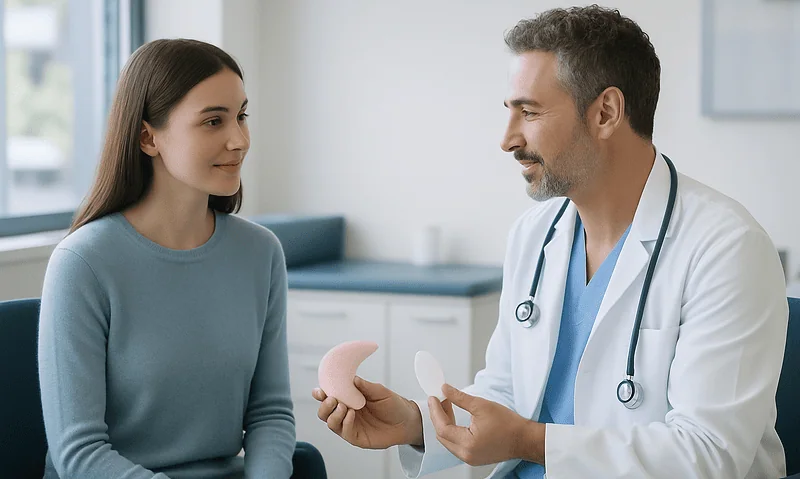
Silicone vs Porous Polyethylene Facial Implants: What the Material Changes for Healing
Solid silicone and porous polyethylene are the two most common facial implant materials, and the difference is mainly about how tissue attaches. Silicone is…
Is Ethnic Rhinoplasty Right for You? Skin Thickness, Cartilage Strength and Goals Weighed
You may be a reasonable ethnic rhinoplasty candidate if you are in good general health, your nose has finished growing, you have a specific…
CT and MRI Before Orbit Surgery: How Imaging Maps the Eye Socket and Guides the Approach
Before orbit surgery, a CT scan maps the bony walls of the eye socket in fine detail, showing fractures, wall thickness, sinus anatomy and…