

Fat Grafting Myths Corrected: Transferred Fat Is Living Tissue, Not a Filler That Wears Off

Key Takeaways
- Transferred fat survives by first absorbing nutrients from surrounding fluid and then growing new capillaries, which is why cells at the center of thick deposits are the ones most likely to die.
- Injectable fillers are broken down by enzymes on a fairly predictable schedule, whereas grafted fat that survives its first months is living tissue that is not scheduled to disappear.
- Mayo Clinic notes that swelling after liposuction settles over weeks and the final contour emerges over months, so a grafted area photographed at week two shows swelling, not the result.
- Fat cells removed by liposuction do not regrow in adults, but remaining cells anywhere can enlarge with weight gain, and Mayo Clinic cautions that fat distribution can shift if weight rises.
- Fat embolism after buttock grafting has been linked to injection into or beneath the muscle, which is why placement depth and the method used to confirm it are the key safety questions.
- Fat necrosis and oil cysts can show up as calcifications on later mammograms, so patients who have breast fat grafting should tell their imaging service in advance.
Fat grafting moves a person's own fat from one body area to another, where the fat cells that survive gain a blood supply and become living tissue. Unlike injectable fillers, which the body steadily breaks down, fat that survives the first few months generally remains, although some transferred fat is always reabsorbed, results vary between people, and the tissue still changes with weight and age.
She had done her homework, or thought she had. Her friend’s lip filler had faded in under a year, so when a surgeon suggested using her own fat to soften the hollows under her eyes, the first question out of her mouth was practical: how often would she need to come back for a top-up? The answer surprised her. If the fat survived, she would not need to come back for that reason at all.
That small misunderstanding sits at the center of most fat grafting myths. People hear “injection” and picture a syringe of something temporary. They hear “fat” and picture something the body will simply burn off at the next diet. Neither picture is right, and the gap between the two leads to disappointment in both directions: patients who expect a permanent, unchanging result, and patients who expect it to vanish.
This explainer walks through what the evidence actually says, where the honest uncertainty lies, and which questions are worth bringing to your care team.
Why fat grafting myths persist
Few procedures in aesthetic and reconstructive surgery attract as much folklore as fat grafting, and the reasons are not mysterious. The procedure borrows a syringe from the world of fillers, a cannula from the world of liposuction, and a healing process from the world of skin grafts. Most people know a little about each of those and assume the pieces add up in a predictable way.
Results also vary more than they do with an implant or a vial of hyaluronic acid. Two people can have an identical technique on the same day and end up with visibly different amounts of fat surviving six months later. Patients who lose more volume than expected tell friends it “all went away,” while patients whose fat grafts survived well tell friends it was “permanent.” Both stories travel, and both become fat grafting myths once they are stripped of context.
There is a third driver: social media before-and-after images taken in the early weeks, when swelling and not-yet-settled fat make the result look fuller than it will be. Mayo Clinic notes that after liposuction, the donor side of the same operation, swelling can take several weeks to subside and the final contour emerges over months. The grafted side follows a similar arc. Photographs taken at week two are not evidence of anything lasting.
What matters most, in my reading of the guidance from bodies such as the NHS and Mayo Clinic, is not the brand of technique but whether the patient understands three things before consenting: some fat will be reabsorbed, the surviving fat behaves like the fat it came from, and the final verdict cannot be read for months.
What actually happens during a fat grafting procedure
Fat grafting, also called fat transfer or lipofilling, has three steps that happen in one session: harvesting, processing and placement.
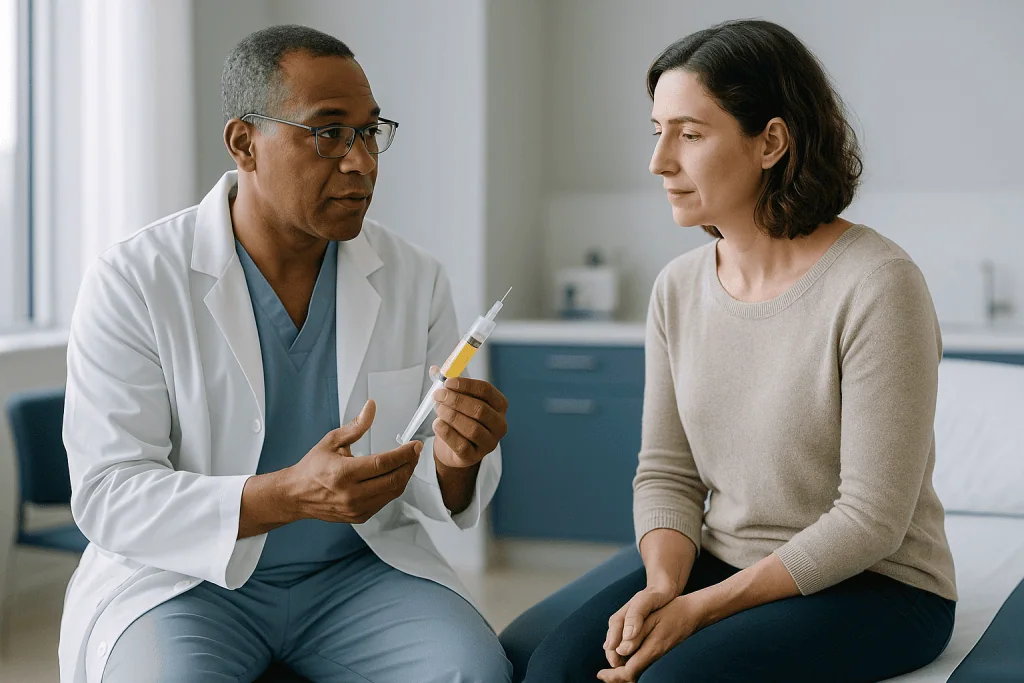
Harvesting is a form of liposuction. The surgeon infiltrates a donor area, commonly the abdomen, flanks or thighs, with a salt-water solution containing a local anesthetic and a small amount of a blood-vessel-constricting medicine to limit bleeding. A thin hollow tube called a cannula is passed through tiny incisions and fat is drawn out under gentle suction. MedlinePlus describes the same basic approach for standard liposuction; the difference in a grafting case is that the surgeon uses lower suction and smaller cannulas to keep the fat cells intact.
Processing separates usable fat from everything else that came out with it: tumescent fluid, blood and the oil released from fat cells that ruptured during harvest. Surgeons use settling, gentle spinning in a centrifuge, filtering or washing. No single method has been proven superior in a way that mainstream guidance treats as settled, which is why you will hear confident claims for several of them.
Placement is the step that decides whether the fat lives or dies. The surgeon injects the prepared fat through blunt cannulas in many small threads, spreading them through the tissue in several layers rather than depositing one large pool. Each thread needs to sit close to existing blood vessels so that oxygen and nutrients can diffuse in during the first days, before new vessels grow.
The whole process can be done under local anesthesia with sedation for small areas such as the face, or under general anesthesia for larger volumes to the breast or buttock. Your anesthesia plan is set by the surgical and anesthesia team based on the volume involved and your health history.
Transferred fat is living tissue, not a filler that wears off
Here is the mechanism that corrects the biggest of the fat grafting myths. A dermal filler is a gel, usually made of hyaluronic acid, a sugar molecule the body already produces. Enzymes in the tissue recognize it and break it down over months, which is why fillers fade on a fairly predictable schedule and why Mayo Clinic classes them as temporary treatments.
A fat graft is made of adipocytes, the technical name for fat cells, along with supporting cells and tiny blood-vessel fragments. Once injected, a graft goes through the same sequence a skin graft does. For roughly the first few days it survives by plasmatic imbibition, meaning the cells soak up oxygen and nutrients from the surrounding fluid. Then capillaries from the recipient bed begin to grow into the graft. Cells that connect to a blood supply in time become part of the local tissue. Cells that do not, usually those at the center of any thick deposit, die and are cleared by the immune system or walled off as an oil cyst.
This is why two things are simultaneously true. Some of the injected volume is always lost in the first months, because some cells never gain a blood supply. And the volume that remains after that period is not scheduled to disappear, because living fat cells are not degraded by enzymes the way a gel is.
The surviving tissue does carry one obligation that filler never does: it behaves like fat. It can enlarge if you gain weight and shrink if you lose it, and it participates in the normal loss of facial volume that comes with aging. “Lasting” and “unchanging” are not the same claim, and a careful surgeon will make only the first.
How long does fat grafting last?
Asked plainly, people usually mean two different questions: how long until the result is stable, and how long the stable result stays.

On the first question, the evidence from the donor side is the best anchor. Mayo Clinic advises that after liposuction, swelling typically subsides over several weeks and the treated area takes on its leaner appearance over several months. The NHS gives a similar picture, noting that it can take months for the final result of liposuction to be visible. The grafted area runs on the same clock: early fullness is partly swelling, and the true surviving volume is best judged once that swelling has gone.
On the second question, the honest answer is that fat which has survived that settling period is generally considered long-lasting, because it is vascularized tissue rather than a degradable product. Mainstream patient guidance stops short of calling it permanent, and so should any surgeon talking to you. Weight change, hormonal shifts, pregnancy, smoking and ordinary aging all act on grafted fat exactly as they act on the fat around it.
What the evidence does not support is a fixed retention percentage that applies to everyone. Published studies report a wide range, and the figure depends on the recipient site, the volume placed, the technique, the patient’s weight stability and even how the fat was handled on the way from one syringe to the next. If a clinic quotes you a single confident number, treat it as a marketing claim rather than a forecast.
A useful mental model: expect to lose some, expect the rest to stay, and expect that “the rest” will be measured at the many-month mark, not at the first follow-up.
Does fat come back after liposuction?
This question matters for fat grafting because the donor site is a liposuction site. The reassuring part comes first: in adults, the number of fat cells in a given area is relatively stable, and liposuction physically removes cells rather than emptying them. Mayo Clinic describes the results of liposuction as generally long-lasting as long as your weight stays stable.
The caveat sits in the same sentence. The fat cells that remain, in the treated area and everywhere else, can still enlarge. Mayo Clinic notes that if you gain weight after liposuction, your fat distribution may change, and new fat can accumulate in areas that were not treated, including deeper around the abdominal organs. The donor area does not become immune to weight gain; it simply has fewer cells available to expand.
Two practical implications follow. First, the donor site is usually smoother and smaller after healing, which is why patients sometimes describe fat grafting as two procedures in one. Second, the behavior of the grafted fat and the donor fat are linked: if you gain weight, both regions will likely show it. Patients occasionally notice that grafted fat in the face or breast enlarges disproportionately after weight gain, because those cells kept the metabolic character of the abdomen or thigh they came from. The evidence here is largely observational, and mainstream guidance presents it as a possibility rather than a certainty.
The myth that “the fat just comes back somewhere else” oversimplifies this. Fat does not migrate. Remaining cells grow if calories exceed needs, and because the treated zone has fewer cells, other zones can look relatively fuller. Weight stability, not the procedure, decides how that plays out.
Who fat grafting is usually for, and who is usually asked to wait
Fat grafting is used across several specialties. In reconstructive surgery it fills contour defects after breast cancer surgery, softens scars and treats radiation-damaged skin. In aesthetic surgery it restores volume to the face, hands, breasts and buttocks. The common requirement is a patient who has enough donor fat to harvest and a recipient area with healthy, well-vascularized tissue to receive it.
Candidates who tend to be considered suitable share a few features. They are at a stable weight, because grafted fat follows the body’s weight trajectory. They are non-smokers or have stopped well in advance, because nicotine narrows blood vessels and the graft’s survival depends on new vessels growing in. They have realistic goals, which for the breast usually means a modest increase in size rather than a dramatic one, since the amount placed in one session is limited by how much the recipient tissue can nourish. And they are in good general health, which the NHS lists as a baseline for any cosmetic surgery.
Patients are usually asked to wait, or to consider alternatives, in several situations:
- Very lean build with little donor fat, which can make adequate harvest impractical.
- Actively losing or gaining weight, or planning pregnancy, since either will change the result.
- Current smoking or vaping, until stopped for the period the surgical team specifies.
- Uncontrolled diabetes, bleeding disorders or conditions that impair wound healing.
- Recent radiation to the recipient site without the surgeon’s assessment of tissue quality.
- Expectations that only an implant could meet, such as a large single-step increase in breast volume.
None of these is a permanent exclusion. They are points at which a surgeon weighs whether the fat is likely to survive and whether the result is likely to match what the patient wants. That judgment belongs to the treating team.
Fat transfer breast augmentation pros and cons
Breast augmentation is where fat grafting myths run hottest, partly because the comparison with implants is so stark. Both the NHS and Mayo Clinic describe breast augmentation primarily in terms of implants, with fat transfer as an option for smaller changes. The table below sets the three common approaches side by side in neutral terms.
| Feature | Fat transfer | Breast implant | Injectable filler |
|---|---|---|---|
| What is placed | Your own fat cells | Silicone or saline device | Synthetic gel |
| How it persists | Surviving cells gain blood supply and live | Device remains until removed or replaced | Gradually broken down by enzymes |
| Typical size change | Modest, often one session per step | Chosen in advance, larger range | Not used for breast enlargement in mainstream practice |
| Second procedure | Possible if more volume is wanted | Implants may need revision or replacement over time | Repeat injections to maintain |
| Donor site | Liposuction required | None | None |
| Imaging | Can leave calcifications visible on mammograms | Can obscure part of the breast on mammograms | Not applicable |
The benefits people cite are real: no foreign device, a natural feel, slimming of the donor area and scars small enough to hide. The drawbacks are equally real. Volume gain per session is limited. Some fat will be lost, so the final size is not known on the day. Oil cysts and calcifications can develop where fat did not survive, and while radiologists can usually distinguish these from suspicious findings, the possibility of additional imaging should be discussed in advance. Mayo Clinic also notes that implants are not lifetime devices and may need replacement, which is a drawback on the other side of the ledger.
Neither approach is better in the abstract. The right choice depends on how much change you want, how much donor fat you have, your views on a device in the body, and your surgeon’s assessment of your tissue.
What is the 45-55 rule for breasts, and does fat grafting follow it?
The “45-55 rule” is not a clinical guideline and has nothing to do with age. It is an aesthetic description that appears in plastic surgery literature: in breasts widely rated as attractive, roughly 45 percent of the visible volume sits above the nipple line and about 55 percent sits below, giving a gently sloping upper pole and a fuller lower pole. The ratio is a way of describing proportion, not a target that any procedure guarantees, and it does not come from the clinical bodies cited in this article.
Why do people ask about it in the context of fat grafting? Because the two techniques for adding breast volume shape the breast differently. An implant adds a fixed volume in a fixed position, which can push the upper pole forward and change the ratio toward the top. Fat grafting lets a surgeon place small volumes in the layers and zones where fullness is wanted, which some surgeons find useful for refining proportion, for softening the upper edge of an existing implant, or for correcting mild asymmetry.
The honest limit is survival. Fat placed in the upper pole does not stay there because a ratio says it should; it stays if it gains a blood supply, and the amount that survives cannot be fixed in advance. A surgeon can aim for a proportion. No surgeon can promise one.
If proportion is your main concern rather than size, that is worth stating in consultation, because it changes the conversation. The question becomes whether the volume you have available to graft, combined with the shape of your existing breast, makes that kind of refinement realistic in one or more sessions. It is a design discussion, and the treating team is the right place to have it.
Fat grafting risks and complications, explained without alarm
Because fat grafting combines liposuction with injection, it inherits the risks of both. The NHS and Mayo Clinic list the following for liposuction, and they apply to the donor side of any grafting procedure: bruising and swelling; numbness that is usually temporary; uneven or lumpy contour; fluid collections (seromas) under the skin; infection; bleeding; and, rarely, damage to deeper structures. General anesthesia carries its own small risks, which the anesthesia team will review.
The recipient side adds complications specific to grafted fat:
- Fat necrosis, meaning fat cells that died because they never gained a blood supply, which can feel like a firm lump.
- Oil cysts, where liquefied fat is walled off by the body, sometimes needing drainage.
- Calcifications that appear on later imaging, particularly relevant in the breast.
- Asymmetry or under-correction, because survival differs between sides.
- Over-correction if more fat survives than anticipated.
- Infection at injection sites.
The rarest and most serious risk is fat embolism, in which fat enters a damaged blood vessel and travels to the lungs or, in very rare cases, the brain. This has been reported most often with large-volume buttock grafting, which the next section addresses directly. Any surgery that limits mobility also raises the risk of a blood clot in a leg vein; the CDC lists swelling, pain or tenderness in one leg, and sudden breathlessness or chest pain as the signs that need urgent attention.
How likely are these? Mainstream patient guidance does not publish a single rate for fat grafting complications, because the procedure is too varied across sites and volumes. What you can reasonably ask is how your surgeon’s team monitors for them, what their plan is if a lump appears, and how they reduce the specific risks tied to the area being treated. Those answers tell you more than any number.
Fat grafting to the buttocks: separating facts from fat grafting myths
Buttock fat grafting, popularly called a Brazilian butt lift, is the application that has drawn the most scrutiny, and for a reason worth understanding rather than fearing.
The gluteal region is traversed by large veins that lie within and beneath the muscle. If a cannula injures one of those veins while injecting fat under pressure, fat can enter the circulation and lodge in the lungs. This is the fat embolism mentioned earlier. Investigations of deaths after buttock grafting found that fat had been placed into or below the muscle in most cases, and professional surgical societies responded by advising that fat be placed only in the fat layer above the muscle, using blunt cannulas, with the cannula tip kept away from the deep plane. Many surgeons now use ultrasound during injection to confirm the depth.
Two myths follow from this history. The first is that buttock grafting is uniquely dangerous in all hands. The evidence points instead to a specific mechanism that is addressed by placement depth and technique, which is why the question to ask a surgeon is not “is this safe?” but “where exactly do you place the fat, and how do you confirm the depth?”
The second myth is the opposite: that because the fat is “your own,” nothing can go wrong. The same biology that makes buttock fat lasting when it survives also makes large-volume grafting demanding. Large deposits are more likely to have an under-supplied center, so fat necrosis and oil cysts are more common when surgeons try to place too much in one session.
Patients should also know that sitting and lying directly on freshly grafted tissue is usually restricted in the early weeks to protect blood supply, and that the final shape, like the donor-site contour described by Mayo Clinic, takes months to settle. A surgeon who describes staged, moderate-volume sessions is applying what the evidence suggests, not hedging.
What the following days and weeks usually look like
Recovery has two halves, and patients are often surprised that the donor site, not the grafted area, is the sorer of the two.
In the first days, both areas are swollen and bruised. The donor site may leak a little pink fluid from the incision points, which MedlinePlus describes as normal after liposuction. A compression garment is usually worn over the donor area to limit swelling and help the skin settle; the NHS advises that this is typically continued for several weeks after liposuction. Over the grafted area, by contrast, the instruction is usually to avoid pressure, massage and tight clothing, because compressing a fresh graft can starve it of the blood supply it is trying to establish.
Pain is generally manageable with the plan your team gives you. Many people return to desk work within one to two weeks; the NHS gives a similar range for breast enlargement. Strenuous exercise and heavy lifting are usually held back for around six weeks, again in line with NHS guidance for breast surgery, both to protect healing and because sharp increases in heart rate and blood pressure can worsen bruising.
Weeks two to six are when early fullness gives way to the real result. Some softening of the grafted area is expected as swelling leaves and non-surviving fat is cleared. This is the point where patients most often fear the graft “failed,” when in fact the tissue is settling toward its stable volume. Mayo Clinic’s description of the donor side applies: swelling resolves over weeks, contour over months.
By three to six months most surgeons regard the result as close to stable and will discuss whether a second session is wanted. Follow-up imaging of the breast, if relevant, is arranged with your team and the radiology service rather than left to chance.
What people often get wrong: more fat grafting myths, corrected
“Fat grafting is permanent.” Partly. Surviving fat is lasting tissue, but it responds to weight change, hormones and aging. Permanent in the sense of “present” is defensible; permanent in the sense of “unchanged” is not.
“If you lose weight, the graft disappears.” Grafted fat shrinks with weight loss, as all fat does, but it does not vanish preferentially. A large weight loss can noticeably reduce a breast or buttock result, which is why weight stability is part of candidacy.
“The fat moves around.” Once vascularized, fat cells are fixed in place. Early on, pressure from garments or sitting can displace unsettled fat, which is why pressure is restricted in the first weeks. Migration after healing is not a recognized phenomenon.
“Stem cells make the fat survive better.” Fat does contain supporting cells with regenerative properties, and this is an active research area. No mainstream guideline currently endorses “stem-cell enriched” grafting as proven to improve survival, and the term is often used loosely in marketing.
“More fat in means more fat survives.” The reverse tends to be true. Beyond what the recipient tissue can nourish, extra fat raises the chance of necrosis and cysts without raising the final volume.
“Lumps mean cancer.” A firm area after breast grafting is far more often fat necrosis or an oil cyst than anything sinister, but no lump should be self-diagnosed. Report it; imaging can usually tell the difference.
“One session is all it takes.” For the face, often. For larger areas, a second session is common when more volume is wanted than one round can reliably support. Surgeons who say so up front are being accurate, not upselling.
“It’s just like filler but cheaper over time.” The comparison ignores that fat grafting is surgery with anesthesia, a donor site and surgical risks. It is a different category of intervention, not a longer-lasting version of the same one.
Questions to ask your care team before fat grafting
Good consultations are conversations, and the questions below are designed to surface the information that actually predicts a satisfying experience. Bring them written down; swelling-related anxiety later is easier to manage when you remember what was said.
- Which area do you plan to harvest from, and do I have enough donor fat for the volume we are discussing?
- How much of the injected fat do you expect to survive in my case, and how do you arrive at that estimate?
- Is the result I want realistic in one session, or should I expect a second?
- For breast grafting: how will this affect my future mammograms, and who should I tell at the imaging service?
- For buttock grafting: in which tissue layer do you place the fat, and how do you confirm the depth during the procedure?
- What type of anesthesia will I have, and who will deliver and monitor it?
- What will I be asked to avoid in the first weeks: sitting, sleeping positions, garments, exercise?
- What is your plan if a lump, hardness or asymmetry appears afterward?
- What should I do about weight, smoking and any medicines or supplements I take before surgery? (Decisions about prescribed medicines rest with the prescribing clinician, so ask who coordinates that.)
- What are the signs that need a same-day call, and whom do I call out of hours?
- How many follow-up visits are planned, and when will you consider the result stable?
- What are the alternatives for my goal, including doing nothing, and how do their risks compare?
Notice that none of these ask the surgeon to promise a result. The answers you want are specific, cautious and mechanistic. A team that explains why fat survives, where it is placed and what they do when things deviate is showing you the reasoning behind the plan, which matters more than any guarantee.
When to call your doctor after fat grafting
Most recovery discomfort is expected and settles. A short list of signs, drawn from the NHS and Mayo Clinic guidance on liposuction and breast surgery and from CDC guidance on blood clots, should prompt a same-day call to your surgical team or emergency care.
Call emergency services or go to the nearest emergency department if you notice:
- Sudden shortness of breath, chest pain, coughing up blood, or a racing heartbeat, which can signal a clot or fat embolism in the lungs.
- Confusion, weakness on one side, slurred speech or a sudden severe headache.
- Fainting, or bleeding that soaks through dressings and does not slow with firm pressure.
Contact your surgical team the same day if you have:
- Swelling, pain or tenderness in one calf or thigh, especially with warmth or redness, which the CDC lists as signs of a deep vein thrombosis.
- A fever, spreading redness, increasing pain, or cloudy or foul-smelling fluid at any incision or injection site.
- A rapidly enlarging, tense or very painful swelling at the donor or recipient site.
- Skin over the grafted or liposuctioned area turning dusky, white, or developing blisters.
- Numbness that worsens rather than improves, or new weakness in a limb.
- Persistent vomiting, inability to pass urine, or any reaction to a prescribed medicine.
In the months after breast grafting, report any new lump, hardness, nipple change or skin dimpling, even though fat necrosis is the most common explanation. Your team may arrange imaging to characterize it.
The rule that keeps people safe is simple: if a symptom is new, worsening, or frightening, the call is worth making. Surgical teams would rather hear from you about something minor than learn later about something that was not. Every decision about further treatment, imaging or medicine sits with the clinicians who know your case.
Frequently asked questions
How long does fat grafting stay?
Fat that survives the first few months is generally long-lasting because it has become living tissue with its own blood supply, not a product the body breaks down. Some injected fat is always reabsorbed early, so the stable result is judged after swelling settles over months, as Mayo Clinic describes for liposuction. The surviving fat still changes with weight, hormones and aging.
What is the 45-55 rule for breasts?
The 45-55 rule is an aesthetic description from plastic surgery literature, not a clinical guideline: in breasts widely rated as attractive, about 45 percent of visible volume sits above the nipple line and 55 percent below. Fat grafting lets a surgeon place small volumes where fullness is wanted, but survival varies, so proportion can be aimed for, not guaranteed.
Does fat come back after liposuction?
Removed fat cells do not regrow in adults, and Mayo Clinic describes liposuction results as generally lasting if weight stays stable. The cells that remain, in the treated area and elsewhere, can still enlarge with weight gain, and fat distribution can shift so other areas look fuller. The procedure does not prevent weight gain; it reduces the number of cells in one zone.
What are the benefits and drawbacks of fat transfer breast augmentation?
Benefits include using your own tissue, a natural feel, small scars and slimming of the donor area. Drawbacks include a modest size gain per session, unpredictable survival so final volume is not known on the day, possible fat necrosis or oil cysts, and calcifications that may appear on mammograms. Implants give larger, predictable volume but are devices that may need replacement over time.
Is fat grafting permanent?
Surviving grafted fat is permanent in the sense of remaining present, but not in the sense of staying unchanged. It responds to weight gain and loss, pregnancy, hormonal shifts and aging exactly as neighboring fat does. Mainstream patient guidance describes results as long-lasting rather than permanent, and a careful surgeon will use the same wording.
Can transferred fat move or migrate after surgery?
Once grafted fat has gained a blood supply it is fixed in place, and migration after healing is not a recognized phenomenon. In the first weeks, before the tissue is anchored, pressure from tight garments, massage or sitting directly on a grafted area can displace or damage it, which is why surgeons restrict pressure early on.
Does breast fat grafting affect mammograms?
It can. Fat that does not survive may form oil cysts or small calcifications that show on later imaging. Radiologists can usually distinguish these from suspicious findings, but additional views or ultrasound are sometimes needed. Tell your imaging service that you have had fat grafting, and report any new lump to your surgical team rather than waiting for routine screening.
What are the main fat grafting risks and complications?
The donor site carries liposuction risks listed by the NHS and Mayo Clinic: bruising, swelling, numbness, uneven contour, fluid collections, infection and bleeding. The grafted area can develop fat necrosis, oil cysts, calcifications, asymmetry or under- or over-correction. Rare but serious risks include blood clots and fat embolism, which is most associated with deep buttock injection.
What happens to grafted fat if I lose weight later?
Grafted fat shrinks with significant weight loss in the same way as the fat around it, because the cells keep their original metabolic behavior. It does not disappear preferentially, but a large loss can visibly reduce a breast or buttock result. This is why surgeons usually ask patients to be at a stable weight before and after the procedure.
How much fat survives after fat grafting?
There is no single figure that applies to everyone, and mainstream patient guidance does not publish one. Published studies report a wide range depending on the area treated, the volume placed, the technique, smoking status and weight stability. A surgeon can give an estimate for your case based on experience, but a quoted universal percentage should be treated as marketing, not a forecast.
References
- MedlinePlus: Liposuction
- NHS: Liposuction
- NHS: Breast enlargement (implants)
- CDC: About Venous Thromboembolism (Blood Clots)
This article is for general information only and is not a substitute for professional medical advice. Please consult a qualified doctor about your individual situation.
Add us as a Preferred Source to see more of our trusted health content across Google Search, AI Overviews and Discover.

More from the Blog
When Do Laser Liposuction Results Show? Swelling, Skin Retraction and Final Contour Timing
Laser liposuction results usually appear in stages rather than all at once. Swelling and bruising are most noticeable in the first one to two…

Can You Have Arm Liposuction Before Reaching Your Goal Weight? How Surgeons Time It
Arm liposuction can sometimes be done before you reach your goal weight, but most surgeons prefer a weight that has been stable for several…

Lifting Your Toddler After a Mommy Makeover: A Realistic Return-to-Childcare Plan
Most people are asked to avoid lifting a toddler for several weeks after a mommy makeover, because a tummy tuck tightens the abdominal wall…

Brazilian Tummy Tuck Recovery: Compression, Early Walking and Protecting the Repaired Muscles
Brazilian tummy tuck is a marketing name for abdominoplasty, often combined with liposuction, so recovery follows the same pattern as any tummy tuck. Most…

When Do CoolSculpting Results Appear? Why Fat Freezing Takes Weeks to Show a Change
CoolSculpting is a brand name for cryolipolysis, a procedure that cools fat cells until they are damaged and gradually cleared by the body. Because…

When Labial Discomfort Becomes a Surgical Question: Non-Surgical Steps Before Labiaplasty
Labiaplasty for discomfort is surgery that reduces or reshapes the inner vulval lips, usually considered only after simpler measures have been tried. Most labial…