

Female Hair Transplant Cost: How Unshaven Techniques Affect the Price
Key Takeaways
- Unshaven female hair transplants carry a guide range of EUR 3,250–6,500 versus EUR 2,600–5,850 for standard shaven FUE: the premium buys slower, more meticulous extraction, not better biology.
- US pricing for the same procedure typically runs USD 8,000–20,000, roughly two to three times the international guide range, which drives most cross-border price research.
- Only a minority of women with hair loss are strong surgical candidates; diffuse thinning that also affects the donor area usually calls for dermatologist-led medical therapy first.
- All transplanted hairs shed within the first several weeks before regrowing, visible results build between six and twelve months, with hairline refinement often taking up to eighteen.
- Unshaven sessions have lower daily graft ceilings, so larger plans may need two surgical days, confirm in writing whether your package price already includes the longer stay.
- Insurance almost never covers the transplant itself, but the diagnostic workup, thyroid tests, iron studies, dermatology review, is legitimate medical care that often is covered.
A female hair transplant using unshaven FUE or DHI typically falls in a guide range of EUR 3,250–6,500 for international patients treated in Turkey, compared with roughly GBP 4,000–9,000 in the UK and USD 8,000–20,000 in the US. No-shave techniques cost more than standard shaven FUE because extraction is slower and more labor-intensive, and suitability always depends on a clinical assessment of the cause of hair loss.
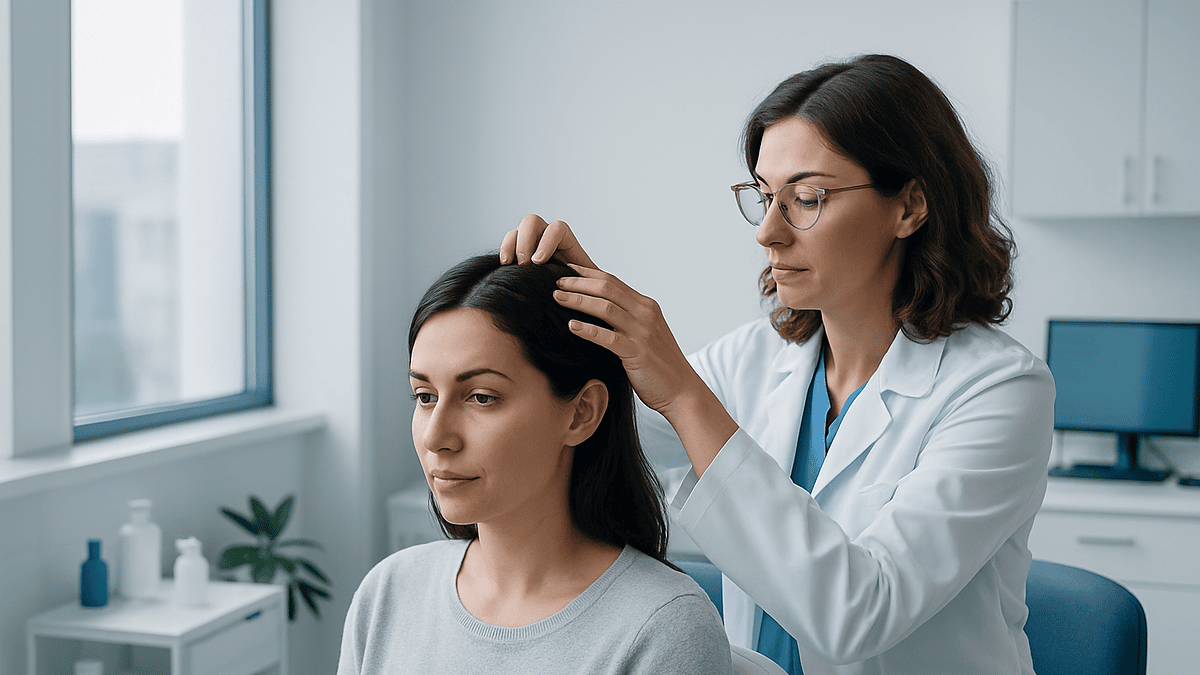
The first question most women ask in a hair transplant consultation isn’t about grafts, guarantees, or even results. It’s quieter than that: will I have to shave my head? For a man, a buzz cut is a weekend inconvenience. For a woman with shoulder-length hair, it can mean months of visible recovery in meetings, school pickups, and family photos.
Surgeons answered that concern with unshaven and partial-shave techniques, and, as with most things in medicine that demand more time and finer handwork, the answer came with a higher invoice. A no-shave procedure can take twice as long per graft as a standard shaved session, and that extra surgical time is exactly what you’re paying for.
So before you compare quotes that seem to swing wildly between countries and clinics, it helps to understand what actually moves the number: the technique, the diagnosis behind your hair loss, and what a package genuinely includes.
Why a woman's hair transplant quote rarely looks like a man's
Most published hair transplant pricing is built around a male scenario: a shaved head, a clearly receded hairline, and a maximum-graft package extracted from a dense donor zone at the back of the scalp. Women arrive with a different clinical picture, and the quote reflects it.
Female pattern hair loss: the most common cause, described by MedlinePlus as thinning concentrated at the crown and along the part line while the front hairline often holds, is typically diffuse. Hair gets sparser across a wide area rather than vanishing from one spot. That changes everything about surgical planning: the target zone may be a widening part rather than a bald hairline, the donor area must be checked carefully for stability, and the patient almost never wants a full shave.
There’s a second difference that matters just as much. Because so many causes of hair loss in women are medical rather than purely pattern-based, thyroid conditions, iron deficiency, postpartum shedding, autoimmune disease, a responsible pathway includes more diagnostic work before anyone talks graft counts. In my view, this is the single most useful filter when you’re comparing providers: a quote that arrives before a diagnosis is a red flag, not a bargain.
Put those elements together, smaller, more precise recipient zones, slower unshaven extraction, heavier assessment requirements, and you get a procedure that sits at the upper end of transplant pricing almost everywhere it’s performed.
How much does a female hair transplant cost?
Here is how female and unshaven hair transplant pricing compares across markets, alongside standard techniques and the follow-on treatments most often discussed at consultation.
| Procedure | Turkey market average | Our guide range | UK typical | US typical |
|---|---|---|---|---|
| Female / unshaven hair transplant | EUR 2,500–5,000 | EUR 3,250–6,500 | GBP 4,000–9,000 | USD 8,000–20,000 |
| Standard FUE package (shaven, max grafts) | EUR 2,000–4,500 | EUR 2,600–5,850 | GBP 3,000–10,000 | USD 8,000–15,000 |
| DHI package | EUR 2,300–4,500 | EUR 3,000–5,850 | GBP 4,000–10,000 | USD 6,000–12,000 |
| PRP for hair (per session) | EUR 100–300 | EUR 130–400 | GBP 150–600 | USD 400–1,500 |
| Scalp micropigmentation (3 sessions, full course) | EUR 550–1,400 | EUR 700–1,800 | GBP 800–3,500 | USD 2,000–4,500 |
Prices last reviewed: August 2026. These are guide ranges for international patients, based on published market data – not a quote. Your exact price depends on your clinical assessment; you will receive a personalised treatment plan and fixed quote after consultation.
Two patterns jump out of that table. First, the unshaven premium: the female/unshaven guide range starts noticeably above standard shaven FUE, even though the graft count is often lower. Second, the geographic gap: US pricing for the same category can run roughly two to three times the guide range, which explains why so many women researching quotes at home end up comparing internationally.
What is an unshaven hair transplant, exactly?
The term covers three related approaches, and clinics don’t always use the labels consistently, worth clarifying before you compare quotes.
- Partial-shave (hidden window) FUE. The surgeon shaves narrow horizontal strips in the donor area at the back of the head, then the surrounding longer hair falls over them. Once you leave the clinic, the shaved zones are invisible. This is the most common compromise and usually the least expensive of the three.
- Completely unshaven FUE. Nothing is shaved. Each follicular unit selected for extraction is trimmed individually with fine scissors under the full-length hair before the punch removes it. Meticulous, slow, and priced accordingly.
- Long-hair (preview) FUE. Grafts are extracted and implanted with the hair shaft left long, so the patient sees an immediate preview of direction and density. Those long shafts shed within weeks, as all transplanted hairs do initially, but there’s no shaved-look phase at all. This is typically the most technically demanding version.
On the recipient side, women usually keep their existing hair unshaven regardless of technique, because grafts are placed between native hairs to add density. That’s delicate work: the surgeon threads new follicles among living ones without damaging them, matching the angle and direction of what’s already growing. Cleveland Clinic notes that transplanted grafts establish their blood supply in the days after placement, precise handling during those placements is what protects both new grafts and neighboring native hair.
Why do no-shave techniques cost more?
The premium isn’t marketing gloss. It’s arithmetic about surgical time.
In a standard shaved FUE session, the donor area is clipped short, every follicular unit is clearly visible, and an experienced team can extract grafts at a steady rhythm. Remove the shave and each step slows down. The surgeon must part long hair, identify a suitable follicular unit underneath it, trim that single unit, extract it without transecting neighbors hidden by surrounding hair, and repeat, potentially a couple of thousand times.
That slowdown cascades through the whole cost structure:
- Longer operating hours. A session that takes one surgical day shaved may stretch across a longer day, or two shorter ones, unshaven. Staff time is the largest cost in any transplant.
- Lower daily graft ceilings. Many teams cap unshaven sessions at fewer grafts per day than shaved ones, because extraction fatigue affects precision. Large plans may need two visits.
- Higher skill requirements. Fewer surgeons and technicians perform unshaven extraction well, and scarce expertise commands higher fees everywhere in medicine.
- Denser recipient-area work. Implanting between existing hairs without shaving the recipient zone demands more careful site creation than working on open scalp.
None of this changes the biology of the result: a well-placed graft grows the same whether the hair around it was shaved or not. What you’re buying is discretion during recovery, and the surgical hours that discretion consumes.
Is hair transplant successful in females?
Yes, for the right candidates, and that qualifier carries real weight. The honest answer is that surgical success in women depends less on technique than on the cause and pattern of the hair loss.
A transplant works by relocating follicles from a donor area that is genetically resistant to thinning. In male pattern baldness, the band of hair at the back and sides is usually stable, which is why male results are so predictable. In women, Harvard Health notes that female pattern hair loss often thins the scalp diffusely, including, sometimes, the donor zone itself. Transplanting follicles that are themselves programmed to miniaturize means paying for hair that may later thin along with the rest.
Dermatology assessments consistently suggest that only a minority of women with hair loss are strong surgical candidates. The women who tend to do well include those with:
- A stable, dense donor area confirmed by examination (sometimes with magnified trichoscopy)
- Pattern loss concentrated at the hairline, temples, or part line rather than everywhere
- Traction alopecia from years of tight hairstyles, once the traction has stopped
- Hair loss around scars, from injury, burns, or previous surgery such as a facelift
- A naturally high hairline they wish to bring forward
For diffuse, unpatterned shedding, medical therapy prescribed by a dermatologist is usually the evidence-supported first step, not surgery. A clinic that tells a poor candidate noor not yetis demonstrating exactly the judgment you want operating on your scalp.
FUE vs DHI for women: does the method change the price?
Both techniques harvest follicular units individually, so donor-side work is similar. The difference lies in implantation, and it matters more for women than for most men.
In classic FUE, the surgeon first creates tiny recipient incisions, then technicians place grafts into those sites. In DHI (direct hair implantation), grafts are loaded into a pen-shaped implanter device that creates the site and places the graft in one motion. That single-motion control over depth, angle, and direction is particularly useful when implanting between existing hairs on an unshaven recipient area: the typical female scenario of densifying a widening part or softening a high hairline.
On price, the ranges overlap heavily. The DHI guide range (EUR 3,000–5,850) sits close to the female/unshaven range (EUR 3,250–6,500), and many clinics quote unshaven female cases as a single category regardless of implantation method, because the unshaven extraction, not the implanter pen, is what dominates the surgical time.
What should drive the decision? Not the label. There is no robust evidence that one method grows hair better than the other when performed by an experienced team; graft survival depends chiefly on gentle handling, short time outside the body, and correct placement depth. Choose based on the surgeon’s demonstrated results in cases resembling yours, same gender, similar pattern, unshaven recipient area, rather than on which acronym appears in the package name. A skilled FUE team beats an inexperienced DHI team every time, and vice versa.
How graft counts drive the quote, and why women's estimates vary so much
Ask three clinics to assess the same woman and you may receive three noticeably different graft estimates. That variance is frustrating, but it usually has explainable causes.
Graft counts in female cases are genuinely harder to standardize than in male ones. A man with an exposed, bald frontal zone presents a measurable area to fill. A woman with diffuse thinning presents a judgment call: how much existing miniaturized hair should the plan work around? How much density is realistically achievable without damaging native follicles crowded into the same skin? Conservative surgeons quote fewer grafts and stage the work; aggressive ones quote more in a single session.
Typical female sessions often run smaller than the maximum-graft male packages advertised online, commonly in the low-to-mid thousands of grafts for hairline and temple work, and sometimes less for targeted part-line densification. Unshaven technique lowers the practical daily ceiling further, which is why some plans are split across two days or two visits.
When comparing quotes, insist on three pieces of information in writing:
- The estimated graft count and the area it’s intended to cover, marked on photos
- Whether the price is fixed for the plan or billed per graft (per-graft billing can drift upward on the day)
- What happens financially if the surgeon determines mid-procedure that fewer grafts are safely available
A fixed package tied to a documented plan protects you far better than a low per-graft teaser rate attached to an inflated count.
What an all-inclusive package should cover, and what it usually doesn't
International package pricing is the main reason the guide range sits so far below UK and US figures, and it’s also where comparisons go wrong. Two quotes with the same headline number can contain very different things.
A credible all-inclusive female hair transplant package generally covers:
- Pre-operative consultation, blood tests, and scalp assessment
- The surgical procedure itself, including all clinical staff and facility fees
- Prescribed aftercare medicines and washing products for the early recovery period
- Hotel accommodation for the treatment stay and airport-clinic transfers
- Interpreter support and scheduled follow-up reviews, often continuing remotely with photos
What packages typically do not cover, and where budgets quietly stretch:
- Flights, travel insurance, and any extra hotel nights if your plan needs a second surgical day
- A companion’s costs, if you’d rather not travel alone
- Follow-on treatments such as PRP sessions or ongoing prescribed therapy at home
- A second procedure years later if native thinning progresses: a genuine possibility in female pattern loss
One structural point deserves emphasis: unshaven cases are more likely than shaven ones to require that second surgical day, because of the lower daily graft ceiling. Ask directly whether your specific plan fits in one day, and whether the package price already assumes the longer stay. A clinic confident in its planning will answer in writing without hesitation.
Will insurance cover a female hair transplant?
Almost never, and it’s better to know that before you build a budget around hope. Hair transplantation for pattern hair loss is classified as a cosmetic procedure by insurers in the US, by the NHS in the UK, and by most European health systems. The NHS states plainly that hair loss treatment of this kind is not routinely available on public funding.
The narrow exceptions are reconstructive: hair restoration after burns, traumatic scarring, or certain surgical scars is sometimes considered on a case-by-case basis, usually with extensive documentation and prior authorization. If your hair loss followed an injury or medically necessary surgery, it’s worth a formal inquiry to your insurer with your treating physician’s notes, just go in with realistic expectations.
What insurance may cover, and this matters more than many women realize, is the diagnostic workup. Blood tests for thyroid function and iron status, a dermatology consultation, and a scalp biopsy where indicated are legitimate medical investigations of a symptom, not cosmetic services. Getting that workup done through your regular healthcare, often at little or no out-of-pocket cost, accomplishes two things at once: it may identify a treatable cause that makes surgery unnecessary, and it produces the clinical picture any good surgeon will want to see anyway.
Some patients use financing plans or medical travel savings to fund the procedure itself. Whatever the funding route, treat the transplant as a fully self-paid expense in your planning, and let any reimbursement be a pleasant surprise.
How long does a female hair transplant last, and what happens 20 years on?
The transplanted follicles themselves are generally permanent, because they’re harvested from areas of the scalp that are genetically resistant to the hormone-driven miniaturization behind pattern loss. Cleveland Clinic describes transplanted hair behaving like the hair from its original location: it grows, cycles, and grays on the donor area’s schedule, not the recipient area’s.
The timeline runs in phases. Expect the grafted hairs to shed within the first several weeks: a normal, temporary stage that surprises patients who weren’t warned. New growth typically emerges over the following months, with most visible results between six and twelve months and the mature picture often taking up to eighteen, particularly for the fine, single-hair grafts used along a feminine hairline.
Twenty years later, the story splits in two:
- The transplanted hair usually persists, provided the donor follicles were genuinely stable when harvested. This is why donor assessment matters so much in women, grafts taken from a subtly thinning donor zone can thin later.
- The native hair around the grafts follows its own trajectory. Female pattern loss is progressive, so untreated surrounding hair may continue to thin, gradually changing how the result reads. Many patients maintain the overall look with prescribed medical therapy, periodic PRP, or a smaller touch-up session years down the line.
Budget-wise, the wise framing is this: the transplant is a durable one-time investment in the grafted follicles, layered on top of a lifelong relationship with your remaining hair. Plans that acknowledge both tend to age gracefully.
The follow-on costs nobody puts in the headline price
The procedure fee is the largest single number, but rarely the last one. Three categories of follow-on spending come up often enough that they belong in any honest budget conversation.
PRP sessions. Platelet-rich plasma, a concentrate spun from your own blood and injected into the scalp, is commonly offered after transplants and as standalone support for thinning hair. The evidence base is genuinely mixed: some studies suggest modest improvements in density, others show little effect, and protocols vary widely between clinics. At EUR 130–400 per session in the guide range, a multi-session course adds up, so treat it as an optional supplement supported by preliminary evidence, not a required part of surgical success.
Scalp micropigmentation. For diffuse thinning, SMP (EUR 700–1,800 for a full three-session course in the guide range) deposits pigment dots that reduce the visual contrast between scalp and hair. Some women combine it with a transplant; others use it instead of one when surgery isn’t advisable. It fades over years and needs refreshing.
Ongoing medical therapy. Because female pattern loss progresses, many dermatologists recommend continuing prescribed treatment after surgery to protect the native hair around the grafts. Mayo Clinic notes that such treatments generally work only while they’re used, stop, and progression typically resumes. That’s a recurring cost measured in years, not months, and it deserves a line in the long-term budget even though it’s modest month to month.
None of these is mandatory. All of them are conversations worth having before you commit, not after.
How to compare quotes without being misled
Price transparency in hair restoration is improving, but the market still rewards a careful reader. A few practical tests separate solid quotes from shaky ones.
Anchor to the market, not the outlier. If a quote lands far below the ranges in the table above, ask what makes it possible. Sometimes the answer is legitimate: a smaller graft plan, a newer clinic building its reputation. Sometimes the price is achieved by delegating surgical steps to unsupervised technicians or compressing two days of unshaven work into one. Neither is visible in the headline number.
Demand a physician-led assessment. For women especially, a quote issued from a few phone photos without any discussion of your medical history, blood work, or the cause of your hair loss skips the step on which the entire result depends.
Check what “unshaven” means in writing. Partial-shave, fully unshaven, and long-hair FUE carry different time costs. A quote that says “no-shave” but assumes hidden shave windows isn’t dishonest, but you should know before travel day, not on it.
Ask about revision policy. What does the clinic do, and at whose cost, if growth at twelve months falls short of the documented plan? Reputable teams answer this precisely.
Ignore urgency discounts. A price that expires Friday is a sales tactic, not a clinical consideration. Surgery scheduled around a countdown timer is surgery scheduled for the wrong reason.
The best quote is rarely the cheapest or the most expensive. It’s the one attached to the clearest plan.
When to see a doctor about hair loss before you price surgery
This is the section I’d urge every reader to take seriously, because for women, hair loss is a symptom before it’s a cosmetic issue, and some of its causes are both treatable and important to catch.
See a doctor promptly, ideally a dermatologist, if you notice any of the following:
- Sudden or rapid shedding. Losing well over the normal 50–100 hairs a day, hair coming out in handfuls, or a part that widens over months rather than years. Sudden shedding often points to telogen effluviuma reversible response to illness, surgery, childbirth, or significant stress.
- Patchy loss. Distinct round bald patches suggest alopecia areata, an autoimmune condition with its own treatment pathway, and one for which transplantation is generally not appropriate while active.
- Scalp symptoms. Itching, burning, scaling, redness, or tenderness can signal inflammatory or scarring alopecias. Operating on an active scarring process risks losing the grafts; these conditions must be diagnosed and quieted first.
- Accompanying body signs. Fatigue, unexplained weight change, irregular periods, or brittle nails alongside hair loss warrant blood tests, thyroid disorders and iron deficiency are common, checkable, and treatable causes.
- A new medication preceding the shedding. Several medicine classes list hair loss as a side effect; your prescriber may have alternatives.
Mayo Clinic’s guidance is worth internalizing: the right treatment depends entirely on the cause, and the cause isn’t always what it appears to be. A transplant fixes exactly one problem, insufficient follicles in a specific area. Make sure that’s actually the problem you have before you pay anyone to solve it.
Frequently asked questions
Is a hair transplant successful in females?
Yes, when the candidate is well chosen. Women with a stable donor area and localized loss, a high hairline, thinned temples, traction alopecia, or scarring, see results comparable to men’s. Diffuse thinning that affects the donor zone as well makes surgery less reliable, because transplanted follicles may carry the same tendency to miniaturize. A thorough scalp assessment before quoting is the strongest predictor that a clinic will get this judgment right.
Why does an unshaven hair transplant cost more?
Because it takes substantially longer. In fully unshaven FUE, each donor follicle is trimmed individually under full-length hair before extraction, roughly doubling the time per graft compared with a shaved donor area. Daily graft ceilings drop, sessions stretch longer or split across two days, and fewer surgical teams perform the technique well. The guide range of EUR 3,250–6,500 reflects those extra staff hours, versus EUR 2,600–5,850 for a standard shaven FUE package.
How long does a female hair transplant last?
The grafted follicles are generally permanent, because they’re taken from scalp areas genetically resistant to pattern thinning and they keep behaving like donor-area hair after relocation. The surrounding native hair, however, can continue thinning over the years, since female pattern loss is progressive. Many women protect the overall result with ongoing dermatologist-prescribed therapy, and some choose a smaller touch-up session years later as the frame around the grafts changes.
What happens 20 years after a hair transplant?
Well-selected grafts typically still grow two decades on: they cycle, gray, and age on the donor area’s genetic schedule. What changes is the context: untreated native hair around the grafts may have thinned further, which can make an old transplant look sparser or leave grafted zones standing out. This is why surgeons assess donor stability so carefully in women, and why long-term plans usually pair surgery with maintenance of the remaining hair.
Will insurance cover a hair transplant for women?
Almost never for pattern hair loss, which insurers and public health systems classify as cosmetic. Narrow reconstructive exceptions exist, restoration after burns, trauma, or surgical scarring is occasionally approved case by case with documentation. The diagnostic side is different: blood tests, dermatology consultations, and scalp biopsies investigate a medical symptom and are often covered. Get that workup through your regular care before self-funding any surgery.
Can women get a hair transplant without shaving their head at all?
Yes. Fully unshaven FUE trims each selected donor follicle individually beneath your existing hair, and long-hair FUE even implants grafts with the shaft left long for an immediate preview. A middle option, partial-shave FUE, hides narrow shaved strips under the hair above them. Costs rise as shaving decreases, because extraction slows dramatically. Ask any clinic to specify in writing which version their “unshaven” package actually means.
How many grafts do women typically need?
It varies more than in male cases, because female plans target density between existing hairs rather than bald areas. Hairline and temple work commonly runs in the low-to-mid thousands of grafts; focused part-line densification can need fewer. Unshaven technique lowers the practical daily maximum, so larger plans are sometimes staged over two days. Treat any graft estimate given without a physical or photographic scalp assessment as provisional at best.
Is DHI better than FUE for women?
Neither is proven to grow hair better in experienced hands. DHI’s implanter pen offers fine control of depth and angle, which helps when placing grafts between existing hairs on an unshaven recipient area: a common female scenario. But graft survival depends mainly on gentle handling and correct placement, whichever tool is used. Choose the surgeon whose documented results in cases like yours are strongest, and let the technique follow from their recommendation.
Why was I quoted so much more at home than abroad?
Labor and facility costs, not different procedures, explain most of the gap. The same unshaven female transplant sits in a EUR 3,250–6,500 guide range for international patients treated in Turkey, against typical figures of GBP 4,000–9,000 in the UK and USD 8,000–20,000 in the US. When comparing, verify what each quote includes, accommodation, transfers, aftercare, follow-up, and weigh travel costs and revision logistics honestly alongside the headline saving.
Am I a good candidate if my hair loss is diffuse all over?
Often not yet, and possibly not at all: an answer worth hearing early. Diffuse unpatterned thinning frequently involves the donor area too, meaning transplanted follicles could thin later, and it can signal treatable causes such as thyroid dysfunction, iron deficiency, or post-stress shedding. See a dermatologist first: blood tests and scalp examination may reveal a reversible cause, or stabilize the loss with medical therapy so that surgery, if still wanted, is built on solid ground.
References
This article is for general information only and is not a substitute for professional medical advice. Please consult a qualified doctor about your individual situation.

More from the Blog

Norwood 6: What Advanced Loss Means for Donor Supply and Expectations
Norwood 6 is advanced male pattern hair loss: the frontal and crown bald areas have merged into one, leaving only a horseshoe of hair…
Mature Hairline or Receding? How to Tell the Difference Honestly
A mature hairline moves back evenly, about a finger's width, or 1 to 1.5 centimeters, above the adolescent line, and then stabilizes, with the…
The Norwood Scale: How Surgeons Stage Hair Loss to Plan a Transplant
The Norwood scale is a seven-stage classification of male pattern hair loss, running from a full youthful hairline (stage 1) to a single horseshoe…
Which Sleeping Position Protects Grafts After an FUE Hair Transplant? Elevation and Pillows
After an FUE hair transplant, most care teams ask patients to sleep on their back with the head raised on pillows or a wedge…
Why Hair Transplant Repair Is Often Staged: Sequencing Graft Removal, Redesign and Regrafting
Hair transplant repair is usually staged because each step changes the conditions for the next. Misplaced grafts are typically removed first, the scalp is…
DHI Explained: What Direct Hair Implantation Changes in Practice
DHI (direct hair implantation) is a variation of the FUE hair transplant in which extracted follicles are loaded into a spring-driven implanter pen and…