Unshaven (U-FUE) Hair Transplant
Unshaven (U-FUE) hair transplant places individual follicular grafts without fully shaving the recipient area, helping suitable patients maintain a more discreet appearance during early healing.
Quick answer
Unshaven (U-FUE) hair transplant is a follicular unit extraction technique that implants individual hair grafts without fully shaving the recipient area. At Acibadem in Turkey, suitability is assessed through hair and scalp evaluation, and grafts are harvested and placed to support a natural-looking result with discreet early recovery.
A More Discreet Path to Hair Restoration
Hair loss can affect far more than appearance. For many people, it changes how they feel in professional settings, social situations, photographs, and everyday interactions. Some patients begin researching hair transplantation after years of gradual thinning; others are responding to a more recent change in their hairline, crown, beard, or eyebrows. Whatever the starting point, the decision often involves practical concerns as well as emotional ones.
A common question is whether it is possible to undergo a hair transplant without noticeably shaving the hair that remains. Unshaven follicular unit extraction, often called U-FUE, is designed for carefully selected patients who want a less conspicuous early recovery. Rather than shaving the entire recipient area, the surgeon can place individual follicular grafts among existing hairs. This may allow the patient to preserve more of their usual hairstyle while the transplanted follicles settle and begin their growth cycle.
Discretion is important, but it is only one part of a successful hair restoration plan. The long-term result depends on the quality and availability of the donor hair, the pattern and cause of hair loss, the design of the hairline or treatment area, the survival of transplanted follicles, and the patient’s ability to follow aftercare instructions. A thoughtful consultation helps determine whether U-FUE is appropriate or whether another surgical or non-surgical approach would better protect the donor area and support a natural-looking outcome.
At Acibadem, hair restoration planning is approached as an individualized medical decision. The aim is not simply to add grafts, but to develop a responsible strategy that considers present hair loss, likely future progression, facial proportions, existing hair density, and realistic expectations. For international patients, this process also includes practical guidance around travel, procedure scheduling, recovery, and follow-up communication.
What Is an Unshaven (U-FUE) Hair Transplant?
Unshaven FUE is a variation of follicular unit extraction, a modern hair transplant technique in which naturally occurring groups of hair follicles are removed individually from a donor area and transplanted into areas of thinning or hair loss. These small follicular units usually contain one to several hairs. In most scalp procedures, the donor follicles are taken from the back and sides of the head, where hair is often more resistant to the hormonal processes that contribute to pattern hair loss.
In a conventional FUE procedure, the recipient area and often a broad portion of the donor area may be trimmed or shaved to improve visibility and efficiency. In U-FUE, the recipient area is generally kept unshaven. Existing longer hairs remain in place, helping to camouflage the small implantation sites during the early healing period. Depending on the treatment plan, only selected hairs within the donor area may be carefully shortened, often in small, concealed zones that can be covered by surrounding hair.
The term “unshaven” can be misunderstood. It does not necessarily mean that no hair is trimmed at all. In many cases, limited trimming of donor hairs is needed to safely extract and prepare follicular grafts. The key distinction is that the visible recipient area is not broadly shaved, and any donor-area trimming is planned as discreetly as possible. The exact approach depends on hair length, density, curl pattern, the number of grafts required, and the areas being treated.
U-FUE is especially useful for patients who prefer not to make a sudden, obvious change to their hairstyle before treatment. It may appeal to professionals with public-facing roles, patients who wish to return to routine activities with less visible evidence of a procedure, and people with longer hair who want to preserve their existing appearance. However, the method is more technically demanding than fully shaved FUE because surgeons and technicians must work carefully around existing hair without compromising graft handling, placement precision, or scalp safety.
As with other FUE procedures, U-FUE does not create new hair follicles. It redistributes healthy donor follicles to areas where they are likely to grow. The transplanted hairs usually shed in the first weeks after surgery before entering a resting phase. New visible growth develops gradually over subsequent months, and the final appearance is assessed only after the hair has had sufficient time to mature.
Who May Need an Unshaven Hair Transplant?
Patients consider U-FUE for different reasons. Some have a receding hairline that has become more noticeable over time. Others have thinning through the frontal scalp, temples, mid-scalp, or crown. Some want to refine a previously transplanted hairline, improve density around a scar, or restore hair in the beard, moustache, sideburn, or eyebrow area. The common goal is not always complete coverage; for many patients, a well-designed procedure is intended to improve framing, density distribution, or visual balance while preserving a natural appearance.
Typical signs that lead patients to seek assessment include increased hair shedding, widening of the part line, a thinning crown visible in bright light, recession at the temples, reduced density after styling, patchy areas of hair loss, or a hairline that no longer feels consistent with the person’s age or facial features. It is important to recognize that these signs do not all have the same cause. Hair loss can reflect genetic pattern hair loss, autoimmune disease, traction, inflammation, nutritional issues, hormonal changes, medication effects, stress-related shedding, prior surgery, or scarring conditions.
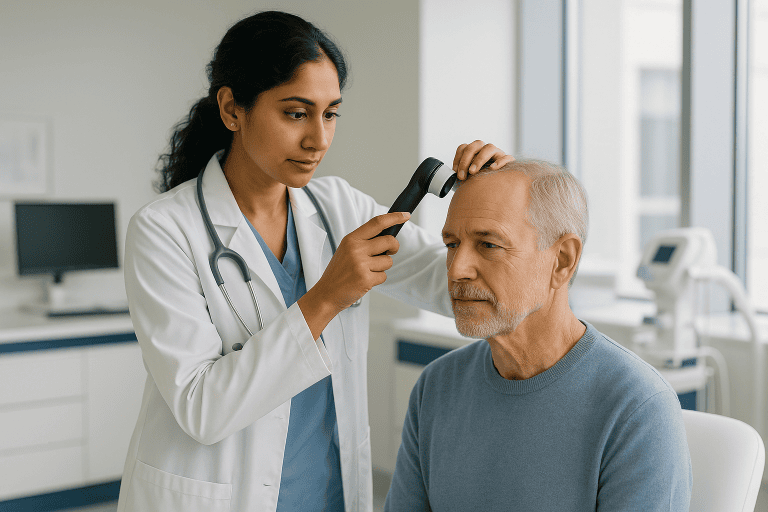
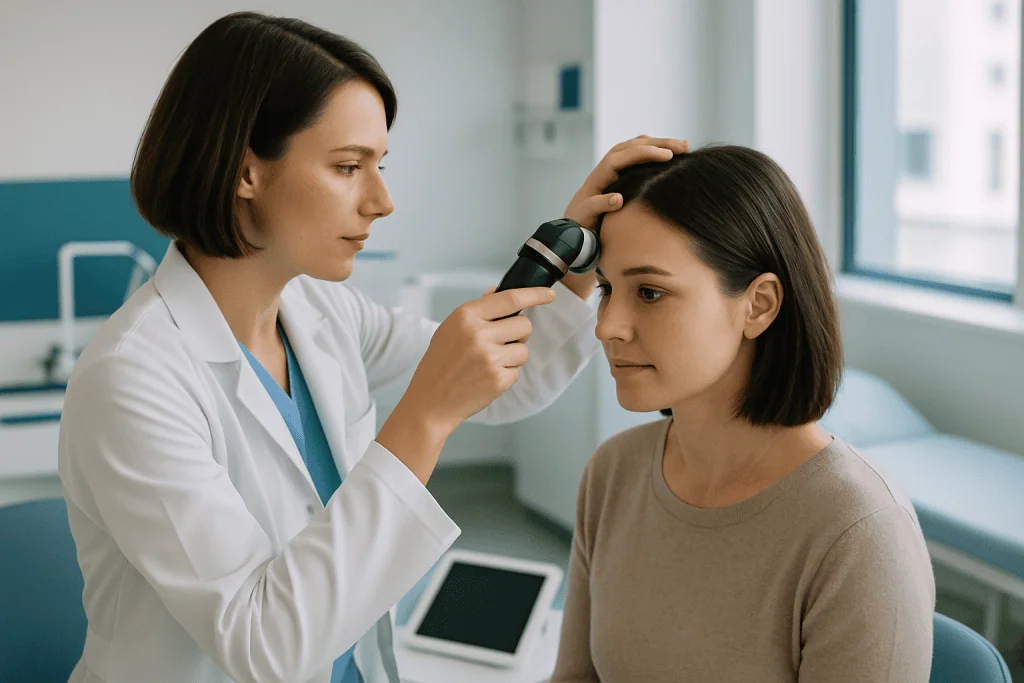
A hair transplant is generally considered only after the cause of hair loss has been evaluated. The assessment may include a detailed medical history, review of family history, scalp examination, evaluation of donor density and hair shaft characteristics, and standardized photographs. In selected cases, blood tests, dermatology review, or further investigation may be appropriate, particularly when hair loss is sudden, patchy, associated with scalp symptoms, or accompanied by other health changes.
The most suitable candidates for U-FUE commonly have stable or relatively predictable hair loss, adequate donor reserves, and realistic expectations about density and coverage. Good donor hair is not defined only by the number of follicles available. Hair caliber, color contrast between hair and scalp, curl pattern, scalp laxity, and the distribution of donor density all influence planning. A patient with thick, wavy hair and modest thinning may need a different strategy from someone with fine, straight hair and extensive loss.
U-FUE may be considered when a patient wishes to avoid shaving the recipient area, but the desire for discretion should not override medical judgment. If a large number of grafts are required, if the donor area is limited, or if the procedure would become less safe or less precise without broader trimming, the clinical team may recommend an alternative approach. In some situations, staged treatment provides a more responsible path than attempting to achieve extensive coverage in one session.
Patients who are experiencing active inflammatory scalp disease, uncontrolled medical conditions, unstable autoimmune hair loss, severe donor depletion, or unrealistic expectations may need treatment of the underlying issue or a different care plan before transplantation is considered. A consultation is also an opportunity to discuss medical therapies that may help preserve existing hair and complement surgical restoration when clinically appropriate.
Conditions and Concerns U-FUE Can Address
U-FUE is most often used for androgenetic alopecia, commonly known as male-pattern or female-pattern hair loss. This hereditary form of hair loss usually develops gradually and follows recognizable patterns, such as recession at the frontal hairline and temples, thinning at the crown, or diffuse reduction in density across the scalp. The procedure can redistribute donor follicles to improve selected areas, but it does not stop the underlying process from affecting non-transplanted hair.
For men, treatment may focus on frontal hairline recession, temple restoration, mid-scalp density, the crown, or a combination of these areas. Hairline design requires particular restraint and artistry. A natural hairline is rarely perfectly straight or overly low; it should reflect facial proportions, age, likely future hair loss, and the amount of donor hair available for the long term.
For women, hair transplantation may be an option in selected cases of female-pattern thinning, especially when donor density is sufficient and the cause of hair loss has been carefully established. Because women may experience diffuse thinning rather than a clearly defined pattern, careful evaluation is essential. U-FUE can be particularly attractive for women with longer hairstyles who would prefer not to shave a visible recipient area.
The technique may also be used for carefully chosen cases involving traction-related hair loss once the damaging styling practice has stopped, stable scar-related hair loss, revision of an earlier transplant, and restoration of brows or facial hair. Scar tissue can have a different blood supply and healing profile from normal scalp, so transplantation into scars requires individualized assessment. Autoimmune conditions such as alopecia areata are approached cautiously because disease activity can be unpredictable; transplantation is not appropriate during active disease and may not be suitable for every patient even when it appears stable.
Not every hair concern is best addressed through transplant surgery. Patients with temporary shedding after illness, childbirth, emotional stress, weight loss, or medication changes may benefit more from diagnosis and medical management. Likewise, patients with early pattern hair loss may be advised to consider evidence-based medical treatments and monitoring before, alongside, or instead of surgery. The most appropriate treatment is the one that protects long-term hair health rather than simply offering the quickest visible change.
How an Unshaven FUE Hair Transplant Is Performed
Personalized Planning Before the Procedure
The process begins with a detailed consultation and hair analysis. The physician reviews the patient’s medical history, current medications, previous hair restoration treatments, family pattern of hair loss, and goals. The scalp and donor zone are examined to assess density, caliber, texture, and the likelihood that donor follicles can be safely harvested without creating an overharvested appearance.
The treatment plan identifies the areas to be restored and establishes priorities. For example, a patient with a receding hairline and early crown thinning may be advised to focus first on the frontal region, which has a greater effect on facial framing. Another patient may prefer modest density enhancement through the mid-scalp while preserving grafts for possible future needs. The physician also discusses the likely need for medical treatment or future sessions if hair loss continues.
Before surgery, patients receive instructions about medications, smoking, alcohol, scalp care, and practical travel planning. Certain medications and supplements may need to be reviewed because they can affect bleeding, healing, or anesthesia. International patients are generally advised to arrive with enough time before the procedure for an in-person assessment and to remain locally for the recommended early review after treatment.
Preparing the Donor and Recipient Areas
On the day of treatment, the hairline or target area is reviewed again before any grafts are harvested. This is an important moment for confirming the design, distribution, and priorities of the procedure. Photographs may be taken for the medical record and later progress comparison.
In an unshaven approach, the recipient hair is normally left at its natural length. The clinical team separates and protects existing hairs to create access for implantation. In the donor area, selected follicular units may be trimmed in small sections or hidden rows. The extent of trimming is individualized. Patients with longer, denser hair may be able to conceal these zones particularly well, while others may require a broader donor preparation to safely obtain the required grafts.
Local anesthesia is used to numb the donor and recipient areas. Some patients may also receive medication to help them feel more comfortable, depending on their medical history and the treatment plan. The patient remains awake during the procedure, allowing the team to monitor comfort and positioning throughout the day.
Extraction of Individual Follicular Units
During FUE extraction, the surgeon uses precise motorized or manual instrumentation to make tiny circular incisions around individual follicular units. The units are then gently removed from the donor area. The technique requires attention to the natural angle and direction of the hair beneath the skin, as this helps minimize follicle injury during harvesting.
Modern magnification systems, fine extraction instruments, controlled lighting, and careful graft handling support accuracy throughout this stage. The goal is to preserve the integrity of each follicular unit while maintaining an even distribution of harvested follicles across the donor zone. Responsible donor management is central to good planning because the donor area is a limited resource.
After extraction, grafts are examined, sorted according to the number of hairs they contain, and kept in controlled conditions until placement. Single-hair grafts are often used at the leading edge of a hairline or eyebrow to create softness and irregularity. Grafts containing more hairs may be placed behind this transition zone to build density.
Creating the Recipient Sites and Placing the Grafts
The physician creates tiny recipient sites in the thinning area according to the planned hair direction, angle, density, and distribution. This is one of the most important determinants of a natural-looking result. Hair grows in different directions across the scalp: forward at the front, diagonally at the temples, and in a spiral pattern around the crown. Reproducing these patterns requires careful planning rather than uniform placement.
For U-FUE, site creation and implantation take place around existing longer hairs. Specialized fine instruments and magnification can help the team place grafts precisely while minimizing disturbance to surrounding follicles. The retained native hair may hide small scabs or redness in the recipient area, although patients should still expect some visible signs of healing on close inspection.
The procedure duration varies considerably. A limited hairline or eyebrow procedure may take several hours, while treatment of multiple scalp regions can require most of a day or, in some cases, be planned across more than one session. The length of treatment depends on the number of grafts, complexity of the area, donor characteristics, and the need to work carefully through unshaven hair. A longer procedure is not automatically a better one; thoughtful graft selection, safe extraction, and precise placement are more important than speed.
Technology and Clinical Precision in U-FUE
Hair transplant technology is most useful when it supports sound surgical judgment. At Acibadem, hair restoration procedures may use high-resolution scalp assessment, medical imaging for planning and follow-up, magnification systems, refined micro-instruments, controlled graft preservation methods, and specialized implantation tools. These technologies can help physicians assess hair characteristics, support careful graft handling, and plan the direction and distribution of implanted follicles.
Technology alone does not determine the outcome. Hair restoration remains dependent on physician-led planning, appropriate indication, careful surgical technique, and realistic use of the donor supply. The most advanced approach is one that fits the patient’s individual biology and goals rather than applying the same graft number or hairline design to every person.
Immediate Recovery and Aftercare
After implantation, the recipient area may appear pink or red and will develop small crusts around each graft. The donor area may feel tender, tight, or numb for a short period. These effects are usually temporary. Most patients return to their hotel or accommodation on the same day, with written instructions for sleeping position, washing, medication, activity, sun exposure, and contact with the treated areas.
Patients should avoid rubbing, scratching, or pressing on newly implanted grafts. Washing instructions are specific and should be followed closely, as early cleansing helps remove crusting without dislodging grafts. Physical exercise, swimming, saunas, heavy sweating, and direct sun exposure are usually restricted during the initial recovery period. The care team will provide individual guidance based on the extent of treatment and the patient’s health status.
Although the recipient area remains unshaven, U-FUE does not eliminate recovery. It offers a more discreet visual transition for suitable patients, but the scalp still needs time to heal. Temporary shedding of transplanted hairs is expected in the weeks after surgery. This does not mean the transplant has failed; the follicles remain beneath the skin and typically begin producing new hair later in the growth cycle.
Why Acting Early Can Matter
Hair loss is not usually a medical emergency, but timing can influence the quality of long-term planning. As pattern hair loss progresses, the area requiring coverage may become larger while the donor supply remains limited. A patient who waits until extensive hair loss has developed may still be a candidate for transplantation, but the available donor hair may need to be distributed over a broader area, making very high density less realistic.
Early assessment can help patients understand whether their hair loss is stable, whether medical treatment could preserve existing follicles, and whether a future transplant should be planned conservatively. For younger patients in particular, an overly low or densely packed hairline can become difficult to sustain if surrounding hair continues to thin. A measured design that anticipates future change may provide a more natural result over time.
Delaying assessment can also mean missing an underlying medical or dermatologic cause of hair loss. Sudden shedding, scalp burning, scaling, pain, patchy loss, or eyebrow loss should be evaluated rather than assumed to be routine pattern hair loss. Inflammation and scarring can damage follicles permanently if not addressed promptly. A proper diagnosis helps ensure that transplantation is considered only when it is medically appropriate.
For patients already considering U-FUE, early consultation also allows time to organize travel, review medications, discuss recovery expectations, and decide whether the procedure should be combined with a longer-term hair preservation plan. There is value in making the decision carefully rather than feeling pressured by a changing appearance.
Potential Benefits of U-FUE Hair Transplantation
For appropriately selected patients, U-FUE can offer the following practical and aesthetic benefits.
| Benefit | What It Means for You |
|---|---|
| Recipient area can remain largely unshaven | Existing hair may help cover the implanted area during early healing, which can make the procedure less obvious in daily life. |
| Natural follicular unit placement | Individual grafts can be placed according to natural hair direction, angle, and distribution to support a refined appearance. |
| No linear donor scar | FUE extraction leaves many small, dot-like healing sites rather than a single linear scar, although all surgery can leave some marks. |
| Personalized treatment design | The plan can prioritize a hairline, temples, crown, density enhancement, facial hair, brows, or scar coverage according to your goals and donor capacity. |
| Potential compatibility with longer hairstyles | Patients with longer hair may be able to conceal selectively trimmed donor areas more easily, depending on the extent of harvesting. |
| Can complement medical hair-loss management | When clinically appropriate, transplantation may be combined with treatments intended to support remaining native hair and manage future loss. |
Recovery Timeline After an Unshaven FUE Procedure
Healing and hair growth occur gradually, and individual instructions from the treating physician should always take priority over general timelines.
| Time Period | What Patients Can Expect |
|---|---|
| Day 1 | Mild tenderness, tightness, swelling, or redness may occur. Newly implanted grafts require careful protection, and patients are usually advised to sleep with the head elevated. |
| First Week | Small crusts form around implanted hairs and begin to clear with instructed washing. The donor area also heals. Most patients can manage light daily activities, but should avoid strenuous exercise and friction on the scalp. |
| Second to Fourth Week | Many transplanted hairs shed as part of the normal growth cycle. The recipient area may begin to look closer to its pre-procedure appearance while follicles enter a resting phase. |
| First Month to Third Month | Visible new growth may still be limited. Existing hair can usually be styled more normally as healing progresses, subject to the care team’s recommendations. |
| Three to Six Months | New transplanted hairs commonly begin to emerge and gradually increase in length and coverage. Early growth may be fine or uneven before maturing. |
| Longer Term | Density, texture, and overall appearance continue to develop over subsequent months. Follow-up helps assess progress and determine whether medical treatment or future planning is appropriate. |
What Influences a Good Result?
Hair transplantation is best understood as a long-term surgical and aesthetic plan rather than a single event. The quality of the result is influenced by multiple factors, beginning with an accurate diagnosis. Transplantation is more predictable when hair loss is stable or when ongoing loss is being actively managed. If native hairs continue to miniaturize around the transplanted area, the appearance can change over time even when transplanted follicles grow well.
Donor capacity is another central consideration. The back and sides of the scalp cannot be harvested indefinitely. Careful extraction protects the appearance of the donor area and preserves options for the future. The physician must balance the number of grafts needed today with the possibility of future hair loss. This is particularly important for younger patients and for those with a strong family history of advanced thinning.
Hair characteristics affect visual density. Coarser hair generally provides more coverage than finer hair; wavy or curly hair can create greater visual volume than very straight hair; and lower contrast between hair and scalp can make thinning less noticeable. These natural factors help guide the graft strategy and the discussion of what is realistically achievable.
Surgical technique matters at every stage. Appropriate extraction, atraumatic graft handling, controlled storage, recipient-site design, and precise placement all support graft survival and natural growth direction. The density of implantation must also be chosen responsibly. Placing grafts too densely can compromise blood supply in some circumstances, while placing them too sparsely may not achieve the desired cosmetic improvement. The correct balance is individualized.
Aftercare also influences early healing. Patients should follow washing instructions, avoid smoking if advised, protect the scalp from trauma and excessive sun, take prescribed medications as directed, and attend recommended reviews. Patients traveling internationally should plan enough time for post-procedure guidance before flying home and should understand how remote follow-up will be arranged.
Finally, expectations matter. A successful hair transplant generally aims for a natural, age-appropriate improvement that makes effective use of limited donor resources. It may not reproduce the density of adolescence or restore every area of extensive hair loss in a single session. A transparent discussion before surgery is an essential part of good care.
Why International Patients Choose Acibadem for Hair Restoration
International patients often seek hair restoration abroad because they want access to experienced physicians, organized care, and a treatment plan that is medically considered rather than standardized. At Acibadem, U-FUE treatment is planned within a broader clinical environment that values diagnosis, physician oversight, patient safety, and individualized surgical decision-making.
Hair restoration candidates may benefit from access to multidisciplinary evaluation when there is uncertainty about the cause of hair loss or when dermatologic, endocrine, nutritional, autoimmune, or medication-related factors need consideration. Where appropriate, specialist input can help clarify whether transplantation is the right next step. This is particularly valuable for patients with diffuse shedding, scarring, scalp symptoms, complex medical histories, or prior unsuccessful procedures.
Acibadem hospitals are JCI-accredited, and clinical care is supported by structured safety processes, modern diagnostic pathways, and internationally informed treatment protocols. In hair restoration, this means attention to informed consent, appropriate patient selection, infection prevention, anesthesia safety, documentation, aftercare, and follow-up planning. The procedure itself is only one part of the patient experience; clear communication before and after treatment is equally important.
Advanced clinical technology supports the hair restoration team through scalp analysis, high-quality imaging, magnification, fine surgical instrumentation, and methods designed to protect grafts during handling and placement. These resources are used to assist clinical precision, not to replace physician judgment. Each U-FUE plan is adapted to the patient’s hair pattern, donor characteristics, hairstyle preferences, travel schedule, and longer-term goals.
For patients coming from the United States and other countries, Acibadem International provides dedicated support throughout the care journey. International patient coordinators can assist with appointment organization, language support in more than 20 languages, medical documentation, travel-related planning, and communication with the treating team. Patients are encouraged to share relevant records, photographs, medication lists, and previous treatment information before arrival so the consultation can be as productive as possible.
A thoughtful international care experience also includes realistic planning for recovery. The team can advise on when patients may be comfortable traveling, how to care for the scalp while away from home, what symptoms should prompt contact with the clinic, and how progress can be monitored after return. This helps patients make informed decisions without minimizing the importance of recovery or follow-up.
Considering a More Discreet Hair Restoration Approach
An unshaven FUE hair transplant may be an appealing option if you want to address hair loss while preserving more of your existing hairstyle during the early healing period. For the right patient, it can combine the established principles of follicular unit extraction with a carefully planned, less visibly disruptive approach. However, suitability depends on more than hairstyle preference. It requires a detailed assessment of the cause of hair loss, donor availability, target area, long-term risk of progression, and the level of coverage that can be responsibly achieved.
A consultation or second opinion can help answer the questions that matter most: Is my hair loss stable enough for surgery? Do I have sufficient donor hair? Would U-FUE be appropriate for the number of grafts I may need? How noticeable will recovery be? What can I realistically expect over the coming months? A physician-led evaluation can provide a clear, individualized answer and help you decide whether now is the right time to proceed.
This information is intended for general education and does not replace professional medical advice, diagnosis, or treatment. A qualified healthcare professional should assess your individual condition and suitability for hair transplantation.
Preparation
- A hair restoration specialist evaluates the pattern and cause of hair loss, donor-area capacity, medical history, and treatment expectations. Patients may need to avoid smoking, alcohol, blood-thinning medicines, and certain supplements before the procedure, as advised by their doctor. Hair should be clean on the day of treatment, and specific instructions are provided for any regular medications.
Aftercare
- Follow the clinical team's instructions for washing, sleeping position, and protecting the grafted area from friction or trauma. Avoid strenuous exercise, swimming, sun exposure, smoking, and alcohol during the early healing period. Temporary scabbing and shedding of transplanted hairs are expected; new growth typically begins over several months.
Frequently Asked Questions
What is an unshaven (U-FUE) hair transplant?
Unshaven FUE, also called U-FUE or no-shave FUE, is a follicular unit extraction technique designed to minimize the need to shave the recipient area. Individual hair follicles are removed from the donor area, usually at the back or sides of the scalp, and placed into thinning or bald areas. It can be especially appealing to people who want to return to work or social activities with less obvious visible change after surgery.
Do I need to shave my head for a U-FUE hair transplant?
In many U-FUE procedures, the recipient area can remain unshaven, allowing existing hair to help conceal the transplanted area during early healing. A small section of the donor area may still need to be trimmed or shaved so follicles can be extracted safely and accurately. The amount depends on your hair length, density, graft needs, and surgical plan. Acibadem hair restoration specialists provide a personalized assessment before recommending the most suitable approach.
Who is a good candidate for unshaven FUE hair transplantation?
U-FUE may be suitable for men and women with stable hair loss, adequate donor hair density, and realistic expectations about coverage. It is often requested by patients with longer hair, public-facing jobs, or a preference for a more discreet recovery. However, it may not be ideal for every case, particularly when a very large number of grafts is needed. Your scalp, donor reserve, hair type, and goals should be assessed carefully before treatment.
Is unshaven FUE different from regular FUE?
The core extraction method is similar: follicular units are removed individually from the donor area and implanted into planned recipient sites. The key difference is preparation of the scalp. Traditional FUE commonly involves shaving a larger area, while U-FUE aims to preserve surrounding hair, especially in the recipient zone. U-FUE can require more detailed planning and may take longer. The best method depends on the extent of hair loss and the desired hairstyle after surgery.
How long does an unshaven FUE hair transplant take?
The procedure generally takes several hours and may be completed in one session or, for more extensive treatment, planned across separate sessions. Timing depends on the number of follicles needed, the size of the treatment area, hair characteristics, and whether the donor area requires careful partial trimming. Local anesthesia is typically used, and patients are awake during treatment. Your medical team will explain the expected schedule and provide instructions for an international treatment visit.
Is U-FUE hair transplant painful?
Patients usually feel brief discomfort during the administration of local anesthesia, followed by minimal pain during follicle extraction and implantation. Some pressure, pulling, or mild tenderness can occur after the procedure, particularly in the donor area. These symptoms are generally manageable with the medications and aftercare guidance provided by the clinical team. If you are anxious about treatment or have a medical condition affecting pain management, discuss this during your consultation.
What is the recovery time after an unshaven FUE hair transplant?
Most patients can resume light daily activities within a few days, although the scalp needs careful protection during the initial healing period. Small scabs and temporary redness may develop around implanted follicles and usually improve gradually within one to two weeks. Because existing hair remains in place, U-FUE may make early recovery less noticeable, but it does not eliminate healing. Avoid strenuous exercise, swimming, direct sun exposure, and friction until your team advises otherwise.
When will I see results after a U-FUE hair transplant?
Transplanted hairs commonly shed during the first weeks after surgery, which is a normal part of the growth cycle. New growth often begins gradually after several months, then becomes fuller and more defined over time. Final maturation can take up to 12 months or longer, especially in areas such as the crown. Results vary according to hair characteristics, the extent of hair loss, scalp health, and adherence to aftercare. Follow-up reviews help monitor progress.
Will the transplanted hair look natural with unshaven FUE?
A natural-looking result depends on careful hairline design, appropriate graft placement angles, and matching the direction and density of your existing hair. U-FUE uses the same principles of artistic planning and follicle implantation as other FUE techniques. The surgeon considers facial proportions, age, current hair pattern, and likely future hair loss when designing the treatment. Acibadem specialists create a personalized plan to aim for a balanced, natural appearance rather than an overly dense or artificial hairline.
What should international patients plan for when traveling to Turkey for U-FUE?
International patients should allow enough time for preoperative assessment, the procedure, and an early postoperative check before traveling home. It is helpful to arrange accommodation nearby, avoid scheduling demanding activities immediately afterward, and plan comfortable transport that does not put pressure on the scalp. You should also share your medical history, current medications, allergies, and previous hair treatments in advance. Your care team can provide individualized travel and aftercare guidance for your recovery.
What affects the cost of an unshaven FUE hair transplant?
The cost depends on the treatment area, estimated graft requirement, donor-hair characteristics, whether unshaven or partial-shave planning is suitable, surgeon and hospital factors, required tests and medicines, and the scope of aftercare or travel support. A free consultation can provide a personalised quote.
Why can unshaven FUE cost differently from conventional FUE?
Unshaven FUE may require more detailed preparation, careful handling of existing hair and additional operating time in some cases. The exact difference depends on the individual surgical plan rather than the technique name alone.
Does an unshaven transplant mean that no hair is shaved at all?
Not necessarily. The recipient area may remain largely unshaven, but discreet trimming in the donor area or selected recipient areas can still be needed for safe graft extraction and placement.
What is usually included in a hair transplant package in Turkey?
Package contents vary by provider. They may include medical consultation, the procedure, pre-treatment assessment, prescribed medicines, follow-up guidance and, for international patients, selected travel-support services. Ask for a written list of inclusions and exclusions before booking.
How can I get a personalised treatment plan and quote?
A specialist should review your hair-loss pattern, donor area, medical history and goals, often using photographs or an in-person assessment. You can request a free consultation to discuss suitability, recommended technique, package details and an individual quote.
Medically reviewed by the Acıbadem International Medical Board August 2, 2026
See our medical review board →
Update history
- PublishedAugust 2, 2026
- Medical review approvedAugust 2, 2026
- Last content updateAugust 2, 2026
Planning this treatment in Turkey
Our English guides for international patients: costs, timelines, safety and travel.
Planning tools for this treatment
Indicative figures for orientation only: your written plan and quote follow a free medical review.
Trusted care for international patients
Hair transplant cost in Turkeyledger-based guide ranges, or browse the full Turkey Medical Price Index.