

Unshaven (U-FUE) Hair Transplant Recovery: Hiding Redness, Washing Long Hair and Work Return
Key Takeaways
- Unshaven FUE hides the donor area from day one, but the recipient grafts are just as fragile as after a shaved procedure and need the same hands-off first days.
- The NHS aftercare timeline places gentle pour-and-rinse washing around days two to five and normal hand washing from about day six, with careful handling for roughly two weeks.
- Transplanted hairs commonly shed between weeks two and eight while the follicles stay in place; regrowth usually becomes noticeable around six months and the full result is assessed at twelve to eighteen months.
- Long hair should be washed separately from the graft area, with the head tilted so foam and water run away from healing incisions rather than through them.
- The NHS gives about three days as a typical return to work; physical, outdoor and helmet-wearing jobs usually need a longer, individually agreed break.
- Redness alone rarely signals infection; increasing pain, spreading warmth, discharge or fever are the signs that justify a same-day call.
Unshaven FUE recovery follows the same biology as any follicular unit extraction, but the surrounding long hair changes the practical details. Grafts typically anchor within the first several days, redness commonly fades over one to a few weeks, washing is gentle and hands-off at first, and many people return to desk work within about three days, with physical jobs waiting longer. Your surgical team sets the exact timeline.
The morning after, the mirror is the hard part. Not the scalp itself, which mostly feels tight and a little tender, but the bathroom logistics: a full head of hair that now has a small red patch tucked inside it, a shower you have been told not to take the usual way, and a calendar that says Monday.
That is the strange bargain of the unshaven approach. You kept your hair specifically so nobody at work would ask questions, and now the same hair is the thing you must keep away from a few hundred fragile grafts. Every comb stroke, every hat, every pillow suddenly needs a plan.
Unshaven FUE recovery is not more medically complex than the shaved version. It is more fiddly. This guide walks through what actually happens in the skin, how long the pink patch usually lingers, how to wash long hair around a healing area, and what a realistic first week back looks like.
What unshaven FUE recovery actually involves
Follicular unit extraction, or FUE, is a hair transplant method in which small groups of one to four hairs, called follicular units, are removed one at a time from the back or sides of the scalp with a tiny circular punch and placed into small incisions in a thinning area. The removal zone is the donor area; the destination is the recipient area. Each unit that is moved is a graft.
In the standard version the donor area is shaved so the surgeon can see every follicle. Unshaven FUE, sometimes written U-FUE, keeps the visible hair long. Surgeons achieve that in one of two ways: by trimming only a thin horizontal strip that the hair above it hides, or by extracting follicles with the long hair still attached, which is slower and yields fewer grafts per session.
Recovery is driven by two healing processes that happen at the same time. In the donor area, hundreds of pinpoint wounds close over within days and leave tiny pale dots. In the recipient area, each graft must form new blood vessel connections, and until it does it sits in place held only by clotted fluid and the fit of the incision. The NHS describes this early window as the period when the transplanted area needs the most care, with normal hand washing usually allowed only after roughly the first week (NHS).
None of that biology changes because the hair is long. What changes is friction, moisture and visibility. Long hair traps sweat and shampoo, catches on scabs, and hides a problem you would have spotted on a shaved scalp. Recovery after unshaven FUE is therefore mostly about handling the hair, not the wounds.
Who is usually offered unshaven FUE, and who is usually asked to wait
Unshaven harvesting suits a specific person: someone with enough donor hair length to hide a trimmed strip, a moderate number of grafts planned, and a strong reason to avoid a visible haircut. Client-facing work, a wedding in the diary, or simply a private temperament are the reasons surgeons hear most often.

The technique has practical limits. Because each follicle is harder to see and reach through surrounding hair, sessions tend to be smaller and longer. Surgeons commonly steer people who need very large graft numbers, or whose donor hair is fine and sparse, toward a shaved or partly shaved approach instead. Very short donor hair cannot conceal a trimmed window at all.
Some people are asked to wait regardless of technique. Mayo Clinic notes that hair loss can be driven by medical conditions, medicines, thyroid disease, iron deficiency and scalp disorders, and that finding the cause comes before any treatment decision (Mayo Clinic). Active scalp inflammation, uncontrolled diabetes, a bleeding disorder or blood-thinning treatment, recent infection, and hair loss that is still progressing quickly are all reasons a surgeon may postpone. Younger adults whose eventual pattern is not yet clear are often advised to hold off, because a hairline designed for a twenty-five-year-old scalp can look odd once the surrounding hair recedes.
The decision belongs to the assessing surgeon, ideally after a scalp examination and a frank conversation about realistic density. Anyone who feels rushed toward a date, rather than through an assessment, has a legitimate reason to pause.
Why the first 72 hours matter more than anything after
Grafts are most vulnerable before they have their own blood supply. In the first day or two they can be dislodged by fairly small forces: a fingernail, a towel, a tight cap pulled off carelessly, or a sleeve brushing past. Once early scabs have formed and the skin has started to grip each follicle, the risk falls sharply, which is why aftercare instructions are strictest at the start and relax quickly afterward.
Swelling is the other early feature. Fluid used to numb and lift the scalp during surgery drains downward with gravity over the following days, sometimes settling around the forehead and eyes. Cleveland Clinic lists swelling, tightness and mild soreness among the expected effects of the first week (Cleveland Clinic). Sleeping with the head raised on extra pillows is the standard advice for limiting where that fluid ends up, and it also keeps the recipient area away from the mattress.
Long hair adds one hazard here that shaved patients never face: hair from the donor zone or the untouched crown falling across the recipient area and sticking to the fluid that oozes from fresh incisions. Pulling that hair free later can lift a graft with it. Most teams suggest keeping the hair combed back and away from the transplanted zone from the very first evening, and moistening any strand that has stuck before separating it.
Pain is usually modest. MedlinePlus notes that the scalp may be sore and that short courses of medicine are sometimes prescribed for discomfort and to lower infection risk (MedlinePlus). Whether you need anything, and what, is a decision for the prescribing clinician who saw your scalp.
How long does hair transplant redness last?
Redness after a transplant is not a sign of trouble. It is the visible side of normal healing: dilated blood vessels feeding repair, plus mild inflammation around each incision. The recipient area is usually pinkest in the first week, while scabs are present, and then fades through pink to a faint blush as the skin surface renews.
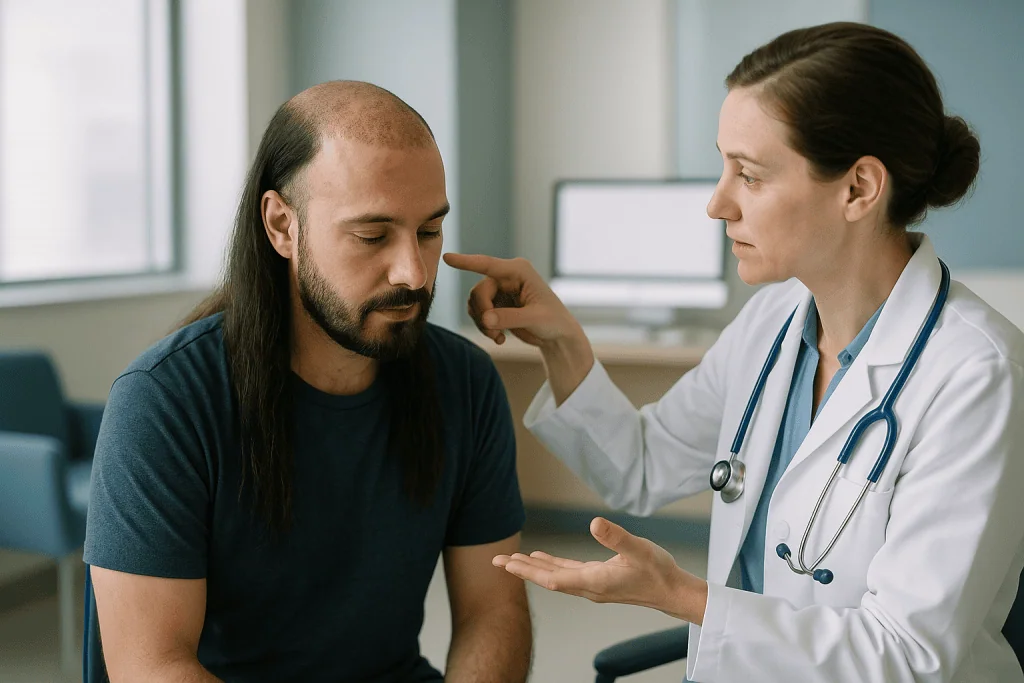
How long that takes varies more between people than between techniques. Fair or easily flushed skin tends to stay pink longer. The NHS timeline treats the transplanted area as needing careful handling for about two weeks, with crusting settling in that window (NHS), and by then most of the intense colour has usually gone. A softer pink can persist for several weeks or, in some people, a few months, particularly along the hairline where the skin is thin. Prolonged redness on its own, without heat, pain or discharge, is generally cosmetic rather than medical.
Two things reliably make redness worse and longer-lasting. The first is sun. Ultraviolet light inflames healing skin and can leave a darker patch that outlasts the pink, so shade and a loose, clean covering once your team allows it are worth taking seriously. The second is picking. Scabs pulled away early expose raw skin and reset the clock.
The donor area behaves differently. On an unshaven scalp it is hidden by overlying hair from day one, so its pink dots go unnoticed. That is one of the genuine advantages of the technique, and it is why most concealment effort goes into the front.
Hiding redness without harming grafts: hats, styling and concealers
The first tool is your own hair. Because it was never shaved, hair from the sides and crown can often be combed forward or across to soften the edge of a red hairline. Do this with a wide-tooth comb held well above the recipient zone, moving only the long hair, never dragging teeth across grafts. A little length in front goes a surprisingly long way once the initial swelling has settled.
Hats are the most asked-about item. The concern is not the hat itself but contact and shear: a snug cap pressed on and pulled off can shift grafts in the first days. Teams generally allow a loose, clean covering once the grafts have anchored, often after the first few days, and prefer one that sits away from the recipient area rather than resting on it. A hood or a wide bucket style tends to be gentler than a fitted baseball cap. Whatever you use, put it on and take it off with two hands, lifting straight up.
Cosmetic concealers and keratin fibres are a separate question. They are safe on fully healed skin, but on a fresh recipient area they can clog incisions and are difficult to wash off without rubbing. Most surgeons ask people to wait until scabs have fully cleared, and to check first. There is no good-quality evidence that any concealer speeds healing or protects grafts, and none should be described that way.
Finally, remember what others actually notice. Colleagues see a face, not a scalp. Slight pinkness above a fringe reads as sunburn or a warm room to almost everyone who is not looking for it.
How to wash hair after FUE when your hair is long
Washing is where unshaven recovery diverges most from the shaved version. The goal is the same, to keep the scalp clean and soften scabs without touching grafts, but long hair carries water, foam and its own weight straight across the areas you are protecting.
Most teams delay the first wash for a day or two and then describe a no-touch routine for the recipient area. A typical version: dilute a mild shampoo in a cup or jug, pour it over the transplanted zone without pressure, let it sit briefly, then rinse with cupped hands or a low-pressure flow, never a direct showerhead jet. The NHS timeline places gentle washing in roughly days two to five and a return to normal hand washing from about day six (NHS), though your own instructions override any general schedule.
For the long hair, three practical adjustments help:
- Wash the untouched hair separately, tilting the head so foam and rinse water run away from the grafts rather than through them.
- Lather in your palms first, so no concentrated product lands on the recipient area.
- Pat the long hair with a clean towel and let the recipient area air-dry; a hairdryer, if allowed, stays on cool and at arm’s length.
The donor area can usually be washed a little more normally because the hair covering it acts as a buffer, but fingertips rather than nails, and no scrubbing. Scabs there are tiny and lift on their own. Anything that looks like pus, spreads, or hurts more each day is not a washing problem and belongs in the red-flag section below.
Tangles, combing and styling products in the first weeks
Nobody warns you about knots. Days of not brushing, plus dried fluid near the hairline, can leave long hair matted close to exactly the place you cannot comb. The safe approach is to work from the ends upward, holding the section above the tangle so no tug reaches the roots, and to stop short of the recipient zone entirely. A leave-in detangling spray on the lengths only, applied well away from grafts, makes this easier and is generally fine once your team has cleared products for the untouched hair.
Styling products deserve a pause. Waxes, clays and strong-hold sprays are sticky, need friction to remove, and can seal over healing incisions. Most surgeons ask people to keep the recipient area product-free until scabs are gone, commonly a couple of weeks, and to keep even the non-transplanted hair product-light so that nothing migrates during washing. Dry shampoo is a frequent question; its powder can settle into incisions and is best avoided on or near the graft area during that same window.
Heat tools follow the same logic. A straightener or curling iron on the long hair is not dangerous to grafts if it never touches the scalp, but the temptation to style right up to the hairline is exactly where accidents happen. Many people simply tie hair back loosely, low on the head and away from both surgical zones, for the first two to three weeks. Tight ponytails and clips that press on the donor area are best left until the pinpoint wounds have closed, because sustained traction on healing skin is uncomfortable and unnecessary.
A small, honest point: the untouched hair will look slightly duller for a while because it is being washed more gently. That is temporary and not a sign of anything wrong.
Unshaven hair transplant healing time: what the days and weeks usually look like
Healing follows a broadly predictable arc, and knowing it in advance prevents a lot of unnecessary worry. The ranges below combine the NHS aftercare timeline (NHS), Cleveland Clinic’s description of early recovery and shedding (Cleveland Clinic), and MedlinePlus on regrowth (MedlinePlus). They are typical, not promised, and your team’s version wins.
| Stage | What is usually happening | Practical focus for long hair |
|---|---|---|
| Days 1 to 3 | Grafts anchoring; swelling may drift toward the forehead; scabs forming | Head elevated; hair combed away from grafts; no touching |
| Days 2 to 5 | Gentle pour-and-rinse washing begins in many protocols | Wash long hair separately; water runs away from recipient area |
| About day 6 onward | Normal hand washing often permitted; scabs softening | Fingertips only; still no styling product on the recipient zone |
| Around 2 weeks | Most scabs gone; redness fading; skin still delicate | Loose covering usually fine; light styling of untouched hair |
| Weeks 2 to 8 | Transplanted hairs commonly shed (shock loss); follicles remain | Reassurance; nothing to do differently |
| Around 6 months | New growth becomes noticeable | Normal hair care resumes on the whole scalp |
| 12 to 18 months | Full result usually assessed | Review with the surgical team |
Shock loss is the stage that alarms people most. The transplanted hair shafts fall out a few weeks after surgery while the follicles beneath them stay put and rest before producing new hair. On an unshaven scalp this can look like the area is going backward, because the contrast with surrounding long hair is sharp. It is expected, and it is not a sign the procedure failed.
Small pale dots in the donor area are permanent but are hidden by hair of almost any length.
Return to work after hair transplant: desk jobs, physical work and public-facing roles
The NHS puts the typical return to work at about three days after a hair transplant (NHS), and for most people with a desk job that holds. The limiting factors are swelling, which can be at its most visible on days three and four, and the need to keep the scalp protected, not pain or stamina.
Different jobs push that window in different directions:
- Office and remote work: often feasible within a few days; a camera-off first day is a common workaround while forehead swelling settles.
- Customer-facing roles: many people prefer to wait until scabs have cleared and a loose covering is permitted, commonly around the end of the second week, purely for comfort with their appearance.
- Physical or outdoor work: heavy lifting, bending, sweating and sun all stress healing skin, and helmets or hard hats rub directly on the recipient area. Teams usually ask for a longer break or temporary duties, and the exact length is set individually.
- Jobs with dust, chemicals or communal water: additional time is often advised because of infection risk to open incisions.
Unshaven FUE helps here in an obvious way: no one sees a freshly shaved donor area. The trade-off is that you carry more responsibility for keeping long hair off the grafts during a working day, especially if you tend to run hands through your hair when concentrating. A loose low ponytail or a headband worn well behind the recipient zone removes most of that risk.
Driving is usually allowed once any sedation has fully worn off and you are not relying on strong pain relief, which your team will confirm. Commuting on crowded transport in the first few days is a genuine graft hazard because of jostling and overhead bags; a quieter route or a later start is a reasonable ask of an employer.
Sleep, exercise, sweat and sun during unshaven FUE recovery
Sleep position is the first night’s challenge. Lying face-down or rolling onto the side can press or drag the recipient area against fabric, and long hair spread across the pillow can stick to weeping incisions. Sleeping propped on two or three pillows, or in a recliner, for the first few nights limits swelling and keeps the grafts clear. Some people wrap a soft, clean scarf loosely around the long hair to keep it gathered behind the head; anything tight around the donor area is counterproductive.
Exercise raises blood pressure and heart rate, which can increase oozing from fresh incisions, and it produces sweat, which is salty, irritating and a good medium for bacteria. Most surgical teams ask for a break from strenuous activity for at least the first week or two, with walking encouraged throughout. Swimming in pools and open water waits longer because of chemical and microbial exposure to unhealed skin. Saunas and steam rooms, which soften scabs prematurely, sit in the same category.
Sun is the quiet long-term factor. Healing skin burns easily and can develop lasting darker patches when exposed early. Shade, a wide loose hat once permitted, and avoiding midday sun on the scalp for several weeks are standard advice. Sunscreen directly on the recipient area usually waits until the skin surface is fully closed; rubbing it in before then is the same problem as any other rubbing.
Alcohol and smoking both narrow or dilate blood vessels in ways that can affect early graft survival and wound healing, and teams commonly ask people to avoid them for a period before and after surgery. That advice is about biology, not judgement, and the specifics come from the clinician who knows your history.
What people often get wrong about unshaven FUE recovery
Because the visible haircut is avoided, people sometimes assume the healing is lighter too. It is not. The same number of incisions exist; they are simply hidden. Treating recovery as a formality because nothing shows is the fastest route to a dislodged graft or a scab pulled off by a comb.
A second myth runs the opposite way: that long hair suffocates grafts and unshaven patients heal worse. There is no good evidence for that. Grafts need blood supply from beneath, not air from above. Long hair matters only as a source of friction and trapped product, both of which careful handling controls.
Shedding is misread constantly. When transplanted hairs fall out in weeks two to eight, people conclude the surgery failed. Cleveland Clinic describes this shedding as an expected phase before regrowth (Cleveland Clinic). The follicle stays; the shaft it arrived with does not.
Many people believe redness that lasts beyond two weeks means infection. Colour alone is a poor guide. Infection announces itself with heat, spreading pain, swelling that increases rather than decreases, and discharge. Pink skin that is cool and painless is simply skin that is still remodelling.
There is also a persistent idea that the more you wash, the faster scabs clear. Gentle daily washing helps; frequent or vigorous washing does not, and it irritates skin that is trying to seal.
Lastly, the belief that a transplant halts future hair loss. It moves hair that is genetically resistant to thinning; it does nothing to the surrounding hair, which may continue to recede. Mayo Clinic notes that people may need ongoing treatment alongside surgery to manage progressive loss (Mayo Clinic). Whether that applies, and what it involves, is a discussion for your clinician rather than a recovery instruction.
Risks, side effects and the alternatives worth understanding
Hair transplantation is a minor surgical procedure and carries minor surgical risks. The NHS lists bleeding, infection, allergic reaction to anaesthetic, folliculitis, swelling, bruising, a temporary loss of sensation, an unnatural-looking result, and scarring among the recognised complications (NHS). Folliculitis, an inflammation of hair follicles that looks like small pimples, is common in the weeks after surgery as new hairs push through and usually settles with the care team’s advice; persistent or spreading pustules need review.
Unshaven harvesting adds no unique medical risk but does have technique-specific limits. Fewer grafts per session may mean more sessions to reach a target density. Follicles extracted through long hair are slightly harder to see, which some surgeons feel increases the chance of transecting, or cutting through, a follicle during removal. Whether that translates into a meaningful difference in outcome has not been established in high-quality comparative studies, and it is honest to say so.
Alternatives sit on a spectrum. Medicines that act on the hormonal drivers of pattern hair loss, or on the follicle’s growth cycle, are described by Mayo Clinic as the usual first step and may slow further loss; their suitability, mechanism and monitoring are matters for the prescribing clinician (Mayo Clinic). The strip method, known as FUT, removes a thin band of scalp and yields many grafts in one session at the cost of a linear scar. Scalp micropigmentation tattoos the appearance of shaved stubble. Low-level laser devices and injected plasma treatments are widely marketed; the evidence for both remains limited and inconsistent, and neither should be assumed effective.
Doing nothing is also a legitimate option, and a surgeon who says so is worth trusting.
Questions to ask your care team before and after unshaven FUE
Good aftercare starts before the procedure, with specific questions rather than general reassurance. These are the ones that shape the recovery described in this article:
- Which unshaven method will be used, a hidden trimmed strip or long-hair extraction, and how will that change the length of the session and the number of grafts?
- On which day can I first pour water over the recipient area, and on which day may I touch it with fingertips?
- What exactly should I do if a long hair becomes stuck to a scab?
- When may I wear a covering, and what kind do you prefer?
- When can I use styling product on the untouched hair, and when on the transplanted area?
- What does normal redness look like for my skin tone, and what would make you want to see me?
- What is your expected window for shedding and first regrowth in my case?
- What activity restrictions apply to my specific job, and for how long?
- Which medicines, if any, will I be given, what are they for, and how do they interact with what I already take?
- How will you assess the result, and at what follow-up points?
After the procedure, the most useful habit is a daily photograph in the same light. It gives you an objective record of swelling and redness fading, replaces anxious mirror-checking, and provides your team with something concrete if you need to message them.
Ask, too, who to contact out of hours. The answer tells you a lot about the service, and it is the number you want saved before you need it.
When to call your doctor
Most unshaven FUE recoveries are uneventful, and mild soreness, tightness, itching and pinkness are all expected. Some signs are not, and they warrant a same-day call to the surgical team rather than a wait for the next appointment.
Contact your team promptly if you notice any of the following:
- Bleeding that soaks through a dressing or does not stop with gentle pressure after several minutes.
- Pain that increases after the first two or three days instead of easing.
- Spreading redness, warmth or swelling around either the donor or recipient area, especially with a fever or feeling generally unwell.
- Yellow or green discharge, a foul smell, or scabs that become wet and enlarge rather than dry and shrink.
- Multiple pus-filled spots that spread rather than settle, which may indicate folliculitis needing treatment.
- Numbness or tingling that is worsening, or a patch of skin that turns dark, grey or unusually pale.
- Any allergic-type reaction such as hives, facial swelling beyond the expected forehead puffiness, or breathing difficulty, which is an emergency.
MedlinePlus describes the general signs of a surgical wound infection as increasing redness, warmth, swelling, pain and drainage, and advises contacting the surgical team when they appear (MedlinePlus). Long hair makes these harder to spot, so use a mirror, a phone camera or a trusted person to look at the donor area every day for the first two weeks.
Photographs help your team judge whether an in-person review is needed. The decision about antibiotics, dressings or any other intervention rests with the clinician who assesses you; nothing in this article replaces that assessment.
Frequently asked questions
How long does unshaven hair transplant healing time really take?
The skin surface usually settles within about two weeks, while the full cosmetic result takes far longer. The NHS timeline describes scabs clearing and careful handling ending at around two weeks, new growth appearing at about six months, and the final result at twelve to eighteen months. Unshaven harvesting does not shorten or lengthen that biology; it only changes how visible each stage is.
How long does hair transplant redness last on the hairline?
Intense pink typically fades over the first two weeks as scabs clear, and a fainter blush can linger for several weeks, occasionally a few months in fair or reactive skin. Sun exposure and picking prolong it. Redness that is cool and painless is cosmetic; redness that spreads, feels hot or comes with discharge should be reported to your surgical team the same day.
How do I wash my hair after FUE if it is long?
Use a no-touch method on the recipient area: pour diluted mild shampoo over it, leave briefly, and rinse with cupped hands or a low-pressure flow. Wash the long, untouched hair separately with the head tilted so water drains away from the grafts. Pat the lengths dry and let the graft area air-dry. Your team will give the exact day to start and when fingertips are allowed.
When can I return to work after a hair transplant?
The NHS suggests about three days for a typical return, which fits most desk-based roles. Swelling can peak around days three and four, so some people plan a low-visibility first day back. Customer-facing roles often wait until scabs clear at about two weeks, and physical, dusty or helmet-wearing jobs need a longer break agreed with the surgical team.
Can I wear a hat to hide the redness?
Usually yes, once the grafts have anchored, which most teams place after the first few days. Choose a loose, clean covering that sits away from the recipient area rather than pressing on it, and put it on and take it off with both hands, lifting straight up. Tight fitted caps and anything with an internal seam across the hairline are best avoided early.
Why is my transplanted hair falling out after a few weeks?
This is shock loss, an expected phase in which the transplanted hair shafts shed while the follicles beneath remain and rest before regrowing. Cleveland Clinic describes it as occurring in the weeks after surgery, commonly between weeks two and eight. On an unshaven scalp the contrast with surrounding long hair makes it look dramatic, but it is not a sign that grafts have failed.
Can I use hair fibres or concealer on the recipient area?
Not until the skin has fully closed and scabs have gone, and only after checking with your team. Fibres and concealers can clog fresh incisions and require rubbing to remove, which is exactly the friction grafts need to avoid. There is no evidence that any concealer protects grafts or speeds healing. On the untouched long hair, product is usually fine sooner, kept well away from the graft zone.
Does unshaven FUE heal worse because hair covers the grafts?
There is no good evidence that it does. Grafts survive on blood supply from the scalp beneath, not on air exposure from above. Long hair matters only as a source of friction, trapped sweat and product, all of which careful washing and combing control. The recognised trade-offs of the unshaven method are fewer grafts per session and longer surgery, not poorer healing.
When can I exercise, sweat and swim again?
Walking is encouraged from the start. Strenuous exercise that raises blood pressure and produces heavy sweat is commonly paused for at least the first week or two because it can increase oozing and irritate open incisions. Swimming, saunas and steam rooms wait longer, until the skin has fully closed, because of chemical and microbial exposure. Your surgical team sets the exact dates for your case.
What are the warning signs that something is wrong after FUE?
Bleeding that does not stop with gentle pressure, pain that increases after day three, spreading redness or warmth, swelling that grows instead of shrinking, yellow or green discharge, a bad smell, spreading pus-filled spots, and fever all warrant a same-day call to the surgical team. Facial swelling beyond the forehead, hives or breathing difficulty are emergencies. Check the hidden donor area daily with a mirror or camera.
References
- NHS – Hair transplant
- MedlinePlus – Hair transplant
- MedlinePlus – Surgical wound infection – treatment
This article is for general information only and is not a substitute for professional medical advice. Please consult a qualified doctor about your individual situation.

More from the Blog
What Robotic Hair Surgery Results Depend On: The Robot, the Team and Time
Robotic hair surgery results depend far more on the donor hair supply, the surgical team's planning and graft handling, and the pattern of underlying…
Eyebrow Transplant Results Over the First Year: Shedding, Regrowth and When the Shape Settles
Eyebrow transplant results change markedly across the first year. Most transplanted hairs shed within roughly two to eight weeks, then regrow from about month…
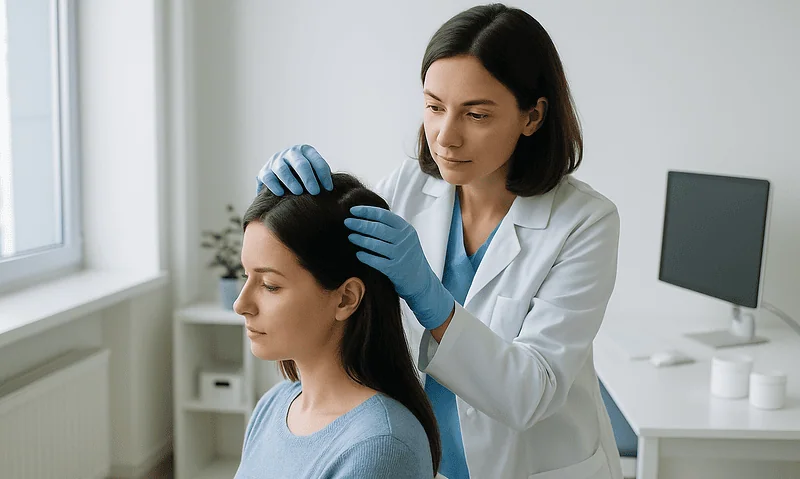
How Many Days in Turkey for a Hair Transplant? The Realistic Itinerary
Plan for five to seven days in Turkey for a hair transplant. The procedure itself usually takes one day (about four to eight hours),…
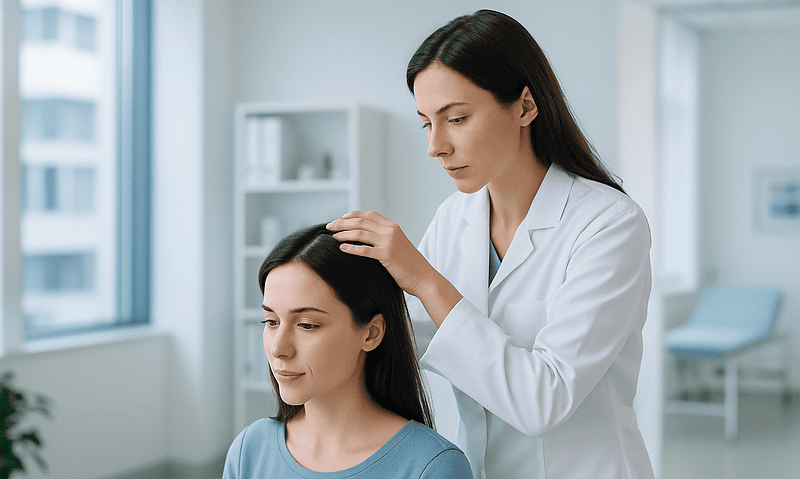
When Does an Old Hair Transplant Need Repair? Hairline Angle, Pluggy Grafts and Uneven Density
An old hair transplant usually needs repair when it no longer looks natural or no longer matches the rest of the scalp: a hairline…

Scalp Micropigmentation Risks: Pigment Spread, Color Shift and Allergic Reactions Explained
Scalp micropigmentation risks are mostly the risks of any cosmetic tattoo applied to a thin, sun-exposed area of skin: pigment can spread and blur…
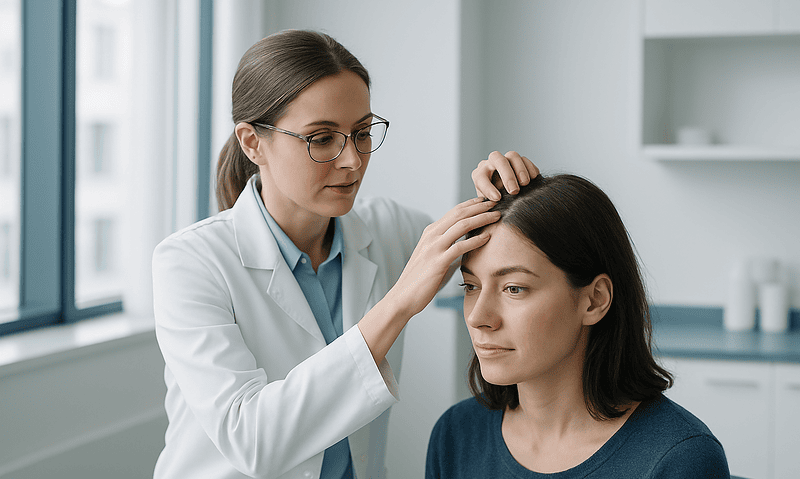
Biofibre Hair Implants: What UK Patients Should Know Before Considering Them
Biofibre hair implants are synthetic polyamide fibers anchored into the scalp, not a transplant of living hair. The fibers never grow, shed at an…