

Hair Transplant Istanbul: Hospital vs Clinic and How to Choose
In this section
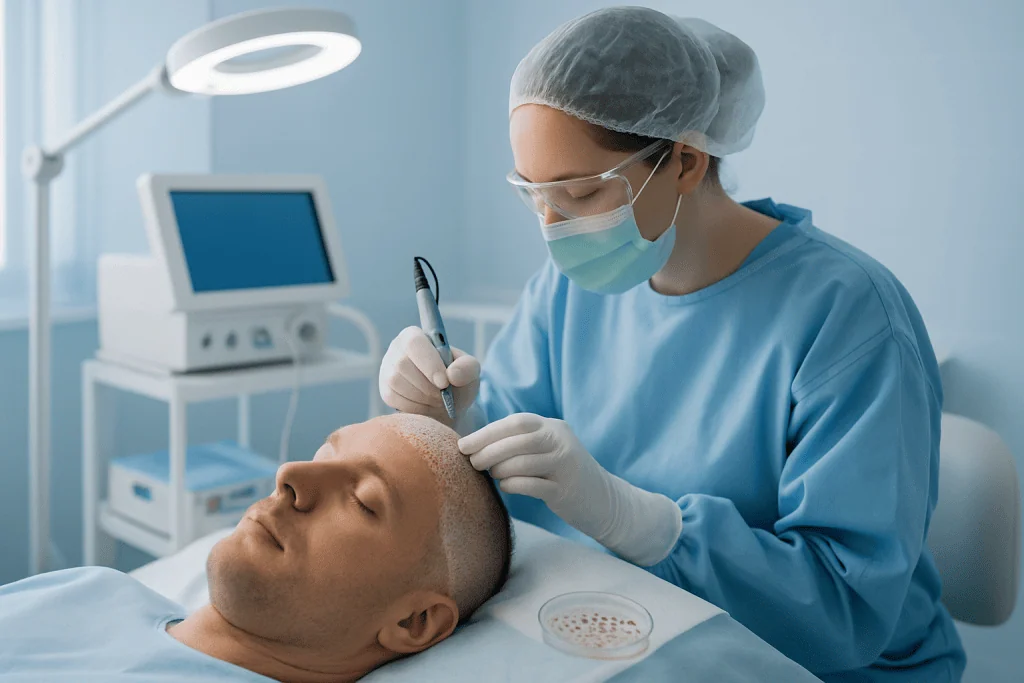
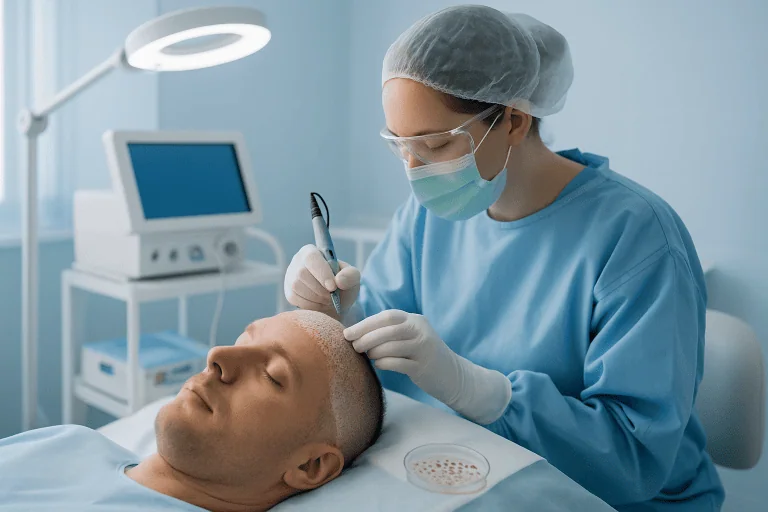 Afro Hair Transplant Turkey: Curl-Specific FUE, Surgeons, Cost An afro hair transplant in Turkey is a follicular unit extraction (FUE) performed under local anaesthesia by a…
 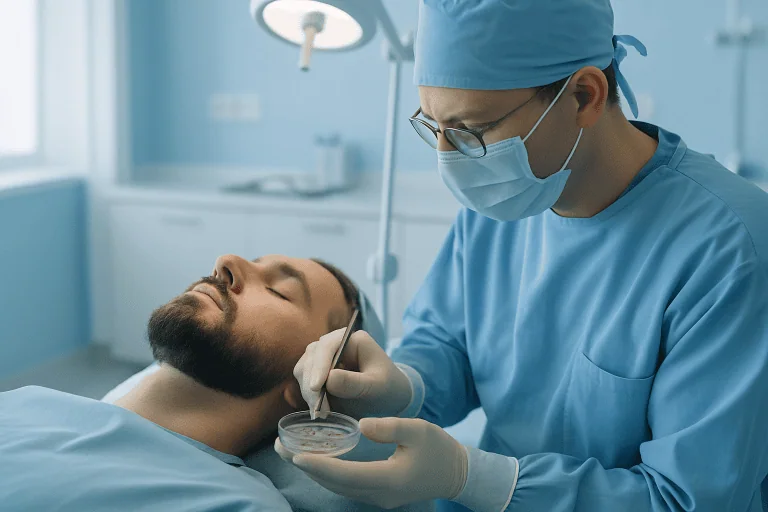 Beard Transplant in Turkey: Grafts, FUE, Recovery and Cost A beard transplant in Turkey moves healthy hair follicles, usually from the back of the scalp, to the…
 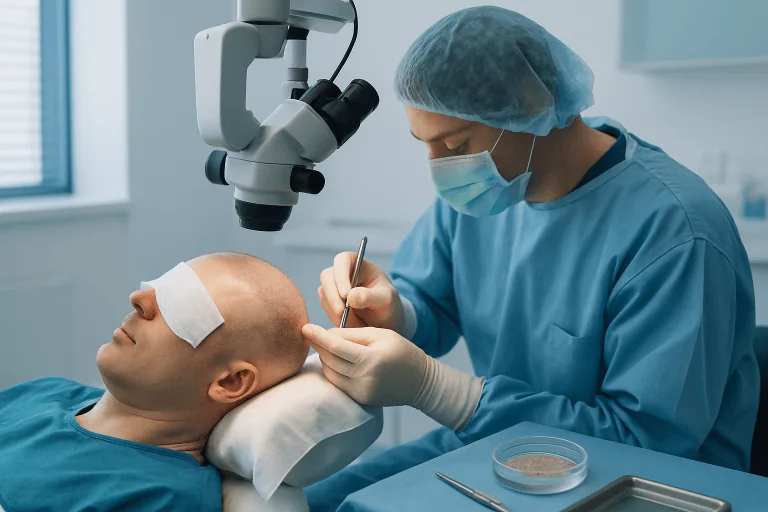 DHI Hair Transplant in Turkey: DHI vs FUE and Sapphire FUE A DHI hair transplant in Turkey is a surgical hair restoration procedure in which individual follicles are taken…
 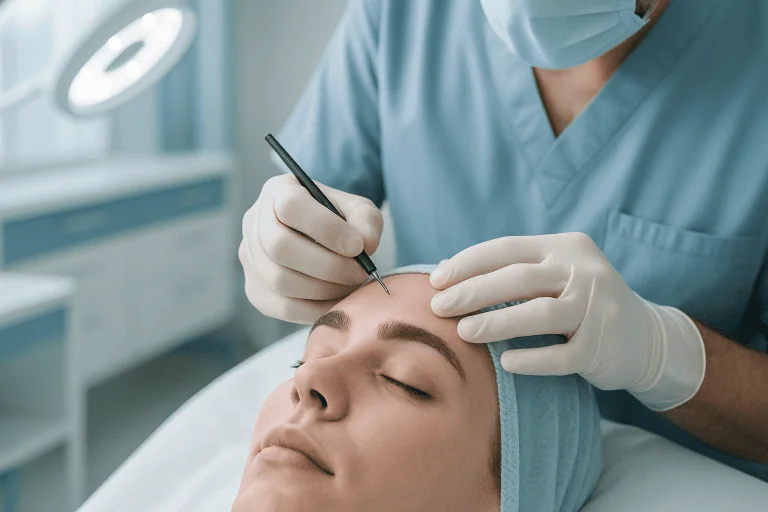 Eyebrow Transplant in Turkey: Design, Grafts, Recovery, Cost An eyebrow transplant in Turkey restores sparse, thin or missing brows by implanting hair follicles taken from a…
 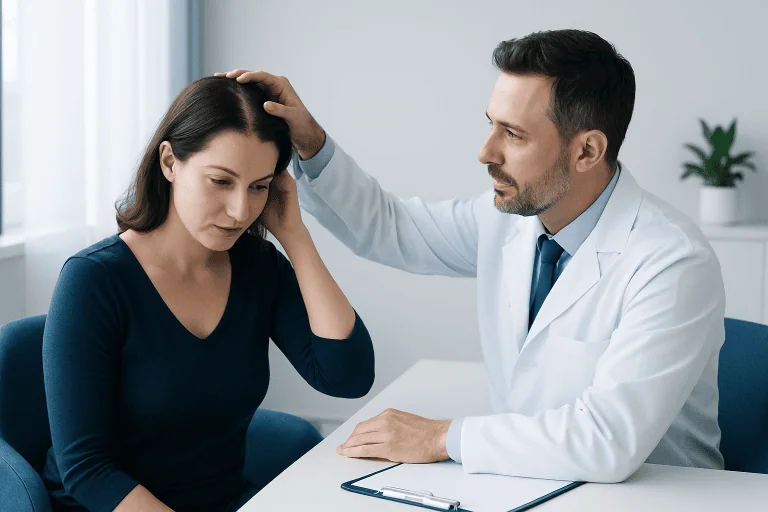 Female Hair Transplant in Turkey: Unshaven Options for Women A female hair transplant in Turkey is usually performed as an unshaven follicular unit extraction (U-FUE), in which… Hair Transplant Cost UK vs Turkey: What the Difference Buys A hair transplant in Turkey usually costs less than the same FUE procedure in the UK mainly because…
 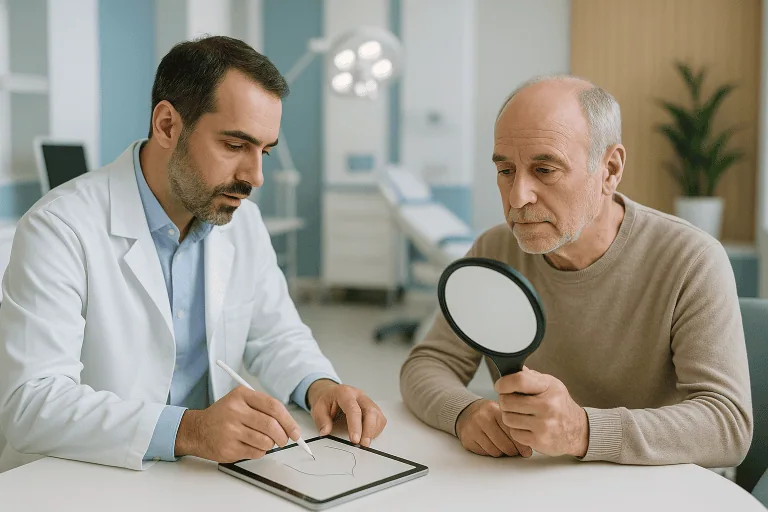 Sapphire Hair Transplant in Turkey: Sapphire FUE vs DHI, Cost A sapphire hair transplant in Turkey is an FUE procedure in which the recipient channels are opened with…
 A hair transplant in Istanbul is, for many people in the United Kingdom, the first time they seriously consider having surgery abroad. The city has become closely associated with hair restoration, and a search for a clinic quickly produces hundreds of options, ranked lists and promotional offers that are difficult to tell apart. This orientation guide is written to help you understand what the procedure actually involves, who it suits, how a hospital-based programme differs from a standalone clinic, and what to compare before you commit to travel.
It covers the FUE method as performed within Acıbadem’s hospitals, the step-by-step journey from a remote medical review to follow-up after you return home, the genuine risks and how they are managed, and the practical side of planning a trip from London or New York. It does not replace a consultation; it is intended to make that consultation more useful.
What a hair transplant in Istanbul involves and who it suits
A hair transplant is a surgical procedure that moves your own hair follicles from a donor area, usually the back and sides of the scalp, to regions that are thinning or bald. Because the transplanted follicles keep the characteristics of the area they came from, the growth they produce is intended to be permanent and to look natural when the hairline has been planned in proportion to the face.
In Istanbul the method most commonly used is follicular unit extraction, or FUE. It is described as minimally invasive because individual follicles are taken one at a time rather than as a strip of skin, which avoids a linear scar and shortens initial healing. The category also includes the planning work that surrounds the operation: assessing the pattern and cause of hair loss, measuring donor capacity, designing a hairline that will still look appropriate as you age, and deciding whether a transplant is the right response at all.
Who is usually a candidate
- Adults with established, stable pattern hair loss and a healthy donor area.
- People whose expectations match what their donor supply can realistically achieve.
- Patients in good general health, or with well-controlled long-term conditions.
Who should be cautious or may not be suitable
- People with diffuse thinning that affects the donor area too, since the moved hair may not be stable.
- Those with active scalp disease, certain autoimmune forms of hair loss, or uncontrolled bleeding or clotting disorders.
- Very young patients whose hair loss pattern has not yet declared itself.
- Anyone expecting a transplant to restore the density of adolescence; it redistributes hair, it does not create new hair.
A physician’s assessment of the scalp and medical history is the only reliable way to tell which group you fall into.
Why do people go to Turkey for hair transplants?
The question comes up in almost every first consultation, and the honest answer has several parts. The most visible one is cost, and the verified price band below shows how the UK, the US and Türkiye compare. But cost alone does not explain why patients choose Istanbul over other destinations, and it is rarely the reason patients give afterwards for being satisfied.
Volume and routine. Hair restoration has been practised in Istanbul for many years, so the supporting processes, from hairline planning to post-operative washing protocols, are well established rather than improvised.
Hospital medicine rather than a shop front. Within Acıbadem, hair transplants are carried out in hospitals such as Acıbadem Taksim Hospital, not in converted offices. That means anaesthesia specialists, an intensive care unit, laboratory testing and imaging are in the same building, and a physician is available if a medical issue arises during or after the procedure.
Independent accreditation. Seven of the group’s hospitals, within a network of more than twenty, hold Joint Commission International accreditation. JCI standards cover infection control, medication safety, patient identification and clinical record keeping, all of which are directly relevant to a procedure that involves thousands of small incisions on the scalp.
Experience with international patients. More than 3,300 physicians work across the network, and the international office handles translation, records transfer and scheduling for patients from the UK, Ireland, North America and Australia as a matter of routine.
No waiting list. Hair transplantation is not available through the NHS, and private UK schedules can be long. In Istanbul the interval between medical review and a confirmed date is usually governed by your own diary and travel plans rather than by the hospital’s capacity.
How a hair transplant works with Acıbadem, step by step
The pathway is designed so that most of the medical decision-making happens before you book a flight, and so that nobody arrives in Istanbul without knowing what has been agreed.
- Remote medical review. You submit photographs of the scalp from several angles, a description of when hair loss began and how it has progressed, and a medical history including medicines, allergies and any previous treatment. A physician reviews this and tells you whether you appear to be a candidate for FUE, and if not, why not.
- Personal plan and quote. If you are suitable, you receive a written plan describing the intended donor and recipient areas, the anaesthesia approach, the expected duration and the recovery period, together with a personal quote. The medical review is free and carries no obligation.
- Arrival and coordinator. A patient coordinator meets you on arrival, confirms your appointments and remains your point of contact for practical matters, including interpreting if needed.
- In-person consultation and pre-operative tests. The surgeon examines the scalp and donor area directly, finalises the hairline in relation to your facial proportions and donor capacity, and confirms the plan with you. Blood tests and any other checks the physician requires are carried out in the hospital.
- The procedure. FUE is performed under local anaesthesia over four to eight hours as an outpatient procedure; you return to your accommodation the same day.
- Recovery in Istanbul. You attend a follow-up visit for wound review and the first supervised wash, and receive written instructions before you are cleared to fly.
- Follow-up after returning home. The team stays in contact by phone or video during the healing months, and your records are provided so that your own doctor can be informed.
The FUE procedure: technique, anaesthesia, duration and hospital stay
FUE hair transplantation is a surgical procedure in which individual follicular units are removed from the donor area and placed into the thinning or bald region. It is classed as minimally invasive because follicles are extracted one by one rather than in a strip, and the aim is natural-looking, permanent growth in the treated area.
Preparation
Before the operation the scalp and donor area are assessed and the hairline is planned according to your facial proportions and the amount of donor hair available. You may be asked to stop blood-thinning medicines, alcohol and smoking for a short period if your physician considers this medically appropriate. You will also receive instructions on hair washing and eating before the procedure day.
Anaesthesia
The procedure is performed under local anaesthesia. You are awake, the scalp is numbed, and you can speak with the team throughout. Because a general anaesthetic is not used, the recovery from the anaesthesia itself is brief.
Duration
An FUE session takes between four and eight hours depending on the number of grafts planned and the size of the area being treated. Breaks are built into the day.
Hospital stay
FUE is an outpatient procedure with no overnight stay. Once the team is satisfied that the grafted area is protected and you understand the initial care instructions, you return to your hotel the same day.
The specific number of grafts, the exact placement and the sequence of the day are decided by the surgeon at the in-person consultation, based on the examination rather than on a figure quoted in advance.
Recovery and aftercare timeline
Recovery from FUE has two distinct phases: a short period of initial healing and a much longer period during which the transplanted hair grows in. Understanding both prevents unnecessary worry in the early months.
The first days
After the procedure you are given instructions on gentle washing, on the sleeping position that protects the grafted area, and on keeping the scalp clean. Mild swelling, redness or crusting around the grafts is common and usually improves within days. You should avoid scratching, direct sun exposure and strenuous exercise until the medical team confirms that healing is under way.
Seven to ten days
Initial healing is typically complete within seven to ten days. The crusts have usually cleared by this point and most patients are comfortable returning to work, although those in physically demanding jobs may need longer before resuming heavy activity.
The following months
It is normal for transplanted hairs to shed in the weeks after the procedure before new growth begins. This phase can be disconcerting if you are not expecting it, which is why the follow-up conversations matter. Growth then comes in gradually rather than all at once.
Twelve to eighteen months
Full results take twelve to eighteen months to appear, as the new hairs mature in thickness and length. Photographs taken at intervals help both you and the team judge progress fairly.
Throughout this period the international team remains contactable, and any concern about infection, unusual pain or unexpected changes should be raised early rather than left to the next scheduled review.
What it costs: UK, US and Türkiye
Typical self-pay ranges from the Turkey Medical Price Index. Türkiye figures are guide ranges for hospital treatment; your personal quote follows a free medical review.
Source: Turkey Medical Price Index (quarterly edition). Ranges depend on the extent of treatment, materials and hospital stay; they are not a quote.
Safety and risks
Hair transplantation is a low-risk procedure when it is properly planned and performed on a suitable patient, but it is surgery, and honesty about what can go wrong is part of informed consent.
Who is not suitable
Patients with unstable or diffuse hair loss affecting the donor area, active scalp infection or inflammatory disease, uncontrolled diabetes or clotting disorders, or unrealistic expectations of density may be advised against surgery or asked to defer it. Some medicines need to be paused; others make surgery inadvisable until they can be reviewed with your prescribing doctor.
Recognised complications
- Infection at donor or recipient sites, usually manageable but requiring prompt attention.
- Bleeding, particularly in patients taking blood-thinning medication.
- Poor graft survival if follicles are handled roughly or left out of the body too long.
- Overharvesting of the donor area, leaving visible thinning at the back of the head.
- An unnatural hairline or wrong angle of growth from inadequate planning.
- Folliculitis, prolonged numbness or, rarely, scarring.
What cases that have gone wrong abroad tend to share
When patients return to the UK with problems, the same features recur: a plan agreed on price rather than on examination, a very high graft number promised before anyone had looked at the donor area, a procedure carried out largely by unqualified staff with no physician in the room, no facility for dealing with a medical emergency, and no route back to the team once the patient had flown home.
How a hospital setting changes this
In a JCI-accredited hospital, physician oversight, sterile technique, medication checks and record keeping are audited rather than assumed. Emergency support is on site. Candidacy is decided by a doctor who is also accountable for the outcome, and follow-up is part of the programme rather than an afterthought.
UK and US vs Türkiye: how the pathway differs
The comparison is often reduced to a headline figure, but the differences in how care is organised matter as much as the number itself.
Access and waiting
Hair transplantation is cosmetic and is not funded by the NHS, so UK patients are self-paying wherever they go. Private UK clinics may have long lead times; in Istanbul the date is largely set by your own availability.
What the lower cost means
Salaries, rents and overheads in Türkiye are lower than in London or New York, and a large volume of procedures spreads fixed costs across many patients. The instruments, anaesthetic agents and consumables used in a hospital programme are the same internationally regulated products used in the UK. The lower price reflects the local economy, not a different standard of material.
What it does not mean
It does not mean that every provider in Istanbul offers the same standard. The gap between a hospital-based programme and an unregulated clinic is wider in Türkiye than in the UK precisely because the market is larger. A low headline price that excludes the surgeon’s involvement, follow-up visits or medication is not comparable with a hospital package that includes them.
Aftercare and travel
In the UK your surgeon is a train ride away for the twelve to eighteen months of growth. Abroad, that contact is remote, which is workable when the team has a structured follow-up process and your own GP is kept informed, and unworkable when it does not. Travel adds a few days away from home and the need for insurance that covers planned treatment.
Comparing like for like
Check who performs which part of the procedure, whether a physician examines you before the plan is fixed, what the price includes, where you would be treated if something went wrong, and how follow-up is delivered. The price band below sets out the verified ranges for the UK, the US and Türkiye.
Planning the trip to Istanbul
A hair transplant trip is straightforward compared with most surgical travel, but a few decisions made early save trouble later.
Documents and entry
UK, Irish, US, Canadian and Australian passport holders can enter Türkiye visa-free for up to 90 days, though you should check the current rules before travelling. Your passport should be valid for the whole trip with margin to spare. Bring printed copies of your medical plan, your medication list and your insurance details.
Getting there
Istanbul is roughly four hours by air from London and around ten hours from New York. A coordinator can advise on arrival timing so that your first consultation is not immediately after a long flight.
How long to stay
Most patients plan around four to six nights: a day for consultation and pre-operative tests, the procedure day, and time for the follow-up wound check and first supervised wash before flying. Your physician confirms when you are cleared to travel; flying too early risks disturbing the grafts.
Companion
Because the procedure is under local anaesthesia and there is no overnight stay, a companion is not medically required, but many patients value the company and the extra pair of hands in the first days.
Insurance
Standard travel insurance usually excludes planned treatment. Look for a policy that specifically covers elective medical travel, including complications and changes to your return date.
What to bring
- Loose, button-front tops that do not need to be pulled over the head.
- A soft hat if advised, for the journey home rather than for the early days.
- Any regular medicines in their original packaging.
- A travel pillow for the sleeping position you are asked to keep.
Back home: follow-up, your GP and insurance
Once you have returned, healing continues for many months, and the arrangements you make in the first fortnight determine how smoothly that period goes.
Follow-up with the Istanbul team
Scheduled check-ins by phone or video allow the team to see photographs of the donor and recipient areas and answer questions about shedding, growth and washing. Keep the contact details you were given and use them; questions are expected.
Sharing records with your GP
Let your GP know that you have had the procedure, and provide the discharge summary and any medication list. This matters if you are prescribed something new, if you develop an unrelated illness, or if you ever need a scalp examination for another reason. Your own doctor remains your primary point of care.
When to seek help
Contact a doctor promptly if you notice spreading redness, increasing pain, discharge, fever, or bleeding that does not settle. In the UK, urgent concerns can be taken to your GP or NHS urgent care; the Istanbul team should also be informed so that the two can coordinate.
Insurance, NHS and your own doctor
Private medical insurance in the UK rarely covers elective cosmetic treatment abroad, and travel policies usually exclude it unless specifically extended. The NHS treats complications of treatment abroad as it would treat any other patient, but it will not carry out corrective cosmetic work; confirm your position with your provider before you travel. Readers in the United States should note that HSA and FSA eligibility for cosmetic procedures is limited, and that travel-medical policies vary widely in what they cover overseas. None of this replaces a conversation with your own doctor, who may have views on your suitability and on any medicines you take.
Choosing a hair transplant clinic in Turkey: questions to ask before deciding
Ranked lists of hair transplant clinics in Turkey circulate widely online, but no independent body publishes such rankings, and many lists are commercial. A more reliable approach is to judge any provider, hospital or standalone clinic, against the same set of questions. A reputable hair transplant clinic in Turkey should answer all of them without hesitation.
- Is the procedure carried out in a hospital or in a clinic without on-site emergency facilities?
- Does the facility hold independent accreditation, such as JCI, and can it be verified?
- Will a physician examine me in person before the graft number and hairline are fixed?
- Which parts of the procedure does the surgeon perform, and who performs the rest? What are their qualifications?
- How is my donor capacity assessed, and what happens if it is lower than expected?
- Has anyone told me I am not a candidate, or would benefit from waiting? A willingness to say no is a good sign.
- What exactly does the quoted price include: consultation, tests, medication, follow-up visits, accommodation?
- What is the follow-up plan after I return to the UK, and who do I contact?
- Where would I be treated if a complication arose during my stay?
- Can I see the written plan and consent form in English before I travel?
- Are the expectations realistic, or am I being offered a fixed high graft number and an assured outcome before examination? A result cannot be promised; it depends on the individual evaluation.
Comparing answers to these questions tells you far more than any list. The price band below gives you the verified range for the UK, the US and Türkiye to set alongside them, and a free remote medical review turns a general estimate into a personal plan. Ultimately, whether a hair transplant is suitable for you is determined by a physician’s evaluation of your scalp, your donor area and your health.
Is a hair transplant in Istanbul carried out in a hospital or a clinic?
Both exist, and the difference matters. Within Acıbadem, FUE is performed in a hospital where anaesthesia specialists, intensive care, laboratory and imaging services are on site and a physician oversees the procedure. Standalone clinics vary widely, and some have no medical backup at all. Ask any provider directly where you would be treated if a problem arose.
Why do so many people go to Turkey for hair transplants?
The main reasons are the lower cost of living, which reduces the price of a procedure without changing the materials used, a long-established routine in hair restoration, and the absence of waiting lists. For UK patients the four-hour flight from London also makes a short trip practical. Cost alone should never decide the matter; the setting and the follow-up plan matter as much.
How do I identify a reputable hair transplant clinic in Turkey?
Look for independent hospital accreditation such as JCI, a physician who examines you in person before the plan is fixed, transparency about who performs each stage of the procedure, a clear written plan in English, and a structured follow-up programme after you return home. Be cautious of a fixed high graft number or a promised outcome offered before anyone has examined your scalp.
Are lists of the top hair transplant clinics in Turkey reliable?
No independent body publishes such rankings, and many online lists are commercial or self-nominated. They can be a starting point for names but not a basis for choosing. Judging each provider against the same questions about setting, qualifications, examination, inclusions and follow-up is a more dependable method.
What anaesthesia is used and how long does FUE take?
FUE is performed under local anaesthesia, so you are awake with a numbed scalp. The procedure takes between four and eight hours depending on the number of grafts and the area treated. It is an outpatient procedure with no overnight hospital stay, and you return to your accommodation the same day.
How long do I need to stay in Istanbul after a hair transplant?
Most patients plan around four to six nights to allow for the consultation and pre-operative tests, the procedure day, and a follow-up visit for wound review and the first supervised wash. Your physician confirms when you are cleared to fly. Initial healing takes seven to ten days, so some restrictions continue after you return home.
When will I see the results of a hair transplant?
Initial healing is complete within seven to ten days, but transplanted hairs commonly shed in the weeks afterwards before new growth begins. Growth then comes in gradually. Full results take twelve to eighteen months as the hairs mature in thickness and length, so early photographs are not a fair measure of the outcome.
Will the NHS or my insurance help if something goes wrong after treatment abroad?
The NHS treats complications from treatment abroad as it would any other patient, but it does not perform corrective cosmetic work. Private UK insurance rarely covers elective cosmetic treatment overseas, and standard travel insurance usually excludes planned procedures unless specifically extended. Check your policy before you travel and keep your GP informed.
Your care team
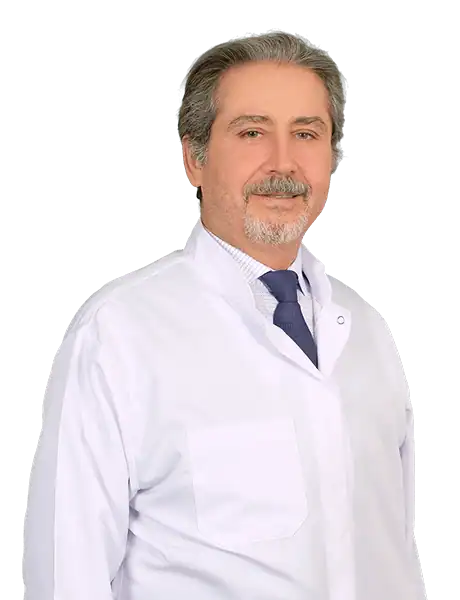
Physicians of the Acıbadem network who perform this treatment in Istanbul.
 Where it is performed Acibadem Taksim Hospital İstanbul · JCI-accredited hospitals
Clinical guide & data
The evidence-based pages behind this guide.
Read this treatment guide in your language
Planning tools for this treatment
Indicative figures for orientation only: your written plan and quote follow a free medical review.