

Beard Transplant in Turkey: Grafts, FUE, Recovery and Cost
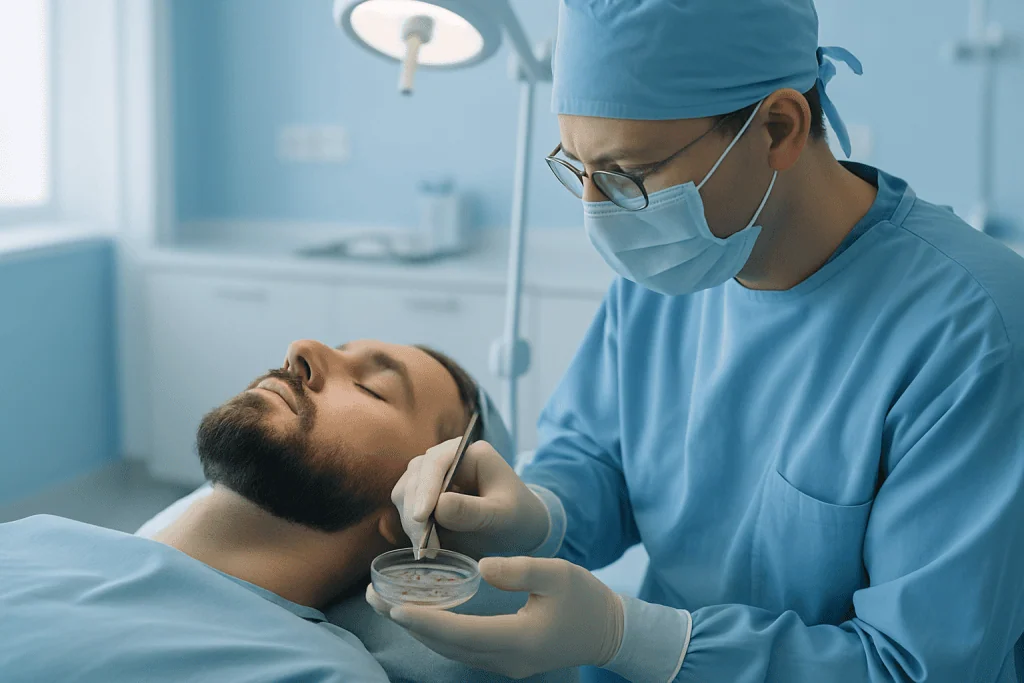
A beard transplant in Turkey has become a common choice for men in the UK, Ireland, the United States, Canada and Australia who have patchy growth, scarring or naturally sparse facial hair and want a fuller, more even beard. The procedure itself is well established: individual hair follicles are taken from a donor area, most often the back and sides of the scalp, and placed one by one into the cheeks, chin, moustache or sideburns following a design agreed with the surgeon beforehand.
This guide explains who is a suitable candidate, how the procedure is carried out under local anaesthesia in an Acıbadem hospital in Istanbul, what recovery looks like week by week, the risks you should weigh honestly, and how the pathway compares with having the same treatment privately at home. Cost is covered too, without figures in the text: a verified UK, US and Türkiye price band appears below these sections, and a personal quote follows a free medical review.
What a beard transplant is and who it suits
A beard transplant restores or enhances facial hair density by transferring healthy hair follicles, usually from the scalp, to the beard, moustache or sideburn areas. Because the transplanted hairs keep the characteristics of the donor site, they continue to grow and can be shaved, trimmed and styled like the surrounding beard once they have established.
Men consider the procedure for a range of reasons:
- Patchy or uneven growth on the cheeks or chin that never filled in after adolescence
- Thin or absent connection between the moustache and the beard
- Scars from injury, burns, surgery or acne where hair no longer grows
- A wish to define the jawline or sideburns more clearly
- Hair loss in the beard area following certain medical conditions, once these are stable and reviewed
Good candidates are generally in good overall health, have a stable donor area on the scalp with hair of a suitable calibre and colour match, and hold realistic expectations about density and the time it takes for growth to appear. A specialist evaluates the existing beard pattern, donor hair quality, skin condition and expectations before planning the number of grafts and their placement.
Who should not have a beard transplant
The procedure is not appropriate for everyone. Active skin infection or inflammation in the treatment area, uncontrolled diabetes, bleeding disorders, keloid scarring tendency and certain autoimmune hair conditions can rule it out or require treatment first. Men with limited donor hair may not have enough grafts for the coverage they hope for. Anyone under significant psychological pressure to change their appearance, or expecting a dramatic transformation in weeks, should discuss this openly with the physician before deciding. A facial hair transplant is elective surgery, and the right answer for some men is to wait or not to proceed.
Why patients from the UK and the US travel to Türkiye for a beard transplant
Türkiye has developed deep experience in hair restoration over two decades, and Istanbul in particular receives a steady flow of international patients for beard and scalp procedures. For UK readers the journey is short, at roughly four hours by air from London; from New York it is around ten hours. Many patients combine the treatment with a few days in the city while the early healing takes place.
The reason to choose a hospital group rather than a standalone clinic is less about geography and more about the setting. At Acıbadem, a beard transplant is hospital medicine. The group operates more than 20 hospitals, seven of them accredited by Joint Commission International, with over 3,300 physicians across its specialties. That means:
- Anaesthesia teams, an intensive care unit and diagnostic imaging are on site, not arranged elsewhere if something unexpected happens
- Pre-operative blood tests and medical assessment are done in the same building, to hospital protocols
- Infection control, sterilisation and record-keeping follow accredited standards that are audited independently
- Dedicated international patient coordinators handle interpretation, scheduling and communication with your family
There is also no waiting list to see a consultant. In the UK, a beard transplant is not available through the NHS, and private consultations can take weeks to arrange; in the United States, access depends heavily on location and cost. In Istanbul, a remote medical review can usually be completed within days, and a treatment date agreed around your own travel plans.
Cost is naturally part of the decision, and it is addressed honestly in the comparison section further down and in the price band below. But patients who have researched carefully tend to say that predictability, a physician-led plan and a hospital behind the procedure matter as much as the fee.
How a beard transplant in Istanbul works with Acıbadem, step by step
The pathway is designed so that most of the thinking happens before you fly, and so that the clinical decision is made by a physician rather than a sales team.
- Remote medical review. You send clear photographs of your face from several angles and of your scalp donor area, together with a short medical history and any medicines you take. A specialist reviews them and gives a preliminary opinion on suitability, likely graft numbers and design.
- Personal plan and quote. If you are a candidate, you receive a written plan describing the areas to be treated, the approach, the expected day and recovery, and a personal quote. The review itself is free.
- Arrival and coordinator. On arrival in Istanbul you are met and taken to your hotel or the hospital. An international patient coordinator remains your point of contact throughout, including for interpretation.
- Consultation and pre-operative tests. You meet the surgeon in person, who examines the beard area and donor site, confirms or adjusts the design with you, and marks the planned hairline and borders. Blood tests and a medical check are completed to hospital protocol.
- The procedure. Carried out under local anaesthesia as a day case lasting four to eight hours, at a hospital such as Acibadem International Hospital in Istanbul.
- Recovery in Istanbul. You return to your accommodation the same day. A check-up and first wash are arranged in the following days so the team can see the grafts and answer questions before you travel.
- Follow-up after returning home. Photographs and messages at agreed intervals let the surgeon monitor healing and growth over the months that follow, and you keep a full copy of your records.
Every step is documented, and you may pause or withdraw at any point before the procedure if you change your mind.
The procedure: FUE facial hair transplant under local anaesthesia
A beard transplant is a surgical procedure in which healthy follicles are moved individually from the donor area to the face. In modern practice this is done using follicular unit extraction, or FUE, in which each follicular unit is removed from the scalp with a fine punch rather than cutting a strip of skin. Your surgeon will confirm the technique appropriate to your case at consultation.
Anaesthesia
Local anaesthesia is typically used. The donor area and the beard area are numbed with injections, so you are awake and able to communicate throughout but should not feel pain. Because there is no general anaesthetic, you do not need to fast overnight in the same way as for a hospital operation, though the team will give exact instructions.
Preparation
Before the day, a specialist evaluates beard pattern, donor hair quality, skin condition and expectations, then plans graft numbers and placement. You may be asked to stop blood-thinning medicines, alcohol and smoking for a period beforehand; never stop a prescribed medicine without checking with the prescribing doctor. On the day, the face and donor area should be clean and free of products.
Duration and hospital stay
The procedure takes 4 to 8 hours depending on the number of grafts and the areas treated. It is carried out as an outpatient procedure with no overnight stay. The follicles are extracted first, prepared, and then implanted one by one into the cheeks, chin, moustache or sideburns at angles that follow the natural direction of facial hair. Breaks are built into the day, and you can eat and use the bathroom. You leave the same afternoon or evening with written aftercare instructions, protective advice for the first nights and a contact number for the team.
Recovery and aftercare timeline
Recovery time is 7 to 10 days for initial healing, with full results in 6 to 12 months. Knowing what is normal at each stage helps you avoid worry and avoid interfering with the grafts.
Days 1 to 3
Mild redness, swelling, small scabs and tenderness in the beard and donor areas are common and are managed with the care instructions provided. Tiny crusts form around each graft. You should not touch, rub or pick the treated skin, and sleeping slightly elevated is usually advised.
Days 4 to 10
Washing begins gently according to the team’s guidance, and the scabs loosen and fall away. Redness fades gradually. Most men feel comfortable in public towards the end of this period, though skin tone and individual healing vary. Avoid shaving, strenuous exercise, sun exposure and swimming until the medical team clears you.
Weeks 2 to 8
Many of the transplanted hairs shed. This is expected and does not mean the grafts have failed: the follicle remains in place beneath the skin and enters a resting phase before new growth begins.
Months 3 to 12
New hairs emerge gradually, fine at first and thickening over time. Growth continues to mature through the first year, which is why the full result is assessed at six to twelve months rather than earlier.
Throughout this period you should:
- Follow washing and moisturising instructions exactly
- Protect the area from strong sun
- Report signs of infection, unusual pain or spreading redness promptly
- Send follow-up photographs at the intervals agreed with your surgeon
What it costs: UK, US and Türkiye
Typical self-pay ranges from the Turkey Medical Price Index. Türkiye figures are guide ranges for hospital treatment; your personal quote follows a free medical review.
Source: Turkey Medical Price Index (quarterly edition). Ranges depend on the extent of treatment, materials and hospital stay; they are not a quote.
Safety and risks
A beard transplant is low-risk surgery when carried out on a suitable patient by an experienced team in a properly equipped setting, but it is still surgery and it carries risks that deserve plain explanation.
Who is not suitable
Active skin disease in the treatment area, poorly controlled diabetes, bleeding disorders or anticoagulant therapy that cannot safely be paused, a tendency to keloid scarring, and unrealistic expectations are the main reasons a physician will advise against proceeding. Insufficient donor hair is another: taking too many grafts from the scalp to satisfy a dense beard design can leave visible thinning at the back of the head.
Possible complications
- Infection or folliculitis around new grafts
- Bleeding or prolonged swelling
- Small pale or pitted scars in the donor or recipient area
- Numbness or altered sensation that usually settles but can persist
- Poor graft survival, patchy growth or an unnatural direction or density
- Allergic or adverse reaction to local anaesthetic, which is rare but is the reason anaesthesia support should be immediately available
What cases that go wrong abroad usually share
Reports of poor outcomes tend to have common features: a decision made quickly, often on price alone; no physician-led assessment of donor supply or skin before the patient travelled; a procedure performed in a room without hospital backup; a design driven by the patient’s wish for density rather than what the donor area can support; and no structured follow-up once the patient flew home. None of these are unique to Türkiye, and each is avoidable.
How a hospital setting changes this
In an accredited hospital, the surgeon's assessment precedes any booking, pre-operative tests are routine, sterile technique and instrument handling are audited, and an anaesthesia team and intensive care are on site should a reaction occur. Follow-up is written into the plan. A result cannot be promised; it depends on the individual evaluation. What this setting provides is a materially different level of oversight than a standalone room offers.
UK and US vs Türkiye: how the pathway and the cost compare
Patients researching a beard transplant usually want to understand two things: why the fee in Istanbul is lower than at home, and whether that difference signals a difference in quality. Both deserve a careful answer.
The pathway
In the UK, beard transplant surgery is cosmetic and not provided by the NHS, so every patient is self-paying. Private clinics exist in most large cities, but consultation slots and surgical dates can take weeks, and the surgeon may see you only briefly before delegating much of the work to technicians. In the United States, the picture is similar: entirely self-pay, wide variation in who performs the extraction and implantation, and cost heavily influenced by the city. Aftercare at home has the advantage of proximity: you can walk into the same clinic if a problem arises.
In Türkiye, the same procedure is available without a waiting list, but it requires travel, a stay of several days and follow-up conducted remotely once you return. That trade-off suits some men and not others.
What the lower cost does and does not mean
The difference reflects the Turkish economy: salaries for surgeons, nurses and technicians, hospital rents, energy and administrative overheads are lower than in London or New York. The punches, blades, magnification, storage solutions and anaesthetic agents used in a hospital such as Acıbadem’s are the same internationally sourced materials used elsewhere. Lower cost does not mean fewer grafts, a faster procedure or a less qualified team; those are decisions each provider makes, and they are the things you should check.
What to compare like for like
- Who performs the extraction and the implantation, and their training
- Where the procedure takes place: hospital or standalone room
- Whether pre-operative tests and a physician’s assessment are included
- What follow-up is included and for how long
- Whether accommodation, transfers and interpretation are part of the plan
The verified UK, US and Türkiye price band below gives the context; your personal quote follows the free medical review.
Planning the trip to Istanbul
A beard transplant is a day procedure, but the early healing days matter, so plan the trip around the medical timeline rather than the flight schedule.
Passport and entry
UK, Irish, US, Canadian and Australian passport holders enter Türkiye visa-free for up to 90 days. Check current rules before you travel, and make sure your passport has adequate validity beyond your return date.
How long to stay
Most patients stay four to seven nights. This allows for the in-person consultation and tests, the procedure day, at least one check-up and the first supervised wash before the team is satisfied that you can travel. Flying with fresh grafts is not a problem in itself, but you should avoid pressure or friction on the face, so a neck pillow that keeps the chin clear is useful.
Companion
A companion is not medically necessary because the procedure uses local anaesthesia and you remain mobile, but many men appreciate company on the first evening when the face is swollen and washing feels unfamiliar. Coordinators can arrange accommodation for two.
Travel insurance
Standard travel insurance excludes planned medical treatment and complications arising from it. Look for a policy that specifically covers elective treatment abroad, or a separate medical travel policy, and read the exclusions. Acıbadem provides documentation of the procedure for any claim.
What to bring
- A list of your medicines and any allergy information
- Button-up or zip shirts so nothing is pulled over the face
- A wide-brimmed hat for sun protection on later days
- Your GP’s or dermatologist’s contact details
- Comfortable clothing for a long day sitting
Avoid alcohol and smoking in the days before as instructed, and confirm any medicine changes with the prescribing doctor at home.
Back home: follow-up, your own doctor and insurance
Once you return, the responsibility for day-to-day healing passes to you, supported remotely by the Istanbul team and, where needed, by your own doctor.
Follow-up with your GP or own doctor
Tell your GP or family physician that you have had a beard transplant, and share the discharge summary and aftercare instructions you were given. This is not because problems are expected but because any clinician you consult should have the full picture. If you already see a dermatologist, they are well placed to check the skin at three and six months.
Sharing records
You receive a copy of your consultation notes, graft numbers, medication list and photographs. Keep these in a folder together with the surgeon’s contact details and the follow-up schedule. Sending photographs at the agreed intervals lets the team spot slow healing or irregular growth early.
When to seek help
Contact the Istanbul team promptly, and see a local doctor if needed, for spreading redness, pus, increasing pain after the first few days, fever, or bleeding that does not stop with gentle pressure. These are uncommon but should not be left to see whether they settle.
Insurance, NHS and your own doctor
Private medical insurance in the UK, Ireland, Canada and Australia rarely covers elective cosmetic treatment abroad, and most policies exclude complications of it; check with your provider before you travel. The NHS treats any complication as it would for any patient, and you should present to your GP or, in an emergency, to urgent care as normal. For US readers, HSA and FSA rules on cosmetic procedures vary and generally exclude them, and travel-medical policies differ widely in whether they cover planned treatment; read the terms carefully or ask your administrator.
Questions to ask before deciding on a beard transplant in Turkey
A short checklist keeps the decision grounded in medicine rather than marketing. Ask any provider, including Acıbadem, the following and expect clear written answers.
- Who assessed my photographs, and are they the surgeon who will operate?
- How many grafts are planned, from which donor area, and what will the donor area look like afterwards?
- Who carries out the extraction and who carries out the implantation, and what is their training?
- Where exactly is the procedure performed, and what happens if I react to the anaesthetic or feel unwell?
- What pre-operative tests are included?
- How long is the procedure expected to take in my case, and will I go back to my hotel the same day?
- What written aftercare will I receive, and in what language?
- How many check-ups take place in Istanbul, and what remote follow-up continues after I return home, and for how long?
- What is included in the quote: transfers, accommodation, interpretation, medication?
- Under what circumstances would you advise me not to proceed?
- Whom do I contact, and how quickly can I expect a reply, if I have a concern at home three weeks later?
Take the answers to your own GP or dermatologist and discuss them before committing. A good provider welcomes that conversation. It is also reasonable to sleep on the decision after the remote review; nothing about the timing of a beard transplant is urgent, and a plan that stands up to scrutiny a week later is a plan you can trust.
Suitability for a beard transplant is determined by a physician’s evaluation.
How much does a beard transplant cost in Turkey?
The fee depends on the number of grafts, the areas treated and what the plan includes, such as tests, transfers and follow-up. Figures are not quoted in the text because they vary by case; the verified UK, US and Türkiye price band appears below these sections. A personal quote follows a free remote medical review of your photographs and history.
Why is the beard transplant price in Turkey lower than in the UK or US?
Surgeon and nursing salaries, hospital overheads and running costs are lower in Türkiye than in London or New York. The instruments, anaesthetic agents and storage solutions used in an accredited hospital are the same internationally sourced materials used elsewhere. Compare providers on who performs the procedure, where it takes place and what follow-up is included, not on the fee alone.
Is a beard transplant in Istanbul done in a hospital or a clinic?
With Acıbadem it is performed in a hospital within a network that includes seven JCI-accredited hospitals. That means anaesthesia support, intensive care and imaging are on site, and infection control is independently audited. Standalone clinics also operate in Istanbul; ask any provider where the procedure will actually take place.
What is a facial hair transplant and is it the same as a beard transplant?
The terms are used interchangeably. A facial hair transplant moves follicles, usually from the scalp, to the beard, moustache, sideburns or scarred areas of the face. The design, number of grafts and target zones differ between patients, but the technique and recovery are the same.
Does a beard transplant hurt?
The procedure is performed under local anaesthesia, so the donor area and face are numbed and you remain awake. Most men describe the anaesthetic injections as the uncomfortable part and the rest as pressure rather than pain. Tenderness in the first days afterwards is managed with the care instructions provided.
How long do I need to stay in Istanbul for a beard transplant?
Most patients stay four to seven nights. This covers the in-person consultation and tests, the procedure day of four to eight hours, and at least one check-up and supervised first wash before travel. Initial healing takes seven to ten days, and much of this can be completed at home.
Will the transplanted beard hair fall out?
Yes, and this is expected. Many transplanted hairs shed in the weeks after the procedure while the follicle beneath the skin enters a resting phase. New growth begins gradually over the following months, with the full result assessed at six to twelve months.
Can I shave after a beard transplant?
Not until the medical team clears you. Shaving, touching the grafts, strenuous exercise, sun exposure and swimming should all be avoided during initial healing. Once the follicles have established, the transplanted hair can be shaved, trimmed and styled like the rest of your beard.
Your care team
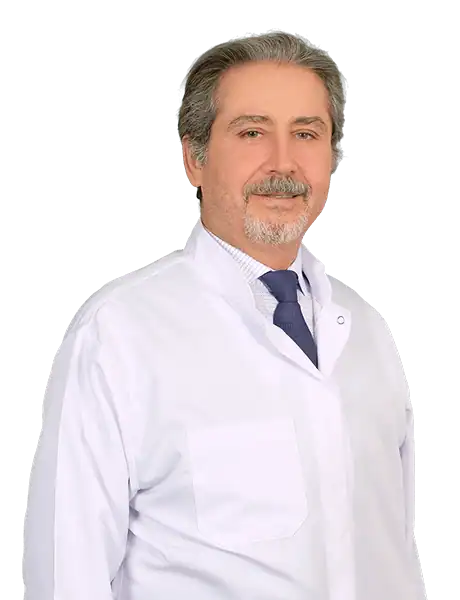
Physicians of the Acıbadem network who perform this treatment in Istanbul.
 Where it is performed Acibadem Taksim Hospital İstanbul · JCI-accredited hospitals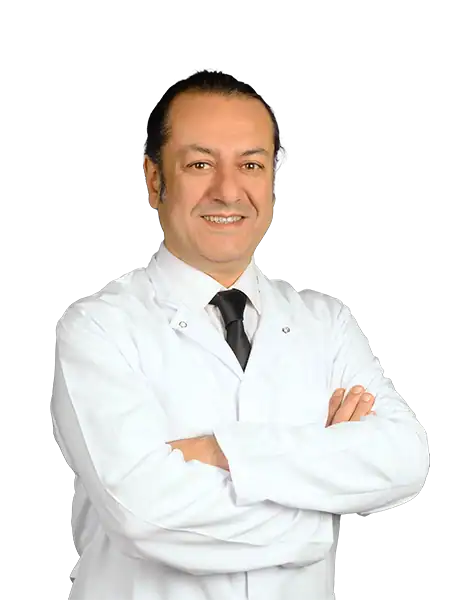
Clinical guide & data
The evidence-based pages behind this guide.
Planning tools for this treatment
Indicative figures for orientation only: your written plan and quote follow a free medical review.