

Eyebrow Transplant in Turkey: Design, Grafts, Recovery, Cost
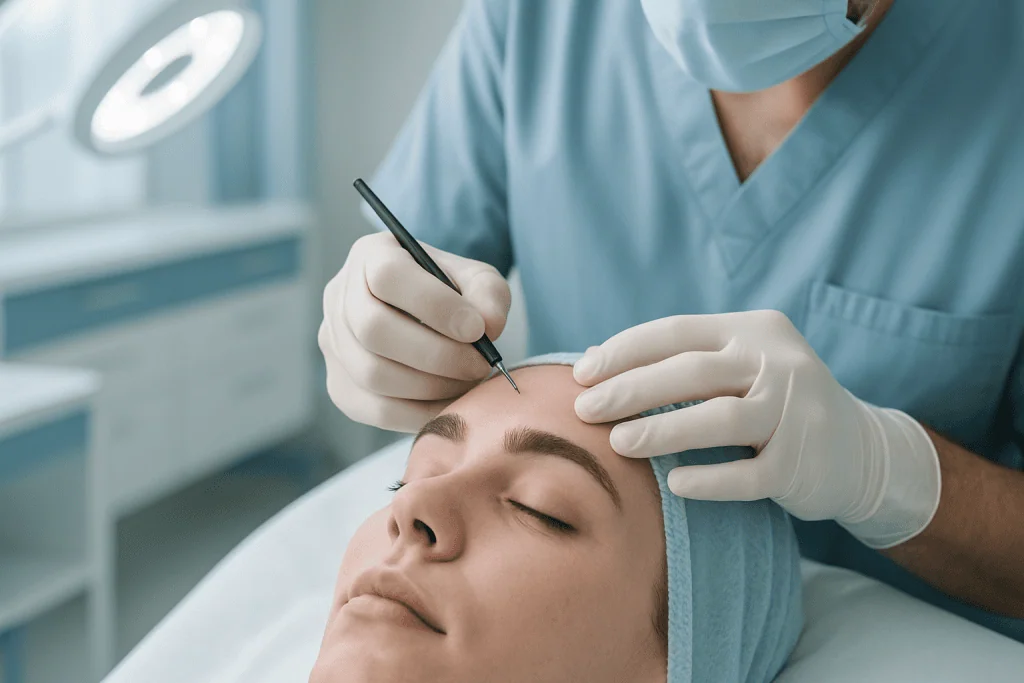
An eyebrow transplant in Turkey has become a common reason for UK patients to consider treatment abroad, usually after years of over-plucking, scarring, a medical condition or simply brows that have thinned with age. The procedure moves hair follicles from a donor area into the brow so that the shape becomes fuller and more defined, using your own hair rather than pigment or daily make-up.
This page sets out who is a candidate, how the procedure is performed under local anaesthesia, what recovery looks like week by week, the risks to weigh, and how the pathway in Türkiye differs from private treatment in the UK or the US. It also explains how cost is compared fairly, using the verified price band shown below rather than figures quoted in passing.
What an eyebrow transplant is and who it suits
An eyebrow transplant restores sparse, thin or missing eyebrows by implanting hair follicles from a donor area into the brow. Because the transplanted hair is your own, it grows, can be trimmed and behaves like natural brow hair, which is the main difference from microblading or permanent make-up.
Who tends to be a good candidate
- Adults whose brows have thinned after years of plucking, waxing or threading and have not recovered.
- People with brow loss from a scar, a burn or a previous injury, once the area has fully healed.
- Those with naturally thin or patchy brows who want more definition without daily drawing.
- Patients with a stable pattern of loss and a donor area that a specialist judges suitable.
Who should think carefully or wait
Hair loss that is still active or has an untreated underlying cause, such as a thyroid or autoimmune condition, should be investigated by your own doctor first. Trichotillomania (compulsive hair pulling) needs to be well controlled before any transplant is considered. People with certain skin conditions in the brow area, poor donor hair quality, or unrealistic expectations about density may be advised against surgery.
The preparation stage described later exists precisely to sort these questions out. A specialist evaluates your eyebrow shape, hair quality, donor area suitability and expectations before a plan is written. If the evaluation suggests that a transplant is not appropriate, you should be told so plainly rather than encouraged to proceed.
An eyebrow hair transplant is elective and cosmetic in most cases, so the decision deserves time, a second opinion if you want one, and a frank conversation about what the procedure can and cannot change.
Why UK and US patients travel to Türkiye for eyebrow transplants
Türkiye has a long track record in hair restoration, and eyebrow work is a specialised branch of that field. For many British and American patients the appeal is not only cost, which is discussed later, but the way the procedure is organised.
Hospital medicine rather than a stand-alone clinic
Within the Acıbadem group, eyebrow transplants are performed inside hospitals rather than in isolated cosmetic studios. That means anaesthesia support, sterile theatre standards, laboratory and imaging services and, should it ever be needed, intensive care are on the same site. For a local-anaesthesia day case this may sound like more than is necessary, and most patients never need any of it. The point is that the safety net exists and does not depend on a referral to an unrelated facility.
JCI accreditation and scale
The network includes 7 JCI-accredited hospitals among more than 20 hospitals, with more than 3,300 physicians. JCI accreditation is an international audit of patient safety, infection control, record keeping and staff credentialing, and it is one of the few external benchmarks a patient abroad can check independently.
Experience with international patients
Acıbadem’s international patient service handles remote medical review, translation, appointment scheduling and coordination for patients arriving from the UK, Ireland, the US, Canada and Australia. Documentation is provided in English so that your own doctor can read it when you return.
No waiting list
Because eyebrow restoration is not available on the NHS, UK patients are in the private market in any case. Travelling to Istanbul allows consultation, pre-operative checks and the procedure itself to be scheduled within a single planned visit rather than spread over months of appointments.
How an eyebrow transplant works with Acıbadem, step by step
The pathway is designed so that most of the thinking happens before you book a flight. A typical sequence looks like this.
- Remote medical review. You send clear photographs of your brows and the likely donor area, a short medical history, current medications and a description of what you hope to achieve. A physician reviews the material free of charge and indicates whether you appear to be a candidate.
- Personal plan and quote. If the review is favourable, you receive a written plan covering the proposed approach, the number of visits, recovery expectations and a personal quote. The price band below gives the general context; your quote reflects your individual case.
- Arrival and coordinator. On landing in Istanbul you are met by a coordinator who arranges transfers, hotel check-in and your appointment schedule, and who remains your point of contact throughout.
- Consultation and pre-operative tests. The specialist examines your brows in person, confirms donor area suitability and discusses the brow design with you in detail. Routine blood tests are taken. You may be asked to stop blood-thinning medications, alcohol and smoking in the days beforehand, and the brow area should be clean and free of make-up on the day.
- The procedure. Performed under local anaesthesia over roughly 2 to 4 hours as an outpatient, with same-day discharge.
- Recovery in Istanbul. You stay nearby for the first days of healing, with a review appointment before you are cleared to fly.
- Follow-up after returning home. Remote check-ins with photographs at agreed intervals, and written records for your GP.
At each step you can pause or withdraw; nothing is booked as a package that removes your choice.
The procedure: brow design, grafts and local anaesthesia
This section describes only what is documented for this treatment on the clinical page, so that expectations are set by the medical team rather than by marketing.
Design before surgery
The specialist evaluates your existing eyebrow shape, hair quality, donor area suitability and your expectations. Together you agree the outline the new brow should follow, taking your face, your natural arch and the direction of your remaining hairs into account. Brow hairs grow in specific directions along the brow, so this planning stage influences how natural the result looks once the transplanted hair has grown.
The transplant itself
Under local anaesthesia, hair follicles are taken from a donor area judged suitable at consultation and implanted into the brow along the agreed design. The procedure is surgical but minimally invasive, and it usually takes 2 to 4 hours depending on how much of the brow is being restored. Most patients are awake and comfortable throughout, and can talk to the team.
Anaesthesia and stay
- Anaesthesia: local.
- Duration: 2 to 4 hours.
- Hospital stay: outpatient, same-day discharge.
Because a hospital such as Acibadem International Hospital in Istanbul is the setting, anaesthesia specialists and a full clinical environment are on hand even though the procedure does not require general anaesthesia.
What results look like over time
Immediately afterwards the brow shows the new hairs together with mild redness. In the following weeks many transplanted hairs shed, which is expected, and new growth appears gradually over 6 to 12 months. Transplanted hair may grow faster or longer than native brow hair, so regular trimming becomes part of routine grooming.
Recovery and aftercare timeline
Initial healing takes 7 to 10 days; the visible result develops over 6 to 12 months. The stages below are a general guide, and your own team’s instructions take precedence.
Days 1 to 3
Mild redness, swelling and small scabs around the implanted follicles are common and usually improve within several days. Sleep with your head slightly raised if advised, keep the area clean as instructed, and avoid touching or rubbing the brows.
Days 4 to 10
Scabbing settles and gentle washing according to the team’s guidance begins. Avoid heavy exercise, swimming and direct sun exposure during this early phase. Most patients are cleared to fly home within this window after a review appointment.
Weeks 2 to 8
Many of the transplanted hairs shed. This can be disheartening if you were not warned, but it is a normal part of the cycle; the follicles remain in place beneath the skin. Make-up may be permitted once the surface has fully healed, if your team agrees.
Months 3 to 12
New growth appears gradually and thickens over time. Hair may initially grow at slightly varied rates. Trimming every week or two keeps the brow tidy as the transplanted hairs may grow longer than native ones. The full picture is generally judged at around a year.
Practical tips
- Bring a soft hat or sunglasses for shade rather than sunscreen on fresh grafts.
- Ask for written aftercare instructions in English before you leave the hospital.
- Photograph the brows in the same light every few weeks so follow-up reviews are meaningful.
What it costs: UK, US and Türkiye
Typical self-pay ranges from the Turkey Medical Price Index. Türkiye figures are guide ranges for hospital treatment; your personal quote follows a free medical review.
Source: Turkey Medical Price Index (quarterly edition). Ranges depend on the extent of treatment, materials and hospital stay; they are not a quote.
Safety and risks
An eyebrow transplant under local anaesthesia is a low-risk procedure in general terms, but no surgery is free of risk, and honest counselling is part of good care.
Who is not suitable
Active or undiagnosed hair loss, uncontrolled hair-pulling behaviour, certain skin conditions in the brow area, poor donor quality and bleeding disorders that cannot be managed are reasons a specialist may advise against surgery. Pregnancy and certain medications may also lead to postponement. Expectations matter too: someone seeking very dense or heavily stylised brows may be better served by other options.
Possible complications
- Infection at the donor or recipient site, usually preventable with hygiene and treatable if it occurs.
- Prolonged redness, swelling or small cysts as hairs grow through.
- Hairs growing in an unwanted direction or angle if placement was imprecise.
- Uneven growth or lower density than hoped, occasionally requiring a further session.
- Small scars in the donor area.
- Rarely, an allergic reaction to local anaesthetic.
What poor outcomes abroad tend to share
Cases that go wrong rarely fail because the country was Türkiye. They tend to share rushed planning with no proper evaluation, a stand-alone premises with no hospital backup, no clear record of who performed the work, and no arranged follow-up once the patient flew home.
How a hospital setting changes that
In a hospital pathway, the evaluation precedes booking, blood tests are taken before surgery, anaesthesia support is on site, the treating physician is identifiable in your records, and a structured follow-up continues after your return. A particular result cannot be promised and depends on the individual evaluation, but these steps address the failure points that experience has shown to matter.
UK and US vs Türkiye: how the pathway differs
Comparing an eyebrow transplant at home with one in Türkiye is not simply a matter of price. The whole pathway is arranged differently.
Access and waiting
In the UK, eyebrow restoration is not available on the NHS, so all patients are self-paying in the private sector, where consultations and surgery may be spread across several appointments. In the US the position is similar, with insurers treating the procedure as cosmetic in most cases. In Istanbul, consultation, tests and surgery are compressed into one planned visit.
Aftercare and travel
Staying near your surgeon at home makes in-person follow-up easier. Abroad, early follow-up happens before you fly and later follow-up is remote, supported by photographs and written records. Travel itself is a modest factor: about 4 hours from London or roughly 10 hours from New York.
What the lower cost does and does not mean
The difference shown in the price band below reflects lower salaries, property and operating costs in Türkiye rather than cheaper materials or shortcuts; instruments, anaesthetic agents and consumables are the same internationally sourced products. It does not mean the procedure is simpler, and it should not be taken as a sign that anything is being omitted.
Compare like for like
- Does the quote include consultation, blood tests, the procedure, medication and follow-up?
- Is the procedure performed in a hospital or a clinic, and who exactly performs it?
- Are transfers, accommodation and a companion’s costs included or separate?
- What happens, and at whose expense, if a further session is needed?
Your personal quote from Acıbadem follows a free medical review and sets out these items so you can compare on equal terms.
Planning your eyebrow transplant trip to Istanbul
Most patients travelling for an eyebrow transplant in Istanbul stay for about a week, allowing time for consultation, the procedure and early healing before the flight home.
Documents and entry
You need a passport valid for the length of your stay. UK, Irish, US, Canadian and Australian passport holders currently enter Türkiye visa-free for up to 90 days; check the official rules before you travel, as entry requirements can change.
How long to stay
Plan to arrive at least a day before consultation, allow one day for the procedure, and remain for a review before departure. Seven to ten days is a comfortable window that matches the initial healing period and avoids flying with fresh scabs.
Companion
A companion is not medically required for a local-anaesthesia day case, but many patients value the support, particularly on the day of surgery when the brows are freshly treated and you may prefer not to be alone in an unfamiliar city.
Travel insurance
Standard holiday insurance usually excludes planned medical treatment and complications arising from it. Look for a specialist policy that covers elective treatment abroad, including repatriation if needed, and read the exclusions carefully.
What to bring
- Printed and digital copies of your medical history and medication list.
- A soft hat and sunglasses for shade during early healing.
- Loose clothing and a comfortable travel pillow for the return flight.
- Your coordinator’s contact details and your hotel address in Turkish.
Your coordinator handles airport transfers and appointment logistics, so the practical side of the trip does not need to be arranged alone.
Back home: follow-up, your GP and insurance
Recovery continues for months after you land, so arrangements for the period at home matter as much as the trip itself.
Follow-up with your own doctor
You are given a written summary in English covering what was done, the anaesthetic used, medications prescribed and aftercare instructions. Share this with your GP or family doctor so that your records are complete. Remote reviews with the Istanbul team continue at agreed intervals using photographs, and you can raise questions between reviews through your coordinator.
When to seek help
- Increasing redness, warmth, pain or discharge suggesting infection.
- Fever or feeling unwell in the days after surgery.
- Swelling that worsens rather than settles after the first few days.
- Any reaction to prescribed medication.
Contact the Acıbadem team and, if symptoms are significant, your GP or local urgent care. Do not wait for a scheduled review.
Insurance, NHS and your own doctor
Private medical insurance in the UK rarely covers elective cosmetic treatment abroad or its complications, so check your policy wording before travelling. The NHS treats complications from treatment abroad as it would any other patient presenting with the same problem, but it does not fund revision or cosmetic correction. Readers in the US should note that HSA and FSA eligibility for procedures abroad depends on the plan administrator and the nature of the treatment, and that travel-medical policies vary widely in what they cover. Keeping your own doctor informed throughout is the simplest safeguard.
Questions to ask before deciding on an eyebrow transplant in Turkey
A short checklist helps turn a general interest into an informed decision. Ask these questions of any provider, in Türkiye or at home, and expect clear written answers.
About the team and setting
- Who performs the procedure, what are their qualifications, and will I meet them before surgery?
- Is the procedure carried out in a hospital, and is that hospital externally accredited?
- What anaesthesia support is available on site?
About my case
- Has a physician reviewed my photographs and history, and am I considered a suitable candidate?
- What brow design is proposed, and how does it account for the direction of my existing hairs?
- Is my donor area suitable, and how was that judged?
- What would make you advise against surgery for me?
About recovery and follow-up
- How many days should I stay in Istanbul, and when is the pre-departure review?
- What follow-up is provided after I return, for how long, and through whom?
- What happens if growth is uneven or a further session is needed?
About cost
- What exactly does the quote include and exclude?
- Does the quote reflect a free medical review of my individual case rather than a generic figure?
If any of these questions is met with vagueness or pressure to book quickly, treat that as useful information. Suitability for an eyebrow transplant is determined by a physician’s evaluation.
How much does an eyebrow transplant cost in Turkey compared with the UK?
The verified UK, US and Türkiye price band is shown beneath this article. The difference reflects lower staff and operating costs in Türkiye rather than different materials. Your personal quote is prepared only after a free medical review of your photographs and history, so that it reflects your individual case.
Is an eyebrow hair transplant in Turkey painful?
The procedure is performed under local anaesthesia, so the brow and donor areas are numbed and most patients describe pressure rather than pain during the 2 to 4 hours. Mild soreness, redness and swelling can follow for a few days and usually settle with simple measures advised by the team.
How long do I need to stay in Istanbul?
Most patients stay about 7 to 10 days, which covers the in-person consultation and tests, the procedure itself, and a review appointment during the initial healing period before flying home. Your coordinator confirms the exact schedule with you before you book flights.
Will the transplanted eyebrow hairs fall out?
Many transplanted hairs shed in the weeks after the procedure, which is expected and part of the normal hair cycle. New growth then appears gradually over the following months, with the fuller result generally judged at around 6 to 12 months.
Do I need a companion or general anaesthesia?
No general anaesthesia is used; the procedure is a local-anaesthesia day case with same-day discharge. A companion is not medically required, though many patients appreciate the support on the day of surgery and during the first days of healing in an unfamiliar city.
Can I wear make-up or exercise after the procedure?
During early healing you should avoid rubbing the brows, heavy exercise, swimming and direct sun exposure. Make-up on the treated area is usually delayed until the surface has fully healed and your team has agreed. Written aftercare instructions set out the timing for your case.
What if something goes wrong after I return to the UK?
Contact the Acıbadem team through your coordinator and, for significant symptoms, your GP or local urgent care. The NHS treats complications as it would for any patient, but does not fund cosmetic revision, and private insurers rarely cover elective treatment abroad, so specialist travel-medical cover is worth arranging beforehand.
Who should not have an eyebrow transplant?
People with active or undiagnosed hair loss, uncontrolled hair-pulling behaviour, certain skin conditions in the brow area, poor donor hair quality or unmanaged bleeding disorders may be advised against surgery. Unrealistic expectations about density are another reason to pause. A physician's evaluation determines suitability in each case.
Your care team
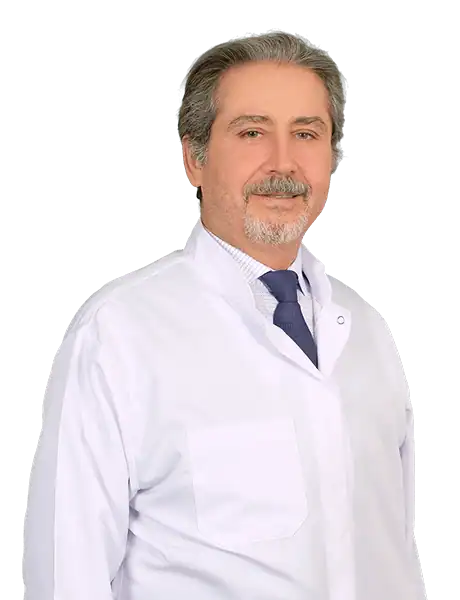
Physicians of the Acıbadem network who perform this treatment in Istanbul.
 Where it is performed Acibadem Taksim Hospital İstanbul · JCI-accredited hospitals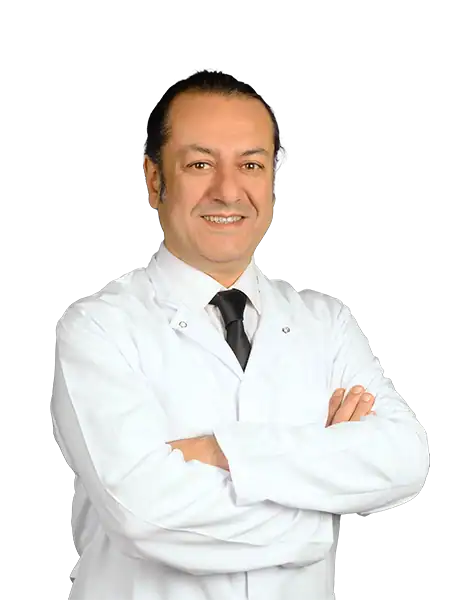
Clinical guide & data
The evidence-based pages behind this guide.