

Afro Hair Transplant Turkey: Curl-Specific FUE, Surgeons, Cost
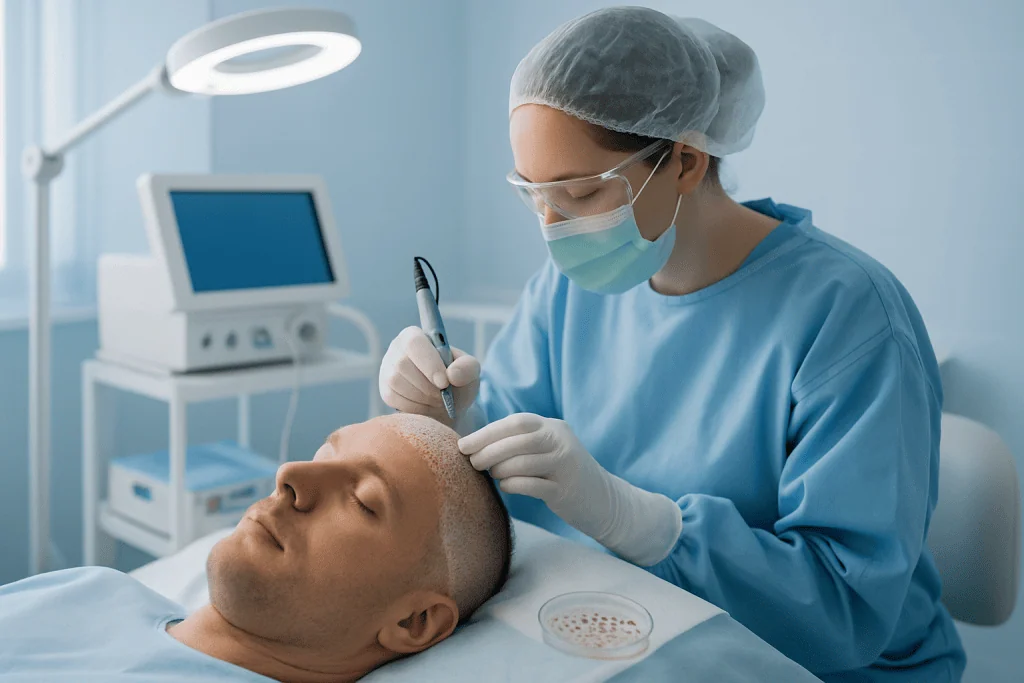
An afro hair transplant in Turkey raises questions that a standard hair transplant does not. Tightly coiled hair curls beneath the skin as well as above it, so the surgeon extracting each follicle has to follow a curved path rather than a straight one, and the hairline has to be drawn for a different pattern of density and growth. Patients from the United Kingdom and the United States who travel to Istanbul for this treatment are usually looking for two things at once: a team with genuine experience of Black hair, and a hospital setting where the procedure is one part of a wider medical service rather than a stand-alone cosmetic offer.
This page explains how the treatment differs for afro-textured hair, who it suits and who should be cautious, what happens step by step with Acıbadem, how recovery unfolds, and how the pathway compares with staying at home. It is written to help you prepare for a conversation with your own doctor and with the surgical team, not to replace either.
What an afro hair transplant is and who it suits
Afro-textured hair, the tightly coiled hair typical of people of African and Caribbean heritage, behaves differently from straight or wavy hair both above and below the skin. The visible curl continues beneath the surface: the follicle sits in a curved channel rather than a straight one. That single anatomical fact shapes every decision in a hair transplant, from how the surgeon extracts each graft to how the hairline is drawn.
An afro hair transplant is therefore not a separate operation but a follicular unit extraction (FUE) performed by a team that plans for curl. FUE is a minimally invasive method that moves individual follicles from a donor area, usually the back and sides of the head, to thinning or bald regions, where they continue to grow as permanent, natural-looking hair.
Who it may suit
- Men with a receding hairline or thinning crown that has stabilised.
- Women and men with traction alopecia along the temples or edges caused by years of tight braids, weaves or locs, once the pulling has stopped and the area is no longer inflamed.
- Adults with a healthy donor area and realistic expectations about density.
Who should be cautious or may not be suitable
- Anyone with an active scarring alopecia such as central centrifugal cicatricial alopecia (CCCA), which needs dermatological control before surgery is considered.
- People with a strong personal history of keloid scarring, who need an individual assessment of how their skin heals.
- Those whose hair loss is still progressing quickly or whose donor area is thin.
- Patients who cannot safely pause blood-thinning medicines where that is medically required.
A remote review of clear scalp photographs is the first step in working out which group you fall into.
Why UK and US patients travel to Türkiye for afro hair transplant
Istanbul has become a familiar destination for hair restoration, but the reasons Black patients from London, Birmingham, Manchester, New York or Atlanta choose to travel are more specific than convenience. Afro hair transplant is a niche within a niche: many clinics at home see relatively few patients with tightly coiled hair, and experience with the curved follicle matters because a straight extraction can cut through the root.
Acıbadem is a hospital group rather than a hair clinic. Hair transplantation takes place inside hospitals such as Acıbadem Taksim Hospital, where anaesthesia, intensive care, laboratory and imaging services are on the same site. For a procedure performed under local anaesthesia that may seem more than is needed, but it means that any unexpected reaction, a medication question or an underlying scalp condition can be addressed by the right specialist without leaving the building.
What the hospital setting adds
- JCI accreditation: 7 of the network’s more than 20 hospitals hold Joint Commission International accreditation, which audits infection control, patient identification, medication safety and record-keeping.
- Dermatology on hand: scarring alopecias and inflammatory scalp conditions common in afro-textured hair can be reviewed by a dermatologist before a surgeon commits to a plan.
- International patient experience: coordinators, interpreters and medical records prepared for a foreign GP are routine, not an afterthought.
- No waiting list: private hair restoration in the UK and US is self-pay in any case, but scheduling in Istanbul is usually a matter of weeks rather than months.
With more than 3,300 physicians across the network, the team treating your scalp can call on colleagues in other fields when a case is not straightforward. Cost is discussed in the Price Index below; it is rarely the only reason patients travel, but it is usually part of the decision.
How it works with Acıbadem, step by step
The pathway is designed so that most of the thinking happens before you book a flight. Each stage is handled by the same coordination team, which keeps your records in one place.
- Remote medical review. You send photographs of your scalp from several angles under good light, a short medical history, a list of medicines and details of previous hair treatments or styling habits. A physician reviews whether FUE is appropriate for your pattern of loss and hair type. This review is free.
- Personal plan. If you are a candidate, you receive a written plan covering the proposed approach, the number of sessions envisaged, preparation instructions and a personal quote drawn from the verified price band shown below.
- Arrival and coordinator. A coordinator meets you in Istanbul, arranges transfers between hotel and hospital, and remains your point of contact throughout the stay.
- Consultation and pre-operative tests. The surgeon examines the scalp and donor area in person, checks that the remote plan matches what they see, and draws the hairline according to your facial proportions and donor capacity. Blood tests are taken where indicated.
- The treatment. FUE is performed under local anaesthesia over 4 to 8 hours as an outpatient procedure, with no overnight stay.
- Recovery in Istanbul. You attend a follow-up visit for the first wash and a check of the grafted and donor areas before you are cleared to fly.
- Follow-up after returning home. You leave with written aftercare instructions, a medical summary for your GP and a schedule for sending photographs so the team can monitor healing and growth over the following months.
Nothing in this pathway asks you to bypass your own doctor. Many patients share the plan with their GP or dermatologist before travelling, and the team welcomes that.
The procedure: curl-specific FUE, anaesthesia, duration and hospital stay
FUE for afro-textured hair follows the same principle as FUE for any hair type: individual follicular units are extracted from the donor area and implanted into the recipient area, where they grow permanently. The difference lies in execution.
Planning for the curve
Because the follicle curls beneath the skin, the direction and depth of each extraction have to follow that curve. The surgeon assesses the scalp and donor area beforehand, and the hairline is planned according to facial proportions and donor capacity. In tightly coiled hair a comparatively modest number of grafts can give an impression of fullness, since each curled hair covers more scalp than a straight one, but that judgement is made case by case rather than assumed.
Anaesthesia
The procedure is performed under local anaesthesia. You are awake, the scalp is numbed, and you can take breaks during a long session. Patients who are anxious about being awake should raise this at the consultation.
Duration
A session lasts 4 to 8 hours, depending on the number of grafts and the care needed to extract curved follicles intact. Some plans involve a single session; others are staged.
Hospital stay
FUE is an outpatient procedure with no overnight stay. You return to your hotel the same day with a protective dressing on the donor area and instructions for the first night.
Preparation
- Blood-thinning medicines, alcohol and smoking may need to be paused for a short period where medically appropriate.
- You receive specific hair-washing and eating instructions for the procedure day.
- If you wear braids, weaves or a wig, you are told when to remove them so the scalp can be examined and prepared.
Recovery and aftercare timeline
Recovery from FUE is gradual and mostly uneventful, but it asks for patience, particularly with afro-textured hair where the temptation to cover the area with a protective style comes early.
The first 7 to 10 days: initial healing
Mild swelling, redness and small crusts around the grafts are expected and usually improve within days. You are shown how to wash the scalp gently, how to sleep with the head slightly raised, and how to protect the grafted area from knocks. Strenuous exercise, direct sun exposure and scratching are avoided until the medical team confirms that the surface has healed. Most patients are cleared to fly home within this window.
Weeks 2 to 8
The transplanted hairs commonly shed in this period. This can be unsettling, but it is a normal phase: the follicle remains in place and rests before producing new growth. Braids, weaves, locs and chemical relaxers should stay off the grafted and donor areas until the team says otherwise, because tension or chemical stress on a newly placed follicle can undo the work.
Months 3 to 12
New growth appears and thickens. Coiled hair may look sparse at first because short curls stand away from the scalp; density becomes more apparent as length builds.
12 to 18 months: full results
The final outcome is judged at this point. Photographs sent at agreed intervals allow the team in Istanbul to track progress and advise on styling, sun protection and, where appropriate, any adjunct treatments your own doctor may suggest.
What it costs: UK, US and Türkiye
Typical self-pay ranges from the Turkey Medical Price Index. Türkiye figures are guide ranges for hospital treatment; your personal quote follows a free medical review.
Source: Turkey Medical Price Index (quarterly edition). Ranges depend on the extent of treatment, materials and hospital stay; they are not a quote.
Safety and risks
FUE under local anaesthesia in a hospital is a low-risk procedure, but it is still surgery and it still has failure modes. An honest account is more useful than reassurance.
Who should not have it
Surgery is not appropriate while a scarring alopecia is active, while hair loss is progressing rapidly, or when the donor area cannot supply enough healthy follicles. A strong keloid history calls for caution and, in some cases, a decision not to proceed. Uncontrolled diabetes, bleeding disorders or an inability to pause anticoagulants where required are also reasons to defer.
Complications
- Bleeding or infection at the donor or recipient site, uncommon and usually manageable when recognised early.
- Folliculitis (inflamed follicles) during regrowth, which is more frequent in curly hair.
- Poor graft survival if curved follicles are cut during extraction, leading to thin results or visible donor thinning.
- An unnatural hairline or wrong angle of growth if the design ignores how coiled hair sits.
- Raised or widened scars in people prone to keloids.
- Numbness or altered sensation in the scalp, usually temporary.
What cases that go wrong abroad tend to share
They are rarely about geography. The common features are rushed planning based on a single photograph, a package sold before a physician has assessed the scalp, no dermatological input for an underlying condition, no hospital to fall back on if something is amiss, and no structured follow-up once the patient has flown home.
A hospital setting changes each of those points. The plan is written by a physician before you travel, the surgeon confirms it in person, specialists in other fields are available on site, and follow-up continues after your return. It does not remove risk, but it puts a system around it.
UK and US vs Türkiye
The clinical procedure is the same on both sides of the journey. What differs is the pathway around it.
Waiting and access
Hair transplantation is not available on the NHS and is almost never covered by US health insurance, so in both countries you are a self-pay patient in the private sector. In the UK, surgeons with substantial experience of afro-textured hair are concentrated in a few cities and appointments can take time; in the US, experience varies widely by region. In Istanbul, a consultation and procedure can usually be scheduled within weeks.
What the lower cost does and does not mean
The difference shown in the price band below reflects lower salaries, lower property costs and lower overheads in Türkiye. It does not reflect different materials or equipment: the punches, implanters, storage solutions and local anaesthetic agents are the same products used in London or New York. Nor does it mean a shorter procedure; a session is still 4 to 8 hours because extracting curved follicles carefully takes time.
Aftercare and travel
At home, your surgeon is a train ride away for a follow-up. Abroad, early follow-up happens in Istanbul and later follow-up happens remotely, with your GP or dermatologist available for anything that needs to be seen in person. That trade-off suits some patients and not others.
What to compare like for like
- Whether the person extracting grafts is a physician or a technician, and the physician’s experience with afro-textured hair.
- Whether the procedure takes place in an accredited hospital or a stand-alone clinic.
- What the quote includes: consultation, tests, procedure, first wash, medication, transfers, follow-up.
- How complications are handled, and by whom.
- Travel, accommodation and time away from work.
Planning the trip to Istanbul
Practical planning is straightforward once the medical plan is agreed. The coordinator handles most logistics, but a few points are worth settling early.
Passport and entry
UK, Irish, US, Canadian and Australian passport holders enter Türkiye visa-free for up to 90 days; check current rules before travel, and make sure your passport has adequate validity beyond your return date.
Flights
Istanbul is roughly 4 hours from London and about 10 hours from New York. Direct flights run from several UK and US airports.
How long to stay
Allow for the consultation and tests, the procedure day, and at least one follow-up visit for the first wash and a check before flying. Most patients plan a stay within the 7 to 10 day initial healing window, and your surgeon confirms the day you are cleared to travel.
Companion
A companion is not medically necessary for an outpatient procedure under local anaesthesia, but many patients appreciate company on the first evening and help with washing routines.
Travel insurance
Standard travel insurance usually excludes planned medical treatment. Look for a policy written specifically for medical travel, or an add-on that covers complications of elective procedures abroad, and read the exclusions.
What to bring
- A soft, loose hat or hood that does not press on the grafted area, for sun protection after clearance.
- Button-front tops and a travel pillow for sleeping with the head raised.
- Your usual medicines in original packaging, with a list for the surgeon.
- Copies of any dermatology letters, blood results or previous treatment records.
- Comfortable clothing for a long procedure day, and something to listen to.
Back home: follow-up, records and insurance
The relationship with the treating team continues after you land, but your own doctor remains part of your care.
Follow-up with your GP or dermatologist
You leave Istanbul with a medical summary describing the procedure, the anaesthetic used, the number of grafts, the medicines prescribed and the aftercare plan. Share it with your GP so it sits in your record. If you have a dermatologist for a scalp condition, send them a copy too. Photographs sent to the Acıbadem team at agreed intervals allow remote monitoring, and the team responds to questions about washing, styling and expected shedding.
When to seek help
- Spreading redness, heat, pus or increasing pain at the donor or recipient site.
- Fever, or swelling that worsens rather than settles after the first days.
- Bleeding that does not stop with gentle pressure.
- Any reaction to prescribed medication.
Contact the treating team and, if symptoms are significant, your GP or local urgent care. Do not wait for a scheduled check-in.
Insurance, NHS and your own doctor
Private medical insurance in the UK rarely covers elective treatment abroad, and hair transplantation is generally excluded in any case; check your policy before assuming anything. The NHS treats complications from treatment abroad as it would for any other patient presenting with the same problem, but it does not fund revision or cosmetic correction. For US readers, whether HSA or FSA funds can be used depends on how the treatment is classified, and travel-medical policies vary widely in what they cover; confirm with your plan administrator and insurer in writing.
Questions to ask before deciding
A good team expects questions and answers them plainly. Use this list in your consultation, whether in Istanbul or at home, and compare the answers.
About the team
- How often do you treat patients with afro-textured hair, and can you describe how your extraction technique differs for curved follicles?
- Who performs the extraction and the implantation: the physician, technicians, or both, and who supervises?
- Will the surgeon I speak to remotely be the one who examines me and operates?
About my case
- What do you think is causing my hair loss, and have you ruled out a scarring alopecia?
- Is my donor area sufficient, and what happens to it if I need a second session later?
- How will the hairline be designed for my face and hair type?
- Given my skin and any history of raised scars, what is your view on how I am likely to heal?
About the process
- Is the procedure performed in an accredited hospital, and what happens if a complication arises during my stay?
- What exactly does the quote include, and what would count as an extra?
- What follow-up is provided after I return home, for how long, and through whom?
- When can I return to braids, weaves, locs, relaxers or hair dye?
Before you travel
- Have I discussed this plan with my own GP or dermatologist?
- Do I have insurance that covers complications of planned treatment abroad?
- Have I allowed enough time in Istanbul for the first follow-up?
Whether an afro hair transplant is right for you is not decided by a brochure or a price band; suitability is determined by a physician’s evaluation of your scalp, your history and your goals.
How is an afro hair transplant in Turkey different from a standard FUE?
The operation is the same follicular unit extraction, but tightly coiled hair curls beneath the skin, so each follicle has to be extracted along a curved path to avoid cutting the root. The hairline is also designed differently, because coiled hair sits and covers the scalp in its own way. Experience with this hair type is the main thing to ask about.
Is FUE suitable for Black patients with traction alopecia from braids or weaves?
It can be, provided the pulling has stopped, the area is no longer inflamed and enough donor hair is available. A dermatologist should first rule out a scarring alopecia such as CCCA, which needs treatment before any surgery. Once healthy, the edges and temples are common areas to restore.
Does a black hair transplant in Turkey need fewer grafts?
Sometimes, because each coiled hair covers more scalp than a straight hair, so a modest number of grafts can look fuller. That said, the number depends on your pattern of loss, donor capacity and goals, and is decided at the consultation rather than assumed in advance.
What anaesthesia is used and do I stay in hospital?
FUE is performed under local anaesthesia, so you are awake but the scalp is numb. It is an outpatient procedure with no overnight stay; you return to your hotel the same day and come back for a follow-up wash and check.
How long does the procedure take and how long should I stay in Istanbul?
A session lasts 4 to 8 hours depending on the number of grafts. Most patients plan their stay within the 7 to 10 day initial healing period so that the consultation, procedure and at least one follow-up visit fit in before flying home.
When will I see results from an afro hair transplant?
Initial healing takes 7 to 10 days, and the transplanted hairs often shed in the following weeks before new growth begins. Coiled hair can look sparse early because short curls stand away from the scalp. Full results are assessed at 12 to 18 months.
I am prone to keloids. Can I still have a hair transplant?
A history of keloid scarring calls for caution and an individual assessment of how your skin heals. In some cases the surgeon may advise against surgery or suggest a very conservative approach. Be open about any raised scars during the remote review.
How much does an afro hair transplant cost in Turkey?
The verified UK, US and Türkiye price band is shown in the Price Index below this article, and a personal quote follows a free medical review of your photographs and history. The difference reflects lower salaries and overheads in Türkiye, not different materials or a shorter procedure.
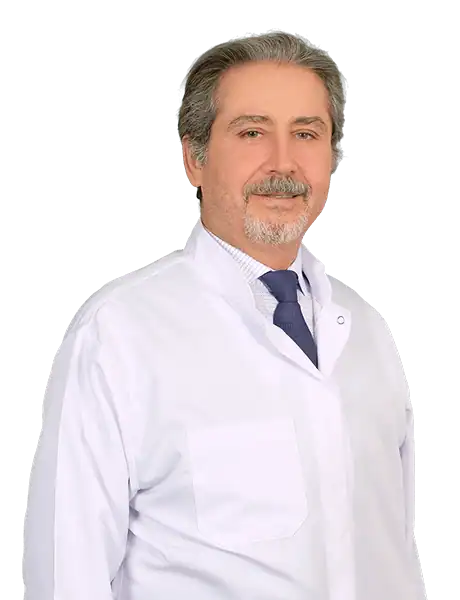
Your care team
Physicians of the Acıbadem network who perform this treatment in Istanbul.
 Where it is performed Acibadem Taksim Hospital İstanbul · JCI-accredited hospitals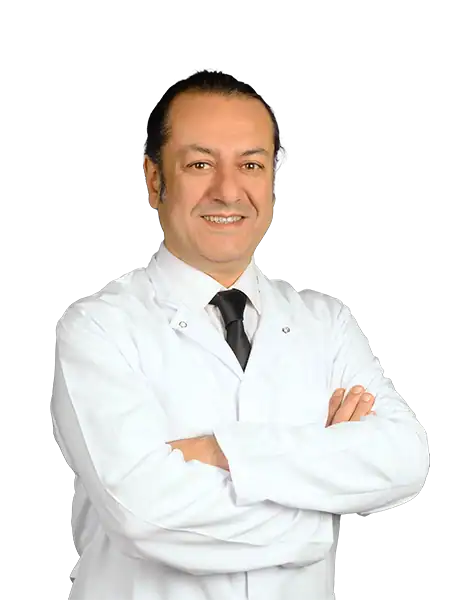
Clinical guide & data
The evidence-based pages behind this guide.
Read this treatment guide in your language
Planning tools for this treatment
Indicative figures for orientation only: your written plan and quote follow a free medical review.