

GIFT (Gamete Intrafallopian Transfer) Step by Step: Eggs, Sperm and the Laparoscopic Placement

Key Takeaways
- GIFT places unfertilized eggs and prepared sperm directly into a fallopian tube through a laparoscope, so fertilization happens inside the body and cannot be observed.
- It requires at least one healthy, open fallopian tube and general anesthesia, whereas IVF needs neither.
- Ovarian stimulation and monitoring for GIFT are essentially the same as for IVF, typically running one to two weeks before egg retrieval about 34 to 36 hours after the trigger medicine.
- Because several eggs are placed at once and fertilization is not seen, the number of eggs is the only lever for limiting twins or higher multiples.
- The CDC classifies GIFT as assisted reproductive technology, but nearly all of the roughly 2% of US births conceived through ART are IVF, not GIFT.
- A failed GIFT cycle yields less diagnostic information than a failed IVF cycle, which is a major reason most teams now favor IVF for any subsequent attempt.
GIFT, or gamete intrafallopian transfer, is an assisted reproduction technique in which eggs are collected after ovarian stimulation, mixed with prepared sperm, and placed together into a fallopian tube through a laparoscope, so fertilization happens inside the body rather than in a laboratory dish. It requires an intact, healthy tube and general anesthesia. Most programs now use IVF instead, so GIFT is rarely offered today.
The folder on the kitchen table is thick with test results, and one word keeps surfacing in the couple’s late-night reading: GIFT. Not a present, not a tax question, but a fertility acronym their aunt mentioned from her own treatment years ago. They want to know whether it still exists, what it actually involves, and whether it is something they should even be asking about.
If you are trying to understand the gift procedure, how it works, and why it has largely faded from clinic menus, this explainer is for you. Gamete intrafallopian transfer sits in a curious spot: historically significant, biologically elegant, and now uncommon. Understanding it also happens to clarify a great deal about the treatments that replaced it.
We will walk through each stage in order, from the first ultrasound scan to the two-week wait, and be honest about what the evidence says and where it goes quiet.
What is the GIFT procedure, and why do so few people mention it now?
Gamete intrafallopian transfer, usually shortened to GIFT, is a form of assisted reproductive technology. A gamete is a reproductive cell: an egg or a sperm. The name spells out the whole idea. Eggs and sperm, unfertilized, are transferred into the fallopian tube, the narrow passage that normally carries an egg from the ovary toward the uterus.
The Centers for Disease Control and Prevention counts GIFT among the procedures classed as assisted reproductive technology, alongside in vitro fertilization (IVF) and zygote intrafallopian transfer (ZIFT). The same agency notes that roughly 2% of infants born in the United States each year are conceived through some form of ART, and the overwhelming majority of those cycles are IVF, not GIFT.
Why did GIFT fade? The short version is that laboratory culture of embryos became reliable, ultrasound-guided egg retrieval replaced surgical collection, and the ability to see whether fertilization occurred proved too valuable to give up. GIFT asks the body to do the one step that clinicians most want to observe. Once that observation became routine, the appeal of tubal placement narrowed to a small group of patients with specific personal or ethical reasons.
None of this makes GIFT a bad or unsafe idea. It made real sense at a time when embryology labs were young and every dish carried uncertainty. It is simply a technique whose central advantage, fertilization in its natural setting, is now matched by methods that do not require an operation. If a clinic still offers it, the conversation should begin with why it suits your situation better than the alternatives, and that judgment belongs with your treating team.
GIFT procedure: how it works in plain language
Picture the normal path to pregnancy. An egg leaves the ovary, is swept into the fallopian tube, meets sperm there, and the fertilized egg drifts toward the uterus over several days before it implants. GIFT tries to recreate that meeting point deliberately, with more eggs than usual and with sperm delivered directly to the spot.
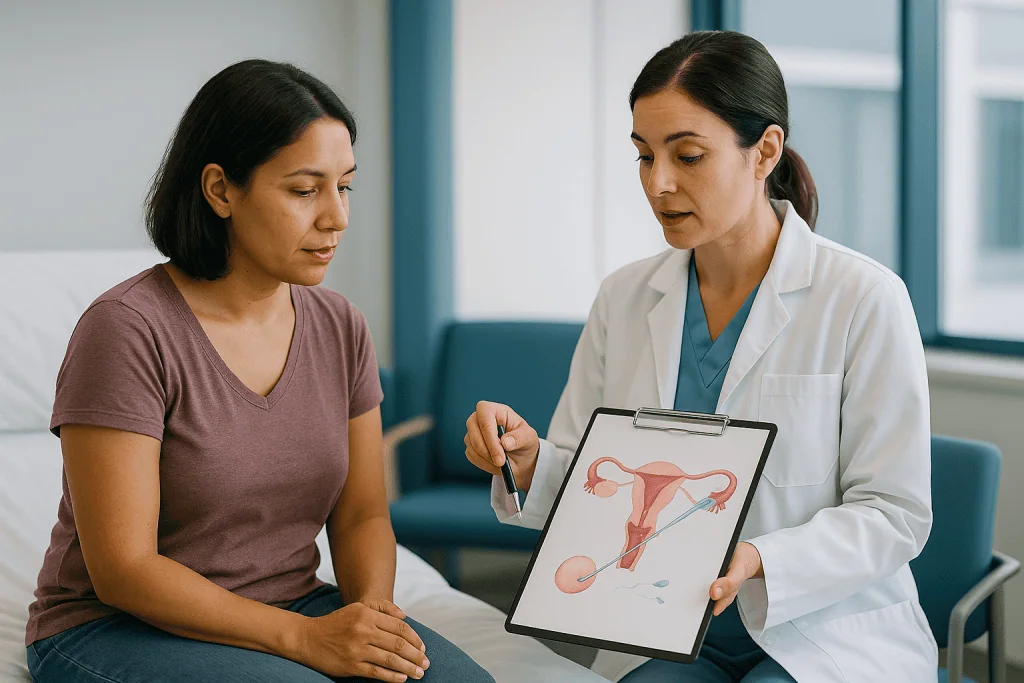
The gift procedure, how it works in practice, comes down to four linked stages. First, medicines encourage the ovaries to mature several eggs in one cycle rather than the usual single egg. Second, those eggs are collected, either through the vagina with ultrasound guidance or, in the original version, through the laparoscope itself. Third, a semen sample is prepared in the laboratory so that the most motile sperm are concentrated in a small volume of fluid. Fourth, under general anesthesia, a surgeon uses a laparoscope, a thin lighted telescope inserted through a small cut near the navel, to find the fallopian tube and thread a fine catheter into its open end. Eggs and sperm are then released together inside the tube.
Everything after that is left to biology. If fertilization occurs, it happens inside the tube, and the early embryo travels to the uterus on its own. There is no embryo transfer step and no laboratory culture of embryos. The first evidence that anything worked arrives with a blood pregnancy test roughly two weeks later.
This is the defining difference from IVF, where eggs and sperm meet in a dish and the resulting embryos are examined before one is placed into the uterus. GIFT trades the information a laboratory can provide for fertilization in its native environment. That trade is the whole story of the procedure, and it shapes who it suits, what it risks, and why it is uncommon.
Gamete intrafallopian transfer steps: what happens before the operating room
The first weeks of a GIFT cycle look almost identical to the first weeks of IVF. The goal is to coax the ovaries into maturing several eggs at once, then to time their collection precisely.
Ovarian stimulation uses injectable hormones that mimic the body’s own signals to the ovary. The Mayo Clinic describes a stimulation phase that typically runs one to two weeks, during which the team tracks progress with transvaginal ultrasound scans and blood tests measuring estrogen and other hormones. Ultrasound shows the follicles, the fluid-filled sacs in which eggs develop, growing in size and number. The prescribing clinician adjusts the plan based on these readings, and the specifics of any medicine, including how much and how often, are their decision alone.
When the follicles reach a size the team judges mature, a final medicine known as a trigger is given. It prompts the eggs to complete their last stage of maturation. Egg retrieval is scheduled about 34 to 36 hours later, according to the Mayo Clinic, timed to catch the eggs just before the ovary would release them on its own.
Meanwhile, the partner or donor providing sperm may be asked to avoid ejaculation for a short period before the collection day so that the sample is of good quality. Pre-operative checks for the person undergoing laparoscopy follow the usual pattern for any surgery under general anesthesia: a review of medical history, allergies and current medicines, and instructions about when to stop eating and drinking.
Two practical realities stand out at this stage. The schedule is dictated by the ovaries, not the calendar, so appointments can shift with little notice. And because GIFT ends with an operation, the anesthetic assessment matters more than it does in a standard IVF cycle, where retrieval is usually done under lighter sedation.
Egg retrieval on the day of GIFT
Collection day is where GIFT and IVF begin to diverge, though the first task is the same: get the mature eggs out of the ovary safely.
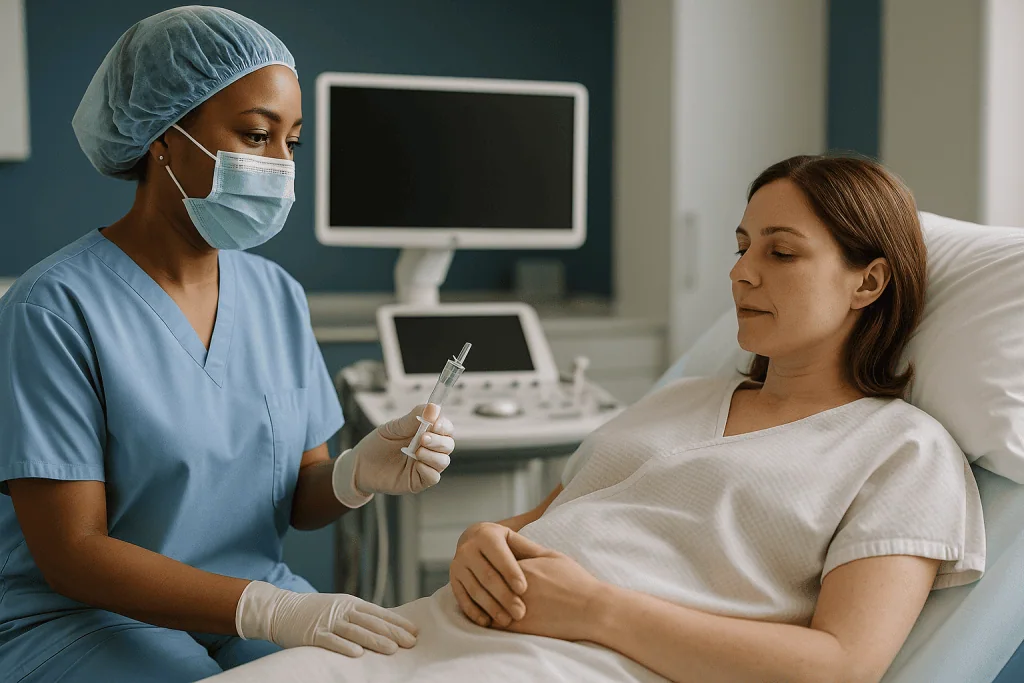
In modern practice, eggs are almost always retrieved transvaginally. An ultrasound probe with a thin needle attached is passed into the vagina, and each follicle is punctured in turn while the fluid inside is drawn out. MedlinePlus and the Mayo Clinic describe this as a procedure lasting around 20 to 30 minutes, usually performed under sedation or anesthesia. The fluid goes straight to the embryology laboratory, where an embryologist identifies the eggs under a microscope, notes how many appear mature, and keeps them in conditions that mimic the body.
In the original form of GIFT, eggs were collected through the laparoscope itself, aspirated directly from follicles seen on the surface of the ovary. Some programs still do it this way, combining retrieval and placement in a single operation. Either approach yields the same thing: a small number of eggs, in a dish, waiting.
The interval between retrieval and tubal placement is short, typically within a few hours, because the eggs are not being fertilized or cultured. The embryologist’s job is to select the eggs that look mature and healthy and to hold them at the right temperature and acidity until the surgeon is ready.
Common side effects of retrieval are cramping, a feeling of fullness or pressure in the pelvis, and light spotting, which the Mayo Clinic lists as expected. Because GIFT then proceeds to laparoscopy, these sensations blend into the recovery from the operation rather than being felt as a separate episode. It is one of the reasons people who have had both often describe GIFT as the more physically demanding day.
Sperm preparation: what the lab does with the sample
A semen sample is a mixture. Sperm make up only a fraction of it; the rest is fluid from several glands, plus cells and debris. Before any assisted reproduction procedure, the laboratory separates the sperm most likely to fertilize an egg from everything else. This step is often called sperm washing.
The process usually involves spinning the sample in a centrifuge through a layered solution so that the most motile, normally shaped sperm settle in one fraction while slower sperm, dead cells and seminal fluid are left behind. The concentrated sperm are then suspended in a small volume of culture medium. Removing seminal fluid matters because it contains substances that can trigger uterine cramping and because it would dilute the small amount of fluid that fits in a fallopian tube.
For GIFT specifically, the volume placed into the tube is tiny, a fraction of a milliliter, so concentration is everything. The embryologist calculates how many motile sperm to include with the eggs; historically, programs aimed for tens of thousands of motile sperm per tube, though exact figures varied and the decision rests with the laboratory and the medical team.
Where the sperm sample is very poor, GIFT becomes a less logical choice. Fertilization inside the tube depends on sperm reaching and penetrating the egg on their own. In IVF, a technique called intracytoplasmic sperm injection (ICSI), in which a single sperm is injected directly into an egg, can bypass severe sperm problems. GIFT has no equivalent step, because nothing is done to the egg beyond placing it. This is one of the sharpest practical limits of the procedure and one of the clearest reasons a team might steer someone toward IVF instead.
Donor sperm can be used for GIFT in the same way as for other treatments, following the screening and quarantine rules that apply to all donor gametes.
The laparoscopic placement itself
Laparoscopy is keyhole surgery of the abdomen. The NHS describes it as a procedure performed under general anesthesia in which a surgeon makes one or more small incisions, typically around a centimeter or less, and introduces carbon dioxide gas to lift the abdominal wall away from the organs. A laparoscope, the thin camera, goes through one incision, and fine instruments go through others.
For GIFT, the surgeon first inspects the pelvis. The fallopian tube is identified and gently steadied, and its fimbriated end, the fringed opening that normally catches the egg, is brought into view. A soft catheter, already loaded by the embryologist with the eggs and prepared sperm separated by small air pockets, is threaded a short distance into the tube. The contents are slowly expelled, the catheter is withdrawn and checked under the microscope to confirm that nothing remains inside, and the process may be repeated on the other tube if the team has decided to divide the gametes.
How many eggs go in is a clinical decision that balances the chance of fertilization against the risk of a multiple pregnancy. Because fertilization cannot be observed, the number of eggs placed is effectively the number of potential embryos, and there is no later opportunity to choose one. This is why programs offering GIFT historically limited egg numbers and why counseling about twins and higher-order multiples is part of informed consent.
The operation itself is usually brief. Recovery from the anesthetic takes place in the usual way, and the NHS notes that most people having diagnostic or minor laparoscopy go home the same day. Expect a sore throat from the breathing tube, tenderness at the incisions, and the characteristic shoulder-tip ache that comes from residual gas irritating the diaphragm. These are ordinary after keyhole surgery and usually settle within a few days.
GIFT vs IVF difference: a side-by-side view
People searching for the GIFT vs IVF difference are usually trying to work out whether the older technique offers something the newer one does not. The honest answer is that it offers one thing, fertilization inside the body, and gives up several others. The table lays that out.
| Feature | GIFT | Conventional IVF |
|---|---|---|
| Where fertilization happens | Inside the fallopian tube | In a laboratory dish |
| Requires at least one healthy, open tube | Yes, essential | No; tubes can be blocked or absent |
| Anesthesia | General anesthesia for laparoscopy | Usually sedation for retrieval; transfer typically needs none |
| Surgical incisions | Small abdominal incisions | None |
| Can fertilization be confirmed? | No | Yes, embryos are observed |
| Can embryo number be controlled at transfer? | Only indirectly, by limiting eggs placed | Yes, often a single embryo |
| Option to freeze embryos for later | Not from the placed gametes | Yes, surplus embryos can be frozen |
| Works with severe sperm problems | Poorly suited | Yes, with ICSI |
| How common today | Rare | The standard ART method |
Two rows deserve emphasis. The inability to confirm fertilization means that if a GIFT cycle does not lead to pregnancy, the team cannot tell whether the eggs never fertilized, fertilized but stopped developing, or developed but failed to implant. Each of those outcomes would point to a different next step. IVF answers that question in the first day or two.
The freezing row matters too. In IVF, embryos not transferred can be stored, which the NHS and Mayo Clinic both describe as a routine part of treatment. GIFT places all selected gametes at once; any remaining eggs could only be preserved through a separate egg-freezing process or fertilized in the lab, which turns the cycle into IVF anyway.
Who GIFT is usually for, and who is usually asked to wait
GIFT was designed for a specific patient: someone with at least one healthy, open fallopian tube whose difficulty conceiving lay elsewhere. Historically that meant unexplained infertility, mild endometriosis, cervical factors that made it hard for sperm to enter the uterus, or mild male-factor problems where sperm numbers were reduced but not severely.
The other group for whom GIFT retained appeal were people whose religious or ethical convictions ruled out fertilization outside the body or the creation of embryos that might not be used. Because GIFT never produces an embryo in a dish, it sidesteps those concerns in a way IVF cannot. For these patients, the trade-offs described above may be entirely acceptable, and a team that respects that position will discuss GIFT as a legitimate option if they have the surgical and laboratory experience to offer it.
Who is usually asked to wait, or steered elsewhere? Anyone with blocked, scarred or absent tubes, since the procedure depends on the tube functioning. Anyone with severe sperm abnormalities, for the reasons covered in the sperm section. Anyone for whom general anesthesia or abdominal surgery carries elevated risk, because IVF avoids both. And anyone whose treatment plan calls for embryo testing, for example to screen for a known inherited condition, since testing requires embryos in the laboratory.
Age enters the picture as well. The Mayo Clinic notes that the chance of pregnancy with any assisted reproduction declines with the age of the person providing the eggs. Where eggs are precious and few, most teams prefer a method that lets them see which ones fertilized rather than committing all of them to a single unobserved attempt.
The decision is never a matter of ticking boxes. It is a conversation about tubes, sperm, values, surgical risk and what information the team needs to guide any future cycles.
Why most programs moved from GIFT to IVF
Three developments in reproductive medicine quietly retired GIFT from mainstream use.
The first was the maturing of the embryology laboratory. Early culture media were unreliable, and embryos often struggled to develop in a dish. Placing gametes in the tube let the body handle a step the lab could not yet do consistently. As culture systems improved, that advantage evaporated, and the lab’s ability to watch fertilization and early cell division became the more valuable asset.
The second was transvaginal ultrasound-guided egg retrieval. Once eggs could be collected through the vagina under light sedation, the laparoscope was no longer needed for retrieval. GIFT still required it for placement, which meant GIFT alone carried the burden of general anesthesia and surgical incisions. IVF’s embryo transfer, by contrast, is done through the cervix with a soft catheter and, as the Cleveland Clinic and Mayo Clinic describe, usually needs no anesthesia at all.
The third was ICSI, which made it possible to achieve fertilization even with very few or poorly moving sperm. GIFT had nothing comparable.
Two related techniques deserve a mention because they appear in the same searches. Zygote intrafallopian transfer (ZIFT) fertilizes eggs in the lab, then places the one-day-old fertilized eggs into the tube by laparoscopy. Tubal embryo transfer does the same with slightly older embryos. Both confirm fertilization but keep the surgery, and both have also become rare, since placing embryos in the uterus without an operation works well and avoids the anesthetic.
The result is that GIFT survives mainly as a niche option for patients with specific ethical preferences and as a chapter in the history of the field. That history is worth knowing, because it explains why every modern IVF cycle looks the way it does.
Risks of the GIFT procedure, from anesthesia to multiples
GIFT combines the risks of ovarian stimulation, egg retrieval and laparoscopic surgery. None is unique to the procedure, but the combination is heavier than a standard IVF cycle.
Ovarian hyperstimulation syndrome (OHSS) is the main medication-related concern. The ovaries over-respond, swell, and leak fluid into the abdomen. The Mayo Clinic describes mild cases as causing bloating, nausea and abdominal discomfort that resolve within about a week, while severe cases, which are uncommon, can involve rapid weight gain, shortness of breath and reduced urine output and need urgent care. Monitoring during stimulation is designed to catch a strong response early.
Laparoscopy carries the general risks of surgery. The NHS lists minor complications such as bruising, infection at the incisions and post-operative nausea as relatively common, and serious complications, including injury to bowel, bladder or blood vessels, or a reaction to the anesthetic, as occurring in a small minority of cases. Blood clots are a recognized risk after any operation, particularly where hormone levels are high.
Multiple pregnancy is the risk most specific to GIFT’s design. Because several eggs are placed and fertilization is not observed, twins or more can result, and the Mayo Clinic notes that multiple pregnancy raises the chance of preterm birth and low birth weight. Limiting the number of eggs is the only available control.
Ectopic pregnancy, in which the embryo implants outside the uterus, is a concern with any tubal procedure. The Mayo Clinic gives a range of about 2% to 5% of pregnancies after IVF; GIFT places gametes directly into the tube, so teams counsel about this risk explicitly, though large comparative data for GIFT are limited and the honest position is that the precise figure is uncertain.
Emotional strain rounds out the list. A cycle that ends without pregnancy, and without an explanation of why, can be harder to absorb than one where the lab can point to a specific step.
What the following days and weeks usually look like
The first day is about recovering from anesthesia and keyhole surgery. Expect grogginess, incision soreness, some bloating from the gas, and that shoulder-tip ache. The NHS advises resting for a day or two after minor laparoscopy, avoiding driving until the anesthetic has fully worn off, and returning to light activity as comfort allows, with most people back to normal routines within about a week for minor procedures.
Layered on top is the aftermath of ovarian stimulation. The ovaries remain enlarged for a while, so pelvic fullness and mild cramping are common. Many programs prescribe progesterone, a hormone that prepares the uterine lining for implantation; if that applies to you, the form, timing and duration are set by your clinician, and stopping or altering it is never a decision to make alone.
Then comes the wait. The Mayo Clinic describes a blood pregnancy test roughly 12 days to two weeks after egg retrieval. Home urine tests taken earlier can mislead, partly because trigger medicines contain a hormone that pregnancy tests detect, so a positive result in the first week may reflect the medicine rather than a pregnancy.
If the test is positive, an early ultrasound follows a few weeks later to confirm where the pregnancy has implanted and how many are present. That scan carries particular weight after GIFT because of the tubal placement and the possibility of multiples.
If the test is negative, the conversation with the team turns to what can be learned. With GIFT, less can be learned than after IVF, since fertilization was never seen. Many teams will suggest that any subsequent cycle be IVF, precisely to gain that information. Feelings during this period can swing widely, and the Mayo Clinic explicitly recommends seeking counseling or support during treatment, not only after it.
Alternatives your team may discuss instead of GIFT fertility treatment
Anyone considering GIFT fertility treatment will almost certainly be offered a comparison with other approaches. The main ones, in roughly increasing order of intervention, are these.
Timed intercourse with ovulation tracking or mild ovarian stimulation suits some people with irregular ovulation and no other identified barrier. It involves no procedure at all.
Intrauterine insemination (IUI) places washed sperm directly into the uterus around the time of ovulation, using a thin catheter through the cervix. MedlinePlus describes it as a simple outpatient step without anesthesia. It shares GIFT’s requirement for at least one open tube, because fertilization still happens in the body, but it skips egg retrieval and surgery entirely.
Conventional IVF, with or without ICSI, is the standard for most tubal, male-factor and unexplained cases and for anyone needing embryo testing. It allows single-embryo transfer, which the NHS notes is the main tool for reducing multiple pregnancy, and it allows surplus embryos to be frozen.
Egg freezing is relevant for people who want to preserve fertility now and decide later, though it is a separate pathway rather than a treatment for current infertility.
Donor gametes or donor embryos may be raised where egg or sperm quality is the limiting factor.
For patients whose interest in GIFT stems from ethical objections to laboratory fertilization, some teams also discuss modified IVF approaches in which only as many eggs are fertilized as will be transferred, or in which all resulting embryos are transferred or frozen rather than discarded. Whether such an approach fits a person’s convictions is something only they can judge, but it is worth knowing the option exists.
Every one of these carries its own risks and demands, and the right choice depends on the specific cause of difficulty, age, medical history and values. The treating team’s role is to lay those out honestly; the decision belongs with the people in the room.
What people often get wrong about GIFT
Misunderstandings cluster around a procedure that most people have only heard of second-hand.
“GIFT is more natural, so it must work better.” Fertilization in the tube is closer to unassisted conception, but the evidence does not support the idea that this location advantage translates into better outcomes than modern IVF for comparable patients. The field moved away from GIFT for reasons of information and safety, not because tubal fertilization failed. Any program presenting GIFT as superior should be asked for the data behind that claim.
“GIFT avoids the hormone injections.” It does not. Ovarian stimulation and monitoring are essentially the same as in IVF. What GIFT avoids is the laboratory fertilization step, not the medication.
“It is a minor procedure.” GIFT ends with laparoscopy under general anesthesia. Compared with an IVF embryo transfer, which typically needs no anesthesia, it is the more invasive route.
“If it fails, at least we will know why.” Usually the opposite. Because fertilization is unobserved, a failed GIFT cycle leaves the team with fewer clues than a failed IVF cycle.
“GIFT is the same as IUI.” Both place sperm in the body, but IUI puts sperm alone into the uterus with no egg retrieval and no surgery. GIFT retrieves eggs and places eggs and sperm together in the tube through a laparoscope.
“GIFT has something to do with gifts or gift tax.” It is an acronym for gamete intrafallopian transfer and has no connection to financial gifts, tax rules or inheritance. The overlap is purely alphabetical, and it explains why online searches for the procedure return so many unrelated results.
Clearing these up matters because each one nudges people toward or away from a treatment for the wrong reason. The right reasons are your tubes, your sperm parameters, your surgical risk and your values.
Questions to ask your care team about gamete intrafallopian transfer
Coming to a consultation with specific questions turns a monologue into a shared plan. These are the ones that matter most for gamete intrafallopian transfer.
- Why are you suggesting GIFT for me rather than IVF or IUI, and what in my results points that way?
- How have you confirmed that my fallopian tubes are open and healthy enough for this?
- How much recent experience does the surgical and laboratory team have with tubal placement specifically?
- How many eggs would you plan to place, and how does that shape the risk of twins or more?
- If the cycle does not result in pregnancy, what will we be able to learn, and what would you recommend next?
- What would happen to any mature eggs that are not placed?
- What are the risks of the anesthesia and laparoscopy in my particular case, given my medical history?
- How will you monitor me for ovarian hyperstimulation syndrome, and what symptoms should prompt me to call?
- When and how will pregnancy be confirmed, and how soon after a positive test will you scan to check location and number?
- Is there a modified IVF approach that would meet my ethical concerns without surgery?
- Who do I contact out of hours if something worries me during the cycle?
Notice that none of these asks the team to promise an outcome. Reputable clinicians will not, and the Mayo Clinic is explicit that the chance of a healthy baby depends on many factors, including age and the cause of infertility, and varies from person to person. What good teams can do is explain their reasoning, quantify risks where data exist, admit uncertainty where they do not, and make clear that you can pause or change course at any point. If any of those elements is missing from the conversation, that absence is itself useful information.
When to call your doctor
Most discomfort after GIFT is mild and settles within days. Some symptoms, though, need a same-day call to the fertility team or, if the team is unreachable, urgent medical assessment. The Mayo Clinic, NHS and MedlinePlus list the following as reasons not to wait.
During or after ovarian stimulation, call promptly for rapid weight gain or a swelling abdomen over a day or two, severe or worsening abdominal pain, persistent vomiting, shortness of breath, or passing much less urine than usual. These can indicate ovarian hyperstimulation syndrome, which occasionally becomes serious.
After laparoscopy, seek care for a fever, increasing redness, swelling or discharge at any incision, pain that is getting worse rather than better after the first day or two, heavy vaginal bleeding, or difficulty passing urine. Calf pain, swelling of one leg, sudden chest pain or breathlessness could signal a blood clot and warrant emergency care.
In the weeks after a positive pregnancy test, one-sided pelvic pain, shoulder-tip pain that appears new, dizziness or fainting, or vaginal bleeding are recognized warning signs of ectopic pregnancy and should be assessed urgently, without waiting for the scheduled scan.
Emotional distress counts too. If low mood or anxiety feels unmanageable at any stage, tell the team; support is part of care, not an afterthought.
Finally, never stop, start or change any prescribed medicine on your own because of a symptom. Call, describe what you are experiencing, and let the prescribing clinician decide. Every decision about your cycle, from the first scan to the last test, sits with your treating team, and they would far rather hear from you about something that turns out to be minor than miss something that is not.
Frequently asked questions
What is the GIFT procedure?
GIFT stands for gamete intrafallopian transfer, an assisted reproduction technique in which eggs are collected after ovarian stimulation, combined with laboratory-prepared sperm, and placed together into a fallopian tube using a laparoscope under general anesthesia. Fertilization, if it occurs, happens inside the tube rather than in a dish. It is now rarely performed because IVF offers similar goals without surgery and allows fertilization to be confirmed.
What is the gift vs ivf difference in one sentence?
In GIFT, eggs and sperm meet inside the fallopian tube after being placed there surgically, while in IVF they meet in a laboratory dish and a resulting embryo is later placed into the uterus through the cervix without an operation. IVF lets the team see whether fertilization happened, control how many embryos are transferred, and freeze any extras; GIFT cannot do any of those, but avoids creating embryos outside the body.
Does GIFT still exist as a fertility treatment?
It exists but is uncommon. The CDC still lists gamete intrafallopian transfer among assisted reproductive technologies, yet the vast majority of cycles today are IVF. Most programs stopped offering GIFT once embryo culture became reliable, transvaginal egg retrieval replaced laparoscopic collection, and ICSI solved severe sperm problems. Where it is still offered, it is usually for people whose ethical or religious views rule out fertilization outside the body.
What are the gamete intrafallopian transfer steps in order?
Ovarian stimulation with monitoring by ultrasound and blood tests over roughly one to two weeks; a trigger medicine followed by egg retrieval about 34 to 36 hours later; laboratory preparation of the sperm sample; laparoscopic placement of eggs and sperm into the fallopian tube under general anesthesia; recovery; and a blood pregnancy test roughly two weeks after retrieval. The exact schedule is set by the treating team and shifts with how the ovaries respond.
Is GIFT painful, and how long is recovery?
The procedure itself is done under general anesthesia, so it is not felt. Afterward, incision soreness, bloating, shoulder-tip ache from residual gas and pelvic cramping from enlarged ovaries are common. The NHS notes most people go home the same day after minor laparoscopy and return to normal routines within about a week, though individual recovery varies and your team will give specific guidance for your situation.
Can GIFT be done if my fallopian tubes are blocked?
No. The procedure depends on at least one open, healthy tube to carry the fertilized egg to the uterus. Blocked, scarred or absent tubes are a firm reason to choose IVF instead, since IVF bypasses the tubes entirely by placing an embryo directly into the uterus. Tube health is usually assessed beforehand with imaging or during laparoscopy.
Why did GIFT fertility treatment fall out of use?
Three advances made it less attractive: reliable laboratory culture of embryos, which let clinicians observe fertilization; ultrasound-guided egg retrieval through the vagina, which removed the need for surgery to collect eggs; and ICSI, which allowed fertilization even with very poor sperm. Each removed a reason to accept the general anesthesia and abdominal incisions that GIFT still requires.
Does GIFT increase the risk of ectopic pregnancy?
Any tubal placement raises the theoretical concern, and teams counsel about it explicitly. The Mayo Clinic cites an ectopic rate of about 2% to 5% of pregnancies after IVF; large comparative figures specific to GIFT are limited, so the precise risk is uncertain. An early ultrasound after a positive test is used to confirm where the pregnancy has implanted.
What happens to eggs that are not placed during GIFT?
That depends on the plan agreed beforehand. Unused mature eggs may be discarded, frozen through a separate egg-freezing process, or fertilized in the laboratory and cultured, which effectively converts part of the cycle into IVF. Because some people choose GIFT specifically to avoid creating embryos outside the body, this question should be settled with the team before the cycle begins.
Is medical GIFT related to gift tax or gifting money to family?
No. The fertility procedure is an acronym for gamete intrafallopian transfer and has nothing to do with financial gifts, gift tax rules or money given between family members. The shared spelling is why searches for the procedure return so many unrelated results about taxes and gift cards. Questions about gifting money belong with a tax professional, not a fertility clinic.
References
- In vitro fertilization (IVF) – MedlinePlus Medical Encyclopedia
- Laparoscopy – NHS
- IVF – NHS
- IVF (In Vitro Fertilization) – Cleveland Clinic
This article is for general information only and is not a substitute for professional medical advice. Please consult a qualified doctor about your individual situation.

More from the Blog

Who Is ICSI Recommended For? Male-Factor Infertility, Prior Fertilization Failure and More
ICSI is usually recommended when sperm are unlikely to fertilize an egg on their own: severe male-factor infertility such as very low sperm count,…

GIFT vs IVF: Why Fertilization Location Matters and How Fertility Teams Choose Between Them
GIFT (gamete intrafallopian transfer) places eggs and sperm together into a fallopian tube so fertilization happens inside the body, while IVF fertilizes eggs in…

Ovulation Pain (Mittelschmerz): Why It Happens and When It Is Something Else
Ovulation pain, also called mittelschmerz, is a one-sided lower abdominal ache or twinge that occurs around the middle of the menstrual cycle when a…

Tracking Ovulation: Basal Temperature, Cervical Mucus and the Fertility Window Explained
Cervical mucus changes with estrogen: scant and sticky after a period, then wetter, and finally clear, stretchy and slippery in the days before ovulation,…

Cramping or Spotting After Insemination: What Is Expected and When to Contact Your Clinic
Mild cramping after IUI is common and usually expected. The thin catheter passing through the cervix, the fluid placed in the uterus, and the…

How ICSI Is Performed: What the Embryologist Does From Sperm Selection to Injection
ICSI, or intracytoplasmic sperm injection, is a laboratory step within IVF in which an embryologist prepares a semen sample, picks out one live, normally…