

Hip Flexor Pain: Tight, Strained or Something Else, and the Exercises That Help
Key Takeaways
- The iliopsoas runs from the lumbar spine to the inner thigh bone, which is why hip flexor pain can be felt in the groin, the front of the hip or the lower back.
- A strain follows a clear moment such as a sprint or kick and hurts when you lift the knee against resistance; tightness from sitting eases within a few steps and has no swelling or bruising.
- Hip flexor tendonitis is usually a load problem, triggered by a training spike, and current guidance favors progressive loading over complete rest.
- Groin pain in a runner that worsens with every stride and does not settle in two to three weeks needs imaging to exclude a femoral neck stress fracture.
- Randomized trials show stretching improves range of motion within weeks, but no trial shows it prevents strains or fixes a weak, overworked muscle; strengthening does that work.
- WHO's 2020 guidelines were the first to recommend limiting sedentary time, and breaking up sitting every 30–60 minutes addresses the stiffness that desk work genuinely causes.
Hip flexor pain is soreness at the front of the hip or groin where the iliopsoas and rectus femoris muscles lift the thigh. Most cases are a mild strain, tendon irritation or stiffness from long sitting, and settle within weeks with relative rest, gentle stretching and gradual strengthening. Pain after a fall, with fever, numbness or an inability to bear weight needs prompt medical assessment.
Scroll through any fitness feed this month and someone is pressing a lacrosse ball into their lower belly, promising that a “psoas release” will fix back pain, anxiety and a flat running stride in one move. As of January 2026, searches for hip flexor pain have climbed alongside those videos, pushed by the “sitting is the new smoking” narrative and by a new year of runners, cyclists and gym returners who felt a pinch at the front of the hip in week two.
The muscle at the center of the story deserves the attention. The hip flexors are small for the work they do, and they sit at a crossroads of hip joint, spine, abdomen and groin, which is exactly why a front-of-hip ache is so often misread.
This piece separates what is tight from what is torn, what is tendon from what is joint, and what the exercise evidence can honestly support.
What are the hip flexors, and what is the psoas muscle?
Place your fingers in the crease where your thigh meets your trunk, then lift your knee toward your chest. The firm band that tightens under your fingertips is the business end of the hip flexors. Flexion simply means bending a joint, so a hip flexor is any muscle that bends the hip by bringing the thigh forward and up.
The star is the iliopsoas, really two muscles that merge into one tendon. The psoas major starts deep inside the abdomen, attached to the sides of the lumbar vertebrae (the five bones of the lower back). The iliacus lines the inner bowl of the pelvis. They join, pass under the inguinal ligament at the groin crease and insert on a small bony knob on the inner thigh bone called the lesser trochanter. That route explains a lot: a muscle that begins at the spine and ends at the thigh can refer discomfort to the back, the groin or the front of the hip, and it can be squeezed by whatever sits around it.
Two helpers matter too. The rectus femoris, the central strip of the quadriceps, crosses both hip and knee and is the hip flexor most often strained in sprinters and kickers. The sartorius, the long ribbon running diagonally across the thigh, assists with the sitting-cross-legged motion. The tensor fasciae latae at the outer hip pitches in as well.
Because the iliopsoas is the only muscle linking spine to leg, it is often described online as the “muscle of the soul” or the emotional storage unit of the body. Anatomy texts do not support that framing. What the evidence does support is simpler: it is a postural muscle that works constantly while you stand, climb and sit, and like any muscle it can be strained, irritated at its tendon or simply underused and stiff.
What could be causing pain in the front of my hip when I lift my leg?
Pain that appears specifically when you lift the leg, pull on a sock or step up a curb points to structures that work during flexion. The task is to work out which one.

A hip flexor strain is a stretch or tear of muscle fibers, usually at the junction where muscle becomes tendon. It tends to follow a clear moment: a sprint start, a slide tackle, a kick that met more resistance than expected, or a stumble that forced the hip backward while the muscle was working. The pain is sharp at first, then settles into a bruised, pulling sensation that flares when the leg is raised against resistance.
Iliopsoas tendinopathy, often called hip flexor tendonitis, is irritation of the tendon rather than a tear in the muscle belly. It creeps in over weeks of repeated flexion: hill repeats, high-cadence cycling, dance training or a sudden jump in step count. It aches at the groin crease, is stiff after rest and warms up with movement, then complains again afterward.
Iliopsoas bursitis is inflammation of the small fluid-filled cushion (bursa) between the tendon and the front of the hip joint. It can accompany tendinopathy and sometimes produces an audible snap as the tendon flicks over the pelvic brim, a pattern clinicians call internal snapping hip.
The joint itself is the great impostor. Femoroacetabular impingement, where the ball and socket of the hip pinch at the front during deep flexion, and a tear of the labrum (the cartilage rim of the socket) both cause groin pain on lifting the leg and are commonly mislabeled as a tight hip flexor for months. Early osteoarthritis does the same in people over 45. Age, the mechanism of onset and whether the pain is deep and catching or superficial and pulling all help a clinician sort this out, and sometimes imaging is needed.
Tight hip flexors symptoms vs a hip flexor strain: how to tell them apart
A tight muscle and a strained muscle feel different, and the distinction changes what you should do next.
Tightness is a loss of comfortable range rather than an injury. The classic signs are a pulling sensation across the front of the hip when you stand up after a long sit, a feeling that you cannot fully straighten the hip when striding or lunging, and a tendency to arch the lower back to compensate when the leg swings behind you. There is usually no single moment of injury, no swelling and no bruising, and pain is mild and improves within minutes of moving around.
A strain announces itself. There is often a specific event, sudden pain at the groin crease or upper thigh, and pain reproduced by lifting the knee against your own hand. Mild (grade 1) strains involve a few overstretched fibers and feel like a deep pull. Moderate (grade 2) strains involve partial tearing, with weakness, noticeable swelling and sometimes bruising that tracks down the inner thigh a day or two later. Severe (grade 3) strains, a complete tear, are rare in the iliopsoas but produce an inability to lift the leg, a visible gap or lump, and a need to limp.
Two clues help in the gray zone. Tightness improves with gentle stretching almost immediately; a fresh strain usually feels worse when stretched hard in the first few days. Tightness is symmetrical in how it limits you across activities, while a strain is task-specific and worst with powerful flexion such as a kick or sprint.
One caveat that matters for the trending claims: a sensation of tightness does not prove the muscle is short. Muscles can feel tight because they are weak and overworked, because a nerve is irritated or because the joint behind them is stiff. Stretching alone will not change those causes, which is why strengthening keeps appearing in modern guidance.
What are the causes of hip flexor tendonitis?
Tendons are load-bearing cables, and they adapt slowly. Tendonitis at the hip flexor almost always traces back to a mismatch between how much load the iliopsoas tendon was asked to carry and how much it had been prepared for. Clinicians increasingly prefer the word tendinopathy, because biopsies of chronically painful tendons show disorganized collagen more than classic inflammation.

The most common driver is a training spike. Doubling weekly mileage, adding hill sprints, switching to a bike with a lower handlebar position that increases hip flexion, or starting a kicking sport all raise the repetitions of forceful flexion. Dancers, gymnasts and rowers accumulate high volumes of deep hip flexion by the nature of their disciplines. Soldiers and new recruits develop it from marching with load.
Biomechanics contributes. Weak gluteal muscles leave the hip flexors doing more of the work of controlling the pelvis in single-leg stance. A stiff thoracic spine or limited hip extension forces the pelvis to tilt forward, lengthening the moment the iliopsoas spends under tension. Leg-length differences and a habit of running with a long stride in front of the body change the load profile too.
Age plays a role. Tendons lose water content and elasticity after about 40, so the same training that was tolerated at 25 may irritate the tendon at 50. After hip replacement surgery, the iliopsoas tendon can rub against the front edge of the artificial socket, a specific and well-recognized cause of persistent groin pain that a surgeon should evaluate.
Less commonly, inflammatory conditions such as spondyloarthritis can present as tendon-insertion pain around the pelvis, and the hip flexor is one of the sites. Groin pain that comes with morning stiffness lasting more than half an hour, pain at other tendon attachments, or a family history of psoriasis or inflammatory bowel disease is a reason to raise this with a clinician rather than assume overuse.
What changed recently in how hip flexor pain is understood
Nothing dramatic has been approved or withdrawn; hip flexor pain remains a conservative-care problem. The shift is in emphasis, and it is worth dating.
In November 2020, the World Health Organization published its guidelines on physical activity and sedentary behavior, the first WHO guidance to make an explicit recommendation to limit sedentary time and to replace it with activity of any intensity. The guidelines set the adult target at 150–300 minutes of moderate aerobic activity a week plus muscle-strengthening work on two or more days. That document is the reference point for the current “desk-bound hip” conversation, and it reframes long sitting as a health exposure in its own right rather than a mere posture problem.
Mainstream patient resources have moved with the research on tendons. Current pages from Mayo Clinic, Cleveland Clinic and MedlinePlus describe hip flexor strain management as relative rest, ice in the first days, gentle range of motion, then progressive strengthening, and they no longer frame prolonged complete rest as the goal. The language around tendon pain has also shifted from inflammation toward load management, meaning the plan is to find the amount of activity the tendon tolerates and build from there.
The other change is diagnostic humility. As hip arthroscopy and MRI became common through the 2010s, clinicians recognized how often front-of-hip pain labeled as a hip flexor problem turned out to be femoroacetabular impingement, labral injury or early arthritis, and how often imaging showed labral tears in people with no pain at all. NHS and Mayo Clinic guidance now routinely list these joint causes alongside muscle strain when describing groin and front-hip pain.
What has not changed is the evidence gap. There is still no large randomized trial of one exercise program against another specifically for iliopsoas pain, so recommendations are extrapolated from broader tendon and groin-pain research and from expert consensus.
Could it be something else? Conditions that mimic hip flexor pain
The front of the hip is a crowded neighborhood. Before settling on the hip flexor, it is worth knowing the neighbors, because several of them need a different plan.
Inside the joint, femoroacetabular impingement and labral tears produce deep groin pain, catching or locking and pain with prolonged sitting that is often blamed on the iliopsoas. A clue is that the pain is reproduced by the clinician flexing and rotating the hip inward with the muscle relaxed, a test that stresses the joint rather than the muscle. Hip osteoarthritis, more common after 45, adds morning stiffness and a gradual loss of rotation, and MedlinePlus and NHS guidance both flag it as a leading cause of groin-pattern hip pain.
Stress fractures of the femoral neck are the mimic no one should miss. They occur in runners who have increased volume quickly, in people with low bone density and in athletes with low energy availability. The pain is in the groin, worsens with every stride and does not settle with the usual two to three weeks of rest. A limp that is getting worse rather than better is a reason for prompt imaging, because a displaced femoral neck fracture is a surgical emergency.
Hernias, both inguinal and the sports hernia pattern often called athletic pubalgia, cause groin pain with coughing, sneezing and sit-ups. Adductor strains of the inner thigh sit a few centimeters away and are often confused with iliopsoas strain. Referred pain from the lumbar spine, where a nerve root is irritated, can present as thigh or groin ache with tingling or numbness.
Deeper still, the psoas lies against the kidney, the appendix and the sigmoid colon. Pain in the psoas region accompanied by fever, night sweats, abdominal pain or unexplained weight loss is not a sports injury pattern and needs medical assessment, since a psoas abscess or an abdominal source can present this way.
Hip flexor pain from sitting: does desk time really shorten the muscle?
The viral version goes like this: eight hours in a chair leaves the iliopsoas permanently shortened, tilting the pelvis forward, arching the back, switching off the glutes and causing everything from low back pain to poor breathing. It is a tidy story. The evidence supports part of it.
Sitting holds the hip in roughly 90 degrees of flexion, which places the iliopsoas in a shortened position for hours. Muscle does adapt to the length it is kept at, and people who sit for long periods often show reduced hip extension on a standard clinical test (the Thomas test, where one knee is hugged to the chest while the other thigh should rest flat on the table). That stiffness is real, and it is why standing up after a long drive produces a front-of-hip pull that eases within a few steps.
The leap from “stiff” to “causes back pain and weak glutes” is where the evidence thins. Studies linking anterior pelvic tilt to low back pain are inconsistent; many pain-free people have a pronounced forward tilt, and many people with back pain have neutral or backward tilt. Observational data, which can show association but not cause, is the best that exists here, and it is mixed. Claims that the glutes are “inhibited” by tight hip flexors rest on small studies and theory rather than on strong trial evidence.
The practical message does not depend on the mechanism being settled. WHO guidance to break up prolonged sitting with movement of any intensity stands on much broader health grounds, including cardiovascular and metabolic data. For the hip specifically, a two-minute stand-and-walk every 30–60 minutes, a chair height that keeps the knees slightly below the hips, and a daily dose of hip extension through walking or a brief lunge stretch addresses the stiffness that sitting genuinely produces without needing to believe the rest of the story.
Strain grades and look-alikes at a glance
Patterns are easier to see side by side. The table below is a guide for conversation with a clinician, not a self-diagnosis tool; several of these conditions can only be told apart by examination or imaging.
| Condition | Typical onset | Where it hurts | Key feature | Usual course |
|---|---|---|---|---|
| Tight hip flexors | Gradual, after prolonged sitting | Front of hip, mild | Pulls when standing up, eases with movement | Days to weeks with stretching and activity |
| Grade 1 strain | Sudden, during sprint or kick | Groin crease or upper thigh | Pain lifting knee against resistance, no weakness | About 1–3 weeks |
| Grade 2 strain | Sudden, often with a felt tear | Groin crease, bruising may track down thigh | Weakness, swelling, limp | About 3–8 weeks |
| Grade 3 strain | Sudden, high force | Groin, with visible defect or lump | Cannot lift leg; rare at the iliopsoas | Months; specialist assessment |
| Iliopsoas tendinopathy | Gradual, after training spike | Deep groin crease | Stiff after rest, warms up, aches after | Weeks to months with load management |
| Iliopsoas bursitis / snapping hip | Gradual | Front of hip | Audible or felt snap on extending the hip | Often settles with activity modification |
| Femoroacetabular impingement / labral tear | Gradual or after twist | Deep groin, “C-sign” hand cupping the hip | Catching, pain with deep flexion and sitting | Variable; may need imaging |
| Femoral neck stress fracture | Gradual, runners with mileage jump | Groin, worse each stride | Does not improve with rest, worsening limp | Urgent imaging required |
Recovery windows in the table come from general strain-healing timelines in NIH and MedlinePlus guidance; individual tendon problems vary widely, and a plan should be adjusted by the clinician who examined you.
What the evidence actually says about hip flexor pain treatment
Honesty about evidence quality is the most useful thing a health writer can offer here, because the gap between the confidence of online advice and the strength of the underlying research is wide.
For acute strains, the core advice, protecting the area, relative rest, ice in the first 48 hours, then early gentle movement and progressive loading, is supported by moderate-quality evidence from trials in other muscle groups, especially the hamstring, and by consistent expert consensus from NIH, Mayo Clinic and NHS resources. Trials comparing early mobilization with prolonged rest after muscle strain generally favor early, pain-guided movement for faster return to activity. Hip-flexor-specific randomized trials are essentially absent, so this is extrapolation, though reasonable extrapolation.
For stretching, randomized trials consistently show that static stretching increases joint range of motion in the short term, and that regular stretching over weeks maintains gains. Whether stretching reduces pain or prevents injury is far less certain; large trials of pre-exercise stretching have shown little effect on overall injury rates. Stretching helps a hip that feels stiff move better; it is not proven to prevent a strain.
For tendinopathy, the best evidence comes from other tendons, where progressive loading programs outperform rest and often outperform passive treatments in randomized trials. Applying that to the iliopsoas is consensus-based, but it is the direction every modern guideline points.
For strengthening programs aimed at longstanding groin pain in athletes, randomized trials of structured exercise focusing on the hip and trunk muscles have shown better return-to-sport rates than passive physiotherapy, though those trials mostly addressed adductor-related groin pain and only partly apply to the hip flexor.
Injections of corticosteroid around the iliopsoas tendon or bursa have small observational studies and case series behind them, not robust trials. Whether one is appropriate is a decision for the treating clinician after examination, not a first-line step.
Which hip flexor stretches help, and how to do them safely
A good stretch for this region does two things: it moves the hip into extension, the direction sitting never takes it, and it keeps the lower back from cheating by arching. Most people who say hip flexor stretches do nothing are stretching their spine instead.
The half-kneeling stretch is the workhorse. Kneel on one knee with the other foot planted in front, as if proposing. Tuck the tailbone under slightly so the lower back flattens, squeeze the buttock on the kneeling side, then shift the hips forward an inch or two. The pull should arrive at the front of the kneeling hip, not the back. Hold for 20–30 seconds, breathe, repeat two or three times per side. Cushion the knee.
The standing version suits an office. Stand, step one foot back, tuck the pelvis and squeeze the rear buttock until the front of that hip lengthens. It is subtle and can be done while the kettle boils. Lying on the edge of a bed with one leg hanging off while the other knee is hugged to the chest stretches the iliopsoas and rectus femoris together and is also, conveniently, the Thomas test position.
Timing matters. In the first few days after a sharp strain, hard stretching tends to aggravate torn fibers; gentle range of motion within comfort is the goal, and real stretching waits until walking is pain-free. For stiffness from sitting or for a tendon that has settled, a daily session with each hold repeated a few times is reasonable. The randomized evidence on range of motion suggests the gains build over weeks, not days.
What a stretch should not do is produce a deep pinch in the groin or a sharp catch. That pattern points toward the joint rather than the muscle and is a cue to stop and seek assessment rather than push through.
Strengthening exercises for hip flexor pain and the muscles around it
If stretching is the part everyone remembers, strengthening is the part the evidence keeps asking for. A hip flexor that feels tight because it is weak and overworked will not improve until it, and its neighbors, can do more.
Start with the hip flexors themselves. Seated marches, lifting one knee a few inches off a chair and lowering slowly, load the iliopsoas in its working range. Progress to standing marches holding a wall, then to a slow straight-leg raise lying on your back with the other knee bent, lifting to about 45 degrees and lowering over three seconds. When those are easy, add a light resistance band around the feet or hold the top position for five seconds. Mild discomfort during the exercise that settles within a day is acceptable in tendon rehabilitation; pain that escalates afterward means the step was too big.
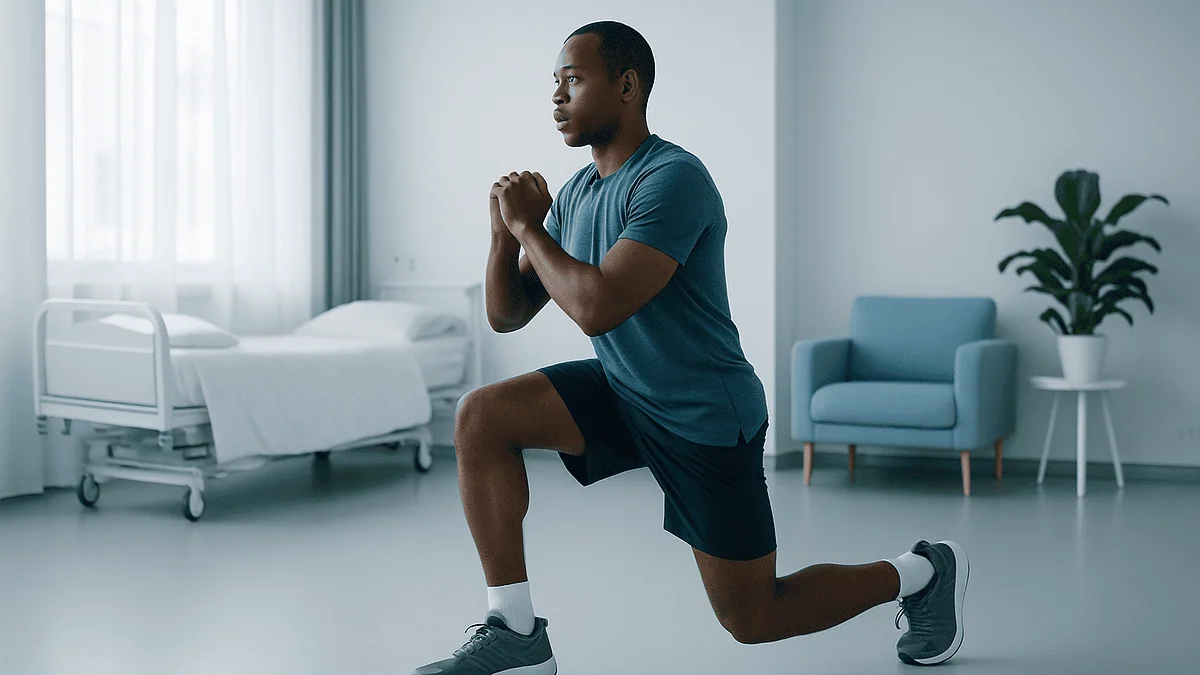
Then address the team. Glute bridges, lying on your back with knees bent and lifting the hips while squeezing the buttocks, train hip extension and remind the pelvis it has a rear hinge. Side-lying leg raises and the clamshell, opening the top knee with feet together, strengthen the gluteus medius that controls the pelvis in single-leg stance. Split squats, a controlled lunge in place, combine hip flexor stretch on the back leg with glute and quadriceps work on the front.
Trunk control rounds it out. A dead bug, lying on your back and lowering opposite arm and leg while keeping the lower back pressed down, teaches the abdominal muscles to hold the pelvis steady so the iliopsoas does not have to.
Two or three sessions a week for six to eight weeks is the typical window in tendon-loading research before meaningful change. A physiotherapist can tailor this to the actual diagnosis, which matters: a program for impingement differs from one for a strain.
How to relieve hip and leg pain now, and how long hip flexor strain recovery takes
The first 48 hours set the tone. For a fresh strain, the aim is to protect without immobilizing. Reduce the activities that reproduce sharp pain, which usually means no sprinting, kicking or hill work, but keep walking as far as it stays comfortable. Ice wrapped in a thin towel for 15–20 minutes a few times a day eases pain and swelling in those early days; longer or direct contact risks skin injury. MedlinePlus and Mayo Clinic guidance both favor this approach over bed rest.
Over-the-counter pain relievers such as acetaminophen or ibuprofen can take the edge off, but they are not treatment for the injury itself, they interact with other medicines and conditions, and whether and how to use them is a question for a pharmacist or your own clinician, following the product label.
Sleep position helps more than people expect. Lying on your back with a pillow under the knees, or on your side with a pillow between the knees, keeps the hip from being held in deep flexion all night. Sitting with the hips slightly higher than the knees reduces the pull on a sore groin.
From day three onward, gentle movement takes over: easy range-of-motion, short walks, then the stretching and strengthening described above as pain allows. Return to sport is gauged by function, not the calendar. A reasonable sequence is pain-free walking, then pain-free jogging, then acceleration and change of direction, then sport-specific skills, each stage held for a few days before the next.
As for timelines, NIH and MedlinePlus guidance puts mild strains at roughly one to three weeks, moderate strains at three to eight weeks, and severe tears at several months. Tendinopathy is slower and less predictable, often needing two to three months of consistent loading. Pain that has not improved at all after two to three weeks of sensible care is a reason to be examined rather than to push harder.
Common myths about hip flexor pain, corrected
The viral claims are repetitive enough to address one by one.
“Tight hip flexors store trauma, and releasing the psoas releases emotion.” There is no anatomical or physiological evidence for emotional storage in a muscle. The psoas does respond to stress the way all muscles do, through general tension, and deep slow breathing relaxes it along with everything else. That is a pleasant effect of relaxation, not a special property of the psoas.
“Press hard into your lower abdomen to release the psoas.” The psoas lies behind the intestines, the kidneys, major blood vessels and, on the right, the appendix and the cecum. Deep self-massage there is uncomfortable, unproven and not risk-free. Stretching and strengthening reach the muscle without going through the abdomen.
“If it hurts in front, it must be the hip flexor.” Joint impingement, labral tears, early arthritis, hernias and stress fractures all present at the front of the hip. Mislabeling a joint problem as muscle tightness and stretching it aggressively for months is one of the commonest ways people delay the right care.
“Stretch more if it still feels tight.” Tightness without loss of range usually reflects weakness, overload or a stiff joint. Randomized trials show stretching improves range of motion; they do not show it fixes a weak or overworked muscle. Loading does.
“Rest completely until it stops hurting.” Trials in other muscle strains favor early, pain-guided movement over prolonged rest for faster recovery. Tendons in particular lose capacity quickly when fully unloaded.
“Sitting shortens your hip flexors permanently.” Sitting produces real, measurable stiffness, and it is reversible with movement and stretching over weeks. The leap to permanent damage, pelvic collapse or switched-off glutes is not supported by trial evidence.
When to see a doctor about hip flexor pain
Most front-of-hip aches are safe to manage at home for a couple of weeks. Some are not, and the distinction is worth knowing before you decide to wait.
Seek urgent care the same day if the pain followed a fall or high-force injury and you cannot put weight on the leg; if the hip or thigh looks deformed, or the leg appears shortened or turned outward; if there is sudden severe pain with a visible lump or gap in the thigh; or if the area is hot, red and swollen with a fever. Numbness, tingling or weakness spreading down the leg, or any new difficulty controlling bladder or bowel, needs emergency assessment because it can signal nerve or spinal involvement.
Arrange a prompt appointment, within days, if groin pain came on after a jump in running or marching volume and worsens with every stride rather than settling, since a femoral neck stress fracture must be ruled out. The same applies to night pain that wakes you, pain with unexplained weight loss, night sweats or abdominal symptoms, or groin pain after hip replacement surgery, which can reflect the tendon rubbing on the implant.
Book a routine visit if pain has not improved at all after two to three weeks of relative rest and gentle exercise, if it keeps returning every time you resume sport, if you feel catching, locking or a deep pinch with sitting that suggests the joint, or if morning stiffness lasts longer than 30 minutes and other joints or tendons ache too.
A clinician will take a history, examine the hip in flexion, extension and rotation, test strength against resistance and, where indicated, order an X-ray, ultrasound or MRI. Any decision about imaging, injections, medicines or referral to physiotherapy or a surgeon belongs to that clinician, who has examined you. An article, including this one, cannot replace that examination.
Frequently asked questions
What could be causing pain in the front of my hip when I lift my leg?
The most likely causes are a hip flexor strain, irritation of the iliopsoas tendon or stiffness from prolonged sitting, all of which hurt when the thigh is raised. Joint problems such as impingement, a labral tear or early arthritis cause a similar pain and are often mistaken for muscle tightness. A clinician can tell them apart by testing the hip against resistance and in rotation.
What is the psoas muscle and where is it located?
The psoas major is a long muscle that starts on the sides of the lumbar vertebrae in the lower back, passes down through the abdomen behind the intestines, and joins the iliacus to form the iliopsoas tendon that attaches to the inner thigh bone. It is the main hip flexor and the only muscle linking the spine directly to the leg.
How do I relieve hip and leg pain from a hip flexor strain?
Reduce the activities that cause sharp pain, keep walking as comfort allows, and apply ice wrapped in a towel for 15–20 minutes a few times daily in the first two days. After that, add gentle range of motion, then stretching and progressive strengthening. Mild strains typically settle in one to three weeks; pain that is not improving at all by then should be examined.
What are the causes of hip flexor tendonitis?
Hip flexor tendonitis is almost always an overload injury, triggered by a sudden increase in running, cycling, kicking, dancing or marching volume, often combined with weak gluteal muscles or limited hip extension that leave the iliopsoas doing extra work. Tendons also lose elasticity after about 40, and after hip replacement the tendon can rub on the implant edge.
What are the symptoms of tight hip flexors?
Tight hip flexors produce a pulling sensation at the front of the hip when you stand after sitting, a feeling that the hip will not fully straighten when striding, and a tendency to arch the lower back when the leg swings behind you. There is no swelling, bruising or specific moment of injury, and the pull eases within minutes of moving.
How long is hip flexor strain recovery time?
General strain-healing guidance from NIH and MedlinePlus puts mild strains at about one to three weeks, moderate partial tears at three to eight weeks and complete tears at several months. Tendinopathy is slower and often needs two to three months of consistent loading. Return to sport should be judged by pain-free function at each stage rather than by the calendar.
Which hip flexor stretches work best?
The half-kneeling stretch, with the tailbone tucked and the buttock squeezed on the kneeling side before shifting the hips forward, targets the iliopsoas without arching the back. A standing version and a bed-edge stretch with one leg hanging are good alternatives. Randomized trials show range of motion improves over weeks of daily holds of 20–30 seconds, repeated two or three times.
Does hip flexor pain from sitting really come from a shortened muscle?
Partly. Long sitting holds the hip flexed and does produce measurable stiffness in hip extension, which is why standing up pulls at the front of the hip. The popular claim that this permanently tilts the pelvis, switches off the glutes and causes back pain rests on weak, inconsistent observational evidence. Breaking up sitting and daily hip extension reverse the stiffness.
Should I stretch or strengthen a painful hip flexor?
Both, but in the right order. In the first days after a sharp strain, avoid hard stretching and use gentle range of motion. Once walking is pain-free, add stretching for stiffness and begin progressive strengthening of the hip flexors, glutes and trunk. Evidence from other tendons shows loading programs outperform rest, and a muscle that feels tight because it is weak needs strength rather than more stretching.
When is hip flexor pain a sign of something serious?
Seek urgent care for pain after a fall with inability to bear weight, visible deformity, a hot swollen area with fever, or new numbness, weakness or bladder or bowel changes. See a doctor promptly for groin pain that worsens with every stride after a mileage increase, night pain, unexplained weight loss, or pain that has not improved after two to three weeks of sensible care.
References
- MedlinePlus: Hip flexor strain – aftercare
- NHS: Hip pain in adults
- NIH NIAMS: Sprains and Strains
- WHO: Physical activity fact sheet and 2020 guidelines on physical activity and sedentary behaviour
This article is for general information only and is not a substitute for professional medical advice. Please consult a qualified doctor about your individual situation.

More from the Blog
Does the Robot Operate on Its Own? Robotic Knee Replacement Myths, Corrected
No. In robotic knee replacement, the surgeon performs the operation and the robotic arm acts as a precision tool. The surgeon plans the implant…

How a Pavlik Harness Keeps Your Baby’s Hips in Place So the Socket Can Deepen
A Pavlik harness works by holding a baby's hips bent up and gently spread apart, so the ball at the top of each thigh…

Shoulder Replacement Recovery: Timeline, Sling Life and Real Milestones
Most people wear a sling for about two to six weeks after shoulder replacement, regain everyday reach by three months, and see strength keep…
What to Ask Your Surgeon Before Hip Replacement: Approach, Implant Type and Rehab Plan
Before hip replacement, ask your surgeon which surgical approach they use and why, what implant type and bearing surface they plan (cemented or uncemented,…

First Signs of Arthritis in the Fingers, and How Arthritis Is Tested
The first signs of arthritis in the fingers are usually subtle: stiffness on waking or after gripping something, aching or tenderness in a knuckle,…

Blood Thinners and Compression Stockings After Robotic Hip Replacement: Why Both Matter
Blood thinners after hip replacement are standard because surgery on the hip, combined with days of reduced movement, sharply raises the chance of a…