

How Digital Dentistry Helps International Patients: Remote Planning and Fewer Visits
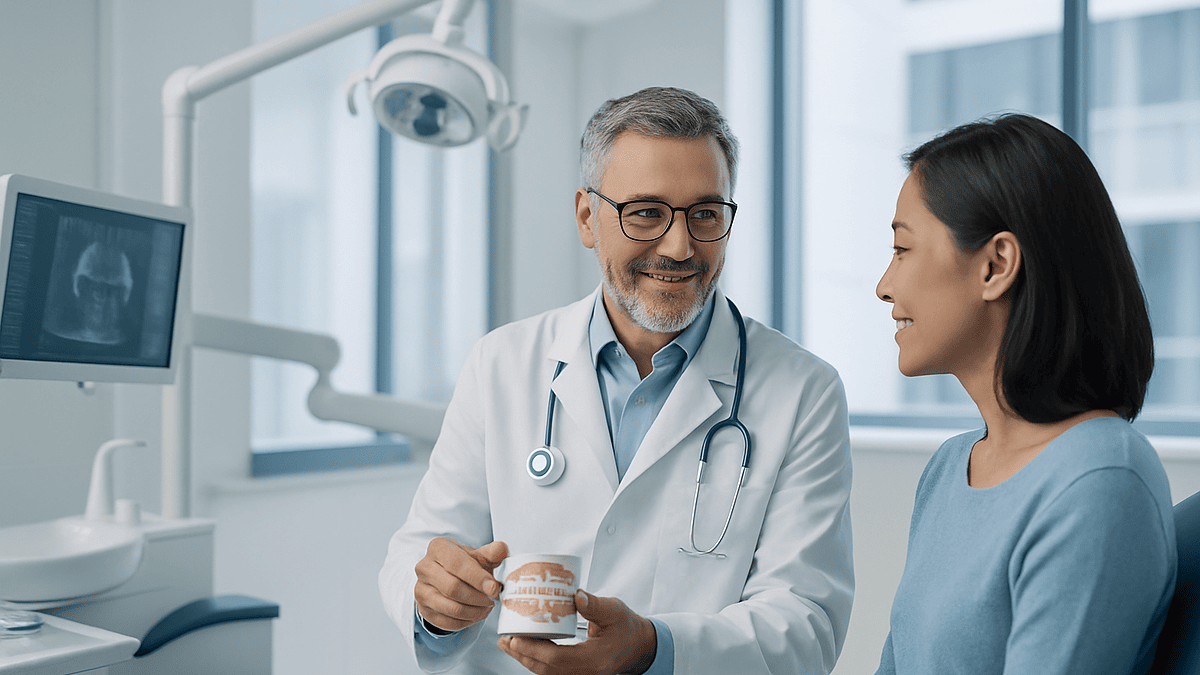
Key Takeaways
- A pooled analysis of guided implant surgery found average deviations of about 1.2 mm at the entry point, 1.4 mm at the tip and roughly 3.5 degrees in angle, which is why plans must leave safety margins.
- CBCT scans are stored as DICOM files and intraoral scans as STL files, both standard formats that can be transferred securely and merged into one 3D planning model.
- The Mayo Clinic describes bone integration around an implant as taking several months, and no digital workflow shortens that stage.
- Remote planning moves consultation, measurement, planning and manufacturing off the chair; surgery, healing checks and fit verification still require in-person visits.
- CDC travel guidance identifies both recent surgery and journeys longer than about four hours as risk factors for deep vein thrombosis, so flight timing after implant surgery should follow the surgeon's advice.
- The WHO estimates oral conditions affect about 3.5 billion people, and an implant joins the list of things needing regular professional maintenance rather than escaping it.
Digital dentistry lets an implant team plan much of a case before an international patient ever sits in the chair. Scans taken at home can be shared securely, the implant position is planned on a 3D model, and a printed guide transfers that plan to surgery. In-person visits can often be fewer, but healing still takes months, and the treating team decides what is safe.
Maya keeps a shoebox of her dental records. Two panoramic films from her twenties, a cardboard mold from a mouthguard, a printout from the last check-up. When a molar finally cracked beyond repair and the word “implant” came up, her first question was practical, not medical: how many times will I need to sit in that chair, and how far from home?
She is not unusual. People relocate for work, split the year between two countries, or simply live far from the specialist their dentist wants them to see. For all of them, the appeal of digital dentistry for international patients is the promise that a fair part of the thinking can happen before the traveling does.
That promise is real, but it has edges. This article walks through what remote planning actually involves, where it genuinely trims visits, and where bone biology stubbornly refuses to be scheduled.
What digital dentistry means for international patients
Digital dentistry is the use of computer-based tools to capture, plan and manufacture dental treatment, replacing plaster molds and paper tracings with scans, software and printed or milled parts. In implant care, that usually involves three technologies working together.
The first is cone beam computed tomography, or CBCT, a dental CT scan that produces a 3D image of the jaw so the team can see bone height, width and the position of nerves and sinuses. The second is the intraoral scanner, a handheld camera that builds a digital model of the teeth and gums in minutes. The third is CAD/CAM, computer-aided design and manufacturing, which turns the plan into physical objects: surgical guides, temporary crowns and final restorations.
Why does this matter to someone living in another country? Because data travels better than people do. A CBCT scan and an intraoral scan can be exported in standard file formats and reviewed by a specialist thousands of miles away. Software then merges the two, so the team sees the bone and the visible teeth in one model and can position a virtual implant exactly where the future crown needs support.
The Mayo Clinic describes dental implant treatment as a staged process that often takes many months from start to finish, largely because bone must heal around the implant before a permanent tooth is attached. Digital tools do not shorten that biology. What they change is how much of the decision-making, measuring and manufacturing can happen while the patient is elsewhere, so that the time physically spent with the team is concentrated on the steps that truly need hands in a mouth.
How remote dental implant planning actually works, step by step
Picture the process as a relay. The baton is a growing digital file, and it passes between the patient, a local dentist and the treating team.
It usually begins with a virtual consultation. The patient describes the problem, shares photographs and any existing X-rays, and the team explains whether an implant is even the right conversation to be having. Nobody plans surgery on a phone camera image, but this call filters out cases that clearly need a different path.
Next come the records. Where a local clinic can provide it, the patient has a CBCT scan and an intraoral scan taken close to home. CBCT images are stored in a format called DICOM, the universal standard for medical imaging, and surface scans are commonly exported as STL files, a standard 3D geometry format. Both can be transferred securely.
The treating team then imports both files into implant planning software. The clinician marks the nerve canal, measures the bone, and places a virtual implant of a specific length and diameter at an angle that will let the crown emerge in the right place. A digital design of the final tooth, sometimes called a virtual wax-up, is built at the same time so the surgery serves the restoration rather than the other way around.
Once the plan is agreed, the software exports a surgical guide: a custom plastic template with a metal sleeve that fits over the teeth or bone and steers the drill along the planned path. That guide is 3D printed before the patient arrives. Temporary teeth can be milled from the same design. The Cleveland Clinic notes that implant treatment still requires a surgical placement visit and later restorative visits; remote planning simply front-loads the homework so those visits are shorter and more predictable.
Which records can be gathered at home, and which cannot
Not every step survives distance. Sorting them honestly is the most useful thing a team can do before anyone books a flight.
Records that travel well include the CBCT scan, the intraoral scan, clinical photographs, a written medical history, a current medication list from the prescribing clinician, and recent blood test results where the medical history calls for them. A local dentist can also carry out a periodontal assessment, measuring the health of the gums around remaining teeth, and forward the findings. The Mayo Clinic lists a thorough dental exam, review of medical history and imaging as standard preparation for implant surgery; most of that paperwork does not care which country it is completed in.
Records that do not travel are the ones that require hands and judgment in the same room. Testing whether a tooth is truly beyond saving, assessing how the jaws close under load, checking soft tissue thickness with a probe, and confirming that a planned implant site feels as solid as the scan suggests all happen in person. Bone quality in particular can look adequate on an image and feel different under a drill.
There is also a currency problem. A scan taken many months ago may not reflect the mouth today. Bone shrinks after tooth loss, and gum tissue changes shape as it heals. Teams typically ask that imaging be recent, and many repeat a scan on arrival to verify the plan against the current anatomy. That second scan is not a sign the remote work was wasted; it is the quality check that makes the remote work safe to act on.
Patients who understand this distinction arrive with realistic expectations and rarely feel that a repeated measurement is a broken promise.
Guided implant surgery accuracy: what the evidence shows
A surgical guide is only useful if it puts the implant where the software said it would. So how accurate is it?
A systematic review and meta-analysis published in Clinical Oral Implants Research pooled studies of static computer-aided implant surgery, meaning surgery performed through a fixed printed guide rather than a live navigation screen. It found that the mean deviation between the planned and actual implant position was roughly 1.2 mm at the implant entry point and about 1.4 mm at the tip, with an average angular deviation of around 3.5 degrees.
Those are small numbers, but they are not zero, and the way clinicians read them matters. A millimeter or so of drift is comfortably absorbed when a plan leaves a generous safety margin from a nerve or a neighboring root. It is not comfortable when the plan is squeezed into a narrow ridge with no room to spare. Good digital planning therefore builds in margins deliberately, and the guide is treated as a precision aid, not a guarantee.
Several factors widen the error. Guides that rest on bone or on gum tissue alone tend to be less stable than those seated on teeth. Long, thin guides flex. Patients with limited mouth opening make it hard to seat drills fully. The same review noted variability between studies, which is a polite way of saying results depend on the operator and the case as much as the technology.
What this means for a remotely planned case is straightforward. The digital plan raises the floor of predictability, particularly for teams that place implants regularly, but the surgeon still checks position during the procedure and retains the authority to deviate from the plan if the tissue demands it. Any claim that a guide makes surgery risk-free should be treated with the same skepticism as any other absolute.
Who a fewer-visit digital pathway usually suits, and who is asked to wait
The people who benefit most from compressed, digitally planned implant care share a few features. Their general health is stable. Their gums around the remaining teeth are healthy or already treated. They have enough bone at the planned site, or a graft has already healed. They can attend a local dentist for scans, and they can commit to follow-up appointments wherever they end up living.
Straightforward single-tooth cases and well-planned multi-tooth cases in healthy bone are where the technology shines, because the variables are few and the plan is unlikely to change on the day.
Teams commonly ask other patients to slow down, not as a rejection but because rushing raises the risk of a failed implant. The Mayo Clinic identifies uncontrolled chronic conditions such as diabetes, heavy smoking, and prior radiation to the head and neck as factors that can interfere with healing and that need discussion before surgery. Active gum disease is another; placing an implant next to untreated infection invites the same disease to attack the implant.
People who need bone grafting or sinus lifting, procedures that add bone where the jaw has shrunk, generally cannot be squeezed into a single trip. The Mayo Clinic describes graft healing as taking several months before an implant can be placed, and no amount of software changes that. Patients taking certain bone-modifying or blood-thinning medicines may need their prescribing clinician involved in timing; the dental team explains the concern, and the prescriber makes any decision about the medicine.
Finally, anyone who cannot realistically return for follow-up, or who has no dentist at home willing to co-manage the case, is usually advised to reconsider a split-location plan altogether. Distance is manageable when everyone knows who is watching the implant afterward; it becomes a risk when nobody is.
Does digital planning really mean fewer visits? A realistic look
Fewer visits is the headline, so it deserves a careful audit. The table below compares where each stage traditionally happened with where it can happen in a digitally planned pathway. It shows stages, not visit counts, because the number of trips depends on the individual case and is a decision for the treating team.
| Stage | Conventional pathway | Digitally planned pathway |
|---|---|---|
| First consultation | In person | Often by video, then confirmed in person |
| Imaging and impressions | In person, plaster molds | CBCT and intraoral scan, possibly taken locally |
| Treatment planning | In person or between visits | Remote, on a merged 3D model |
| Surgical guide fabrication | Often not used | Designed remotely, 3D printed before arrival |
| Implant placement | In person | In person, guided |
| Healing period | Several months | Several months, unchanged |
| Final crown fabrication | In person impressions, lab time | Scan, digital design, milled or printed |
| Follow-up | In person | Mix of video review and in-person checks |
Two things jump out. Planning and manufacturing move off the chair, which is where the real saving lives. The healing row does not move at all. The Mayo Clinic is explicit that bone integration, the process by which the jaw grows onto the implant surface, takes several months, and that the whole treatment can span many months.
Some teams place a temporary crown on the same day as the implant, a technique called immediate loading. It can reduce the number of appointments in selected cases with firm bone, but it is a clinical judgment about implant stability, not a scheduling convenience, and it is not appropriate for everyone. Ask directly whether it applies to you and why.
What a virtual dental consultation can and cannot do
The video call has become the front door for many distance cases, and it does several jobs well. It lets the patient tell their story without a mirror in their mouth. It gives the team a chance to review existing images, set out the general options, explain the staged nature of implant treatment, and describe the records they will need. It is also the moment to be candid about health conditions, smoking, medications and the realistic ability to return for follow-up.
Where teledentistry falls short is diagnosis. A camera cannot detect a hairline root fracture, measure pocket depth around a gum, test how a tooth responds to cold, or feel how the jaw closes. The CDC’s guidance for people considering health care in another country stresses the importance of understanding a treatment plan fully before committing and of knowing how complications will be handled; a video consultation is where that understanding starts, not where it ends.
A few habits make the call more useful. Have any existing X-rays or scan files ready to share ahead of time rather than holding a phone up to a light box. Write down the medicines you take and who prescribes them. Ask the team to explain the plan in terms of stages and what each stage requires in person. Ask what would make them change or abandon the plan on arrival.
Be wary of any remote consultation that ends in a firm quote of outcomes or a promise that everything will be finished in one short trip before anyone has examined you. Ethical teams describe possibilities and conditions. They reserve commitments for after the in-person exam, because that is when they actually know what they are working with.
What the first days and weeks after implant surgery usually look like
Once the implant is in, the digital part of the story pauses and the biological part takes over.
The Mayo Clinic describes the expected early effects of implant surgery: swelling of the gums and face, bruising of the skin and gums, pain at the site, and minor bleeding. These typically ease over the first days. Soft foods, avoiding disturbing the site, and keeping the mouth clean as instructed are the usual advice. Any pain relief, antibiotics or mouth rinses are prescribed by the surgeon, who decides what is appropriate; this article deliberately gives no doses or regimens.
Stitches, if used, may dissolve on their own or be removed at a check visit. A healing cap or a temporary tooth may be visible. Some patients wear a removable temporary during the healing months so that a gap is not on show.
Beneath the gum, the slow work is osseointegration, the bone growing onto and locking around the implant surface. The Mayo Clinic gives several months as the typical window. During this time the implant should not be loaded heavily, which is why a final crown is delayed and why chewing habits matter.
For someone splitting care between countries, this is the phase where the local dentist becomes essential. Someone nearby should be able to look at the site if it feels wrong, take an X-ray if needed, and speak with the treating team. Photographs sent through a secure channel can support a video review, but they do not replace an examination when something hurts, swells or moves.
When the bone is judged ready, a scan of the healed site allows the final crown to be designed digitally and manufactured before the fitting appointment, which is one of the places the fewer-visits promise is genuinely honored.
Flying after dental implant surgery: neutral safety guidance
Nobody should treat a boarding time as a medical decision made by an airline. The timing of any flight after oral surgery is for the surgeon to advise, based on how the procedure went, how extensive it was, and the patient’s general health.
Two issues sit behind that caution. The first is local. Bleeding, swelling and pain are expected in the first days after implant placement, and being sealed in a cabin far from the team while those peak is uncomfortable at best. Cabin pressure changes can also intensify sinus discomfort after upper jaw surgery near the sinus floor. The second issue is systemic. The CDC’s travel health guidance notes that recent surgery raises the risk of deep vein thrombosis, a clot in a deep leg vein, and that long-distance travel of more than about four hours is itself a recognized risk factor. Combining the two soon after any operation is the specific combination that travel health authorities caution against.
Basic clot-prevention habits apply to any long journey: move your legs and walk the aisle when permitted, stay hydrated, avoid sitting with knees bent tightly for hours, and follow any individual advice from a clinician who knows your history. Compression stockings or medicines are individual decisions, not general recommendations, and belong with the prescribing clinician.
Practical points matter too. Carry the written treatment summary, the implant details and the surgeon’s contact information. Know who to call locally if something changes. Confirm before leaving that a named follow-up appointment exists, whether by video or in person. The CDC advises people receiving care in another country to arrange follow-up care before traveling home; that advice is not about dentistry specifically, but it fits.
Risks and limits of digital dentistry international patients should understand
Digital planning reduces certain risks and does nothing about others. Naming both keeps expectations honest.
The risks of implant surgery itself are unchanged by the software. The Mayo Clinic lists infection at the implant site, injury to neighboring teeth or blood vessels, nerve damage causing pain, numbness or tingling in the lip, gums or chin, and sinus problems when upper implants intrude into the sinus space. A well-planned guide lowers the chance of a drill straying toward a nerve, but the accuracy evidence discussed earlier shows deviations of a millimeter or more are normal, so the plan must leave room.
Digital workflows add their own failure points. Scan files can be corrupted or misaligned when merged, and a guide built on a bad merge will confidently steer the drill to the wrong place. Guides can fit poorly if the teeth have shifted since the scan or if a temporary filling was changed. Printing tolerances vary. Experienced teams verify the guide’s fit and re-check landmarks before drilling, and they are willing to set the guide aside if it does not seat cleanly.
Radiation is a modest but real consideration. CBCT delivers more radiation than conventional dental X-rays, and repeated scans across two countries add up. Imaging should be justified, not routine.
Distance is the risk that no technology fixes. Peri-implantitis, inflammation and bone loss around an implant, develops quietly over months and is best caught by regular professional checks. A patient with no local dentist looking at the implant is more likely to present late. The WHO’s oral health fact sheet notes that oral conditions affect an estimated 3.5 billion people worldwide, most of them preventable with ongoing care; an implant joins that maintenance list, it does not escape it.
Alternatives to implants, and why a good digital plan shows them too
Software can plan an implant beautifully and still be planning the wrong treatment. A trustworthy remote consultation puts the alternatives on the same screen.
Saving the natural tooth is the first alternative. Root canal treatment, a crown or periodontal therapy may keep a compromised tooth in service for years. Whether that is realistic depends on findings that usually need an in-person exam, which is one reason a video call should not end in a firm implant plan.
A fixed bridge replaces a missing tooth by anchoring a false tooth to the neighbors, which must be reshaped to carry it. It avoids surgery and healing months but sacrifices healthy enamel on adjacent teeth and does not stop bone loss under the gap. The same digital scan used for implant planning can design a bridge, so the choice does not have to be made blind.
Removable dentures, partial or complete, remain a reasonable option for some people, particularly where health, bone or the practicalities of follow-up make surgery unwise. Digital design and printing have improved their fit too. The NHS lists bridges, dentures and implants as the main ways of replacing missing teeth, each with different demands on the mouth and on the patient.
Doing nothing is also a choice for some gaps. A missing tooth at the back that no one sees and that does not disturb chewing may not need replacing, and a clinician should say so.
What all of this means for the international patient is that the planning software is a tool for comparison, not just for placement. Asking to see the implant plan and the alternative on the same model is a fair request, and the answer should be a discussion rather than a sales pitch.
What people often get wrong about remote implant planning
Myth one: the plan is the treatment. A digital plan is a proposal built on images. The mouth on the day has the final vote, and surgeons routinely adjust for bone that feels softer than it looked or tissue that behaves differently. A patient who expects the screen to match reality exactly may read a sensible adjustment as a failure.
Myth two: digital means faster healing. It does not. The Mayo Clinic’s several-months window for bone integration applies whether the implant was placed freehand or through a printed guide. Digital tools save chair time and reduce guesswork; they do not accelerate biology.
Myth three: the guide makes the surgeon’s skill irrelevant. Evidence on guided surgery shows average deviations around a millimeter or more, and wider variability between operators and case types. The guide narrows the range of error for a skilled hand; it does not create skill.
Myth four: one trip finishes everything. Immediate temporary teeth exist, but the final restoration is generally fitted after the implant has integrated, and complex cases involving grafts need more stages. Anyone promised a complete result in a single short stay before an examination should ask how that is possible given standard healing times.
Myth five: an old scan is fine. Bone remodels and teeth drift. A guide built on outdated anatomy fits poorly and misleads. Repeating a scan is a safety step, not upselling.
Myth six: follow-up can be entirely virtual. Video reviews are helpful for reassurance and triage, but a probe, an X-ray and a clinician’s fingers are needed to detect early inflammation around an implant. Somebody local should be part of the plan from the start.
None of these misunderstandings makes digital dentistry less valuable. They simply mark where the marketing ends and the medicine begins.
Questions to ask your care team
A well-prepared patient does not need to understand DICOM files. They need the right questions, asked before any commitment is made.
- Which parts of my plan can be completed remotely, and which require me to be present?
- What records do you need from my local dentist, how recent must they be, and in what format?
- Will you repeat the scan on arrival, and what would make you change or postpone the plan?
- Do I have enough bone, or is a graft likely? If so, how does that change the number of stages?
- How far from the nerve, sinus and neighboring roots does the plan sit, and how much margin does the guide leave for the deviations described in the evidence?
- Is a same-day temporary tooth appropriate for me, and on what basis would you decide?
- How long after surgery would you expect me to stay nearby, and what would make you ask me to stay longer?
- Who examines me during the healing months, and how will you and my local dentist share information?
- What are the specific risks in my case, and what alternatives to an implant have you considered?
- If something goes wrong after I return home, who do I contact, and who is responsible for managing the complication?
- Which of my medicines might affect healing, and will you coordinate with the clinician who prescribes them?
- How will the implant be maintained long term, and how often should it be professionally checked?
Write the answers down. A team that welcomes these questions and answers them in stages rather than in guarantees is behaving the way guideline-level care expects. A team that brushes them aside, or that answers with certainties before an examination, has told you something useful as well.
When to call your doctor
Most recovery after implant surgery is unremarkable: some swelling, some bruising, tenderness that eases over days. A short list of signs should prompt a same-day call to the treating team or, if you are far from them, to a local dentist or urgent medical service.
- Bleeding that does not settle with gentle pressure, or that restarts heavily after the first day.
- Swelling or pain that gets worse after the third or fourth day instead of better, or swelling that spreads toward the eye or under the jaw.
- Fever, chills or feeling generally unwell.
- Numbness or tingling in the lip, chin or tongue that persists beyond the anesthetic wearing off, since this can signal nerve irritation.
- Difficulty swallowing or breathing, or swelling of the floor of the mouth or throat. Treat this as an emergency and seek immediate medical care.
- A foul taste or discharge from the site, or a temporary tooth or healing cap that becomes loose.
- Nasal bleeding, or air or fluid passing between mouth and nose after upper jaw surgery, which may indicate a sinus communication.
- For anyone who has traveled recently: a swollen, painful or warm calf, or sudden breathlessness or chest pain, which can indicate a blood clot and needs emergency assessment.
In the longer term, contact a dentist if the gum around the implant becomes red, bleeds when brushed, recedes, or if the implant or crown feels mobile. These are early signals of peri-implantitis and are more manageable when caught early.
Every one of these decisions, from whether to adjust a medicine to whether to remove an implant, belongs with the clinicians examining you. This article describes signals worth acting on; it does not replace the judgment of the team responsible for your care.
Frequently asked questions
Can dental implants really be planned remotely for international patients?
Yes, much of the planning can happen at a distance. A CBCT scan and an intraoral scan taken locally are merged in software so the treating team can position a virtual implant and design a surgical guide before you arrive. Diagnosis, surgery, healing assessments and final fitting still require in-person examination, and the team confirms the plan on arrival.
How accurate is guided implant surgery compared with the digital plan?
A systematic review of static guided surgery reported mean deviations of about 1.2 mm at the implant entry point, 1.4 mm at the tip and around 3.5 degrees in angle. Those errors are small but real, so clinicians plan with safety margins from nerves and neighboring roots and verify position during surgery rather than trusting the guide blindly.
What does remote dental implant planning require from my local dentist?
Typically a recent CBCT scan, an intraoral scan or good impressions, clinical photographs, a gum health assessment and a written summary of your dental and medical history. The local dentist may also be asked to co-manage healing, take follow-up X-rays and communicate with the treating team. Agree those roles clearly before treatment starts.
Does digital dentistry make dental implants heal faster?
No. Digital tools save chair time and improve planning precision, but the bone still needs to grow onto the implant, a process the Mayo Clinic describes as taking several months. Some patients receive a temporary tooth on the day of surgery in suitable cases, yet the final crown is generally fitted only after integration is confirmed.
How soon can I fly after dental implant surgery?
That is a decision for your surgeon based on how extensive the surgery was and your general health. CDC travel guidance notes that recent surgery and flights longer than about four hours both raise the risk of blood clots. Expect to stay close to the team while early bleeding and swelling settle, and keep moving your legs on any long journey.
Is a virtual dental consultation enough to decide on an implant?
It is a starting point, not a decision. A video call lets the team review your history and images and explain options, but it cannot detect root fractures, measure gum pockets or assess bone quality by touch. A firm plan should follow an in-person examination, and any team promising outcomes before that exam deserves caution.
Why might the team repeat my scan when I arrive?
Because anatomy changes. Bone shrinks after tooth loss, gums remodel and teeth drift, so a scan taken months earlier may no longer match your mouth. A surgical guide built on outdated images can fit poorly and mislead the drill. Repeating imaging on arrival is a safety verification, not an indication that the remote work was wasted.
Who is usually asked to wait before a fewer-visit implant pathway?
People with uncontrolled chronic conditions such as diabetes, heavy smokers, those with active gum disease, and anyone needing bone grafting that must heal for several months first. The Mayo Clinic also flags prior head and neck radiation as a factor requiring careful assessment. Waiting improves the chance that the implant integrates rather than fails.
What are the main risks of implant surgery that digital planning does not remove?
Infection at the site, injury to neighboring teeth or vessels, nerve damage causing numbness or tingling, and sinus problems with upper implants remain possible. Digital workflows add their own failure points, including misaligned scan files and poorly fitting guides. Longer term, peri-implantitis can develop quietly and is best caught by regular local checks.
What alternatives to an implant should a digital plan show me?
Saving the natural tooth with root canal treatment or a crown, a fixed bridge anchored to neighboring teeth, a removable partial or complete denture, or in some cases leaving a back gap unrestored. The same scan used to plan an implant can design a bridge or denture, so asking to compare options on one model is reasonable.
References
- Cleveland Clinic: Dental Implants
- PubMed: The accuracy of static computer-aided implant surgery: a systematic review and meta-analysis (Tahmaseb et al.)
- WHO: Oral health fact sheet
This article is for general information only and is not a substitute for professional medical advice. Please consult a qualified doctor about your individual situation.

More from the Blog
Peri-Implantitis Warning Signs: Bleeding, Pus and Implant Mobility That Mean a Prompt Visit
Peri-implantitis warning signs include gums around a dental implant that bleed when brushed or probed, redness or swelling, pus or a persistent bad taste,…
Getting Used to a New Dental Bridge: Sensitivity, Speech and Bite Adjustments in Early Weeks
The dental bridge adjustment period is the stretch of days to a few weeks in which a newly cemented bridge stops feeling foreign. Mild…

How Long Do Inlays and Onlays Last? Wear, Bonding Strength and When Replacement Is Discussed
Inlays and onlays usually last many years, and patient-facing sources place comparable restorations in roughly the five-to-fifteen-year range that Cleveland Clinic gives for crowns,…
3-on-6 Dental Implants: How This Full-Arch Alternative Differs From All-on-4
3-on-6 dental implants replace a full arch of teeth using six upright implants that support three separate ceramic bridges, while All-on-4 uses four implants,…
Who Needs Maxillofacial Prosthetics? Obturators and Facial Prostheses After Surgery Explained
Maxillofacial prosthetics treat openings and missing structures in the mouth, jaws and face left by cancer surgery, injury, infection or birth differences. An obturator…
Dental Bone Graft Warning Signs: Exposed Membrane, Persistent Swelling and When to Call
Dental bone graft failure signs include swelling or pain that worsens after the third day instead of easing, a membrane or grayish graft material…