Teledentistry
Teledentistry provides remote dental consultation, screening, and follow-up through secure digital communication. It helps patients receive expert guidance before traveling or visiting the clinic.
Quick answer
Teledentistry is remote dental care delivered through secure digital communication, allowing dentists to assess concerns, review images or records, and provide consultation, screening, and follow-up without an in-person visit. At Acibadem in Turkey, it is used to guide patients before clinic visits or travel, support treatment planning, and monitor recovery after dental procedures.
When You Need Dental Answers Before You Travel
Dental concerns can be difficult to evaluate from a distance. A toothache that comes and goes, a broken filling, gum swelling, jaw discomfort, a child’s dental injury, or questions about implants and cosmetic dentistry can all create uncertainty. For international patients, that uncertainty is often magnified by practical questions: Is this urgent? Do I need to travel? Which specialist should I see? Can treatment be planned in advance? How many clinic visits might be required?
Teledentistry is designed to make this first step clearer. Through secure digital communication, patients can receive professional dental guidance without immediately visiting the clinic. A remote consultation does not replace every aspect of an in-person examination, and it cannot provide treatment that requires hands-on care. However, it can help identify likely causes of symptoms, determine how urgent the situation may be, recommend the most appropriate next steps, and prepare a more efficient clinic visit if travel is needed.
For patients considering dental care abroad, teledentistry can be especially valuable. It allows the dental team to review your concerns, medical background, photographs, prior dental records, and available imaging before you arrive. This early review helps match you with the appropriate dentist or dental specialist, such as an implant dentist, endodontist, periodontist, orthodontist, prosthodontist, oral surgeon, or pediatric dentist. It can also help determine whether additional imaging, laboratory planning, or multidisciplinary input may be needed.
At Acibadem, teledentistry is used as part of a modern care pathway for patients who need remote consultation, screening, treatment planning, follow-up, or a second opinion. The goal is not to make decisions based on limited information, but to use digital tools responsibly so that patients receive timely, accurate guidance and understand what can be safely managed remotely and what requires an in-person visit.
What Is Teledentistry?
Teledentistry is the use of secure digital communication to provide dental consultation, screening, education, triage, treatment planning support, and follow-up care at a distance. It may involve a video appointment, written communication through a secure platform, sharing photographs of the teeth and gums, uploading dental X-rays or three-dimensional imaging when available, and reviewing a patient’s medical and dental history.
The purpose of teledentistry is to bring expert dental assessment closer to the patient, especially when an immediate visit is not practical. It can help clarify whether symptoms are likely related to tooth decay, gum disease, an infected tooth, a cracked tooth, bite-related problems, temporomandibular joint concerns, orthodontic issues, implant complications, or cosmetic and restorative needs. It can also support patients who have recently completed dental treatment and need follow-up guidance from their clinical team.
There are two common models of teledentistry. In a live video consultation, the patient and dentist speak in real time, often with the patient showing the area of concern using a smartphone camera. In an asynchronous review, sometimes called store-and-forward communication, the patient sends photographs, records, forms, and imaging for later evaluation by the dentist. In many cases, both approaches are combined: the dental team reviews documents before the appointment, then discusses findings and options during a live consultation.
Teledentistry can support decision-making, but it has natural limits. A dentist cannot fully assess tooth mobility, perform pulp vitality tests, measure gum pockets, take new X-rays, remove decay, place a restoration, adjust a bite precisely, or treat an infection through a screen. For that reason, a remote consultation may result in advice to attend an in-person appointment, visit an emergency dental clinic, or obtain additional imaging locally. A responsible teledentistry service is clear about these boundaries and uses remote care to improve access, not to replace necessary clinical examination.
Who May Need Teledentistry?
Teledentistry may be helpful for patients who need dental advice but are not yet able to attend an appointment in person. This includes international patients planning treatment abroad, people seeking a second opinion, patients who want to understand whether a dental issue is urgent, and those who need follow-up after treatment. It is also useful for patients who have limited access to specialist dental care in their home location or who need help organizing a complex treatment plan before traveling.
Common reasons for a teledentistry consultation include tooth pain, sensitivity to hot or cold, swelling around a tooth or gum, bleeding gums, bad taste or discharge, a chipped or broken tooth, a lost filling or crown, discomfort after dental treatment, concerns about a dental implant, questions about wisdom teeth, orthodontic concerns, jaw clicking or facial pain, and interest in cosmetic procedures such as veneers, whitening, crowns, bridges, or smile design. Parents may also seek remote advice for children after a dental injury, eruption problems, tooth discoloration, or oral habits such as thumb sucking.
Diagnosis through teledentistry begins with structured information. The dental team will usually ask when symptoms started, what triggers them, whether pain is spontaneous or related to chewing, whether there is swelling or fever, which medications you take, whether you have medical conditions that affect dental care, and what dental work has been performed previously. Clear photographs and existing dental images can be very helpful. For example, close-up images of a broken tooth, gum swelling, orthodontic appliance, or surgical site can help the dentist determine whether urgent care is needed.
Patients who are planning dental treatment in Turkey may use teledentistry to understand the likely pathway before they travel. If dental implants are being considered, the team may request panoramic X-rays or cone-beam computed tomography images if available. If cosmetic dentistry is the goal, photographs of the smile, bite, and facial profile can help guide a preliminary discussion. If full-mouth rehabilitation is needed, the remote consultation may focus on sequencing care, estimating the number of visits, and identifying whether additional specialist review is appropriate.
Teledentistry is not suitable for every situation. Severe facial swelling, difficulty breathing or swallowing, uncontrolled bleeding, major trauma, high fever with dental infection symptoms, or sudden spreading infection requires urgent in-person medical or dental care. A remote dentist can help direct you, but emergency symptoms should not wait for a routine online appointment.
Conditions and Dental Needs Teledentistry Can Address
Teledentistry can be used for a wide range of dental concerns, particularly when the aim is consultation, screening, monitoring, or planning. It may support the early assessment of tooth decay, gum disease, dental infections, cracked or fractured teeth, wisdom tooth symptoms, implant-related concerns, orthodontic issues, temporomandibular joint discomfort, oral lesions, and post-treatment healing.
In restorative dentistry, teledentistry can help evaluate broken fillings, worn teeth, old crowns, missing teeth, and the need for crowns, bridges, inlays, onlays, or dental implants. The dentist may not be able to give a final treatment plan without clinical examination and diagnostic imaging, but remote review can identify what information is needed and which treatment options may be reasonable to discuss.
In cosmetic dentistry, patients often use teledentistry to ask about veneers, bonding, teeth whitening, gum contouring, smile design, or replacement of older dental work. Photographs and a discussion of expectations can help the dentist explain what may be achievable, what limitations may exist, and whether orthodontic, periodontal, or restorative treatment should be considered before cosmetic work.
In orthodontics, teledentistry can assist with initial screening, aligner or braces follow-up, appliance concerns, retention questions, and assessment of crowding, spacing, bite problems, or relapse after previous treatment. It can also help determine whether a patient should schedule a detailed orthodontic examination.
In implant dentistry and oral surgery, remote consultation may be used to review missing teeth, failing teeth, previous implant placement, bone grafting questions, sinus lift considerations, wisdom teeth, cysts, or post-surgical healing. Imaging is especially important in these cases. A dentist or oral surgeon may request updated scans before offering detailed treatment recommendations.
For follow-up care, teledentistry can be valuable after procedures such as dental implant placement, extractions, root canal treatment, gum therapy, orthodontic adjustments, crown placement, or cosmetic restorations. The patient can report symptoms, send photographs, and receive guidance about healing, oral hygiene, medication use, and when an in-person visit is necessary.
How Teledentistry Is Performed
A teledentistry pathway usually begins with a request for consultation. International patients may contact Acibadem’s international patient services or the relevant dental department and share the reason for consultation. The care coordination team can help explain what documents, photographs, medical information, and dental records are needed. When language support is required, coordination can be arranged in the patient’s preferred language whenever available.
Before the consultation, you may be asked to complete a medical and dental history form. This includes current symptoms, allergies, medications, previous dental procedures, chronic medical conditions, pregnancy status if relevant, and whether you take blood thinners, osteoporosis medications, immunosuppressive therapy, or medications that may affect oral surgery or healing. This information is important because dental care is connected to overall health. Conditions such as diabetes, heart disease, immune disorders, bleeding disorders, and previous radiotherapy to the head and neck can influence treatment decisions.
You may also be asked to provide photographs. The dental team may request images of the full smile, upper and lower teeth, bite from the front and sides, close-up view of the painful or damaged area, gums, tongue, or surgical site. Good lighting, a clean camera lens, and stable focus make remote assessment more useful. If you already have dental X-rays, panoramic imaging, cone-beam CT scans, intraoral scans, treatment plans, implant records, or laboratory reports, these can be uploaded securely for review.
During a live video consultation, the dentist will discuss your symptoms and goals, ask targeted questions, and may guide you to show specific areas of the mouth using your device camera. For example, you may be asked to gently point to the painful tooth, describe whether biting causes discomfort, show swelling, or demonstrate how your teeth meet. The dentist may ask about the intensity and duration of pain, whether pain wakes you at night, whether there is a bad taste, and whether swelling has increased.
When records are reviewed asynchronously, the dentist examines the information submitted and prepares an opinion or recommendation. This can be helpful when imaging or photographs need careful review, or when input from more than one specialist is needed. For complex cases, the dental team may discuss the case among relevant specialists before communicating recommendations. This is particularly important for full-mouth rehabilitation, implant planning, medically complex patients, or cases involving both function and esthetics.
The technology used in teledentistry typically includes secure communication platforms, encrypted file sharing, digital imaging review systems, high-resolution photography, electronic health records, and, where appropriate, three-dimensional imaging data provided by the patient or referring dentist. These tools help clinicians review dental structures, previous treatments, bone anatomy, bite relationships, soft tissue concerns, and healing progress. Technology supports clinical judgment; it does not replace it.
The duration of a teledentistry consultation varies depending on the concern. A focused consultation for a single tooth problem may be relatively brief. A second opinion for implants, cosmetic dentistry, orthodontics, or full-mouth rehabilitation may require more time, especially if imaging and records are reviewed before the appointment. In some cases, the first consultation is used to identify missing information, and a more detailed planning discussion takes place after new imaging or photographs are obtained.
After the consultation, you may receive recommendations that include home care advice, medication guidance when clinically appropriate and legally possible, referral for urgent local dental care, a plan for an in-person visit, or a request for additional diagnostic tests. If treatment at Acibadem is being considered, the team may outline the likely sequence of appointments, the specialists involved, estimated visit structure, and preparation required before travel. Any final treatment decision is typically confirmed after an in-person dental examination and necessary imaging.
Recovery is not usually associated with teledentistry itself because it is not a procedure that physically treats the teeth or gums. However, when teledentistry is used for follow-up after treatment, the dentist can monitor whether healing appears consistent with expectations, whether symptoms require attention, and when the patient should return to normal oral hygiene, diet, or activity. If there are warning signs, the patient can be directed to timely in-person care.
Why Acting Early Matters
Dental symptoms often begin mildly, but they can progress if the underlying cause is not identified. A small cavity may become deeper and reach the nerve of the tooth. Gum bleeding may indicate early periodontal disease, which can advance to bone loss. A cracked tooth may worsen under chewing forces. A loose crown or filling may allow bacteria to enter and cause decay. An untreated dental infection can spread beyond the tooth and, in rare cases, become a serious medical problem.
Teledentistry helps patients act earlier by lowering the barrier to professional advice. Instead of waiting until travel is convenient or symptoms become severe, patients can ask whether their situation is urgent, what warning signs to watch for, and what can be done safely in the meantime. For international patients, this can prevent unnecessary delays and reduce the risk of arriving for dental treatment with an infection, uncontrolled pain, or insufficient diagnostic preparation.
Early remote assessment is also valuable for planning. Some dental treatments require staged care. Implant treatment may involve extraction, bone grafting, healing time, implant placement, temporary restoration, and final prosthetic work. Orthodontic treatment may require records, aligner planning, or coordination with restorative dentistry. Complex esthetic cases may require periodontal evaluation or bite analysis before veneers or crowns are designed. Teledentistry can help identify these needs before travel, so expectations are more realistic and the in-person visit can be organized more efficiently.
Delaying care may limit treatment options. A tooth that could have been restored may eventually require root canal treatment or extraction. Gum disease that could have been controlled may become more advanced. A dental infection may affect surrounding bone. Cosmetic concerns may become more complex if underlying bite or periodontal problems are not addressed. While teledentistry does not eliminate these risks by itself, it can help patients enter the appropriate care pathway sooner.
Benefits of Teledentistry
The benefits of teledentistry are most meaningful when remote consultation is used appropriately and connected to responsible in-person care when needed.
| Benefit | What It Means for You |
|---|---|
| Earlier professional guidance | You can discuss symptoms with a dentist before deciding whether to travel, wait, or seek urgent local care. |
| Better preparation for treatment abroad | Your records, photographs, and available imaging can be reviewed before arrival, helping the team plan the right specialist pathway. |
| Efficient specialist matching | Your concern can be directed to the appropriate clinician, such as an implant dentist, orthodontist, periodontist, endodontist, oral surgeon, or prosthodontist. |
| Support for second opinions | You can request an expert review of an existing diagnosis or treatment proposal, especially for complex or costly dental decisions. |
| Convenient follow-up | After treatment, remote check-ins may help monitor healing, answer questions, and identify whether an in-person visit is needed. |
| Improved understanding | You can learn what may be causing your symptoms, what tests may be needed, and what treatment options may be considered. |
Teledentistry Consultation and Follow-Up Timeline
Although each patient’s pathway is individual, the following timeline shows how teledentistry is commonly used from the first request through longer-term follow-up.
| Time Period | What Patients Can Expect |
|---|---|
| Day 1 | You submit your request, describe your concern, and may be asked to provide photographs, medical history, dental records, or available imaging. |
| First Week | A remote consultation or record review is arranged. The dentist may provide preliminary guidance, identify urgent concerns, or request additional information. |
| Before Travel or Clinic Visit | The team may help plan which specialist you should see, what imaging may be required, and how appointments may be organized if treatment is pursued. |
| After In-Person Treatment | Remote follow-up may be used to monitor healing, review symptoms, answer practical questions, and advise whether an additional visit is necessary. |
| Longer Term | Teledentistry may support maintenance, periodic review, orthodontic monitoring, implant follow-up, or future treatment planning when appropriate. |
What Influences the Quality of a Teledentistry Assessment?
The usefulness of teledentistry depends on the quality of information available and the nature of the dental problem. Clear photographs, detailed symptom descriptions, accurate medical history, and recent dental imaging can significantly improve the value of the consultation. A blurry image or incomplete history may limit what the dentist can safely conclude.
The type of condition also matters. Some concerns, such as a visible broken tooth, irritated gum area, healing extraction site, orthodontic appliance problem, or cosmetic planning question, may be well suited for remote review. Other conditions require physical testing. For example, diagnosing the exact tooth responsible for pain may require percussion testing, bite tests, cold testing, gum measurements, and X-rays taken at specific angles. In these cases, teledentistry can guide the next step but cannot provide a complete diagnosis on its own.
Patient safety is an important factor in a good outcome. A responsible dentist will explain when remote advice is enough and when clinical examination is necessary. If there is swelling, fever, severe pain, trauma, or signs of spreading infection, the patient may be advised to seek urgent local care rather than wait for travel. If surgical treatment is being considered, the dentist must understand the patient’s medical background, medications, allergies, and risk factors before recommending a pathway.
For international patients, outcomes are also influenced by coordination. Dental care may involve timing, laboratory work, imaging, healing intervals, and sometimes multiple specialties. A clear plan helps reduce avoidable visits and supports realistic expectations about what can be completed during one trip. Complex treatments such as implants, full-mouth rehabilitation, orthodontic-restorative care, and advanced cosmetic dentistry often require staged planning. Teledentistry can help begin that process, but final treatment planning usually depends on in-person examination and diagnostic records.
Communication is another essential component. Patients should feel able to explain their goals and concerns, including fear of dental treatment, time constraints, previous negative experiences, desired esthetic outcome, budget considerations, or medical limitations. The dentist’s role is to provide evidence-based recommendations while helping the patient understand risks, alternatives, and timing. A good teledentistry consultation should leave the patient better informed, even if the final answer is that an in-person visit is required.
Why International Patients Choose Acibadem for Teledentistry
International patients often seek dental care abroad because they want access to experienced clinicians, coordinated appointments, advanced diagnostic pathways, and a clear understanding of treatment options before making travel decisions. Teledentistry at Acibadem is designed to support that decision-making process in a careful and structured way.
Acibadem Hospitals are JCI-accredited, and the group’s approach to international patient care includes medical coordination, multilingual communication support, assistance with appointment organization, and guidance throughout the care journey. For dental patients, this can be especially important because treatment may involve several steps: remote consultation, imaging review, specialist assessment, in-person examination, treatment, laboratory coordination, and follow-up.
Dental concerns may also intersect with broader medical issues. Patients with diabetes, heart conditions, cancer history, immune system disorders, bleeding risks, or complex medication regimens may require careful planning before invasive dental procedures. Within a hospital-based healthcare group, dental teams can coordinate with other medical specialists when needed. This is particularly relevant for oral surgery, implant dentistry, infection management, and patients who need dental clearance before other medical treatments.
Acibadem’s care model emphasizes individualized treatment planning rather than one-size-fits-all recommendations. A patient asking about dental implants may need evaluation of bone volume, gum health, bite forces, smoking status, medical risks, esthetic expectations, and long-term maintenance. A patient seeking veneers may first need assessment of enamel condition, tooth alignment, gum symmetry, clenching habits, and the health of existing restorations. A patient with dental pain may need urgent treatment locally before traveling. Teledentistry helps begin these conversations early.
The technology used in Acibadem’s dental pathways may include digital imaging review, three-dimensional diagnostic data when available, high-resolution clinical photography, electronic medical documentation, secure communication tools, and digital planning workflows. These systems help dentists understand the patient’s condition and prepare for a more focused in-person visit. For patients, this means fewer unanswered questions before travel and a better sense of the likely diagnostic and treatment sequence.
Another reason international patients value remote dental consultation is access to specialist input. Some cases are straightforward; others benefit from collaboration among dentists with different areas of expertise. Implant treatment may involve surgical and prosthetic planning. Gum disease may require periodontal assessment before restorative work. Orthodontic movement may be needed before cosmetic rehabilitation. Root canal treatment may be required before a crown. In appropriate cases, remote records can be reviewed with this multidisciplinary perspective, helping patients understand the broader picture.
Acibadem International supports patients from many countries with services in more than 20 languages. This can help reduce misunderstandings about symptoms, treatment options, scheduling, and preparation. For patients traveling from the United States, Europe, the Middle East, Africa, or other regions, clear communication before arrival is often central to feeling prepared. The aim is to help patients make informed choices with realistic expectations, not to pressure them into treatment.
Teledentistry is also useful after the patient returns home. While not every follow-up can be handled remotely, many questions about healing, oral hygiene, temporary restorations, sensitivity, aligners, or maintenance can begin with a remote review. If the dentist identifies signs that require examination, the patient can be directed appropriately. This continuity can be particularly important for patients who have traveled internationally for dental procedures and want to stay connected with the treating team.
Taking the First Step With Confidence
Teledentistry gives patients a practical way to begin dental care without immediately committing to travel or an in-person visit. It can help you understand whether your dental concern is urgent, what information is needed, which specialist may be appropriate, and what treatment pathways may be considered. For international patients, it can also make planning more organized by allowing the dental team to review records and answer key questions before arrival.
If you have dental pain, a broken tooth, gum concerns, missing teeth, implant questions, orthodontic needs, cosmetic goals, or an existing treatment plan you would like reviewed, a teledentistry consultation may be a useful first step. The consultation can clarify what can be assessed remotely, what requires clinical examination, and how to prepare for care if you choose to proceed.
Acibadem’s teams can help coordinate remote consultation, record review, specialist referral, in-person appointments, and follow-up for international patients. By starting with a careful digital assessment, you can make decisions with better information and a clearer understanding of the next steps.
This information is general and is not a substitute for professional medical or dental advice. Diagnosis and treatment recommendations should always be made by a qualified healthcare professional after appropriate evaluation.
Preparation
- Patients may be asked to share dental history, current symptoms, medications, and previous X-rays if available. Clear photos or videos of the teeth and gums can help the dentist assess the concern. A stable internet connection and a quiet, well-lit setting are recommended.
Aftercare
- After the consultation, the dentist may provide guidance on oral hygiene, medication use, or the need for in-person examination. If treatment is required, the care team can help plan appointments and next steps. Patients should seek urgent dental care if they have severe pain, swelling, trauma, or fever.
Frequently Asked Questions
What affects the cost of teledentistry?
The cost depends on the purpose of the consultation, the specialist involved, the records reviewed, the need for interpretation or written reporting, and whether the remote visit is connected to an in-clinic treatment plan.
Can I get a quote before traveling to Turkey?
Yes. You can request a complimentary consultation by sharing your symptoms, dental photos, X-rays, scans, or previous treatment records. The team can provide personalised guidance, although the final plan may be confirmed after an in-person examination.
Is teledentistry enough to diagnose my dental problem?
Teledentistry can support screening, triage, preliminary opinions, and follow-up, but it may not replace a full dental examination. A specialist decides whether an in-clinic visit, imaging, or urgent local care is needed.
What is usually included in a teledentistry package?
A package may include secure remote communication, review of submitted records, consultation with a dentist or specialist, preliminary recommendations, and coordination for an in-clinic appointment if appropriate.
Will language support be available for international patients?
International patient services may help with language support, appointment coordination, and preparation for travel or clinic visits. Availability depends on the provider, so it is best to confirm this during the consultation request.
Medically reviewed by the Acıbadem International Medical Board June 20, 2026
See our medical review board →
Update history
- PublishedJune 8, 2026
- Medical review approvedJune 20, 2026
- Last content updateJune 8, 2026
Trusted care for international patients
From the Acibadem Blog
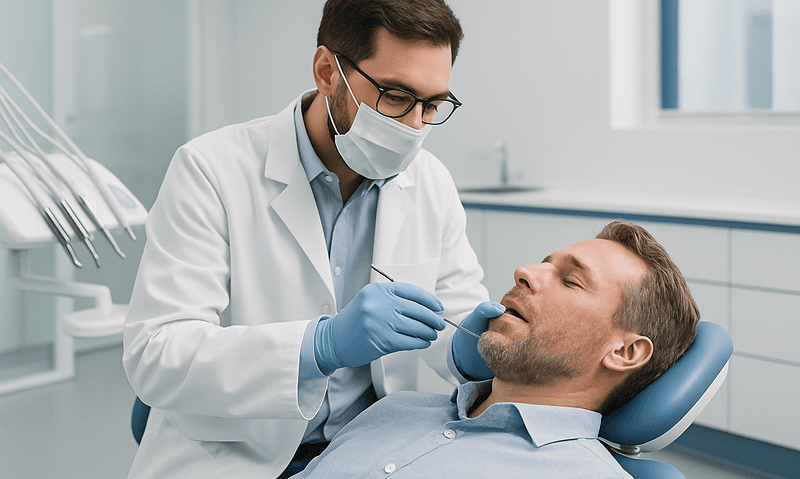
When Teledentistry Is Not Enough: The Concerns That Need an In-Person Dental Examination
Teledentistry is not enough when a concern needs touch, X-rays, or instruments: toothache that cannot be localized, facial or gum swelling, fever with dental…