

How Esophageal Cancer Treatment Is Planned: From Endoscopic Removal to Combined Care
Key Takeaways
- Stage in esophageal cancer combines tumor depth (T), lymph node involvement (N) and distant spread (M), and endoscopic ultrasound is the test that best measures depth and nearby nodes.
- Cancers confined to the inner lining can sometimes be removed entirely through an endoscope because that layer has almost no lymphatic channels for cancer cells to escape through.
- For cancers that have reached the muscle wall or nearby nodes, chemotherapy and radiation before surgery is a guideline-standard sequence, with a planned recovery gap of several weeks before the operation.
- Definitive chemoradiation without surgery is a complete treatment strategy in guidelines, commonly chosen for tumors high in the esophagus, squamous cell type, or when surgery is too risky.
- Stage 4 treatment centers on chemotherapy, often combined with checkpoint-inhibitor immunotherapy, with targeted drugs added when the biopsy shows markers such as HER2.
- Hospital stays after esophagectomy are commonly one to two weeks, and eating patterns take months to settle into a routine of smaller, more frequent meals.
Esophageal cancer treatment is planned by stage after tests map how deep the tumor has grown and whether it has reached lymph nodes or other organs. Very early cancers confined to the inner lining may be removed through an endoscope. Cancers that have grown deeper are often treated with chemotherapy and radiation followed by surgery, or with chemoradiation alone. Cancer that has spread is managed with drug therapy and supportive care aimed at control and comfort.
The scan report is three pages long, and one line is doing all the work: the size of a tumor, in millimeters, sitting in a tube most of us never think about until swallowing a piece of chicken starts to feel like an event. Then comes the sentence people remember for years: your treatment will depend on the stage.
That sentence is accurate, and it is also maddeningly vague if nobody explains what happens next. Esophageal cancer treatment by stage is not a single decision made by a single doctor. It is a sequence of measurements, a meeting of specialists, and a plan that can range from a 40-minute procedure through an endoscope to months of chemotherapy, radiation and a major operation.
This explainer walks through that sequence in the order your care team actually follows it. The goal is not to replace the conversation in the clinic but to make it a conversation you can take part in, with the right questions ready.
Why esophageal cancer treatment by stage begins with a map, not a scalpel
The esophagus is a muscular tube roughly 10 inches long that carries food from the throat to the stomach, and its wall is built in layers: a thin inner lining, a layer of connective tissue, a thick muscle layer, and an outer coat. According to MedlinePlus, esophageal cancer nearly always starts in that inner lining and works outward. Stage is, at heart, a description of how far outward it has gone and whether it has traveled elsewhere.
Doctors express this with three letters. T describes how deeply the tumor has invaded the wall. N describes whether nearby lymph nodes, the small bean-shaped filters of the immune system, contain cancer cells. M describes metastasis, meaning spread to distant organs such as the liver or lungs. Those three answers combine into a stage from 0 to 4, as Mayo Clinic outlines, with stage 0 meaning abnormal cells only in the surface layer and stage 4 meaning distant spread.
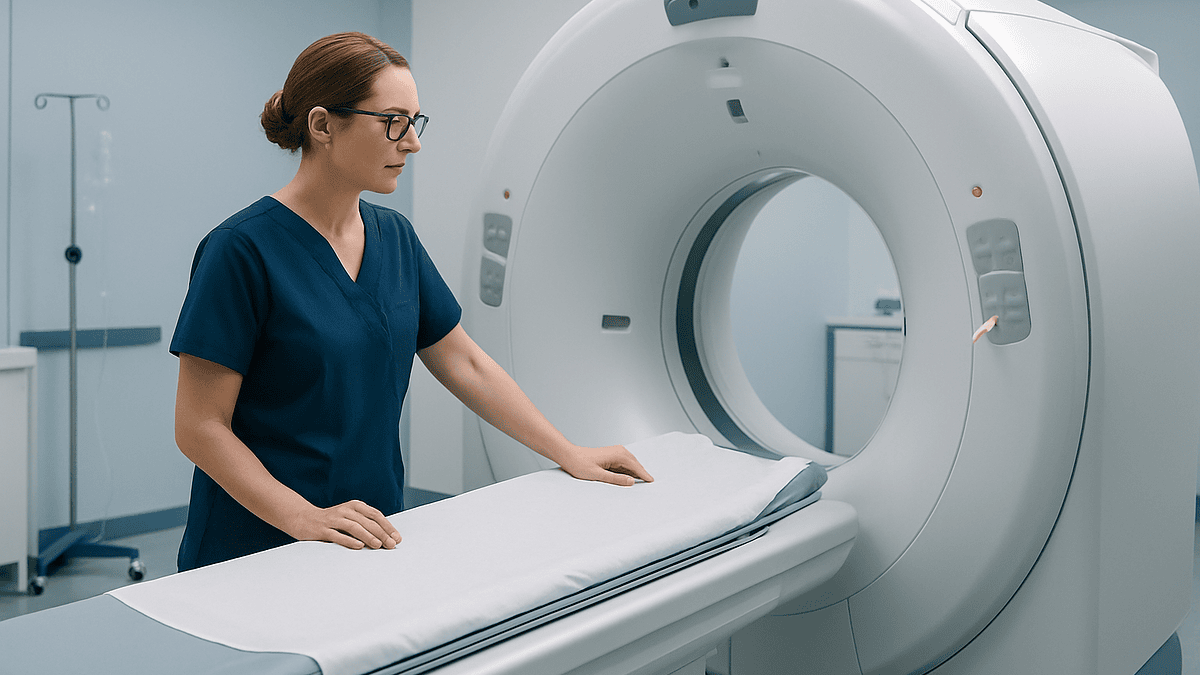
Getting those answers takes more than one test. An endoscopic ultrasound, in which a tiny ultrasound probe on the tip of a flexible scope is passed down the throat, gives the clearest picture of depth and of the nodes hugging the esophagus. A CT scan looks for spread to the chest and abdomen. A PET scan, which highlights areas of high sugar use typical of cancer cells, can catch deposits a CT misses. Occasionally a surgeon looks inside the abdomen with a camera through small incisions before committing to a bigger operation.
None of this feels like treatment, and patients often say the waiting for results is the hardest stretch. Yet every later decision, from whether an endoscopic removal is enough to whether surgery would even help, rests on the accuracy of this map. A rushed stage is the fastest route to the wrong plan.
What actually happens when a tumor board plans your treatment
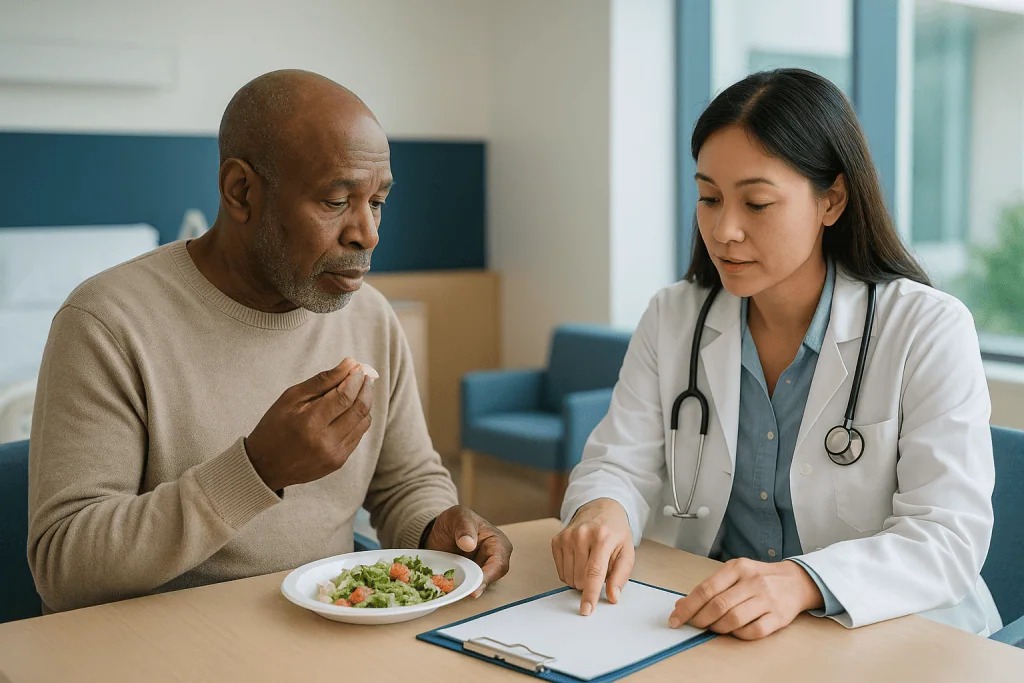
Most people picture one oncologist deciding their fate at a desk. In practice, esophageal cancer plans are made in a multidisciplinary meeting, often called a tumor board, where a gastroenterologist, a thoracic or upper gastrointestinal surgeon, a medical oncologist, a radiation oncologist, a radiologist, a pathologist and usually a dietitian and specialist nurse review the same images and biopsy slides together. The NHS describes this team approach as standard for esophageal cancer.
Three questions dominate the discussion. First, what is the cell type? Mayo Clinic notes two main kinds: adenocarcinoma, which usually arises in the lower esophagus near the stomach and is often linked to long-standing acid reflux, and squamous cell carcinoma, which more often sits higher up and is associated with tobacco and alcohol. The two behave differently and respond differently to radiation and drugs.
Second, how deep and how far has it gone? This is the staging map from the previous section, now debated line by line. A pathologist may point out that the biopsy shows only surface involvement; a radiologist may flag a node that looks suspicious but not certain.
Third, and this is the part patients rarely hear about, how fit is this person for each option? An esophagectomy is among the larger operations in cancer surgery. Heart and lung function, nutritional state, other illnesses and the patient’s own priorities all shape what the board recommends. Someone with significant lung disease may be steered toward chemoradiation alone, not because their cancer is worse, but because the risks of surgery outweigh its expected benefit for them.
The board produces a recommendation, not a verdict. Your treating clinicians then bring it to you, explain the alternatives, and the final choice remains yours, made with them.
Early stage esophageal cancer treatment: how endoscopic removal works
For a small number of people, the whole treatment happens without a single external incision. When cancer, or the precancerous change called high-grade dysplasia, is confined to the innermost lining, Mayo Clinic lists endoscopic resection as a treatment option. Understanding why depth matters so much explains who qualifies.
The inner lining of the esophagus has almost no lymphatic drainage, the network of channels that carries cancer cells to lymph nodes. Once a tumor pushes into the deeper submucosal layer, that network becomes available and the chance of node involvement rises. So a lesion that has not crossed that boundary can, in principle, be removed completely from the inside.
Two techniques do this. Endoscopic mucosal resection, or EMR, lifts the abnormal patch by injecting fluid beneath it and then snares it off with a wire loop. Endoscopic submucosal dissection, or ESD, uses a fine electrosurgical knife to carve out a larger area in one piece, which lets the pathologist judge the edges and depth more reliably. Both are done under sedation through a scope passed down the throat, and most people go home the same day or the next.
What happens to the removed tissue matters as much as the removal itself. The pathologist measures exactly how deep the cancer reached and whether any cells sit at the cut edge. If the specimen shows deeper invasion than the endoscopic ultrasound suggested, the plan often changes to surgery. This is why endoscopic removal is sometimes described as both a treatment and the final staging test.
Afterward, the remaining abnormal lining, especially the reflux-related change known as Barrett’s esophagus, is frequently treated with radiofrequency ablation, which burns away the surface cells so healthy lining can regrow. Surveillance endoscopies follow on a schedule set by the treating gastroenterologist.
Who is usually offered surgery, and who is usually asked to wait
Surgery is offered when three things line up: the cancer has grown beyond what an endoscope can safely remove, it has not spread to distant organs, and the person is fit enough to recover from a major operation. Mayo Clinic frames esophagectomy, removal of part of the esophagus and nearby lymph nodes, as an option for cancers that have not spread beyond the esophagus and regional nodes.
Being asked to wait is not the same as being turned down, and the distinction causes real confusion in clinic. Several groups are routinely asked to wait.
- People whose cancer has reached the muscle layer or nearby nodes are often asked to complete chemotherapy and radiation first, because shrinking the tumor before the operation is a standard approach in the NHS and Mayo Clinic pathways for these stages. Surgery follows weeks later, once the body has recovered from the pre-treatment.
- People whose very early lesion is still being evaluated may wait for a repeat endoscopy or for the pathology from an endoscopic resection, since that result decides whether surgery is needed at all.
- People with heart or lung conditions may be sent for cardiology or pulmonary optimization first. A few weeks of stopping smoking, breathing exercises and nutritional support can meaningfully change surgical risk.
Some people are advised against surgery altogether. That group includes anyone whose staging shows distant spread, where an operation would add recovery time without addressing cancer elsewhere, and people whose frailty makes the risks unacceptable. For them, chemoradiation, drug therapy or supportive procedures become the main plan. The treating team weighs these factors openly, and a second opinion within the same guideline framework is a reasonable request.
What esophagectomy involves, in plain language
An esophagectomy removes the section of esophagus containing the tumor, a margin of healthy tissue on either side, and the surrounding lymph nodes. The surgeon then rebuilds the swallowing pathway, most often by pulling the stomach up into the chest and joining it to the remaining esophagus, a connection called an anastomosis. Johns Hopkins describes the operation as one that may use incisions in the abdomen, the chest, the neck, or a combination, depending on where the tumor sits.
Approaches vary. Some surgeons work through larger open incisions; others use minimally invasive techniques with several small cuts and a camera, sometimes robot-assisted. The internal reconstruction is essentially the same. Which approach is chosen depends on tumor location, prior surgery, body shape and the experience of the team, and no approach is universally superior for every patient.
Patients ask what life is like without most of an esophagus. The honest answer is that eating changes. The stomach, now a narrower tube in the chest, holds less, so meals become smaller and more frequent. Reflux at night is common because the valve between esophagus and stomach has been removed, and many people learn to sleep with the head of the bed raised. A dietitian is part of the team for months, not days.
Risks are real and the team will describe them before consent. Cleveland Clinic and Johns Hopkins list leaks at the new connection, pneumonia, irregular heart rhythm, hoarseness from nerve irritation, and narrowing of the join that may need stretching. Serious complications are less common in centers that perform the operation regularly, which is why guideline bodies encourage treatment in experienced units. Anesthesia teams, physiotherapists and pain specialists are all part of the operating-day picture.
Why combined care before surgery is standard for many stage 2 and 3 cancers
Once a tumor has pushed into the muscle wall or reached nearby nodes, surgery alone tends to leave microscopic disease behind, either at the edges or in lymph channels the scalpel cannot see. That observation, repeated across trials, is why both the NHS and Mayo Clinic describe chemotherapy with or without radiation given before surgery as a standard approach for these stages. The technical term is neoadjuvant therapy, meaning treatment given before the main operation.
The logic works in several directions at once. Chemotherapy circulates through the bloodstream and can reach cells that have escaped the esophagus. Radiation, aimed precisely at the tumor and its surrounding nodes, damages cancer cells locally and can shrink a bulky tumor enough to make a cleaner operation possible. Giving both before surgery also acts as a test: how the tumor responds on the follow-up scan tells the team something about its biology.
The pattern differs by cell type. Squamous cell carcinomas are generally more sensitive to radiation, so chemoradiation features heavily in their plans. Adenocarcinomas near the stomach junction are sometimes treated with chemotherapy before and after surgery without radiation, a sequence called perioperative chemotherapy. Which sequence a board recommends depends on location, cell type, and the patient’s ability to tolerate each element.
Timelines are measured in months. The NHS notes that radiotherapy is typically delivered as short daily sessions on weekdays over several weeks, with chemotherapy running alongside in cycles. After the combined course finishes, there is a recovery gap of several weeks before surgery so that inflamed tissue can settle and blood counts can recover. Patients often describe this gap as unnerving, a feeling of doing nothing; in reality the treatment is still working during that window.
Esophageal cancer treatment without surgery: when chemoradiation is the whole plan
Yes, esophageal cancer can be treated without surgery, and for some people that is the recommended path rather than a fallback. Mayo Clinic lists combined chemotherapy and radiation as a treatment that may be used on its own for people who cannot have or choose not to have an operation. The medical term is definitive chemoradiation, meaning the combination is intended to be the complete treatment rather than a prelude.
Who typically receives it? Several groups appear repeatedly in guidelines. Tumors high in the esophagus, near the voice box, are difficult to remove without affecting speech and swallowing, so radiation-based plans are often preferred. Squamous cell cancers, given their radiation sensitivity, are frequent candidates. People with heart or lung disease that makes an esophagectomy too risky, and people who, after a frank discussion, decline surgery, are also offered it.
The course looks much like the pre-surgical version but often runs slightly longer and to a higher total radiation dose, delivered as daily weekday sessions over several weeks, as the NHS describes. Side effects concentrate on the treated area: a sore throat and painful swallowing that peaks toward the end of the course, fatigue, and skin changes on the chest. Nutrition support is planned in advance because eating becomes difficult right when calories matter most.
Follow-up after definitive chemoradiation is active rather than passive. Endoscopies and scans check the response, and if cancer persists or returns in the esophagus and the person is fit, surgery can sometimes be offered later; this is called salvage surgery. The evidence on whether adding surgery routinely after a good response improves outcomes is mixed, and it is one of the questions still being studied. Your team should be able to explain where they stand and why.
Esophageal cancer treatment by stage: a summary table
The table below condenses the general pattern described by MedlinePlus, Mayo Clinic and the NHS. It is a starting point for conversation, not a prescription; a tumor board may reasonably recommend something different based on cell type, location, fitness and personal priorities.
| Stage (simplified) | What it usually means | Approaches commonly discussed | Typical goal |
|---|---|---|---|
| Stage 0 / high-grade dysplasia | Abnormal cells only in the surface lining | Endoscopic resection, ablation of remaining Barrett’s lining, surveillance | Remove abnormal tissue, prevent progression |
| Stage 1 | Cancer in the inner layers, no node spread | Endoscopic resection if very superficial; esophagectomy if deeper | Remove all cancer |
| Stage 2 to 3 | Into the muscle wall and/or nearby lymph nodes | Chemoradiation or chemotherapy, then surgery; or definitive chemoradiation | Remove or eliminate all detectable cancer |
| Stage 4 | Spread to distant organs or distant nodes | Chemotherapy, immunotherapy, targeted therapy where markers allow; stents, radiation for symptoms | Control the cancer, protect swallowing, maintain quality of life |
A few things the table cannot show deserve a sentence each. Stage numbers are assigned twice: a clinical stage from scans before treatment and a pathological stage from the removed specimen after surgery, and the two do not always match. The row divisions are soft; a stage 3 tumor in a person unfit for surgery is planned like a nonsurgical case, and a stage 4 cancer with a single small deposit may occasionally be discussed more aggressively. Finally, supportive care threads through every row, not just the last one.
Stage 4 esophageal cancer treatment: what control looks like
Stage 4 means the cancer has reached distant sites, and the aim of treatment shifts from removing every cell to controlling the disease for as long as possible while protecting how a person feels and functions. That shift is not surrender. Mayo Clinic describes chemotherapy, immunotherapy and targeted therapy as treatments used for advanced esophageal cancer, and the range of options has widened in recent years.
Chemotherapy remains the backbone. It works by damaging rapidly dividing cells throughout the body, given in cycles with rest periods so healthy tissues recover. Immunotherapy, specifically drugs called checkpoint inhibitors, works differently: it blocks a signal that cancer cells use to switch off attacking immune cells, effectively releasing a brake. These are often combined with chemotherapy in first-line treatment, and whether they are offered depends partly on laboratory markers measured on the tumor tissue.
Targeted therapy is a third category. Some adenocarcinomas of the esophagus and stomach junction carry excess amounts of a protein called HER2, and a drug directed at that protein may be added when the biopsy shows it. The pathologist’s report, not the stage alone, decides eligibility here, which is why oncologists request extra tests on the biopsy before starting.
Alongside anticancer drugs sits treatment for the tumor itself as a physical obstacle. A short course of radiation to the esophagus can shrink a blockage; a stent can hold it open. Palliative care specialists, whose expertise is symptom control at any stage of illness, are increasingly involved early, and their input is associated with better symptom management rather than with giving up on treatment.
How long drug therapy continues is individual. Teams reassess with scans every few months and change course if the cancer grows or side effects outweigh benefit. Clinical trials are a legitimate option to ask about at every decision point.
How swallowing and nutrition are protected during treatment
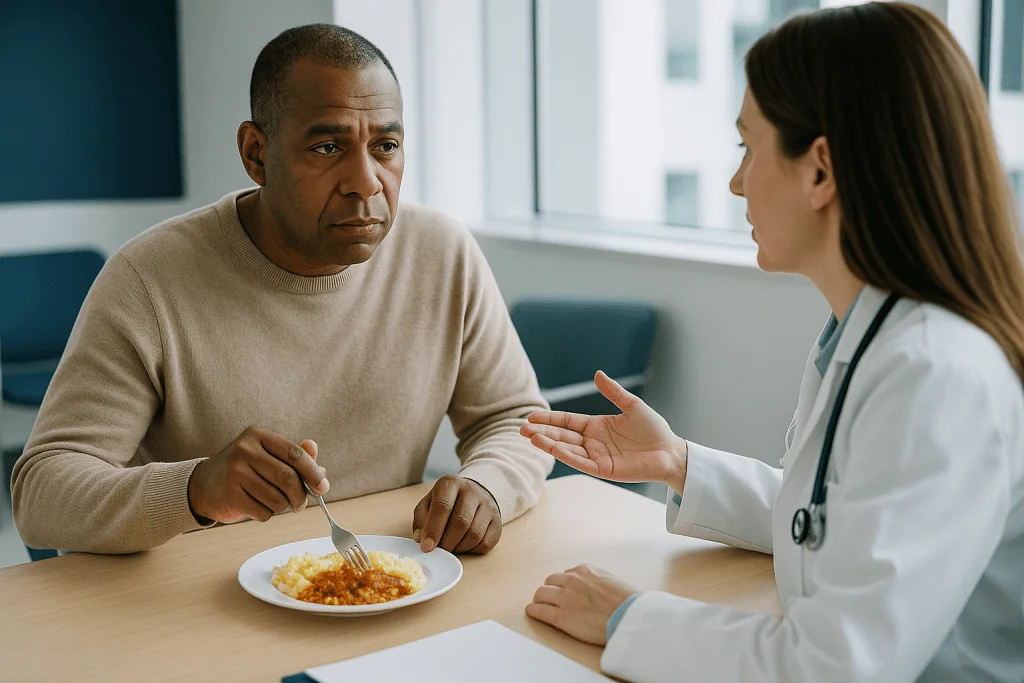
A tumor in the esophagus attacks the one thing every other treatment depends on: the ability to take in enough food to heal. Weight loss before diagnosis is common, and both radiation and surgery make eating harder for a period. For that reason, guideline pathways including the NHS treat nutrition as a treatment in its own right, with a dietitian assigned from the first appointment.
Several tools keep calories flowing. When a tumor narrows the esophagus, an expandable metal stent, a mesh tube placed through an endoscope that springs open against the wall, can restore the passage for soft foods within a day, an option Mayo Clinic lists for relieving obstruction. Stents suit people whose main problem is blockage; they are less often used before planned surgery because they can complicate the operation.
Feeding tubes are the other mainstay. A thin tube passed through the nose into the stomach can be used short term. For longer courses of chemoradiation or after esophagectomy, a tube placed directly into the small intestine through the abdominal wall lets nutrition bypass the sore or healing esophagus entirely. Patients frequently resist the idea, associating tubes with the end of life; in this setting the tube is usually temporary and is removed once eating recovers.
Everyday adjustments matter too. Soft, moist foods, smaller portions eaten more often, and sitting upright for a while after meals reduce discomfort. Dilation, gentle stretching of a narrowed segment with a balloon or tapered dilator during endoscopy, addresses scarring that can develop after radiation or at a surgical join. Speech and language therapists assess swallowing safety when there is concern about food entering the airway. Ask early who on your team owns the nutrition plan; it should never be an afterthought.
Esophageal cancer surgery recovery time and the weeks after treatment
Recovery has a rhythm, and knowing it in advance removes some of the fear. After endoscopic resection, most people go home within a day, eat soft foods for a short period as advised, and return for a follow-up endoscopy to check healing and review the pathology. Chest discomfort and a scratchy throat are common for a few days.
After esophagectomy, the timeline is longer. Johns Hopkins describes a hospital stay of roughly one to two weeks, with the first days often spent in an intensive care or high-dependency unit. Early on, patients are asked to sit up, walk with support and breathe deeply into a small device to keep the lungs clear, because pneumonia is one of the main complications. Nutrition initially comes through a feeding tube; sips of liquid and then soft food are introduced once the surgeon is confident the new connection has sealed, sometimes confirmed with a swallow X-ray.
Home is where the real adjustment happens. Fatigue that lasts weeks is normal. Eating becomes an exercise in small, frequent meals, and many people describe a period of trial and error before they learn what their reshaped digestive system tolerates. Some experience dumping syndrome, in which food moves too quickly into the intestine and causes sweating, cramping or lightheadedness after meals; a dietitian can help adjust timing and composition. Full recovery of energy and eating patterns is commonly measured in months rather than weeks.
After chemoradiation, the pattern differs: side effects often peak a week or two after the final session, then ease over the following month. Fatigue and taste changes can persist longer. Follow-up scans and endoscopies are scheduled by the treating team, and the interval typically lengthens as time passes without recurrence.
What people often get wrong about esophageal cancer treatment
Some beliefs surface in nearly every first consultation, and correcting them early saves distress.
Cancer marches through the stages on a clock. People ask how long it takes to go from stage 1 to stage 4, as if the number were a countdown. Stage is a description of extent at the moment of measurement, not a phase in a fixed sequence. Some cancers spread early while still small; others grow locally for a long time. No credible source gives a timetable, and any that claims to should be treated with suspicion.
No surgery means the doctors have given up. Definitive chemoradiation is a complete treatment strategy in guidelines, chosen for tumor location, cell type or patient fitness. It is not a consolation prize.
Palliative care means hospice. Palliative care is symptom-focused medicine offered alongside anticancer treatment at any stage. Hospice is a specific service for the final months. Conflating the two leads people to refuse help they would benefit from.
A feeding tube is permanent. In esophageal cancer treatment, tubes are usually temporary bridges through chemoradiation or the weeks after surgery.
Supplements or special diets can shrink the tumor. There is no reliable evidence that any dietary supplement, juice regimen or alternative therapy treats esophageal cancer, and some products interfere with chemotherapy or increase bleeding risk during procedures. The NIH Office of Dietary Supplements advises telling your team about everything you take. Good nutrition supports treatment; it does not replace it.
Waiting for chemoradiation to finish before surgery means the cancer is spreading unchecked. The gap is deliberate, planned into the protocol so tissue can recover, and the treatment already delivered continues to act.
Questions to ask your care team before agreeing to a plan
Bringing written questions to the consultation changes the tone of the meeting. It signals that you intend to be a partner, and it protects you from the blankness that descends when big news is delivered. The following are worth asking regardless of stage.
- What is my exact stage, and how confident are you in it? Which tests gave you that answer, and is anything still uncertain?
- What cell type is this, and were extra markers such as HER2 or immune-related tests requested on the biopsy?
- Why are you recommending this sequence rather than the alternatives? What would change your recommendation?
- If surgery is part of the plan, what approach will be used, roughly how many of these operations does your unit perform, and what complications do you watch for most closely?
- If surgery is not part of the plan, is that because of the cancer, because of my fitness, or because of location? Could that change later?
- What will treatment do to my eating, and who is managing my nutrition from today onward?
- What side effects should I expect at each phase, and which ones should prompt a same-day call?
- How will you know the treatment is working, and when is the first checkpoint?
- Are there clinical trials I am eligible for, now or later?
- Who is my single point of contact, and how do I reach them outside office hours?
Two further questions are harder to say aloud but matter: what is the realistic goal of this plan, and what would you advise if it does not work as hoped? Teams appreciate being asked directly. The answers give you the frame within which every later decision sits, and the decisions themselves stay with you and the clinicians treating you.
When to call your doctor: red-flag signs during and after esophageal cancer treatment
Every treatment described here comes with a contact number for urgent concerns, and using it is not an overreaction. Some symptoms need a same-day call or emergency care.
Fever during or after chemotherapy is the single most time-critical sign, because chemotherapy can lower the white blood cells that fight infection. The NHS advises contacting the treatment team immediately for a high temperature, shivering or feeling suddenly unwell, since infection in that state can escalate within hours.
After esophagectomy, seek urgent help for new or worsening shortness of breath, chest pain, a racing or irregular heartbeat, a fever, redness or discharge at an incision, or sudden difficulty swallowing that was not present when you left the hospital. Johns Hopkins and Cleveland Clinic highlight leaks at the surgical join and pneumonia as complications that declare themselves this way, and both are treated far more effectively when caught early.
During or after radiation, call if you cannot swallow liquids, are losing weight quickly, have signs of dehydration such as dizziness or very dark urine, or develop chest pain that is different from the expected sore throat.
At any stage, black or bloody stools, vomiting blood, coughing up blood, or sudden severe pain need emergency assessment. Food that repeatedly sticks or comes back up, especially with coughing or choking, may signal a blockage or a narrowed join and should be reported promptly rather than endured.
Mood matters too. Persistent low mood, hopelessness or thoughts of self-harm are medical concerns your team wants to hear about, and support is part of cancer care. When in doubt, call; the people who staff those lines would rather hear from you ten times unnecessarily than miss the one call that mattered.
Frequently asked questions
What is the life expectancy for someone with stage 1 esophageal cancer with treatment?
There is no single number that applies to an individual, and reliable sources deliberately avoid giving one. Mayo Clinic notes that outlook is generally more favorable when esophageal cancer is found early and confined to the inner layers, and that treatment aims to remove all of it. Your own outlook depends on exact depth, cell type, whether the removed tissue shows clear edges, and your general health. Ask your treating team to explain what your pathology report means for you specifically.
Can stage 4 esophageal cancer be treated with the aim of long-term control?
Yes, stage 4 esophageal cancer is actively treated, with the aim of controlling the disease and protecting quality of life rather than eliminating every cell. Mayo Clinic lists chemotherapy, immunotherapy and targeted therapy as options for advanced disease, and stents or radiation can relieve swallowing problems. How long control lasts varies widely between people, and teams reassess with scans every few months, adjusting the plan as needed.
How long does it take to go from stage 1 to stage 4 esophageal cancer?
There is no reliable timetable, and stages are not phases that every cancer passes through on a schedule. Stage describes how far the cancer has reached at the time of measurement. Some tumors spread to distant sites while still small; others grow locally for long periods. This is why guidelines emphasize prompt evaluation of persistent swallowing difficulty rather than watching and waiting, and why staging tests are repeated if treatment is delayed.
Can esophageal cancer be treated without surgery?
Yes. Combined chemotherapy and radiation, called definitive chemoradiation, is listed by Mayo Clinic as a treatment that can be used on its own for people who cannot have or choose not to have surgery. It is commonly chosen for tumors high in the esophagus, for squamous cell cancers, and when heart or lung disease makes an operation too risky. Follow-up endoscopies and scans check the response, and surgery can sometimes be offered later if needed.
What is early stage esophageal cancer treatment through an endoscope?
Endoscopic mucosal resection and endoscopic submucosal dissection remove very early cancers or precancerous changes confined to the inner lining, using instruments passed down the throat under sedation. Mayo Clinic lists endoscopic resection as an option for these superficial lesions. The removed tissue is examined to confirm depth and clear edges; if it shows deeper invasion, surgery may be recommended. Remaining Barrett’s lining is often treated with ablation, followed by surveillance endoscopies.
What is the typical esophageal cancer surgery recovery time?
Johns Hopkins describes a hospital stay of roughly one to two weeks after esophagectomy, with early days often in intensive care. Nutrition starts through a feeding tube and progresses to soft food once the surgical join is confirmed to be healing. At home, fatigue commonly lasts weeks, and eating patterns take months to settle into smaller, more frequent meals. Individual recovery depends on age, fitness, surgical approach and whether complications occur.
Does everyone with esophageal cancer need chemotherapy?
No. Very early cancers removed endoscopically or by surgery alone may not need chemotherapy. It becomes standard once the cancer has reached the muscle wall or nearby lymph nodes, usually combined with radiation before surgery, and it is the backbone of treatment for cancer that has spread. Whether chemotherapy is recommended, and in what sequence, depends on stage, cell type and fitness, and the decision is made with the treating team.
What does a tumor board do in esophageal cancer treatment?
A tumor board, or multidisciplinary team meeting, brings together surgeons, medical and radiation oncologists, gastroenterologists, radiologists, pathologists, dietitians and specialist nurses to review the scans and biopsy together and agree on a recommended plan. The NHS describes this team approach as standard for esophageal cancer. The board’s output is a recommendation that your treating clinicians then discuss with you, along with alternatives, before any decision is made.
Will I be able to eat normally after esophageal cancer treatment?
Most people eat again, but often differently. After esophagectomy, the stomach becomes a narrower tube in the chest, so meals are smaller and more frequent, and nighttime reflux is common. After chemoradiation, soreness peaks near the end of the course and then eases over weeks. Scarring can narrow the esophagus and may need stretching during endoscopy. A dietitian remains involved for months, and feeding tubes used during treatment are usually temporary.
How does immunotherapy work in stage 4 esophageal cancer treatment?
Immunotherapy drugs called checkpoint inhibitors block a signal that cancer cells use to switch off attacking immune cells, effectively releasing a brake on the immune system. Mayo Clinic lists immunotherapy among treatments for advanced esophageal cancer, often given alongside chemotherapy. Whether it is offered depends partly on laboratory markers measured on the tumor tissue. Side effects differ from chemotherapy and can involve inflammation in organs such as the bowel, lungs or thyroid, so teams monitor closely.
References
- MedlinePlus – Esophageal Cancer
- NHS – Oesophageal cancer: Treatment
- Cleveland Clinic – Esophageal Cancer
This article is for general information only and is not a substitute for professional medical advice. Please consult a qualified doctor about your individual situation.

More from the Blog
Radiation for Cervical Cancer: Expected Side Effects and the Signs That Need a Call
Radiation for cervical cancer commonly causes tiredness, loose stools or diarrhea, bladder irritation, skin soreness in the groin and buttocks, and vaginal discharge or…

Does Radiation Therapy Hurt? What the Beam Feels Like and Where Discomfort Comes From
External beam radiation therapy is not felt while it is being delivered; the beam itself causes no pain, heat or pressure. Discomfort, when it…
Life After Skin Cancer Treatment: Sun Habits, Skin Self-Checks and Regular Reviews
Sun protection after skin cancer means daily habits rather than a single product: seeking shade when the UV index is 3 or higher, wearing…
What Is Normal After Testicular Cancer Surgery and When to Call Your Care Team
After orchiectomy, mild groin soreness, bruising, a little swelling and tiredness for a few weeks are common. Call your care team the same day…

Is a Second Opinion Useful for a Leukemia Treatment Plan? What Hematologists Say
A leukemia second opinion is generally considered useful, and many hematologists treat it as routine rather than a sign of distrust. Because leukemia is…

Living With Permanent Brachytherapy Seeds: Contact With Children, Pets and Partners
Permanent brachytherapy seeds give off low-energy radiation that is mostly absorbed within a few millimeters of surrounding tissue, so everyday contact such as sharing…