

Induction Chemotherapy for Acute Myeloid Leukemia: What the First Hospital Weeks Involve

Key Takeaways
- The chemotherapy in standard intensive AML induction runs for about a week, but the hospital stay lasts several weeks because the dangerous period of low blood counts comes after the drugs finish.
- Neutrophils live only a day or two in the blood, which is why the count drops to near zero within days of chemotherapy and why fever during this period is treated as an emergency.
- Complete remission is conventionally defined as fewer than 5 percent blasts in the bone marrow with recovering blood counts, a threshold that means leukemia is no longer visible, not that it is gone.
- Treatment intensity is chosen on fitness, organ function and leukemia genetics rather than age alone, with lower-intensity combinations available for people who cannot safely undergo the intensive regimen.
- Induction is always followed by further treatment, typically several consolidation cycles over months, and for some people a stem cell transplant, depending on genetic risk and residual disease testing.
- Acute promyelocytic leukemia, a rare AML subtype, is treated with a different drug backbone built around a vitamin-A derivative and arsenic trioxide, so the general regimen described here does not apply to it.
AML induction chemotherapy is an intensive first treatment given in hospital, usually as a continuous course lasting about a week, followed by several weeks on the ward while blood counts fall and then recover. Expect a central line, daily blood tests, transfusions, infection precautions, and a bone marrow check to see whether the leukemia has gone into remission. The treating team tailors every step to the individual.
The phone call usually comes fast. A tired week, a blood test ordered almost as an afterthought, and then a voice asking you to come to the emergency department tonight, not tomorrow. By the next morning there is a hematologist at the bedside, a word you have never heard applied to yourself, and a plan that begins within days. Acute myeloid leukemia does not leave much room for a second opinion tour, and most people meet their treatment before they have finished absorbing their diagnosis.
That speed is why the question people type into their phones from the ward chair is so practical: AML induction chemotherapy, what to expect. Not the biology first, but the shape of the weeks ahead. Which line goes where. Why the nurses knock and gel their hands before every entry. How long the stay really lasts.
This explainer walks through those first hospital weeks in the order they tend to happen, grounded in what mainstream medical evidence actually shows, and honest about what no article can predict for one person.
What is induction chemotherapy for AML, in plain language?
Acute myeloid leukemia is a cancer of the bone marrow in which immature white cells, called blasts, multiply without ever growing up into working cells. Blasts crowd out the marrow’s normal production, so red cells, platelets and mature white cells all run short. That is why fatigue, bruising and infections often bring people to the doctor in the first place, according to MedlinePlus and the Mayo Clinic.
Induction is the opening phase of treatment. The word comes from “inducing remission,” and remission means the point at which blasts fall below a set threshold in the marrow, blood counts recover, and there are no other signs of leukemia. The National Cancer Institute’s patient guide describes this as the immediate goal: clear the visible disease so that later phases can work on what remains.
The strategy is deliberately blunt. Rather than a gentle drug taken at home, induction uses medicines strong enough to wipe out the leukemia cells and, unavoidably, the healthy marrow alongside them. The marrow is then expected to regrow from surviving normal stem cells over the following weeks. Everything that happens on the ward, from transfusions to visitor rules, exists to carry a person safely across that gap.
Two features distinguish AML induction from many other cancer treatments. It starts quickly, often within days of diagnosis, because untreated AML can progress over weeks rather than months. And it is delivered in hospital, because the period of very low blood counts that follows is when people are most vulnerable. The NHS treatment guide is explicit that this stage is carried out as an inpatient for exactly this reason.
AML induction chemotherapy: what to expect in the first 48 hours
The first two days are busy in a way that can feel disorienting. Blood is drawn repeatedly, sometimes several times a day, to check counts, kidney and liver function, and clotting. A bone marrow biopsy, if not already done, samples marrow from the back of the pelvis under local anesthetic so the leukemia can be classified precisely. The Mayo Clinic notes that genetic and molecular testing on these samples shapes the whole treatment plan, including whether a targeted medicine is added later.

A central venous line is usually placed before chemotherapy begins. This is a soft catheter threaded into a large vein near the heart, entering either through the upper arm (a PICC line) or the chest wall (a tunneled line). It allows drugs, fluids, blood products and antibiotics to run without repeated needle sticks, and it stays in for weeks. The NHS describes the line as standard for intensive AML treatment.
Fluids often start early. Rapid destruction of a large number of leukemia cells can release potassium, phosphate and uric acid into the blood faster than the kidneys clear them, a situation called tumor lysis syndrome. Teams pre-empt it with intravenous fluids, a medicine that lowers uric acid, and frequent blood checks in the opening days.
Expect a stream of introductions: the hematology consultant, fellows or residents, specialist nurses, a pharmacist, a dietitian, sometimes a social worker or psychologist. Ask who your point of contact is. Most people also meet an echocardiogram or ECG in this window, because one of the standard chemotherapy classes can affect the heart and the team wants a baseline before it is given.
Which medicines are used in AML induction, and why two at once?
The most widely used intensive regimen pairs two chemotherapy drugs from different families. One is cytarabine, an antimetabolite, which slips a faulty building block into DNA as cells copy themselves so the copy fails. The other is an anthracycline, such as daunorubicin or idarubicin, which tangles the DNA strand and blocks the enzyme cells use to unwind it. Because leukemia cells divide relentlessly, they are hit hardest, though normal marrow, gut lining and hair follicles divide quickly too, which explains the side-effect pattern.
The combination is often nicknamed “7+3” on the ward. The numbers refer to the days over which each drug is given, not to intensity, and the whole course runs continuously for about a week through the central line, as the Cleveland Clinic and NHS describe. Exact drugs, schedules and any additions are decisions for the prescribing team and vary by center and by the individual’s leukemia.
Why two drugs? Leukemia is not one cell type but a population, and a single mechanism leaves survivors. Attacking DNA replication from two directions at once lowers the chance that a resistant clone is left behind. The same logic underlies the later addition of targeted medicines for certain genetic subtypes, such as FLT3 inhibitors for leukemias carrying that mutation, or the use of a monoclonal antibody in selected cases. The National Cancer Institute’s guide outlines these options as evidence-based additions rather than replacements.
One subtype stands apart. Acute promyelocytic leukemia, a rare form of AML, is treated with a different backbone built around a vitamin-A derivative and arsenic trioxide, and its bleeding risk in the first days is managed with particular urgency. If your team says “APL,” much of the general AML timeline still applies, but the drugs will not.
Who is usually offered intensive induction, and who is asked to wait or take a different path?
Intensive induction demands a body that can tolerate several weeks with almost no working marrow. Age matters, but not as a cutoff. What the team assesses is fitness: how the heart, kidneys, liver and lungs are functioning, whether other illnesses are well controlled, and how independently a person manages day to day. The Mayo Clinic and NCI both describe treatment choice as a balance between the aggressiveness of the leukemia and what an individual can safely undergo.
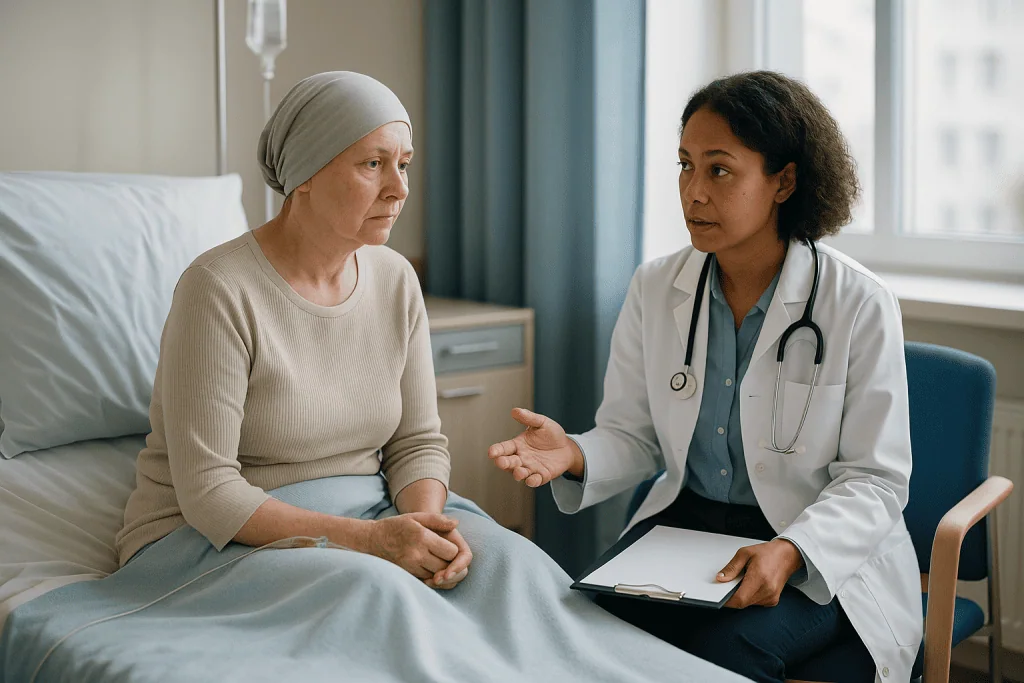
Younger and fitter adults are generally offered the intensive route because the potential to reach a deep remission justifies the toxicity. Older adults, or those with significant heart or kidney disease, are more often offered lower-intensity treatment. This commonly combines a hypomethylating agent, a drug that switches faulty silenced genes back on, with a BCL-2 inhibitor, which removes a survival signal that leukemia cells depend on. These regimens are usually given largely as an outpatient and carry a gentler blood-count dip, though they are not free of risk.
A short wait is sometimes deliberate rather than a delay. If a person arrives with an active infection, the team may treat it for a few days first. If molecular results are pending and could change the choice of regimen, a brief pause can be worthwhile, provided the leukemia is not behaving explosively. Very high white counts, by contrast, may prompt a holding treatment to bring numbers down before full induction starts.
What a person wants matters as much as what a scan shows. Some people, fully informed, choose the lower-intensity path for quality-of-life reasons; others want the most aggressive option available. Neither choice is wrong. The team’s job is to explain the trade-offs clearly; the decision belongs to the patient and the treating clinicians together.
How long is induction chemotherapy for AML, and how long is the hospital stay?
Two different clocks run at once, and mixing them up causes most of the confusion. The chemotherapy itself, for the standard intensive regimen, is given over roughly a week. The hospital stay is far longer, because the point of danger comes after the drugs have finished. Both the NHS and the Cleveland Clinic describe an inpatient period of several weeks, commonly around a month, while blood counts fall and then climb back.
The following table sketches a typical intensive induction course. It is a pattern, not a schedule, and the treating team will describe how an individual’s course may differ.
| Phase | Typical timing | What tends to happen |
|---|---|---|
| Work-up and line placement | First few days | Marrow biopsy, genetic tests, heart check, central line, fluids |
| Chemotherapy infusion | About one week | Continuous or daily doses via the line; nausea and fatigue begin |
| Counts falling (nadir) | Roughly weeks two to three | Neutrophils near zero; transfusions; highest infection risk |
| Recovery | Roughly weeks three to five | Counts climb; repeat marrow test; discharge planning |
The recovery clock is the least predictable. A younger person with otherwise healthy marrow may see neutrophils return in three weeks; someone whose marrow was already struggling, or who had a complication, may take longer. Some centers, once a person is stable and lives nearby, allow part of the low-count period to be spent at home with daily clinic visits, but this is a local decision based on individual circumstances and safety, not a norm.
What no clinician can promise is a discharge date on day one. Asking “what would need to be true for me to go home?” usually gets a more useful answer than “when can I leave?”
Why blood counts fall after AML induction, and what the nadir week feels like
The nadir is the low point of the blood counts, and for many people it is the hardest stretch of the whole course. Chemotherapy has stopped, so it can feel puzzling that this is when things get rougher. The explanation lies in cell lifespans. Neutrophils, the front-line white cells, live for only a day or two in the blood, so once the marrow stops making them the supply vanishes within days. Platelets last about a week. Red cells last months, which is why anemia builds more slowly and is often already present at diagnosis.
With neutrophils near zero, the body loses its ability to mount a normal response to bacteria, including the bacteria that live harmlessly in the gut and on the skin. The chemotherapy has also damaged the lining of the mouth and intestines, which normally keeps those bacteria in place. The result is a period when a fever is treated as a medical emergency rather than a symptom to watch, as MedlinePlus advises for anyone with a low neutrophil count.
Day to day, the nadir often brings deep fatigue, a sore mouth, altered taste, loose stools or constipation, and hair loss that begins within a few weeks of the first dose. Appetite tends to fall. Bruising appears from small knocks. None of this means the treatment is failing; it means it is doing what it does to fast-dividing cells throughout the body.
Emotionally, this is also the week when the adrenaline of diagnosis wears off and the length of the road becomes real. People often describe a flatness or irritability that surprises them. Naming it to the nurses matters. Psychological support is part of the hematology team’s remit, not an optional extra, and antidepressant or sleep support decisions can be discussed with the prescribing clinician like any other part of care.
Neutropenia after chemotherapy: what the isolation rules are really for
Visitors sometimes assume the single room, the hand gel and the ban on fresh flowers are about protecting other patients from the person with leukemia. It is the reverse. Neutropenia is a shortage of neutrophils, and during induction the neutrophil count can sit at zero for two weeks or more. Every precaution is aimed at reducing the number of microbes reaching a person who cannot fight them.
The rules vary between hospitals, and the evidence behind some of them is thinner than their strictness suggests. Hand hygiene has the strongest support by a wide margin. Excluding visitors who have colds, coughs, stomach upsets or recent chickenpox exposure is a close second. Food guidance, once a rigid list of forbidden items, has softened at many centers toward ordinary food safety: well-cooked meat and eggs, pasteurized dairy, washed fruit, nothing from a buffet that has sat out. Ask what your unit follows rather than assuming.
Antibiotic, antifungal and antiviral medicines are often given preventively during the low-count period, because infections in neutropenic patients can escalate within hours. If a fever does develop, the standard response is to draw blood cultures and start broad intravenous antibiotics immediately, without waiting to identify the organism. This can feel alarming the first time. It is the protocol working as designed.
Fungal infection is the quieter risk. Molds in building dust and soil are harmless to most people but can seed the lungs of someone with no neutrophils, which is why construction near hematology wards is managed carefully and why a new cough or chest pain during the nadir is investigated promptly. Growth factors, medicines that hurry neutrophil recovery, are used in some situations but not all, and the decision rests with the team.
Transfusions, mouth care and nausea: the daily rhythm on the ward
Most mornings begin the same way. Blood is drawn from the line before breakfast, the numbers come back within an hour or two, and the day’s plan follows from them. If hemoglobin has drifted below the unit’s threshold, a red cell transfusion is ordered, typically taking a couple of hours per unit. If platelets are low, a platelet transfusion, which is quicker, is given to reduce bleeding risk. The NHS lists both as routine supportive care during induction rather than signs that something has gone wrong.
Mouth care is unglamorous and matters enormously. The lining of the mouth is among the tissues that chemotherapy damages, and a raw mouth is both painful and a doorway for bacteria. Soft toothbrushes, prescribed rinses several times a day, avoiding alcohol-based mouthwash, and reporting ulcers early rather than enduring them all reduce the toll. Eating may shift toward soft, cool, bland foods for a while; dietitians expect this and can help maintain protein intake with supplements when appetite fails.
Nausea is more controllable than most people fear. Modern anti-sickness medicines from several classes are given before chemotherapy and continued through the course, and the pharmacist can adjust the combination if one approach is not working. Constant, unrelieved vomiting is not something to accept quietly.
Movement matters too. Weeks in a room shrink muscle quickly, and deconditioning slows recovery after discharge. Walking laps of the ward when counts allow, using a stationary pedal at the bedside, or following a physiotherapist’s simple program keeps legs working and reduces clot risk, which rises with immobility and a central line. Small, boring, daily. That is the rhythm of induction.
AML remission after induction: what the follow-up bone marrow test shows
The single most anticipated result of induction is the repeat bone marrow examination. Many teams take one sample partway through the low-count period to gauge whether the leukemia has been cleared from the marrow, and another once blood counts recover, to confirm the picture. The procedure is the same as at diagnosis: local anesthetic, a needle into the back of the pelvis, a few minutes of pressure and pulling, and a sore spot for a day or two.
What the pathologist looks for is defined by convention. The National Cancer Institute describes complete remission as a marrow in which blasts make up less than 5 percent of cells, with blood counts recovering and no leukemia detectable elsewhere. That 5 percent line is not magic; healthy marrow contains a small proportion of blasts normally, and the threshold marks the point at which leukemia can no longer be distinguished by looking.
Increasingly, laboratories look deeper. Flow cytometry and molecular tests can detect leukemia cells at levels far below what a microscope reveals, a concept called measurable residual disease. A person can be in complete remission by conventional criteria and still carry detectable residual disease, and this information helps guide what comes next, including whether a stem cell transplant is discussed.
Remission is not the same as the leukemia being gone for good, and it is worth hearing that clearly on the day the result arrives. It means the visible disease has been cleared and the marrow is recovering. It is the foundation for the next phase, not the finish line. Where the first course does not achieve remission, teams have a second induction or an alternative regimen ready; this is a recognized branch of the pathway, not an unexpected failure.
AML induction chemotherapy: what to expect when counts recover and you go home
Recovery announces itself in numbers before feelings. A neutrophil count that has read zero for weeks ticks up to a fraction, then doubles, then doubles again. Platelets follow, then the need for transfusions tapers off. Energy lags behind the blood counts by days or weeks, so people often feel no better on the morning the team starts talking about discharge, which can be disheartening if no one has warned them.
Discharge planning is a checklist rather than a moment. The central line may stay in for consolidation or be removed, depending on the plan. Medicines to prevent infection may continue for a period at home. A thermometer becomes a permanent companion, because the fever rule does not end at the hospital door; the NHS and MedlinePlus both stress that a temperature during any low-count period needs same-day medical contact. Clinic visits for blood tests usually run at least weekly at first.
Home life needs some adjustment while counts are still climbing. Ordinary food hygiene, avoiding crowded indoor spaces and unwell friends, gentle daily walks, and no gardening or handling of pet litter until the team says otherwise are common instructions. Sexual activity is generally fine with barrier protection once counts allow; ask directly rather than guessing. Driving is usually possible once fatigue and any sedating medicines permit.
Hair begins to return within weeks of the last chemotherapy, sometimes a different texture at first. Taste normalizes. Weight lost on the ward comes back with time. What tends to take longest is the mental reset from patient to person, and people commonly describe the gap between induction and consolidation as both a relief and an oddly anxious lull. Support groups and hematology nurse lines exist for exactly this stretch.
How many rounds of chemo is normal for AML? Consolidation and what follows
Induction is one round. Stopping there would leave leukemia cells that the microscope cannot see, and the disease would very likely return. The next phase, consolidation, exists to attack that hidden remainder. The NHS describes it as several further cycles of chemotherapy given over a period of months once remission has been reached, and the National Cancer Institute frames the overall course as induction followed by post-remission therapy in almost every case.
AML consolidation chemotherapy often uses higher intensity cytarabine on its own, given over a few days per cycle. Because the leukemia burden is now low and the marrow has recovered, these cycles are frequently delivered as short admissions or day-unit visits, with the low-count period spent at home under close monitoring. The number of cycles varies with the leukemia’s genetic risk group, the person’s tolerance of induction, and whether a transplant is planned, so “how many rounds” has no single honest answer beyond “more than one, decided as you go.”
Each cycle brings a smaller echo of induction: a dip in counts, a stretch of infection vigilance, fatigue, then recovery. Most people find the pattern more manageable once they know its shape, though cumulative tiredness is real and the gaps between cycles may be adjusted to allow recovery.
For some, the plan after consolidation includes a maintenance phase, using a lower-intensity oral medicine over a longer period; for others, it moves to a stem cell transplant. For still others, particularly with favorable-risk genetics, consolidation alone is the plan and follow-up shifts to monitoring. Which path applies is a conversation with the treating team, informed by the marrow results, the genetics and the person’s wishes.
Can AML be treated with chemotherapy alone, or is a transplant needed?
Chemotherapy on its own is a complete treatment plan for some people with AML and a bridge to something else for others. The deciding factor is mostly the leukemia’s genetic and molecular fingerprint, established from the marrow taken at diagnosis and refined by residual disease testing after induction. The Mayo Clinic and NCI both describe this risk stratification as the basis for choosing between continued chemotherapy and a stem cell transplant.
Favorable-risk subtypes, such as those with certain chromosome rearrangements or an isolated NPM1 mutation, are often treated with induction and consolidation chemotherapy alone, with transplant held in reserve should the disease return. Adverse-risk subtypes, including those with complex chromosome changes or a TP53 mutation, are more commonly steered toward an allogeneic transplant in first remission, because chemotherapy alone tends to leave a high chance of relapse. Intermediate-risk disease sits in between, and here residual disease testing and individual fitness carry extra weight.
An allogeneic stem cell transplant replaces a person’s marrow with a donor’s after intensive conditioning treatment. The donor immune system then acts against remaining leukemia cells, an effect chemotherapy cannot replicate. The trade-off is substantial: transplant carries its own serious risks, including graft-versus-host disease, and demands months of recovery. It is not a stronger version of chemotherapy but a different tool with different costs to the body.
Targeted medicines have widened the choices. Where a FLT3 mutation is present, an inhibitor of that pathway is often added to chemotherapy; where an IDH mutation exists, specific inhibitors are available in some settings. These do not replace the decision about transplant but can shift the balance. Any figures about long-term outcomes depend heavily on subtype and age and should come from the treating team, who can quote the evidence that applies to one person’s disease.
What people often get wrong about AML induction
“Feeling worse after chemo ends means it isn’t working.” The reverse is closer to the truth. The nadir arrives after the drugs have finished, because that is when the marrow’s output runs dry. Feeling roughest in weeks two and three is the expected pattern, not a warning sign.
“Remission means it’s gone.” Remission is a defined threshold on a marrow test, below which leukemia cannot be seen by conventional methods. Cells below that threshold are exactly what consolidation targets. Stopping after induction is not part of any standard pathway.
“Older people can’t be treated.” Fitness, not birth year, decides intensity. Lower-intensity combinations have changed what is possible for people who would not tolerate the intensive regimen, and many in their seventies and beyond receive meaningful treatment, as the NCI notes.
“Isolation means no visitors.” Most units welcome well visitors who follow hand hygiene. The people excluded are those with symptoms of infection. Loneliness has its own costs, and companionship is part of getting through the weeks.
“Supplements or special diets can boost the marrow.” No dietary supplement has been shown to speed marrow recovery after induction, and some, including high-dose antioxidants and certain herbal products, can interfere with chemotherapy or raise bleeding risk. The NIH Office of Dietary Supplements advises telling the team about every product taken; during induction, most teams ask people to stop non-prescribed supplements entirely.
“A second induction means the first failed.” A meaningful minority of people need a second course to reach remission, and this is built into treatment protocols as a planned branch. It changes the timeline, not the goal.
Questions to ask your care team before and during induction
The most useful questions are the ones that turn a general pathway into a personal map. A notebook by the bed, or a shared note on a phone that family can add to, makes the daily round far more productive.
Before chemotherapy starts, it helps to ask: What subtype of AML do I have, and which genetic or molecular results are still pending? Which regimen are you recommending for me, and what were the alternatives you considered? Is there a clinical trial that fits my situation, and what would joining involve? What is my heart and kidney function like going in, and are you monitoring anything specific?
During the low-count period, practical questions carry weight: What thresholds do you use for transfusions, and how often will you check? Which preventive medicines am I on and why? What do you want me to report immediately versus mention at the next round? Can I walk the corridor, and are there exercises I should be doing? Who do I speak to about mood, sleep or worry?
Around the follow-up marrow test: When will you take it, and when will results be back? What does remission mean for my subtype, and will you be testing for measurable residual disease? If the first course doesn’t get there, what is the plan?
Looking ahead: How many consolidation cycles are you planning, and where will they be given? Is a stem cell transplant being considered, and if so, has a donor search begun? Who coordinates my care once I leave, and what number do I call at three in the morning?
No question on this list is too basic. Teams answer them daily, and the ones people regret are the ones they did not ask.
When to call your doctor: red-flag signs during and after AML induction
During induction and any later low-count period, the threshold for calling is lower than at any other time in most people’s lives. A fever of 100.4°F (38°C) or higher, taken by mouth, is the signal that both MedlinePlus and the NHS single out: it requires immediate contact with the hematology team or emergency department, not a wait to see if it settles. Neutropenic fever can progress to sepsis within hours, and antibiotics started early change the course.
Other signs need the same urgency even without a fever. Shaking chills or drenching sweats. Feeling suddenly unwell, faint, or confused. Fast breathing, chest pain, or a new cough. Redness, swelling, pain or discharge around the central line, or a line that will not flush. Bleeding that does not stop after ten minutes of pressure, blood in urine or stool, black stools, or a headache that is severe or unlike any before, which can signal bleeding with low platelets. Pain, swelling or warmth in one arm or leg, which may indicate a clot around the line or in a deep vein.
Watch also for signs that fluid or nutrition is failing: inability to keep fluids down for more than a day, severe diarrhea, passing very little urine, or a mouth so sore that swallowing has become impossible. These are not emergencies in the same way as fever, but they warrant a same-day call.
After discharge, the rules do not relax while counts are recovering or between consolidation cycles. Keep the emergency number where family can find it, take a temperature whenever you feel off, and err toward calling. Hematology teams would rather hear from someone ten times unnecessarily than miss the one call that mattered. Every decision about what to do next belongs with them.
Frequently asked questions
How long is AML induction chemotherapy?
The standard intensive induction regimen is given over roughly a week, but the inpatient stay typically lasts several weeks, commonly around a month, while blood counts fall and then recover, according to the NHS and Cleveland Clinic. The exact length depends on how quickly the marrow regrows and whether complications such as infection arise, so the team cannot fix a discharge date at the start.
What is the hardest week of chemo for AML?
For many people, the hardest stretch is the second and third week after chemotherapy starts, when neutrophils and platelets reach their lowest point. Fatigue, a sore mouth, transfusions and the constant vigilance for fever cluster here, and the emotional weight of a long stay often lands at the same time. Feeling worst after the drugs have finished is the expected pattern.
How many rounds of chemo is normal for AML?
Induction is one round, and it is almost always followed by several consolidation cycles over a period of months, as the NHS describes. The number depends on the leukemia’s genetic risk group, how induction was tolerated, and whether a stem cell transplant is planned, so it is decided progressively rather than fixed at diagnosis.
Can AML be treated with chemotherapy alone?
For some people, yes. Favorable-risk subtypes are often treated with induction and consolidation chemotherapy alone, with transplant kept in reserve. Adverse-risk subtypes are more commonly steered toward a stem cell transplant in first remission because chemotherapy alone leaves a higher chance of relapse. The choice rests on genetic testing, residual disease results and individual fitness, and sits with the treating team.
What does neutropenia after chemotherapy mean and how long does it last?
Neutropenia is a shortage of neutrophils, the white cells that fight bacteria. After intensive AML induction the count typically sits near zero for around two weeks or more before the marrow recovers. During this time a fever of 100.4°F (38°C) or higher is treated as an emergency because infection can escalate within hours, as MedlinePlus advises.
What does AML remission after induction actually mean?
Complete remission means the bone marrow contains fewer than 5 percent blasts, blood counts are recovering, and no leukemia is detectable elsewhere, according to the National Cancer Institute. It means the disease is no longer visible by conventional methods, not that every leukemia cell is gone, which is why consolidation treatment follows in every standard pathway.
Why do I need a central line for AML induction?
A central line is a soft catheter placed in a large vein near the heart, entering through the arm or chest. It allows chemotherapy, fluids, antibiotics and blood products to be given over weeks without repeated needle sticks, and lets nurses draw daily blood samples painlessly. The NHS describes it as standard for intensive AML treatment; the type used varies by center.
Can visitors come during AML induction chemotherapy?
Usually yes, as long as they are well. Isolation precautions protect the patient, not the visitor, so most units exclude only people with colds, coughs, stomach upsets or recent exposure to infections like chickenpox. Hand hygiene on entry is the single most important rule. Ask your unit about its specific policy on children, flowers and food brought from home.
What is AML consolidation chemotherapy and where is it given?
Consolidation is the phase after remission that targets leukemia cells too few to see. It often uses cytarabine over a few days per cycle, repeated several times over months. Because the disease burden is low and the marrow has recovered, cycles are frequently given as short admissions or day-unit visits, with the low-count period spent at home under monitoring.
Is a second induction a sign the treatment failed?
No. Some people do not reach remission after one course, and treatment protocols include a planned second induction or an alternative regimen for exactly this situation. It extends the timeline and prompts the team to review the plan, including whether a transplant should be considered earlier, but it is a recognized branch of the pathway rather than an unexpected outcome.
References
This article is for general information only and is not a substitute for professional medical advice. Please consult a qualified doctor about your individual situation.

More from the Blog

Bladder Removal or Bladder Preservation? How Specialists Compare the Two Approaches
For muscle-invasive bladder cancer, specialists compare radical cystectomy (removing the bladder, usually after chemotherapy) with bladder preservation, most often trimodality therapy combining tumor resection,…
Surgical Oncology Explained: How a Cancer Operation Is Planned Within a Multidisciplinary Team
Cancer surgery is planned by a multidisciplinary team rather than a single surgeon. Pathologists confirm the diagnosis from a biopsy, radiologists stage the cancer…
Speech and Swallowing Therapy After Head Cancer Treatment: How Rehabilitation Works
Swallowing therapy after head and neck cancer is a rehabilitation program led by a speech-language pathologist. It combines a formal swallow assessment, targeted exercises…

Preparing a Child for Wilms Tumor Surgery: Comfort, Explanations and the Day Before
Preparing a child for Wilms tumor surgery works best when explanations are short, honest and matched to the child's age, when familiar comfort items…

Life After Endometrial Cancer Treatment: Surgical Menopause, Energy and Long-Term Care
Menopause after endometrial cancer surgery happens when both ovaries are removed along with the uterus, so estrogen falls within days rather than over years.…

When Does a Parotid Gland Tumor Need Parotidectomy Surgery Rather Than Monitoring?
A parotid gland tumor usually needs parotidectomy surgery when biopsy or imaging suggests cancer, when a benign tumor such as a pleomorphic adenoma is…