

Infection Prevention During Lymphocytic Leukemia Treatment: Vaccines, Habits, Warning Signs

Key Takeaways
- CLL weakens antibody production and T-cell function before any treatment starts, so vaccines and infection habits apply from diagnosis, not just during therapy.
- Non-live vaccines are considered appropriate for people with CLL under CDC guidance, while live vaccines such as the nasal flu spray are generally avoided during immunosuppression.
- CDC guidance advises giving inactivated vaccines at least 2 weeks before immunosuppressive treatment and waiting at least 6 months after anti-B-cell antibody therapy for a worthwhile response.
- Antivirals such as acyclovir on a CLL treatment plan suppress dormant herpes-family viruses to prevent shingles and cold sores; they do not act on the leukemia.
- Fever with low neutrophils can be the only sign of a bloodstream infection because the cells that normally create redness and pus are missing, which is why it is treated as urgent.
- Soil, compost, litter trays, reptiles and unpasteurized foods carry specific organisms that matter more with certain CLL drugs, so avoiding them is targeted rather than superstitious.
CLL infection prevention during treatment rests on four layers: non-live vaccines timed around therapy (ideally before B-cell-depleting drugs, then again once the immune system recovers), preventive antiviral or antibiotic medicines when your team judges the risk high enough, everyday habits such as hand hygiene and food safety, and treating any fever or sudden decline as urgent. Your treating team tailors each layer to your drug and blood counts.
The infusion chair is comfortable enough, the blanket is warm, and the nurse has just said the thing that lands harder than the diagnosis did: for the next several months, a cold is not just a cold. Across the room, someone starting a tablet-based regimen is asking whether she can still hold her grandson, who has a runny nose. Nobody in that room is frightened of the cancer in that moment. They are frightened of germs.
That instinct is sound, and CLL infection prevention during treatment deserves more attention than it usually gets. Chronic lymphocytic leukemia is a cancer of the B lymphocytes, the white cells that make antibodies. It weakens defenses before any drug is given, and the drugs that control it can weaken them further.
The good news is that the risk is not a fog you simply walk through. It has a shape. Once you know which part of the immune system your treatment affects, most of the advice about vaccines, habits and warning signs stops sounding like a list of rules and starts sounding like common sense.
Does CLL increase the risk of infection, even before treatment starts?
Yes, and understanding why makes everything that follows easier to accept. CLL floods the blood and bone marrow with B lymphocytes that look plentiful on a lab report but function poorly. B cells are supposed to mature into antibody factories. In CLL, many never do, so the body gradually produces fewer immunoglobulins, the antibody proteins that tag bacteria and viruses for destruction. Doctors call this hypogammaglobulinemia, which simply means low antibody levels.
The damage does not stop at B cells. T lymphocytes, which coordinate the immune response and kill infected cells, become exhausted and disorganized in CLL. Complement proteins, a set of blood chemicals that help antibodies punch holes in microbes, often run low. As the marrow fills with leukemia cells, it has less room to make neutrophils, the fast-responding white cells that swarm a wound within hours.
The result is a person who may feel entirely well on watch-and-wait, yet catches chest infections more easily and shakes them off more slowly. Mayo Clinic and the NHS both list frequent or severe infections among the recognized complications of CLL, and infections are a leading cause of serious illness in people living with the disease.
This matters for prevention because it explains a paradox patients notice: the more advanced the CLL, the more infections, yet the treatment that shrinks the CLL can, for a while, make infections more likely still. Both things are true. Treatment trades a long, slow immune decline for a shorter, sharper one that the team can plan around. Planning is the whole point of the sections that follow.
How CLL infection prevention during treatment actually works
Think of it as four overlapping shields rather than one wall. No single shield is complete, which is why your team will talk about several at once.
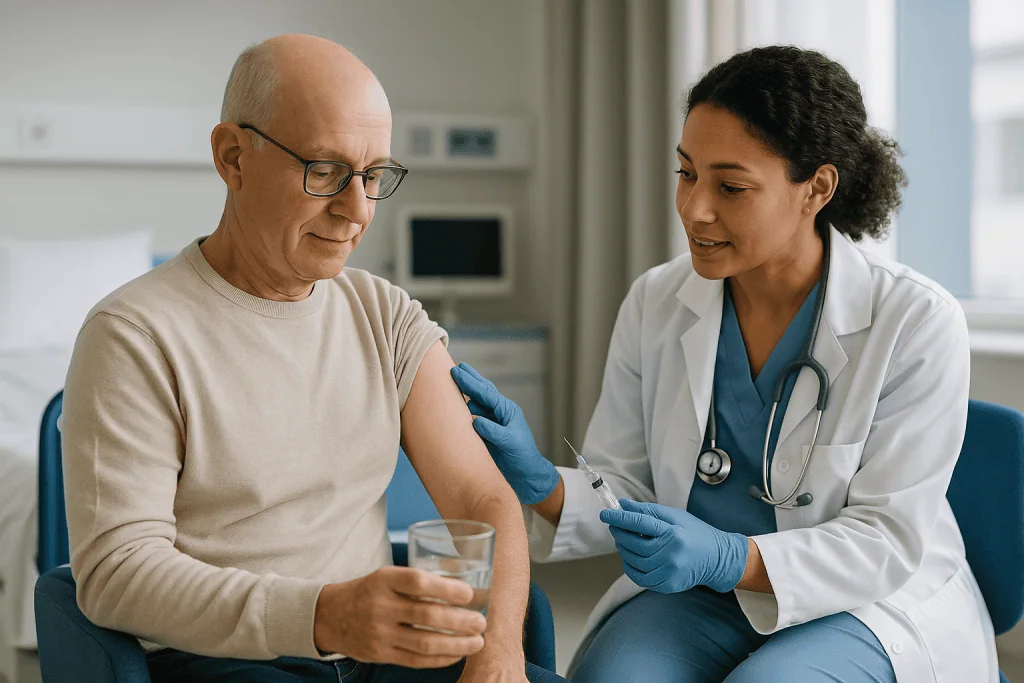
The first shield is vaccination, and its trick is timing. Non-live vaccines teach the immune system to recognize a threat in advance, but they only work if enough functioning B cells are present to learn the lesson. Given before B-cell-depleting therapy, a vaccine has a fair chance; given in the middle of it, the lesson may not stick. CDC guidance on vaccinating people with altered immunity is built around that timing problem.
The second shield is preventive medicine, known as prophylaxis. Certain treatments predictably wake up dormant viruses or open a door to specific fungi. Rather than wait for the infection, teams may prescribe a low-key antiviral or antibiotic for the duration of the risk. This is prevention, not treatment of the leukemia, and it is chosen drug by drug.
The third shield is behavior: hand hygiene, food safety, avoiding obviously sick contacts, mouth care and skin care. These sound humble next to targeted drugs, yet they block the everyday exposures that cause most infections.
The fourth shield is surveillance, meaning blood counts checked on a schedule, a thermometer at home, and a clear rule about when to call. Surveillance does not stop an infection from starting. It stops a small one from becoming a dangerous one, because bacteria in a person with few neutrophils can multiply in hours rather than days.
Your team adjusts the weight of each shield to your regimen. Someone on an antibody infusion leans hard on vaccine timing; someone on a tablet that lowers neutrophils leans on surveillance. The rest of this article walks through each shield in turn.
Which CLL treatments raise infection risk, and how?
Every CLL drug class touches the immune system differently, so the infection pattern differs too. Knowing your class helps you understand why your team worries about some things and not others. The table summarizes mainstream clinical understanding; your own risk depends on prior treatments, age, kidney function and blood counts, which only your team can weigh.
| Treatment class | What it does | Main immune effect | Infection concern teams watch for |
|---|---|---|---|
| Anti-CD20 monoclonal antibodies (e.g., rituximab, obinutuzumab) | Bind a surface marker on B cells and flag them for destruction | B-cell depletion lasting months after the last dose | Weak vaccine responses; hepatitis B reactivation, so screening beforehand is routine |
| BTK inhibitors (e.g., ibrutinib, acalabrutinib, zanubrutinib) | Block a signaling enzyme B cells need to survive | Impaired B-cell signaling; some effect on innate immune cells | Bacterial chest infections; uncommon but serious fungal infections, especially early or with steroids |
| BCL-2 inhibitors (e.g., venetoclax) | Remove a survival protein so leukemia cells die | Neutropenia, often during the dose ramp-up phase | Bacterial infections when neutrophils fall; frequent count checks |
| Chemoimmunotherapy (fludarabine- or bendamustine-based) | Damages dividing cells including lymphocytes | Deep T-cell and neutrophil suppression | Pneumocystis pneumonia and herpesvirus reactivation, so prophylaxis is commonly considered |
| Corticosteroids (when used alongside treatment) | Dampen inflammation broadly | Blunts many immune signals at once | Fungal infections; can also hide a fever |
Two patterns are worth holding onto. Antibody therapies mostly cause a long, quiet gap in antibody production, which shapes vaccine planning. Neutrophil-lowering therapies cause a shorter, sharper window in which bacteria move fast, which shapes the fever rules. Many modern regimens combine classes, so both patterns may apply at once.
Vaccines for CLL patients: which ones are usually recommended?
The rule that organizes everything else is simple: non-live vaccines are generally appropriate for people with CLL, while live vaccines are generally avoided during immunosuppression. CDC’s guidance on altered immunocompetence states this plainly. A live vaccine contains a weakened but living virus or bacterium, which a healthy immune system controls easily and a suppressed one may not.
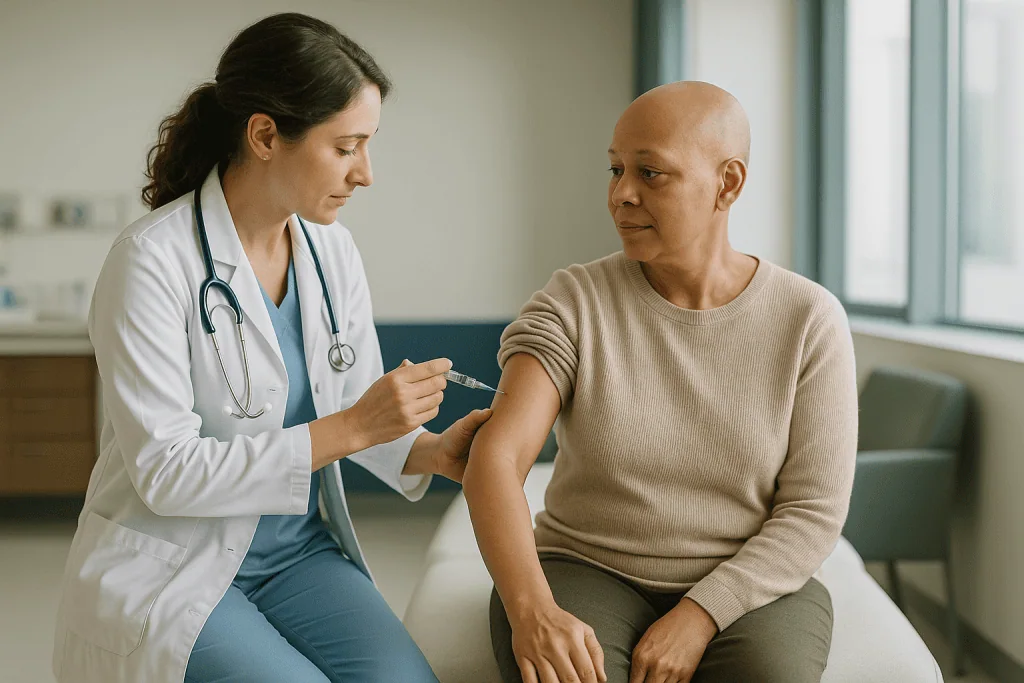
Within the non-live group, several vaccines are commonly discussed with people who have CLL:
- Inactivated influenza vaccine, given each season. The nasal spray version is live and is not the one for you.
- Pneumococcal vaccines, which protect against a bacterium that is a leading cause of pneumonia and bloodstream infection in people with low antibodies.
- Recombinant zoster (shingles) vaccine, a non-live version recommended for adults with weakened immune systems. Shingles is the reactivation of the chickenpox virus and is more common in CLL.
- COVID-19 vaccines, following current public health recommendations for immunocompromised adults.
- Hepatitis B vaccine for those who are not immune, especially before antibody therapy.
- Tetanus, diphtheria and pertussis boosters on the usual adult schedule.
Household members matter too. When the people closest to you are vaccinated against influenza, COVID-19 and pertussis, they are less likely to bring those infections home. CDC guidance notes that most live vaccines can safely be given to healthy household contacts, with specific exceptions your team can explain.
One honest caveat runs through all of this. Vaccines in CLL are safe, but their protection is often weaker than in healthy adults, because the very cells that respond are the ones the disease affects. That is why timing, discussed next, matters so much, and why vaccination is one shield among four rather than a guarantee.
Why does timing matter so much for vaccines before, during and after CLL therapy?
Imagine trying to teach a class after most of the students have been sent home. That is what vaccinating during anti-CD20 therapy looks like. The antibody drug removes B cells so thoroughly that there may be almost nobody left to learn the vaccine’s lesson and produce protective antibodies.
CDC guidance offers concrete anchors. Where possible, inactivated vaccines should be given at least 2 weeks before immunosuppressive therapy begins, and live vaccines, if ever appropriate, at least 4 weeks before. After anti-B-cell antibody therapy, CDC advises waiting at least 6 months before vaccinating if the goal is a meaningful response, because B cells take roughly that long to repopulate.
In practice this creates three windows:
- Before treatment. This is the golden window. Teams often try to update influenza, pneumococcal, shingles and other non-live vaccines once treatment is planned but before it starts.
- During treatment. Vaccines are not dangerous here, but responses are unreliable. Many teams still give seasonal influenza and COVID-19 vaccines, reasoning that partial protection beats none, while deferring vaccines that can wait.
- After treatment. Once antibody therapy ends and counts recover, some vaccines are repeated because earlier doses may not have taken.
Oral therapies that continue for years, such as BTK inhibitors, blur these windows. There is no clean before and after, so teams tend to vaccinate on schedule and accept a somewhat reduced response. Whether to pause a tablet around a vaccine is a question for the prescribing clinician, never a decision to make alone.
The takeaway is not that you should worry about every date. It is that the single most useful question to ask at the treatment-planning visit is: which vaccines can we get done before we start?
Who is usually offered preventive medicines, and who is usually asked to wait?
Prophylaxis means taking a medicine to prevent an infection you do not yet have. In CLL it is targeted, not universal, and it is a treatment-team decision based on your regimen and history. Four categories come up most often.
Antivirals against herpes-family viruses. Chickenpox and cold-sore viruses never fully leave the body; they hide in nerve cells and reawaken when immunity dips. Medicines such as acyclovir or valacyclovir suppress that reawakening. They are frequently prescribed alongside chemoimmunotherapy and some other regimens, and for people with a history of shingles. They do nothing to the leukemia itself.
Antibiotics against Pneumocystis. Pneumocystis is a fungus that causes a serious pneumonia when T cells are depleted. Regimens known to suppress T cells deeply, particularly fludarabine-based ones and prolonged steroids, are the usual trigger for this kind of prophylaxis.
Immunoglobulin replacement. For people whose antibody levels are low and who keep getting serious bacterial infections despite everything else, teams may offer regular infusions or injections of pooled antibodies from donors. It is not offered for low levels alone; the recurrent infections are the key.
Growth factors. Granulocyte colony-stimulating factor, or G-CSF, is an injectable protein that pushes the marrow to release neutrophils faster. It is used selectively when neutrophil counts fall to a level the team considers risky.
Who is asked to wait? People on watch-and-wait with stable counts and no infection history usually receive vaccines and habits advice rather than daily medicines. Someone on a BTK inhibitor alone may need only targeted surveillance. Prophylaxis carries its own trade-offs, including side effects, interactions and resistance, so more is not automatically better. If you have wondered why a fellow patient takes a preventive pill you were not given, the answer almost always lies in the different drugs you are on.
How to avoid infections while on chemotherapy or targeted CLL therapy: everyday habits
The habits that protect you are unglamorous, and that is precisely why they work. Most infections in treatment do not arrive through exotic routes. They arrive on hands, in food and from the people we love.
Hands first. CDC recommends washing with soap and water for at least 20 seconds, especially before eating, after using the bathroom, after touching animals and after being in public. Alcohol-based hand rub is a good substitute when hands are not visibly dirty. This single habit interrupts the most common transmission route for respiratory and gut infections.
Food as a controlled environment. Cook meat, poultry, eggs and seafood thoroughly. Wash fruit and vegetables well. Avoid unpasteurized milk and soft cheeses made from raw milk, raw sprouts and food that has sat out for hours. Check use-by dates and treat leftovers with suspicion after a couple of days. Your team may tighten or loosen these rules depending on your neutrophil counts.
Mouth and skin as barriers. Brush gently with a soft toothbrush and keep up dental care; mouth ulcers are an entry point for bacteria. Moisturize dry skin, treat small cuts promptly with soap, water and a clean dressing, and be careful with nail clipping and shaving. A dental check before treatment begins is a common recommendation.
People, chosen thoughtfully. Ask visibly unwell friends and family to visit another day. Crowded indoor spaces during respiratory virus season carry higher risk than an outdoor walk. A well-fitted mask in clinics, pharmacies and public transport is a reasonable, low-cost precaution during periods of low counts, not a sign of paranoia.
Sleep, movement and nutrition. None of these boost immunity in the way supplement labels claim, but poor sleep and inactivity make everything harder, including recovery from an infection you could not avoid.
What to avoid with CLL during treatment, and why each item is on the list
Lists of forbidden things breed anxiety unless each item comes with a reason. Here is the reasoning behind the most common ones.
- Live vaccines. The nasal influenza spray, the measles-mumps-rubella vaccine, the older live shingles vaccine and yellow fever vaccine all contain living organisms that a suppressed immune system may not contain. CDC guidance treats them as generally contraindicated during immunosuppression.
- Raw or undercooked animal products. Sushi, rare meat, runny eggs and raw shellfish carry bacteria that healthy guts shrug off and neutropenic guts may not.
- Unpasteurized dairy and juices. Pasteurization exists to kill exactly the organisms that cause serious illness in immunocompromised people.
- Gardening bare-handed and handling soil, compost or potting mix without gloves and a mask. Soil and decaying plant matter harbor fungal spores. This matters most for people on BTK inhibitors or steroids, where fungal infections, though uncommon, are a recognized concern.
- Cleaning litter trays, bird cages or reptile tanks. Cat feces can carry a parasite, birds can shed fungal spores and reptiles frequently carry salmonella. Delegate these tasks if you can.
- Hot tubs, public pools and natural water during low counts. Warm shared water is a bacterial incubator.
- Unnecessary over-the-counter fever reducers before you have spoken to your team. Lowering a fever can hide the one sign that tells your team an infection is brewing. Ask what they want you to do.
- Herbal and high-dose supplements without checking. Several interact with CLL drugs, and none has good evidence for preventing infection.
Notice what is not on this list: hugging your grandchildren, walking outdoors, eating in a clean restaurant, or seeing friends who are well. The goal is to remove the high-yield risks, not to remove life.
Pets, gardens, homes and travel: the lower-profile risks people forget
Most people picture infection risk as a crowded bus. In practice, plenty of exposures happen at home, and a few small adjustments cover them.
Pets can stay. Companion animals do measurable good for mood and routine, and giving them up is rarely necessary. The precautions are specific: wash hands after touching animals, keep vaccinations and flea and worm treatments up to date, avoid licks to the face and to broken skin, and hand litter-tray and cage-cleaning duty to someone else while your counts are low. Reptiles, chicks and ducklings carry salmonella so often that CDC advises immunocompromised people to avoid handling them.
Gardens are lovely and slightly dusty. Wear gloves and consider a mask when turning soil or compost, and wash cuts promptly. Fresh-cut flowers in standing water grow bacteria quickly; changing the water daily or choosing potted plants avoids that.
The bathroom and kitchen deserve attention. Clean high-touch surfaces regularly, replace sponges and dishcloths often, and let cutting boards dry fully. Humidifiers and dehumidifiers need regular cleaning or they aerosolize mold.
Travel needs a conversation, not a ban. Air travel itself is mostly a matter of crowded spaces and shared air, where a mask and hand hygiene help. Destinations that require live vaccines, such as yellow fever, may be off the table during treatment. Food and water precautions matter more in places where sanitation is variable. Timing a trip for a period of stable counts, carrying a letter from your team, knowing how to reach emergency care at your destination, and taking a thermometer are the essentials. Whether a particular trip is wise is a question only your treating team can answer, and it is worth asking early.
What the first weeks of CLL treatment usually look like from an infection standpoint
Timelines vary by regimen, so treat this as a typical shape rather than a promise. Your team will give you the version that fits your drugs.
Before the first dose. Expect blood tests that include hepatitis B and other viral screening, particularly before anti-CD20 antibodies, because these drugs can reactivate a dormant hepatitis B infection. This is the window for catching up on non-live vaccines, ideally at least 2 weeks ahead according to CDC guidance, and for a dental check. Many teams hand over a written fever plan and a phone number at this visit.
The first few weeks. Blood counts are checked frequently, often weekly at first with some regimens. If your treatment includes a BCL-2 inhibitor with a dose ramp-up, or chemoimmunotherapy, neutrophil counts may dip during this period, and the team may start prophylaxis or a growth factor if counts fall to a level they consider risky. This is when the fever rule matters most.
Months two to six. Antibody-treated patients are now deeply B-cell depleted. Counts often stabilize, prophylaxis continues where prescribed, and vaccines that can wait are usually deferred. People on continuous oral therapy settle into a steady rhythm of clinic checks.
Six months and beyond. CDC guidance uses at least 6 months after anti-B-cell therapy as the point where vaccine responses become worthwhile again, so this is when repeat vaccination is often planned. Immunoglobulin levels may be rechecked. For long-term oral therapy there is no defined end point, so seasonal vaccines simply continue.
Through all of it, the constant is surveillance. Counts, temperature and a low threshold to call do not change from week to week, even as everything else does.
Why is a fever treated as an emergency during CLL treatment?
In everyday life a fever is a nuisance you sleep off. During CLL treatment it can be the only visible sign of a bloodstream infection, and the reason comes down to how the body normally announces infection.
Neutrophils do two jobs. They kill bacteria, and in doing so they generate the redness, swelling, pus and pain we recognize as infection. When neutrophils are scarce, both jobs stop. Bacteria multiply unchecked, and the familiar local signs never appear. What remains is the body’s fallback alarm: a rise in temperature driven by chemical signals from the few immune cells still working. That is why a person can feel only mildly unwell with a serious infection already underway.
Doctors call fever with low neutrophils neutropenic fever, and when it tips into a whole-body response it becomes neutropenic sepsis. The NHS describes sepsis as a life-threatening reaction to infection that needs treatment in hospital straight away. Speed matters because bacteria in the bloodstream double in number over hours, not days, and every hour before the first dose of antibiotics raises the stakes.
Practical consequences follow. Keep a working thermometer at home and know your team’s threshold, which is commonly a temperature of 100.4°F (38°C) but may be set differently for you. Check your temperature if you feel shivery, flushed or simply off, not just when you feel hot. Avoid taking fever-reducing medicines before you have checked and called, because they can erase the one clue you have. Steroids in your regimen can also blunt fever, so a lower temperature with feeling unwell still warrants a call.
None of this means panic. It means that the ordinary rule, wait and see how you feel in the morning, is suspended for the duration of treatment.
What people often get wrong about CLL infection prevention during treatment
Some of the most confident beliefs in waiting rooms are the least accurate. A few worth correcting:
Myth: watch-and-wait means my immune system is normal. CLL weakens antibody production and T-cell function well before treatment is needed. Vaccination and sensible habits apply from diagnosis, not from the first infusion.
Myth: vaccines are dangerous for people with CLL. Non-live vaccines are considered safe in immunocompromised adults by CDC guidance. The genuine problem is weaker protection, which is an argument for careful timing, not for skipping them.
Myth: I should isolate completely. Total isolation damages mental health, mobility and relationships without eliminating risk, because many infections come from your own gut and skin bacteria rather than other people. Targeted precautions beat blanket withdrawal.
Myth: acyclovir is a leukemia treatment. It suppresses herpes-family viruses to prevent shingles and cold sores. It has no effect on CLL cells. If it is on your list, it is a shield, not a weapon.
Myth: a fever can wait until morning if I feel okay. Feeling okay is exactly what a neutropenic infection can look like early. The temperature is the signal.
Myth: supplements boost immunity. No vitamin, mushroom extract or herbal blend has good evidence for preventing infection in CLL, and some interact with treatment drugs. Correcting a documented deficiency is a different matter and a team decision.
Myth: once treatment ends, the risk ends. B-cell recovery after antibody therapy takes months, and low immunoglobulins can persist for years. The precautions taper; they do not switch off on the last treatment day.
Myth: masks are only for hospitals. A mask in any crowded indoor space during low counts reduces respiratory exposure. Where you wear it matters less than whether it fits.
Questions to ask your care team about infection prevention
Appointments are short and the agenda is usually the cancer. Bringing a written list keeps infection prevention on the table. These questions tend to produce the most useful answers:
- Which part of my immune system will this treatment affect most, and what infections does that make more likely for me specifically?
- Which vaccines can I have before we start, and how soon before the first dose should they be given?
- Which vaccines should I have during treatment, which should wait, and when will we repeat any that may not have worked?
- Should my household members be vaccinated against anything, and are there live vaccines they should avoid or take precautions around?
- Am I being offered any preventive medicines, such as an antiviral or an antibiotic, and if not, why does my risk not warrant them?
- Have I been screened for hepatitis B and other dormant infections before treatment?
- What is my fever threshold, what number do I call at any hour, and what should I do if the line is busy?
- Should I take anything for a fever before calling, or nothing at all?
- How often will my blood counts be checked, and what will you do if neutrophils fall?
- Are there food, pet, gardening or travel restrictions that apply to my regimen, and when do they ease?
- Is a mask advisable for me, and in which settings?
- Will my immunoglobulin levels be measured, and what would prompt a discussion about immunoglobulin replacement?
- If I develop a rash, cough or mouth sores, do you want to see me the same day?
Write the answers down or ask permission to record them. The fever threshold and the phone number belong on the refrigerator door, not in a folder.
When to call your doctor: red-flag signs during CLL treatment
This is the section to bookmark. The overarching rule is that during treatment, the threshold for calling drops sharply, and calling unnecessarily is never a mistake.
Call your team the same day, at any hour, for:
- A temperature at or above the threshold your team has set for you, commonly 100.4°F (38°C), even once and even if you feel reasonably well.
- Shaking chills, sweats or feeling suddenly and unusually unwell, with or without a fever, especially if you take steroids.
- A new cough, chest pain or breathlessness, or a sore throat that worsens rather than settles.
- Burning or pain when passing urine, or urine that becomes cloudy or bloody.
- Redness, warmth, swelling or discharge around a catheter, port or wound.
- Mouth ulcers that stop you swallowing, or white patches inside the mouth.
- A painful, blistering rash appearing in a band on one side of the body, which can be shingles.
- Persistent diarrhea or vomiting.
Call emergency services for the signs the NHS lists for sepsis: confusion or slurred speech, skin that looks blue, gray, pale or blotchy, a rash that does not fade when a glass is rolled over it, severe difficulty breathing, or a level of drowsiness where the person is hard to wake. Do not drive yourself.
Bring your treatment card or a note of your regimen, and tell the first person you see that you are on treatment for leukemia and may have low neutrophils. That single sentence changes how quickly you are assessed.
The team caring for you would rather hear from you ten times about nothing than once too late about something. Every decision about testing, antibiotics and admission belongs with them; your job is simply to make the call.
Frequently asked questions
Does CLL increase the risk of infection even before treatment?
Yes. CLL lowers antibody production and impairs T cells from early in the disease, so people on watch-and-wait already have a higher chance of chest, sinus and urinary infections than others their age. Mayo Clinic and the NHS list frequent infections among the recognized complications of CLL. Vaccination and everyday hygiene habits are worth discussing at diagnosis, not only when treatment begins.
How can I avoid infections while on chemotherapy for CLL?
Wash hands with soap for at least 20 seconds or use alcohol rub often, cook food thoroughly and avoid unpasteurized products, keep your mouth and skin intact with gentle care, steer clear of visibly unwell people and crowded indoor spaces during low counts, and keep a thermometer handy with your team’s fever plan. Take any prophylactic medicines exactly as prescribed, and ask before starting supplements.
What should I avoid when I have CLL and am on treatment?
Live vaccines, raw or undercooked meat, eggs and seafood, unpasteurized dairy, handling soil or compost bare-handed, cleaning litter trays and reptile tanks, shared hot water such as hot tubs, and taking fever reducers before checking your temperature and calling your team. Herbal supplements should be cleared with your prescriber because several interact with CLL drugs. Hugging well family members is not on the list.
Is acyclovir used to treat CLL?
No. Acyclovir and related antivirals suppress herpes-family viruses, including the one that causes shingles, which reactivate more easily when immunity is low. Teams prescribe them alongside certain CLL regimens purely as prevention, particularly with chemoimmunotherapy or a past history of shingles. They have no effect on leukemia cells. Whether you need one depends on your specific treatment and is your team’s call.
Which vaccines for CLL patients are usually recommended?
Inactivated influenza each season, pneumococcal vaccines, the recombinant (non-live) shingles vaccine, COVID-19 vaccines per current recommendations, hepatitis B for those not already immune, and routine adult boosters such as tetanus and pertussis. Live vaccines are generally avoided during treatment. Ideally as many as possible are given before B-cell-depleting therapy starts, since CDC guidance notes responses are weaker during and for months after it.
Can I get the flu shot during CLL treatment?
Usually yes, provided it is the inactivated injection and not the live nasal spray. The vaccine is safe during treatment; the concern is that protection may be weaker, especially after anti-CD20 antibodies. Many teams still recommend it on the reasoning that some protection is better than none, and they also encourage household members to be vaccinated. Confirm timing with your treating team.
Should I wear a mask during CLL treatment?
A well-fitting mask is a reasonable, low-cost precaution in clinics, pharmacies, public transport and crowded indoor spaces, particularly during respiratory virus season or when your neutrophil counts are low. It reduces the number of viral particles you inhale rather than eliminating risk. Outdoors and at home with well family members, it is generally unnecessary. Your team can tell you when counts make it more important.
Why is a fever treated as an emergency during CLL treatment?
Because low neutrophils remove the usual signs of infection, a fever may be the only clue that bacteria have reached the bloodstream, and those bacteria multiply over hours. The NHS describes sepsis as a life-threatening emergency requiring hospital treatment straight away. Teams therefore ask you to call at any hour once your temperature reaches the threshold they set, rather than waiting to see how you feel.
Can I keep my pets during CLL treatment?
In most cases yes. Wash hands after contact, keep animals’ vaccinations and parasite treatments current, avoid licks to the face or broken skin, and hand litter-tray, cage and tank cleaning to someone else while counts are low. Reptiles, chicks and ducklings carry salmonella often enough that CDC advises immunocompromised people to avoid handling them. Discuss any new pet with your team first.
How is shingles prevention in CLL usually handled?
Two ways. The recombinant, non-live shingles vaccine is recommended for adults with weakened immune systems and is often given before treatment when possible. Separately, with regimens known to reactivate herpes-family viruses, teams may prescribe a preventive antiviral for the duration of risk. A painful, blistering, one-sided rash should prompt a same-day call regardless of which measures you are on.
References
- Chronic Lymphocytic Leukemia: MedlinePlus
- Chronic lymphocytic leukaemia: NHS
- Altered Immunocompetence: General Best Practice Guidelines for Immunization: CDC
- About Handwashing: CDC
This article is for general information only and is not a substitute for professional medical advice. Please consult a qualified doctor about your individual situation.

More from the Blog
Who May Be a Candidate for SBRT for Early-Stage Lung Cancer When Surgery Is Not Planned
SBRT for early-stage lung cancer is usually considered for people with a small non-small cell lung cancer that has not spread to lymph nodes…

Why a PSMA PET Scan Comes Before Lutetium-177 PSMA Therapy and What It Has to Show
A PSMA PET scan comes before lutetium-177 PSMA therapy because the treatment only works on cancer cells that display the PSMA protein, and the…

Eating After Pancreatic Cancer Surgery: Enzyme Replacement, Blood Sugar and Small Meals
After pancreatic cancer surgery, many people need enzyme replacement because the remaining pancreas cannot release enough digestive enzymes; the capsules are taken with food…
Why Chemotherapy Often Surrounds Stomach Cancer Surgery: Perioperative Treatment Explained
Chemotherapy is often given both before and after stomach cancer surgery because gastric tumors are frequently found at a locally advanced stage, when cancer…

Bladder Removal or Bladder Preservation? How Specialists Compare the Two Approaches
For muscle-invasive bladder cancer, specialists compare radical cystectomy (removing the bladder, usually after chemotherapy) with bladder preservation, most often trimodality therapy combining tumor resection,…

Induction Chemotherapy for Acute Myeloid Leukemia: What the First Hospital Weeks Involve
AML induction chemotherapy is an intensive first treatment given in hospital, usually as a continuous course lasting about a week, followed by several weeks…