

Infection Risk After a Stem Cell Transplant: Protective Isolation, Masks and When to Call
Key Takeaways
- Infection risk peaks in the two to four weeks before engraftment, when neutrophils are essentially absent, and shifts toward viral and fungal threats in the months after.
- Most early infections come from bacteria already on your own skin and in your gut, which is why hand hygiene and central line care matter more than any other precaution.
- A temperature of 100.4 F (38 C) or higher during neutropenia is an emergency requiring an immediate call, not a wait-and-see moment.
- HEPA-filtered, positive-pressure rooms have solid evidence for reducing mold exposure; strict visitor gowning and total visitor bans do not.
- Trials have not shown that the traditional restrictive neutropenic diet prevents infection better than careful everyday food-safety practice.
- After a donor transplant the immune system can take a year or more to recover, and childhood vaccine protection has to be rebuilt through a planned re-vaccination schedule.
Infection risk after a stem cell transplant is highest in the first few weeks, when conditioning treatment has wiped out white blood cells and the new marrow has not yet started working. Risk then falls gradually over months as the immune system rebuilds, more slowly after a donor transplant. Protective isolation, hand hygiene, preventive medicines and prompt reporting of fever are the main safeguards; the treating team sets the specific rules.
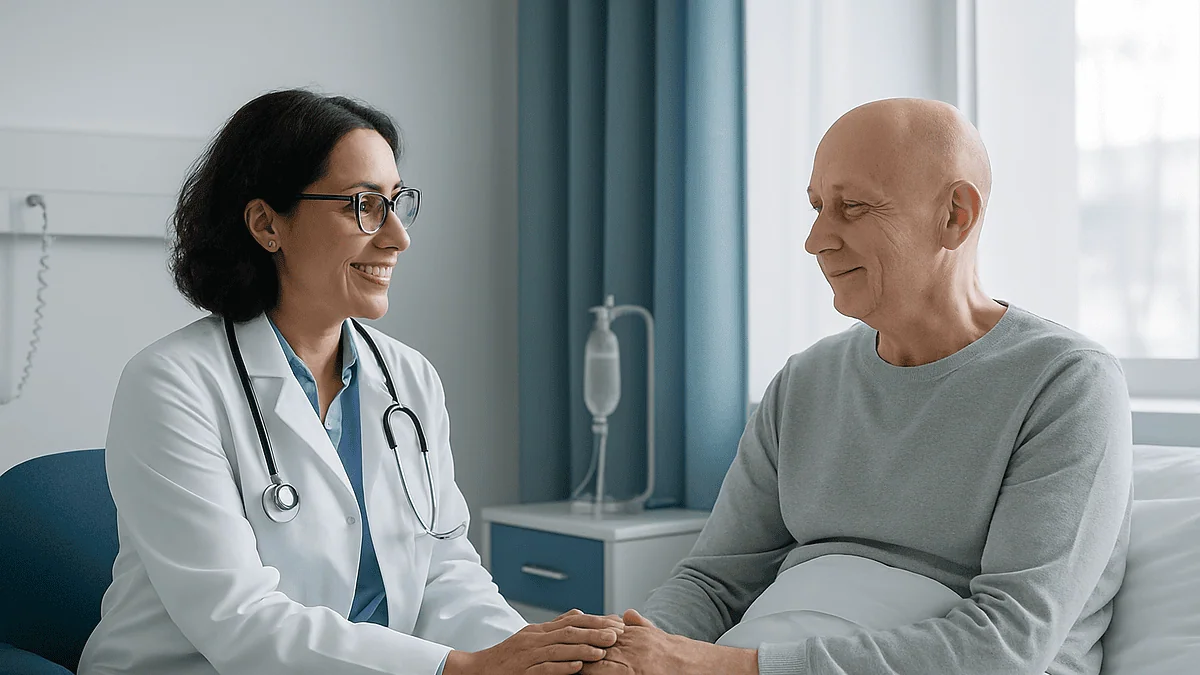
The room has a whiteboard, a window that does not open, and a hand-gel dispenser that the nurses hit on the way in and the way out, every single time. A daughter in a paper mask holds up her phone so her father can see the dog. He has had his new cells for six days. His neutrophil count this morning was zero.
Families in that room ask the same thing in different words: how dangerous is this, and for how long? The honest answer about infection risk after stem cell transplant is that it is real, it is time-limited, and it is far better understood than it was a generation ago. The body loses its defenses on a predictable schedule and regains them on a slower, less predictable one.
This explainer walks through what actually happens to the immune system, why the rules around masks, food and visitors exist, which of those rules the evidence firmly supports, and the handful of warning signs that should send you to the phone without a second thought.
Why infection risk after stem cell transplant is the first thing your team watches
A stem cell transplant replaces blood-forming cells in the bone marrow with healthy ones, either your own collected earlier (autologous) or a donor’s (allogeneic). Before those cells go in, you receive conditioning: high-dose chemotherapy, sometimes with radiation, designed to clear diseased marrow and, in a donor transplant, to make room and quiet the immune system so the graft is not rejected.
Conditioning does not distinguish between cancer cells and the marrow that makes your infection-fighting white cells. Within days, neutrophils, the front-line white cells that swarm bacteria and fungi, fall to almost nothing. Cleveland Clinic defines neutropenia as a neutrophil count below 1,500 cells per microliter and severe neutropenia as below 500; after conditioning, counts routinely sit below 100 for a stretch of days.
Three other things happen at once. The lining of the mouth and gut, which normally acts as a wall against the bacteria that live there, becomes inflamed and leaky. A central venous catheter, the soft tube placed in a large vein to give medicines and draw blood, offers bacteria a highway from skin to bloodstream. And in a donor transplant, drugs given to prevent graft-versus-host disease deliberately dampen the T cells that fight viruses.
Put those together and the picture is clear: for a period of weeks the body has almost no soldiers, damaged walls and an open gate. That is why transplant units treat a single temperature reading as an emergency, why rooms are engineered the way they are, and why you will be handed a list of rules on the day you arrive. None of it is superstition. Each rule maps onto one of those four vulnerabilities.
What actually happens to your immune system in the first weeks and months
Doctors describe immune recovery after transplant in three overlapping phases, and knowing which one you are in explains most of the advice you will hear.
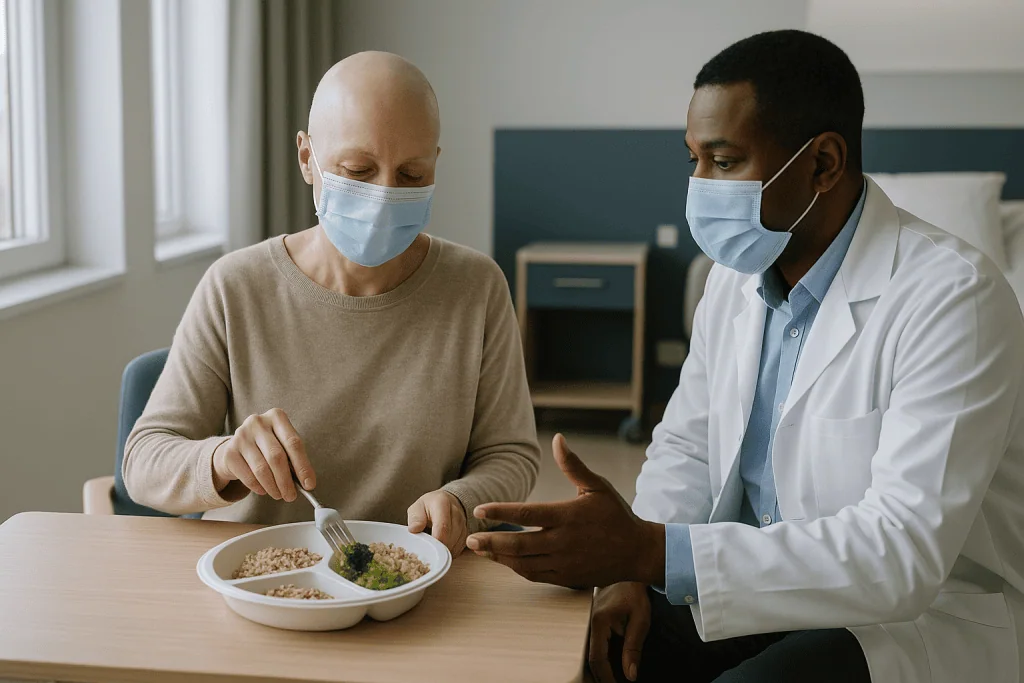
The pre-engraftment phase runs from conditioning until the new cells begin producing blood, which MedlinePlus puts at roughly two to four weeks after infusion. Engraftment is the moment the transplanted cells settle in the marrow and start making new blood cells. During this window neutrophils are absent, mucous membranes are raw and the catheter is in constant use. Bacteria from your own gut and skin, and the fungus Candida, are the main threats.
The early post-engraftment phase, roughly the second and third months, brings neutrophils back but not a competent adaptive immune system. T cells and B cells, the cells that remember specific germs and make antibodies, are still scarce and poorly coordinated. This is when latent viruses that most adults carry harmlessly, such as cytomegalovirus (CMV), can reactivate, and when molds like Aspergillus become a concern if immunosuppression is heavy.
The late phase stretches from about three months onward. For an autologous transplant, immune function often approaches normal within the first year. After an allogeneic transplant, the NHS notes that full recovery can take a year or more, and chronic graft-versus-host disease, a condition in which donor immune cells attack the recipient’s tissues, can prolong the vulnerability considerably. Encapsulated bacteria such as pneumococcus and viruses such as varicella-zoster (the shingles virus) dominate this period.
Your care team times preventive medicines, isolation decisions and vaccine schedules to these phases, which is why the rules loosen in steps rather than all at once.
Which infections are most common after a stem cell transplant, and when
People often imagine exotic hospital germs. In reality, most early infections come from organisms you already carried in on your own body. The table below summarizes the typical pattern described in transplant guidance from the NHS, Mayo Clinic and MedlinePlus; individual timing varies with the type of transplant and the degree of immunosuppression.
| Phase | Typical timing | Main weaknesses | Infections most often seen |
|---|---|---|---|
| Pre-engraftment | Conditioning to about 2–4 weeks | No neutrophils, damaged gut and mouth lining, central line | Gut and skin bacteria in the bloodstream, Candida, herpes simplex reactivation |
| Early post-engraftment | About weeks 4 to 12 | Weak T cells and B cells, GVHD treatment | CMV and other herpes-family viruses, molds such as Aspergillus, Pneumocystis pneumonia |
| Late post-engraftment | Beyond about 3 months | Slow antibody recovery, chronic GVHD, loss of prior vaccine protection | Pneumococcus and other encapsulated bacteria, varicella-zoster, community respiratory viruses |
Two patterns in that table deserve emphasis. First, bloodstream infections cluster in the first weeks, which is why that period carries the strictest precautions and why the central line is inspected daily. Second, the risk does not simply disappear at discharge; it changes character. A person three months out is unlikely to have a bacterial bloodstream infection but may be at meaningful risk from a household member’s cold or an unrecognized shingles rash.
Fungal and viral infections tend to worry patients most because they sound ominous, and they are indeed harder to treat. Their frequency, however, depends heavily on how much immunosuppression you need. An autologous recipient with quick engraftment and no GVHD drugs sits at the low end of the spectrum.
Autologous vs allogeneic transplant: who faces the higher infection risk, and who is asked to wait
The single biggest predictor of your infection risk is the kind of transplant you are having. In an autologous transplant your own cells are returned, so there is no rejection, no graft-versus-host disease and no need for long-term immunosuppressive drugs. Neutropenia is intense but usually brief, and the immune system that rebuilds is essentially the one you had before.
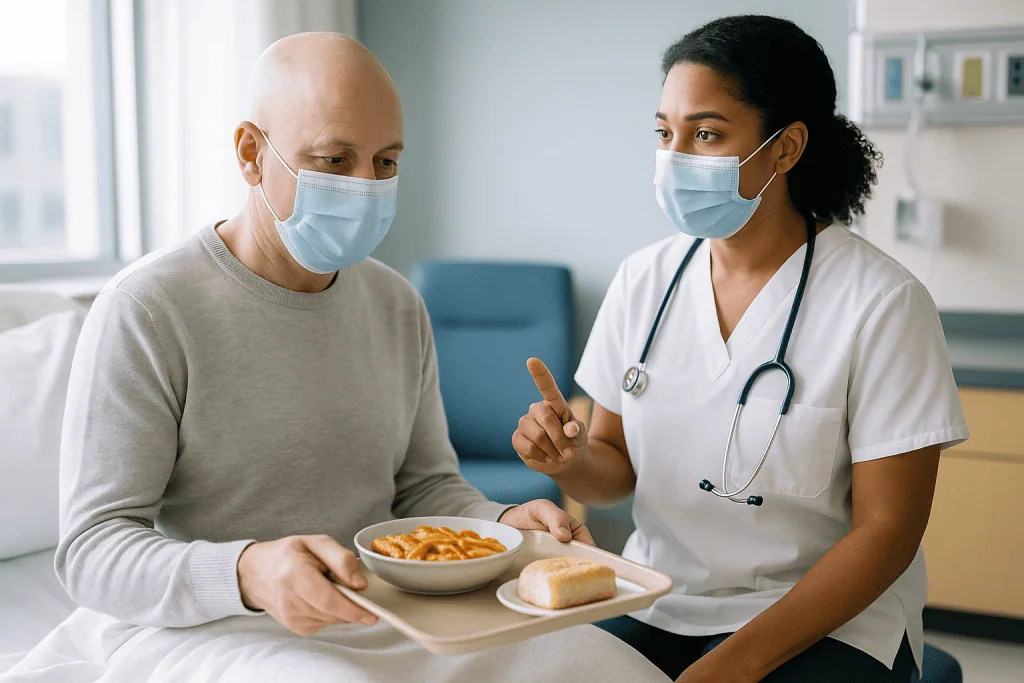
An allogeneic transplant introduces a donor immune system. That is the point: donor cells can recognize and attack residual disease. The trade-off is that the same cells can attack you, and the medicines used to keep that in check suppress the very T cells that control viruses and fungi. Mayo Clinic and the NHS both describe infection as one of the principal complications of donor transplants, alongside GVHD itself.
Transplant is usually considered for blood cancers such as leukemia, lymphoma and myeloma, and for certain marrow failure or inherited blood disorders, in people whose organs can withstand conditioning. Fitness matters more than age on a birth certificate; reduced-intensity conditioning, which uses gentler drug regimens, has widened the group of people who can be considered.
Who is asked to wait? Anyone with an active, uncontrolled infection at the time of planned admission. Starting conditioning while a pneumonia or a dental abscess is smoldering removes the defenses needed to contain it, so teams routinely postpone until it is treated. Uncontrolled disease, severe heart, lung, liver or kidney impairment, and lack of a suitable donor are other common reasons for delay or reconsideration. A pre-transplant dental check, an assessment of any previous fungal infection, and screening for latent viruses such as CMV and hepatitis are standard, not optional extras. Each finding shapes which preventive medicines you will receive. The decision to proceed, and when, rests with the transplant team weighing all of this.
What is protective isolation, and how long is isolation after stem cell transplant?
Protective isolation means arranging the environment to keep germs away from a person who cannot fight them, which is the mirror image of the isolation used to stop a contagious patient spreading infection. On most transplant units it involves a single room, a door that stays closed, hand hygiene for everyone who enters, and often a specialized air system.
That air system is the part with the strongest evidence. Many units use HEPA (high-efficiency particulate air) filtration, which removes airborne mold spores, and positive pressure, meaning air flows out of the room when the door opens rather than in from the corridor. Mold spores are everywhere in ordinary air and are harmless to healthy lungs, but for a neutropenic patient inhaling them can seed invasive aspergillosis. Filtered air reduces that exposure; construction and renovation near a unit are treated as genuine hazards for the same reason.
How long does it last? Typically until neutrophils recover, which MedlinePlus places at about two to four weeks after infusion, though it varies with the source of the cells, the conditioning used and whether growth factor injections are given. Some autologous programs now deliver part of this period at home with daily nurse contact; others keep everyone in until engraftment. Your team will tell you the count they are watching for.
What about the stricter rituals, the gowns and the ban on all visitors? Here the evidence is thinner. Studies have struggled to show that gowning visitors or barring them entirely lowers infection rates beyond what clean hands and clean air achieve. Most units have relaxed those rules while tightening the ones that matter: nobody with a cough, fever, rash or recent stomach bug comes through the door, and everyone washes their hands.
Neutropenic precautions after transplant: hand hygiene, food, flowers and pets
Neutropenic precautions are the everyday habits that reduce germ exposure while white cells are low. Some rest on solid evidence; others are traditions that have softened as data accumulated. It helps to know which is which, so that you spend your energy where it counts.
Hand hygiene is the non-negotiable. Most early infections come from bacteria on skin and in the gut, and hands are how they move. Alcohol gel or soap before eating, after the bathroom and after touching shared surfaces, for you and for everyone who visits, does more than any other single measure. Ask visitors to gel in front of you; nobody who loves you will mind.
Food safety is where practice has changed most. The traditional neutropenic diet banned fresh fruit, salad and many other foods. Trials comparing that restrictive diet with ordinary food-safety practice, meaning thorough washing of produce, avoiding raw or undercooked meat, eggs and seafood, unpasteurized dairy and juice, and careful handling of leftovers, have not shown that the stricter diet prevents infections. Many centers now teach safe food handling rather than a list of forbidden foods, though some keep restrictions during the deepest neutropenia. Follow your unit’s version.
Fresh flowers and potted plants are usually kept out of the room because standing water and soil harbor mold and Gram-negative bacteria. Pets can usually stay part of your life at home, with limits: no cleaning litter boxes, cages or aquariums, no contact with reptiles or birds, and no new young animals, which carry more pathogens. Gardening, compost and demolition dust are off the list until your team clears you, because of mold. Skin care matters too: an electric razor rather than a blade, careful oral hygiene with a soft brush, and keeping the catheter dressing clean and dry, as MedlinePlus discharge guidance describes.
Do masks help after a stem cell transplant, and when should you wear one?
Masks occupy an odd place in transplant care: patients often assume they are the main defense, while clinicians see them as one tool for specific situations. The truth is in between, and it depends on what the mask is meant to stop.
Against airborne mold spores, the relevant risk in hospital corridors, elevators and anywhere near construction, a well-fitting respirator-type mask offers meaningful protection during the neutropenic phase. Many units ask patients to wear one whenever they leave the filtered room for a scan or procedure. A loose surgical mask filters far less of that fine particulate.
Against respiratory viruses, the bigger threat after discharge, masks work in both directions. A visitor with a mild cold who wears a mask sheds fewer droplets; a patient in a crowded waiting room breathes in fewer. The strongest protection, though, is distance from people who are unwell. A mask is a supplement to that, not a substitute.
Where the evidence is weak is in wearing a mask continuously in your own clean room with healthy visitors. It adds discomfort without a clear benefit, and most units do not require it.
After you go home, sensible mask use typically means wearing one in clinics, pharmacies, public transport and crowded indoor spaces for at least the first few months, longer if you are on immunosuppression or have GVHD. The NHS and MedlinePlus discharge guidance both advise avoiding crowds and sick contacts during this period. Handle the mask by the straps, change it if damp, and pair it with hand hygiene, because touching a contaminated surface and then your face defeats the purpose. Your team will tell you when you can ease off; do not guess based on how well you feel, since antibody recovery lags behind energy.
Fever after stem cell transplant: why one temperature reading changes everything
In ordinary life a fever is a nuisance you sleep off. After a transplant, with no neutrophils, it is treated as a medical emergency, because the body has lost its ability to wall off infection. Bacteria in the bloodstream can progress to sepsis, a life-threatening whole-body response, within hours rather than days.
The threshold is specific. MedlinePlus discharge guidance for transplant patients uses a temperature of 100.4 F (38 C) or higher as the point to call immediately, day or night. Some units also count a slightly lower temperature sustained for an hour. You will be told your unit’s rule and given a number to ring that is answered around the clock.
Two features of neutropenic fever catch people out. First, it often arrives without the usual signposts. With so few white cells there may be no pus, no cough, no obvious redness; the temperature is frequently the only sign. Second, the fever itself may be mild while the underlying infection is serious. Waiting to see if it climbs is exactly the wrong response.
This is also why teams ask you not to take fever-reducing medicines on your own during neutropenia. Bringing the temperature down does not treat the infection; it hides the one signal you have. Any pain or fever medicine should be discussed with the team first.
When you call, expect to be seen quickly. Standard practice is to draw blood cultures from the catheter and a vein, take other cultures depending on symptoms, and start broad-spectrum intravenous antibiotics, meaning ones that cover a wide range of bacteria, before the culture results are back. That speed, not the specific drug, is what the guidelines emphasize. Shivering, feeling cold, or a heart rate that feels fast warrant the same call even without a thermometer reading.
Preventive medicines: what antivirals, antifungals and antibiotics are actually for
Almost everyone leaves the transplant unit with a list of preventive medicines, and it is worth understanding what each class does, because the list will change as your immune system recovers. None of this is a recommendation; the prescribing clinician chooses the drugs, timing and duration for your situation.
Antivirals in the herpes family are usually given because most adults carry herpes simplex and varicella-zoster viruses in a dormant state. When T cells vanish, those viruses can reactivate as painful mouth ulcers or shingles. Antiviral prophylaxis suppresses that reactivation and typically continues for many months after an allogeneic transplant, often a year or longer for shingles prevention, with the end date set by the team.
CMV is handled differently. Depending on whether you and your donor carry the virus, your team will either monitor your blood regularly and treat if the virus appears, an approach called pre-emptive therapy, or give a preventive antiviral from the outset. Either way, regular blood tests for CMV are a fixture of the first months.
Antifungals target Candida during neutropenia and, in higher-risk patients, molds as well. Which agent and for how long depends on your GVHD treatment and any previous fungal infection.
A specific antibiotic is given to prevent Pneumocystis pneumonia, a lung infection caused by a fungus that only troubles people with weak T cells. It usually starts after engraftment and continues for several months, longer if immunosuppression continues.
Some centers also use a preventive antibacterial during deep neutropenia; practice varies because of concerns about resistance. If you develop side effects from any of these, tell the team rather than stopping. Each drug is holding a particular door shut, and the team can adjust the plan safely.
What happens if you get an infection after a stem cell transplant?
Infection after transplant is common, expected and planned for. Most recipients will have at least one febrile episode during neutropenia, and the system is built to catch it early. Knowing the sequence removes some of the dread.
The moment you report a fever or another warning sign, the team moves to identify the source and cover the likely culprits at the same time. Blood cultures from the central line and from a separate vein help show whether the catheter itself is infected. A chest X-ray or CT scan, urine and stool tests, and swabs of any sore area follow depending on symptoms. Broad-spectrum intravenous antibiotics begin within the first hour whenever possible, before results are back, because the cost of waiting is higher than the cost of a few days of unnecessary antibiotics.
Over the next two to three days the picture sharpens. If cultures grow a specific bacterium, treatment narrows to target it. If the fever persists with negative cultures, the team considers fungal infection and may add an antifungal or arrange more detailed imaging. Viral tests, particularly for CMV and respiratory viruses, are checked in the later phases.
Sometimes the central line has to come out. A catheter colonized by certain bacteria or fungi cannot be reliably sterilized with antibiotics alone, and removing it is often the decisive step. A new line can be placed once the bloodstream is clear.
Most bacterial infections resolve with this approach once neutrophils return, which is why growth factors that speed neutrophil recovery are sometimes used. Fungal and viral infections are slower and more serious, and the NHS lists infection among the causes of significant illness after transplant. That honesty matters: infections are the reason for the rules, and rapid reporting is the part you control.
Stem cell transplant recovery timeline: what the days and weeks usually look like
Recovery has a rhythm that most patients recognize in hindsight, even though the exact dates differ. Timeframes below are typical ranges drawn from MedlinePlus, Mayo Clinic and NHS guidance, not promises.
Days 1 to 10 after infusion are usually the hardest. Blood counts hit their lowest point, mouth sores (mucositis) make eating painful, and nausea and fatigue peak. Transfusions of red cells and platelets are routine. Fever is common in this window and is managed as described above.
Somewhere between weeks two and four, neutrophils begin to climb: engraftment. Mucositis heals within days of that turning point, appetite creeps back, and the team starts talking about discharge criteria. Going home usually depends on stable counts, the ability to eat and drink, control of any infection, and a caregiver at home.
The first three months after discharge involve frequent clinic visits, often twice weekly at first, for counts, virus monitoring and medicine adjustments. Energy returns unevenly; a good day followed by a flat one is normal. Mayo Clinic notes that it can take several months to feel like yourself, and the NHS puts full recovery after an allogeneic transplant at a year or more.
Diarrhea deserves its own mention because it is so common and so often misread. In the first weeks it usually comes from conditioning damage to the gut lining and settles as the lining heals after engraftment. Diarrhea that begins or worsens after engraftment in a donor transplant may signal gut GVHD, and diarrhea at any stage can indicate infection, including Clostridioides difficile, a bacterium that flourishes after antibiotics, or viruses. There is no single expected duration; new, worsening or bloody diarrhea, or diarrhea with fever or cramping, needs a same-day call so the team can test for the cause rather than guess.
Vaccines, alcohol, work and travel: returning to ordinary life safely
A transplant erases most of the immune memory you built from childhood vaccines. Antibody levels fall over the first year and, after an allogeneic transplant, the donor’s memory does not transfer reliably. Re-vaccination is therefore a standard part of long-term follow-up. Inactivated vaccines, meaning those that contain killed germs or fragments, typically begin several months after transplant once the team judges that you can respond; live vaccines, which contain weakened but living virus, are delayed much longer and are not given at all while immunosuppression or active GVHD continues. Household members should stay current on their own vaccines, especially against influenza, because a vaccinated household is a buffer around you.
Alcohol comes up constantly and there is no universal date. The medical reasons for caution are concrete: the liver is processing multiple medicines and may have been stressed by conditioning; alcohol irritates a gut lining that is still healing; several antifungals and other drugs interact with it; and it impairs sleep and hydration when both are already fragile. Most teams ask people to avoid alcohol entirely during the first months and then discuss it individually based on liver tests and the medicine list. Ask rather than assume.
Work and school usually re-enter the picture between three and twelve months depending on the job, the transplant type and how crowded the setting is. Travel, particularly air travel and destinations where food and water safety are uncertain, is generally deferred until immunosuppression is minimal and re-vaccination is underway; if you must travel, arrange access to medical care at the destination in advance and carry a summary of your medicines and transplant history.
Sun protection matters more than before, since transplant medicines and GVHD both raise skin cancer risk. Swimming in lakes, rivers and public pools waits until your team clears it because of waterborne organisms.
What people often get wrong about infection risk after stem cell transplant
Some of the most persistent beliefs about post-transplant infection are half-truths that made sense once. Correcting them frees up attention for what actually protects you.
Myth: the danger is over once you are discharged. Discharge means neutrophils have returned, not that immunity is normal. T cells and antibodies recover over months, and the late-phase infections in the table above, shingles, pneumococcal pneumonia, respiratory viruses, happen at home. The precautions change; they do not end.
Myth: hospital germs are the main threat. Most early infections come from your own skin and gut bacteria, which is why hand hygiene and line care outrank anything a visitor might carry.
Myth: raw fruit and salad are forbidden for months. Trials have not shown that the traditional neutropenic diet prevents infections better than ordinary food-safety practice. Follow your unit’s guidance, but understand that washing produce carefully usually matters more than banning it.
Myth: a low-grade fever can wait until morning. During neutropenia, 100.4 F is the threshold for an immediate call, and fever-reducing medicine taken to see whether it settles hides the only early warning you have.
Myth: feeling well means the immune system has recovered. Energy returns before antibodies do. Vaccine responses, not how you feel, tell the team where you are.
Myth: masks alone make crowds safe. A mask reduces exposure; it does not eliminate it. Distance from sick people is the primary defense, and a mask is the backup.
Myth: everyone with a transplant faces the same risk. An autologous recipient with quick engraftment sits at the low end; an allogeneic recipient with chronic GVHD on ongoing immunosuppression sits at the high end. Your rules are written for your position on that spectrum, which is why comparing notes with another patient can mislead.
Questions to ask your care team about infection precautions
Transplant teams expect questions, and the answers you get will be tailored in a way no article can be. Bring these to a pre-admission meeting or an early clinic visit and write the answers down; the details shift over time.
- What neutrophil count are you waiting for before I can leave protective isolation, and what does that typically take with my type of transplant?
- Does this unit use HEPA filtration or positive-pressure rooms, and when should I wear a respirator mask when I leave the room?
- Which visitors are allowed, what symptoms should keep someone away, and can children visit?
- Does the unit use a restricted neutropenic diet or food-safety teaching, and for how long?
- What is the exact temperature at which I must call, what number do I call at 3 a.m., and where will I be seen?
- Which preventive medicines will I take, what is each one protecting against, and roughly when do you expect to stop them?
- Am I, or is my donor, CMV positive, and how will you monitor for it?
- How should my caregiver look after the central line, and what changes at the site should prompt a call?
- When can pets, gardening, swimming, crowds, work and travel come back into my life?
- When will re-vaccination start, and should my household members update their vaccines now?
- How will I know the difference between diarrhea from conditioning, from infection and from GVHD?
- Is there anything about my history, previous fungal infection, dental problems or lung disease, that changes my risk or my plan?
One more, often skipped: ask who to call if the answer to any of these changes. Precautions evolve as counts and medicines change, and a single named contact prevents the confusion of hearing slightly different rules from different people.
When to call your doctor
The team will give you a card with a number staffed around the clock. Use it early and often; a call that turns out to be nothing is the system working as intended. Call immediately, at any hour, without waiting to see how things develop, if you notice any of the following:
- A temperature of 100.4 F (38 C) or higher, or shaking chills or a sense of being unusually cold, even without a thermometer reading.
- Redness, swelling, pain, warmth or leakage at the central line site, or fever within an hour of the line being flushed.
- New shortness of breath, a new cough, chest pain, or a fast heartbeat at rest.
- Confusion, unusual drowsiness, a severe headache, a stiff neck or a new seizure.
- Diarrhea that is new, worsening, bloody or accompanied by fever or severe cramping, or vomiting that prevents you from keeping fluids or medicines down.
- A new rash, particularly a painful, blistering one on one side of the body, or a spreading area of hot, red skin.
- Mouth sores that stop you swallowing, or white patches on the tongue or cheeks.
- Burning on passing urine, passing very little urine, or dark urine with pale skin.
- Any unexplained bleeding or bruising, since low platelets and infection often travel together.
Some symptoms, such as a runny nose without fever, mild constipation or a small skin nick, can usually wait for the next scheduled contact, but if you are unsure, call. Do not take fever or pain medicine to test whether a symptom settles. Keep a thermometer, the call card and a current list of your medicines in one place, and make sure your caregiver knows where. If you cannot reach the transplant line and any red-flag sign is present, go to the nearest emergency department and say at the door that you have had a stem cell transplant and may be neutropenic; that sentence changes how quickly you are seen.
Frequently asked questions
What happens if you get an infection after a stem cell transplant?
You are assessed urgently, blood cultures are drawn from the central line and a vein, and broad-spectrum intravenous antibiotics usually start within the first hour, before results are back. Over the next days treatment is narrowed to the organism found, an antifungal may be added if fever persists, and the catheter may be removed if it is the source. Most bacterial infections settle as neutrophils return; fungal and viral infections take longer to treat.
How long does it take to recover from a stem cell transplant?
Blood counts typically recover within about two to four weeks of infusion, but that is only the first step. Energy and appetite improve over the following months, and the NHS notes that full recovery after a donor transplant can take a year or more, longer with chronic graft-versus-host disease. Autologous recipients generally recover faster. Your team tracks immune recovery through blood tests and vaccine responses rather than by how you feel.
How long does diarrhea last after a stem cell transplant?
There is no fixed duration, because diarrhea has several possible causes with different courses. Early on it usually comes from conditioning damage to the gut lining and eases as that lining heals after engraftment. Diarrhea appearing later in a donor transplant may signal gut graft-versus-host disease, and infection such as Clostridioides difficile can occur at any stage. New, worsening or bloody diarrhea, or diarrhea with fever, needs a same-day call for testing.
How long after a stem cell transplant can I drink alcohol?
There is no universal date; most teams ask you to avoid alcohol for at least the first few months and then decide individually. The reasons are practical: the liver is handling several medicines, some antifungals and other drugs interact with alcohol, the gut lining is still healing, and alcohol worsens sleep and hydration. Ask your team once your liver tests are stable and your medicine list has shortened.
How long is isolation after a stem cell transplant?
Protective isolation usually lasts until neutrophils recover, which MedlinePlus places at roughly two to four weeks after infusion, though it depends on the cell source, conditioning intensity and whether growth factors are used. Some autologous programs manage part of this period at home with daily nurse contact. After leaving isolation, precautions such as avoiding crowds and sick contacts continue for months, easing in steps as the team confirms immune recovery.
What are neutropenic precautions after transplant, and which ones matter most?
Neutropenic precautions are habits that reduce germ exposure while white cells are low. Hand hygiene for you and every visitor is the most important, followed by careful central line care, keeping people with any illness away, and safe food handling. Fresh flowers, soil, standing water and animal waste are avoided because of mold and bacteria. The traditional strict neutropenic diet has weaker evidence than these basics.
Why is fever after stem cell transplant treated as an emergency?
Without neutrophils the body cannot wall off bacteria, so an infection in the bloodstream can progress to sepsis within hours. A temperature of 100.4 F (38 C) or higher is the standard threshold for calling immediately. Fever is often the only sign, because the usual redness or pus needs white cells to form. Fever-reducing medicines should not be taken to see if it settles, since that hides the warning.
Do I need to wear a mask after a stem cell transplant?
Usually yes in specific settings rather than constantly. A respirator-type mask is commonly advised whenever you leave the filtered room during neutropenia, because it filters mold spores, and a mask in clinics, pharmacies, public transport and crowded indoor spaces is sensible for the first months after discharge. Distance from unwell people remains the main defense. Your team will say when you can ease off based on your immune recovery.
What is the stem cell transplant recovery timeline for the immune system specifically?
Neutrophils return first, typically within two to four weeks. T cells and antibody-producing B cells take much longer, often several months to a year, and longer after a donor transplant or with graft-versus-host disease. Childhood vaccine protection is largely lost, so re-vaccination with inactivated vaccines usually begins some months after transplant, with live vaccines delayed until immunosuppression has ended. Blood tests guide each step.
Can my pet stay with me after a stem cell transplant?
Most established, healthy household dogs and cats can stay, with limits set by your team. Someone else should handle litter boxes, cages, aquariums and any animal waste, and you should avoid reptiles, birds, farm animals and new young pets, which carry more pathogens. Wash hands after contact, keep pets off your bed if advised, and report any scratch or bite the same day.
References
- MedlinePlus: Bone marrow transplant
- MedlinePlus: Bone marrow transplant – discharge
- NHS: Stem cell and bone marrow transplants – Risks
- Cleveland Clinic: Neutropenia
This article is for general information only and is not a substitute for professional medical advice. Please consult a qualified doctor about your individual situation.

More from the Blog
Who May Benefit From Cancer Rehabilitation: Fatigue, Weakness and Limb Swelling
Cancer rehabilitation is usually considered for anyone whose cancer or its treatment has left them with persistent fatigue, muscle weakness, limb swelling (lymphedema), stiffness,…
How Engraftment After a Stem Cell Transplant Shows Up in Your Blood Counts Week by Week
Engraftment after a stem cell transplant is the point when transplanted stem cells settle in the marrow and begin producing new blood cells. Counts…
When Is Radiation Chosen Over Surgery for Vulvar Cancer, and When Are Both Used?
Surgery is usually the first treatment for vulvar cancer that can be removed with a clear margin of healthy tissue while preserving bladder, bowel…
What Is Normal Healing After Vulvar Cancer Surgery and What Needs a Prompt Call
After vulvar cancer surgery, mild swelling, bruising, thin pinkish drainage, numbness and soreness that eases week by week are usually part of normal healing.…
Lymphedema After Breast Cancer Treatment: How It Is Monitored and Managed Long Term
Lymphedema after breast cancer treatment is persistent swelling of the arm, hand, breast or chest wall caused by damage to lymph nodes and vessels…
Targeted Therapy for Chronic Myeloid Leukemia: How Daily Treatment and Monitoring Work
Targeted therapy for chronic myeloid leukemia uses daily oral tyrosine kinase inhibitors (TKIs) that block BCR-ABL1, the abnormal enzyme driving the disease. Treatment is…