

Is an Eyebrow Transplant an Option After Years of Over-Plucking? What Surgeons Assess First
Key Takeaways
- Repeated plucking over years can miniaturize or scar brow follicles, and only a sustained period with no plucking reveals which follicles are dormant and which are gone.
- Surgeons first check for other causes of brow loss, including thyroid disease, alopecia areata and frontal fibrosing alopecia, because grafts placed into inflamed or scarring skin tend to fail.
- Eyebrow grafts are single scalp hairs placed nearly flat to the skin at angles that change across the brow, and they keep growing like scalp hair, so regular trimming becomes routine.
- Transplanted hairs usually shed in the weeks after surgery before regrowing over months, with the NHS describing final hair transplant results emerging over roughly a year.
- Ongoing hair pulling, including trichotillomania, is a common reason surgeons ask people to wait and seek behavioral support first, since pulled grafts cannot be replaced.
- The NIH Office of Dietary Supplements finds insufficient evidence that biotin supplements improve hair growth without a deficiency, and notes they can interfere with some blood tests.
An eyebrow transplant can be an option after years of over-plucking, but surgeons first check that the hair loss is stable, that plucking has genuinely stopped for a sustained period, and that no skin or medical condition is causing the thinning. Scalp hair follicles are then moved one by one into the brow. Candidacy, timing and expectations are decided with the treating team, never assumed in advance.
The tweezers live in the second drawer down, and they have not been touched in eleven months. That is the first thing she tells the surgeon. Then she pulls a pencil from her bag and, without looking, sketches in the outer third of each brow the way she has every morning since her twenties, when thin arches were the look and nobody warned that follicles keep score.
Her question is the one that fills consultation slots in hair-restoration clinics: is an eyebrow transplant after overplucking realistic, or is the damage simply the shape she has now? The honest answer begins not with a yes or a no, but with a magnifying lens, a set of questions about the last two years, and sometimes a blood test.
What follows is what surgeons actually look at before they agree to move a single hair, why they ask some people to wait, and what the months afterward tend to look like in real life rather than in a highlight reel.
Can overplucked eyebrows grow back on their own?
Sometimes, and more often than people fear. Each brow hair grows from a follicle, a tiny pocket in the skin that cycles through a growth phase, a resting phase and a shedding phase before starting again. Brow hairs have a shorter growth phase than scalp hairs, which is why they never reach your shoulders and why a single plucked hair can take a frustratingly long time to reappear.
One pluck removes the hair shaft and often the root bulb with it. The follicle usually survives that. The trouble is repetition over decades. Every extraction is a small mechanical injury, and the Mayo Clinic lists pulling forces on hair, the mechanism behind traction alopecia, among the recognized causes of hair loss. Over years, some follicles respond by producing progressively finer, paler hairs, a process called miniaturization, in which the follicle shrinks and the hair it makes becomes almost invisible. Others stop producing hair and are replaced by a fine scar.
You cannot tell from the mirror which follicles are dormant and which are gone. That is why the first prescription from nearly every surgeon is patience: stop plucking entirely, including the stray hairs, and let the brows show what they can still do. Regrowth, when it happens, is slow. The Mayo Clinic notes that even with medicines used for hair regrowth, at least six months typically pass before anyone can judge whether anything is working, and brows recovering from mechanical damage are no faster.
Two practical clues help during the wait. Fine, downy hairs appearing in the bald patches suggest follicles that are alive but miniaturized. Completely smooth, slightly shiny skin with no fuzz at all, especially after a year without tweezers, points toward follicle loss, which is the situation where a transplant enters the conversation.
How does an eyebrow transplant work, step by step?
An eyebrow transplant is a hair transplant scaled down to a very small, very visible canvas. Hair follicles are removed from a donor area, almost always the scalp at the back or sides of the head, and placed into tiny incisions in the brow so that they grow there instead.
The unit of surgery is the graft: a follicle, or a small cluster of follicles, lifted out with a sliver of surrounding tissue. Scalp hair naturally grows in groups of one to four hairs, but eyebrow hairs grow singly, so the surgical team separates the grafts under magnification into single-hair units before placement. That sorting is tedious and matters enormously; a two-hair graft in a brow looks like a tuft.
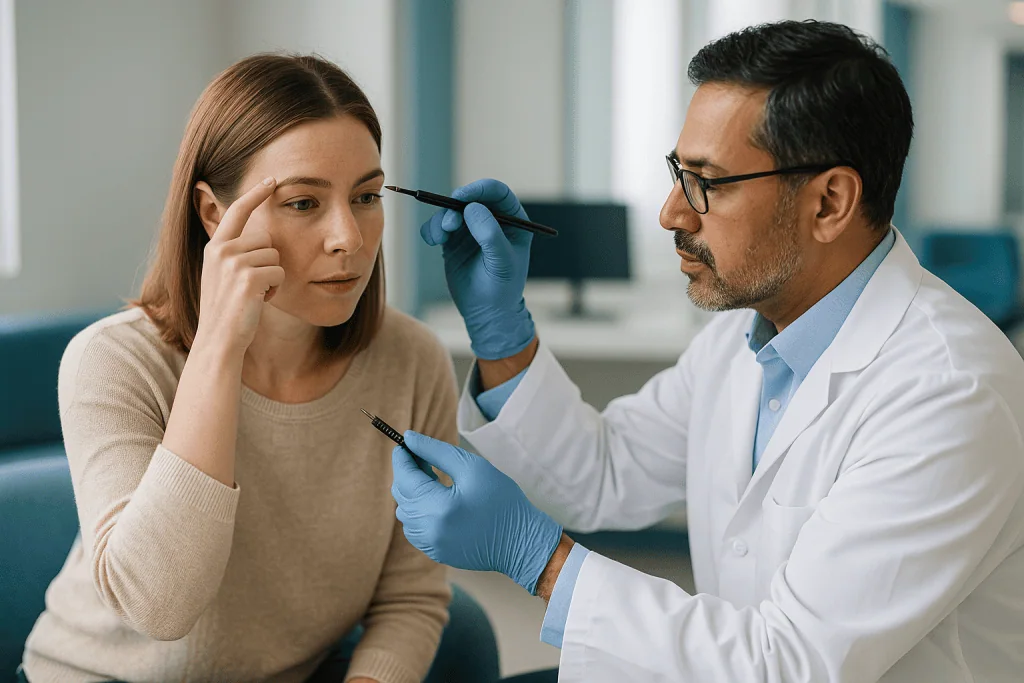
Placement is where skill shows. Eyebrow hairs lie almost flat against the skin, and their direction changes across the brow: upward near the nose, more horizontal through the arch, angling gently downward toward the tail. Each recipient incision is made with a fine blade or needle at that angle and direction, and the graft is slid in to follow it. According to NHS guidance on hair transplants, the procedure is carried out under local anesthetic, which numbs the area while you stay awake, and patients usually go home the same day.
Once healed, a transplanted follicle keeps the behavior it learned on the scalp. It does not know it has moved. That means the new hairs grow longer and faster than native brow hairs and will need regular trimming, a point surgeons raise early because it surprises people. Over time some patients find the growth slows and softens, but no one should be told to count on it.
The whole operation is, in short, a relocation of living tissue, and living tissue has conditions. The next section covers what surgeons check before agreeing to move it.
What surgeons assess first at an eyebrow transplant consultation
The consultation starts with a story, not a scalpel. When did the plucking begin, how aggressive was it, and, most importantly, when did it fully stop? Surgeons want a clear stretch of time without any tweezing, threading or waxing of the brow, long enough for dormant follicles to declare themselves. A brow that is still changing is a moving target, and grafts placed into it may end up sitting among hairs that later return or continue to disappear.
Next comes the question many people find awkward and every good surgeon asks gently: is any pulling still happening, even occasionally, even without meaning to? Repetitive, hard-to-resist hair pulling is described by the Cleveland Clinic as trichotillomania, a recognized condition rather than a habit or a failing. It is relevant because transplanted hairs can be pulled out like any others, and the follicles that come with them are irreplaceable. A surgeon who hears that pulling is ongoing will usually recommend support for that first, with the transplant kept as a later option.
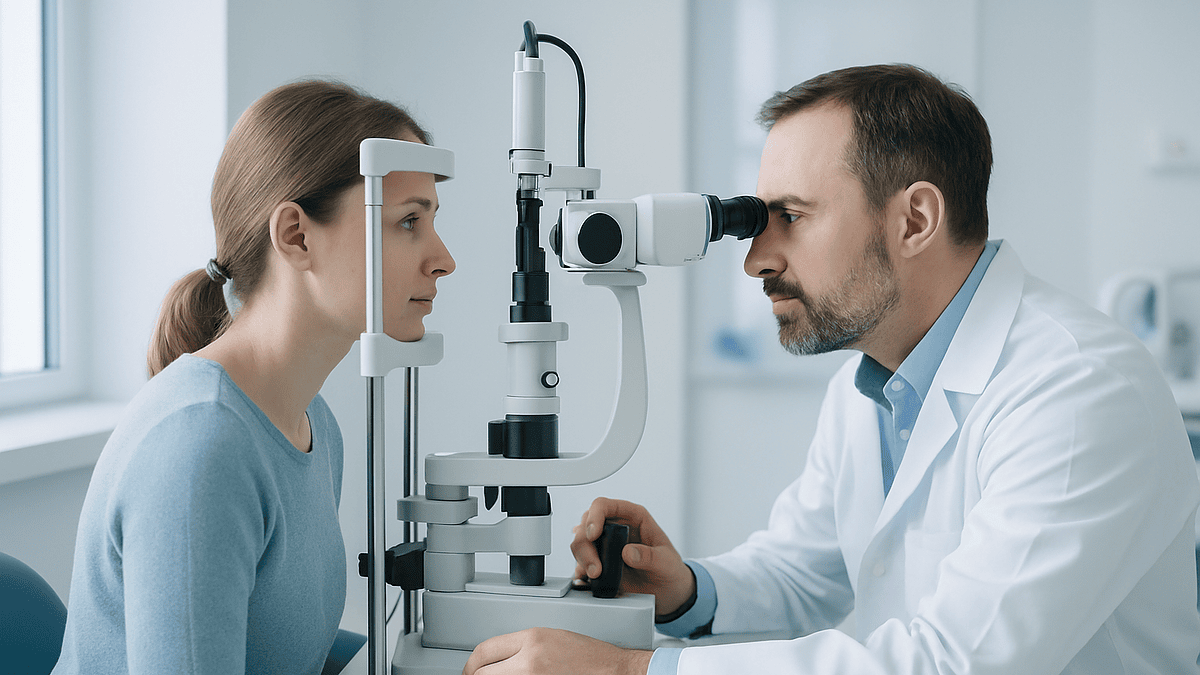
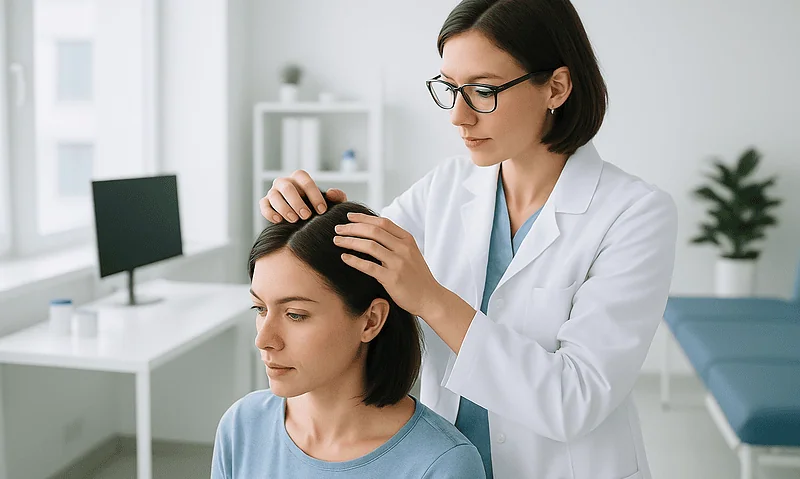
Then the examination. The surgeon looks at the brow skin under a dermatoscope, a handheld magnifier with polarized light, to see whether follicle openings are present, whether there is fine regrowth, redness, scaling or scarring. Skin that looks inflamed or shiny prompts a search for other causes, covered in the next section. The donor scalp is inspected for hair density, texture and color, because coarse, curly or very dark scalp hair set against fine, light brow hair can look mismatched.
Medical history rounds it out: bleeding tendencies, medicines that thin the blood, diabetes, smoking, a history of raised or keloid scars, and previous cosmetic tattooing in the area. Photographs are taken from several angles. Only then does design begin, and design is drawn on the face with the patient watching, not decided in advance.
Is it really over-plucking? The other causes surgeons rule out
Decades of tweezing make an easy explanation, and sometimes the easy explanation hides a second one. Several medical conditions thin the eyebrows, and a few of them make a transplant unwise until they are treated or settled.
Thyroid disease is the classic example. Both an underactive and an overactive thyroid can cause diffuse hair thinning, and the Mayo Clinic lists thyroid problems among the hormonal causes of hair loss. Loss concentrated at the outer third of the brows is a pattern that prompts many clinicians to check thyroid function.
Alopecia areata is an autoimmune condition in which the immune system attacks hair follicles, producing smooth, round bare patches, sometimes in the brows alone. Because it can wax and wane, grafts placed during active disease may be lost.
Frontal fibrosing alopecia deserves special mention. It is a scarring form of hair loss, most common in women after menopause, in which the hairline slowly recedes and the eyebrows often thin first, sometimes years before the scalp changes are noticed. Scarring alopecia destroys follicles permanently, and transplanting into skin where that process is still active tends to fail. Surgeons look for a receding hairline, loss of the fine baby hairs at the temples, and skin that looks pale and smooth, and they may ask a dermatologist to take a small skin biopsy, a sample examined under a microscope, before proceeding.
Other contributors are less dramatic but real: eczema or seborrheic dermatitis in the brow, low iron stores, restrictive dieting, recent serious illness, and certain medicines. MedlinePlus lists a wide range of illnesses, nutritional problems and medicines among causes of hair loss, which is why a short set of blood tests often forms part of the workup.
None of this means the plucking was innocent. It means the surgeon wants to know that the plucking is the whole story before treating it as such.
Who is usually a good eyebrow transplant candidate, and who is asked to wait
Candidacy is less about age or gender than about stability. The people surgeons feel most comfortable operating on share a handful of features: the brow loss has been stable for a sustained period with no ongoing plucking, the skin in the brow is healthy with no inflammation or scarring disease, the donor scalp has enough fine hair of a compatible color, general health is good, and the person understands that transplanted hairs will need trimming and that a second session is sometimes suggested to build density.
Equally important is a clear idea of what the result is for. Someone who wants the tail of the brow back so they can stop drawing it every morning is describing a well-defined, achievable goal. Someone who wants brows that look like a filtered photograph is describing a goal surgery cannot promise.
Surgeons commonly ask people to wait, or decline for now, in these situations:
- Plucking, threading or pulling of any kind is still happening, or stopped only recently, because the brow has not yet shown its true baseline.
- Hair pulling has features of trichotillomania, where the Cleveland Clinic notes treatment usually centers on behavioral therapy; surgery before that support is in place risks losing the grafts.
- Signs of frontal fibrosing alopecia, alopecia areata or another active skin disease in the brow, which need a dermatologist’s assessment first.
- Poorly controlled diabetes, bleeding disorders, or medicines affecting clotting that have not been reviewed by the prescribing clinician.
- Pregnancy or breastfeeding, when elective surgery is generally deferred.
- Age under eighteen, since brow shape and hair patterns are still changing.
- Expectations the surgeon believes cannot be met.
Being asked to wait is not a rejection. It is usually the most protective decision a surgeon makes, because the follicles at stake cannot be regrown once spent.
Eyebrow transplant vs regrowth medicines vs microblading: how the options compare
People weighing an eyebrow transplant after overplucking are rarely choosing between surgery and nothing. They are choosing among several routes with different timelines, permanence and risks. The table below sets them side by side in neutral terms; which one fits depends on the examination, not on the table.
| Option | What it does | Typical timeline | Key limits |
|---|---|---|---|
| Stop plucking and wait | Lets dormant, miniaturized follicles recover and show what remains | Months; the Mayo Clinic notes regrowth judgments generally need at least six months | Cannot revive follicles that have scarred over |
| Topical hair-growth medicine (for example, minoxidil, used off-label on brows) | Prolongs the growth phase and enlarges miniaturized follicles | At least six months to judge, per Mayo Clinic; effect fades if stopped | Needs living follicles; possible skin irritation; prescribing decision sits with a clinician |
| Brow makeup and tinted gels | Camouflages gaps daily | Immediate | Washes off; adds nothing to the follicle |
| Microblading or cosmetic tattooing | Deposits pigment to mimic hair strokes | Immediate; fades and needs refreshing | Pigment can shift color or blur; infection and allergy risk; may complicate later surgery |
| Eyebrow transplant | Moves living scalp follicles into the brow | Shedding then regrowth over months; NHS guidance describes final results emerging over roughly a year | Permanent commitment; needs trimming; surgical risks; requires stable, healthy skin |
Notice what the table does not say. It does not rank the options, because the right one for a brow with fine regrowth may be the wrong one for a brow with no follicles left, and only the examination can distinguish the two. Many surgeons also combine approaches: wait first, treat any skin disease, camouflage in the meantime, and consider grafts only for what fails to return.
FUE or FUT for eyebrow grafts: what actually happens on the day
Two techniques harvest donor follicles, and the choice affects the scar you carry on your scalp far more than the brow itself.
Follicular unit excision, usually shortened to FUE, removes follicles one at a time with a tiny circular punch, leaving scattered dot-sized marks that fade into the surrounding hair. Follicular unit transplantation, or FUT, removes a narrow strip of scalp from the back of the head, closes the wound with stitches, and dissects the strip into grafts under a microscope. The NHS describes both methods for hair transplants and notes that the strip technique leaves a linear scar, while FUE leaves many small ones. For the small number of grafts an eyebrow needs, many surgeons favor FUE, but a person with very short hair, a history of poor scarring, or particular donor characteristics may be guided differently, and the reasoning belongs in the consultation.
On the day, the donor area is trimmed and numbed with local anesthetic. Harvesting comes first, then the grafts are trimmed and sorted into single hairs while the brow is numbed and the recipient incisions are made along the design drawn earlier. The grafts are placed one by one, often with fine forceps, and checked for angle. Because the area is small and the work is precise, an eyebrow session is usually shorter than a full scalp session, though the surgeon’s own estimate is the only one worth relying on.
A few things people are glad to have known in advance: you are awake and can talk, the injections of anesthetic sting briefly, the brow feels tight rather than painful once numb, and you will leave with a light dressing on the scalp and nothing covering the brows, because the grafts need air and must not be rubbed. Someone else should drive you home. The following section describes what the next days bring.
Eyebrow hair transplant recovery: the first two weeks
The grafts are most vulnerable in the first several days, before they anchor into their new blood supply. Almost every aftercare instruction in that window exists to protect them from friction and pressure.
Expect the brow to look worse before it looks better. Small crusts form around each graft within a day or two, the skin pinkens, and swelling can drift downward toward the eyelids by the second or third morning, which alarms people who were not warned. Sleeping propped up on extra pillows helps the swelling drain. Bruising around the eyes, when it occurs, tends to peak early and fade over the following week. NHS guidance on hair transplants lists swelling, bruising, crusting and temporary numbness among the expected early effects.
Washing is usually reintroduced gently within the first days according to the surgeon’s own protocol, with water trickled over the area rather than sprayed, and no rubbing, picking or makeup on the brow until cleared. The donor area on the scalp typically feels tender and itchy as it heals; FUT stitches are removed at a follow-up visit, while FUE dots scab and fall away on their own.
Most people can return to desk-based work within a few days. The NHS notes that patients commonly go back to work around three days after a hair transplant, though anyone whose job involves heavy lifting, dust, sweating or helmets is usually asked to wait longer. Strenuous exercise, swimming, saunas and direct sun on the brow are generally restricted for a couple of weeks because heat, sweat and pressure can disturb grafts or invite infection.
By the end of the second week the crusts have usually gone, the tiny hairs still poke through the skin, and the brow can look convincingly complete. That appearance is temporary, and the next section explains why.
Months later: shedding, regrowth and the trimming routine
Somewhere in the weeks after surgery, most of the transplanted hairs fall out. This is the moment that generates the most anxious phone calls, and it is entirely expected. The follicle, jolted by the move, drops the hair shaft and enters a resting phase before starting a fresh growth cycle. MedlinePlus explains that transplanted hair typically sheds in the weeks after surgery and that this is normal and almost always temporary, with new growth resuming later. The follicle is still there under the skin; only the shaft has gone.
New hairs then emerge slowly and unevenly, fine at first and then thicker, so a brow can look patchy for a period before it looks full. The NHS describes hair transplant results developing over months, with the full effect taking up to a year or more to appear. Photographs taken at monthly intervals in the same light are far more reliable than the mirror, which tends to notice gaps and ignore progress.
Native brow hairs around the grafts sometimes shed too, a phenomenon called shock loss, in which existing hairs near a surgical site temporarily enter the resting phase. These usually return with the rest.
Then the trimming begins. Because the follicles came from the scalp, the hairs grow long and comparatively fast. A small pair of scissors and a brow comb become part of the weekly routine, and a clear brow gel helps train hairs to lie in the intended direction during the months when they are still deciding which way to fall. Some people notice the growth rate settles over time; others trim indefinitely. Both are normal outcomes rather than problems.
Once growth has matured, the surgeon assesses density and direction and discusses whether a second, smaller session would help fill remaining gaps. That is a shared decision, and many people are content with one.
Risks and honest limitations of eyebrow transplant surgery
Eyebrow transplantation is a minor operation with real risks, and a good consultation spends as much time on them as on the design.
The general surgical risks are those the NHS lists for any hair transplant: bleeding, infection, swelling, bruising, crusting, temporary numbness, itching, and inflammation of the follicles, known as folliculitis, which shows up as small pimple-like bumps around new hairs. Most are short-lived and manageable, but infection near the eye deserves prompt attention, which is why the red-flag section later in this article matters.
The brow-specific risks are more about aesthetics than health, and they are harder to undo. Hairs placed at too steep an angle stand up instead of lying flat. Grafts placed against the natural flow of the brow grow in the wrong direction and resist training. A two-hair graft that slipped through sorting creates a visible tuft. Density that looks good on the operating table can appear sparse or, less commonly, too heavy once everything grows. Small cysts can form where a graft was buried too deep. Because the two brows are placed separately, slight asymmetry is possible.
Then there is the question of take. Not every graft survives the move; some proportion in any hair transplant fails to grow, and the number varies with technique, tissue handling and the health of the recipient skin. Surgeons will not, and should not, quote a guaranteed figure for your brows.
The donor site carries its own footprint: a fine linear scar with FUT, scattered dots with FUE. Both hide under hair of ordinary length and both are visible with a very close crop.
Finally, the limitation people most often underestimate is permanence. The hairs are permanent, and so is the shape. Fashion in brows changes every decade; a transplanted brow does not. That argues for a conservative, natural design over a bold one, and most experienced surgeons will say so unprompted.
What people often get wrong about eyebrows after over-plucking
Brow folklore is abundant, and several of its favorite claims deserve a gentle correction.
The first myth is that eyebrows never grow back after a certain age. Age slows hair cycling, and follicles that have scarred will not return, but plenty of people see meaningful regrowth after they finally stop plucking, whatever their birth year. The variable that matters is follicle survival, not the calendar.
The second is that biotin supplements regrow brows. The NIH Office of Dietary Supplements is clear that true biotin deficiency is rare, that hair thinning is a symptom of deficiency rather than a reason to suspect it, and that there is insufficient evidence that biotin supplements improve hair growth in people who are not deficient. The same fact sheet warns that high biotin intake can interfere with certain laboratory tests, including some used to assess heart and thyroid function, so it is worth telling any clinician who orders blood work.
Third: castor oil, coconut oil and assorted serums restore lost follicles. Oils can condition existing hairs so they look glossier and less brittle, which is pleasant, but there is no mainstream evidence that they create new follicles or reverse scarring. Products claiming to do so should be treated with the skepticism their price tags usually deserve.
Fourth: microblading is a transplant without surgery. It is a tattoo. Pigment sits in the skin and fades, sometimes to gray or orange, and it does not produce hair. It can be a reasonable camouflage, but people considering surgery later should mention any tattooing, since pigment in the skin can complicate the surgeon’s view.
Fifth: the result is visible the day after surgery. It is not; the hairs shed and regrow over months, as described above.
Last, and most important: that thin brows from over-plucking are a vanity problem unworthy of medical attention. Brows frame expression, and losing them affects how people feel about their faces. That is a legitimate reason to seek advice.
Non-surgical alternatives while you wait or if surgery is not right for you
Being told to wait is not the same as being told to do nothing. Several approaches can support regrowth or improve appearance in the meantime, and some people find they never need the surgery they came to ask about.
The foundation is a complete stop to plucking, waxing and threading of the brow, including the stragglers that seem harmless. If stopping proves difficult because pulling has become automatic or urge-driven, that is worth raising with a clinician; the Cleveland Clinic describes behavioral therapy as the mainstay of treatment for trichotillomania, and support here protects both existing and any future hairs.
Medicines come in two main classes, and both are used on brows off-label, meaning outside the use they were originally approved for. Topical minoxidil is thought to work by prolonging the growth phase and improving blood flow around the follicle, and the Mayo Clinic notes that at least six months of use is typically needed before regrowth can be judged, with gains lost if it is stopped. Prostaglandin analogues, originally developed as glaucoma drops and later marketed for eyelash growth, lengthen the growth phase in a similar way and can cause skin darkening or eye color changes. Whether either is appropriate, and how it should be used, is a decision for the prescribing clinician after examining the skin; nothing here is a recommendation to start one.
Camouflage remains legitimate. Tinted gels, fine pencils and powders can rebuild a brow for the day, and a skilled brow professional can teach a shape that flatters rather than overcorrects. Semi-permanent cosmetic tattooing and microblading offer longer-lasting camouflage with the trade-offs already discussed: fading, possible color shift, and infection or allergy risk, all of which argue for a licensed, hygienic practitioner and a patch test.
Treating any underlying condition matters most of all. A brow thinned by thyroid disease or eczema often improves as the condition is managed, which is why the workup precedes any procedure.
Questions to ask your care team before agreeing to an eyebrow transplant
A consultation is a two-way examination. These questions help you assess the plan, the surgeon and your own readiness.
- Based on my examination, how much of my brow loss looks like follicle damage from plucking, and how much might still recover if I wait longer?
- Have you ruled out other causes, such as thyroid disease, alopecia areata or frontal fibrosing alopecia? Which tests, if any, do you recommend first?
- How long would you want me to be completely free of plucking or pulling before surgery, and why that period?
- Which harvesting technique do you suggest for me, and what will the donor scar look like with my hair length?
- How do you sort grafts into single hairs, and how do you decide the angle and direction of each one?
- Can you show me the design drawn on my face, and can we make it more conservative if I want to?
- What proportion of eyebrow patients in your practice return for a second session, and what usually prompts it?
- What are the specific risks in my case, including infection near the eye and hairs growing at the wrong angle, and how are they handled if they occur?
- What will the first two weeks look like, when can I wash, wear makeup, exercise and return to my particular job?
- When do the transplanted hairs shed, when should I expect regrowth, and when will we judge the final result together?
- How often will the new hairs need trimming, and how do I train their direction?
- Who do I contact after hours if something worries me, and what signs should prompt that call?
- Are there any of my medicines or supplements you would like reviewed by my prescribing clinician beforehand?
Write down the answers. A surgeon who welcomes the list and answers in specifics is telling you something reassuring about how the rest of your care is likely to go, and a plan you can explain back in your own words is a plan you have genuinely consented to.
When to call your doctor: red flags before and after an eyebrow transplant
Most eyebrow transplant recoveries are uneventful, and most brow thinning from over-plucking is exactly that. A few signs, however, should prompt a prompt call rather than a wait-and-see approach.
Before any procedure, seek medical advice if your brow loss is accompanied by a receding hairline, loss of the fine hairs at your temples, or skin in the brow that is pale, smooth and shiny, since these can suggest a scarring form of alopecia. Itching, burning, scaling or redness in the brow, sudden new patches of hair loss elsewhere on the body, or hair thinning alongside fatigue, weight change, feeling unusually cold or hot, or changes in heart rate also warrant assessment, because they point away from plucking alone. If you find you cannot stop pulling despite wanting to, that is a reason to ask for help, not a reason for shame.
After surgery, contact your surgical team the same day if you notice:
- Spreading redness, warmth or swelling around the brow or donor area, especially with pus or a foul smell
- Fever, chills or feeling generally unwell
- Pain that is increasing rather than easing, or that is not controlled by the measures your team advised
- Bleeding from grafts or the donor site that does not stop with gentle pressure
- Swelling that closes the eye, or any eye pain, redness of the eye itself, or change in vision
- A rash, hives, wheezing or swelling of the lips or tongue, which can indicate an allergic reaction to a dressing, ointment or medicine
- Several grafts dislodging with bleeding in the first days
Expected shedding of transplanted hairs in the weeks after surgery is not an emergency, but if you are unsure whether what you see is normal, calling is always the right choice. Your surgical team would rather hear from you unnecessarily than late.
Every decision described in this article, from whether to wait to whether to operate, belongs with the clinicians who have examined you. This explainer is a map of the territory, not a substitute for the visit.
Frequently asked questions
Can overplucked eyebrows grow back after 20 years?
Some can, depending on whether the follicles are dormant or destroyed. Follicles that have miniaturized often recover once plucking stops completely, producing fine hairs first and then thicker ones over months. Follicles replaced by scar tissue do not return. Surgeons generally advise a long tweezer-free period to find out which situation applies, and examine the skin under magnification for follicle openings before discussing surgery.
How does an eyebrow transplant work for over-plucked brows?
Hair follicles are taken from the scalp, usually the back of the head, sorted into single hairs under magnification, and placed into tiny incisions in the brow angled to match the natural direction of growth. The procedure is done under local anesthetic and patients go home the same day. The transplanted hairs shed and then regrow over the following months, keeping scalp-hair growth characteristics that require trimming.
How long after I stop plucking should I wait before considering a transplant?
Long enough for the brow to show its stable baseline, which surgeons judge individually rather than by a fixed number. Because hair regrowth is slow, with the Mayo Clinic noting that even regrowth medicines take at least six months to assess, many surgeons want a sustained tweezer-free period and stability on repeat photographs before operating. Your surgeon will set the timeframe after examining you.
Who is a good eyebrow transplant candidate?
Someone with stable brow loss, no ongoing plucking or pulling, healthy brow skin without inflammation or scarring disease, adequate donor scalp hair of a compatible texture and color, good general health, and realistic expectations about trimming and the possibility of a second session. People with active skin conditions, uncontrolled medical problems, recent cessation of plucking or ongoing hair pulling are usually asked to wait.
What does eyebrow hair transplant recovery look like in the first week?
Expect small crusts around each graft, pink skin, and swelling that can drift toward the eyelids in the first few days, along with tenderness at the scalp donor site. Sleeping propped up helps. Gentle washing is reintroduced per the surgeon’s protocol, with no rubbing or makeup on the brow. The NHS notes many people return to work around three days after a hair transplant, though strenuous activity is restricted longer.
Do transplanted eyebrow hairs fall out?
Yes, and it is expected. In the weeks after surgery most transplanted hairs shed as the follicles enter a resting phase, which MedlinePlus describes as normal and almost always temporary. The follicles remain under the skin and begin producing new hair some weeks later. Growth then fills in gradually over months, so the brow often looks patchy for a period before the final result becomes clear.
Will an eyebrow transplant look natural?
It can, but natural appearance depends on single-hair grafts, careful angle and direction, a conservative design, and ongoing trimming, because scalp hairs grow longer than brow hairs. Risks to a natural look include hairs standing up if placed too steeply, tufts from multi-hair grafts, and mismatched hair texture. Ask your surgeon to show the design on your face and to explain how grafts are sorted and placed.
Does biotin help eyebrows grow back?
The evidence does not support it for people who are not deficient. The NIH Office of Dietary Supplements states that biotin deficiency is rare and that there is insufficient evidence that supplements improve hair growth in healthy people. High biotin intake can also interfere with certain laboratory tests, including some heart and thyroid assays, so anyone taking it should tell the clinician ordering blood work.
Is microblading a good alternative to an eyebrow transplant?
It is a different tool for a different goal. Microblading deposits pigment into the skin to imitate hair strokes; it does not create hair and fades over time, sometimes shifting color. It offers immediate camouflage with risks of infection, allergy and pigment migration. A transplant moves living follicles and is permanent. Some people use camouflage while waiting to see how much natural regrowth occurs.
What if I still catch myself pulling my brow hairs?
Tell your surgeon honestly, because it changes the plan. Repetitive, hard-to-resist pulling may be trichotillomania, which the Cleveland Clinic describes as a treatable condition usually managed with behavioral therapy. Surgeons typically postpone transplantation until pulling is well controlled, since transplanted hairs can be pulled out just like native ones and the follicles lost with them cannot be replaced.
References
This article is for general information only and is not a substitute for professional medical advice. Please consult a qualified doctor about your individual situation.

More from the Blog
When Can You Judge DHI Hair Transplant Results? What Density Looks Like at Each Stage
A DHI hair transplant cannot be fairly judged for density until roughly 12 months, and sometimes up to 18 months, after the procedure. Transplanted…
FUE Hair Transplant Aftercare: Normal Crusting vs Folliculitis, Infection and When to Call
After FUE, thin light-colored crusts around each graft, mild redness and some itching are expected and usually settle within about two weeks. Signs that…

How Long Does Scalp Micropigmentation Last? Fading, Touch-Ups and What Changes Over the Years
Scalp micropigmentation is a cosmetic tattoo, and like any tattoo it softens over time rather than lasting forever. Practitioners generally describe the shading holding…

5,000+ Graft Sessions: What Mega-Sessions Can Do, and Their Safe Limits
A 5,000-graft hair transplant is a large "mega-session" that can cover extensive balding, roughly the front, mid-scalp, and part of the crown in advanced…
Can a Beard Transplant Cover Scars or Burned Skin? How Surgeons Test the Area Before Grafting
A beard transplant over scars or burned skin is sometimes possible, but graft survival depends on blood supply, scar thickness and skin movement, all…
Long Hair (Unshaven) Transplants: Who Qualifies and What to Expect
Long hair (unshaven) transplants are follicular unit procedures done without buzzing the recipient area, and sometimes without trimming the donor zone at all. Good…