

Is IPL Photorejuvenation Suitable for Your Skin Type? Why Tone and Tan Matter Before Treatment
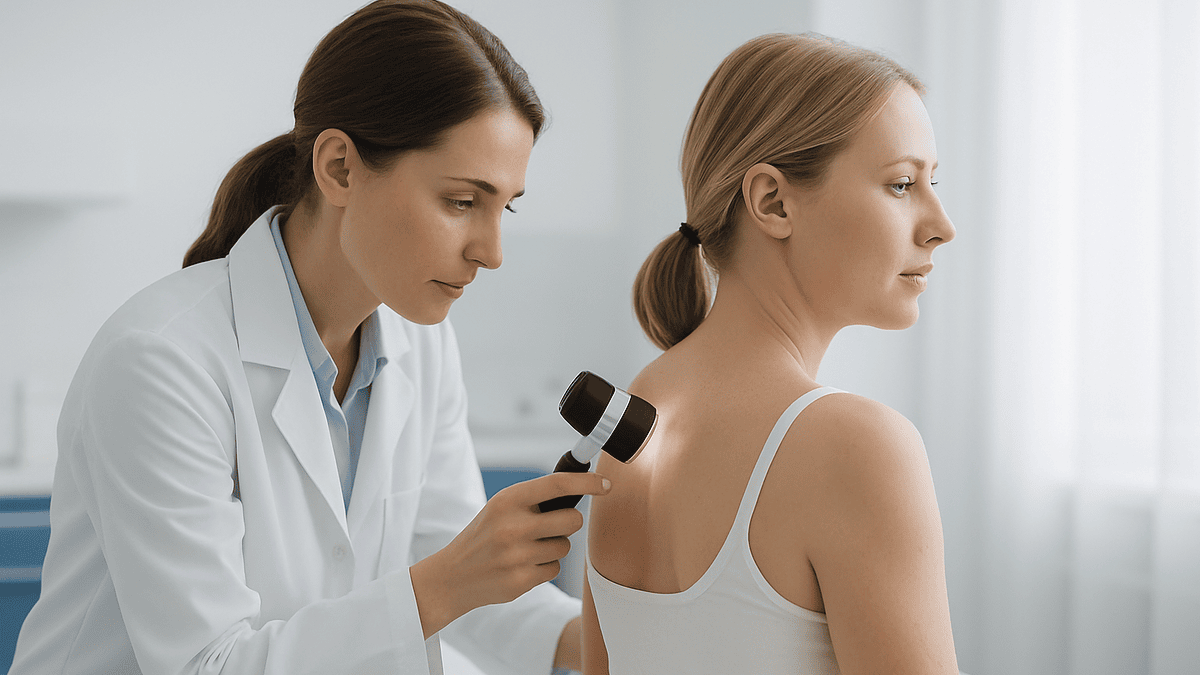
Key Takeaways
- IPL is a broad-spectrum flash lamp, not a laser, and its wide band of wavelengths is absorbed heavily by melanin throughout the epidermis rather than only at the target.
- Standard IPL photorejuvenation is generally reserved for Fitzpatrick types I to III, treated case by case on type IV, and usually avoided on types V and VI.
- A recent tan adds real melanin to the epidermis, so Mayo Clinic advises about six weeks without sun exposure before melanin-targeting light treatments.
- Long-pulsed Nd:YAG lasers at 1064 nm are the most commonly chosen light device for deeply pigmented skin because surface melanin absorbs that wavelength weakly.
- Melasma, a hormonally driven pigment disorder common in medium and deep skin, can worsen with heat and light, so the diagnosis of a brown patch matters more than the device.
- Post-inflammatory hyperpigmentation can appear days to weeks after treatment and take months to fade, which is why a test patch needs a real observation period before the face is treated.
IPL photorejuvenation is generally considered safest on lighter skin (Fitzpatrick types I to III) because its broad-spectrum light is absorbed by melanin in the skin itself, not only by the spot or vessel being treated. On deeper tones and recently tanned skin, that raises the risk of burns and dark or pale patches. Many clinicians steer darker skin toward longer-wavelength lasers or non-light options, decided after a consultation and test patch.
The flyer in the salon window promised a “photofacial” for sun spots and dullness, and Priya, who has deep olive skin that tans in an afternoon, stood reading it twice. Her cousin with fairer skin had raved about hers. Priya’s dermatologist, years earlier, had warned her that any heat on her face tended to leave a brown shadow that outlasted the original problem.
That hesitation is the right instinct, and it is why searches for IPL for dark skin fill forums with equal parts enthusiasm and cautionary tales. The same physics that lets intense pulsed light lift a freckle on pale skin makes it a blunt instrument on skin that carries more melanin.
This explainer walks through what IPL does, why tone and tan change the risk equation, which alternatives clinicians reach for on medium and deep skin, and what a careful consultation should look like before anyone flashes a light at your face.
What actually happens during IPL photorejuvenation
Intense pulsed light, or IPL, is not a laser. A laser fires one precise wavelength, a single color of light. IPL uses a flash lamp that releases a broad band of wavelengths in one burst, roughly from visible yellow-green through near-infrared, and the operator slides a filter into the handpiece to trim off the shorter, more aggressive wavelengths.
The idea rests on a principle called selective photothermolysis: a chromophore, which simply means a pigment that absorbs light, soaks up the energy and turns it into heat, while surrounding tissue that does not absorb that color stays cooler. Two chromophores matter for photorejuvenation. Hemoglobin in tiny dilated blood vessels absorbs light and the vessel wall is heated and collapses, which is how IPL softens rosacea flushing and broken capillaries. Melanin clumped in a sun spot absorbs light, the pigment fragments, and the spot darkens briefly before flaking away.
In the room, a cooling gel goes on, you wear opaque eye shields, and each pulse feels like a rubber band snapping against the skin. Cleveland Clinic describes a typical session as about 20 to 30 minutes, with most people having 3 to 6 treatments spaced roughly a month apart, and notes that redness and slight swelling can follow for a few hours to a couple of days.
Notice what is missing from that mechanism: any way for the light to tell the difference between melanin inside a sun spot and melanin spread evenly through healthy skin. On pale skin that hardly matters because there is little background pigment to absorb the energy. On deeper skin, it is the whole story.
Why melanin makes IPL for dark skin a different conversation
Melanin sits in the epidermis, the outermost layer of skin, packaged in granules whose number and size rise with natural skin tone and with sun exposure. When IPL passes through the epidermis on its way to a vessel or spot beneath, epidermal melanin absorbs a share of the energy first. The more melanin, the larger that share, and the hotter the surface layer becomes before any useful energy reaches the target.

Operators respond by lowering the fluence, the amount of energy delivered per area, and by lengthening the pulse so heat spreads more gently. Beyond a certain point, though, the energy left over is too weak to do anything useful, while the epidermis is still being heated. The treatment window narrows until it can close entirely.
Two injuries follow when that window is misjudged. Post-inflammatory hyperpigmentation, usually shortened to PIH, is the brown or gray-brown patch that darker skin lays down after almost any inflammation, from a pimple to a burn; Cleveland Clinic describes it as a common pattern of hyperpigmentation that can persist for months. Hypopigmentation is the opposite, a pale or white patch where melanin-producing cells were damaged, and it can be slower to recover and sometimes permanent.
Deeper skin also carries a greater tendency toward thick, raised scarring after injury, which is why a history of keloids appears on nearly every IPL screening form. None of this means darker skin is fragile. It means the margin between an effective dose and a harmful one is thinner, and the consequences of crossing it are more visible and more lasting.
What your Fitzpatrick skin type number really means
Clinicians classify skin for light-based treatment with the Fitzpatrick scale, a six-step grading of how skin responds to sun rather than a description of ethnicity. It was designed to predict burning and tanning, which is exactly the behavior that predicts how skin will handle a flash of intense light.
| Type | Sun response | How clinicians usually view IPL photorejuvenation |
|---|---|---|
| I | Always burns, never tans | Commonly treated; standard settings |
| II | Burns easily, tans minimally | Commonly treated |
| III | Burns moderately, tans gradually | Commonly treated with adjusted settings |
| IV | Burns minimally, tans easily | Case by case; conservative settings, longer filters, test patch |
| V | Rarely burns, tans deeply | Often declined; alternatives usually preferred |
| VI | Never burns, deeply pigmented | Generally avoided |
The scale has limits worth knowing. It was built around European skin and lumps enormous variety into types IV through VI. Two people who both identify as South Asian might be a III and a V. Someone with freckled, sun-reactive skin and dark hair might burn like a II despite an olive undertone. A recent tan can push a IV into behaving like a V for weeks.
A good practitioner therefore asks about your actual history, whether you blistered as a child, how long a summer tan lingers, whether shaving nicks leave marks, and looks at untanned skin such as the inner upper arm rather than guessing from your face. If you are ever assigned a Fitzpatrick type purely from your surname or a glance, that is a reason to look elsewhere for advice.
Who IPL photorejuvenation is usually for, and who is usually asked to wait
The people who tend to do well are those whose complaint is a sharp contrast against a light background: scattered brown sun spots on a pale forearm, red flushing across fair cheeks, a web of fine broken capillaries beside the nose. The light has a clear target, little background melanin competes for it, and the skin tolerates the energy needed to reach it.

Being asked to wait is common and is not a refusal. Typical reasons include:
- A recent tan or self-tanner, because either raises surface pigment. Mayo Clinic advises avoiding sun exposure for about six weeks before laser hair removal, and clinicians apply similar caution to IPL.
- Current or recent use of oral retinoids such as isotretinoin, a class of medicines that thin and sensitize the skin; the prescribing clinician sets the interval.
- Photosensitizing medicines, including some antibiotic and acne classes, which make skin react more strongly to light.
- Active cold sores, acne flares, eczema or any infection in the treatment area.
- Pregnancy, largely because safety data are lacking and because pregnancy hormones themselves drive pigment.
- Active melasma, discussed below, because heat can make it worse.
For darker skin, “wait” often expands into “consider something else.” A type IV patient with a few discrete sun spots might be offered a cautious test patch. A type V patient with diffuse unevenness will more often hear a recommendation for a longer-wavelength laser, a chemical peel formulated for deeper tones, or a topical pigment-regulating program first.
The decision is always the treating clinician’s to make with you, and the honest ones will tell you when the safest answer is not IPL at all.
Who should not use IPL at all? The clear no-go list
Some situations move past “wait” into “no,” and they apply regardless of skin tone, though several bite hardest on deeper skin.
A history of keloids or hypertrophic scarring is near the top. If your skin has ever answered a minor cut or piercing with a thick raised scar, a thermal injury from IPL can do the same on your face. Photosensitive conditions such as lupus, in which light triggers inflammation, are another. So is any seizure disorder provoked by flashing light, because the handpiece flashes repeatedly close to the eyes even behind shields.
Tattoos and permanent makeup in the treatment field absorb light intensely; IPL over a tattoo can blister the skin and blur the ink, and over tattooed brows it can burn. Operators mask or avoid these areas entirely.
Melasma deserves its own paragraph because it is so common in medium and deep skin, particularly in women of South Asian, Middle Eastern, Latin American and African descent. Melasma is a hormonally influenced pigment disorder in which the pigment-producing cells are overactive rather than clumped in one spot. Cleveland Clinic notes that heat and light are known triggers and that some laser and light treatments can worsen it. A brown patch that darkens with sun and pregnancy is far more likely to be melasma than a sun spot, and treating it with IPL is one of the most frequent ways people end up with a bigger patch than they started with.
The final entry is the practical one: skin that is Fitzpatrick V or VI with a standard broad-spectrum IPL device. Most guidance-level sources and device manufacturers treat this combination as contraindicated, not because the skin is unworthy of treatment but because the physics offers no safe window. When someone offers it anyway, ask what they plan to do differently and why.
Does IPL work on tanned skin? Why a summer glow changes the math
A tan is not a cosmetic layer sitting on top of your skin. It is a real increase in melanin, made by the same cells that give you your baseline tone, deposited in the same epidermis the IPL beam must cross. For a few weeks after a beach holiday, a person who is normally a Fitzpatrick III is, as far as a flash lamp is concerned, a IV or V.
That shift matters in two directions. The tanned epidermis absorbs more energy, so a setting that was comfortable at the last session can blister now. And the contrast between a sun spot and its background shrinks, so the treatment does less even when it does not harm. The operator ends up turning the energy down until it accomplishes little, or leaving it up and risking a burn. Neither is a good trade.
Self-tanner behaves differently but is no safer. Its active ingredient stains the dead outer cells rather than making melanin, but that stained layer still absorbs light and can heat unevenly, producing patchy marks. Most practitioners want it fully faded, which usually means a week or two of ordinary exfoliation.
The waiting interval clinicians quote for genuine sun tan runs to several weeks. Mayo Clinic’s guidance on laser hair removal, which shares the same melanin problem, advises avoiding sun exposure for six weeks beforehand and afterward and using broad-spectrum sunscreen daily in the meantime. The CDC’s sun-safety advice, shade in the middle of the day, protective clothing and SPF 15 or higher reapplied as directed, is the practical way to arrive at an appointment with your true baseline tone.
The irony is not lost on anyone: the seasons when people most want to fix sun spots are the seasons when they are least suitable for the treatment.
IPL for Indian skin: what medium-to-deep tones need to know
“Which IPL is best for Indian skin?” is one of the most typed versions of this question, and the honest answer is that it is the wrong question. South Asian skin spans roughly Fitzpatrick III to V, sometimes VI, and it is known for two tendencies that matter more than any brand of machine: a strong PIH response to inflammation and a high prevalence of melasma.
Put those together and the risk profile becomes clear. The most common pigment complaints among Indian, Pakistani, Bangladeshi and Sri Lankan patients, patchy darkening on the cheeks, forehead and upper lip, are frequently melasma or PIH rather than the discrete sun spots IPL handles well. Treating them with broad-spectrum light heats a large area of already reactive epidermis, and the pigment cells respond exactly as they were built to: by making more.
Where IPL is attempted on type III to IV South Asian skin, clinicians who publish on the subject describe the same set of adaptations. A longer cutoff filter removes the shorter wavelengths that melanin absorbs most greedily. Pulse durations are lengthened so heat dissipates rather than spiking. Fluence starts low and is raised only after a test patch has been observed for long enough for delayed pigment changes to appear. Active contact cooling protects the surface. Sun avoidance is strict for weeks on either side.
Even with all of that, many dermatologists treating South Asian skin prefer to start elsewhere: pigment-regulating topical programs, superficial chemical peels formulated for deeper tones, or a long-pulsed Nd:YAG laser for vascular concerns. A responsible consultation for Indian skin spends more time on the diagnosis of the brown patch than on the device, because if the patch is melasma, the device choice is moot.
Which laser is best for African American skin? Why longer wavelengths matter
The question of the “best” laser for Black skin has a physics answer rather than a brand answer. Melanin absorbs light strongly at shorter wavelengths and progressively less as the wavelength lengthens toward the infrared. A device that emits at longer wavelengths therefore passes through pigmented epidermis with less of its energy captured on the way, leaving more for the target below and less heat on the surface.
| Device class | Wavelength | Epidermal melanin absorption | Typical position for Fitzpatrick V to VI |
|---|---|---|---|
| IPL (broad spectrum) | Roughly 500 to 1200 nm, filtered | High | Generally avoided |
| Alexandrite | 755 nm | High | Generally avoided |
| Diode | Around 800 to 810 nm | Moderate | Used cautiously by some, long pulses |
| Long-pulsed Nd:YAG | 1064 nm | Low | Most commonly chosen |
Nd:YAG stands for neodymium-doped yttrium aluminum garnet, the crystal that generates the beam; you will hear it called “the 1064.” Its light reaches hair follicles and deeper vessels while being absorbed relatively little by surface melanin, which is why it is the workhorse for hair removal and some vascular work on deeply pigmented skin. The trade-off is that it is less efficient against the very thing many people want treated, superficial brown pigment, precisely because it ignores melanin so well.
For sun spots and unevenness on type V to VI skin, light is often not the first tool at all. Clinicians reach for topical regimens that slow pigment production, gentle peels, and careful management of the underlying cause, whether that is acne, shaving irritation or sun. Where lasers are used for pigment on deep skin, they tend to be low-energy, fractional or picosecond systems handled by practitioners with specific experience in skin of color, and even then a test patch comes first.
Best hair removal method for dark skin: IPL, laser, or something else
Many people who search for IPL for dark skin are really asking about hair. The mechanism is the same: melanin in the hair shaft absorbs light, heat travels down to the follicle and damages its ability to regrow. The catch is identical too. On dark skin, the epidermis is also full of melanin, so the light struggles to tell hair from skin.
That is why long-pulsed Nd:YAG dominates laser hair removal for Fitzpatrick V and VI. Its 1064 nm light is absorbed weakly by epidermal melanin yet still heats the dense pigment in a coarse dark hair. Mayo Clinic notes that laser hair removal is most effective for people with light skin and dark hair, that it typically takes 2 to 6 treatments spaced about 4 to 8 weeks apart, and that results are long-lasting rather than guaranteed permanent, with maintenance sessions often needed. The NHS gives the same picture, adding that it may not work well on light or gray hair and that the number of sessions depends on the area and hair type.
Standard IPL for hair removal on dark skin is generally discouraged for the reasons already covered: the energy needed to reach the follicle is the energy that burns the surface.
Non-light options have a real place. Electrolysis destroys one follicle at a time with a fine probe and electric current; because it does not rely on color, it works on any skin tone and any hair color, at the cost of being slow and best suited to small areas. Shaving with a single blade in the direction of growth, or clippers that leave a fraction of stubble, reduces the ingrown hairs and razor bumps that many people with curly hair and deep skin battle. Chemical depilatories dissolve hair at the surface but can irritate reactive skin. A prescription cream that slows hair growth by blocking an enzyme in the follicle exists for facial hair; whether it suits you is a decision for a prescriber.
Home IPL devices and dark skin: what the skin-tone sensor can and cannot do
Consumer IPL devices have brought the question home, quite literally. Most now carry a skin-tone sensor that reads the surface before it will fire, and many simply refuse to flash on Fitzpatrick V and VI. That lockout is a safety feature, not a slight, and forum threads full of people trying to trick the sensor with tape or a lighter patch of skin are describing a fast route to a burn.
Home devices deliver far lower energy than clinical systems, which is what makes unsupervised use tolerable at all. Lower energy also means slower, more modest results and more sessions, and it does not change the underlying physics for skin that sits at the edge of the sensor’s range. A type IV user who passes the sensor while carrying a fresh tan is in exactly the position a clinic would refuse to treat.
A handful of newer consumer units are marketed toward deeper tones, typically by using longer-wavelength filters and lower fluence. That is the right direction, but the trade-off is the same one clinics face: what is safe enough to fire on melanin-rich skin is weak enough that results, particularly on hair, may be slight. Claims that a specific device is proven effective on dark skin should be read as marketing until independent evidence appears.
Melasma is the quiet danger with home use. Someone with a hormonal brown patch on the cheek, reading a device manual that talks only about skin “tone,” may flash it repeatedly and watch the patch spread. No sensor detects melasma. If you have uneven pigment on the face rather than discrete spots, a clinician’s diagnosis before buying anything is the more useful purchase. And whatever the device, the eye shields and the manufacturer’s tone chart are not optional extras.
What a careful consultation and test patch should look like
The single most protective thing that can happen before IPL on medium or deep skin is a proper consultation, and it has recognizable features.
The practitioner should take a history that covers your natural burn-and-tan pattern, recent sun and self-tanner, medicines including anything that increases light sensitivity, past scarring, pregnancy or breastfeeding, and whether you have ever had a laser or peel and how your skin responded. They should examine untanned skin, not just your face, and assign a Fitzpatrick type out loud so you can question it. They should tell you what they think the brown marks actually are. If the word melasma never comes up in a consultation about facial pigmentation on olive or brown skin, ask about it directly.
Then comes the test patch: one or a few pulses in an inconspicuous area, such as behind the ear or under the jaw, at the settings they intend to use. Its purpose is not to show results but to reveal harm, and because PIH can surface days or weeks after the heat, the observation period must be long enough to catch it. A practitioner who offers a test patch and full treatment in the same visit has misunderstood what the test is for.
Photographs under consistent lighting protect both of you and make delayed changes measurable. Written aftercare, a way to reach the clinic if something looks wrong, and a clear statement of what the treatment can and cannot do complete the picture.
The consultation is also the moment to hear “no.” A clinician who declines to treat type V skin with IPL and explains the alternatives is demonstrating competence, not turning you away.
What the days and weeks after IPL usually look like
Immediately afterward the treated area is typically pink and slightly puffy, with a warmth like mild sunburn. Cleveland Clinic describes this settling over a few hours to a couple of days. Treated sun spots often darken within the first day, sometimes looking like coffee grounds sitting on the skin, and then lift and flake away over roughly a week as the skin turns over. Treated vessels may look slightly more flushed before fading.
On deeper skin this early phase deserves closer attention than on pale skin. Darkening that is confined to the spots themselves is expected. Darkening that spreads into the surrounding skin, or a gray-brown haze over the whole treated field, is the early face of PIH and should be reported rather than waited out.
Aftercare is mostly restraint. Cool compresses ease heat. Gentle cleanser and a bland moisturizer replace anything with acids, retinoids or fragrance for a period your clinician sets. Broad-spectrum sunscreen, reapplied during the day, is the only genuinely non-negotiable step, because a freshly treated epidermis exposed to sun is the classic setup for new pigment. Hats and shade matter as much as the bottle.
Sessions for a full course are usually spaced about a month apart in Cleveland Clinic’s description, allowing the skin to complete its healing and reveal any delayed pigment change before the next round. Skipping that interval to speed things up removes the very safety check darker skin most needs.
Pigment changes on medium and deep skin can appear late and fade slowly. Cleveland Clinic notes PIH may take months to lift, and hypopigmentation can be slower still. Your clinician may discuss topical measures that calm pigment production during that recovery; what, if anything, is appropriate is their call with you.
What people often get wrong about IPL and dark skin
Forums and comment threads on this topic are full of confident half-truths. A few are worth correcting plainly.
“IPL is just a gentler laser.” It is not a laser at all. Its broad spectrum is precisely why it interacts with melanin more indiscriminately than a single-wavelength device, and why a long-pulsed 1064 nm laser can be safer on deep skin than the “gentle” IPL.
“Dark skin cannot have any light treatment.” False. Long-wavelength lasers are used routinely for hair removal and some vascular work on Fitzpatrick V and VI. What deep skin generally cannot have safely is standard broad-spectrum IPL.
“If the home device fires, it is safe for me.” The sensor reads surface tone in one spot. It does not know about your tan, your melasma, your photosensitizing medicine or your keloid history.
“A tan protects my skin during treatment.” The reverse. A tan is extra melanin, which means extra heat absorbed exactly where you do not want it.
“If it does not sting, it is not working.” Comfort is not a dosing gauge. On darker skin, the pain threshold is often crossed after the injury threshold, not before.
“A dark mark after treatment is a burn scar.” Usually it is PIH, an inflammatory pigment response that often fades over months with sun protection and appropriate care. It is still a sign the setting was too aggressive, and still worth a call.
“One session fixes it.” Cleveland Clinic and Mayo Clinic both describe courses of several sessions weeks apart, with maintenance often needed. Anyone promising a single-visit transformation is selling, not informing.
“My cousin’s results predict mine.” Only if you share a Fitzpatrick type, a diagnosis and a tan status. Family resemblance does not settle any of the three.
Questions to ask your care team before IPL on medium or deep skin
A consultation is a two-way examination. These questions tend to separate practitioners who understand skin of color from those who own a machine.
- What Fitzpatrick type are you assigning me, based on what, and does my recent sun exposure change it?
- What do you think these marks actually are? Could any of them be melasma or post-inflammatory pigmentation rather than sun damage?
- Given my type and diagnosis, is IPL the right tool, or would a longer-wavelength laser, a peel or a topical program be safer or more effective first?
- What filter, pulse duration and cooling will you use for my skin, and how do they differ from your settings for lighter skin?
- Will you do a test patch, where, and how long will you wait before treating my face?
- How much experience do you have treating Fitzpatrick IV to VI skin with this device, and what complications have you seen?
- What does post-inflammatory hyperpigmentation look like in the first days, and what should I do if I notice it?
- What are the chances I see little benefit at settings safe for my skin, and how will we decide when to stop?
- Which of my medicines, supplements or skincare products should I pause, and who decides the timing?
- How many sessions do you anticipate, spaced how far apart, and what happens if my skin reacts between them?
- How do I reach you outside clinic hours if something looks wrong?
Write the answers down. A practitioner who welcomes these questions, gives specific answers and is comfortable saying “I would not treat you with IPL” is showing exactly the judgment the procedure requires. The decision to proceed, adjust or choose a different path belongs to that clinician and to you, and to no flyer in a window.
When to call your doctor after IPL
Most reactions after IPL are mild and settle within days. Some are not, and on darker skin the difference between a nuisance and a lasting mark often comes down to how quickly it is assessed. Contact the treating clinic or your doctor promptly if you notice any of the following.
- Blistering, weeping or a raw, peeling area, which suggests a burn deeper than the epidermis.
- Pain that worsens after the first day instead of easing, or a burning sensation that persists.
- Spreading redness, warmth, swelling, pus or yellow crusting, or a fever, which can indicate infection.
- Gray, white or pale patches appearing in the treated field, since hypopigmentation is easier to address early.
- Brown or gray-brown darkening that extends beyond the spots treated or continues to deepen over days to weeks.
- Any eye symptom after a facial treatment, including pain, light sensitivity, blurred vision or a dark spot in your vision, which needs same-day medical attention.
- A raised, thickened or itchy area forming along the treated skin in the following weeks, particularly if you have a history of keloids.
- Any reaction that leaves you worried, even if it is not on this list.
Seek urgent care for extensive blistering, signs of a spreading skin infection with fever, or any sudden change in vision. For pigment changes noticed late, weeks after the session, still make the call; PIH and hypopigmentation are managed differently and a clinician can tell them apart.
Do not try to fix a suspected complication with over-the-counter lightening products, scrubs or a second flash from a home device. Document it with a photograph in daylight, protect it from the sun, and let the team that treated you, or your own doctor, decide the next step.
Frequently asked questions
Is IPL safe for dark skin?
Standard broad-spectrum IPL is generally not considered safe for Fitzpatrick types V and VI, because melanin throughout the skin absorbs the light and the surface overheats before the target does. Type IV skin is treated case by case with longer filters, lower energy and a test patch. Lighter types tolerate IPL best. Whether it suits your skin is a judgment for a clinician who has examined you, not a general rule.
Which IPL is best for Indian skin?
No particular IPL device is established as best for Indian skin, and many clinicians would question whether IPL is the right tool at all. South Asian skin often sits at Fitzpatrick III to V, has a strong tendency to post-inflammatory hyperpigmentation, and frequently carries melasma, which heat can worsen. Where IPL is used, longer filters, low fluence and a test patch are standard; alternatives such as topical programs, peels or a 1064 nm laser are often preferred.
Which laser is best for African American skin?
For deeply pigmented skin, the long-pulsed Nd:YAG laser at 1064 nm is the most commonly chosen light device, because surface melanin absorbs that wavelength relatively weakly, leaving more energy for hair follicles or vessels and less heat in the epidermis. It is widely used for hair removal on Fitzpatrick V and VI. For brown spots on deep skin, clinicians often start with non-light approaches. The right choice depends on the specific concern.
What is the best hair removal method for people with dark skin?
There is no single best method; the choice depends on the area, hair color and how your skin reacts. Long-pulsed Nd:YAG laser is the light-based option most often used on deep skin, typically over several sessions weeks apart according to Mayo Clinic. Electrolysis works on any skin and hair color but is slow. Careful shaving, clippers and depilatories remain reasonable everyday options, especially for people prone to razor bumps.
Who should not use IPL?
People with Fitzpatrick V or VI skin using standard IPL, anyone with a recent tan or self-tanner, those with a history of keloid scarring, photosensitive conditions such as lupus, or seizures triggered by flashing light, and anyone with tattoos or permanent makeup in the treatment area. Active melasma, current oral retinoid use, photosensitizing medicines, pregnancy and active skin infection are also common reasons clinicians decline or postpone treatment.
Does IPL work on tanned skin?
IPL is usually postponed on tanned skin. A tan is extra melanin in the epidermis, which absorbs more of the light, raising burn risk while shrinking the contrast between a sun spot and its background so the treatment achieves less. Mayo Clinic advises avoiding sun exposure for about six weeks before melanin-targeting light treatments, and self-tanner should be fully faded. Arriving at your true baseline tone is safer and more effective.
Can IPL cause hyperpigmentation on brown skin?
Yes. Post-inflammatory hyperpigmentation, a brown or gray-brown patch laid down after inflammation, is the most common complication of IPL on medium and deep skin. It can appear days to weeks after treatment and, according to Cleveland Clinic, may take months to fade. The risk is reduced by conservative settings, strict sun protection and a properly observed test patch, but it cannot be eliminated on melanin-rich skin.
Can IPL treat melasma?
IPL is generally not recommended for melasma and can make it worse. Melasma is a hormonally influenced pigment disorder in which pigment cells are overactive across a patch rather than clumped in a spot, and Cleveland Clinic lists heat and light among its triggers. Because melasma is common in medium and deep skin and easily mistaken for sun damage, getting the diagnosis right before any light treatment matters more than the device.
How many IPL sessions are usually needed and how far apart?
Cleveland Clinic describes a typical IPL photorejuvenation course as 3 to 6 sessions spaced about a month apart, each lasting roughly 20 to 30 minutes, with maintenance sometimes needed later. On darker skin the interval between sessions is also a safety check, giving delayed pigment changes time to show before the next round. Your clinician sets the number and spacing based on how your skin responds.
Is IPL safe for Fitzpatrick type 4 skin?
Type IV skin is a gray zone that clinicians handle case by case rather than by rule. Some will treat discrete sun spots or vascular concerns with longer cutoff filters, lower energy, longer pulses, active cooling and a test patch observed for delayed pigment change. Others prefer alternatives, particularly for diffuse pigmentation or possible melasma. A recent tan can push type IV skin out of the safe range entirely.
References
This article is for general information only and is not a substitute for professional medical advice. Please consult a qualified doctor about your individual situation.

More from the Blog
How to Prepare for Microneedling: Sun, Retinoids and the Two Weeks Before Your Session
Preparing for microneedling usually means keeping the skin out of strong sun and free of sunburn or tan for the two weeks beforehand, pausing…
IPL Photorejuvenation Results: Why Spots Darken Before They Fade and How Sessions Build
IPL photorejuvenation results usually appear gradually. Treated brown spots often turn darker and coffee-ground-like for several days before flaking away over one to two…

Surface Reconstruction Recovery: Early Supervised Walking, Physical Therapy and Milestones
Surface reconstruction recovery after ocular surface surgery usually unfolds in stages: the corneal surface layer re-covers over days, comfort and light sensitivity settle over…

Before Aesthetic Filling: Blood Thinners, Alcohol and Supplements Your Doctor Will Review
Before dermal fillers, clinicians typically review anything that increases bruising or bleeding: prescribed anticoagulants and antiplatelet drugs, over-the-counter anti-inflammatory painkillers, supplements such as fish…
Reconstruction After Cancer or Infection: How Grafts, Flaps and Staged Surgery Are Planned
Reconstructive surgery after cancer or infection rebuilds tissue removed by a tumor operation or destroyed by infection, using skin grafts, flaps of tissue moved…

Why Hands Show Age Early: Volume Loss, Visible Veins and Sun Spots and How Each Is Treated
Hands show age early because their skin is thin, has very little fat beneath it, and spends decades in sunlight without protection. Over time…