

Latent vs Active Tuberculosis: How Treatment Differs and Why Latent TB Is Still Treated

Key Takeaways
- Latent TB infection is not contagious and shows a normal chest X-ray, yet about 5 to 10 percent of untreated infections progress to active disease over a lifetime, half of them within the first two years (CDC).
- Latent TB is treated with one or two medicines for three to four months in the regimens the CDC now prefers, while active TB needs a multidrug course of roughly six months or longer.
- Skin and blood tests cannot distinguish latent from active TB, which is why a chest X-ray and symptom review always come before a latent regimen is prescribed.
- Combination therapy for active TB is arithmetic, not excess: a large bacterial population always contains a few organisms resistant to any single drug, and several medicines together stop them from taking over.
- Rifamycin medicines turn urine, sweat, and tears orange and can permanently stain soft contact lenses; this is harmless, unlike dark brown urine or yellowing eyes, which need a same-day call.
- TB skin and blood tests usually stay positive for life after infection, so keep written proof of completed treatment to avoid being retested and retreated unnecessarily.
Latent TB infection and active TB disease are both treated, but differently. Latent TB, where bacteria are dormant and not contagious, is usually managed with one or two medicines for about three to four months to prevent future illness. Active TB, which causes symptoms and can spread, needs several medicines for six months or longer. Latent treatment matters because 5 to 10 percent of untreated infections become active disease.
The call comes on an ordinary Tuesday. A workplace screening blood test has come back positive for tuberculosis. Your chest X-ray is clear, you have never coughed up anything alarming, and you ran three miles last weekend. Then the nurse says the word that makes no sense: treatment. Months of it. For an infection you cannot feel.
That gap between how you feel and what you are being told is the heart of the latent vs active TB treatment question, and it is where most of the confusion, and most of the abandoned prescriptions, come from. Two people can carry the same bacterium and need completely different care: one walks out with a short course and no restrictions, the other spends weeks at home on a multidrug regimen with a public health team tracing their contacts.
This explainer walks through why those paths diverge, what the medicines are doing in each case, and why guidelines are so insistent that the silent form still deserves treatment. Every decision along the way belongs to you and your treating team; the goal here is that you arrive at those conversations already understanding the map.
What is the difference between latent and active tuberculosis?
Tuberculosis is caused by a slow-growing bacterium, Mycobacterium tuberculosis, that travels in tiny droplets when someone with disease in the lungs or throat coughs, speaks, or sings. What happens after those droplets are inhaled is where the two labels come from.
In most people, the immune system corrals the bacteria inside small clusters of immune cells called granulomas, walled-off pockets where the bacteria survive but cannot multiply freely. That state is latent TB infection, sometimes now called inactive TB. The person has no symptoms, cannot pass the bacteria to anyone, and would never know anything was there without a skin or blood test that detects the immune system’s memory of the encounter. The World Health Organization estimates that about a quarter of the world’s population has been infected in this way (WHO).
Active TB disease is what happens when the wall fails. The bacteria begin dividing, damage tissue, and produce the picture most people associate with tuberculosis: a cough that drags on, fever, drenching night sweats, weight loss. When the lungs are involved, the person can spread infection. TB can also settle in lymph nodes, bones, kidneys, or the lining of the brain, and those extrapulmonary forms, meaning disease outside the lungs, are usually not contagious but are just as serious (Mayo Clinic).
The distinction matters because it determines everything downstream: whether you need to stay home, how many medicines you take, how long you take them, and how closely your liver and other organs are watched. Same bacterium, two very different clinical situations. Everything else in this article follows from that fork.
Latent vs active TB treatment: what the medicines are actually doing
Think of the bacterial population as a crowd rather than a single enemy. In latent infection the crowd is small and mostly asleep. Dormant bacteria barely divide, which makes them hard to kill but also means there are too few of them to develop resistance quickly. That is why latent TB can be treated with a single medicine, or two, and why a course measured in a few months is enough (CDC).
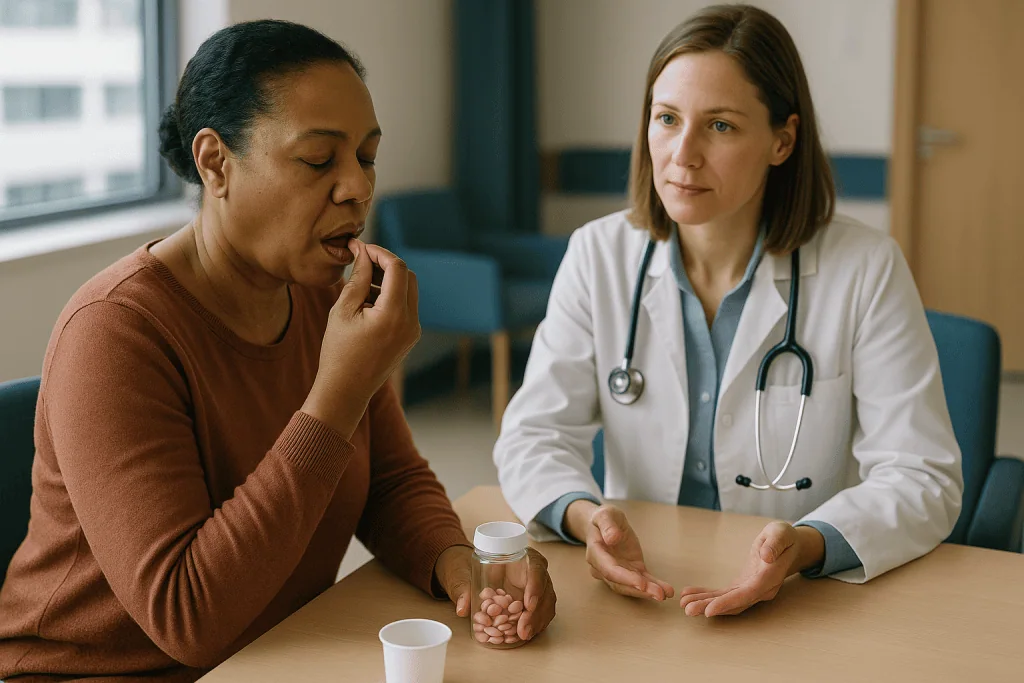
Active disease is a different crowd. Inside a cavity in the lung there may be enormous numbers of bacteria in several states at once: some dividing rapidly in oxygen-rich areas, some sitting semi-dormant in the acidic interior of immune cells, and a stubborn minority, often called persisters, that switch off their metabolism and simply wait. No single medicine reaches all of them. Isoniazid works well against fast dividers; the rifamycin class, which includes rifampin, is valued for reaching the persisters; pyrazinamide is active in acidic pockets; ethambutol adds a safeguard in case the strain already resists one of the others.
Using several medicines together is not overkill. It is arithmetic. A large bacterial population will, by chance, contain a few organisms already resistant to any one drug. Give that drug alone and those few survive and take over. Give several at once and a bacterium would need to be resistant to all of them simultaneously, which is vanishingly rare. This is also why clinicians insist on excluding active disease before prescribing a latent regimen: a single medicine given to someone who unknowingly has active TB can breed a resistant strain (CDC).
Length follows from biology too. M. tuberculosis divides far more slowly than the bacteria behind common infections such as strep throat, and the persisters have to be caught during their occasional stirrings. Hence months, not days, for either type of treatment, and considerably more months for active disease.
Is it worth treating latent TB if I feel completely fine?
This is the question that stalls most people, and it deserves a straight answer rather than reassurance. Left untreated, roughly 5 to 10 percent of people with latent TB infection will develop active disease during their lifetime, and about half of those who do will do so within the first two years after infection (CDC). For someone with a weakened immune system the risk climbs sharply; people living with HIV, for instance, face a far higher year-by-year risk than the general population (WHO).
Five to 10 percent may not sound alarming until you consider what sits on the other side. Active TB means months of a multidrug regimen, weeks of isolation, a public health investigation of your household and workplace, and permanent lung scarring for some. Those consequences do not stay with you. The people most exposed when latent infection wakes up are the ones you live with, and children in the household are among the most vulnerable to severe forms of the disease (WHO).
Set against that, latent treatment is short, uses one or two medicines, requires no isolation, and, in the rifamycin-based regimens now preferred, carries a lower risk of liver injury than the older longer course (CDC). Preventive treatment of infection is one of the two pillars of the global strategy to reduce TB, alongside finding and treating active disease (WHO).
An honest opinion, grounded in that evidence: for most people offered latent treatment, taking it is the better bet. The exceptions are real and individual, an older adult with fragile liver function, say, or someone whose exposure was decades ago and whose risk profile is low. That weighing is exactly what your clinician is for. What you should not do is decide by how you feel today, because feeling fine is the defining feature of latent TB.
How is latent TB diagnosed before treatment starts?
Two tests detect the immune system’s memory of TB bacteria. The tuberculin skin test places a small amount of purified protein under the skin of the forearm; a clinician measures any firm swelling 48 to 72 hours later (CDC). The interferon-gamma release assay, or IGRA, is a blood test that measures how strongly certain white cells react to TB proteins in a laboratory dish. IGRAs need one visit and are not affected by prior BCG vaccination, the childhood TB vaccine used in many countries that can cause a false-positive skin test, so they are often preferred for people who were vaccinated (CDC).

Here is the part that surprises people: neither test can tell latent infection from active disease. Both simply say the body has met the bacteria. So a positive result triggers a second step. Your clinician asks about symptoms, orders a chest X-ray, and, if there is any cough or X-ray abnormality, sends sputum, the mucus coughed up from the lungs, for microscopy, culture, and molecular testing (Mayo Clinic). Only when active disease has been excluded does the latent label apply.
This sequence is not bureaucracy. Culture results can take weeks because the bacteria grow so slowly, and clinicians sometimes hold off on a latent regimen until they are confident. False negatives happen too: very recent exposure, a weak immune system, or advanced age can blunt both tests, which is why close contacts of someone with active TB are often retested some weeks after a first negative result (CDC).
Bring your history to that visit. Country of birth, past positive tests, BCG vaccination, prior TB treatment, every medicine you take, and any liver problems all shape which regimen fits you and whether baseline blood tests are needed before the first prescription is written.
Who is usually offered latent TB treatment, and who is asked to wait?
Guidelines from the CDC and WHO do not treat every positive test the same way. They prioritize people whose odds of progression are highest, or for whom active disease would be most dangerous.
At the front of the line are recent close contacts of someone with infectious TB, people living with HIV, and anyone about to start medicines that suppress the immune system, including the TNF-blocker class used for rheumatoid arthritis, Crohn’s disease, and psoriasis, and the anti-rejection drugs given around organ transplant. Children under five who have been exposed, people with diabetes, chronic kidney disease requiring dialysis, silicosis, or significant undernutrition, and those who have moved from regions where TB is common are also strongly encouraged to treat (CDC; WHO). A healthcare worker whose test has newly turned positive falls into this group as well.
Who is asked to wait? Anyone in whom active TB has not yet been fully excluded, because a latent regimen could then fuel resistance. Someone with acute hepatitis or unstable liver disease is generally deferred until the liver recovers, since the main medicines are processed there. During pregnancy, clinicians often delay treatment until after delivery unless the person is at high risk of progression, in which case the balance tips toward treating (CDC). Heavy alcohol use does not rule treatment out, but it prompts closer monitoring and an honest conversation.
Drug interactions rarely mean no treatment; they mean a different regimen. The rifamycins speed up the breakdown of many other medicines, including some HIV antiretrovirals, blood thinners, and hormonal contraceptives, so a clinician may choose a non-rifamycin course or adjust the other prescriptions.
Someone who completed latent treatment in the past is usually not treated again unless there has been a new exposure. Keep the paperwork. Tests stay positive for life, and documentation spares you from repeating this whole process.
How is latent TB treated? The shorter regimens explained
Latent TB treatment options have changed more than most people realize. For decades the standard was a long course of isoniazid alone, lasting six or nine months. That regimen still exists and is still used when others are unsuitable, but the CDC now prefers shorter rifamycin-based courses lasting three or four months: rifampin on its own, isoniazid combined with rifampin, or isoniazid combined with rifapentine, a long-acting relative of rifampin (CDC).
Why the shift? Two reasons the evidence supports. People are far more likely to finish a three-month course than a nine-month one, and an unfinished course protects nobody. And the rifamycin-based regimens carry a lower rate of liver injury than prolonged isoniazid (CDC). Shorter, safer, and more often completed is a rare combination in medicine and worth appreciating.
The choice between regimens is individual. Rifapentine-containing courses are often taken with support from a clinic or a video check-in, a form of directly observed therapy in which someone confirms the medicine was actually taken. Rifampin alone suits people who cannot tolerate isoniazid. Isoniazid alone remains the fallback when rifamycins clash with other essential medicines, as they can with certain HIV or transplant drugs. Children, pregnant people, and those with liver conditions each have specific pathways in the guidelines, and the prescribing clinician weighs all of it.
Practical points people wish they had known: rifamycins turn urine, sweat, and tears orange, harmlessly, and can permanently tint soft contact lenses. Isoniazid can cause tingling in the feet, which clinicians often head off by pairing it with a B vitamin. Alcohol is usually discouraged for the duration because the liver is already working harder (NHS). None of this is a reason to avoid treatment; it is a reason to ask questions before you start so nothing catches you off guard.
How is active TB treated, and why does it take so long?
Active, drug-susceptible TB is treated with a combination of medicines, most often isoniazid, rifampin, pyrazinamide, and ethambutol together at first, followed by a longer stretch on fewer drugs once the bacterial load has fallen. The standard course runs about six months, extending to nine in some circumstances, and the CDC also describes a four-month regimen built around rifapentine and moxifloxacin for people who meet specific criteria (CDC). Disease in the brain, spine, or bones typically requires longer treatment because those tissues are harder for medicines to reach (Mayo Clinic).
Drug-resistant TB, where the bacteria have already learned to survive one or more of the standard medicines, is a separate and more demanding road. WHO now recommends shorter all-oral regimens for many patients where older approaches required well over a year and injections, though treatment remains longer and side effects heavier than for susceptible disease (WHO).
Monitoring is more intensive than for latent infection. Expect repeated sputum samples to confirm the bacteria are clearing, blood tests for liver function, and vision checks while on ethambutol, which can occasionally affect color perception and sharpness. Directly observed therapy, in which a health worker or a video link confirms the medicine is taken, is standard practice in many programs because interrupted treatment is the single biggest driver of resistance (CDC).
Isolation is part of the early plan for pulmonary disease. Staying home, sleeping in a separate room, and ventilating the space protect household members until the team, guided by sputum results, confirms you are no longer infectious.
The most common mistake is emotional rather than medical. Symptoms often ease within weeks, and it becomes tempting to slack off. The persisters, the bacteria lying dormant in scar tissue, are the reason the course continues long after you feel well. Stopping early hands them the field.
Latent vs active TB treatment at a glance
Seeing the two pathways side by side makes the logic click. The columns below summarize what guidelines from the CDC and WHO describe as typical; your own plan may differ for good reasons that your team will explain.
| Feature | Latent TB infection | Active TB disease |
|---|---|---|
| Symptoms | None | Cough, fever, night sweats, weight loss, or organ-specific signs |
| Contagious? | No | Yes, when lungs or throat are involved |
| Skin or blood test | Usually positive | Usually positive, may be negative if very ill |
| Chest X-ray and sputum | Normal; sputum not needed or negative | Often abnormal; sputum may show bacteria |
| Number of medicines | One or two | Usually four at first, then fewer |
| Typical length (CDC) | Three or four months preferred; six or nine months for older single-drug course | About six months; four months for eligible people; nine or longer for some sites or resistance |
| Isolation | None | Until the team confirms you are no longer infectious |
| Monitoring | Symptom check-ins; liver tests for some | Sputum cultures, liver tests, vision checks, often directly observed therapy |
| Goal | Prevent disease from ever developing | Treat disease, stop spread, prevent resistance |
Notice what the table does not say. It does not say latent treatment is optional, and it does not say active treatment is hopeless. Both are structured, evidence-based programs with a defined finish line. The difference is scale: a small dormant population needs a modest intervention, a large active one needs a coordinated assault.
One more observation worth carrying into your appointment. The gap in monitoring is not because latent medicines are trivial. It is because a healthy person on one drug for a few months faces far less cumulative strain than someone on four drugs while their body is also fighting disease. Fewer checks reflect lower risk, not lower stakes.
What do the first weeks of TB treatment usually look like?
For latent infection, the early weeks are mostly uneventful, which is the point. Some people have baseline liver blood tests before starting, particularly if they have liver disease, drink regularly, are pregnant or recently delivered, or take other medicines that stress the liver (CDC). After that, expect a check-in with a nurse or clinician roughly monthly, in person or by phone, focused on side effects and on whether you are managing to take the medicine consistently. You go to work, you exercise, you see friends. Nobody needs to know unless you choose to tell them.
Active disease is a different rhythm. The first stretch usually involves staying home, wearing a mask around others, coughing into tissues, and keeping windows open. Household members are tested. Public health staff ask about workplaces and recent gatherings, not to assign blame but to find anyone else who may be infected and offer them the latent treatment this article has described. That circle is how TB control actually works.
Relief tends to arrive before clearance. Fever and night sweats often settle within the first weeks, and after a few weeks of consistent treatment many people are no longer contagious (Mayo Clinic). The team confirms this with repeat sputum tests rather than by how you feel, and only then lifts isolation. Returning to work or school follows that clearance.
Both groups notice the orange tint from rifamycins almost immediately. Both are usually asked to avoid alcohol. And both face the same quiet challenge: remembering a medicine when there is no symptom to remind you. Phone alarms, a pillbox, tying the dose to a fixed daily habit such as brushing your teeth, or accepting the video check-in offered by many programs all help. Missing occasional doses happens; the important thing is telling your team so they can advise whether the course needs adjusting.
TB medicine side effects: what monitoring is watching for
Every medicine used against TB has a known personality, and clinicians monitor for each one specifically rather than hoping for the best.
The liver is the shared concern. Isoniazid, rifampin, and pyrazinamide are all processed there, and each can inflame it. Most people never notice anything; a minority develop rising liver enzymes on blood tests without symptoms, and a smaller group develop symptomatic hepatitis. The risk rises with age, pre-existing liver disease, heavy alcohol use, and certain other medicines (CDC). This is why your team may draw blood before starting and periodically after, and why they will ask you at each contact about appetite, nausea, and the color of your urine. Orange from rifamycins is expected; dark brown, tea-colored urine or yellowing of the eyes is not.
Isoniazid can irritate peripheral nerves, producing tingling or numbness in the feet and hands, more often in people with diabetes, kidney disease, poor nutrition, or pregnancy. Ethambutol can affect the optic nerve, so baseline and follow-up vision and color tests are routine while it is prescribed. Pyrazinamide commonly raises uric acid and can cause aching joints or trigger gout in people prone to it. Rifamycins interact with an unusually long list of other medicines and can cause flu-like symptoms or, rarely, a drop in platelets.
Rashes, fever, and itching can occur with any of them and sometimes signal an allergic reaction that requires switching medicines.
The rule that matters most is simple: do not stop or skip on your own initiative, and do not push through worrying symptoms in silence. Both carry risk. Call. A clinician can usually distinguish a nuisance from a warning within a short conversation, and if a medicine does need to be paused or replaced, that is a decision the prescribing team makes with the whole regimen in view.
Can TB go from active to latent without treatment?
People ask this hoping for a yes, and history offers a partial one that is easy to misread. Before effective medicines existed, some people with active TB did recover on their own. Their immune systems regained control, the cavities scarred over, and they lived for decades. But the WHO is blunt about the other half of that history: without treatment, about half of people with TB disease die (WHO). Spontaneous containment was a coin flip, and the survivors often carried lifelong lung damage.
There is a subtler problem. When active disease is walled off without medicines, the scar tissue that shows up on an X-ray frequently still harbors living bacteria. Clinically this looks like a healed old infection, but it behaves more like a loaded spring. Progression can happen years later when immunity dips with age, illness, or immunosuppressive treatment. Guidelines therefore treat old fibrotic changes on a chest film, in someone with a positive test who was never treated, as a reason to offer therapy rather than a reason to relax (CDC).
Consider also what happens during the months it would take for untreated disease to settle, if it settles at all. The person remains infectious, and the bacteria in a large, unchecked population have time to accumulate resistance mutations. Partial or intermittent self-treatment with leftover or borrowed antibiotics makes this worse, not better.
The honest answer, then: the body can sometimes push active TB back into a dormant state, but it cannot be predicted, it cannot be relied on, and the result is not the same as the low-risk latent infection found on a routine screening test. Anyone who suspects they once had untreated TB should say so at their next appointment; it changes the conversation about preventive treatment.
Can latent TB become active, and how do I lower that risk?
Yes. That is the entire reason latent infection is treated. The lifetime risk of progression for an otherwise healthy adult sits at roughly 5 to 10 percent, concentrated in the first two years after infection but never falling to zero (CDC). The bacteria are alive, and anything that weakens the immune response can let them out.
Completing preventive treatment is the single most effective thing you can do, and it is not close. The CDC describes treatment of latent infection as effective at preventing progression to disease and as a cornerstone of TB elimination efforts (CDC). Nothing else on this list comes near it, so if you are weighing whether to finish a course, that is the answer.
Beyond the medicine, the levers are the ones that keep immunity steady. Keeping diabetes well controlled matters, since high blood glucose blunts immune defenses and diabetes is a recognized risk factor for TB progression (WHO). Staying on HIV treatment, if that applies, is protective in the same way. Smoking roughly doubles the risk of TB disease and is listed by WHO among the key modifiable risk factors alongside undernutrition, harmful alcohol use, and diabetes (WHO). Eating enough, and eating well, is not a folk remedy here; undernutrition is one of the largest population-level drivers of TB worldwide.
Tell every future clinician about your history before you start any immunosuppressive medicine, including steroid courses, biologics for arthritis or bowel disease, and cancer therapy. They may want to confirm you completed treatment or offer it before proceeding.
Finally, a word about what does not work. No supplement, herbal product, or diet has been shown to clear dormant TB bacteria. Claims that vitamin regimens or cleanses can do so are not supported by evidence, and relying on them in place of proven treatment is a genuine risk rather than a cautious alternative.
What people often get wrong about latent and active TB
Some of these misunderstandings are harmless. Several lead directly to abandoned treatment or delayed diagnosis, so they are worth correcting plainly.
“A positive test means I’m sick and contagious.” It means your immune system has met the bacteria. Latent infection causes no symptoms and cannot be passed on. Contagiousness requires active disease in the lungs or throat (CDC).
“I had the BCG vaccine, so I can’t have TB.” BCG offers partial protection against severe childhood forms and does not prevent infection in adults. It can also cause a false-positive skin test, which is why blood tests are often preferred for people who were vaccinated (CDC).
“My X-ray was normal, so the test must be wrong.” A normal chest X-ray is exactly what latent infection looks like. The X-ray is done to rule out active disease, not to confirm latent infection.
“After treatment my test will go negative.” Skin and blood tests generally remain positive for life because they detect immune memory, not living bacteria. Keep written proof of completed treatment so you are not retested and retreated needlessly.
“TB is a lung disease.” It most often is, but it can affect lymph nodes, bones, kidneys, the abdomen, and the brain. Extrapulmonary disease is usually not contagious yet still requires full treatment (Mayo Clinic).
“Only people who travel get TB.” TB exists in every country, including the United States, and most cases in low-incidence countries arise from latent infections acquired years earlier, not from recent trips.
“Latent treatment is a mini version of active treatment with the same burden.” It uses fewer medicines for a shorter time, needs less monitoring, and requires no isolation.
“I feel better, so the bacteria are gone.” Symptoms fade weeks before the dormant persisters are eliminated. Stopping early is how resistant TB is created (CDC).
None of these errors is foolish. They come from applying the rules of ordinary infections to a bacterium that plays a much slower, longer game.
Questions to ask your care team before starting TB treatment
A good consultation is a conversation, and the questions you bring shape how useful it is. The list below is not a script; pick the ones that fit your situation and add your own.
- Has active disease been fully ruled out, and how? If cultures are still pending, what happens if they come back positive?
- Which regimen are you recommending for me, and why this one over the alternatives?
- How long will my course last, and what defines completion?
- Which of my current medicines, supplements, or contraceptives interact with this regimen, and what needs to change?
- Do I need blood tests before starting, and how often afterward?
- What side effects should I expect as normal, and which ones mean I should call the same day?
- Is alcohol off limits entirely, or is there a threshold you consider acceptable for me?
- Will I need directly observed therapy or video check-ins, and how does that work in practice?
- If I miss a dose, or several, what should I do, and at what point does the course need to be extended or restarted?
- For active disease: when will I be able to return to work or school, and who decides?
- Who else in my household should be tested, and who arranges that?
- What documentation will I receive when I finish, and how should I store it for future medical or employment screening?
Two further suggestions. Ask for a single named contact, a nurse or coordinator, whose number you can call with questions between appointments; TB programs usually have one. And ask your clinician to write down the regimen name and planned end date so the goal is concrete rather than a vague stretch of months ahead. People finish courses they can see the end of.
When to call your doctor during TB treatment
Most people move through TB treatment without incident, but the medicines are strong and the disease is serious, so a low threshold for calling is the right one. Your team would far rather hear about a false alarm than learn of a real problem late.
Contact your care team the same day if you notice any of the following, which can signal liver injury or another significant reaction: yellowing of the skin or the whites of the eyes; urine that turns dark brown or tea-colored rather than the expected orange; pale or clay-colored stools; persistent nausea, vomiting, or loss of appetite lasting more than a day or two; pain or tenderness under the right ribs; unexplained fatigue or weakness that is out of proportion to your usual; a spreading rash, hives, or itching; fever or chills that develop after treatment began; easy bruising or unusual bleeding; new numbness, tingling, or burning in your feet or hands; or any change in vision, including blurring or difficulty telling colors apart while on ethambutol (CDC; MedlinePlus).
If you are being treated for latent infection and develop a cough lasting more than three weeks, night sweats, fevers, or weight loss you cannot explain, call promptly. These do not confirm anything on their own, but they are precisely the signs that require a clinician to reassess rather than wait for the next scheduled visit (NHS).
Seek emergency care immediately for coughing up more than a small streak of blood, sudden or severe shortness of breath, chest pain, confusion or unusual drowsiness, a severe headache with a stiff neck, or a seizure.
Do not stop your medicines while you wait to be seen unless a clinician tells you to. Pausing on your own can allow resistance to develop, and restarting decisions belong to the team who knows your full regimen. Keep your medicine list with you so whoever you speak to can act quickly.
Frequently asked questions
What is the difference between latent and active tuberculosis (TB)?
Latent TB means the bacteria are alive but walled off by the immune system, causing no symptoms and posing no risk to others. Active TB means the bacteria are multiplying and damaging tissue, producing symptoms such as prolonged cough, fever, and night sweats, and it can spread when the lungs are involved. Both states test positive on skin or blood tests, so a chest X-ray and symptom review are needed to tell them apart (CDC).
Is it worth it to treat latent TB?
For most people offered it, yes, according to CDC and WHO guidance. Roughly 5 to 10 percent of untreated latent infections progress to active disease over a lifetime, with higher risk in people who have HIV, diabetes, or take immune-suppressing medicines. Latent treatment is short, uses one or two medicines, and needs no isolation, whereas active TB requires months of multidrug therapy and affects your household. Individual factors such as liver health are weighed by your clinician.
Can TB go from active to latent without treatment?
Sometimes the immune system regains control on its own, but it cannot be predicted or relied upon. WHO notes that without treatment about half of people with TB disease die, and survivors often carry lung scarring that still contains living bacteria. That scarred, self-contained state is not equivalent to low-risk latent infection and is itself a reason to offer treatment. Untreated active disease also remains contagious for months.
How do I stop latent TB from becoming active?
Completing a course of preventive treatment prescribed by your clinician is by far the most effective step, according to the CDC. Beyond that, keeping diabetes controlled, staying on HIV treatment if relevant, not smoking, eating adequately, and limiting alcohol all support the immune control that keeps bacteria dormant. Tell any future prescriber about your history before starting steroids, biologics, or chemotherapy. No supplement or diet has been shown to clear dormant TB bacteria.
Can latent TB become active years or decades later?
Yes. The risk is highest in the first two years after infection, when about half of progressions occur, but it never drops to zero because the bacteria remain alive (CDC). Reactivation often follows a dip in immunity from aging, illness, malnutrition, or immune-suppressing medicines. This is why people with a positive test and no prior treatment are offered therapy even when the exposure was long ago, and why old scarring on an X-ray is taken seriously.
What are the latent TB treatment options if I can't take one of the usual medicines?
Several regimens exist precisely so that a clinician can work around intolerance or interactions. CDC-preferred courses are rifamycin-based and last three or four months, using rifampin alone or combined with isoniazid or rifapentine. When rifamycins clash with essential medicines such as certain HIV or transplant drugs, a longer course of isoniazid alone is the alternative. Choosing among them, and managing any switch, is a decision for the prescribing team.
Is latent TB contagious to my family or coworkers?
No. In latent infection the bacteria are contained and not being expelled in breath or cough, so the person cannot transmit TB, and no isolation or workplace restriction is needed (CDC). Contagion requires active disease in the lungs or throat. Household members of someone with latent TB do not need testing because of that person, though they may have been exposed to the same original source, which a clinician can help assess.
Will my TB skin or blood test turn negative after treatment?
Usually not. Both the tuberculin skin test and the IGRA blood test detect the immune system’s memory of the bacteria, which persists for life regardless of treatment. A positive test after completing therapy does not mean it failed. Keep a written record from your clinic stating the regimen and completion date, because employers, schools, and future clinicians may ask for screening and this documentation prevents unnecessary retesting and retreatment.
Do I need to isolate during latent TB treatment?
No. Because latent TB is not contagious, you can work, travel, exercise, and socialize normally throughout the course (CDC). Isolation applies only to active pulmonary disease, and even then it is lifted once sputum tests confirm the person is no longer infectious, which often happens after a few weeks of consistent treatment (Mayo Clinic). If you develop a persistent cough, fever, or night sweats during latent treatment, contact your team for reassessment.
What happens if I miss doses or stop TB treatment early?
Missing occasional doses is common and usually manageable if you tell your team promptly; they may extend the course so the total is completed. Stopping early is riskier. For latent infection it leaves you unprotected. For active disease it allows surviving bacteria to develop resistance, making later treatment longer and harder (CDC). Never stop on your own because of side effects; call the same day and let the prescribing clinician decide.
References
- CDC – Treatment for Tuberculosis
- CDC – Clinical Treatment of Latent Tuberculosis Infection
- WHO – Tuberculosis Fact Sheet
- MedlinePlus – Tuberculosis
This article is for general information only and is not a substitute for professional medical advice. Please consult a qualified doctor about your individual situation.

More from the Blog

Which COVID-19 Cases Need Hospital Care? Oxygen Readings, Risk Factors and the Monitoring Plan
COVID-19 usually needs hospital care when breathing becomes hard at rest, when a pulse oximeter reads about 92 percent or lower, or when confusion,…

Dengue Blood Tests Explained: What Platelet Counts and Liver Tests Tell Your Doctor Each Day
In dengue, doctors repeat a complete blood count, often daily, because the platelet count usually falls to its lowest point around the time the…

Why Antibiotics Are Not Prescribed for a Common Cold: What Symptom-Relief Care Involves
Antibiotics do not help a cold. Colds are caused by viruses, and antibiotics only act on bacteria, so they neither shorten the illness nor…

Life After Meningitis Treatment: Hearing Checks, Neurological Follow-Up and Rehabilitation
Recovery after meningitis is usually gradual rather than sudden. Viral meningitis often settles within about 7 to 10 days, while bacterial meningitis typically needs…

Bacterial vs Viral Meningitis: Why the Cause Decides the Treatment Pathway and the Follow-Up
Bacterial and viral meningitis look alike at the bedside but follow different paths. Bacterial meningitis is a medical emergency treated in hospital with intravenous…
Whooping Cough in Adults: Why Cases Are Rising and When a Cough Is Pertussis
Whooping cough (pertussis) in adults is rising because protection from the acellular vaccine fades within a few years, the pandemic interrupted normal exposure, and…