

Life After a Heart Transplant: Rejection Checks, Infection Prevention and Medication Routine

Key Takeaways
- Rejection is most likely in the first few months after transplant, which is why biopsies, blood tests and clinic visits are most frequent then and space out over the first year.
- Early rejection is usually silent, and a transplanted heart's cut nerves mean chest pain may never appear even when arteries narrow, so scheduled checks replace symptoms as the safety net.
- Anti-rejection medicines are lifelong, and calcineurin inhibitors in particular work within a narrow blood-level window that missed doses, grapefruit, St John's wort and some antibiotics can push out of range.
- A denervated heart rests faster, speeds up slowly during exercise and slows down slowly afterward, so longer warm-ups and cool-downs are standard advice rather than a sign of trouble.
- Inactivated vaccines such as influenza, pneumococcal and COVID-19 are encouraged for recipients, while live vaccines are generally avoided, and household members are often asked to stay up to date.
- Long-term follow-up shifts toward the transplanted heart's arteries, kidney function, skin and other cancers, blood sugar and bone density, each of which has its own scheduled screening.
Life after a heart transplant is organized around three routines: scheduled rejection checks (clinic visits, blood tests, echocardiograms and, especially in the first year, heart biopsies), daily anti-rejection medicines taken for life at consistent times, and practical infection prevention because those medicines dampen the immune system. Follow-up is most intensive in the first few months, then spaces out, but it never fully stops, and the transplant team directs every change.
The first thing many recipients notice is the quiet. For years their chest carried a failing pump that announced itself with every flight of stairs. Now the monitor traces a steady rhythm, the breathlessness has gone, and a nurse is handing over a folder thicker than a novel: appointment schedules, a pillbox with seven compartments, a thermometer, and a list of phone numbers to call at 3 a.m. if something feels wrong.
That folder is the real start of life after heart transplant follow up. The operation replaced the organ; the years that follow are about protecting it. A transplanted heart is, biologically, a stranger the body would prefer to evict, and the medicines that prevent that eviction also make ordinary germs more dangerous.
What follows is a plain account of how the checks work, what the medicines do, how people keep infections at bay, and which sensations deserve a phone call rather than a wait-and-see. It is written to explain, not to alarm, and every decision described here belongs to the person’s own transplant team.
What life after heart transplant follow up actually involves
A heart transplant swaps a failing heart for a donor heart, and from the moment the new organ starts beating the immune system begins studying it. Rejection is the name for that immune attack on the donor tissue. Immunosuppressants, often called anti-rejection medicines, are drugs that deliberately weaken the immune response so the heart is tolerated.
Follow-up exists to hold two opposing risks in balance. Too little immune suppression and the heart is damaged by rejection; too much and infections, kidney strain and certain cancers become more likely. No blood test reads that balance perfectly, so the team triangulates. Blood samples measure drug levels and kidney function. An echocardiogram, an ultrasound scan of the heart, checks how well it pumps. An electrocardiogram records the rhythm. And in the early period, an endomyocardial biopsy, a procedure in which a thin catheter removes a few rice-grain pieces of heart muscle through a neck or groin vein, lets a pathologist look directly for rejection under a microscope.
Around these tests sits the human routine: weighing yourself each morning, checking temperature and blood pressure, taking medicines on schedule, and reporting anything unusual. According to the NHS, most people stay in hospital for around two to three weeks after the operation and then return frequently to the transplant clinic in the following months, with visits spacing out as the heart settles. Mayo Clinic describes the same pattern: the most intensive monitoring falls in the first few months, and biopsies become less frequent over time.
The phrase people use is that the transplant is not a finish line but a change of sport. The training never stops; it simply becomes familiar.
What is the most critical time after a heart transplant?
Ask a transplant coordinator and the answer is consistent: the first year, and within it the first three months. The NHS lists rejection as most likely in the months immediately after surgery, when the immune system has not yet been fully tamed and medicine levels are still being adjusted. Infection risk peaks in the same window because immunosuppression is typically at its most intensive early on, and the body is also healing a large surgical wound.
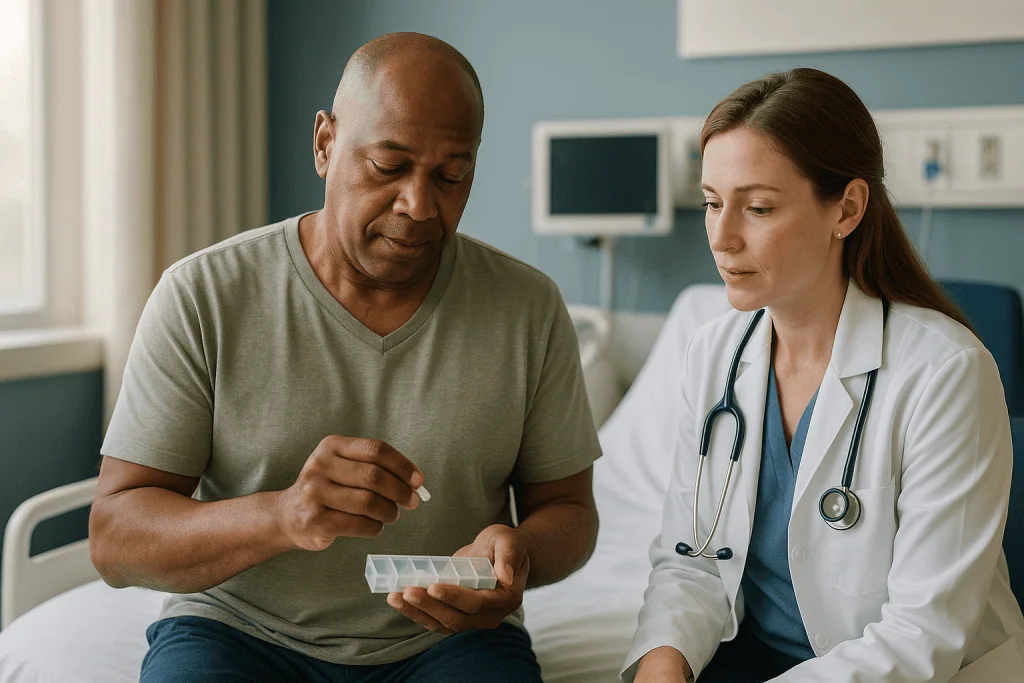
This is why the early calendar is crowded. Clinic visits may fall weekly at first. Blood is drawn often because the medicines that prevent rejection have a narrow window in which they work well without causing harm, and levels drift with diet, other drugs, kidney function and even a stomach upset. The team is not being fussy; they are tuning a live instrument.
The early months also carry a psychological weight that is easy to underestimate. Many recipients describe a strange mix of gratitude, guilt toward the donor family, and anxiety that every twinge is rejection. Transplant programs generally include psychological support and social work because these feelings are common, not because they are a sign of weakness.
What makes this period survivable, in the practical sense, is structure. A written medicine schedule taped to the fridge. A single notebook for daily weight, temperature and blood pressure. A caregiver who knows the clinic number. Once the first year passes, the NHS notes that many people return to work and ordinary activities, and the rhythm of checks becomes lighter. The heart is never entirely off watch, but the watch becomes routine.
Heart transplant recovery timeline: the first weeks at home
Going home usually happens once the team is satisfied that the heart is pumping well, the wound is healing, drug levels are stable and the person or a caregiver can manage the routine. The NHS describes a typical hospital stay of around two to three weeks, followed by recovery at home that stretches over several months.
The sternum, the breastbone cut during surgery, needs time to knit. Cardiac surgery guidance from Cleveland Clinic and the NHS generally advises avoiding heavy lifting, pushing and pulling for the first weeks, and not driving until the team gives the go-ahead. Walking, by contrast, is encouraged almost immediately and gradually lengthened.
A typical week at home in this phase might look like this:
- Morning weight, temperature and blood pressure recorded before breakfast, because a steady weight gain or a new fever is often the earliest clue that something needs checking.
- Medicines taken at fixed times, some with food and some without, according to the team’s written plan.
- A clinic visit with blood tests, and in many programs an echocardiogram or biopsy.
- Short walks several times a day, extended as stamina returns.
- Wound care as instructed, and a look at the incision for redness, warmth or discharge.
Cardiac rehabilitation, a supervised program of exercise, education and support, is commonly offered and the NHS recommends it after heart surgery. For transplant recipients it has an extra purpose: the new heart responds to exercise differently, and rehab teaches the body how to work with it. Most people find that energy returns in steps rather than a smooth line, with good weeks and flat ones. That unevenness is expected and worth mentioning at clinic rather than worrying about alone.
How does the team check for rejection, and how long after heart transplant biopsy continues?
Rejection is the central fear, and the honest answer to how it is detected is: usually before you feel anything. Early rejection often produces no symptoms at all, which is why surveillance is scheduled rather than triggered by complaints.

The endomyocardial biopsy remains the reference test. Under local anesthetic, a catheter is guided into the right side of the heart and a small tool snips a few tiny pieces of muscle, which a pathologist grades for inflammation. Mayo Clinic describes biopsies as frequent in the first few months and less frequent afterward; the exact schedule differs between programs and depends on how stable the person has been. Many teams continue occasional biopsies into the first year and then rely more on non-invasive tests, though a biopsy may be ordered at any point if something looks off.
Alongside biopsy, the team uses:
- Echocardiograms to check pumping strength and wall movement.
- Blood tests, including drug levels and kidney markers.
- Electrocardiograms for rhythm changes.
- In some centers, blood tests that measure fragments of donor DNA or patterns of immune gene activity as a screening tool; these are used to help decide who needs a biopsy rather than to replace it entirely.
There are two broad kinds of rejection. Acute cellular rejection involves immune cells infiltrating the muscle and is the type biopsies grade most reliably. Antibody-mediated rejection involves antibodies attacking the heart’s blood vessel lining and can require additional blood and tissue tests. Both are treatable when caught early, generally by adjusting immunosuppression, which is exactly why the schedule matters.
Over years, the concern shifts from acute rejection toward cardiac allograft vasculopathy, a gradual narrowing of the transplanted heart’s arteries. Teams look for this with periodic angiography, an X-ray of the coronary arteries using contrast dye, or with stress imaging.
Heart transplant medications for life: how anti-rejection drugs work
Nearly every recipient takes a combination of medicines, typically from two or three classes, and Mayo Clinic and the NHS are explicit that anti-rejection treatment continues for life. The combination lets each drug be used at a gentler level than any one alone would need.
The main classes, described by mechanism only:
- Calcineurin inhibitors (generic examples include tacrolimus and cyclosporine) block a signaling protein that T cells, the immune system’s attack coordinators, need in order to activate. They are the backbone of most regimens and require regular blood-level monitoring because the difference between too little and too much is small.
- Antimetabolites (such as mycophenolate) interfere with the DNA building blocks that rapidly dividing immune cells rely on, slowing their multiplication.
- Corticosteroids broadly dampen inflammation. Many programs reduce these over the first year where possible because of long-term effects on bone, blood sugar and weight; the pace is decided by the team.
- mTOR inhibitors (such as sirolimus or everolimus) block a different growth pathway and are sometimes introduced later, for instance when kidney function or vessel narrowing is a concern.
Alongside these sit supporting medicines: antimicrobials to prevent specific infections in the early months, stomach protection, blood pressure and cholesterol treatment, and often bone protection. None of these are optional extras; each addresses a known consequence of immunosuppression.
Side effects are real and worth naming in neutral terms. Calcineurin inhibitors can strain the kidneys and raise blood pressure and blood sugar. Antimetabolites can lower blood counts and upset the stomach. Steroids can affect mood, sleep and appetite. The response to side effects is always the same: report them, and let the prescribing clinician decide whether to adjust. Stopping or changing a dose independently is among the most dangerous things a recipient can do.
Why the medication routine matters more than any single pill
Transplant teams talk about adherence, taking medicines exactly as prescribed, with an intensity that can surprise newcomers. The reason is pharmacological. Calcineurin inhibitors are dosed to hold a blood level within a narrow band. A missed dose lets the level dip and gives the immune system an opening; a doubled-up dose can push kidneys and nerves into trouble. Consistency of timing matters almost as much as the medicine itself.
Practical habits that recipients and coordinators commonly rely on:
- Taking medicines at the same clock times each day, tied to anchors like waking and an evening meal.
- Using a weekly pill organizer filled from the current written list, and updating that list whenever the team changes anything.
- Setting phone alarms, and keeping a small travel supply in a bag that never leaves your side rather than in checked luggage.
- Asking the pharmacist before adding any new medicine, supplement or herbal product.
That last point deserves emphasis. Some everyday substances change how calcineurin inhibitors are processed by the liver. Grapefruit and grapefruit juice can raise levels; St John’s wort can lower them; several common antibiotics, antifungals and even some over-the-counter remedies interact. Mayo Clinic advises recipients to check with the transplant team before taking anything new, including herbal supplements. Non-steroidal anti-inflammatory painkillers are often discouraged because they add to kidney strain.
Blood tests for drug levels are usually drawn before the morning dose, so the team can see the lowest point in the day. Taking the dose early by mistake before a level is drawn skews the result; coordinators ask people to hold that dose until after the blood is taken. Small habits like this are unglamorous, but over a decade they are what keep a transplanted heart quiet.
Infection prevention after a heart transplant: a new relationship with germs
Immunosuppression does not switch the immune system off; it turns the volume down. The practical consequence, the NHS notes, is that infections that would be minor for others can become serious, and the risk is greatest in the first months when medicine levels are highest.
The threats fall into a few groups. Ordinary bacteria and respiratory viruses spread from other people. Fungi live in soil, compost and damp buildings. And a handful of viruses that most adults carry harmlessly, such as cytomegalovirus, a common herpes-family virus usually abbreviated CMV, can reactivate when immunity is suppressed. Teams often prescribe preventive antimicrobials for a period after transplant to cover these known risks, then stop them as immunosuppression is reduced.
Habits that most programs teach:
- Hand washing with soap before eating, after the bathroom and after touching shared surfaces.
- Keeping distance from people with coughs, fevers or stomach bugs, and asking visitors who are unwell to postpone.
- Wearing gloves for gardening and avoiding handling compost, bird droppings or cat litter, which can carry fungal and parasitic organisms.
- Careful dental hygiene, and telling the dentist about the transplant before any procedure.
- Prompt attention to cuts, with cleaning and a dressing, and a call if redness spreads.
- Daily sun protection, because immunosuppression raises skin cancer risk over time.
Pets are not usually forbidden; the team will typically discuss which animals and which tasks carry risk. Crowds are not off-limits forever either, though many people are asked to be cautious in the early months and during respiratory virus seasons. The goal is a sensible middle path: the same instincts a careful person would have during a bad flu season, applied year-round with a slightly firmer hand.
Vaccines, food safety and travel with a suppressed immune system
Three areas generate more clinic questions than almost anything else.
Vaccines. The general rule, reflected in CDC guidance for immunocompromised people, is that inactivated vaccines are encouraged and live vaccines are usually avoided. Inactivated vaccines contain killed organisms or fragments and cannot cause the disease; annual influenza, pneumococcal and COVID-19 vaccines fall in this group. Live vaccines contain weakened but living organisms and could, in theory, cause illness when immunity is low. Timing matters too: vaccines given very soon after transplant may produce a weaker response, so teams schedule them. Household members are often encouraged to stay up to date themselves, creating a protective ring.
Food safety. The concern is foodborne bacteria such as Listeria and Salmonella. Common advice for immunocompromised people includes avoiding raw or undercooked meat, fish and eggs, unpasteurized milk and soft cheeses, raw sprouts and pre-cut deli items of uncertain age; washing fruit and vegetables; and keeping raw and cooked foods separate. Grapefruit is a separate issue, avoided because of drug interactions rather than germs.
Travel. Travel is not ruled out, but it is planned. Mayo Clinic advises discussing trips with the transplant team in advance. Practical points include carrying medicines in hand luggage with a copy of the prescription list, knowing where medical care is available at the destination, checking whether any recommended travel vaccines are live, and considering destinations where water and food hygiene are reliable. Long flights carry a clot risk for everyone; moving regularly and staying hydrated are basic measures the team may build on. Follow-up appointments should be arranged around the trip rather than skipped, and blood tests may need to be timed before departure.
Who gets a heart transplant, and who is usually asked to wait
Follow-up makes more sense when you understand who reaches transplant in the first place. According to the NHS and Mayo Clinic, a heart transplant is considered for people with advanced heart failure that has not responded to medicines, devices or other surgery, and whose expected quality and length of life would otherwise be poor. Common underlying causes include cardiomyopathy, a disease of the heart muscle itself, severe coronary artery disease, valve disease that has damaged the muscle, and congenital heart conditions.
Assessment is thorough because the operation and its aftermath place heavy demands on the whole body. Teams look at kidney, liver and lung function, blood vessel health, cancer history, infection status and, candidly, whether the person has the support and capacity to manage a lifelong medicine routine.
Some people are asked to wait, or are not offered transplant at that time. Reasons the NHS and Mayo Clinic describe include:
- An active infection that needs to be treated first.
- A recent or active cancer, since immunosuppression can accelerate tumor growth.
- Severe disease in other organs that would make surgery or immunosuppression unsafe, though some people are considered for combined organ transplants.
- Ongoing smoking, alcohol or drug use that has not been addressed.
- Circumstances that make adherence to medicines and appointments unrealistic without more support in place.
Waiting is not a judgment on worth. It reflects the fact that a donor heart is scarce and that a transplant into a body not yet ready for it can fail. Many people spend the waiting period on a mechanical pump called a ventricular assist device, which supports the failing heart, and use the time to build strength. Everything about who is listed, and when, sits with the transplant team and the national allocation system.
Heart transplant follow-up at a glance: checks by phase
Programs differ, and the person’s own schedule always overrides any general table. Still, a broad map helps families understand why the calendar looks the way it does. The phases below reflect the pattern described by the NHS and Mayo Clinic: intensive early monitoring that gradually loosens.
| Phase | Typical purpose | Commonly used checks | Medicine focus |
|---|---|---|---|
| In hospital (around 2–3 weeks, per NHS) | Stabilize the new heart, heal the wound, set drug levels | Continuous monitoring, echocardiograms, early biopsies, daily bloods | Highest immunosuppression; preventive antimicrobials started |
| First 3 months | Highest rejection and infection risk window | Frequent clinic visits, regular biopsies, drug levels, kidney function | Levels adjusted often; steroid reduction may begin |
| Months 3–12 | Confirm stability, restore normal activity | Visits and biopsies spaced out, echocardiograms, cardiac rehab | Regimen simplified where safe; preventive drugs often stopped |
| Year 1 onward | Long-term surveillance of vessels, kidneys, cancer risk | Periodic clinic visits, angiography or stress imaging, skin checks, cancer screening | Lowest stable immunosuppression that still prevents rejection |
Two things the table cannot show. First, the schedule collapses back to intensive mode whenever something changes: a rejection episode, a serious infection, or a new medicine that alters drug levels. Second, the checks are cumulative rather than sequential; a person years out still has blood drawn regularly, still weighs themselves, and still calls about fevers. What changes is the interval and the emotional temperature. Most recipients describe the transition from dread to routine as happening somewhere in the first year, and by the second or third year clinic visits feel closer to a familiar check-in than an exam.
Living with a denervated heart: exercise, heart rate and daily life
One fact surprises almost everyone. During transplantation the nerves that connected the brain to the old heart are cut, and they do not reliably regrow. The new heart is described as denervated, meaning it no longer receives direct nervous system signals. It still beats, because the heart has its own internal pacemaker, but it responds to the body’s demands differently.
Cleveland Clinic and Johns Hopkins describe the practical consequences. The resting heart rate is often higher than before, because the vagus nerve that normally slows the heart at rest is no longer connected. At the start of exercise the heart rate rises slowly, since it depends on adrenaline circulating in the blood rather than an instant nerve signal. At the end of exercise it comes down slowly for the same reason. And the classic warning sign of heart trouble, chest pain, may be absent even when the heart’s arteries narrow, because pain signals travel along nerves that are no longer there.
What this means day to day:
- Warm up for longer than feels necessary, giving the heart several minutes to catch up before harder effort.
- Cool down gradually rather than stopping abruptly, to avoid dizziness.
- Do not rely on chest pain as a signal; breathlessness, unusual fatigue or a drop in exercise tolerance are the messages to heed.
- Rise slowly from sitting or lying, especially in the early months, as blood pressure regulation can be sluggish.
Cardiac rehabilitation teaches these adjustments under supervision, and most recipients go on to walk, cycle, swim, garden and work. Competitive and contact sports are individual conversations with the team, partly because of the healing sternum and partly because of medicine effects on bones and bruising. The heart itself, once recovered, is usually a strong heart; it simply speaks a different language.
Long-term risks the follow-up is designed to catch
Beyond acute rejection, the NHS lists a set of longer-term problems that shape what surveillance looks like after the first year. Naming them clearly is more useful than avoiding them, because each has a monitoring plan.
Cardiac allograft vasculopathy. This is a gradual thickening of the walls of the transplanted heart’s coronary arteries, driven by low-grade immune activity and conventional risk factors. Because the heart is denervated, it may progress without chest pain, which is why teams schedule angiography or stress imaging rather than waiting for symptoms. Controlling blood pressure, cholesterol and blood sugar, and not smoking, are the levers people themselves hold.
Kidney strain. Calcineurin inhibitors narrow small blood vessels in the kidneys, and over years this can reduce kidney function. Regular blood tests track it, and teams may adjust the regimen if it declines.
Cancer. A suppressed immune system is less able to remove abnormal cells. Skin cancers are the most common, followed by a lymphoma linked to a common virus. Annual skin checks, sun protection and age-appropriate cancer screening are standard parts of long-term follow-up.
Metabolic changes. High blood pressure, raised cholesterol, new diabetes and weight gain are all more common after transplant, partly from the medicines and partly from renewed appetite and energy. They are treated in the ordinary way, with the transplant pharmacist checking for interactions.
Bone thinning. Steroids and some other medicines reduce bone density. Bone scans and bone-protecting treatment are often part of the plan.
None of these is inevitable, and all are more manageable when found early. That is the plain case for keeping every appointment years after the operation feels like history.
Does life go back to normal after a heart transplant?
The honest answer is that life becomes a new normal, and for most people it is a good one. The NHS says that after recovery many people return to work, driving, travel and an active social life. What changes is the scaffolding underneath: pills, appointments and habits that others never think about.
Work. Return depends on the job and on recovery. Desk-based work often resumes within the first few months after surgery; physically heavy work waits for the sternum to heal fully and for the team’s clearance.
Driving. Licensing rules vary by country and by license type, and the team advises on timing. The early restriction relates to the healing breastbone and to the effects of surgery and medicines on reaction and concentration.
Intimacy. Sexual activity is generally considered safe once the wound has healed and stamina has returned. Some medicines affect libido or function, and this is a legitimate topic for the clinic, not an embarrassing one.
Pregnancy. Pregnancy after transplant is possible for some people but is high-risk and requires planning, because some anti-rejection medicines can harm a developing baby and the heart must be stable. Contraception and pregnancy plans are discussed with the team well in advance.
Alcohol. Small amounts may be acceptable for some recipients; the team will advise based on liver function and interactions.
Mood. Low mood, anxiety and a form of post-traumatic stress are common after any life-threatening illness and major surgery, and steroids can add to emotional turbulence. Transplant programs expect this and offer support. Many recipients also describe a lasting sense of gratitude and a changed relationship with time. Normal, for them, is richer and more deliberate than before.
What people often get wrong about life after a heart transplant
Myths cluster around transplants, and several can cause real harm.
“If I feel fine, the heart is fine.” Early rejection is usually silent, and a denervated heart cannot signal artery narrowing with pain. Feeling well is good news but is not a substitute for scheduled checks.
“Once the first year is over, I can relax the medicines.” Immunosuppression is lifelong. The team may lower it as the heart stabilizes, but that is their decision based on tests. Self-reducing doses because you feel healthy is a well-documented route to late rejection.
“Natural supplements are harmless.” Some interact directly with anti-rejection drugs, raising or lowering blood levels. Herbal products are medicines in the pharmacological sense and belong on the list you show your pharmacist.
“I have to live in a bubble.” Sensible hygiene, vaccination and food care reduce risk substantially. Most recipients travel, work, attend events and hug their grandchildren. The team calibrates caution to the phase of recovery, not to a permanent lockdown.
“Rejection means the transplant has failed.” Most rejection episodes are detected early and treated by adjusting medicines. A rejection episode is a problem to manage, not an ending.
“The new heart will feel like the old one.” It won’t. A higher resting rate, a slow climb during exercise and a slow descent afterward are expected features, not warning signs.
“Donor characteristics will change who I am.” Personality, tastes and memories live in the brain. Changes people notice after transplant are far better explained by recovery, medicines and the experience of surviving something enormous.
Correcting these ideas early, ideally before discharge, is one of the quieter services a transplant team provides.
Questions to ask your care team
Clinic time is short and memory is unreliable, especially in the early months when steroids and fatigue blur concentration. Writing questions down before each visit, and bringing someone to take notes, is a habit coordinators actively encourage. These are the questions that tend to matter most.
- What is my current follow-up schedule, and what would make it more or less frequent?
- How often will I have biopsies, and when do you expect to rely more on non-invasive tests?
- Which of my medicines need blood-level monitoring, and how should I time doses on test days?
- What should I do if I vomit shortly after a dose, or realize I have missed one?
- Which over-the-counter medicines, supplements and foods should I avoid because of interactions?
- Which vaccines do you recommend for me and for the people I live with, and when?
- What signs should prompt a same-day call, and what is the number to use at night and on weekends?
- When can I drive, return to work, lift my children or grandchildren, and resume exercise beyond walking?
- Is cardiac rehabilitation part of my plan, and when does it start?
- How will you monitor my kidneys, bones, skin and blood sugar over the long term?
- What travel precautions apply to me, and how far ahead should I discuss a trip?
- Who do I contact about mood, sleep or anxiety, and is psychological support built into the program?
- If I am considering pregnancy or a change in contraception, when should that conversation start?
A good team welcomes these questions and will often have printed answers to many of them. If an answer is unclear, it is entirely reasonable to ask for it in writing. The person living with the transplant is the most important member of the follow-up team, and the more they understand the plan, the better the plan works.
When to call your doctor: red-flag signs after a heart transplant
Transplant teams would rather take ten unnecessary calls than miss one that mattered, and they say so explicitly. The list below is not a tool for diagnosing yourself; it is a prompt to pick up the phone and let the team decide.
Call the transplant team the same day, or go to emergency care if severe, for:
- A fever, or feeling shivery and unwell, since infection and rejection can both present this way and immunosuppression can blunt other signs.
- New or worsening breathlessness, especially lying flat, or waking at night short of breath.
- Rapid weight gain over a few days, or new swelling of the ankles, legs or abdomen, which can signal fluid building up as the heart struggles.
- A racing, irregular or unusually slow heartbeat, or episodes of dizziness or fainting.
- Unusual fatigue, a sudden fall in exercise tolerance, or a general sense that something is wrong; recipients often recognize this before any test does.
- Flu-like aching, nausea, vomiting or diarrhea lasting more than a day, both because of infection risk and because vomiting or diarrhea can disrupt medicine absorption.
- Redness, warmth, swelling or discharge at the wound or any cut, or a rash or mouth ulcers that are new.
- A cough that lingers, chest congestion or pain on breathing.
- Any missed doses you are unsure how to handle, or a new medicine started by another clinician.
Call emergency services immediately for chest pain or pressure, severe breathlessness, fainting, signs of stroke such as facial drooping, arm weakness or slurred speech, or heavy bleeding.
Keep the clinic and out-of-hours numbers in your phone and on the fridge, carry a card or wear a bracelet identifying you as a transplant recipient on immunosuppression, and never let reluctance to bother anyone delay a call. Every decision about what happens next belongs to the treating team; your job is to give them the earliest possible chance to make it.
Frequently asked questions
Can you live 30 years after a heart transplant?
Some people have lived three decades and longer with a transplanted heart, and registries described by Mayo Clinic and the NHS show many recipients living well beyond ten years. No one can promise an individual outcome, because it depends on rejection episodes, artery narrowing, kidney health, infections and how consistently medicines and follow-up are maintained. Long survivors tend to share one habit: they never stopped treating the routine as important.
Does life go back to normal after a heart transplant?
For most people, life settles into a new normal that includes work, travel, exercise and relationships, according to the NHS. What stays different is the scaffolding: daily medicines at fixed times, regular blood tests and clinic visits, careful infection habits and sun protection. Recovery to that point typically takes several months. Many recipients describe their energy and quality of life as far better than in the years of heart failure before surgery.
What can you never do after a heart transplant?
The firm rules are few but absolute: never stop or change anti-rejection medicines without the transplant team, never take new medicines, supplements or herbal products without checking for interactions, and avoid live vaccines unless the team specifically approves. Grapefruit is usually off the menu because of drug interactions. Smoking is strongly discouraged because it accelerates artery narrowing in the new heart. Most other activities are conversations about timing, not permanent bans.
What is the most critical time after a heart transplant?
The first year, and especially the first three months, carries the highest risk of both rejection and serious infection, according to the NHS and Mayo Clinic. Immunosuppression is at its most intensive, medicine levels are still being adjusted, and the body is healing from major surgery. This is why early follow-up is so frequent. After the first year, monitoring continues for life but at wider intervals.
What are heart transplant rejection symptoms to report?
Rejection often causes no symptoms early on, which is why scheduled tests matter. When signs do appear they can include fever or flu-like feelings, new breathlessness, swelling in the legs or abdomen, rapid weight gain over a few days, an irregular or racing heartbeat, dizziness and unusual fatigue. None of these confirms rejection, and infection can look identical. The right response to any of them is a same-day call to the transplant team.
How long after heart transplant biopsy checks continue?
Biopsies are most frequent in the first few months, then spaced out over the first year as stability is confirmed, according to Mayo Clinic. Many programs then rely mainly on echocardiograms, blood tests and, in some centers, blood-based rejection markers, reserving biopsy for when something looks off. The exact schedule varies between programs and individuals, so the person’s own team sets it.
Are heart transplant medications for life?
Yes. Anti-rejection medicines continue for as long as the transplanted heart is in place, as both the NHS and Mayo Clinic state. The team may reduce the intensity over time, particularly steroids, as tests show the heart is stable, but the combination is never simply stopped. Supporting medicines such as preventive antimicrobials are often time-limited to the early months. Every change is made by the prescribing clinician based on blood levels and test results.
What is the heart transplant recovery timeline for getting home and back to work?
The NHS describes a typical hospital stay of around two to three weeks, followed by several months of recovery at home during which clinic visits are frequent and activity is built up gradually, often through cardiac rehabilitation. Desk-based work commonly resumes within the first few months once the team agrees; physically demanding jobs wait for the breastbone to heal fully. Timelines are individual and depend on complications, age and fitness before surgery.
Can you travel or fly after a heart transplant?
Travel is generally possible once recovery is established, but it is planned with the transplant team in advance, as Mayo Clinic advises. Practical points include carrying medicines in hand luggage with a prescription list, checking whether recommended travel vaccines are live, choosing destinations with reliable food and water hygiene, arranging follow-up and blood tests around the trip, and moving regularly on long flights to reduce clot risk. Early recovery is not usually the time for long trips.
Why is my heart rate higher after a heart transplant?
During surgery the nerves connecting the brain to the heart are cut, so the new heart no longer receives the vagus nerve signal that slows it at rest. Cleveland Clinic and Johns Hopkins describe a higher resting heart rate as expected, along with a slow rise at the start of exercise and a slow fall afterward, because the heart now responds to circulating adrenaline rather than instant nerve signals. Sudden changes in rate or rhythm should still be reported.
References
- NHS – Heart transplant: Recovery
- NHS – Heart transplant: Risks
- MedlinePlus – Heart transplant
- Cleveland Clinic – Heart Transplant
This article is for general information only and is not a substitute for professional medical advice. Please consult a qualified doctor about your individual situation.

More from the Blog

Blood Sugar Spikes: What They Do to Energy, Hunger and Arteries, and How to Blunt Them
Blood sugar spikes are sharp rises in glucose after eating, usually peaking within an hour and settling within two to three hours in healthy…

Vinegar Before Meals and Food Order: Two Blood-Sugar Hacks Under the Evidence Lens
Eating vegetables and protein before the carbohydrate portion of a meal (food order) and taking a small amount of diluted vinegar before eating both…

What the Robot Does in Robotic Heart Surgery: Arms, a 3D Camera and Small Chest Incisions
In robotic heart surgery, the robot does not operate on its own. A cardiac surgeon sits at a console a few feet from the…
When Does Angina Need More Than Medication? How Cardiologists Decide on Stents or Bypass
Angina usually needs more than medication when symptoms keep limiting daily life despite well-adjusted medicines, when tests show a large area of heart muscle…

After Arrhythmia Treatment: Which Sensations Are Normal and When to Call Your Cardiologist
After arrhythmia treatment, mild palpitations, a faster resting pulse, fatigue, a bruised access site and skin soreness after cardioversion are common and usually settle…
TAVI Recovery Timeline: Early Walking, the Cardiac Unit Stay and the First Two Weeks Home
After TAVI, most people are helped to sit up and take their first steps within hours of the procedure, spend roughly one to three…