

Life With a Permanent Pacemaker: What Regular Device Checks Confirm About Battery and Pacing

Key Takeaways
- Pacemaker batteries typically last 5 to 15 years, and how long yours lasts depends mainly on what percentage of beats it paces and how much energy each pulse needs.
- A low battery is detected as a voltage reading called the elective replacement indicator at a device check or remote transmission, not as a symptom you feel.
- Standard pacemakers have no speaker and do not beep; audible patient alerts belong to implantable defibrillators, which is where the myth comes from.
- The replacement indicator is set months before true depletion so that a generator change can be scheduled as a planned day-case procedure.
- Lead impedance and capture threshold trends often reveal problems earlier than the battery reading does, which is why checks continue even when the battery is healthy.
- Keeping a mobile phone at least 6 inches from the device and staying enrolled in remote monitoring are two of the simplest, best-supported everyday measures.
Regular pacemaker device checks confirm four things: how much battery remains and roughly how many years it should last, whether the leads are intact, how much energy the heart needs to respond to each pulse, and whether the device is sensing the heart's own beats correctly. Batteries typically last 5 to 15 years and give months of warning before replacement is needed.
She had come in with a list. Third item, underlined twice: how would she actually know if the battery was running out? Her pacemaker had been in for six years, long enough that she rarely thought about it, and that was precisely the worry. A device you forget is a device you cannot watch.
The technologist placed a small programmer wand over her collarbone, and within a minute the screen filled with numbers she had never seen: voltage, impedance, a threshold, a percentage of beats paced. None of it was alarming. Most of it was reassuring. But nobody had ever walked her through what those pacemaker device checks were really looking at, or why the battery reading mattered less than she feared and the lead readings mattered more than she knew.
This article is the walk-through she wanted: what a routine check measures, how a low battery announces itself, what a generator change involves, and which symptoms deserve a same-day call.
What pacemaker device checks actually measure
A pacemaker is two parts: a sealed metal generator about the size of a large coin that holds the battery and circuitry, and one or more insulated wires, called leads, that carry pulses to the heart muscle and carry the heart’s own electrical signals back. A device check, sometimes called an interrogation, is a conversation with the generator through the skin. A wand or a wireless link asks the device to report on itself, and the clinician reviews the answers.
Four groups of numbers come back. The first describes the battery: its voltage, its internal resistance, and a projected longevity. The second describes the leads: an electrical resistance reading called impedance that rises if a wire fractures and falls if the insulation is damaged. The third describes capture, meaning the smallest pulse that reliably makes the heart contract. The fourth describes sensing, meaning how clearly the device hears the heart’s own beats so it can stay quiet when it is not needed.
Alongside these, the generator keeps a diary. It records what percentage of beats it paced in each chamber, how many episodes of fast atrial or ventricular rhythm it detected, and in many devices a rough estimate of daily activity. The clinician also confirms that the programmed settings still match the person in the chair, because a rate ceiling chosen for someone recovering from surgery may be too low for the same person walking hills a year later. The NHS describes this routine check as a short, painless outpatient visit, and the Mayo Clinic notes that much of the same data can now be sent from home.
The point worth holding onto is that a check is not a battery gauge with extras. The battery is one line on a page. The leads and the thresholds are where quiet problems tend to show up first.
How long does the battery in a pacemaker typically last?
Most pacemaker batteries last between 5 and 15 years, according to the NHS, with many landing in the middle of that range. The spread is wide because the battery is not being drained at a fixed rate; it is being spent according to how hard the device works.

Three factors dominate. The first is pacing percentage. A device that steps in for a handful of beats a day sips energy, while one that paces nearly every beat, as happens in complete heart block, draws steadily. The second is output. Every pulse is delivered at a set voltage and duration, and the device is usually programmed with a safety margin above the capture threshold. A higher threshold means a stronger pulse, and a stronger pulse means faster depletion. The third is features: rate-response sensors, extra diagnostics and wireless transmissions all cost a little current.
The battery itself is a lithium chemistry cell sealed inside the titanium can. It cannot be recharged or swapped on its own, which is why a battery change means replacing the whole generator. Its discharge curve is deliberately predictable; voltage stays fairly flat for years and then declines along a slope the device can measure and project forward.
That projection is the longevity estimate printed on your check report, often phrased as a range of years. Treat it as a weather forecast rather than an expiry date. It assumes today’s settings and today’s pacing percentage continue. If a threshold rises or you become more dependent on pacing, the estimate shortens; if the clinician lowers an output safely, it lengthens. This is one reason regular checks matter even when nothing feels different: the forecast is updated every time.
How do you know your pacemaker battery is low? The ERI explained
You usually do not know from how you feel. You know because the device tells the clinic. Every pacemaker has a programmed battery voltage at which it flags itself as due for replacement. Manufacturers use different labels for this point, most commonly ERI, short for elective replacement indicator, or RRT, recommended replacement time. In plain terms, it is the moment the device says: I am still working normally, but please schedule a change.
Reaching ERI triggers changes designed to be noticed by a technologist rather than by you. The report shows the flag prominently. Many devices also alter their behavior in ways that show up on an ECG or a check, such as switching to a simpler pacing mode or changing the fixed rate they produce when a magnet is placed over the generator. Remote monitoring systems typically send an alert to the clinic when the flag is set, which is one of the strongest arguments for staying enrolled.
Between ERI and true end of battery life, there is a built-in window of months, not days. That margin exists precisely so replacement can be booked as a planned procedure. The Cleveland Clinic and the NHS both describe generator replacement as scheduled surgery arranged after a check identifies the indicator, not an emergency triggered by symptoms.
Could you feel anything? Occasionally. If a device drops into a simpler mode at ERI, some people notice slightly less stamina on exertion, because the pacing rate no longer climbs with activity. But that is a soft clue at best and easy to misattribute. The reliable signal is the number on the screen, which is why a missed check is the most common way a low battery goes unnoticed.
Does a pacemaker beep when the battery is low?
Ordinary pacemakers do not beep. There is no speaker in a standard pacing generator, and no sound or vibration alerts you when the battery reaches its replacement indicator. The warning system is designed to be read by the clinic, through an in-person interrogation or a remote transmission, rather than heard by the wearer.
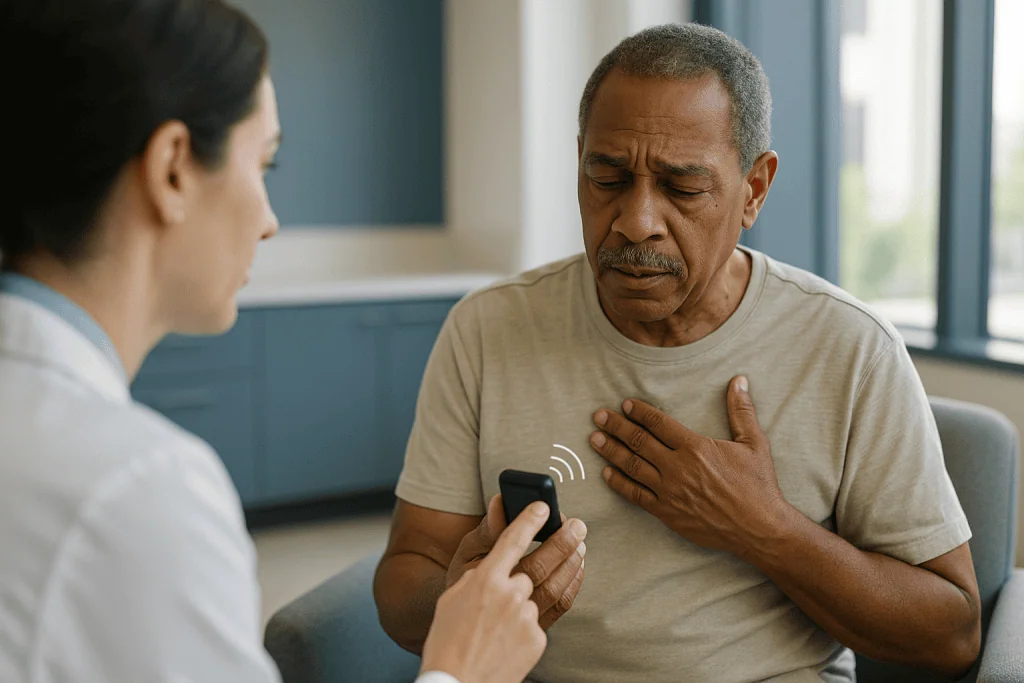
The confusion comes from a related device. Implantable cardioverter-defibrillators, often called ICDs, are larger devices that can deliver a shock for dangerous fast rhythms, and many of them include an audible or vibrating patient alert. Those alerts can be programmed to sound for a low battery, an abnormal lead reading or certain other conditions. Because ICDs also pace, and because friends and relatives may have one, stories about a heart device beeping in the chest travel widely and get attached to pacemakers by mistake.
Some newer pacemakers that communicate with a smartphone app can display a notification if a scheduled transmission fails, and clinics that run remote monitoring receive alerts on their own systems. Neither is the same as the implant itself making a noise.
If you have a pacemaker rather than an ICD and you hear a tone from your chest, the first step is to check whether the sound is coming from something else, such as a wearable, a hearing aid or a home monitor. If you genuinely have a device with a patient alert, your clinic will have told you at implant and shown you what it sounds like. In either case, an unexplained tone is a reason to contact the device clinic the same day, not a reason to assume the battery has failed. MedlinePlus is clear that the type of device you have determines what warnings it can give, so knowing which one is in your chest matters.
What happens to a patient when the pacemaker battery dies?
The honest answer has two halves: it depends on how much you rely on the device, and it is engineered not to happen without warning.
Pacemakers are prescribed for different reasons. Some people have a slow heart rhythm that comes and goes; their own conduction system works most of the time, and the device fills gaps. Others have complete heart block or a sinus node that has effectively stopped, and their heart may have only a slow, unreliable escape rhythm of its own. Clinicians describe the second group as pacemaker-dependent. Your check report shows your pacing percentage, and your team can tell you which group you are in.
For someone who paces occasionally, a battery that drifts past its replacement window means losing a safety net; they might notice more dizziness, tiredness or pauses when the slow rhythm returns. For someone dependent on pacing, a device that finally stops could leave the heart beating very slowly or, in the worst case, produce fainting or collapse. That is a serious scenario, and it is exactly why the layered warning system exists.
Here is the sequence a device is designed to follow. Years of stable voltage give a projected longevity at each check. The elective replacement indicator flags months before depletion, and remote monitoring can alert the clinic within days of that flag. Only after the built-in margin is exhausted does the device reach end of service, where behavior becomes unpredictable. With checks every 3 to 12 months, as the NHS describes, the indicator is caught with time to spare.
The realistic failure mode, then, is not a battery that dies silently. It is a person who moves house, loses contact with the clinic, and goes years without a check. Staying on the follow-up list is the intervention.
Pacing checks in plain language: capture, sensing and lead impedance
Battery aside, three tests take up most of a routine visit. Each has a plain meaning.
Capture threshold answers the question: how small a pulse still makes the heart beat? The programmer steps the output down until a beat is missed, then records the last value that worked. You may feel a brief flutter or nothing at all. A stable threshold is good news twice over: the lead tip is sitting well in the muscle, and the device can be set at a modest output that conserves battery. A threshold that climbs between visits can point to scarring at the lead tip, a shift in lead position or, occasionally, a medication effect, and the team may adjust output or investigate.
Sensing answers the opposite question: can the device hear the heart’s own beats? It measures the size of the natural atrial and ventricular signals. If those signals are too small, the pacemaker may fire when it should have waited; if it hears electrical noise as a heartbeat, it may stay silent when it should have stepped in. Either error is usually correctable by reprogramming.
Lead impedance is the electrical resistance along the wire. Every lead has a normal range, and what matters most is the trend. A sudden jump suggests a fracture in the conductor; a sudden fall suggests a breach in the insulation. Both are uncommon, and both are far easier to manage when spotted on a check than when they cause symptoms.
Finally, the report shows how often each chamber was paced and lists any recorded fast rhythms. Episodes of atrial fibrillation discovered this way are clinically important because they can change decisions about stroke prevention, which is a conversation for your cardiologist rather than a setting on the device. Johns Hopkins notes that these stored diagnostics are one of the main reasons checks are scheduled even when the battery is healthy.
Remote pacemaker monitoring versus in-clinic checks
Two ways now exist to run a pacemaker device check, and most people end up using both. Remote monitoring means a small transmitter at home, or in some systems a phone app, collects data from the implant and sends it securely to the clinic. In-clinic checks mean sitting with a technologist and a programmer. The Mayo Clinic describes remote transmissions as a routine part of follow-up for many devices, with periodic in-person visits layered on top.
| Question | Remote monitoring | In-clinic check |
|---|---|---|
| Battery voltage and longevity estimate | Yes | Yes |
| Lead impedance trends | Yes | Yes |
| Stored arrhythmia episodes | Yes | Yes |
| Capture threshold test | Automatic measurement in many devices | Manual test with observation |
| Changing settings | No | Yes |
| Wound and pocket examination | No | Yes |
| Alert if replacement indicator reached | Often within days | At next scheduled visit |
The table makes the division of labor clear. Remote monitoring is a superb surveillance tool: it shortens the time between a problem appearing and the clinic noticing, and it catches the replacement indicator early. It cannot reprogram the device, and it cannot look at the skin over the generator or ask how you climbed the stairs this week. In-clinic visits do those things.
What people often overlook is that a transmitter only works if it is plugged in, within range of where you sleep, and connected. Clinics regularly find that a missed transmission was a monitor unplugged during a move or a change of internet provider. If yours has been silent, contact the device clinic; a quick reconnection restores the safety net.
How often are pacemaker checks scheduled?
Pacemaker check-up frequency follows a rough pattern that most guidelines share, even though the precise intervals are set by the implanting center and adjusted to the person.
The first check happens before you leave hospital, to confirm the leads are sitting well and the settings suit you. A second visit usually follows within the first few months, once the lead tips have settled and the capture thresholds, which often rise briefly then fall as healing completes, have stabilized. After that, the NHS describes routine checks roughly every 3 to 12 months, depending on the device, the reason it was implanted and whether remote monitoring is in place.
Intervals then change over the device’s life. In the long stable middle years, an annual in-person visit supplemented by remote transmissions is common. As the battery approaches its projected replacement window, checks are brought closer together, sometimes to every few months, so the indicator is not missed. The same tightening happens after any concern: a rising threshold, an unusual impedance, a new arrhythmia or a change in symptoms.
Manufacturer advisories add another layer. Occasionally a specific model or lead is found to have a higher-than-expected fault rate, and clinics increase surveillance for people who carry it. If you receive such a letter, it is a request for closer watching, not a statement that your device has failed, and the clinic will explain what applies to you.
A practical note: keep the identification card you were given at implant, or a photo of it, in your wallet or phone. It names the device and lead models, which lets any clinic anywhere run a check with the right equipment. The American Heart Association recommends carrying it at all times.
Who needs closer monitoring, and who is usually asked to wait
Not everyone with a pacemaker sits on the same schedule, and the differences follow the physiology rather than the calendar.
Closer monitoring is usual for people who are pacemaker-dependent, because a lead or battery problem has bigger consequences when there is little underlying rhythm. It is also usual in the first months after implant, when leads are still healing into place; in the final year or two of projected battery life; after a generator change while the new device settles; for people with a device under an advisory; and for anyone whose device is also treating heart failure through pacing of both ventricles, where the percentage of paced beats directly affects benefit. Children and young adults are typically followed more closely too, because they grow, move vigorously and will live through several generators.
People asked to wait are usually those doing well. If your thresholds have been flat for years, your pacing percentage is low, your battery has ample projected life and remote transmissions arrive on time, a clinic may reasonably stretch in-person visits toward the longer end of the 3 to 12 month range the NHS describes, relying on remote data in between.
Waiting is also the norm at the other end of the process. Once the replacement indicator appears, the built-in margin means the generator change can be scheduled around your life and your clinic’s list rather than done that week. Some people find that unsettling and want it done immediately; the team will weigh your dependency and the device’s behavior at ERI before setting the date.
Every one of these decisions belongs to the treating team, who can see the full trend of your numbers. Your role is to attend, transmit and report anything that has changed since the last visit.
What a pacemaker battery replacement involves
Because the battery is sealed inside the generator, a battery replacement is a generator replacement. The procedure is usually simpler than the original implant, and the Cleveland Clinic and NHS both describe it as a shorter operation, often done as a day case.
Here is what typically happens. Under local anesthetic and light sedation, the surgeon reopens the original incision over the pocket where the generator sits, usually below the collarbone. The old generator is disconnected from the leads, and each lead is tested on the spot: its impedance, its capture threshold and its sensing are measured through external equipment. If the leads perform well, and most do, they are connected to the new generator, which is placed back into the same pocket. The incision is closed with sutures or adhesive strips, and the new device is programmed to match your previous settings.
Leads are kept whenever possible because removing a chronically implanted lead is a more involved procedure carrying its own risks. If a lead is found to be failing at the time of replacement, the team may add a new lead alongside it, or in some cases discuss extraction; that decision is individual and made with you.
Risks are those of any small operation around an implanted device: bleeding into the pocket, infection, and rarely damage to a lead. Infection deserves particular respect because bacteria can travel along leads toward the heart, which is why the wound is watched closely and why antibiotics are given around the procedure according to local protocol. For people who are pacemaker-dependent, temporary pacing support is arranged during the moments when the old device is disconnected.
An alternative some people ask about is a leadless pacemaker, a capsule placed directly inside the heart. Whether that is an option depends on why you were paced and which chambers need pacing; it is a question for your electrophysiologist rather than a general recommendation.
What the days and weeks after a generator change usually look like
Most people go home the same day or the following morning. The wound is typically covered with a dressing for a few days, and the area feels bruised and tender; that fades over one to two weeks for most.
Because the leads were not newly placed, the movement restrictions after a straightforward replacement are usually lighter than after a first implant. Even so, the NHS advises avoiding strenuous activity and heavy lifting on the affected side for around 4 to 6 weeks after pacemaker surgery, and your team will tell you which parts of that apply when only the generator was changed. Keeping the wound dry until it has sealed, watching for redness or discharge and not picking at adhesive strips are the everyday priorities.
Driving rules depend on where you live and on why you have the device; in many places you may drive again after a short interval following a routine replacement, but the rule is set by the licensing authority, and the clinic will tell you what applies to you.
Expect a wound review within the first couple of weeks and a device check within the first few months. The check confirms the new generator is reading the old leads correctly, that thresholds are where they were, and that the longevity estimate now shows a fresh battery. Then the familiar rhythm of remote transmissions and periodic visits resumes.
Two things surprise people. The first is that the new generator may feel slightly different under the skin, sometimes smaller than the one it replaced, because devices have shrunk over the years. The second is that the skin over the pocket, after years of housing a device, can be thinner; the surgeon may reposition the pocket a little deeper if that is a concern. Neither is a sign anything is wrong, but both are worth asking about before the day.
Living with a pacemaker day to day: phones, magnets, airports and scans
Modern pacemakers are well shielded, and most everyday electronics are no concern. A handful of situations deserve a little thought.
Mobile phones and headphones contain small magnets and transmitters. The Mayo Clinic and the American Heart Association advise keeping a phone at least 6 inches, about 15 centimeters, from the device: hold it to the ear on the opposite side and avoid resting it in a shirt pocket over the generator. The same spacing applies to magnetic earbud cases and to some wearable accessories that snap on with magnets. Microwave ovens, televisions, remote controls and kitchen appliances are fine.
Airport security scanners and shop anti-theft gates are safe to walk through at a normal pace; do not linger inside them. Show your device card if asked, and if a handheld wand is used, ask the officer not to hold it directly over the device for longer than needed.
Strong industrial magnets, arc welding equipment, and some physiotherapy devices that use electrical stimulation can interfere and should be discussed with the clinic before exposure. Household induction hobs are generally considered acceptable at normal cooking distance, but check with your team if you use one professionally.
MRI scans were once ruled out for everyone with a pacemaker. Many devices implanted in recent years are labeled MRI-conditional, meaning scanning is possible under defined conditions with the device temporarily reprogrammed. Whether yours qualifies depends on the generator and every lead being conditional models, so the radiology team will need the details from your card and often a device check before and after the scan. Older systems may still be scanned in some centers under specialist protocols; that is a case-by-case decision.
Exercise, swimming and travel are all compatible with a pacemaker once you have healed. Tell any new clinician, dentist or surgeon that you have a device, since electrocautery used in some procedures can interfere and is easily managed when the team knows in advance.
What people often get wrong about pacemaker batteries and checks
The battery can be recharged or swapped through the skin. It cannot. The cell is sealed inside the generator, and replacement means a small operation to exchange the whole unit. Research into rechargeable and energy-harvesting devices exists, but none of it changes what is in your chest today.
You will feel the battery getting low. Rarely. The replacement indicator is a voltage reading detected at a check, not a sensation. Relying on symptoms is the single most common way a low battery is missed.
A pacemaker keeps the heart beating on its own. The device sends a signal; the heart muscle does the work. That is why capture thresholds matter: if the muscle needs more energy to respond, the device has to be set higher.
A stopped battery means the heart stops instantly. For people with a reasonable rhythm of their own, it means losing a backup. For those who are pacemaker-dependent, it is dangerous, which is exactly why the device flags months ahead and why follow-up is designed around never reaching that point.
Remote monitoring replaces visits entirely. It replaces some. It cannot change settings, examine the wound or test the leads under observation.
Microwaves and electric blankets are dangerous. They are not. Mainstream sources, including the American Heart Association, list them as safe for people with pacemakers.
Nobody with a pacemaker can have an MRI. Many can, under conditions, depending on the exact generator and lead models.
The longevity estimate is a promise. It is a projection from current settings and usage, updated at every check. It can shorten if pacing needs increase and lengthen if outputs are safely reduced. Reading it as a forecast, and attending checks so the forecast stays current, is the mindset that serves people best.
Questions to ask your care team about your device check
A device check report is dense, and the visit is short. Arriving with specific questions turns a printout into information you can use. These are the ones experienced device nurses say they wish more people asked.
- What percentage of my beats is the device pacing, and does that make me pacemaker-dependent?
- What is the current longevity estimate, and has it changed since my last check? If so, why?
- Are my capture thresholds and lead impedances stable, or is anything trending?
- Did the device record any fast rhythms, such as atrial fibrillation, since my last visit, and does that change anything about my other treatment?
- Am I enrolled in remote monitoring? When did you last receive a transmission from me?
- Which chambers does my device pace, and is my generator and every lead MRI-conditional?
- Is my device or lead covered by any manufacturer advisory, and what does that mean for my follow-up?
- How will I be told when the replacement indicator is reached, and roughly how far ahead of the procedure would that be?
- When the time comes, will my existing leads be kept, and how will you decide?
- Are there activities, tools or medical procedures I should tell you about before doing them?
- Who do I contact, and how quickly, if I notice symptoms between checks or if my home monitor goes offline?
Ask for a copy of the report, or at least the headline numbers, and keep it with your device card. Over years, your own file of thresholds and longevity estimates becomes a useful record if you move or see a new team. None of these questions second-guesses your clinicians; they simply make you a better-informed partner in decisions that remain theirs to make with you.
When to call your doctor
Most life with a pacemaker is uneventful, and the device clinic is watching the numbers. Some symptoms, however, should not wait for the next scheduled check.
Call emergency services if you faint or nearly faint, if you have chest pain, sudden severe breathlessness, or a sensation that your heart has stopped and restarted, or if you develop signs of stroke such as facial drooping, arm weakness or slurred speech. These need assessment now, whatever the cause.
Contact your device clinic or doctor the same day if you notice a heart rate that is persistently slower than your programmed lower limit, which you can check with a pulse count if you know that number; recurring dizziness or unusual fatigue that has appeared over days; persistent hiccups or twitching of the chest or abdominal muscles in time with your heartbeat, which can signal a lead stimulating the diaphragm; or swelling of the arm or hand on the side of the device, which can indicate a vein problem.
Look at the skin over the generator. Redness, warmth, swelling, discharge, an opening in the scar, or the device visibly pushing through thin skin are all reasons for a prompt appointment, because pocket infection is far easier to manage early and can otherwise track along the leads. Fever without an obvious cause in someone with a device deserves the same attention.
Finally, treat administrative silence as a symptom. If your home monitor has stopped transmitting, if you have not had a check in more than a year, or if you have lost contact with your clinic after moving, get back in touch. The warning system for a low battery only works if someone is listening at the other end. Your treating team decides what each of these findings means; your job is to make sure they hear about it in time.
Frequently asked questions
How do you know your pacemaker battery is low?
You find out at a device check, not from a sensation. Each pacemaker has a programmed battery voltage at which it flags itself for replacement, usually called ERI or RRT. That flag appears on the interrogation report and, if you are enrolled in remote monitoring, is typically sent to the clinic as an alert. A few devices switch to a simpler pacing mode at that point, which some people notice as slightly reduced stamina, but symptoms are an unreliable guide.
Does a pacemaker beep when the battery is low?
No, standard pacemakers do not beep or vibrate. They have no speaker. The warning is electronic and read by the clinic. Implantable cardioverter-defibrillators, which are a different and larger type of device, often do include an audible or vibrating alert, and this is the source of most stories about a chest device beeping. If you have a pacemaker and hear a tone, check other gadgets first, then call the device clinic the same day.
What happens to a patient when the pacemaker battery dies?
It depends on how much you rely on the device. People with a reasonable rhythm of their own would lose a backup and might notice returning dizziness or pauses. People who are pacemaker-dependent could experience a very slow heart rate, fainting or collapse, which is serious. The device is designed to prevent this by flagging for replacement months before depletion, and regular checks are how that flag gets caught in time.
How long does the battery in a pacemaker typically last?
The NHS gives a typical range of 5 to 15 years. Devices that pace only occasionally and at low output sit at the long end; devices that pace nearly every beat at higher output sit at the short end. Your check report includes a longevity estimate projected from current settings. It is a forecast that is updated at every check rather than a fixed expiry date.
What is the usual pacemaker check up frequency?
After a check before discharge and another within the first few months, routine checks are typically every 3 to 12 months according to the NHS, with the interval set by your clinic. Many people have an annual in-person visit supplemented by remote transmissions. Checks are brought closer together in the final years of projected battery life, after any abnormal reading, and for people who are pacemaker-dependent.
What are the signs a pacemaker battery is low that a patient might notice?
Usually none. Occasionally a device that drops into a simpler pacing mode at its replacement indicator causes less energy on exertion, because the rate no longer rises with activity. Some people also report tiredness or lightheadedness. These are soft, nonspecific clues that overlap with many other causes. The reliable sign is the battery voltage recorded at a device check or picked up by remote monitoring.
How does remote pacemaker monitoring work at home?
A small bedside transmitter, or in some systems a smartphone app, collects data from the implant, usually overnight, and sends it securely to your clinic. It reports battery status, lead impedance, thresholds and stored arrhythmia episodes and can send alerts when something changes, including the replacement indicator. It cannot change your settings or examine the wound, so in-person visits continue at a lower frequency.
What does a pacemaker battery replacement involve?
Because the battery is sealed inside, the whole generator is replaced. Under local anesthetic and light sedation, the original incision is reopened, the old generator is disconnected, the existing leads are tested, and if they perform well they are connected to a new generator placed in the same pocket. The Cleveland Clinic and NHS describe it as shorter than a first implant and often a day-case procedure.
Can I use a mobile phone with a pacemaker?
Yes, with simple precautions. The Mayo Clinic and American Heart Association advise keeping a phone at least 6 inches, about 15 centimeters, from the device: hold it to the ear on the opposite side and do not carry it in a pocket over the generator. Magnetic earbud cases and magnetic wearable accessories deserve the same spacing. Ordinary household electronics such as microwaves and televisions are not a concern.
Can I have an MRI scan with a pacemaker?
Many people can. Devices implanted in recent years are often labeled MRI-conditional, meaning scanning is possible under defined conditions with the device temporarily reprogrammed before and restored after. Every component, the generator and each lead, must be a conditional model, so the radiology team will check your device card details. Older systems may be scanned in some centers under specialist protocols; that is an individual decision.
References
- NHS: Pacemaker implantation
- Cleveland Clinic: Permanent Pacemaker
- MedlinePlus: Pacemakers and Implantable Defibrillators
This article is for general information only and is not a substitute for professional medical advice. Please consult a qualified doctor about your individual situation.

More from the Blog

Liver Enzymes Explained: ALT, AST and GGT: What Raised Numbers Mean
Liver enzymes such as ALT, AST and GGT are proteins that leak into the blood when liver cells are stressed or injured. Mildly raised…

How Advanced Mapping and Imaging Guide the Catheter During an Ablation Procedure
During cardiac ablation, a 3D mapping system tracks the catheter tip using weak magnetic fields or small electrical signals sensed through patches on the…

How Coronary Artery Disease Progresses and Why Treatment Starts With Risk Assessment
Atherosclerosis is treated in proportion to a person's estimated risk of a future heart attack or stroke. Clinicians first combine blood pressure, cholesterol, blood…

Who Is Referred to Cardiac Rehab After a Heart Attack, Stent, Surgery or Heart Failure
Cardiac rehab is routinely recommended for anyone who has had a heart attack, a coronary stent, bypass or heart valve surgery, a heart transplant,…

Saturated Fat: Where the Evidence Actually Stands in 2026
Saturated fat raises LDL cholesterol, and randomized trials show that replacing it with unsaturated fat lowers the risk of cardiovascular events by roughly 17…

Robotic Heart Surgery Recovery: Light Activity in Weeks and Full Exertion Over Two Months
Robotic heart surgery recovery time is usually shorter than recovery after open-chest surgery because the breastbone is left intact. Most people leave the hospital…