

Mouth Sores and Taste Changes During Chemotherapy: Daily Care That Makes Eating Easier
Key Takeaways
- Chemotherapy mouth sores follow blood counts: they typically appear 5 to 10 days after a dose, peak when white cells are lowest, and heal over about two to four weeks as the marrow recovers.
- Roughly 20 to 40 percent of people on conventional chemotherapy develop some mucositis, rising to about 80 percent with high-dose transplant conditioning, according to the National Cancer Institute's PDQ review.
- Ice chips held in the mouth around a short infusion have real evidence only for specific drugs such as bolus fluorouracil and high-dose melphalan, so whether they help depends on your regimen.
- Brushing should become gentler, not less frequent, when the mouth is sore, because a clean lining has fewer microbes waiting to colonize open ulcers.
- A metallic taste often comes from drug secreted into saliva plus reduced saliva flow, which is why plastic utensils, tart marinades and non-meat protein sources help many people.
- A temperature of 100.4°F (38°C) or higher during chemotherapy is an emergency call, not a wait-and-see symptom, especially when mouth sores are present.
Mouth sores during chemotherapy (oral mucositis) happen because chemotherapy damages the fast-dividing cells lining the mouth. They usually appear 5 to 10 days after a treatment and heal over roughly two to four weeks as blood counts recover. Gentle, frequent mouth care, soft cool foods, avoiding alcohol-based rinses, and early reporting of pain, fever, or trouble swallowing help most people keep eating. Prescription pain relief and antifungal treatment are decided by the cancer care team.
The soup is the right temperature. The spoon is the small one. And still, halfway to the mouth, the hand stops, because the last spoonful found the raw patch on the inside of the cheek and the whole face remembered it. Anyone who has sat at a kitchen table during a chemotherapy cycle knows this pause. Eating turns from a pleasure into a negotiation.
Mouth sores during chemotherapy are one of the most predictable side effects of cancer treatment, and one of the least talked about outside the clinic. The mouth is lined with some of the fastest-renewing cells in the body, which is exactly what makes it vulnerable to drugs designed to interrupt rapid cell division. Taste often goes sideways at the same time, so that the food you can manage to chew no longer tastes like itself.
None of this is inevitable in every person, and much of it is manageable with habits that cost nothing more than a soft toothbrush, a glass of salt water and some patience. This explainer walks through why sores form, what they look like, how long they tend to last, and the daily care that makes eating easier while the mouth repairs itself.
What are mouth sores during chemotherapy, and why do they happen?
Doctors call them oral mucositis: inflammation and breakdown of the mucosa, the moist tissue that lines the mouth, tongue and throat. The lining renews itself every one to two weeks, shedding old cells and pushing up new ones from a basal layer underneath. Chemotherapy cannot tell a tumor cell from a healthy cell that is simply dividing quickly, so the same drugs that slow cancer also slow the production of new mouth lining.
The damage unfolds in stages. First, the drugs and the free radicals they generate injure the basal cells. Inflammatory signaling ramps up, the surface thins, and within days the lining can ulcerate, leaving open patches that expose nerve endings. Bacteria and yeast that normally live harmlessly in the mouth colonize the raw areas. Finally, as the bone marrow recovers and white cell counts climb, the lining regrows and the ulcers close. The National Cancer Institute’s PDQ summary on oral complications describes this sequence and notes that mucositis is most likely when white cell counts are at their lowest.
Which drugs matter most? Agents that interfere with DNA synthesis, such as fluorouracil and methotrexate, and the high-dose regimens used before stem cell transplant carry the highest risk. Newer targeted therapies can produce a different pattern: fewer diffuse ulcers, more discrete, aphthous-like spots. The PDQ summary estimates that roughly 20 to 40 percent of people receiving conventional chemotherapy develop some degree of mucositis, rising to about 80 percent with high-dose conditioning for transplant.
Understanding this mechanism is not academic. It tells you why the sores arrive on a schedule, why they improve when your blood counts do, and why keeping the mouth clean matters even when brushing hurts: a clean surface has fewer microbes waiting to move into any break in the lining.
What do mouth sores from chemo look like?
The earliest sign is often not a sore at all. Two or three days after treatment, the lining may look pinker or shinier than usual, and the tongue can feel oddly sensitive to toothpaste or orange juice. People describe it as a sunburn inside the mouth. That description is medically fair: it is inflammation before ulceration.
Over the following days, patches may turn white or yellowish where the surface has eroded, then open into shallow ulcers with red borders. The classic locations are the inner cheeks, the underside and sides of the tongue, the floor of the mouth and the soft palate, because these are the movable, non-keratinized surfaces that renew fastest. The gums and hard palate are more protected. Sores range from a few millimeters to several centimeters and can merge into larger raw areas in severe cases.
Three look-alikes are worth knowing. Oral thrush, a yeast infection, appears as creamy white plaques that can be wiped off, leaving a red, sometimes bleeding base underneath. Herpes simplex reactivation tends to start as clusters of small blisters that rupture into painful ulcers, often on the lips or gums. Ordinary trauma from a sharp tooth or an ill-fitting denture produces a single ulcer that matches the shape of the irritant. The care team may swab a suspicious area because each of these has a different treatment path, and mucositis, thrush and viral sores often coexist.
The Mayo Clinic’s patient guide to mouth sores from cancer treatment recommends checking your mouth once a day in good light with a small mirror, looking at the tongue from both sides and lifting the lips away from the gums. Photographing anything new on your phone gives the nurse a useful before-and-after record at the next visit. Sores that are spreading, deepening or accompanied by fever should not wait for that visit.
Who usually gets mouth sores during chemotherapy, and who is asked to wait on dental work?
Risk is not spread evenly. The drug regimen matters most, as described above, but the person receiving it matters too. The PDQ summary lists factors that raise the odds: younger age, because young mucosa turns over faster; existing gum disease, cavities or broken teeth that seed the mouth with bacteria; dry mouth from other medicines; smoking or heavy alcohol use; poor nutritional state; and kidney or liver problems that slow drug clearance so tissues are exposed longer. People who develop mucositis in one cycle are more likely to develop it in the next, which is why teams often adjust supportive care after a difficult first round.
A dental check before chemotherapy is standard guidance from the National Institute of Dental and Craniofacial Research. The goal is to fix anything that could become an infection source once white cell counts fall. This is where the question of waiting comes in. Chemotherapy teams typically ask that extractions and other invasive dental procedures be completed well before treatment begins so the socket can heal, or postponed until counts have recovered between cycles or after the course ends. Elective work such as whitening or cosmetic bonding is generally deferred entirely.
During treatment, anyone with a low platelet count is usually asked to avoid dental flossing that draws blood, and anyone with a low neutrophil count is asked to avoid dental appointments unless the oncology team has coordinated with the dentist. Denture wearers are commonly asked to leave dentures out overnight and whenever sores are present, because the appliance rubs on tissue that cannot repair itself quickly.
None of these are rules a patient should apply alone. Blood counts change week to week, and the oncology nurse or pharmacist can tell you where you stand before you book anything with a dentist.
How long do mouth sores last during chemo?
The honest answer is that they follow your blood counts. The Mayo Clinic notes that sores usually appear 5 to 10 days after a chemotherapy dose, which lines up with the time it takes for damaged basal cells to fail to replace the surface. Discomfort tends to peak in the second week, coinciding with the nadir, the point at which white blood cell counts are lowest.
Healing follows recovery of the marrow. The PDQ summary describes mucositis from standard-dose chemotherapy as generally resolving within about two to four weeks after the dose, and the Mayo Clinic gives a similar range. In a three-week cycle, that often means the mouth is nearly back to normal just as the next infusion arrives. Some people describe the pattern as a tide that goes out and comes back with each cycle.
Several things stretch the timeline. Infection in an ulcer delays closure. Continued trauma from hard food, a rough tooth or dentures reopens what has started to heal. Poor nutrition slows tissue repair because the body lacks protein and micronutrients to build new cells. Concurrent radiation to the head and neck is a different situation altogether: radiation mucositis builds gradually over several weeks of treatment and can persist for weeks after the final session, as the PDQ summary explains.
Targeted therapies and some immunotherapies can cause sores that do not follow the classic count-linked curve, appearing later or lingering for as long as the drug is taken. If your sores are not improving on the schedule your team predicted, that is worth a call, not because it signals anything dire, but because it may point to an infection or a fixable irritant.
Timelines here are typical ranges drawn from those references, not promises. Your own pattern will become clearer after the first cycle, and it is a reasonable thing to ask your team to help you map.
Why does food taste like metal, cardboard, or nothing at all?
Taste buds live in the tongue’s papillae and are replaced roughly every ten days, so they are on the same collateral-damage list as the mouth lining. Chemotherapy can thin out the taste buds, alter the receptors on them, and change the composition of saliva that carries flavor molecules to those receptors. Some drugs are also secreted directly into saliva, which is why people report a metallic or chemical taste within hours of an infusion, before any tissue damage has occurred.
The National Cancer Institute describes several patterns. Dysgeusia is a distorted taste, most often the metallic or bitter sensation people mention when they say their coffee tastes like pennies. Hypogeusia is a dulled sense of taste, where food seems flat or like wet cardboard. Ageusia, a complete loss of taste, is less common. Many people also notice that a favorite smell has become unpleasant, because taste and smell are processed together and the brain’s combined judgment of a food shifts when one input changes.
Dry mouth compounds all of this. Flavor molecules need to dissolve in saliva to reach receptors. When saliva is thick or scant, sweetness and saltiness are muted while bitterness, which needs less liquid to register, seems louder. That is one reason chemotherapy patients often go off meat: the iron in red meat plus reduced saliva reads as metal.
Taste changes typically improve after treatment ends, though the PDQ summary notes recovery can take weeks to months, and a minority of people describe lasting differences, especially after head and neck radiation. Zinc supplements have been studied for taste loss with mixed results; the National Institutes of Health Office of Dietary Supplements does not consider the evidence strong enough to recommend it for this purpose, and any supplement should be cleared with the oncology pharmacist because some interact with treatment.
A daily mouth care routine that fits around treatment days
The single most effective thing within your control is keeping the mouth clean and moist, and doing it more often than feels natural. The National Institute of Dental and Craniofacial Research and the NHS both recommend a soft-bristled toothbrush and gentle brushing after every meal and before bed. Soft means soft: a children’s brush or one softened under warm water works well when tissue is tender. Replace it frequently, and always after a bout of thrush.
Rinsing matters as much as brushing once sores appear. A homemade bland rinse of salt or baking soda dissolved in water, swished and spat several times a day, helps clear debris and neutralize acidity without stinging. Exact proportions are worth confirming with your nurse, who may hand you a printed recipe. Avoid rinses that contain alcohol, and skip whitening or strongly flavored toothpastes, which burn on open tissue. Some centers recommend a mild fluoride toothpaste to protect enamel from the acid of vomiting and dry mouth.
Flossing is a judgment call. If you flossed daily before diagnosis and your platelet count is adequate, gentle flossing usually continues. If your gums bleed or your team has told you counts are low, they may ask you to pause. Lips need attention too; a plain lip balm prevents cracking at the corners, which is a common entry point for infection.
Build the routine around the clock rather than around meals alone, because saliva production drops at night and the mouth is at its driest and most vulnerable on waking. Keep water at the bedside. A humidifier in the bedroom is a low-tech, widely recommended aid. Denture wearers should clean the appliance daily and keep it out whenever sores are present. Ten minutes of care, four or five times a day, is a modest investment against a fortnight of difficult eating.
Eating when your mouth hurts: textures, temperatures, and timing
The goal during a sore-mouth week is not a perfect diet. It is enough calories and protein to keep weight steady and enough fluid to keep the mouth moist. The National Cancer Institute’s eating guidance for people in treatment gives permission that many patients need to hear: this is a time to eat what you can, when you can.
Texture comes first. Soft, moist foods slide past ulcers with less friction: scrambled eggs, yogurt, oatmeal thinned with milk, mashed potatoes with extra butter, well-cooked pasta in cream sauce, tender fish, cottage cheese, puddings, smoothies and soups blended smooth. Adding gravy, sauce or broth to anything drier turns a scraping bite into a sliding one. A blender earns its counter space this month.
Temperature is the second lever. Cool or room-temperature foods numb slightly and rarely sting. Very hot foods aggravate inflamed tissue. Some people find frozen fruit bars, ice chips or chilled melon the only comfortable snack at the peak of soreness, and these also help with dryness.
Then there is what to leave off the plate for now. Citrus, tomatoes, vinegar-based dressings and carbonated drinks are acidic and sting. Chips, crackers, toast, nuts and raw vegetables have sharp edges. Spicy seasoning, alcohol and very salty snacks irritate. These are temporary exclusions, and the list belongs to the sore-mouth days, not to your whole treatment.
Timing helps too. Smaller meals every two to three hours are easier than three large ones, and a wide straw positioned past the sorest area can bypass a painful spot for liquids. Rinsing with the bland rinse before eating clears the mouth, and rinsing after removes food particles from ulcers. If the team has prescribed a numbing rinse or pain medicine, ask when to use it relative to meals; many people take it a set interval before eating so the mouth is most comfortable when the food arrives.
Eating when nothing tastes right: working with taste changes after chemo
Taste distortion calls for a different toolkit than soreness, and the two can be present at once, which is why a menu often needs both a soft texture and a strong flavor. The National Cancer Institute’s advice on taste changes starts with a simple premise: if a food tastes wrong, stop forcing it and try a substitute, because aversions formed during treatment can stick.
Metallic taste responds to several tricks with decent practical support. Plastic or bamboo utensils remove the taste of metal on metal. Tart flavors such as lemon, lime or pickles can cut through a metallic background, provided the mouth is not too sore for acid. Marinating meat in fruit juice or a sweet-and-sour sauce softens the iron note; if meat still tastes wrong, protein from eggs, dairy, beans, tofu, nut butters and fish is a full substitute. Rinsing with the baking soda solution before meals can clear a lingering chemical taste.
For dulled taste, turn the volume up on aroma and seasoning. Herbs, garlic, onion, ginger, cinnamon and a little sugar or salt are perceived through different pathways and often survive when subtle flavors vanish. Serving food warm rather than hot releases aroma without scalding. Chewing sugar-free gum or mints between meals keeps saliva flowing, which restores some flavor perception.
When smells are the problem, cold foods give off less aroma than hot ones, and eating in a room away from cooking odors helps. Some people find they can tolerate food that someone else has prepared and plated out of sight.
Above all, track what works in a notebook. Taste often shifts across the cycle, so the smoothie that was unbearable on day four may be fine on day twelve. A dietitian attached to the oncology service can turn these notes into a plan that meets protein needs, and asking for that referral is entirely reasonable.
How to treat mouth sores from chemotherapy: what the care team may offer
Chemo mouth sores treatment has two goals: control pain so you can eat and sleep, and prevent or treat infection in the open tissue. There is no single medicine that reliably heals mucositis faster, so care is supportive and layered, and every choice below sits with the prescribing clinician.
Pain control usually starts topically. Anesthetic rinses and gels containing a local numbing agent coat the ulcers and dull nerve endings for a short period, which is why they are often timed before meals. Coating agents create a temporary protective film over the lining. Some centers use a combination rinse mixing an antihistamine, an antacid and an anesthetic; the PDQ summary notes that evidence for these mixtures is limited, and they are used for comfort rather than healing. When topical measures are not enough, systemic pain medicine from the same classes used for other moderate to severe pain may be prescribed, and during transplant conditioning, patient-controlled analgesia is common. Which class, how much and for how long is a decision for the team, guided by your pain scores.
Infection is the second target. Oral thrush is treated with antifungal medicines, either as a lozenge or rinse that works in the mouth or as a tablet that works through the bloodstream, depending on severity and on whether swallowing is affected. Herpes reactivation is treated with antiviral medicine. Bacterial superinfection in a neutropenic patient can escalate quickly, which is why fever with mouth sores is treated as urgent rather than routine.
Two treatments have stronger evidence for specific situations, discussed in the prevention section: oral cryotherapy for certain short-infusion drugs, and a growth factor for the mucosal lining used in some transplant settings. Outside those contexts, the honest summary from the PDQ review is that good oral hygiene, pain relief and prompt treatment of infection remain the backbone of care, and that many advertised products have not been shown to shorten mucositis.
Can mouth sores during chemotherapy be prevented? What the evidence actually shows
Prevention is possible in some settings and overstated in many others. The table below summarizes the main approaches as evaluated in the National Cancer Institute’s PDQ review and the guidance from the National Institute of Dental and Craniofacial Research.
| Approach | What it involves | What the evidence shows |
|---|---|---|
| Pre-treatment dental assessment | Treating decay, gum disease and sharp edges before chemotherapy starts | Consistently recommended; reduces infection sources when counts fall |
| Basic oral hygiene protocol | Soft brushing after meals, bland rinses several times daily, no alcohol rinses | Reduces severity and infection risk; foundation of every guideline |
| Oral cryotherapy (ice chips) | Holding ice in the mouth shortly before, during and after a short infusion | Supported for bolus fluorouracil and high-dose melphalan; constricts vessels so less drug reaches the lining |
| Palifermin (keratinocyte growth factor) | An injected growth factor that stimulates mucosal cell growth | Evidence supports use in certain high-dose regimens with stem cell transplant; not for routine chemotherapy |
| Low-level laser or photobiomodulation | Light therapy applied to the oral lining | Emerging support in transplant and head and neck settings; availability varies |
| Chlorhexidine rinse | Antiseptic mouthwash | Not shown to prevent chemotherapy mucositis; may stain and irritate |
| Vitamin, herbal or honey products | Various supplements and natural rinses | Small, inconsistent studies; not recommended as prevention; check interactions |
Two lessons stand out. First, the interventions with real evidence are specific to particular drugs and schedules, so whether ice chips will help you depends entirely on which drug you receive and how it is given. Ask. Second, the foundational habits are unglamorous and universal. A clean, moist mouth going into the nadir does better than a neglected one, regardless of regimen.
Anything marketed as a mucositis remedy deserves the question: shown in whom, against what, and published where? The oncology pharmacist is the right person to ask, and many products that seem harmless, including some herbal rinses, can interact with treatment or hide an infection under a temporary coating.
Dry mouth, thick saliva and thrush: the complications that travel with mouth sores
Mucositis rarely arrives alone. Xerostomia, the medical term for dry mouth, is common during chemotherapy because some drugs and many supportive medicines, including anti-nausea and pain medicines, reduce saliva flow. Saliva is the mouth’s maintenance crew: it buffers acid, washes away food, carries antibodies and delivers flavor. When it thins out, ulcers hurt more, teeth decay faster and taste flattens.
Practical relief is straightforward. Sip water throughout the day rather than drinking large amounts at once. Sugar-free gum or lozenges stimulate the salivary glands. Over-the-counter saliva substitutes and moisturizing mouth gels coat the tissue for a few hours and are especially useful at night. A bedroom humidifier helps. Avoid caffeine, alcohol and tobacco, which all dry the mouth further. MedlinePlus’s guide to dry mouth during cancer treatment covers these steps in detail.
Thick, ropey saliva is a separate nuisance, more often reported with head and neck radiation but seen in chemotherapy too. Rinsing with the baking soda solution helps break it up, as does a rinse with sparkling water when the mouth is not sore.
Thrush deserves particular vigilance. Candida yeast lives in most mouths without causing trouble, but a low white cell count, dry mouth, antibiotics and steroids all tip the balance. Signs include white plaques, a cottony feeling, soreness that worsens after a period of improvement, cracking at the corners of the lips, and sometimes a burning sensation on swallowing that suggests the infection has spread down the esophagus. It is treatable, but only if someone knows about it, which is why a daily mirror check pays off.
Bleeding gums when platelets are low, cracked lips, and tooth sensitivity to cold round out the list. Each has a fix, and none should be endured silently on the assumption that it is simply part of chemotherapy.
What the following days and weeks usually look like across a cycle
Mapping a cycle helps people plan meals, social life and mouth care instead of being ambushed by each stage. The following pattern reflects the typical course for standard-dose chemotherapy described in the PDQ summary and the Mayo Clinic’s guidance; individual regimens vary, and the team can adjust the map for yours.
Days one to three, around the infusion, the mouth usually feels normal, though a metallic taste may appear within hours. This is the window for eating well and for stocking the freezer with portions of soft food. If your drug is one where ice chips are recommended, this is when they are used.
Days four to seven, the lining thins. Sensitivity to toothpaste, spice and acid creeps in. Sores may begin to appear. Increase rinsing frequency, switch to the softer menu, and start checking the mouth daily. Blood counts are beginning to fall.
Days seven to fourteen are typically the hardest. White cell counts reach their lowest point, ulcers are at their most painful, and the risk of infection is highest. Fever at this stage is an emergency, not a wait-and-see symptom. Pain medicine, if prescribed, is most needed now, and the priority shifts from a balanced diet to enough fluid, calories and protein by any comfortable route.
Days fourteen to twenty-one, as the marrow recovers, ulcers begin to close and taste starts to return. People often describe a sudden day when coffee tastes like coffee again. Sensitivity may linger for a few days after the ulcers have visibly healed.
Across successive cycles, the pattern tends to repeat but can intensify if the mouth does not fully recover between doses. Telling the team how the first cycle went allows them to adjust supportive care before the second, which is a far better position than catching up after the fact.
What people often get wrong about chemo mouth sores
The first misconception is that mouth sores are a sign the chemotherapy is working. They are not. They are a sign that the drug is affecting fast-dividing healthy cells, which happens whether or not it is affecting the tumor. Severe mucositis is a reason for the team to review supportive care or, occasionally, the regimen, not a badge of effectiveness.
The second is that brushing should stop when the mouth hurts. The opposite is true. A dirty mouth loads the ulcers with bacteria and yeast, delaying healing and inviting infection. Brushing gets gentler, not rarer. If a toothbrush is truly unbearable on a given day, the NHS suggests a soft foam swab or a clean gauze-wrapped finger as a temporary substitute, with a return to the brush as soon as possible.
Third, the belief that a standard commercial mouthwash is helpful. Most contain alcohol, which dries and stings; some contain strong flavors or peroxide that irritate open tissue. The bland salt or baking soda rinse is the guideline-supported choice.
Fourth, that hydrogen peroxide or undiluted antiseptic will sterilize the sores. These damage healing tissue and are not recommended for routine mucositis care.
Fifth, that supplements, honey, aloe or vitamin E can be relied on to heal sores. The evidence, as summarized in the PDQ review, is small and inconsistent, and some supplements interact with chemotherapy or affect blood counts. Anything taken by mouth beyond food needs the oncology pharmacist’s sign-off.
Sixth, that weight loss during a sore-mouth week is unavoidable and unimportant. Losing weight during treatment is associated with worse tolerance of subsequent cycles, and it is one of the most fixable problems on this list with the help of a dietitian. Finally, people often assume that taste changes mean they should force themselves to eat familiar foods to stay normal. Forcing food that tastes wrong can create lasting aversions; substituting freely is the better strategy.
Questions to ask your care team before and during treatment
Good questions get better answers, and the mouth is an area where a five-minute conversation before the first infusion can change the next three months. The following are drawn from the concerns patients raise most often, organized roughly by when they come up.
- Which of my drugs are most likely to cause mouth sores, and are ice chips or any other preventive measure recommended for the way mine are given?
- Should I see a dentist before treatment starts, and how far in advance would any dental work need to be finished?
- What exact recipe do you recommend for a bland mouth rinse, and how many times a day should I use it?
- Which toothpaste, toothbrush or lip products do you suggest, and which should I avoid?
- On roughly which days of my cycle will my blood counts be lowest, so I know when to be most careful about infection?
- What is the temperature at which I should call, and which number do I call at night or on a weekend?
- If sores become painful, what pain relief options are available, and when should I use them relative to meals?
- How will you check for thrush or a viral infection, and what should make me suspect one at home?
- Can I be referred to an oncology dietitian, and are there nutrition supplements you recommend for sore-mouth weeks?
- Are there any supplements, herbal rinses or over-the-counter products I should avoid because of interactions?
- Is it safe for me to continue flossing, and how will I know if that changes?
- If my mouth has not healed by the next scheduled infusion, what happens to the schedule?
Bring the mouth up at every visit, not only when it is bad. Teams grade mucositis on standard scales, and a running record across cycles helps them decide when to add or change supportive care. Writing down the answers, or having a companion do so, saves repeating the conversation later when concentration is harder.
When to call your doctor: red flags with mouth sores during chemotherapy
Most mouth sores are managed at home with the routine above. A small number of situations need same-day contact with the oncology team or an emergency department, because a mouth infection in someone with a low white cell count can spread quickly. The National Cancer Institute’s guidance for people in treatment and the NHS chemotherapy side effects page agree on the core list.
Call urgently, day or night, if you have a temperature of 100.4°F (38°C) or higher, or feel shivery, sweaty or unwell even without a measured fever. During the nadir, fever is treated as a medical emergency until proven otherwise, and your team will have given you a direct number for exactly this.
Contact the team the same day if you cannot swallow liquids or your own saliva, if you have not been able to drink for a day, or if you are passing much less urine than usual, because dehydration sets in fast when swallowing hurts. Bleeding from the mouth or gums that does not stop with gentle pressure after a few minutes, or blood in saliva when you have not brushed, needs a call, since platelets may be low.
Report sores that are spreading rapidly, deepening, turning dark or foul-smelling, white patches that suggest thrush, clusters of blisters that suggest a viral infection, or pain that your prescribed relief no longer controls. Difficulty opening the mouth, swelling of the face or neck, drooling because swallowing is too painful, a hoarse voice, or any breathing difficulty are emergency signs.
Weight loss of more than a few pounds over a week, or an inability to eat solid food for more than two or three days, is not an emergency but is a reason to ask for a dietitian and a review of your pain plan promptly. None of these calls are a nuisance to the team; they are exactly what the after-hours line exists for, and early treatment of infection is far simpler than late treatment.
Frequently asked questions
How to treat mouth sores from chemotherapy at home?
Keep the mouth clean and moist: brush gently with a soft brush after meals, rinse several times a day with a bland salt or baking soda solution, avoid alcohol-based mouthwash, and choose soft, cool, non-acidic foods. Check the mouth daily in a mirror. Numbing rinses, coating gels and pain medicine are prescribed by the care team, who also decide whether an antifungal or antiviral is needed if infection is suspected.
How long do chemo mouth sores last?
Typically two to four weeks from the dose, according to the National Cancer Institute and the Mayo Clinic. Sores usually appear 5 to 10 days after treatment, hurt most in the second week when white cell counts are lowest, and close as counts recover. Infection, ongoing trauma from hard food or dentures, poor nutrition, or concurrent radiation can extend that range.
What do chemo mouth sores look like?
They begin as redness and a sunburn-like sensitivity inside the cheeks, on the tongue or soft palate, then form white or yellowish patches that open into shallow ulcers with red borders. Creamy white plaques that wipe off suggest thrush rather than mucositis, and clusters of small blisters on the lips or gums suggest a viral reactivation. Any new, spreading or painful area should be shown to the care team.
What is chemo rage?
Chemo rage is an informal term, not a diagnosis, for the irritability, anger or emotional volatility some people experience during treatment. Contributors include steroid medicines given with chemotherapy, disrupted sleep, pain, fatigue, nausea and the strain of illness itself. It is worth raising with the care team, because adjusting supportive medicines, treating pain and sleep problems, and psychological support can all help, and the decision on any change rests with the prescribing clinician.
Why do mouth sores appear about a week after chemotherapy?
Because the mouth lining renews itself over one to two weeks. Chemotherapy damages the basal cells that produce new surface tissue, but the existing surface lasts a few days before it fails to be replaced. Ulcers therefore emerge around days five to ten, coinciding with falling white blood cell counts, and heal once the marrow recovers and can support tissue repair again.
What are the best taste changes after chemo remedies for a metallic taste?
Practical steps that many people find helpful include using plastic or bamboo utensils, rinsing with a baking soda solution before meals, adding tart flavors such as lemon or pickles if the mouth is not sore, marinating meat in fruit juice, and switching to eggs, dairy, beans or fish when red meat tastes wrong. Sugar-free gum keeps saliva flowing, which restores some flavor. Zinc supplements have weak evidence and should be cleared with the oncology pharmacist.
Can I use regular mouthwash if I have mouth sores during chemotherapy?
Most commercial mouthwashes are not recommended because they contain alcohol, strong flavoring or peroxide that dry and sting inflamed tissue. Guidelines favor a bland rinse of salt or baking soda in water several times a day. Antiseptic chlorhexidine has not been shown to prevent chemotherapy mucositis and can irritate. Ask the oncology nurse for a specific rinse recipe and for any prescription rinse they recommend.
Do ice chips prevent chemo mouth sores?
Only for certain drugs. Oral cryotherapy, holding ice in the mouth shortly before, during and after a short infusion, narrows blood vessels in the lining so less drug reaches it. The National Cancer Institute’s PDQ review supports it for bolus fluorouracil and high-dose melphalan. It does not help with long infusions or oral drugs, so ask your team whether it applies to your regimen.
Should I see a dentist before starting chemotherapy?
Guidance from the National Institute of Dental and Craniofacial Research recommends a dental assessment before treatment so that decay, gum disease, broken teeth or sharp edges can be dealt with while blood counts are normal. Extractions need time to heal before chemotherapy begins. During treatment, dental work is usually postponed or coordinated with the oncology team around blood count recovery.
What should I eat when my mouth is too sore to chew?
Soft, moist, cool or room-temperature foods: scrambled eggs, yogurt, blended soups, oatmeal, mashed potatoes with butter, cottage cheese, smoothies, puddings and tender fish in sauce. Add gravy or broth to anything dry, eat small amounts every two to three hours, and use a straw to bypass sore spots. Avoid citrus, tomatoes, spice, alcohol, crunchy or sharp foods until the mouth heals. A dietitian can help protect weight and protein intake.
References
This article is for general information only and is not a substitute for professional medical advice. Please consult a qualified doctor about your individual situation.

More from the Blog

Why Leukemia and Lymphoma Plans Are Built by Hematology and Oncology Together
Leukemia and lymphoma begin in blood-forming and immune cells, so the specialists who read blood counts and bone marrow (hematology) and those who plan…

After Ureteral Tumor Surgery: Stents, Catheters and the Return to Normal Activity
After surgery for a ureteral tumor, a temporary ureteral stent (a soft tube keeping the ureter open) and a bladder catheter are common. The…

Who Is Assessed for a Stem Cell Transplant in Multiple Myeloma, and When Does It Happen?
In multiple myeloma, a stem cell transplant is usually considered for people whose overall fitness, organ function and other health conditions suggest they can…
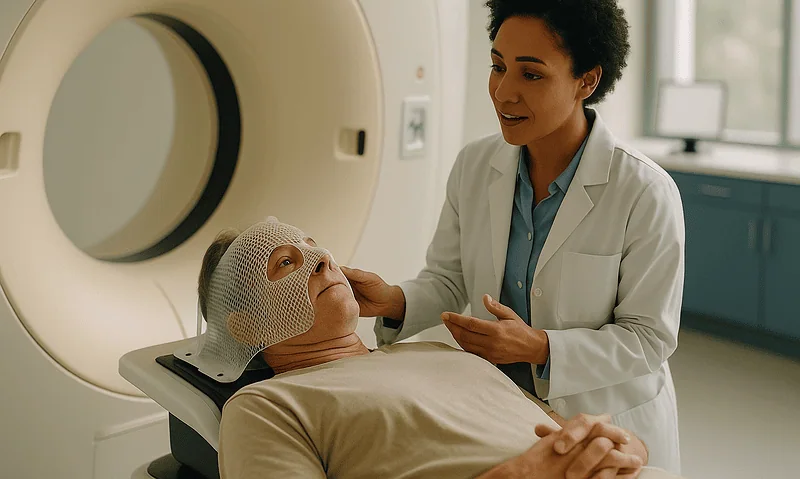
What a CyberKnife Session Feels Like: No Incision, No Frame, Just Lying Still
Most people describe a CyberKnife session as uneventful: you lie still on a padded table, often in a soft mesh mask or body cradle,…

Preparing for Brachytherapy: Fasting, Bowel Preparation and the Anesthesia Check
To prepare for brachytherapy, most people are asked to stop eating for roughly six hours and clear fluids for about two hours before anesthesia,…

When Is a Stem Cell Transplant Part of Acute Lymphocytic Leukemia Treatment?
A stem cell transplant is usually considered for acute lymphocytic leukemia when chemotherapy alone is unlikely to keep the disease away: high-risk genetic features,…