

Nasal Breathing vs Mouth Breathing: What It Changes for Sleep, Jaw and Exercise
Key Takeaways
- The nose warms, humidifies and filters air and adds nitric oxide that the mouth bypasses, which is established physiology rather than a trend.
- A 2025 systematic review of mouth taping found only ten small studies with mixed results and four that flagged a breathing risk for people with nasal obstruction.
- Habitual mouth breathing in children is consistently associated with a longer, narrower face and crowded teeth, but adult facial bones have stopped growing and will not change.
- Small crossover trials in recreational athletes found that trained nasal breathing preserved aerobic capacity while cutting breaths per minute, though it cannot supply enough air at high intensity.
- Mouth breathing during sleep drops the jaw and lets the tongue fall back, which sleep-lab studies show makes the airway more collapsible and worsens snoring.
- Persistent inability to breathe through the nose usually has a cause, most often allergic swelling, a deviated septum, polyps or enlarged adenoids, and each needs a different response.
Nasal breathing filters, warms and humidifies air, adds nitric oxide and slows the breath, and observational studies link habitual mouth breathing to snoring, dry mouth and, in children, narrower jaw development. Small trials suggest trained nasal breathing during exercise does not reduce performance. Evidence that switching improves sleep apnea or blood pressure is limited, and anyone who cannot comfortably breathe through the nose should be evaluated rather than tape the mouth shut.
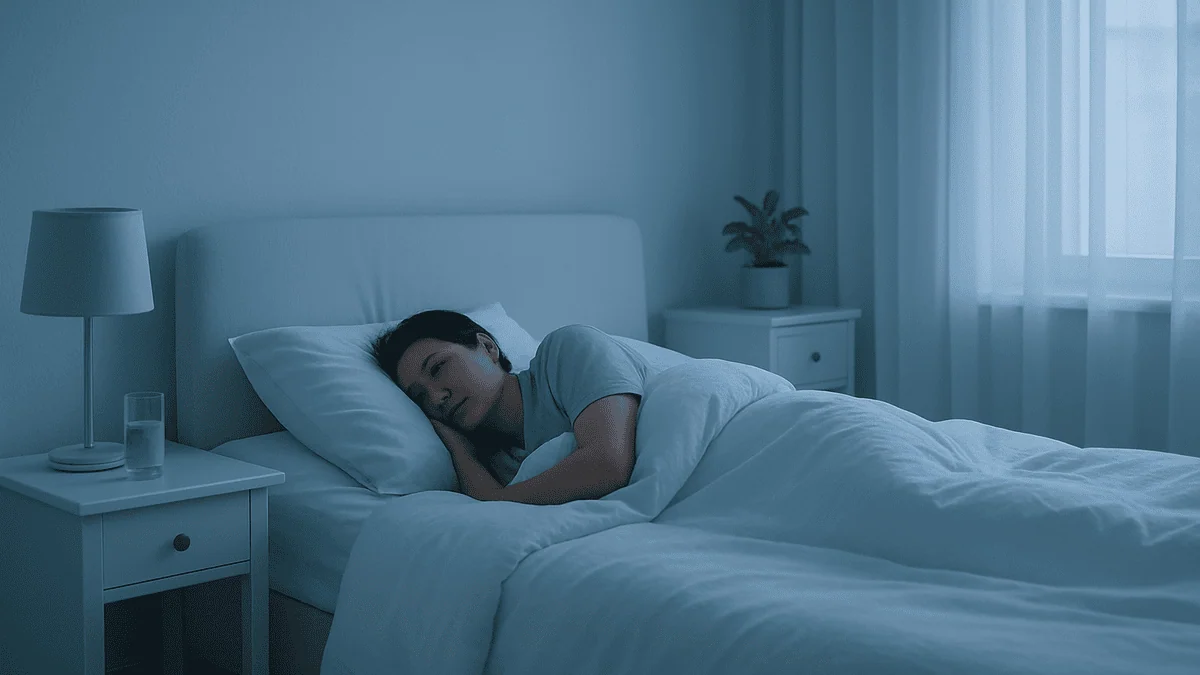
Scroll through any fitness or sleep feed this winter and you will meet the same image: a person in bed with a small strip of tape across their lips, captioned with promises about deeper sleep, a sharper jawline and calmer mornings. The mouth-taping trend has pushed nasal breathing from a niche interest of speech therapists and sleep clinics into one of the most searched health topics of the year.
The timing is not accidental. In 2025 a Canadian research team pooled every published study on mouth taping and found only a handful of small trials, with mixed results and a documented risk for people whose noses are already blocked. As of early 2026 that review, plus a run of consumer health explainers responding to it, has reframed the question. The interesting story is not tape. It is what the nose does that the mouth cannot, who actually struggles to use it, and where the science is solid versus merely plausible.
This piece walks through sleep, jaw development and exercise one at a time, grading the evidence as it goes.
What changed recently in the nasal breathing conversation
Three developments explain why this topic is everywhere at once.
First came the trend itself. Between 2023 and 2025, short videos demonstrating mouth taping for sleep accumulated hundreds of millions of views, often paired with claims that nasal breathing alone could reshape a face or eliminate snoring. The claims spread faster than any study could catch up.
Second, researchers answered. In May 2025 a systematic review published in a peer-reviewed open-access journal gathered the ten studies that had ever examined mouth taping in adults. Combined, they involved roughly 200 participants. Two of the ten reported a modest improvement in a measure of breathing interruptions among people with mild obstructive sleep apnea. Four of the ten raised a safety concern: when nasal airflow is compromised, sealing the mouth removes the backup route. The authors concluded the evidence was too thin to recommend the practice, and that people with nasal obstruction could be harmed.
Third, mainstream medical libraries updated their consumer guidance. Cleveland Clinic and Mayo Clinic pages on mouth breathing and obstructive sleep apnea now carry clearer language about who should not experiment with airway hacks and why a blocked nose is a symptom to investigate rather than a habit to override. The NHS sleep apnoea page continues to list dry mouth on waking and loud snoring as reasons to seek assessment, not as cosmetic annoyances.
What has not changed is the underlying physiology. The nose has always been the intended default airway at rest. Nasal nitric oxide was described in the 1990s; the link between chronic childhood mouth breathing and facial growth has been discussed in orthodontic literature for decades. The trend simply dragged an old, moderately supported idea into a spotlight bright enough to reveal both its strengths and its gaps. The sections that follow sort one from the other.
What your nose does that your mouth cannot
Picture the nose as an air-conditioning unit the size of a walnut. Every breath drawn through it passes over the turbinates, three curved shelves of bone covered in moist tissue that dramatically increase surface area. In the roughly quarter of a second that air spends in the nasal cavity, several things happen.

The air is warmed toward body temperature and humidified to near saturation, so that the delicate lining of the lower airways receives conditioned air rather than cold, dry room air. Hairs at the nostril entrance and a layer of mucus deeper inside trap dust, pollen and many airborne particles before they reach the lungs. Tiny hair-like structures called cilia then sweep that mucus backward to be swallowed.
The nasal lining and sinuses also release nitric oxide, a gas that dilates blood vessels and has antimicrobial properties. Nitric oxide is a signaling molecule the body produces in many tissues; in the nose, concentrations are far higher than in exhaled breath from the mouth. When inhaled through the nose it travels to the lungs, where studies in the physiology literature suggest it modestly improves the matching of airflow to blood flow. Mouth breathing bypasses this supply almost entirely.
Resistance matters too. The nasal passages are narrower than the open mouth, so breathing through them slows the breath and encourages fuller use of the diaphragm, the dome-shaped muscle beneath the lungs. Slower breathing with longer exhalations is associated with a shift toward the calmer, parasympathetic side of the nervous system. Mouth breathing tends to be faster and shallower, drawing more on the upper chest.
None of this means the mouth is a bad airway. It is the right one when the nose is blocked, when speaking, and when exercise demands more air than the nose can deliver. The point is that the nose was built for the resting default, and the mouth was built for the overflow.
Is nasal breathing good for you? What the evidence actually says
The honest answer depends on which claim is being made, because the strength of evidence varies enormously across them. A rough grading:
- Filtering, warming and humidifying air. Well established by anatomy and physiology. This is not contested.
- Nasal nitric oxide reaches the lungs and modestly improves oxygen uptake. Supported by small controlled physiological studies, mostly in healthy volunteers and some in intensive care settings. Moderate evidence for a real but small effect; unclear how much it matters for daily life.
- Habitual mouth breathing in children is associated with altered facial and dental growth. Consistent observational evidence, largely from orthodontic and ear-nose-throat studies. Association is strong; cause is entangled with the conditions that produce mouth breathing, such as enlarged adenoids and allergic rhinitis.
- Mouth breathing worsens snoring and airway collapsibility during sleep. Supported by sleep-laboratory studies showing the airway narrows when the jaw drops open. Moderate observational evidence.
- Nasal breathing during exercise preserves performance once trained. A few small randomized crossover trials in recreational athletes. Low to moderate evidence, small samples.
- Nasal breathing lowers blood pressure. Slow, paced breathing has trial evidence for modest reductions; the nose-specific contribution is not isolated in most of that research. Indirect evidence only.
- Mouth taping improves sleep apnea or sleep quality. Very low evidence; a 2025 systematic review found mixed results across small studies and flagged safety concerns.
- Nasal breathing reshapes an adult face or jawline. No trial evidence. Adult facial bones have finished growing.
Notice the pattern. The claims closest to anatomy are rock solid, the claims about children are strong but observational, and the claims driving the social media trend sit at the weak end. A cautious reader can comfortably conclude that breathing through the nose at rest is the physiologically normal state worth preserving, while treating the more dramatic promises as hypotheses awaiting proper trials.
How do you know if your nose breathing is normal?
Most people never think about how they breathe, which is a reasonable sign that things are working. Normal resting nasal breathing is quiet, effortless and roughly 12 to 20 breaths per minute in an adult. You should be able to close your mouth, breathe through both nostrils for several minutes while sitting still, and feel no urge to gasp.

A few everyday observations can tell you more than any gadget:
- Waking with a dry mouth or sore throat most mornings suggests the mouth is falling open at night.
- Drool on the pillow or chapped lips point the same direction.
- A partner reports loud snoring, gasping or pauses in breathing. This crosses from habit into a medical question.
- One nostril is always more blocked than the other, regardless of colds or allergies. A mild alternating pattern is normal; a fixed one is not.
- You catch yourself mouth breathing while concentrating, reading or watching a screen, with no cold to blame.
- Nasal breathing feels like a struggle even on gentle walks.
The nose has a built-in rhythm worth knowing about. Blood flow shifts between the two sides over a period of hours, a phenomenon called the nasal cycle, so one side feeling slightly fuller than the other at any moment is ordinary. What is not ordinary is persistent blockage on one side for weeks, or blockage on both sides that never lifts even when you are well.
A simple self-check used by speech and myofunctional therapists: hold a small mirror under the nostrils and exhale. Two fog patches of similar size suggest reasonably balanced airflow. A markedly smaller patch on one side is a reason to mention it at your next appointment. This is an observation, not a diagnosis; only an examination can tell whether the cause is swelling, structure or something else.
Nasal breathing vs mouth breathing during sleep
Sleep is where the difference between the two airways becomes most consequential, because you cannot consciously correct it for seven hours.
When a sleeping person breathes through the mouth, the jaw drops and the tongue tends to fall backward, narrowing the space behind it. Sleep-laboratory studies have measured this directly: the upper airway becomes more collapsible with the mouth open, and the pressure needed to keep it open rises. That is the mechanical reason mouth breathing and snoring travel together. Snoring is the sound of soft tissue vibrating in a narrowed airway.
Obstructive sleep apnea, a disorder in which the airway repeatedly closes during sleep and breathing pauses for ten seconds or longer, sits at the severe end of that spectrum. Mayo Clinic and the NHS both list mouth breathing, dry mouth on waking, loud snoring and daytime sleepiness among the recognized features. Mouth breathing does not cause sleep apnea on its own, but it is a common companion and can make the condition harder to manage. People using continuous positive airway pressure, the mask therapy that splints the airway open with gentle air pressure, often find that air leaks from an open mouth reduce comfort and effectiveness.
Dry mouth is more than a nuisance. Saliva protects teeth and gums; a mouth left open all night loses that protection for hours, which dental literature links to more cavities and gum inflammation. Morning bad breath and a sore throat follow the same logic.
There is a less obvious cost. Slower nasal breathing at night appears to support deeper, more stable sleep stages in small studies, though the effect is hard to separate from the absence of snoring. Reports of feeling more rested after switching to nasal breathing are common but come mostly from self-selected people; the controlled evidence is thin.
The practical upshot is that nighttime mouth breathing is a signal worth reading. Sometimes the fix is treating a stuffy nose. Sometimes the signal points to a sleep disorder that needs proper testing.
Does mouth breathing change your jaw and face?
This is the claim behind the jawline videos, and it deserves a careful split between children and adults.
In children, the answer is a qualified yes. Facial bones grow rapidly in the first decade of life, and growth responds to the forces acting on it. A child who habitually breathes through an open mouth holds the tongue low in the mouth instead of against the palate, tilts the head slightly forward and keeps the lips apart. Orthodontic and ear-nose-throat researchers have described a recognizable pattern associated with this posture: a longer, narrower face, a high arched palate, crowded teeth, a retruded lower jaw and a tendency toward an open bite. Some textbooks call it adenoid facies, because enlarged adenoids, the lymph tissue at the back of the nasal passage, are the classic cause of the blockage that starts the habit.
The evidence is observational and consistent. What it cannot fully untangle is cause and effect. Children who mouth breathe usually have a reason, most often enlarged adenoids or tonsils, allergic rhinitis or chronic congestion, and those same conditions may influence growth by other routes. Studies following children after adenoid removal report improved nasal breathing and, in some, more favorable facial growth, which strengthens the case but does not close it.
In adults, the story is different. The growth plates of the facial skeleton are closed by the late teens. Switching an adult from mouth to nasal breathing will not lengthen a jaw, widen a palate or carve a new profile. It may change soft-tissue posture: a closed mouth, a tongue resting on the palate and a relaxed lower face can look subtly different in a photograph, which is likely what the before-and-after videos are capturing. That is posture, not bone.
For parents, the takeaway is that a child who consistently breathes through the mouth, especially with snoring or restless sleep, should be seen. For adults chasing a jawline, the evidence simply is not there.
Nasal breathing during exercise: what the small trials found
Athletes have long been told to breathe in through the nose and out through the mouth, and more recently to keep the nose in charge throughout. Here the evidence is intriguing but thin, resting on a few small randomized crossover studies in recreational athletes.
One study of recreational runners had participants train exclusively with nasal breathing for six months, then compared their laboratory results with mouth breathing. Maximal oxygen uptake, a standard measure of aerobic capacity, was essentially the same either way. What differed was efficiency: with nasal breathing the runners took fewer, larger breaths per minute and reached a lower ventilation rate at the same workload. Another small trial examined short, high-intensity sprint efforts and found no meaningful difference in peak power between nasal and mouth breathing, though the nasal condition felt harder to some participants.
Two cautions apply. Sample sizes were small, typically ten to twenty people, and participants were recreational rather than elite. The findings tell us that trained nasal breathing does not appear to sabotage performance at moderate intensities, not that it improves it.
The mechanism is plausible. Nasal resistance slows the breath, which may reduce the sensation of breathlessness at a given intensity and encourage diaphragmatic breathing. Warmer, more humid air may be gentler on airways that tighten with exercise, a consideration for people who cough or wheeze after cold-weather runs, though this has not been tested as a treatment and should not replace prescribed inhalers.
Practically, most people can sustain nasal breathing through easy and moderate effort, roughly the intensity at which you can still speak in full sentences. Beyond that, the nose cannot move enough air, and the mouth opens automatically. That is physiology, not failure. The reasonable approach is to use nasal breathing for warm-ups, easy sessions and recovery, let the mouth join in at hard efforts, and treat any breathlessness that feels out of proportion as a reason to talk to a clinician rather than push through.
Nasal breathing vs mouth breathing at a glance
The table below summarizes the main differences and how confident the evidence allows us to be. It is a map of what is known, not a scorecard.
| Effect | Nasal breathing | Mouth breathing | Strength of evidence |
|---|---|---|---|
| Air conditioning | Warms, humidifies and filters air before the lungs | Cooler, drier, unfiltered air reaches the airways | Established anatomy |
| Nitric oxide delivery | Carries nasal nitric oxide to the lungs | Bypasses the nasal supply | Moderate, small physiological studies |
| Breathing rate at rest | Slower, deeper, more diaphragm | Faster, shallower, more upper chest | Moderate |
| Snoring and airway collapse | Jaw closed, tongue forward, airway more stable | Jaw open, tongue back, airway more collapsible | Moderate, sleep-lab observation |
| Oral health | Saliva protects teeth and gums overnight | Dry mouth linked to cavities, gum disease, bad breath | Moderate observational |
| Facial growth in children | Tongue on palate supports normal arch width | Associated with long, narrow face and crowding | Consistent observational; cause not fully proven |
| Facial shape in adults | No bony change | No bony change | No trial evidence for change either way |
| Exercise performance | Similar aerobic capacity once trained, fewer breaths per minute | Needed at high intensity | Low to moderate, small crossover trials |
| Blood pressure | Slow paced breathing lowers it modestly; nose-specific effect unclear | Not separately studied | Indirect |
| Sleep apnea outcomes | Mouth taping: mixed results in tiny studies, safety concerns | Common companion of apnea | Very low for taping |
Reading down the right-hand column tells the real story. The physiological differences are not in doubt. The clinical payoffs people most want, better sleep apnea numbers and a different face, are exactly where the evidence thins out. That gap is the space in which the viral claims live.
Why some people simply cannot breathe through the nose
Before anyone is told to breathe through the nose, it is worth asking whether they can. Persistent mouth breathing is very often a symptom, and the causes cluster into a few groups.
Swelling of the lining. Allergic rhinitis, the runny, itchy congestion triggered by pollen, dust mites or pet dander, is the most common reason a nose feels permanently half shut. Non-allergic rhinitis, in which the lining overreacts to temperature changes, smoke or strong smells, behaves similarly. Prolonged use of over-the-counter decongestant sprays can itself cause rebound swelling, a pattern clinicians call rhinitis medicamentosa.
Structural narrowing. A deviated septum, meaning the wall of cartilage and bone dividing the two nostrils is off center, affects a large share of adults to some degree and can leave one side markedly narrower. Mayo Clinic notes that many people have some deviation without symptoms; trouble arises when the narrowing is enough to block airflow. Enlarged turbinates and a collapsing nasal valve, the narrowest point just inside the nostril, are other structural culprits.
Growths. Nasal polyps are soft, non-cancerous swellings of the lining that can grow large enough to obstruct breathing and dull the sense of smell. They often accompany asthma or chronic sinus inflammation.
Enlarged adenoids and tonsils. Especially in children, this lymph tissue can swell enough to block the passage behind the nose and drive both mouth breathing and snoring.
Habit. After a long cold or a childhood blockage that has since resolved, some people continue breathing through the mouth simply because the pattern stuck. This group benefits most from the retraining described later.
The distinction matters because the fix differs. Swelling may respond to allergy management prescribed by a clinician. Structure may need an ear-nose-throat assessment. Habit responds to practice. Taping over any of them treats the symptom while leaving the cause in place, and in the structural and growth categories it can be unsafe.
How can I improve my nasal breathing? Practical steps that stand up
Assuming the nose is physically clear, the evidence-backed path to more nasal breathing is unglamorous: reduce swelling, clear the passages and practice.
Rinse. Saline nasal irrigation, rinsing the passages with a sterile salt-water solution, has reasonable trial support for easing congestion in allergic and chronic rhinitis, and it is safe when made with sterile or previously boiled water. MedlinePlus and Mayo Clinic both describe it as a first-line comfort measure. Tap water straight from the faucet should not be used because of a rare but serious infection risk.
Tame the triggers. If congestion tracks with seasons or bedrooms, allergy is the likely driver. Washing bedding in hot water, keeping pets out of the bedroom and using a high-efficiency filter are standard advice. Whether medication is appropriate is a conversation for your clinician or pharmacist; do not extend the use of any spray beyond what the label or prescriber allows.
Humidify wisely. Dry indoor air in winter thickens mucus. A bedroom humidifier kept clean can help; a dirty one grows mold.
Practice awake, not asleep. Spend several short periods a day consciously breathing through the nose: during a walk, at a desk, while cooking. Keep the lips lightly closed and the tongue resting against the roof of the mouth. This is the same tongue posture speech and myofunctional therapists teach, and it makes the closed-mouth position feel natural rather than effortful.
Use exercise as training. Easy-intensity walking or cycling with nasal breathing only builds tolerance for the extra resistance. If you must open the mouth, slow down rather than stop.
Slow the exhale. Breathing exercises that lengthen the out-breath, such as exhaling for longer than you inhale, have trial evidence for lowering heart rate and modestly reducing blood pressure over weeks. Harvard Health describes diaphragmatic breathing as a low-risk practice anyone can learn. Doing it through the nose reinforces the habit.
What this list omits is deliberate. It contains no device you must buy, and nothing that overrides a blocked nose. If these steps do not make nasal breathing comfortable within a few weeks, the obstacle is probably not habit, and an examination is the next step.
How long does it take to get used to nasal breathing?
There is no trial that has timed the adaptation, so any figure is an estimate drawn from clinical experience and the training periods used in small studies. With that caveat, a realistic picture looks like this.
The first week often feels worse before it feels better. People who have breathed through the mouth for years describe a sense of not getting enough air, mild anxiety and a strong pull to open the mouth. This is partly the unfamiliar resistance of the nose and partly a recalibration of the breathing reflex. The body has been accustomed to a faster, larger air exchange; slower nasal breathing briefly registers as insufficient even when oxygen levels are entirely normal.
By the second to fourth week, most people find daytime nasal breathing at rest comes without conscious effort. The exercise studies that trained participants to breathe nasally allowed anywhere from several weeks to six months of adaptation before testing, which is a fair indication that comfortable nasal breathing during moderate exertion takes longer than at rest.
Nighttime is the slowest to change because there is no conscious control. Improvements in morning dry mouth tend to lag daytime progress, and for some people the mouth continues to fall open in sleep regardless of daytime habit. That is one of the strongest signs that something other than habit, such as congestion, a structural narrowing or a sleep disorder, is at work.
Two things speed the process. The first is clearing the nose, because practice against a blocked airway teaches the body only that nasal breathing is unpleasant. The second is frequency over duration: a dozen two-minute check-ins across the day build the habit faster than one heroic half-hour.
One thing should never be part of the plan: forcing nasal breathing when it feels genuinely airless, dizzying or frightening. Discomfort is expected; distress is a signal to stop and get assessed.
Mouth taping for sleep: what the studies actually show
Because it is the practice driving the trend, mouth taping deserves its own plain accounting.
The idea is simple. A strip of porous tape placed over or across the lips discourages the mouth from opening during sleep, forcing air through the nose. Proponents claim less snoring, less dry mouth and better sleep.
The 2025 systematic review gathered every published study on the practice: ten in total, with a combined total of about two hundred adults, most of them people with mild obstructive sleep apnea or habitual snoring. The results were mixed. Two studies reported a modest reduction in the number of breathing interruptions per hour in mild apnea. Others found no meaningful change. Several were very small, unblinded and short, and none was large enough to detect harms reliably. Four of the ten explicitly warned that people with nasal obstruction faced a risk of restricted breathing if the mouth was sealed.
That safety point is not theoretical. During sleep the nose can become more congested as blood flow shifts and as a person lies flat. A nose that felt open at bedtime may be partly blocked at three in the morning. With the mouth free, the body compensates without waking. With the mouth taped, the options narrow. People with untreated sleep apnea are the very group most tempted to try taping and also the group for whom masking a symptom carries the most risk, because it can delay diagnosis of a condition that Mayo Clinic and the NHS link to high blood pressure, heart rhythm problems and daytime accidents.
Other reported downsides are smaller but real: skin irritation, disrupted sleep from removing the tape, and difficulty for anyone who might vomit or reflux during the night.
The neutral conclusion is that mouth taping has not been shown to work well enough, or to be safe enough for a broad group, to recommend. Someone who has been formally diagnosed, has had nasal patency assessed and wants to discuss it should raise it with their sleep clinician, who can weigh it against established treatments.
Common myths about nasal breathing, corrected
Viral health content thrives on a grain of truth stretched past its limits. Here are the most common stretches and where each one snaps.
Myth: Nasal breathing will reshape an adult face. Facial bones stop growing in the late teens. Nasal breathing can change lip and tongue posture, which alters how the lower face looks in a photo, but it does not move bone. The genuine evidence on facial development concerns children who mouth breathe chronically.
Myth: Mouth breathing is always a bad habit you should break. Mouth breathing is often a symptom of a blocked nose. Overriding it without finding the cause treats the wrong thing and can be unsafe.
Myth: Mouth taping cures snoring and sleep apnea. Ten small studies with mixed results and documented safety concerns are not a cure. Sleep apnea has established, tested treatments; taping is not among them.
Myth: You should breathe only through your nose during hard exercise. Small trials suggest trained nasal breathing preserves performance at moderate intensity. At high intensity the nose cannot move enough air, and the mouth opens automatically. That is normal physiology.
Myth: Nose breathing raises your blood oxygen. In healthy people, blood oxygen saturation is already near maximum with either airway. Nasal nitric oxide may improve efficiency slightly, but a fingertip oximeter will not show a difference in someone with healthy lungs.
Myth: Nasal breathing lowers blood pressure. Slow, paced breathing does have trial evidence for modest reductions. Most of those studies did not isolate the nose from the pace. The pace appears to be what matters.
Myth: Everyone breathes through the mouth at night and should be worried. Occasional mouth breathing during a cold, after alcohol or in a very dry room is ordinary. The concern is a persistent pattern paired with snoring, dry mouth every morning or unrefreshing sleep.
The through-line is that the nose really is the better resting airway, and that fact has been dressed in promises it cannot keep.
Mouth breathing side effects in children: what parents should watch
Children carry the strongest evidence and the highest stakes in this conversation, because their airways are small, their faces are still growing and they rarely report symptoms themselves.
Habitual mouth breathing in a child is most often driven by enlarged adenoids or tonsils, allergic rhinitis or chronic congestion. Cleveland Clinic lists the recognizable signs: lips apart at rest, snoring or noisy breathing at night, restless sleep, dry cracked lips, bad breath, and a tendency to eat with the mouth open or be a messy eater. Some children develop dark circles under the eyes from chronic congestion.
The downstream effects fall into three groups. The dental and facial pattern described earlier, with a narrow palate and crowded teeth, is well documented in observational studies. Sleep-disordered breathing, ranging from primary snoring to obstructive sleep apnea, is more common in mouth-breathing children, and pediatric sleep apnea presents differently from the adult form: rather than daytime sleepiness, children often show hyperactivity, poor concentration, irritability and slipping school performance, which can be mistaken for attention problems. Bed-wetting beyond the usual age and morning headaches are also on the list. The third group is growth; poor sleep in early childhood has been associated in observational research with slower growth, though the evidence is less consistent.
None of this is a reason for alarm at a child who occasionally sleeps with an open mouth during a cold. A persistent pattern, especially with snoring most nights, is different. Pediatric guidance in the sources cited here is consistent: a child who snores regularly should be evaluated, and a child with signs of mouth breathing and dental crowding benefits from a dentist and a pediatrician comparing notes.
What parents should not do is tape a child’s mouth. The safety concerns raised for adults apply with greater force to small airways, and children cannot reliably remove tape in distress. The right move is an appointment, not a fix from a video.
When to see a doctor about nasal breathing or mouth breathing
Most people who want to breathe through their nose more can work toward it safely with the steps above. Certain patterns, though, are not habits to retrain. They are reasons to be examined, and the decision about any treatment belongs with the clinician who sees you.
Arrange an appointment if you notice:
- Loud snoring most nights, especially with witnessed pauses in breathing, gasping or choking sounds
- Waking unrefreshed, or falling asleep unintentionally during the day, while driving or in meetings
- Persistent blockage of one nostril for more than a few weeks, or blockage of both sides that never clears between colds
- Nasal congestion with facial pain, reduced sense of smell or thick discolored discharge lasting more than ten days
- Repeated nosebleeds, or bleeding from one side only
- A child who mouth breathes, snores regularly, wets the bed beyond the expected age, or shows daytime restlessness and poor concentration
- Morning headaches, high blood pressure that is hard to control, or a new heart rhythm irregularity alongside snoring
- Breathlessness during light activity that is out of proportion to your fitness
Seek urgent care if breathing through either the nose or mouth becomes difficult at rest, if lips or fingertips look bluish, or if a nosebleed will not stop after twenty minutes of firm pressure.
What to expect at a visit varies. A primary care clinician will typically look inside the nose, ask about allergies and sleep, and may refer to an ear-nose-throat specialist for a closer look with a small camera, or to a sleep clinic for an overnight study that records breathing, oxygen levels and sleep stages. Mayo Clinic, the NHS and the National Heart, Lung, and Blood Institute all describe home and laboratory sleep testing as the standard route to diagnosing sleep apnea. If a medication, device or procedure is suggested, the choice, the specifics and any changes over time rest with that clinician. Nothing in this article replaces that conversation, and nothing here should prompt anyone to stop or alter a treatment already prescribed.
Frequently asked questions
Is nasal breathing good for you?
Breathing through the nose at rest is the body’s intended default and carries clear physiological benefits: filtered, warmed and humidified air, delivery of nasal nitric oxide to the lungs, and a slower breathing rhythm. Observational evidence links habitual mouth breathing to snoring, dry mouth and, in children, altered jaw growth. Claims that nasal breathing cures sleep apnea or reshapes an adult face are not supported by trials.
How can I improve my nasal breathing?
Start by clearing the nose with saline rinsing using sterile or previously boiled water, managing allergy triggers in the bedroom, and keeping indoor air humidified. Then practice conscious nasal breathing in short daytime bursts with the tongue resting on the palate, and use easy exercise as training. If nasal breathing still feels blocked after a few weeks, the cause is likely structural or inflammatory and warrants an examination.
How do you know if your nose breathing is normal?
Normal nasal breathing is quiet and effortless, with no urge to open the mouth while sitting still for several minutes. Warning signs include waking with a dry mouth most mornings, drool on the pillow, one nostril persistently more blocked than the other, catching yourself mouth breathing at a screen, or a partner reporting loud snoring. A mild alternating fullness between nostrils over hours is a normal pattern called the nasal cycle.
How long does it take to get used to nasal breathing?
No trial has timed it precisely, but clinical experience suggests daytime nasal breathing at rest feels natural within two to four weeks of regular practice, while comfortable nasal breathing during moderate exercise can take several weeks to months, matching the adaptation periods used in small athletic studies. Nighttime habits change slowest. If the mouth keeps falling open in sleep despite daytime progress, something other than habit is likely involved.
What are the main mouth breathing side effects?
Commonly reported effects include dry mouth, bad breath, sore throat on waking, chapped lips and a higher rate of cavities and gum inflammation because saliva protection is lost overnight. Mouth breathing is also linked observationally to snoring and more collapsible airways during sleep. In children who mouth breathe chronically, studies describe a longer, narrower face, high palate and crowded teeth. Many of these effects stem from the underlying blockage rather than the habit alone.
Does mouth taping for sleep actually work?
The evidence is weak. A 2025 systematic review found ten small studies of about two hundred adults in total; two reported modest improvement in mild sleep apnea, others found no change, and four raised safety concerns for people with blocked noses. Mouth taping has not been shown to be effective or broadly safe, and anyone with snoring or suspected sleep apnea should be assessed by a clinician rather than self-treat.
Is nasal breathing during exercise better than mouth breathing?
Small randomized crossover trials in recreational athletes found that after weeks to months of training, nasal breathing produced similar aerobic capacity to mouth breathing with fewer breaths per minute, and no loss of peak power in short sprints. It is not clearly better, but it does not appear to hurt at moderate intensity. At high intensity the nose cannot move enough air and the mouth opens automatically, which is normal.
Can mouth breathing change your face as an adult?
No trial evidence shows that switching to nasal breathing changes adult bone structure, because facial growth finishes in the late teens. What can change is soft-tissue posture: a closed mouth, relaxed lower face and tongue resting on the palate can look different in photographs. The documented facial changes from mouth breathing concern children, whose bones are still growing in response to tongue and lip position.
Does nasal breathing lower blood pressure?
Slow, paced breathing with lengthened exhalations has trial evidence for modest reductions in blood pressure over weeks of regular practice. Most of those studies did not separate the effect of the nose from the effect of the slow pace, so the nose-specific contribution is uncertain. Breathing exercises are low risk and can complement, but never replace, blood pressure treatment prescribed by a clinician.
Why can't I breathe through my nose even when I don't have a cold?
Persistent blockage without a cold usually points to allergic or non-allergic rhinitis, a deviated septum, enlarged turbinates, nasal polyps or, in children, enlarged adenoids. Overusing decongestant sprays can also cause rebound swelling. Because the causes and their management differ, a fixed blockage lasting more than a few weeks, particularly on one side, is a reason for an examination rather than a breathing exercise.
References
This article is for general information only and is not a substitute for professional medical advice. Please consult a qualified doctor about your individual situation.

More from the Blog
The Military Sleep Method and 4-7-8 Breathing: Do the Viral Fall-Asleep Techniques Work?
The military sleep method and 4-7-8 breathing are relaxation routines that combine muscle release, slow breathing and calming imagery. They are low-risk and can…
The Best Temperature for Sleep: Why a Cooler Room Deepens Sleep
For most healthy adults the best temperature for sleep is roughly 60 to 67°F (about 15.5 to 19.5°C), with some guidance settling around 64…
How to Sleep Better: The 12 Evidence-Backed Habits, Ranked by How Much They Actually Help
To sleep better, keep the same wake time every day, get outdoor light within an hour of waking, use the bed only for sleep,…

Caffeine Half-Life: Why a 3 pm Coffee Is Still in Your Blood at Midnight
Caffeine half life is the time your body needs to clear half of a dose, about five hours in a typical healthy adult, with…
Sleep Score: What the Number Means and How Seriously to Take It
A sleep score is a proprietary estimate, usually on a 0-to-100 scale, that blends how long you slept, how restless you were, and sleep…
Sleep Cycles Explained: The 90-Minute Rhythm, the Stages and Why Waking Time Matters
A sleep cycle is one pass through the light, deep and REM stages of sleep, lasting roughly 90 to 120 minutes in adults, with…