

Oil Pulling: The Ancient Practice vs the Actual Evidence

Key Takeaways
- Small trials of 20 to 60 people suggest oil pulling may modestly reduce plaque and Streptococcus mutans counts, but reviewers consistently rate the evidence as weak and short-term.
- No clinical study has shown oil pulling prevents cavities, whitens teeth, or removes toxins: the detox claim has no anatomical mechanism at all.
- Medical case reports link improperly done oil pulling (inhaling oil while gargling or lying down) to lipoid pneumonia, a rare lung inflammation.
- Oil pulling belongs before brushing, never instead of it, because swished oil delivers no fluoride and cannot disrupt mature plaque between teeth.
- Spit used oil into the trash, not the sink, coconut oil solidifies below about 76°F and gradually clogs plumbing.
- Traditional Ayurvedic practice used sesame oil; coconut oil's lab-tested lauric acid has never been proven superior in an actual head-to-head human trial.
Oil pulling, swishing edible oil in the mouth for 10 to 20 minutes, may modestly reduce plaque and mouth bacteria, according to a handful of small studies. There is no reliable evidence that it prevents cavities, whitens teeth, or detoxifies the body, and it cannot replace brushing with fluoride toothpaste, cleaning between teeth, and regular dental checkups.
Somewhere right now, a person is standing over a bathroom sink with a mouthful of coconut oil, eyes on a phone timer, wondering how anyone makes it to twenty minutes. Social media has turned this into a morning ritual for millions, complete with promises of whiter teeth, fresher breath, and a vaguely defined “detox.”
The ritual itself is nothing new. Ayurvedic texts described swishing oil more than two thousand years before the first wellness influencer pressed record. What is new is the size of the claims attached to it, and the gap between those claims and what clinical research has actually measured.
That gap is worth mapping honestly. A few small trials do show something interesting. Several popular claims show nothing at all. And one rare complication, buried in medical case reports, deserves more attention than it gets. Here is the full picture, minus the mythology.
What is oil pulling, exactly?
Oil pulling is simple to describe and surprisingly hard to do. You take roughly a tablespoon of an edible oil, coconut, sesame, and sunflower are the usual choices, and swish it around your mouth for anywhere from 10 to 20 minutes. You push and pull the oil between your teeth, over your gums, along your cheeks. Then you spit it out, rinse, and go about your day.
Twenty minutes is longer than it sounds. Most people who try it report jaw fatigue within the first five, which is one reason experienced practitioners suggest starting shorter and building up. The oil mixes with saliva as you swish, roughly doubling in volume and turning thin and milky. That change in texture is normal, not a sign that anything medicinal is happening.
Two rules are non-negotiable. First, the oil is never swallowed, by the end of a session it carries bacteria, food debris, and dead cells from the mouth. Second, it is never gargled, because tipping the head back with a mouthful of oil raises the risk of inhaling droplets into the lungs, a hazard covered later in this article.
Advocates position oil pulling as a daily habit, typically done in the morning before eating or brushing. Critics point out that any liquid swished vigorously for 20 minutes would dislodge some debris. Both observations are relevant to what the research actually found.
Where does oil pulling come from?
The practice traces back to Ayurveda, the traditional medical system of the Indian subcontinent, where classical texts describe two related techniques. Kavala graha involves holding a comfortable amount of liquid in the mouth and swishing it; gandusha involves filling the mouth completely and holding the liquid still. Sesame oil was the traditional choice, and the techniques were prescribed for a long list of conditions, from bad breath and bleeding gums to headaches, claims made in an era with no way to test them.
That historical context matters for two reasons. First, traditional use tells us a practice is old and culturally significant; it does not tell us the practice works. Plenty of ancient remedies turned out to be effective when finally studied, and plenty turned out to be inert or harmful. Age is not evidence.
Second, the modern version has drifted from the original. Coconut oil, now the most popular choice in Western wellness circles, was not the classical Ayurvedic standard, sesame was. The “detox” framing common on social media, in which oil supposedly draws toxins out through the mouth, has no anatomical basis and does not appear in serious discussions of the traditional practice either. The body clears waste through the liver and kidneys, not through oil held against the cheeks.
So when someone says oil pulling is “backed by thousands of years of use,” the honest translation is: people have done this for a very long time, and scientists only recently started checking whether it does anything measurable.
Is oil pulling actually good for teeth?
The most defensible answer: possibly a little, for a narrow set of outcomes, based on weak evidence. That sentence will not fit on a social media caption, which is part of the problem.
A handful of small clinical studies, most conducted in India, most with 20 to 60 participants, have measured what happens when people add oil pulling to their routine. Some found reductions in plaque scores, gingivitis scores, and counts of Streptococcus mutans, a bacterium heavily involved in tooth decay. Those are real, measurable oral health markers, and the direction of the findings is at least consistent.
But markers are not outcomes. No trial has followed oil pullers long enough, in large enough numbers, to show fewer cavities, less gum disease progression, or fewer lost teeth. Reducing a bacterial count for a few weeks is a hint, not a proof. By comparison, brushing with fluoride toothpaste has decades of large-scale evidence behind it showing actual reductions in tooth decay.
There is also a design flaw running through much of the research: many studies did not adequately control for the swishing itself. Vigorously moving any liquid, including plain water, around the mouth for 10 to 20 minutes mechanically dislodges food particles and some loosely attached plaque. Untangling the oil’s contribution from the swishing’s contribution requires careful comparison groups, and most studies did not have them.
So: not useless, not proven, and nowhere near the transformation the marketing implies.
What does the research really show? A snapshot
Rather than gesture vaguely at “studies,” it helps to look at representative examples and their honest limitations.
| Study | What was done | Finding | Key limitation |
|---|---|---|---|
| Asokan et al., 2008 (India) | 20 adolescents; sesame oil pulling vs. an antiseptic mouth rinse, measured over 2 weeks | Both groups showed reduced S. mutans counts in plaque | Very small sample; short duration |
| Peedikayil et al., 2015 (India) | 60 teenagers added coconut oil pulling to normal brushing for 30 days | Plaque and gingivitis scores declined steadily | No control group, brushing alone or water swishing might explain results |
| Review articles, 2016–2020s | Pooled assessments of available trials | Suggestive but inconsistent benefits on plaque and bacteria | Reviewers repeatedly flagged small samples, short follow-up, and weak blinding |
Notice the pattern. The individual results are not fabricated, bacterial counts and plaque scores genuinely dropped in several trials. But every study shares the same structural weaknesses: tiny groups, follow-up measured in weeks rather than years, and comparison arms that make it hard to isolate the oil’s effect.
In evidence-based medicine, this tier of research is called preliminary or hypothesis-generating. It justifies bigger, better trials. It does not justify health claims. When dental journals have published sharp critiques of oil pulling, one prominent editorial bluntly filed it under bad science, the objection was not that the studies showed nothing, but that promoters were treating pilot data as settled fact.
How is oil pulling supposed to work?
Three mechanisms get proposed, with very different levels of plausibility.
The first is mechanical, and it is the strongest. Swishing any liquid forcefully for 10 to 20 minutes physically flushes food debris and disturbs loosely organized plaque. Oil’s viscosity may help it coat surfaces, but the swishing does much of the work, which is why studies comparing oil against other swished liquids matter so much.
The second involves the oil’s chemistry. Coconut oil is roughly half lauric acid, a fatty acid that shows antimicrobial activity against S. mutans and certain yeasts in laboratory conditions. That finding is real, but a petri dish is not a mouth. Concentration, contact time, and saliva all change the equation, and lab activity routinely fails to translate into clinical benefit.
The third is the saponification hypothesis: the idea that alkaline saliva partially reacts with the oil during swishing, producing a mild soap-like emulsion that lifts debris and microbes. It is chemically conceivable in principle, but the reaction requires conditions that a 15-minute swish at body temperature only weakly provides. It remains a hypothesis, not a demonstrated process.
What oil pulling clearly does not do is “pull toxins” from the bloodstream, organs, or lymphatic system. No pathway exists for that. The mouth’s lining is not a drainage port, and no study has ever detected systemic toxins migrating into swished oil. When a claim requires new anatomy to be true, the claim loses.
Why don't dentists like oil pulling?
It is worth being precise here, because “dentists hate it” is itself a distortion. Most dental professionals do not object to a patient swishing coconut oil in the morning. They object to three specific things that travel with the trend.
The first is substitution. Some enthusiasts scale back brushing or skip fluoride toothpaste because they believe the oil covers them. It does not. Oil cannot remineralize enamel, cannot reach effectively between teeth the way floss or interdental brushes do, and has never been shown to prevent a single cavity. When oil pulling replaces proven care rather than supplementing it, oral health predictably suffers.
The second is delay. Persistent bad breath, bleeding gums, and tooth sensitivity are symptoms with causes, gum disease, decay, infection. A person who spends three months oil pulling at a problem that needed professional treatment gives that problem three months to advance. Gum disease in particular progresses quietly, and early treatment is dramatically simpler than late treatment.
The third is the evidence standard. Dentistry moved to evidence-based practice for good reason, and professional bodies are consistent: when the best available research consists of small, short, poorly controlled trials, the honest position is “insufficient evidence,” not endorsement. Dental journals have published pointed critiques making exactly this argument.
Framed that way, the dental profession’s stance is not hostility toward tradition. It is the same skepticism applied to any intervention, including new commercial dental products, that arrives with big claims and thin data.
What are the downsides to oil pulling?
For most healthy adults who do it correctly, oil pulling is low-risk. But low-risk is not no-risk, and the specifics are worth knowing before you commit to a mouthful of oil every morning.
The most serious concern is rare but documented: lipoid pneumonia. Medical case reports describe lung inflammation in people who accidentally inhaled small amounts of oil during pulling, typically by gargling it, laughing, or swishing while lying down. The lungs handle inhaled oil poorly, and the resulting inflammation can require significant medical care. This is why the rules are swish gently, keep the head level, never gargle, and keep the practice away from anyone with swallowing difficulties.
The everyday downsides are less dramatic:
- Jaw soreness and muscle fatigue, especially in people with existing jaw joint problems, for whom 20 minutes of sustained swishing can genuinely aggravate symptoms.
- Nausea or an upset stomach if the used oil is swallowed, remember, it is carrying the bacterial load you just rinsed off your teeth.
- Allergic reactions in people sensitive to coconut, sesame, or other source plants.
- Plumbing damage: coconut oil solidifies below about 76°F (24°C), and spitting it into the sink day after day is a slow-motion drain clog. Spit into the trash.
- Opportunity cost: 15 to 20 minutes daily is a real commitment, and spending it on an unproven add-on while neglecting a two-minute brush is a bad trade.
None of this makes oil pulling dangerous for a careful adult. It makes it a practice with rules, and with a rare complication that deserves respect.
Do I brush my teeth after oil pulling?
Yes, oil pulling never replaces brushing, and the conventional sequence puts the oil first. The typical routine among practitioners runs: swish the oil, spit it into the trash, rinse the mouth thoroughly with water, then brush with fluoride toothpaste as usual.
The logic behind that order is straightforward. Brushing afterward removes any oily film along with residual bacteria and debris the swishing loosened, and it delivers fluoride to clean tooth surfaces where it can do its job, helping enamel resist acid and repair early mineral loss. Fluoride is the single most evidence-backed ingredient in home dental care, and nothing in a bottle of coconut oil replicates what it does.
A few practical notes on the handoff between the two steps. Rinse with plain water before brushing so your toothbrush is not working through a layer of oil; some people find the residue makes toothpaste feel less effective at foaming, though this is cosmetic rather than chemical. If mornings feel crowded, there is no rule that oil pulling must happen at dawn, any time you can spare the minutes works, as long as brushing still happens twice daily on its own schedule.
One habit to avoid: treating the post-pulling freshness as a reason to skip the brush. A slick, just-rinsed feeling is not the same as plaque removal, and it definitely is not fluoride exposure. The oil is the optional extra. The toothbrush is the appointment you keep.
Does oil pulling whiten teeth?
This is the claim that drives much of the trend, and it has the least evidence behind it, effectively none from controlled research.
Teeth look whiter through two mechanisms. Surface stains from coffee, tea, red wine, and tobacco can be physically removed, which is what mild abrasives in toothpaste and professional cleanings accomplish. Deeper discoloration within the tooth requires bleaching chemistry that penetrates enamel. Swished oil does neither meaningfully. It is not abrasive, and it contains no bleaching agent.
So why do people swear their teeth look brighter? Several ordinary explanations cover it. Anyone motivated enough to swish oil for 20 minutes daily is usually also brushing more carefully, drinking less staining coffee, or paying closer attention to their mouth, and any of those changes can lighten surface stains within weeks. Add expectation bias, which is powerful with appearance judgments made in a bathroom mirror, and the anecdotes explain themselves without the oil doing anything.
No published clinical trial has measured tooth shade before and after oil pulling with standardized methods and found a whitening effect. Given how easy that study would be to run, its absence after a decade of viral popularity is telling.
If whiter teeth are the goal, the evidence points elsewhere: reduce staining foods and tobacco, brush twice daily, get professional cleanings to remove built-up surface stain, and discuss bleaching options with a dentist if you want a shade change beyond that. Those routes are unglamorous, but they are the ones that measurably work.
Can oil pulling replace brushing, flossing, or mouthwash?
No, and this is the point where the evidence is unambiguous rather than merely thin.
Brushing does two things oil cannot. Mechanically, the bristles disrupt plaque: a structured bacterial biofilm that adheres to teeth far more stubbornly than swished liquid can dislodge once it matures. Chemically, toothpaste delivers fluoride, which incorporates into enamel and helps reverse the earliest stages of decay. Decades of population-level research connect fluoride toothpaste use with lower cavity rates. Oil has zero comparable evidence and no mechanism to acquire it.
Cleaning between teeth addresses the roughly one-third of tooth surface area that neither a brush nor a mouthful of liquid reaches effectively. Floss and interdental brushes work by physical contact in tight spaces; a fluid, whether oil, water, or rinse, flows past those contact points without scraping the biofilm off them.
Even against mouthwash, the comparison oil pulling most plausibly wins, the picture is mixed. The small trials that pitted oil against an antiseptic rinse found roughly similar short-term bacterial reductions, which advocates cite as a victory. But those trials were weeks long with a few dozen participants, and “performed similarly to a rinse in a tiny study” is a much smaller claim than it sounds.
The realistic role for oil pulling, if it has one, is as a supplement layered on top of a complete routine: brush twice daily with fluoride toothpaste, clean between teeth daily, then add the oil if you enjoy the ritual. As an addition, it is probably harmless. As a replacement, it is a downgrade with consequences.
Coconut, sesame, or sunflower: does the oil matter?
Less than the marketing suggests. Traditional Ayurvedic practice used sesame oil, and the earliest modern studies followed suit. Coconut oil took over in the social media era, partly riding coconut’s broader wellness halo and partly on the strength of lauric acid: the fatty acid making up about half of coconut oil, which inhibits S. mutans in laboratory settings.
That lab finding is the entire scientific case for coconut’s superiority, and it has never been confirmed by a head-to-head clinical trial showing coconut oil outperforms sesame or sunflower in actual mouths. The small human studies used different oils, different durations, and different measurements, making comparison impossible. If you were hoping science had crowned a winner, it has not even held the contest.
Practical considerations end up mattering more than chemistry:
- Taste and texture: coconut oil is solid below about 76°F and melts in the mouth, which some people find pleasant and others find briefly unpleasant; sesame has a stronger flavor.
- Allergies: sesame is a major allergen, and coconut sensitivity exists too, anyone with a known allergy to the source plant should obviously choose differently or skip the practice.
- Quality: use a food-grade oil you would cook with; there is no evidence that expensive specialty “pulling oils” sold with essential-oil blends offer any advantage, and added ingredients introduce their own unknowns.
The honest bottom line: if any benefit exists, most of it likely comes from the act of prolonged swishing rather than the particular fat in the bottle. Choose the oil you can tolerate for 15 minutes, because tolerability is what determines whether the habit survives past week one.
If you still want to try it: how to oil pull sensibly
An informed adult who understands the limits of the evidence can try oil pulling with minimal risk. The technique matters more than the oil.
- Start with about a teaspoon rather than a full tablespoon, and swish for 5 minutes rather than 20. Jaw muscles adapt over a week or two; forcing a 20-minute session on day one is how the habit dies by day three.
- Swish gently. This is a slow push-pull between the teeth, not a vigorous gargle. Keep your head level and your chin down slightly.
- Never gargle the oil, never swish while lying down, and stop immediately if you feel the urge to cough or laugh, spit first, recover, then decide whether to continue. These rules exist because of the lipoid pneumonia case reports.
- Spit into the trash or a paper towel, not the sink. Coconut oil solidifies in pipes.
- Rinse with water, then brush with fluoride toothpaste. The oil is a preamble to your real routine, not a substitute for it.
- Do it while doing something else, showering, unloading the dishwasher, reading. The time cost is the biggest practical barrier, and multitasking is how regular practitioners sustain it.
Set expectations accordingly. If your gums bleed less after a month, that could be the oil, the swishing, the extra attention you are paying your mouth, or coincidence. What it should never do is talk you out of a dental visit for a symptom that was already bothering you.
Who should skip oil pulling entirely?
A few groups should sit this trend out, and the reasons are concrete rather than cautious boilerplate.
Young children top the list. Reliable swish-and-spit control develops gradually, which is the same reason young children need supervision with any mouth rinse. A child who swallows a mouthful of bacteria-laden oil gets an upset stomach; a child who inhales it risks the lung inflammation described in adult case reports, with smaller airways and less margin. There is no pediatric evidence of benefit to weigh against that risk.
People with swallowing difficulties, from stroke, neurological conditions, or other causes, face an elevated aspiration risk with any liquid held in the mouth for extended periods, and oil is a particularly bad substance to aspirate. The same logic applies to anyone with a strong gag reflex who finds the texture triggers retching.
Anyone with a known allergy to the source plant should avoid the corresponding oil; sesame in particular is a major allergen, and prolonged mucosal contact is exactly the kind of exposure that provokes reactions.
People with jaw joint disorders or chronic jaw pain should be cautious, since 15 to 20 minutes of continuous muscular activity is a meaningful workout for an already irritated joint. Several would-be practitioners discover this the hard way in the first week.
Finally, anyone tempted to use oil pulling instead of dental treatment for an active problem, a toothache, an abscess, persistently bleeding gums, should redirect that energy toward an appointment. The oil will still be there afterward.
What actually keeps a mouth healthy, according to the evidence
Since this article has spent considerable space on what oil pulling cannot do, fairness demands the comparison: here is what the evidence robustly supports, ranked roughly by impact.
Brushing twice daily with fluoride toothpaste sits at the top, and the margin is not close. Fluoride helps enamel resist acid attack and remineralizes early decay before it becomes a cavity: an effect documented across decades and millions of people. Two minutes, morning and night, and spit rather than rinse heavily afterward so fluoride lingers on the teeth.
Cleaning between teeth daily with floss or interdental brushes reaches the surfaces a brush misses, where gum disease typically begins. Sugar frequency matters as much as quantity: each sugary snack or sip triggers an acid attack lasting up to an hour, so six small sweet moments spread across a day damage teeth more than the same sugar eaten at once with a meal. Water, fluoridated where available, beats every other routine drink.
Tobacco in any form multiplies the risk of gum disease and oral cancers, and quitting produces measurable oral health gains within months. Regular dental checkups catch decay and gum disease at the cheap, reversible stage; how often you need them is individual, so let your dental team set the interval.
Notice what this list has in common: every item is supported by large, repeated studies with real outcomes, fewer cavities, fewer lost teeth, rather than short-term shifts in bacterial counts. That is the evidentiary bar oil pulling would need to clear to join the list. It has not, and honest health writing should say so plainly.
When to see a dentist or doctor
No home practice, oil pulling included, should stand between you and professional care when your mouth is signaling a problem. Certain symptoms warrant an appointment rather than another week of swishing.
- Gums that bleed regularly when you brush or floss, especially beyond two weeks of consistent, gentle cleaning, persistent bleeding is a hallmark of gum disease, which is far easier to treat early.
- Bad breath that does not improve with thorough brushing, tongue cleaning, and interdental cleaning, since stubborn halitosis often points to gum disease, decay, dry mouth, or occasionally a non-dental cause.
- Tooth pain, sensitivity to hot or cold that lingers, or pain when biting: these suggest decay, a cracked tooth, or infection, none of which resolve on their own.
- A loose adult tooth, receding gums, or gums pulling away from teeth.
- Any mouth sore, ulcer, white or red patch that has not healed within three weeks: this deserves prompt evaluation to rule out serious causes, including oral cancer.
- Facial swelling, a bad taste with throbbing pain, or fever alongside tooth pain, which can signal an abscess needing urgent treatment.
One addition specific to this topic: if you develop a persistent cough, chest discomfort, or breathlessness in the weeks after regularly oil pulling, particularly if you recall coughing or choking during a session, mention the practice to your doctor. Lipoid pneumonia is rare and treatable, but it is also easy to miss unless the clinician knows oil was involved. That single sentence in an appointment can shortcut weeks of diagnostic guesswork.
Frequently asked questions
Is oil pulling actually good for teeth?
Possibly slightly, based on limited evidence. A few small studies found reduced plaque, gingivitis scores, and cavity-linked bacteria after several weeks of oil pulling. However, no research shows it prevents cavities or gum disease over time, and much of the measured effect may come from the swishing motion rather than the oil itself. It can be a harmless add-on for most healthy adults, but it earns none of the transformative claims made online.
Why don't dentists like oil pulling?
The objection is to weak evidence and risky substitution, not the practice itself. The supporting studies are small, short, and often lack proper control groups, so professional bodies cannot recommend it. Dentists’ bigger worry is patients who cut back on brushing, fluoride, or dental visits because they believe oil covers them, or who spend months oil pulling at symptoms like bleeding gums that needed actual treatment.
What are the downsides to oil pulling?
Common ones include jaw soreness, nausea if the used oil is swallowed, allergic reactions in people sensitive to coconut or sesame, and clogged drains from spitting solidifying oil into the sink. The rare but serious risk is lipoid pneumonia, lung inflammation from accidentally inhaling oil, documented in medical case reports. Swishing gently, keeping the head level, and never gargling the oil minimizes that risk.
Do I brush my teeth after oil pulling?
Yes. The standard sequence is: swish the oil, spit it into the trash, rinse your mouth with water, then brush with fluoride toothpaste. Brushing afterward removes the oily residue along with loosened debris and, crucially, delivers fluoride, which strengthens enamel in a way no oil can. Never treat the fresh feeling after pulling as a reason to skip brushing; oil pulling is an optional extra, not a replacement.
How long should you oil pull?
Traditional and modern guidance suggests 10 to 20 minutes, but beginners should start with about 5 minutes and a teaspoon of oil, building up gradually as jaw muscles adapt. There is no evidence that longer sessions produce better results, the study durations varied widely, and pushing to 20 minutes on day one usually just causes jaw fatigue and abandonment. Gentle, sustained swishing matters more than hitting a specific number.
Does oil pulling whiten teeth?
There is no controlled evidence that it does. Whitening requires either removing surface stains, which needs mild abrasion or professional cleaning, or bleaching within the tooth, which needs specific chemistry. Oil provides neither. Anecdotal reports of brighter teeth are better explained by improved overall brushing habits, reduced staining drinks, and expectation bias. Notably, no published trial has measured tooth shade before and after oil pulling with standardized methods.
Can oil pulling heal cavities?
No. Once decay has broken through enamel and formed a cavity, no rinse, oil, or home remedy can rebuild the lost tooth structure: it requires professional treatment. The earliest stage of decay, before a hole forms, can sometimes remineralize with the help of fluoride and reduced sugar exposure, but oil contributes nothing to that process. Delaying dental care while oil pulling at a cavity simply lets it grow deeper.
Does oil pulling detox your body?
No. The body eliminates waste through the liver and kidneys; there is no biological pathway by which toxins exit the bloodstream through the mouth into swished oil. The milky, cloudy appearance of used oil comes from emulsification with saliva plus ordinary mouth bacteria and debris, not from extracted poisons. No study has ever detected systemic toxins in used pulling oil. The detox claim is the least supported part of the entire trend.
Which oil is best for oil pulling?
No clinical trial has proven any oil superior. Tradition used sesame; coconut is popular partly because its lauric acid inhibits cavity-linked bacteria in laboratory tests, though that has not translated into demonstrated clinical advantage. Practically, choose a food-grade oil you can tolerate swishing for many minutes, and avoid it entirely if you are allergic to the source plant, sesame is a major allergen. Expensive specialty pulling oils offer no proven benefit.
Can kids do oil pulling?
It is best avoided in young children. Reliable swish-and-spit control develops gradually, and a child who swallows the bacteria-laden oil may get an upset stomach, while inhaling it risks lung inflammation. There is no pediatric research showing benefit to justify those risks. Children’s oral health is far better served by supervised twice-daily brushing with fluoride toothpaste, limited sugary snacks and drinks, and regular dental checkups.
References
This article is for general information only and is not a substitute for professional medical advice. Please consult a qualified doctor about your individual situation.

More from the Blog
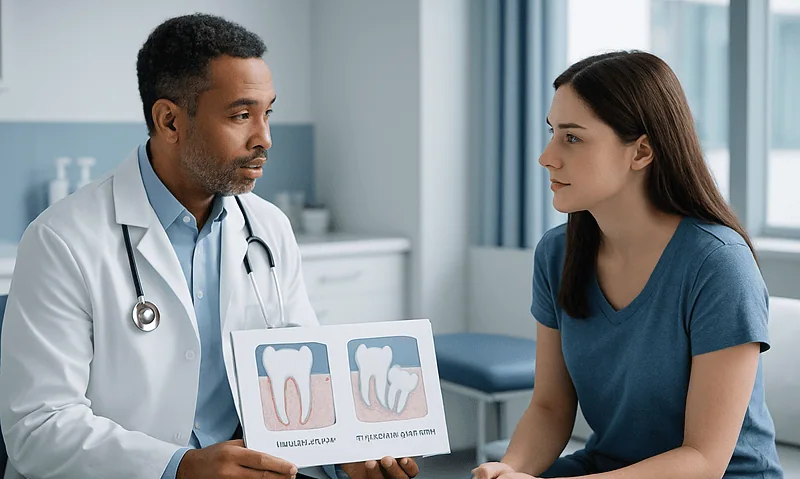
Impacted Canine vs Impacted Wisdom Tooth: Why One Is Often Saved and the Other Removed
An impacted canine is usually saved because it is a cornerstone tooth with the longest root in the mouth, guides the bite and anchors…
Do Root Canals Make You Sick? Old Myths About Treated Teeth, Corrected
No. Current evidence does not show that a properly treated root canal tooth causes cancer, heart disease, arthritis or other illnesses. The idea traces…
Do Teeth Need Straightening Before Porcelain Veneers? When Orthodontics Comes First
Not everyone needs braces before veneers, but many people benefit from straightening first. Porcelain veneers can mask mild rotations, small gaps, and uneven edges,…

Sinus Lift: Why Upper-Jaw Implants Sometimes Need It, and How It Heals
A sinus lift is a surgical procedure that adds bone between the upper jaw and the maxillary sinus so a dental implant has enough…

How 3D Imaging Changes Oral and Maxillofacial Surgery Planning Around Nerves and Sinuses
3D imaging in oral surgery planning, most often a cone beam CT scan, gives surgeons a layered view of the jaw so they can…
How Laminate Veneers Are Placed: Impressions, Minimal Preparation and Bonding the Shells
A laminate veneers procedure usually unfolds over two or three dental visits spread across a few weeks. The dentist first assesses the teeth and…