

Period and Fertility Apps: How Accurate Are Their Predictions and Who Sees Your Data?

Key Takeaways
- An analysis of more than 600,000 tracked cycles found only about 13 percent lasted exactly 28 days, and most variation came from shifting ovulation, which calendar formulas cannot anticipate.
- A period tracking app typically predicts the next period within one to two days for regular cycles, and misses by three or more days when cycles range widely.
- A 2016 test of over 50 websites and apps found only a handful identified the fertile window precisely, even when fed a perfectly regular 28-day cycle.
- Under typical use, about 24 in 100 people relying on calendar-based fertility awareness become pregnant within a year, compared with fewer than 1 in 100 using an implant or hormonal intrauterine device.
- The few apps with regulatory clearance as contraceptives require daily basal body temperature readings and reported typical-use failure rates of roughly 7 to 9 per 100 users per year in prospective studies, not randomised trials.
- Cycle data logged in a consumer app generally falls outside US federal health privacy law, so protection depends on the app's own policy and settings such as device-only storage.
A period tracking app is usually accurate to within a day or two for people with regular cycles, but predictions drift when cycles vary, which is common. Fertility apps that estimate ovulation from calendar math alone are far less reliable than those using temperature or hormone tests. Many apps share data with advertisers or analytics firms, so read the privacy policy before logging anything.
Open the app, tap the day, and a small drop icon appears on your calendar. For roughly a hundred million people, that tap has quietly replaced the pocket diary and the pencil cross. As of early 2026 the habit is under new scrutiny, for two reasons at once: a wave of independent privacy audits ranking cycle apps on how much they share, and a crop of smartwatches with built-in skin temperature sensors promising to find ovulation while you sleep.
Both stories raise the same two questions. Does a period tracking app actually know when your period is coming, and who else is reading along? The honest answer to the first is “often, within a couple of days, if your cycle behaves.” The honest answer to the second is “more people than you might expect.”
This piece walks through the arithmetic behind the predictions, the studies that have tested them, the regulatory line between a lifestyle tracker and a cleared medical device, and the practical steps that keep your data where you want it.
What changed recently with period tracking apps
Three developments explain why this topic has climbed the search charts.
First, the regulatory picture matured. In 2018 the US Food and Drug Administration granted the first marketing authorization to a smartphone app intended for use as a contraceptive, based on daily basal body temperature readings. Basal body temperature is your lowest resting temperature, measured on waking, which rises slightly after ovulation. Since then a small number of other apps have earned similar clearance, which means there is now a meaningful split between apps that have submitted effectiveness data to regulators and the much larger group that have not.
Second, the data got bigger and more sobering. A 2019 analysis of more than 600,000 self-tracked cycles, published in a peer-reviewed digital medicine journal, found that the textbook 28-day cycle described only about 13 percent of cycles, and that the day of ovulation varied far more than most calendar formulas assume. That single study did more than any marketing campaign to show why predictions miss.
Third, privacy moved from footnote to headline. US regulators have taken enforcement action against at least one widely used cycle app for sharing users’ health details with third-party analytics and advertising companies despite promising otherwise. Several European data protection authorities have opened similar reviews. Independent researchers who read the privacy policies of popular apps have repeatedly found that a majority reserve the right to share some form of user data with partners.
Add the arrival of temperature-sensing wearables in 2023 and 2024, which many apps now ingest automatically, and you have a product category that has changed more in five years than in the previous fifteen.
How does a period tracking app predict your next period?
Strip away the pastel interface and most apps run on a formula a school student could follow. They record the first day of each period, calculate the length of each cycle, average the last several, and add that average to your most recent start date. If your last three cycles were 27, 29 and 28 days, the app will pencil in your next period 28 days after the last one began.
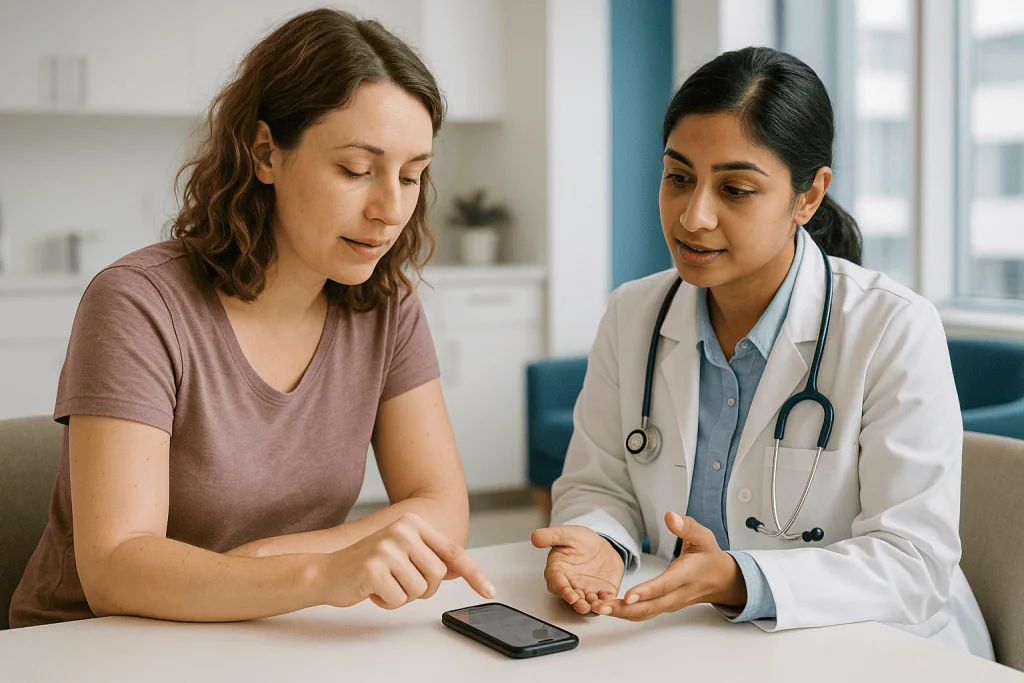
Many apps add a second layer called a luteal phase assumption. The luteal phase is the stretch between ovulation and the next period, and it is relatively stable in most people at around 12 to 16 days. Apps exploit that stability by counting backwards: predicted period date minus about 14 days equals predicted ovulation. The fertile window, the roughly six days ending on ovulation day when intercourse can lead to pregnancy, is then drawn around that estimate.
Better apps use a weighted average that gives more influence to recent cycles, and a few use machine learning, which simply means the software adjusts its own formula as it sees more of your data. Whether that is genuinely smarter than a well-weighted average is not something the companies have published convincing evidence on.
You can do this yourself. Note the first day of bleeding for at least three cycles, count the days from each start to the next start, average them, then add that number to your latest start date. Mark a window of plus or minus two days rather than a single date, because that is what the underlying biology justifies. A paper calendar does this with no data leaving your kitchen drawer.
Is a period app accurate? What the prediction error looks like
The short answer is: accurate enough to pack supplies, not accurate enough to plan a wedding around.
Cycle variability is the whole story. Mainstream clinical guidance considers cycles between 21 and 35 days in adults to be within the normal range, and a difference of several days from one cycle to the next is ordinary rather than a sign of trouble. The 2019 analysis of 600,000 cycles put the average length at about 29 days, with a wide spread around that figure. Crucially, most of the variation sat in the follicular phase, the stretch from the first day of bleeding to ovulation, not in the luteal phase. That means the date your period starts moves around because ovulation moves around, and no formula built on past averages can see that shift coming.
Translated into app performance: if your cycles cluster tightly, a period tracking app will often land within one day. If your cycles range from 26 to 33 days, the app will be off by three or four days a good deal of the time. Teenagers in their first few years of menstruating, people in the years approaching menopause, people recently off hormonal contraception, and anyone under acute stress or illness tend to see the largest misses.
Apps rarely show you their own error rate. The useful trick is to check retrospectively: scroll back six months and compare the predicted start date against the day you actually logged bleeding. That personal audit tells you more than any app store rating about how far to trust the forecast.
How accurate are fertility apps at finding the fertile window?
Here the gap between apps becomes dramatic, and the distinction worth memorizing is calendar-only versus physiology-based.
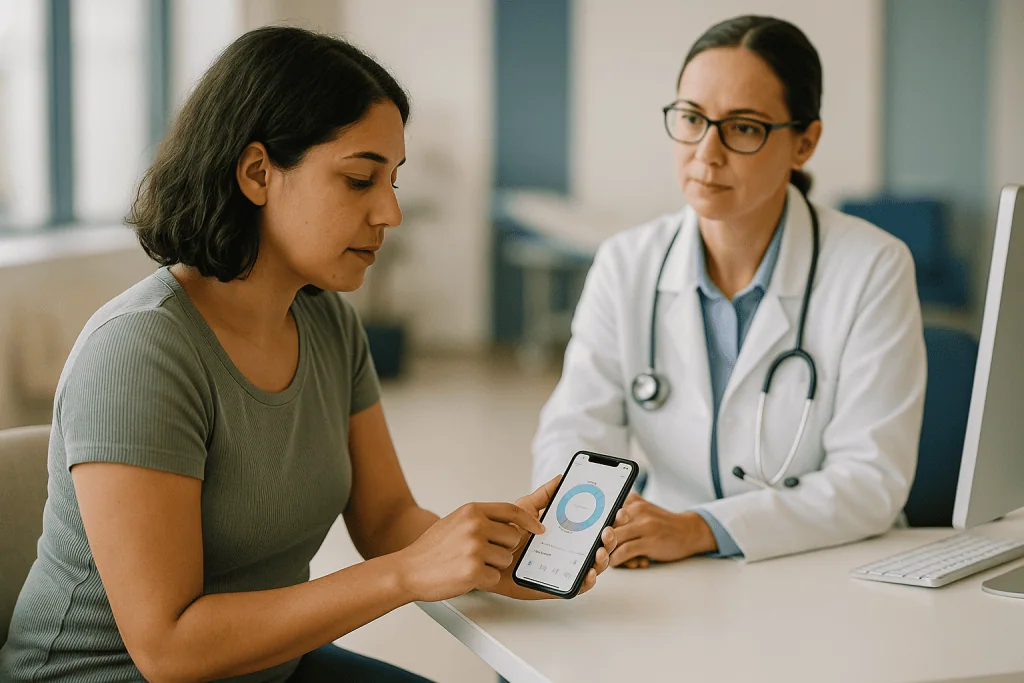
Calendar-only fertility apps estimate ovulation purely from past cycle lengths. A 2016 study in a major obstetrics journal tested more than 50 websites and apps against a 28-day model cycle with ovulation on day 15. Only a handful identified the fertile window precisely; most included days when conception was unlikely and some missed days when it was likely. Remember that this test used a perfectly regular cycle. Real cycles are messier, so real-world performance is worse.
Physiology-based fertility apps ask you to add a biological signal. The three in common use are basal body temperature, which rises by a few tenths of a degree after ovulation and therefore confirms it only after the fact; cervical mucus observations, which become clear and stretchy in the days before ovulation; and urine tests that detect the surge of luteinizing hormone, the pituitary signal that triggers egg release roughly 24 to 36 hours later. Apps that incorporate these signals can identify ovulation far more reliably, because they are measuring the event rather than guessing it from a calendar.
Wearable temperature sensors sit in between. Overnight wrist or finger temperature tracks basal body temperature reasonably well in validation studies, but it still confirms ovulation retrospectively, and alcohol, fever, a late night or a warm bedroom can blur the signal.
For someone trying to conceive, the practical point is that any method that marks a generous window of several days before a confirmed ovulation will usually serve well. For someone trying to avoid pregnancy, a predicted window is a different and higher-stakes proposition, discussed below.
What the evidence actually says, graded by strength
It helps to sort the claims by the kind of evidence behind them.
Strong observational data. The finding that cycle length and ovulation timing vary widely across and within individuals rests on very large datasets and decades of clinical observation. Confidence here is high. Any app claim that a single formula fits most users contradicts this body of work.
Moderate evidence from bench-style testing. The 2016 comparison of apps against a model cycle is a careful study but tested software, not people. It tells us the algorithms disagree with each other and with physiology; it cannot tell us pregnancy outcomes.
Moderate evidence from prospective cohort studies. The apps that earned regulatory clearance as contraceptives did so on the basis of large prospective studies following users over many months and counting pregnancies. These are not randomised trials, and participants were often motivated, educated volunteers, which tends to flatter results. Still, this is real outcome data, which almost no other app possesses.
Weak or absent evidence. Claims that an app’s artificial intelligence outperforms a simple average, that mood or symptom logging improves prediction, or that a tracker can detect conditions such as polycystic ovary syndrome, a hormonal condition that commonly causes irregular cycles, have not been tested in published peer-reviewed studies for most products. Treat them as marketing until shown otherwise.
Randomised trials. There are essentially none comparing app-guided fertility awareness with other methods on pregnancy outcomes. That absence matters when a company describes its product as clinically proven.
The responsible reading is this: apps are good at recording, modest at predicting periods, poor at predicting ovulation from calendars alone, and only a few have outcome data that regulators have examined.
Can fertility apps replace contraception?
Some can be used as a form of fertility awareness, but the numbers deserve a clear look before anyone relies on them.
Fertility awareness methods, which means identifying fertile days and avoiding intercourse or using a barrier on those days, have a wide gap between perfect and typical use. UK health service guidance puts effectiveness as high as 99 percent when the method is taught properly and followed exactly every cycle. Under typical real-world use, mainstream US clinical guidance estimates that about 24 in 100 people using calendar-based methods will become pregnant within a year. By comparison, long-acting methods such as the implant or hormonal intrauterine device have first-year failure rates below 1 in 100.
The small group of apps that hold regulatory clearance as contraceptives reported typical-use failure rates in their submitted studies of roughly 7 to 9 pregnancies per 100 users per year, with perfect-use rates considerably lower. Those figures came from prospective studies rather than randomised trials, and they apply only to the specific app and protocol tested, generally requiring daily temperature measurement. They do not transfer to a general purpose period tracking app that simply shades a few days red.
Fertility apps also depend heavily on the user. Missed temperature readings, irregular cycles, breastfeeding, recent childbirth and the years approaching menopause all reduce reliability. Clinical guidance is consistent that calendar methods are not recommended for people with cycles outside the 26 to 32 day range.
None of this makes the approach wrong for someone who understands the trade-off and prefers a hormone-free method. It does mean the decision belongs in a conversation with a clinician who can match the method to your cycle history and your tolerance for risk.
Period tracking methods compared: app, wearable, paper and tests
The table below summarizes how the common approaches stack up on what they measure, how well they predict, and what happens to your information. Effectiveness figures for contraception are typical-use estimates from mainstream clinical guidance and apply to fertility awareness methods as a group, not to any individual product.
| Method | What it records | Period prediction | Ovulation detection | Where the data lives |
|---|---|---|---|---|
| Paper calendar or notebook | Period start and end dates | Within 1–2 days if cycles are regular | Estimate only, from counting backwards | With you |
| Calendar-only app | Dates plus symptoms and mood | Within 1–2 days if cycles are regular | Estimate only; often several days off | Company servers, often shared with analytics or ad partners |
| App with basal body temperature | Dates plus daily waking temperature | Similar to calendar | Confirms ovulation after it happens | Company servers; a few hold regulatory clearance |
| App with wearable temperature | Overnight skin temperature, heart rate | Similar to calendar | Retrospective; sensitive to fever, alcohol, room heat | Wearable maker and app company |
| Urine hormone tests with or without app | Luteinizing hormone surge | Not designed for this | Predicts ovulation 24–36 hours ahead | Paper record or app, your choice |
| Device-only mode on phone | Whatever you enter | As above | As above | Encrypted on the handset only, if the setting is enabled |
The pattern is plain. Prediction accuracy depends on your cycle and the biological signals you add, not on how polished the app looks. Privacy, by contrast, depends almost entirely on which product you choose and which settings you switch on. Those two decisions are independent, and it is worth making each one deliberately.
Who sees your data when you log a period?
Cycle data is some of the most sensitive health information a person generates. It can reveal pregnancy, pregnancy loss, menopause, sexual activity and, through symptom logs, mood and pain. Yet in the United States it generally falls outside the federal health privacy law that protects records held by hospitals and insurers, because an app company is not a healthcare provider. The protections you get are mostly the ones written into the app’s own policy and the consumer protection laws of your state or country.
Audits by academic researchers and consumer groups have found a consistent set of recipients. Analytics firms receive event data such as when you open the app and which screens you tap. Advertising networks may receive device identifiers that let them match you across other apps. Cloud hosting providers store the raw logs. Some apps have shared more granular information, including the fact that a user logged a period or indicated an intention to conceive, with large technology platforms through embedded software development kits, the ready-made code blocks developers borrow to add features.
Companies often describe shared data as de-identified, meaning names and emails are stripped out. The limitation is well documented: a device identifier plus a location plus a few dates can re-identify a person with surprising ease.
There is also the question of legal requests. Most policies state that the company will hand over data when compelled by a valid court order. How readily, and with how much notice to you, varies by company and country.
None of this means every app is careless. Several store data only on the device, publish independent audits, and collect nothing beyond what the features need. The point is that you cannot tell which kind you are holding from the icon.
How to protect your data in a period tracking app
A five-minute check before you log anything saves a great deal of regret later.
Start with the privacy policy, and search it for three words: “third parties,” “advertising” and “sell.” A policy that says data is shared with partners for marketing or that the company may transfer data in a merger is telling you exactly what will happen. Policies that state data is processed on your device and never uploaded are rarer and worth noticing.
Next, look at the app’s own settings. Many now offer an anonymous mode that lets you use the app without creating an account, or a device-only mode that keeps entries on the handset with encryption. Both reduce exposure substantially. Turn off any permission the app does not need: location is almost never necessary to count days.
Consider what you type into free-text fields. Notes such as “positive test” or “appointment Thursday” are the most revealing entries you can make, and they are also the hardest for a company to meaningfully de-identify. A separate paper note or an encrypted notes app you already trust may be the better home for those.
If you decide to leave an app, deleting it from your phone does not delete your account. Use the in-app deletion request, and in regions with strong data laws you can also email the company to exercise your right to erasure. Keep a copy of the request.
Finally, remember that a wearable adds a second company to the chain. The watchmaker’s policy governs the temperature and heart rate data even if the cycle app itself is careful.
None of these steps require technical skill. They require about the same attention you would give a bank statement, which is roughly the level of sensitivity involved.
Common myths about period and fertility apps
Several claims circulate widely on social platforms. Here is what the evidence supports.
Myth: the app knows I am pregnant before I do. No. An app can flag that a period is late relative to its prediction, and a late period has many causes. It has no way to detect pregnancy. Only a pregnancy test or a clinician can do that.
Myth: if the app says I am not fertile, I cannot get pregnant. Calendar predictions of the fertile window are frequently several days off, and sperm can survive up to five days in the reproductive tract. Mainstream guidance is explicit that a calendar-based prediction alone is not reliable for avoiding pregnancy unless the method has been taught and the cycles are regular.
Myth: more data makes the prediction accurate. Logging mood, sleep and cravings builds a useful personal record, but no published study shows these inputs sharpen period or ovulation forecasts. The prediction still rests on cycle length and, where available, temperature or hormone signals.
Myth: an app can diagnose polycystic ovary syndrome or endometriosis. An app can show a pattern of irregular or painful cycles that is worth discussing. Diagnosis of either condition requires clinical assessment, and in the case of polycystic ovary syndrome, blood tests or ultrasound.
Myth: all apps sell your data. Also untrue. Policies and practices differ markedly. Some companies have built their reputation on collecting the minimum and storing it locally. The useful habit is to check rather than assume in either direction.
Myth: deleting the app deletes the data. Uninstalling removes the software from your phone. Account data on company servers remains until you request deletion, and backups may persist for a stated retention period after that.
Which app features matter, and does paying help?
People searching for the best period tracking app usually want a ranking. A more useful frame is a short list of features that make a measurable difference, and a longer list that mostly make the app pleasant to use.
Features that change what the app can do for you: the ability to log basal body temperature or import it from a wearable; a field for luteinizing hormone test results; the ability to mark a cycle as unusual so a single illness does not skew your averages; an export function that gives you your own data in a readable file; and an on-device or anonymous mode for privacy.
Features that are pleasant but do not change accuracy: symptom encyclopedias, community forums, partner-sharing modes, cycle-phase workout suggestions, and most of what sits behind a subscription paywall. Several widely used apps offer the core tracker free and reserve content articles, extra charts and detailed insights for paid tiers. The prediction engine is generally the same in both tiers, which is worth knowing before you pay for accuracy you will not receive.
Comparing two popular apps head to head, as many searches do, tends to miss the point. Two calendar-based trackers will produce near-identical period forecasts from the same inputs, because they are doing the same arithmetic. They differ in design, in what extra signals they accept, and above all in how they handle your data. Those are the dimensions to compare.
If you are trying to conceive, prioritize hormone test logging. If you are trying to understand a confusing cycle, prioritize the export function so you can show a clinician the raw record. If privacy is your main concern, prioritize the storage model and the policy wording. The app that wins on your priority is the best app for you, regardless of the charts.
Can a period tracking app help you spot a health problem?
Used as a record rather than an oracle, yes, and this may be the most underrated thing a tracker does.
Clinicians assessing cycle concerns ask a predictable set of questions: how long are your cycles, how much do they vary, how many days do you bleed, how heavy is the flow, and where in the cycle does pain occur. Most people answer these from memory, and memory is unreliable over months. An app with six months of honest entries turns a vague “I think they have been all over the place” into a concrete pattern that can be reviewed in a minute.
Mainstream guidance describes several patterns that merit a conversation: cycles consistently shorter than 21 days or longer than 35 days in an adult; cycles that suddenly become irregular after years of regularity; bleeding that lasts more than seven days; bleeding between periods; and periods that stop for three months or more in someone who is not pregnant or breastfeeding. A tracker makes each of these visible.
Where a tracker cannot help is in telling you why. Irregular cycles have many explanations, including thyroid changes, significant weight change, intensive exercise, stress, polycystic ovary syndrome and the transition toward menopause. Painful periods may be ordinary or may reflect endometriosis, a condition in which tissue similar to the uterine lining grows outside the uterus. Distinguishing these requires history, examination and sometimes tests, and the app has none of those tools.
The export function matters here. Bringing a printed or on-screen cycle history to an appointment is a genuinely useful contribution to your own care, and it is one of the few places where logging extra symptoms pays off: pain scores and flow estimates give the clinician more to work with than dates alone.
When to see a doctor about your cycle or app readings
A period tracking app is a record keeper, not a clinician. Treat its alerts as prompts to notice, and let these signs guide when to act.
Seek urgent medical care, by emergency services if needed, for very heavy bleeding that soaks through a pad or tampon every hour for several hours in a row, bleeding accompanied by dizziness, fainting or a racing heart, severe one-sided pelvic pain with a positive pregnancy test or a missed period, or sudden severe abdominal pain with fever.
Book a routine appointment if your tracker shows any of the following over two or more cycles: cycles shorter than 21 days or longer than 35 days; bleeding lasting more than seven days; bleeding or spotting between periods or after intercourse; periods absent for three months or more without pregnancy or breastfeeding; pain that disrupts work, school or sleep despite over-the-counter measures already discussed with a pharmacist or clinician; or any bleeding after menopause has been established.
Also make an appointment if you have been using fertility apps to try to conceive for 12 months without success, or for six months if you are 35 or older, since mainstream guidance recommends assessment at those points. If you are using an app as contraception and your cycles have become irregular, or you have missed several temperature readings in a cycle, speak to a clinician about backup options rather than relying on the prediction.
Finally, if you are taking any prescribed medicine that affects your cycle, including hormonal contraception, do not stop or change it based on what an app displays. Bring the app record to your prescriber and let that conversation guide any decision. The clinician who knows your history is the right person to interpret the pattern, and every treatment choice rests with them and with you together.
What matters most about period tracking apps, in the editor's view
Having read the studies and a long stack of privacy policies, here is the opinion this evidence supports.
Treat the period prediction as a weather forecast. A good app will be right within a day or two most of the time if your cycle is steady, and nobody should feel let down when biology moves the date. The useful question is not whether the app is accurate in the abstract but how it has performed for you over the last six cycles, which you can check in under a minute.
Treat the ovulation prediction with real caution unless you are adding a biological signal. Calendar math alone has been tested and found wanting, and the gap between a shaded fertile window and actual ovulation is wide enough to matter for anyone trying to avoid pregnancy. The small group of apps with regulatory clearance earned it by requiring daily temperature readings, and even then their typical-use figures are far from the reliability of long-acting methods. That is a legitimate choice for some people; it should be an informed one, made with a clinician.
Treat the data question as the one most within your control. Prediction accuracy is bounded by biology, but privacy is bounded only by which app you pick and which switches you flip. Device-only storage, no account, no location permission, and no free-text confessions will put you ahead of most users with ten minutes of effort.
And keep the record. The genuine, underappreciated value of a period tracking app is that it remembers what you will forget, and hands a clinician a clear picture when something changes. Used that way, it earns its place on the home screen.
Frequently asked questions
Is a period app accurate?
For people with regular cycles, a period app is usually accurate to within a day or two; for cycles that vary by several days, predictions can be off by three or more days. Apps work by averaging your past cycle lengths, so they cannot foresee a shift in ovulation caused by stress, illness or hormonal change. Check your own app’s accuracy by comparing past predictions with the dates you actually logged.
How do you calculate your next period date without an app?
Record the first day of bleeding for at least three cycles, count the days from each start to the next start, and average those numbers. Add the average to your most recent start date to get the predicted day, then allow a window of about two days on either side. A paper calendar does this reliably, keeps your data private, and matches what most calendar-based apps calculate.
Which period tracking app is best?
No single app is best for everyone; two calendar-based trackers given the same dates will produce near-identical period forecasts because they use the same arithmetic. Compare them instead on whether they accept temperature or hormone test data, whether they can export your record, and how they store and share your information. The app that scores highest on your main priority, whether conception, pattern-spotting or privacy, is the right one.
Are period tracking apps free?
Most widely used period tracking apps offer the core calendar and prediction features free of charge and reserve extras such as detailed insights, articles and advanced charts for a paid subscription. The prediction engine is generally the same in both versions, so paying rarely improves accuracy. Free tiers are sometimes supported by advertising or data partnerships, which is one reason to read the privacy policy before signing up.
Are fertility apps reliable for getting pregnant?
Fertility apps that rely on calendar math alone often misplace the fertile window by several days, but those that incorporate urine luteinizing hormone tests, cervical mucus observations or basal body temperature are far more reliable at pinpointing ovulation. For conception, marking a generous window of several days before confirmed ovulation usually works well. If you have been trying for 12 months, or six months if you are 35 or older, seek clinical assessment.
Can I use a fertility app instead of birth control?
A small number of apps hold regulatory clearance as contraceptives, based on daily basal body temperature readings, and reported typical-use failure rates of roughly 7 to 9 per 100 users per year in prospective studies. General purpose trackers have no such data, and calendar-based methods overall have a typical-use pregnancy rate of about 24 in 100 per year. Discuss the trade-offs with a clinician before relying on any app for contraception.
Who can see my period tracking app data?
Depending on the app, your data may be visible to the company, its cloud hosting provider, analytics firms, advertising networks and, under a valid court order, legal authorities. In the United States, consumer app data usually falls outside federal health privacy law. Apps offering anonymous or device-only modes keep entries on your phone and share far less. Reading the policy for the words third parties, advertising and sell reveals a great deal.
Does deleting a period app delete my data?
No. Uninstalling removes the software from your phone, but your account and its history remain on the company’s servers until you request deletion. Most apps have an in-app deletion option, and in regions with strong data protection laws you can also email the company to exercise a right to erasure. Backups may persist for a stated retention period, so keep a record of your request.
Can a period app tell if I am pregnant?
No. An app can only notice that your period is later than its prediction, and a late period has many possible causes including stress, illness, travel and ordinary cycle variation. Pregnancy can be confirmed only by a pregnancy test or a clinician. If a period is more than a week late and pregnancy is possible, take a test rather than waiting for the app.
Can a period tracking app detect polycystic ovary syndrome or perimenopause?
An app cannot diagnose either, but it can reveal patterns worth discussing, such as cycles longer than 35 days, sudden irregularity after years of regular cycles, or periods absent for three months or more. Polycystic ovary syndrome requires clinical assessment with blood tests or ultrasound, and the transition toward menopause is judged on age, symptoms and history. Export your cycle record and bring it to the appointment.
This article is for general information only and is not a substitute for professional medical advice. Please consult a qualified doctor about your individual situation.

More from the Blog
Immunotherapy for Cancer: What It Is, Who Qualifies and How It Is Given
Immunotherapy for cancer is a group of treatments that help a person's own immune system recognize and attack cancer cells, rather than killing those…
Smart Scales and Bioimpedance: How Accurate Is Your Body Fat Reading?
Bioimpedance (BIA) smart scales estimate body fat by sending a tiny electrical current through the body, and they are moderately accurate at best. For…
How a Pacemaker Works and How It Is Fitted
A pacemaker is a small battery-powered device placed under the skin near the collarbone and connected to the heart by thin wires called leads.…
AI Medical Diagnosis: How Accurate Are the Systems, Study by Study?
AI medical diagnosis systems can be highly accurate on narrow, well-defined tasks such as reading mammograms or classifying skin lesions, where some tools match…
AI Medical Diagnosis: How Accurate Are the Systems, Study by Study?
AI medical diagnosis tools can match specialists on narrow, image-based tasks such as reading retinal photographs or mammograms, with sensitivity above 90% in large…
Smart Baby Monitors: What Oxygen and Breathing Sensors Can and Cannot Do
Smart baby monitors with oxygen or breathing sensors can track a sleeping infant's pulse, blood oxygen level or body movement and send alerts to…