

Post-Op Fever: When It Is Normal and When It Means Infection
Key Takeaways
- The adult fever threshold used by the NHS, Mayo Clinic, and most surgical protocols is 100.4°F (38°C); 99.5°F falls inside the normal daily range.
- Most fevers in the first 48 hours after surgery come from the inflammatory response to tissue injury, peaking within 24 hours and usually gone by the morning of day three.
- The long-taught idea that collapsed lung tissue (atelectasis) causes day-one fever has not held up; a 2011 systematic review found no convincing causal link.
- Surgical site infections most often appear between day four and day ten, and the CDC counts them for 30 days after surgery, or 90 days when an implant such as hernia mesh is in place.
- A blood clot in the leg or lung is a non-infectious cause of post op fever that typically surfaces after several days of reduced movement and can be life-threatening.
- Older adults often mount a blunted fever response, so new confusion, a fall, or loss of appetite can be the first sign of infection even when the thermometer reads under 100°F.
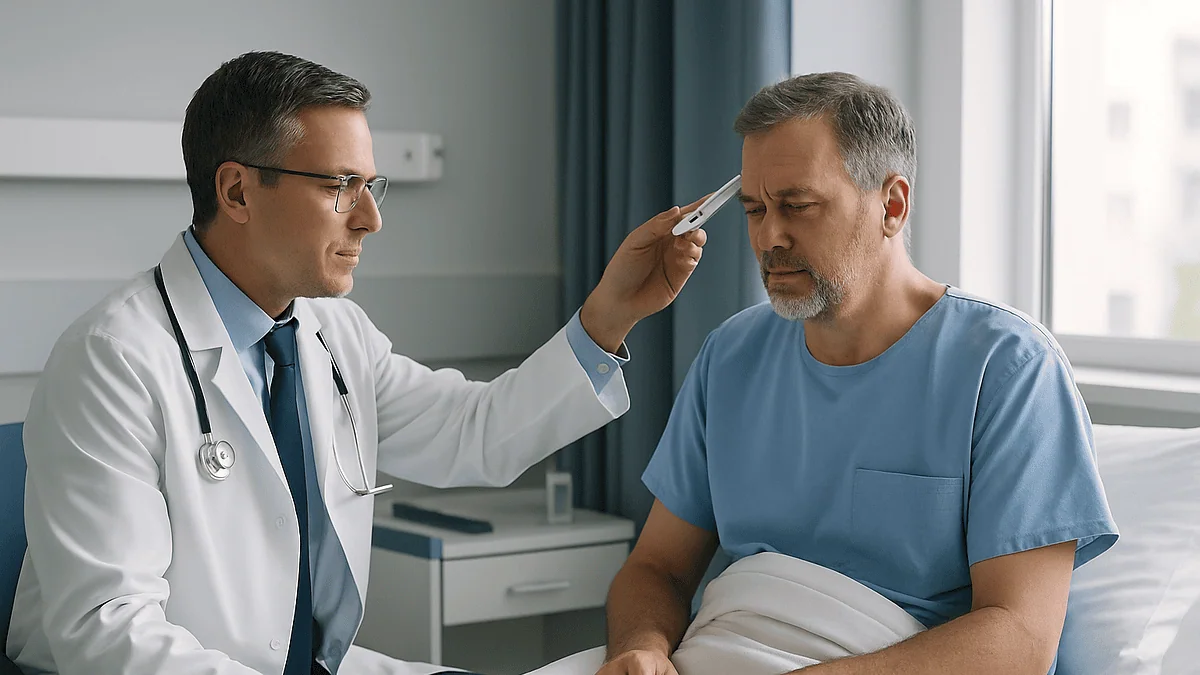
A post op fever is common and usually harmless in the first 48 hours after surgery, when tissue injury releases inflammatory signals that briefly raise body temperature. A fever that begins or persists after day three, climbs above 101°F (38.3°C), or arrives with wound redness, pus, breathing trouble, confusion, or a racing pulse is more likely to signal infection and needs prompt medical review.
The thermometer reads 100.2°F at 11 p.m., the surgical dressing is still clean, and the discharge sheet says to call about a fever. Call now, or wait until morning? As of September 2026, that small bedside dilemma is driving a surge of searches for post op fever, pushed along by viral short videos insisting that any temperature after an operation “means infection” and that 99.5°F is already a fever.
Neither claim survives contact with the evidence. Surgical teams have known for decades that a brief rise in temperature on the first or second day is one of the most common events in recovery, and that most of those fevers resolve without an antibiotic. What matters is not simply the number on the screen. Timing, trend, and the company a fever keeps matter far more.
This guide walks through what a fever after surgery usually is, when it earns a phone call, and why the day it starts is the single most useful clue.
What is a post op fever, and is 99.5 considered a fever?
A post op fever is simply a body temperature at or above the fever threshold during the days or weeks after an operation. Most surgical teams use 100.4°F (38°C) as the line, and the NHS and Mayo Clinic use the same figure for adults in general. Some protocols flag 101.3°F (38.5°C) or a reading that stays elevated on two checks several hours apart, because a single borderline number is a weak signal.
So no, 99.5°F is not considered a fever by any mainstream definition. It sits inside the normal daily range. Core temperature drifts by roughly a degree Fahrenheit across the day, lowest around dawn and highest in the late afternoon and evening. Large datasets from the past three decades also show that the famous 98.6°F average is slightly high for modern adults; many healthy people run closer to 97.5°F to 98.2°F at rest. A reading of 99.5°F in the evening, after walking the hallway, is unremarkable.
That said, context changes the meaning of a modest number. A frail older adult, a person taking steroids, or someone on chemotherapy may mount only a small temperature rise even during a serious infection. In those groups, surgeons often ask to hear about anything over 100°F, and about any new chills, shaking, or feeling unwell regardless of the thermometer. Your own discharge instructions override any general cutoff. If they name a specific number, use it.
The practical rule for everyone else: a true fever after surgery is 100.4°F or higher, checked properly, and its importance depends heavily on which day it appears.
What changed recently about post op fever advice
Three shifts explain why this topic feels new even though the biology is old. First, the volume of same-day and short-stay surgery keeps rising, so the first fever now often happens at home rather than on a ward with a nurse nearby. The person reading the thermometer is the patient or a family member, which is exactly who the viral videos reach.

Second, the CDC rebuilt its public pages on surgical site infections in 2024, giving patients a plain-language checklist of warning signs: redness, pain, or warmth spreading around the incision, pus or cloudy drainage, and fever. Those pages sit on the same foundation as the CDC’s 2017 guideline for preventing surgical site infection, which remains the reference standard in US hospitals and defines a surgical site infection as one occurring within 30 days of an operation, or within 90 days when an implant is left in place.
Third, the consensus on what fever in the first two days does and does not mean has hardened. A 2011 systematic review in the journal Chest, and later analyses, found no good evidence that atelectasis, the partial collapse of small air sacs in the lungs after anesthesia, actually causes fever, even though generations of trainees were taught that it does. The accepted explanation is now the inflammatory response to tissue injury itself, which rises and falls over 48–72 hours.
Put together, more fevers are being noticed outside hospital, the warning signs are better publicized, and the explanation for early benign fever has been corrected. None of this means fever has become more dangerous. It means the right questions are easier to ask.
Why does the body run hot after an operation?
Surgery is a controlled injury, and injury switches on the same alarm system an infection would. Damaged tissue releases cytokines, small signaling proteins such as interleukin-1, interleukin-6, and tumor necrosis factor, that travel to the hypothalamus, the brain’s thermostat, and nudge its set point upward. The body then shivers, narrows blood vessels in the skin, and holds heat until it reaches the new target. That is a fever.
How much cytokine is released depends on how much tissue was cut, retracted, or cauterized. A long open abdominal procedure or a joint replacement produces a larger inflammatory surge than a short laparoscopic operation done through keyhole ports. Interleukin-6 levels typically peak around 6–24 hours after an incision and ease over the next two days, which maps neatly onto the typical early fever curve.
Several other things happening in the first day push in the same direction. Blood transfusions can provoke a transient fever. Some anesthetic and pain medicines affect temperature regulation. A warming blanket left on too long, or a hot room, can raise a surface reading without changing the core at all.
Why does this matter to a worried person at home? Because an early fever is usually the sound of healing, not the sound of bacteria. Infection takes time to develop. Bacteria introduced into a wound at the time of surgery need days to multiply to a level that produces pus and fever, which is why a temperature that first appears on day four or five tells a very different story from one that appears on the evening of surgery.
Understanding the mechanism is not a reason to ignore a fever. It is a reason to interpret it alongside the calendar.
Fever after surgery by the day: a timeline of likely causes
Clinicians lean on timing more than any other single fact when evaluating a fever after surgery. The pattern below reflects standard teaching and the direction of the evidence; individual cases vary, and overlap is common.

| Timing | Most likely explanations | How concerning |
|---|---|---|
| During or within hours of surgery | Drug or transfusion reaction; pre-existing infection; rarely malignant hyperthermia (a genetic reaction to certain anesthetics) or a severe wound infection from fast-growing bacteria | Usually managed in the operating room or recovery unit; rapid rise above 104°F is an emergency |
| Days 1–2 | Inflammatory response to tissue injury; early urinary infection if a catheter was used | Mostly benign; typically settles by itself |
| Days 3–5 | Pneumonia; urinary tract infection; infection around an intravenous line; early surgical site infection | Deserves a clinical review |
| Days 5–10 | Surgical site infection; deep abscess; leak from a bowel join; blood clot in the leg or lung | Needs prompt assessment |
| Beyond 2 weeks | Deep infection around an implant; drug fever; infection of the heart valve or bone; rare transfusion-transmitted infection | Always investigate |
A few points sharpen this picture. A fever that peaks on the first evening and is gone by the second morning is almost never infectious. A fever that is still present on day three, or that disappears and then returns, moves from the “watch” column to the “call” column. A fever that starts fresh after you have already felt well for several days is the classic footprint of a wound infection or a clot.
Height matters less than people assume. Serious infections can produce modest fevers, and a benign inflammatory fever can touch 101°F. The exception is a very high reading, above 104°F (40°C), which is unusual for simple inflammation and should be reported the same day whatever the cause.
The five Ws, and the atelectasis myth
Medical students memorize a mnemonic for fever after surgery: Wind, Water, Wound, Walking, Wonder drugs. Each W is a category of cause and a rough day on which it tends to appear. It is a useful filing system, provided you know where it is wrong.
Wind refers to the lungs. The traditional teaching assigned day-one fever to atelectasis, the partial collapse of small airways and air sacs that happens when anesthesia and pain make breathing shallow. The problem is that studies measuring both atelectasis on imaging and fever in the same patients have repeatedly failed to show a causal link. Fever on day one and atelectasis on day one are both common, which made them look connected. The 2011 Chest review concluded there is no convincing evidence that one causes the other. Pneumonia, a true lung infection, belongs under Wind, but it usually appears from day three onward and brings cough, sputum, and sometimes low oxygen levels.
Water means the urinary tract. Catheters introduce bacteria, and a urinary infection typically declares itself around days three to five with burning, frequency, or cloudy urine.
Wound covers surgical site infection, usually from day five onward, although rapidly progressing infections caused by streptococcal or clostridial bacteria can erupt within 24–48 hours with severe pain and spreading redness.
Walking is a reminder about deep vein thrombosis, a clot in a leg vein, and pulmonary embolism, a clot that has traveled to the lungs. Both can cause low-grade fever and tend to surface after several days of reduced movement.
Wonder drugs stands for drug fever and reactions to transfusions, which can appear at any point and are diagnosed partly by stopping the suspected cause under supervision.
Breathing exercises after surgery remain valuable. They reduce the risk of pneumonia. They just were never a treatment for the inflammatory fever of day one.
What the evidence actually says about post op fever
Evidence on post op fever comes in several grades, and it helps to know which claims rest on which foundation.
Strongest: that fever in the first 48 hours is common and usually not infectious. This is supported by large observational cohorts across orthopedic, abdominal, gynecologic, and cardiac surgery, consistently showing that early fevers are frequent, that cultures taken from those patients are rarely positive, and that most settle without antibiotics. Observational data cannot prove cause, but the consistency across specialties and decades makes the conclusion reliable. It is also the position of the StatPearls review hosted by the NIH’s National Library of Medicine.
Strong: that routine, reflexive testing of every early fever has a low yield. Studies of blood cultures, chest X-rays, and urine cultures ordered automatically for fever within the first two days find a positive result in only a small minority, and even fewer that change treatment. Most guidelines now recommend a focused examination first, with tests chosen by findings rather than ordered as a bundle. This is expert consensus built on observational data, not on randomized trials.
Moderate: the timing patterns in the table above. They derive from case series and clinical experience rather than from controlled studies, so individual exceptions are expected.
Weak or absent: the atelectasis explanation for early fever, which observational studies have failed to support, and the viral claim that any fever equals infection, which the same data contradict.
Where randomized trials do exist, they concern prevention rather than interpretation: trials of preoperative antibiotics, skin antiseptics, normothermia (keeping body temperature normal during surgery), and glucose control all show reduced surgical site infection rates, and they form the backbone of the CDC guideline.
The honest summary: we are confident about what early fever usually is, confident about what warning signs mean, and appropriately humble about the gray zone in between.
Fever after laparoscopy, gallbladder, and hernia surgery
Three of the most searched questions concern three of the most common operations, so they deserve direct answers.
Is it normal to have a fever after laparoscopy? A low-grade temperature in the first day or two is common and usually reflects the inflammatory response plus the effects of carbon dioxide gas used to inflate the abdomen, which irritates the lining and the diaphragm. Because keyhole incisions are small, wound infections are less frequent than after open surgery, and the overall rate of surgical site infection after laparoscopic procedures is lower in most comparisons. A fever after laparoscopy that begins on day three or later, or that comes with worsening abdominal pain, should be reported.
Is it normal to have a fever after gallbladder surgery? Laparoscopic cholecystectomy, the keyhole removal of the gallbladder, carries the same early pattern. The specific concerns that surgeons watch for are a bile leak or a retained stone, which can cause fever with right-sided or shoulder-tip pain, nausea, yellowing of the skin or eyes, or dark urine, typically from day two onward. A fever accompanied by any of those signs is a same-day call, not a wait-and-see.
Is it normal to have a fever after hernia surgery? Yes for the first 24–48 hours, particularly after larger repairs. Because most hernia repairs involve mesh, a synthetic patch that reinforces the abdominal wall, a late fever with redness, swelling, or drainage at the incision raises the possibility of a mesh-associated infection. These are uncommon but can appear weeks after surgery, which is why the CDC’s definition stretches to 90 days when an implant is present.
Across all three operations, the shared message holds: early and brief is usually fine, late or persistent is a reason to be seen.
Low grade fever after surgery: how to measure it properly
A low grade fever after surgery, often described as 99.5°F to 100.3°F, is the number most likely to produce confusion, because it hovers at the edge of normal and because measurement errors cluster in exactly that zone.
Where you measure matters. Oral readings are the usual reference for adults. Forehead and ear thermometers are convenient but read lower or higher depending on technique, room temperature, and earwax. Armpit readings run about half a degree to a full degree lower than oral readings and are the least reliable. Rectal readings are the most accurate and run about half a degree higher than oral; they are standard for infants and rarely used in adults.
When you measure matters too. A reading taken within 15 minutes of a hot drink, a shower, or walking will be inflated. Early morning readings are naturally lower, so a 99.8°F at 7 a.m. is relatively more notable than the same number at 7 p.m.
Consistency beats precision. Use the same thermometer in the same place at the same times each day, and write the numbers down with the time. A trend that climbs over 24 hours is more informative than any single value. Surgical teams would rather see a log than hear a single alarming figure.
Two cautions about pain and fever medicines. Acetaminophen and anti-inflammatory drugs are often part of a post-surgical pain plan, and both lower temperature, so a fever may be partly masked while they are on board. Note what you took and when, and ask your team how they want you to handle temperature checks around those doses. Do not add or stop any medicine on your own to “see what the fever does”; that decision belongs to the prescribing clinician.
Which signs point to a surgical site infection?
A surgical site infection is an infection that develops in the skin, the tissue beneath it, or the organ space where the operation took place, within 30 days of surgery or 90 days if an implant was placed. The CDC estimates these affect roughly 1 in 30 patients undergoing inpatient surgery, with wide variation by procedure type, and they are the single most important thing a post op fever can signal.
Fever is only one piece. The incision itself usually speaks first. Look for redness that spreads beyond the edges of the wound rather than the thin pink line of normal healing. Feel for warmth and new firmness. Notice drainage: clear or slightly pink fluid in small amounts during the first days is expected, while cloudy, thick, yellow, green, or foul-smelling drainage is not. Pain that was improving and then worsens is a classic cue, as is a wound that was closed and begins to open.
Deeper infections are quieter at the surface. An abscess, a walled-off pocket of pus, inside the abdomen or beneath a muscle layer may produce fever, a fast heart rate, loss of appetite, and a general sense of being unwell, with little to see on the skin. After bowel surgery, a leak at the join between two segments of intestine can present this way around days five to seven, and it is one of the reasons surgeons take late fevers after abdominal operations seriously.
Timing again helps. Most surgical site infections declare themselves between day four and day ten. The rare exceptions, aggressive streptococcal or clostridial infections, arrive within the first two days with severe pain out of proportion to the wound’s appearance, rapidly spreading redness, and sometimes blistering or a dusky color. Those require emergency care.
Fevers that are not from the wound: urine, lungs, lines, clots, and drugs
Many infectious post op fevers have nothing to do with the incision. Each has a signature worth knowing.
Urinary tract infection is the most common hospital-acquired infection after surgery, and a urinary catheter is the usual route. Fever around days three to five with burning, urgency, cloudy or bloody urine, or new lower-abdominal or flank pain points here. In older adults, confusion may be the only symptom.
Pneumonia follows shallow breathing, lying flat, and difficulty coughing. Fever with a productive cough, chest discomfort when breathing, shortness of breath, or a drop in oxygen on a home pulse oximeter suggests it. People who smoke, have lung disease, or had chest or upper abdominal surgery are at higher risk.
Intravenous line infections show up as redness, tenderness, or a cord-like firmness along a vein where a cannula sat, sometimes days after it was removed. Central lines, which are longer catheters placed into large veins, carry a higher risk and can seed bacteria into the bloodstream.
Deep vein thrombosis and pulmonary embolism are not infections, but they cause fever. A clot in the calf produces swelling, warmth, and tenderness in one leg; a clot in the lung produces sudden breathlessness, chest pain, a racing pulse, and occasionally coughing blood. Both are more likely after pelvic, hip, or knee surgery and after prolonged bed rest.
Drug fever is a diagnosis of exclusion. Antibiotics, some anti-seizure medicines, and certain heart drugs can cause a persistent fever with no other explanation, often with a surprisingly well-looking patient. It resolves when the clinician stops the drug.
Finally, gout flares, thyroid storms, and adrenal insufficiency can all produce fever after the stress of surgery. They are uncommon, but experienced teams keep them on the list when cultures come back clean.
How long does fever last after surgery, and what will the team check?
How long does fever last after surgery when nothing is wrong? Typically one to two days. The inflammatory curve peaks within the first 24 hours, eases through day two, and is gone by the morning of day three in most people. A fever lasting beyond 72 hours, or any fever that disappears and returns, is the point at which surgeons stop assuming inflammation and start looking for a source.
What that look involves is more structured than many patients expect, and it starts with a conversation rather than a scan. The clinician will ask when the fever began, how high it has been, whether chills accompanied it, and what else has changed: appetite, breathing, urination, bowel function, pain, and the wound. Then comes a head-to-toe examination: the incision, the chest, the abdomen, the calves, every current and recent intravenous site, and the urine if a catheter was used.
Tests follow the findings. A fever on day one in a comfortable patient with a clean wound may prompt nothing beyond observation and repeat checks. A fever on day five with a tender incision may prompt a wound swab, blood counts, and sometimes an ultrasound or CT scan to look for a collection of fluid or pus. Blood cultures are drawn when the patient looks unwell, when the fever is high or accompanied by shaking chills, or when a line infection is suspected. A chest X-ray is reserved for respiratory symptoms rather than ordered automatically.
Treatment is tailored to whatever is found. A superficial wound infection may need the incision opened and cleaned; an abscess may need drainage; pneumonia or a urinary infection may need antibiotics; a clot needs anticoagulation. The common thread is that the surgical team, not the thermometer, decides. Reporting an early, promptly described fever is how that process starts well.
Common myths about fever after surgery
Myth: any fever after surgery means infection. Observational data across every surgical specialty show the opposite for the first two days. Most early fevers are inflammatory and resolve without antibiotics. Infection is a possibility, not a certainty, and the calendar is the best first filter.
Myth: 99.5°F is a fever. It is not, by the definitions used by the NHS, Mayo Clinic, CDC, and nearly every surgical protocol. The adult threshold is 100.4°F. The caveat is that a modest rise can matter in frail, immunosuppressed, or very elderly people, which is why individualized discharge instructions sometimes set a lower bar.
Myth: the fever on day one is from collapsed lungs, so breathe deeply to bring it down. Breathing exercises are worthwhile for preventing pneumonia, but the atelectasis-fever link has not held up under study. The fever is from tissue injury; deep breathing does not switch off cytokines.
Myth: no fever means no infection. Older adults, people on steroids, and those with weakened immune systems can develop serious infections with a normal or even low temperature. New confusion, a fast pulse, low blood pressure, or a wound that looks wrong are warning signs even when the thermometer stays quiet.
Myth: taking a fever reducer will hide an infection and make things worse. Fever medicines lower the temperature but do not stop the body fighting infection, and they do not erase the other clues clinicians use. The real risk is not telling your team what you took. Follow the pain plan you were given and report both the fever and the medicine.
Myth: a high fever is always more dangerous than a low one. Height is a weak guide on its own. A 100.6°F fever on day seven with a red incision is more concerning than a 101.5°F fever on day one that vanishes by morning.
Children and older adults: why the rules shift
The general pattern of post op fever holds across ages, but the two ends of life bend it in opposite directions.
Children run hotter and faster. Their inflammatory responses are vigorous, so a brief fever after tonsillectomy, appendectomy, or orthopedic surgery is extremely common and frequently reaches higher numbers than an adult would see for the same operation. Pediatric studies echo the adult literature: early fever after surgery in children is usually not infectious, and routine broad testing in the first 48 hours yields little. Children also commonly pick up ordinary viral illnesses around the time of surgery, which can produce a fever unrelated to the operation.
Where parents should be alert is in the signs that accompany the fever: a child who is unusually drowsy, refusing fluids, breathing fast, developing a rash, or crying inconsolably needs to be assessed regardless of the number. Any fever in an infant under three months, surgery or not, should be reported immediately; that is standard pediatric guidance.
Older adults run cooler and quieter. Baseline temperature falls with age, and the febrile response to infection is blunted. A person in their eighties may have pneumonia or a urinary infection with a temperature that barely reaches 99.5°F. Clinicians in geriatric settings often define fever in this group as a rise of 2°F above the person’s usual baseline, or any reading above 99°F orally, rather than waiting for 100.4°F.
The more reliable signals in older adults are changes in function and behavior: new confusion, unsteadiness, a fall, loss of appetite, or simply “not themselves.” Families who know a person’s baseline are an underused diagnostic tool. If something has changed and you cannot say exactly what, say that to the surgical team. It is a legitimate reason to call.
When to see a doctor about post op fever
Call the surgical team or the number on your discharge sheet the same day if you have any of the following:
- A temperature of 100.4°F (38°C) or higher that lasts more than 24 hours, or any fever that first appears on day three or later
- Fever that goes away and then comes back
- Spreading redness, warmth, swelling, or increasing pain around the incision, or any cloudy, thick, or foul-smelling drainage
- A wound that opens or that you can see tissue through
- Burning, urgency, or cloudy urine; a new productive cough; or redness along a vein where an intravenous line sat
- Swelling, warmth, or pain in one calf
- Nausea, vomiting, or inability to keep fluids down alongside the fever
- After gallbladder surgery, yellow skin or eyes, dark urine, or pale stools
Go to an emergency department or call 911 immediately, without waiting to reach the surgical office, if a fever comes with:
- A temperature above 104°F (40°C)
- Shaking chills with a fast heart rate, dizziness, or fainting
- New confusion, extreme drowsiness, or slurred speech
- Shortness of breath, chest pain, or coughing up blood
- Severe abdominal pain, a rigid belly, or pain far out of proportion to how the wound looks
- Mottled, dusky, or blistering skin around the incision, or rapidly spreading redness over hours
- Passing very little urine
Several of those features describe sepsis, the body’s life-threatening overreaction to an infection, which the CDC and NHS both urge people to treat as a medical emergency. It is far better to be seen and reassured than to wait out a fever that turns out to be a deep infection or a clot.
For anyone immunosuppressed, over 75, living with diabetes, or carrying a new implant, use a lower threshold and report even a modest temperature rise. Whatever the cause turns out to be, the decision about tests and treatment rests with the surgeon or clinician who knows your operation. This article can tell you when to pick up the phone; only they can tell you what comes next.
Frequently asked questions
Is 99.5 considered a fever after surgery?
No. A reading of 99.5°F sits within the normal range for adults, whose temperature naturally rises by about a degree through the afternoon and evening. The standard threshold for fever is 100.4°F (38°C). The exception is people who are frail, elderly, or immunosuppressed, for whom surgeons may ask to hear about any reading over 100°F, or any chills or feeling unwell regardless of the number.
Is it normal to have a fever after gallbladder surgery?
A low-grade fever in the first day or two after laparoscopic gallbladder removal is common and usually reflects normal inflammation plus irritation from the carbon dioxide gas used during the operation. A fever that starts on day three or later, or that comes with worsening right-sided pain, nausea, yellow skin or eyes, or dark urine, could signal a bile leak or infection and should be reported the same day.
Is it normal to have a fever after laparoscopy?
Yes, a brief temperature rise within the first 48 hours is common after any laparoscopic procedure and typically settles on its own. Keyhole surgery carries a lower rate of wound infection than open surgery because the incisions are small. A fever after laparoscopy that persists beyond 72 hours, returns after going away, or arrives with increasing abdominal pain or drainage from a port site deserves a clinical review.
Is it normal to have a fever after hernia surgery?
A short fever in the first 24–48 hours is common after hernia repair, especially larger ones, and is usually inflammatory. Because most repairs use synthetic mesh, a later fever accompanied by redness, swelling, or drainage at the incision raises the possibility of a mesh-related infection, which can appear weeks after surgery. That combination should be assessed promptly by the surgical team rather than watched at home.
How long does fever last after surgery when nothing is wrong?
Usually one to two days. The inflammatory fever peaks within the first 24 hours and fades through day two, with most people fever-free by the third morning. A fever that lasts longer than 72 hours, climbs instead of falls, or disappears and then returns is the point at which clinicians stop assuming inflammation and begin searching for an infection, a clot, or another specific cause.
What does a low grade fever after surgery mean on day five?
A new fever on day five, even a modest one, is more meaningful than a higher fever on day one, because infections take time to develop. Common causes at this stage include a surgical site infection, a urinary infection, pneumonia, or a blood clot. Check the incision, note any other symptoms, and call the surgical team the same day; they will decide what examination and tests are needed.
Can a blood clot cause fever after surgery?
Yes. A deep vein thrombosis in the leg or a pulmonary embolism in the lung can produce a low-grade fever without any infection. Warning signs are swelling, warmth, or tenderness in one calf, or sudden breathlessness, chest pain, a racing pulse, or coughing up blood. Clots are more common after hip, knee, and pelvic surgery and after prolonged bed rest, and they need urgent assessment.
Should I take a fever reducer before calling the surgeon?
Follow the pain and fever plan you were given at discharge, and do not add, skip, or stop any medicine on your own to test what the fever does. Fever reducers lower the temperature but do not hide the other signs clinicians rely on, such as wound changes or breathing symptoms. What matters is telling the team both the reading and what you took, and when, so they can interpret it correctly.
Why do surgeons not order tests for every fever after surgery?
Because the evidence shows that routine blood cultures, chest X-rays, and urine tests ordered automatically for fevers in the first 48 hours rarely come back positive and even more rarely change treatment. Guidelines now favor a careful history and examination first, with tests chosen by what is found. Fevers after day three, high fevers, or fevers with concerning symptoms prompt a more thorough workup.
What is the difference between a fever and sepsis after surgery?
A fever is a single sign that may or may not reflect infection. Sepsis is the body’s dangerous overreaction to an infection, and it is a medical emergency. Signs include a fast heart rate, rapid breathing, confusion or extreme drowsiness, shaking chills, low blood pressure, mottled or clammy skin, and passing little urine. Those features, with or without a high temperature, call for emergency care rather than a wait for the surgical office.
References
- Postoperative Fever (StatPearls, NIH National Library of Medicine)
- About Surgical Site Infections (CDC)
- Surgical wound infection – treatment (MedlinePlus)
- High temperature (fever) in adults (NHS)
This article is for general information only and is not a substitute for professional medical advice. Please consult a qualified doctor about your individual situation.

More from the Blog

Blood Clots After Surgery: Why Risk Peaks, the Prevention Steps and the Warning Signs
Blood clots after surgery, mainly deep vein thrombosis and pulmonary embolism, are most likely in the first two weeks and remain more common for…
Are You Awake During Liposuction? Anesthesia Options Explained Calmly
It depends on the anesthesia chosen. Liposuction can be performed while you are fully awake using tumescent local anesthesia, lightly sedated in a 'twilight'…

Surgical Site Infections: The Prevention Steps That Work, Including the Chlorhexidine Wash
A surgical site infection is an infection at or beneath an incision that appears within 30 days of surgery, or within a year when…

Sedation vs General Anesthesia: The Differences That Matter for Your Surgery
Sedation and general anesthesia sit on the same continuum but differ in depth. Sedation ranges from relaxed-but-awake to deeply drowsy, usually with you breathing…
Anesthesia Side Effects: The Common, the Rare and How Long They Last
Most anesthesia side effects are mild and short-lived: grogginess, nausea, a sore throat, shivering, muscle aches or confusion that typically clear within hours to…

Hospital Bag Checklist for Surgery: What to Pack and What to Leave at Home
A hospital bag checklist for surgery covers four things: paperwork (photo ID, insurance details, consent forms and an up-to-date medication list), loose front-opening clothing…