

Preparing for Stomach Cancer Treatment: Nutrition Assessment and Pre-Surgery Checks
Key Takeaways
- Stomach tumors cause early fullness by narrowing the outlet or stiffening the wall, so weight loss often begins months before diagnosis.
- Pre-surgery blood tests look for iron deficiency anemia from slow tumor bleeding and for low vitamin B12, both of which can be corrected in advance.
- Marked malnutrition is a common reason surgery is deliberately delayed in favor of nutrition support and prehabilitation.
- Chemotherapy before surgery adds nausea and taste changes on top of tumor-related fullness, so weight is checked before every cycle.
- NHS guidance describes a typical hospital stay of roughly one to two weeks after gastrectomy, with full recovery taking several months.
- After total gastrectomy the body can no longer absorb vitamin B12 from food, so lifelong replacement is arranged before deficiency appears.
Before stomach cancer surgery, care teams typically assess nutrition by tracking recent weight loss, appetite and how much a person can actually eat, alongside blood tests for anemia, protein levels, iron and vitamin B12. Pre-surgery checks also cover heart, lung and fitness capacity. People found to be malnourished may be offered nutrition support or a period of prehabilitation first; the timing of surgery always rests with the treating team.
The belt tells the story before anyone says it out loud. Two notches tighter since spring. A plate of pasta that used to disappear now sits half finished, because a few forkfuls bring that heavy, pressing fullness under the ribs. When a stomach cancer diagnosis follows, the conversation that many people expect, about the operation itself, is often postponed by a different one. The surgeon wants to know what you have been eating.
That is not a detour. Nutrition before stomach cancer surgery is one of the most closely watched parts of the whole plan, because the organ being treated is the very one that has been quietly limiting your meals. A body that has lost muscle heals more slowly, tolerates chemotherapy less well and copes less easily with the weeks after a major operation.
This explainer walks through what the nutrition assessment involves, which blood, heart and fitness checks sit alongside it, who is usually ready for surgery and who is asked to wait, and what the following weeks tend to look like.
Why nutrition before stomach cancer surgery is checked so early
The stomach does three jobs at once: it stores a meal, grinds it with muscular contractions, and mixes it with acid and enzymes before releasing it in small amounts into the small intestine. A tumor interferes with all three. It can narrow the outlet so food backs up, stiffen the stomach wall so it cannot stretch, or simply take up room. The result is early satiety, a plain-language term for feeling full after only a few mouthfuls.
Weight loss is one of the most common features at diagnosis, and Mayo Clinic lists losing weight without trying among the typical signs. By the time someone reaches a surgical clinic they may have shed a noticeable share of their body weight, much of it muscle rather than fat. That matters for reasons that go beyond appearance.
Muscle is the body’s protein reserve. After a major operation the body draws on that reserve to repair tissue, fight infection and rebuild the gut lining. Someone who arrives depleted has less to draw on. Evidence summarized by the National Cancer Institute and by NHS surgical guidance consistently links poor nutritional status with slower recovery and a higher risk of complications after abdominal surgery, which is why guidelines treat malnutrition as a modifiable risk factor rather than an unfortunate side note.
There is a second reason the assessment comes early. Many people with stomach cancer are offered chemotherapy before surgery. Chemotherapy itself can dull appetite and alter taste, so a person who is already struggling to eat may struggle more. Finding that out in the first week, not the last, gives the dietitian time to act.
What a nutrition assessment actually involves
Most people picture a scale and a chart. The real process is closer to a structured interview with a few measurements folded in.
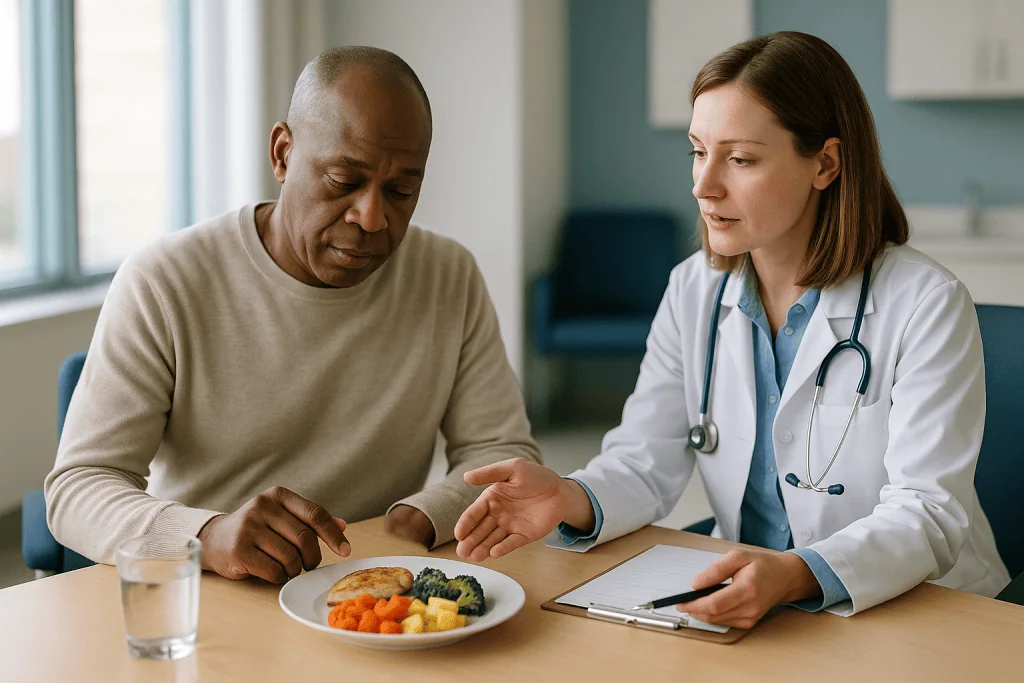
A dietitian or nurse begins with your weight history: what you weighed six months ago, three months ago and today. The percentage lost over time carries more meaning than the number on the scale, because a steady person who has lost a tenth of their body weight in a season is in a different position from someone whose weight has been stable for years. You will be asked about appetite, how many meals you manage, whether you stop early because of fullness or pain, whether you vomit, and whether certain textures have become impossible.
The physical side is brief. Body mass index (BMI, a ratio of weight to height) is recorded, but the examiner also looks at the temples, shoulders and hands for hollowing that signals muscle loss, and may test grip strength with a handheld device. Some clinics use a formal malnutrition screening tool, a short questionnaire that produces a risk score and triggers a fuller review above a threshold.
Blood tests, covered in the next section, add the chemistry. Together these pieces place a person into a broad category: well nourished, at risk, or malnourished. That category shapes what happens next, from simple advice about meal timing to nutrition drinks, to a feeding tube in more marked cases.
The assessment is repeated. If chemotherapy comes first, expect to be weighed and questioned at each cycle. Nutrition is treated as a moving target, not a box ticked once at the start.
Blood tests before stomach surgery: what they look for
The blood panel before a gastrectomy is wider than a routine check-up, and several results speak directly to nutrition.
Hemoglobin is the oxygen-carrying protein in red blood cells, and a low level means anemia. Stomach tumors often bleed slowly into the gut, so iron deficiency anemia is common in this setting. Ferritin, a marker of stored iron, helps distinguish iron shortage from anemia caused by inflammation. The NIH Office of Dietary Supplements notes that iron deficiency develops in stages, with stores falling before hemoglobin does, so both markers are usually checked together.
Vitamin B12 is measured because the stomach produces intrinsic factor, a protein needed to absorb B12 further down the gut. Cancer, chronic gastritis or previous acid-suppressing treatment can lower it before surgery ever happens, and removal of the stomach removes the source of intrinsic factor permanently. Knowing the starting point matters.
Albumin and prealbumin are proteins made by the liver. They fall with poor intake but also with inflammation, so teams read them alongside the weight history rather than in isolation. Kidney and liver function, electrolytes such as sodium and potassium, glucose, and clotting tests round out the picture and flag anything the anesthesiologist needs to know.
Some centers add vitamin D, folate and zinc if intake has been poor for months. None of these results decides the surgery on its own. What they do is allow deficiencies to be corrected in advance, under the direction of the treating team, so the body is not trying to build new tissue from an empty pantry.
Heart, lung and fitness checks: the pre-operative assessment
A gastrectomy, the surgical removal of part or all of the stomach, is a long operation under general anesthesia. The pre-operative assessment exists to answer one question: can this body withstand that stress and recover?

An electrocardiogram (ECG, a tracing of the heart’s electrical rhythm) is standard. People with a history of heart disease, breathlessness or an irregular pulse may also have an echocardiogram, an ultrasound that shows how well the heart pumps. Lung function tests measure how much air you can move and how quickly, which matters because upper-abdominal surgery makes deep breathing painful for a while afterward, and shallow breathing raises the chance of chest infection.
Fitness is assessed in plainer terms. Some clinics ask how many flights of stairs you can climb without stopping. Others use a formal cardiopulmonary exercise test on a bicycle, which measures oxygen use under load and gives anesthesiologists an objective sense of reserve. Mayo Clinic’s overview of stomach cancer treatment describes surgery as suited to people who are healthy enough to tolerate it, and these tests are how that phrase is turned into a decision.
The anesthesiology review also covers medicines. Blood thinners, diabetes treatments and some blood pressure medicines usually need adjustment around the operation; the prescribing clinician gives specific instructions and nothing should be stopped on your own initiative. Smoking status is recorded because smoking impairs wound healing and lung function, and stopping before surgery is consistently advised.
Dental health, sleep apnea and mobility are checked too. Small things, but each shapes how safely the days after surgery unfold.
Pre-op tests for stomach cancer surgery compared
People often leave the pre-assessment clinic with a stack of appointment letters and no clear sense of which test does what. This table groups the usual checks by purpose. Not every person has every test; the treating team tailors the list.
| Check | What it shows | Why it matters before gastrectomy |
|---|---|---|
| Weight history and screening questionnaire | Speed and extent of weight loss, intake | Identifies malnutrition risk that may need correcting first |
| Hemoglobin, ferritin | Anemia and iron stores | Slow tumor bleeding is common; low iron affects energy and healing |
| Vitamin B12, folate | Vitamin status | Stomach removal ends B12 absorption; baseline guides replacement |
| Albumin, prealbumin | Liver-made proteins | Read with weight history as a marker of nutritional reserve |
| Kidney, liver, electrolytes, glucose, clotting | Organ function and bleeding risk | Guides anesthesia and medicine adjustments |
| ECG, echocardiogram if needed | Heart rhythm and pumping strength | Long anesthesia places sustained demand on the heart |
| Lung function tests | Airflow and lung capacity | Upper-abdominal incisions discourage deep breathing afterward |
| Exercise or stair test | Functional reserve | Objective measure of how well the body copes under stress |
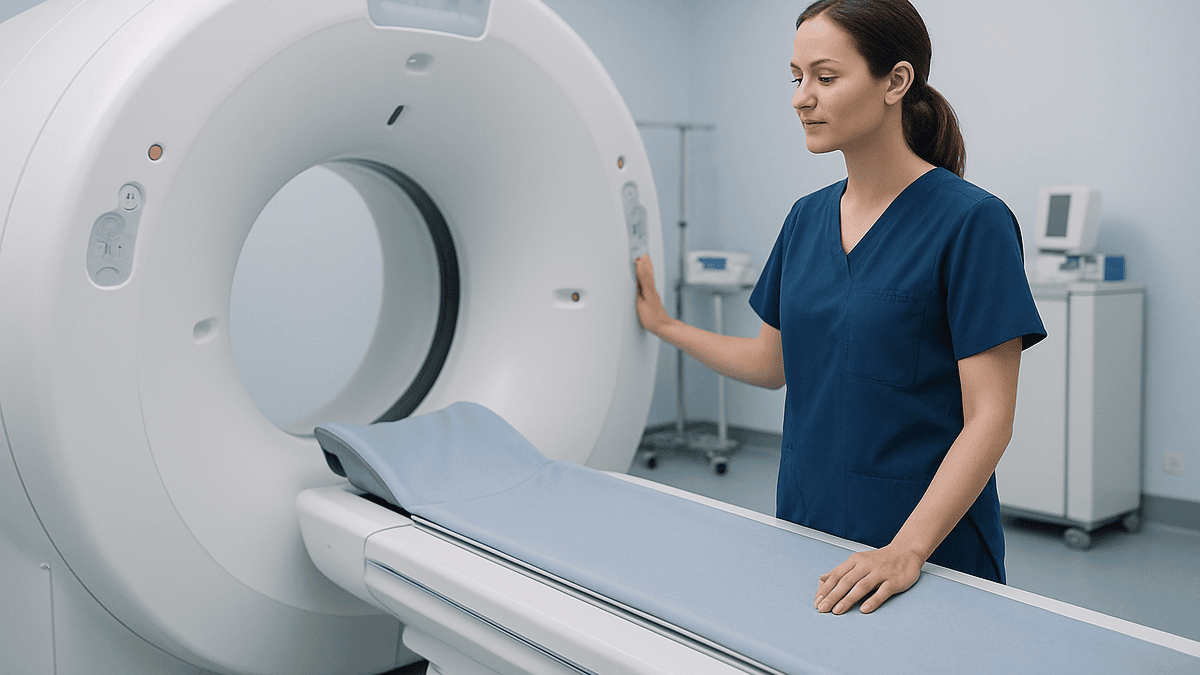
| CT scan, endoscopy, sometimes laparoscopy | Tumor extent and spread | Determines whether surgery is the right step at all |
The last row is the one many people forget belongs here. Staging tests are not about fitness for surgery but about whether surgery makes sense. A CT scan (a detailed X-ray cross-section) and an endoscopy (a camera passed down the throat) map the tumor. A staging laparoscopy, a keyhole look inside the abdomen, may be added to check for small deposits a scan can miss.
Who is usually ready for surgery, and who is asked to wait
Surgery with the aim of removing the whole tumor is generally considered when imaging suggests the cancer is confined to the stomach and nearby lymph nodes, and when the person is fit enough for a major operation. The National Cancer Institute’s treatment summary describes surgery as a standard option for cancer that has not spread to distant organs.
Several groups are usually asked to wait, and the reasons differ.
Those with marked malnutrition are the first. When weight loss has been rapid and intake is minimal, most teams prefer a period of nutrition support, sometimes combined with exercise, before operating. This is not a refusal. It is sequencing, based on evidence that a better-nourished body handles surgery with fewer complications.
Those whose cancer has spread beyond the stomach are usually not offered gastrectomy as a first step, because removing the primary tumor does not address disease elsewhere. Chemotherapy or other systemic treatments become the focus, and surgery may be reconsidered later or used only to relieve a blockage.
Those with unstable heart or lung disease, poorly controlled diabetes or a recent blood clot are typically referred for optimization first. A cardiologist or respiratory physician may adjust treatment so the anesthetic risk falls to an acceptable level.
Those scheduled for chemotherapy before surgery wait by design. The operation follows a defined number of cycles and a rest interval, decided by the oncology and surgical teams together.
People who smoke are strongly encouraged to stop as far ahead as possible. Nobody is turned away for smoking alone, but the conversation happens early because the benefit to lung function and healing grows with time.
Chemotherapy before surgery: how it changes the eating plan
For many people with stomach cancer that appears removable, chemotherapy is given both before and after the operation, an approach the National Cancer Institute describes as perioperative treatment. The pre-surgery portion aims to shrink the tumor and treat cells that may have already traveled. It also means several months of eating under harder conditions.
Chemotherapy commonly causes nausea, a metallic or flat taste, mouth soreness and early fullness of its own, layered on top of the fullness the tumor already causes. Appetite tends to dip in the days after each cycle and lift in the second half, so intake follows a sawtooth pattern rather than a steady line.
The dietitian’s response is practical. Meals are timed for the better days. Protein is pushed to the front of every plate, because muscle preservation is the goal and protein needs are higher during treatment than at rest. Cold or room-temperature foods are often easier when smells are off-putting. Nutrition drinks, the ready-made high-energy, high-protein liquids sometimes called oral nutritional supplements, may be suggested between meals rather than instead of them.
Anti-nausea medicines are a normal part of a chemotherapy plan. They work by blocking signals in the gut and brain that trigger vomiting, and the oncology team chooses and adjusts them; if the ones you have are not working, tell the team rather than ration food.
Weight and blood counts are checked before each cycle. A fall in weight across cycles is a signal, not a failure, and it may lead to more intensive support such as tube feeding so that surgery can proceed on schedule.
Prehabilitation before gastrectomy: what it means and what to eat
Prehabilitation is the term for preparing the body before surgery the way an athlete prepares for a season. It usually has three strands: nutrition, physical activity and psychological readiness, with smoking cessation and alcohol reduction folded in.
The nutrition strand starts with the ordinary plate. When a stomach fills quickly, three meals a day stop working. Dietitians typically suggest six to eight small eating occasions, each built around a protein source: eggs, fish, poultry, dairy, beans, tofu. Liquids are taken between rather than with meals, because a glass of water occupies space that could hold food. Low-energy fillers such as large salads or clear soups are eased back in favor of denser choices. Soft textures help if chewing is tiring or the outlet is narrow.
When food alone cannot close the gap, nutrition drinks are added. When those are not enough, or vomiting prevents swallowing, a feeding tube may be placed. A nasojejunal tube runs through the nose past the stomach into the small intestine; a jejunostomy tube enters the small intestine through the abdominal wall. Both deliver liquid feed directly to where absorption happens. Intravenous feeding is reserved for situations where the gut cannot be used at all.
The activity strand is modest by design. Daily walking, gentle resistance work and breathing exercises with a device that encourages deep inhalation are the usual components. Evidence summarized by NHS surgical guidance supports improving fitness before major surgery, though the size of the benefit varies between studies and should be described honestly as promising rather than settled.
The psychological strand is often the most overlooked. Understanding the plan reduces fear, and less fear tends to mean better sleep and better eating.
The final days before surgery: fasting, medicines and practicalities
The last stretch before a gastrectomy is administrative as much as medical, and knowing what to expect takes some of the edge off.
A pre-admission appointment usually happens one to two weeks ahead. Blood tests may be repeated. The anesthesiologist or nurse confirms your medicine list and tells you which to take on the morning of surgery and which to pause. Blood thinners and certain diabetes medicines are the ones most often adjusted; the instructions come from the prescribing clinician and are specific to you.
Fasting instructions are given in writing. The general principle is that solid food stops several hours before the anesthetic and clear fluids somewhat later, so the stomach is empty and the risk of inhaling contents during anesthesia is minimized. The exact times vary between centers and are set by the anesthesiology team, so follow the sheet you are given rather than a general rule. Some centers offer a clear carbohydrate drink to be finished before the fluid cutoff as part of an enhanced recovery pathway.
Consent is a conversation, not a signature. The surgeon should explain whether a partial or total gastrectomy is planned, how the intestine will be reconnected, what the main risks are, and what the alternatives would be. Ask for anything unclear to be repeated.
Practical preparation helps recovery. Arrange help at home for the first weeks. Pack loose clothing, slip-on footwear, lip balm for a dry mouth, and a list of your medicines. Continue eating as well as you can right up to the fasting cutoff; the days before surgery are not the time to lose more weight.
What the first weeks after a gastrectomy usually look like
Recovery from stomach surgery follows a recognizable arc, even though the pace differs from person to person.
The first day or two are spent in a high-dependency or surgical ward with a drip for fluids, pain relief often delivered by an epidural or patient-controlled pump, and usually a drain near the wound. Nurses will have you sitting out of bed and walking short distances within a day, because movement protects the lungs and lowers the risk of blood clots in the legs. Breathing exercises begin immediately.
Eating restarts cautiously. Sips of water come first, then clear fluids, then thicker liquids and soft foods over several days as the new join between esophagus or remaining stomach and intestine begins to heal. If a feeding tube was placed during surgery, liquid feed may run alongside this progression. NHS guidance on gastrectomy describes a hospital stay of roughly one to two weeks, with full recovery taking several months; both figures are typical ranges rather than promises, and complications can extend them.
At home, tiredness dominates the first month. Small, frequent meals continue. Wound care is straightforward for most people. A follow-up appointment reviews the pathology report, which describes exactly what was removed and whether lymph nodes contained cancer, and this shapes any chemotherapy that follows.
Weight usually falls in the weeks after surgery even with careful eating. Mayo Clinic notes that weight loss after stomach surgery is expected, and the dietitian’s aim is to slow it and to preserve muscle rather than to prevent every lost pound.
Eating after stomach surgery: small meals, dumping syndrome and vitamin B12
A smaller or absent stomach changes eating for good, and understanding the mechanisms makes the adjustments feel logical rather than arbitrary.
Without a reservoir, food passes into the small intestine quickly. When a large or sugary meal arrives all at once, water is pulled into the gut and hormones surge, producing cramping, bloating, diarrhea, sweating and lightheadedness within about half an hour. A later dip in blood sugar can follow an hour or more after eating. Mayo Clinic calls this dumping syndrome and lists small meals, limiting refined sugar, favoring protein and fiber, and separating drinks from meals as the mainstays of managing it. Most people find symptoms ease as the gut adapts over months.
Vitamin B12 becomes a lifelong consideration after total gastrectomy. The NIH Office of Dietary Supplements explains that B12 absorption requires intrinsic factor from the stomach, so without a stomach the vitamin cannot be absorbed from food or standard tablets. Deficiency can take years to appear because the liver stores a reserve, which is exactly why teams arrange regular replacement, usually by injection, rather than waiting for symptoms. The schedule is set by the treating clinician.
Iron and calcium absorption also fall, partly because stomach acid helped release them from food. Blood tests at follow-up watch for shortfalls. Fat absorption can be affected if the pancreas’s signals are disrupted, leading to pale, greasy stools; the team may consider enzyme replacement.
Many people describe learning to eat again as the hardest part of recovery. It is also the part where a dietitian’s steady presence makes the largest difference.
What people often get wrong about nutrition before stomach cancer surgery
Myths about eating and cancer are stubborn, and several of them do real harm in the weeks before an operation.
“Eating less will starve the tumor.” There is no mainstream evidence that restricting food slows stomach cancer. What restriction reliably does is accelerate muscle loss in a person who is already losing it. Guidelines uniformly favor maintaining intake before surgery.
“Sugar feeds cancer, so cut out all carbohydrates.” Every cell uses glucose, and the body will make it from muscle if the diet does not supply it. Very low-carbohydrate eating before major surgery is not supported by evidence and can worsen weight loss. Moderating refined sugar becomes relevant after surgery because of dumping syndrome, not before.
“A juice cleanse will detox me before the operation.” Juices are low in protein and high in volume, the opposite of what a quickly filling stomach needs. Nothing in mainstream evidence supports detox regimens.
“Supplements can replace meals.” Nutrition drinks are designed to add to food, not to substitute for it, unless a dietitian has deliberately planned otherwise. High-dose vitamin and herbal products can interact with chemotherapy and anesthesia, so every supplement should be declared to the team.
“Losing weight before surgery is a good thing.” In the context of stomach cancer, unplanned weight loss is a warning sign, not a health gain. The goal is to stop the slide.
“If I can still eat something, I am fine.” Quality and quantity both matter. A person managing toast and tea is eating, but not enough protein to preserve muscle.
When in doubt, the dietitian is the right person to ask, and asking early beats guessing.
Questions to ask your care team
Consultations are short and questions evaporate under pressure. Writing them down beforehand, and bringing someone to take notes, changes the experience. These are the questions that tend to matter most before stomach cancer surgery.
- How much weight have I lost according to your records, and how does that affect the plan?
- Have my blood tests shown anemia or low vitamin B12, and will these be corrected before surgery?
- Am I being referred to a dietitian, and how often will I be reassessed?
- Will I have chemotherapy before surgery? If so, how many cycles are planned and how long is the gap before the operation?
- Is a partial or total gastrectomy planned, and what determines which?
- Do I need a feeding tube before or during surgery, and if so, what type and for how long?
- What is the prehabilitation program here, and what exercise is safe for me now?
- Which of my medicines and supplements should I pause, and who will give me those instructions in writing?
- What are the main risks of this operation for someone in my situation, and what are the alternatives?
- What will I be able to eat in the first weeks, and who do I contact if I cannot manage?
- How will vitamin B12, iron and calcium be monitored after surgery?
- Who is my named contact if I develop a problem at home, including at night or on weekends?
A good team welcomes these questions. If an answer is unclear, ask for it in plain words. If you feel rushed, say so. The decisions belong to the treating team, but understanding them is your right, and understanding tends to make the whole path easier to walk.
When to call your doctor
The period between diagnosis and surgery, and the weeks after it, are times when problems are best caught early. Contact your care team promptly, using the number you were given, if any of the following occur.
Before surgery: vomiting that prevents you keeping down fluids for a day or more; vomiting blood or material that looks like coffee grounds; black, tarry stools; sudden inability to swallow even liquids; dizziness or fainting on standing; a fever during chemotherapy; or weight falling faster than it was at your last visit.
After surgery: a fever or shaking chills; increasing rather than easing abdominal pain; redness, warmth or discharge at the wound; persistent vomiting; inability to pass urine; a swollen, painful calf; or new breathlessness or chest pain, which can signal a blood clot and needs emergency assessment.
At any stage: confusion, severe weakness, or a sense that something is seriously wrong. Trust that instinct.
Seek emergency care immediately for chest pain, difficulty breathing, heavy bleeding, or collapse. For everything else, the team would far rather hear from you about something that turns out to be minor than learn afterward about something that was not. Nothing in this article replaces their individual advice; every decision about tests, timing and treatment rests with the clinicians who know your case.
Frequently asked questions
What is malnutrition screening for cancer patients before surgery?
It is a short structured questionnaire, usually combined with weight measurement, that identifies people at risk of malnutrition and flags them for a fuller dietitian review. Questions cover recent weight loss, appetite and how much you are managing to eat. A score above a set threshold triggers more detailed assessment and, where needed, nutrition support before the operation.
What should I eat before a gastrectomy if I feel full quickly?
Small, frequent meals built around protein are the usual advice: eggs, fish, poultry, dairy, beans or tofu six to eight times a day rather than three large plates. Drink between meals rather than with them, choose soft, energy-dense foods, and add nutrition drinks between meals if a dietitian recommends them. Individual plans come from your dietitian.
What does prehabilitation before gastrectomy involve?
Prehabilitation combines nutrition support, gentle exercise such as daily walking and breathing practice, smoking cessation and psychological preparation in the weeks before surgery. The aim is to arrive at the operation with more muscle, better lung function and less anxiety. Evidence supports improving fitness before major surgery, though the size of the benefit varies between studies.
Which pre-op tests for stomach cancer surgery are standard?
Most people have blood tests for hemoglobin, iron, vitamin B12, kidney and liver function, glucose and clotting, plus an electrocardiogram. Lung function tests, an echocardiogram or an exercise test are added when history suggests they are needed. Staging scans and endoscopy confirm whether surgery is appropriate. The exact list is tailored by the treating team.
Why might my surgery be delayed because of nutrition?
Because a body that has lost significant muscle heals more slowly and has a higher risk of complications after major abdominal surgery. If weight loss has been rapid and intake is minimal, teams often prefer a period of nutrition support first. This is sequencing rather than refusal, and surgery usually proceeds once nutritional status has improved.
Will I need a feeding tube before stomach cancer surgery?
Only if food and nutrition drinks cannot meet your needs, or if the tumor blocks swallowing. A nasojejunal tube passes through the nose into the small intestine; a jejunostomy tube enters through the abdominal wall. Both deliver liquid feed past the stomach. The decision depends on your assessment and is made by the treating team.
How does chemotherapy before surgery affect eating?
It commonly causes nausea, altered taste, mouth soreness and early fullness, on top of the fullness the tumor already causes. Appetite typically dips in the days after each cycle and recovers later. Dietitians adjust meal timing, emphasize protein and may add nutrition drinks. Anti-nausea medicines are part of the plan and are managed by the oncology team.
Do I have to stop smoking before a gastrectomy?
You will be strongly encouraged to. Smoking impairs wound healing and reduces lung function, and upper-abdominal surgery already makes deep breathing harder afterward. The benefit grows with the length of time smoke-free before the operation. Nobody is turned away for smoking alone, but support to stop is offered early for good reason.
What is dumping syndrome after stomach surgery?
It is a group of symptoms, including cramping, bloating, diarrhea, sweating and lightheadedness, that occur when food moves too quickly from the stomach or esophagus into the small intestine. Mayo Clinic describes managing it with small meals, less refined sugar, more protein and fiber, and separating drinks from food. Symptoms usually ease as the gut adapts over months.
Why is vitamin B12 checked before and after stomach surgery?
The stomach makes intrinsic factor, a protein required to absorb vitamin B12 in the intestine. After total gastrectomy that source is gone, so B12 from food can no longer be absorbed. Checking levels beforehand sets a baseline, and lifelong replacement, usually by injection, is arranged by the treating clinician before deficiency develops.
References
This article is for general information only and is not a substitute for professional medical advice. Please consult a qualified doctor about your individual situation.

More from the Blog

How Leukemia and Lymphoma Treatment Paths Differ, and Where They Overlap
Leukemia and lymphoma are both cancers of white blood cells, but leukemia begins in the bone marrow and travels in the blood, so it…

Bone Marrow Transplant Recovery Milestones: Discharge, Day 100 and the First Year
Bone marrow transplant recovery unfolds in stages rather than a single date. Blood counts usually recover within a few weeks of the infusion, most…
Lumpectomy or Mastectomy for Breast Cancer: What the Surgical Team Weighs With You
For most early-stage breast cancers, lumpectomy followed by radiation and mastectomy offer similar long-term survival, so the choice usually turns on tumor size relative…

How Graft-Versus-Host Disease Is Treated: Immunosuppressive Therapy Step by Step
Graft-versus-host disease is treated by calming the donor immune cells that are attacking the recipient's body. Prevention starts with immunosuppressive medicines around transplant. If…

Who Is a Candidate for Robotic Partial Nephrectomy? Tumor Size, Location and Kidney Health
A robotic partial nephrectomy candidate is usually someone with a single, small kidney tumor, most often 4 cm or under and sometimes up to…

What Happens After a Surgical Oncology Operation? Walking, Wound Care and Pathology Results
After cancer surgery, the first hours focus on waking safely, controlling pain and getting you upright to walk, usually the same day or the…