

PRK for Athletes, Pilots and Contact-Sport Players: Why No Flap Can Matter
Key Takeaways
- PRK removes the cornea's surface layer and reshapes the tissue beneath, so no hinged flap is created and nothing can be dislodged by a later blow to the eye.
- A LASIK flap heals well enough for normal life but never regains full strength across its interface, which is why trauma-exposed sports and occupations are often steered toward surface treatment.
- The corneal surface typically regrows under a bandage lens in about three to five days, and this is the window of greatest discomfort and infection risk.
- Vision after PRK usually becomes functional within the first week or two but can keep sharpening for up to three months, later than the day-or-two recovery often seen with LASIK.
- Keratoconus and other corneal thinning disorders are firm reasons to decline laser treatment, which is why corneal mapping is a standard part of screening.
- Laser surgery matches the prescription you already have in contacts; it does not raise the eye's underlying visual limit and does not prevent age-related reading glasses.
PRK is a laser vision correction method that reshapes the cornea after removing its surface layer, rather than cutting a hinged flap as LASIK does. Because no flap exists to shift or tear under a direct blow, some athletes, pilots and contact-sport players are offered PRK, accepting a slower, more uncomfortable recovery of several weeks. Suitability is decided by an eye surgeon after a full examination.
A rugby hooker rinses the grass out of her contact lens for the third time in one half. A cadet reads the eligibility small print for flight training and pauses at the word “flap.” A weekend boxer wonders whether his glasses prescription means he will spend the rest of his sparring career in a fog. The question each of them lands on is the same, and it is more precise than “should I get laser eye surgery”: is PRK for athletes and other people who take hits to the face a smarter choice than the better-known alternative?
The answer turns on one structural detail of the cornea, the clear dome at the front of the eye. One procedure leaves a thin hinged layer that heals but never fully re-knits; the other leaves nothing behind but a resurfaced cornea. That difference matters most in the few people whose sport, job or hobby makes a direct impact to the eye a real possibility rather than a remote one.
It also comes with a price paid in recovery time, discomfort and patience, which is why the choice is never obvious and never belongs to a search engine.
What actually happens during PRK, step by step
PRK stands for photorefractive keratectomy. In plain words, it is a laser treatment that reshapes the cornea from its surface downward so that light focuses correctly on the retina, the light-sensing layer at the back of the eye.
The cornea has five layers. The outermost, the epithelium, is a sheet of cells roughly as thick as a strand of hair, and it regrows constantly. In PRK the surgeon loosens and removes this sheet from the central cornea, usually with a diluted alcohol solution, a soft brush or the laser itself. Underneath sits the stroma, the structural bulk of the cornea. An excimer laser, a cool ultraviolet laser that vaporizes tissue a fraction of a micron at a time, then removes a precisely mapped amount of stroma to flatten the cornea for nearsightedness, steepen it for farsightedness or even it out for astigmatism (Cleveland Clinic).
Nothing is cut and lifted. Once the laser finishes, a soft “bandage” contact lens is placed over the raw surface to protect it while the epithelium grows back, which typically takes around three to five days (Cleveland Clinic). The whole treatment for both eyes commonly lasts under 15 minutes, though you can expect to be at the facility far longer for checks and instructions.
The eye is numbed with anesthetic drops, so people usually describe pressure and bright light rather than pain during the procedure. The discomfort arrives afterward, once the numbing wears off and the exposed nerve endings in the healing surface make themselves known. That is the trade-off the rest of this article keeps returning to: a surgically simpler eye at the cost of a harder first week.
PRK vs LASIK for athletes: what the flap changes
LASIK, or laser-assisted in situ keratomileusis, achieves the same reshaping with a different route in. A microkeratome blade or a femtosecond laser creates a thin hinged flap in the cornea, the flap is folded back, the excimer laser treats the stroma beneath, and the flap is laid back down without stitches (Mayo Clinic).
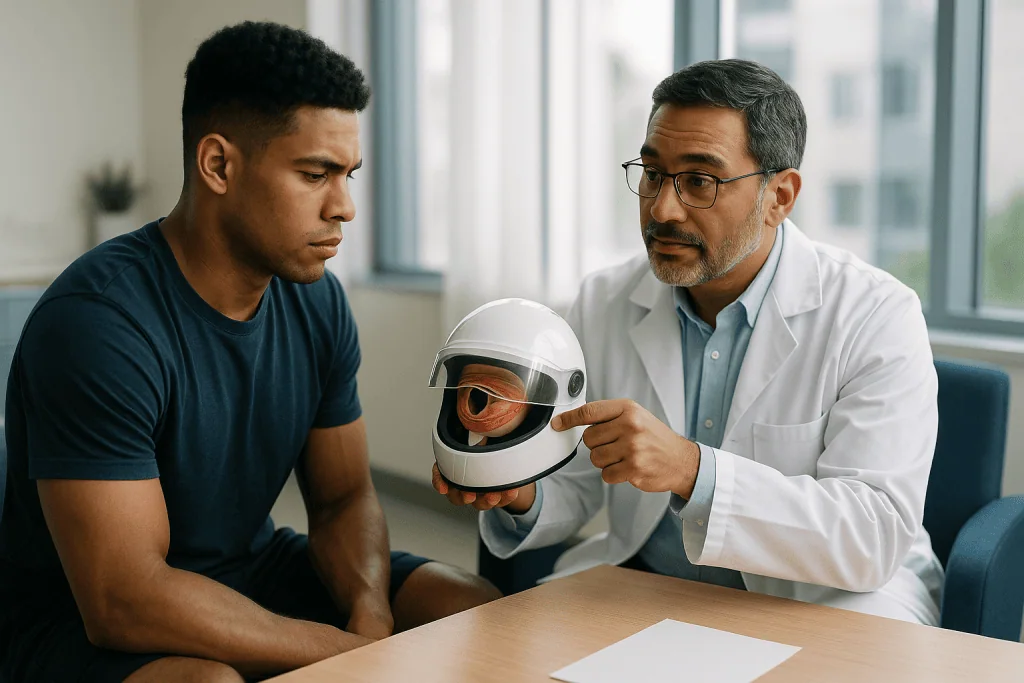
The flap is the whole story for anyone comparing PRK vs LASIK for athletes. Within hours it adheres well enough for normal life. Over months the edges seal and the surface heals over. What never fully happens is a return to the original tissue strength along the interface, the plane where the flap was separated. The cornea’s structural fibers do not regrow across that plane, so it remains a potential weak point for the life of the eye (Mayo Clinic; Cleveland Clinic).
In everyday terms this almost never matters. A flap displacement after the first weeks is rare, and it requires a direct, usually sharp, blow or rubbing to the eye. For a desk worker or a distance runner, that risk is close to theoretical.
Change the setting to a boxing ring, a rugby scrum, a wrestling mat or a cockpit where a loss of cabin pressure or an ejection could follow, and the calculation shifts. The absence of a flap means there is nothing to dislodge, fold or trap debris under. Surface healing after PRK is slower, but once the epithelium has matured, the cornea’s architecture is essentially a thinner version of what it was before (Cleveland Clinic).
LASIK’s advantages are equally concrete: minimal discomfort, functional vision usually within a day or two, and a quicker return to work (Mayo Clinic). Choosing between them is a question of which risk you would rather carry, and your surgeon will have a view on which risk is real for your eye and your sport.
Why no flap can matter in contact sports
Think of the LASIK flap as a lid on a jar that has been screwed back on but never resealed. It stays put through almost everything. Under the wrong force, applied at the wrong angle, it can lift at the edge.
The forces in contact sports are exactly the wrong kind. A finger in the eye during a basketball rebound, a thumb in the eye socket in a grappling match, a headbutt in soccer, an elbow in rugby, a glove edge in boxing. Each applies a shearing load tangential to the cornea rather than a straight push. Shear is what a flap is least able to resist. Published case reports describe traumatic flap dislocation years after LASIK following blows of this type; they are uncommon, but they exist, and they tend to involve sport, fights or accidents (Mayo Clinic lists eye trauma risk among the reasons some people are steered away from LASIK).
A flap that lifts can usually be repositioned, but it may fold, trap epithelial cells underneath it, or wrinkle, each of which can cost vision and need further surgery. After PRK there is no flap to lift; a blow to the eye after full healing carries the same risks it would in an untreated eye, such as corneal abrasion or bleeding inside the eye, but not the flap-specific ones (Cleveland Clinic).
This is why many combat athletes, martial artists, rugby players and anyone whose sport routinely involves hands near faces are offered PRK first. It is a mechanical argument, not a marketing one, and it is strongest for sports with repeated, unpredictable facial contact. For a tennis player or a swimmer, the argument is far weaker, and either method may be reasonable.
None of this makes PRK “safer” in a general sense. It moves risk from the distant future into the first few weeks, where infection and haze become the concerns to watch.
Why military and aviation programs have often favored flap-free surgery
People searching “why military prefers PRK” usually want a simple yes or no. The honest answer is that eligibility rules belong to each service and each aviation authority, and they change. What can be explained is the reasoning that has shaped those rules.
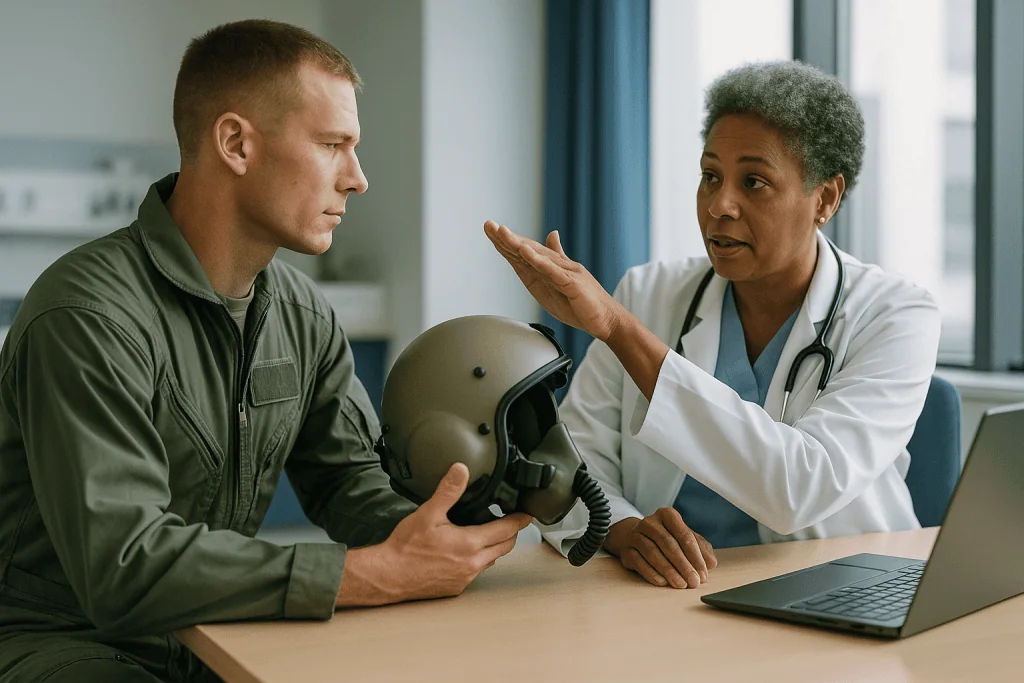
Military occupational medicine deals with the extremes of the civilian comparison above: blast overpressure, sudden decompression, ejection seats, sand and grit, and hand-to-hand training. For decades surface ablation, which is the family of procedures PRK belongs to, was the first laser method accepted for many roles because it leaves no flap to displace under those conditions. As evidence accumulated that femtosecond-laser LASIK flaps are more stable than older bladed flaps, many programs widened their acceptance to include LASIK for a growing number of roles.
The point for a reader is this: an aviation medical examiner or a military recruiter, not a wellness magazine, determines what counts for a specific role, and candidates are routinely asked to provide the surgical report, the pre-operative prescription and evidence of a stable result over a set interval. If your plan involves a service, a flight school or a commercial pilot’s license, ask the examining authority what it requires before you book any surgery, because the choice of procedure may be made for you.
Pilots also care about something besides impact. Flight decks are dry, bright and demanding on contrast. Dry eye after any laser surgery is common and usually settles over months (Mayo Clinic). Glare, halos and reduced night contrast can occur after either procedure and are more likely with higher prescriptions or large pupils. Surface ablation does not escape these; it simply removes the flap-related variables from the equation while leaving the optical ones in place.
Who PRK for athletes is usually for, and who is asked to wait
Surgeons tend to think in terms of eye anatomy first and lifestyle second, then let the two meet. PRK for athletes is most often suggested when both lines of thinking point the same way.
On the anatomy side, PRK is commonly favored when the cornea is thinner than average, because no tissue is spent on a flap and more structural stroma is left behind after treatment (Cleveland Clinic). It is also often preferred when the corneal surface map shows mild irregularity that is not disease, when there is a history of recurrent corneal erosion, or when the person has had previous eye surgery that would complicate a flap.
On the lifestyle side, the strongest candidates are those who face repeated facial contact or occupational trauma: combat sports, rugby and football, basketball at competitive levels, police and military roles, and some aviation pathways.
A separate group is asked to wait rather than refused outright. The reasons are usually temporary:
- A prescription that has changed in the past year, since laser surgery corrects today’s prescription only (NHS; Mayo Clinic).
- Age under the early twenties in many protocols, because the eye may still be changing (NHS).
- Pregnancy or breastfeeding, which can shift the prescription and alter healing.
- Active dry eye, allergic eye disease or eyelid inflammation that needs controlling first.
- An in-season competition schedule that leaves no room for a recovery of weeks, which is simply a timing problem.
Waiting is not a verdict on your eyes. It is the surgeon protecting the result, because a treated eye that then drifts out of focus has used corneal tissue it cannot get back.
What disqualifies you from PRK altogether
“What disqualifies you from PRK” is one of the most-searched phrases on this subject, and the list is shorter than most people fear but firmer than most people hope.
The clearest barrier is keratoconus or any corneal ectasia, conditions in which the cornea progressively thins and bulges. Removing more tissue from such a cornea can accelerate the bulging, so every reputable screening includes corneal mapping (topography or tomography) to look for early signs before any laser is considered (Cleveland Clinic; Mayo Clinic).
Beyond that, surgeons generally decline or defer in the presence of:
- Uncontrolled autoimmune or connective tissue disease, where corneal healing can be unpredictable and surface melting is a documented concern (Mayo Clinic).
- Significant cataract, since lens surgery would address both problems and laser treatment would be wasted.
- Advanced glaucoma or unexplained optic nerve changes.
- Active herpes simplex or herpes zoster eye disease, because laser treatment can reactivate it.
- Severe dry eye that cannot be brought under control.
- A prescription outside the range the laser platform and the surgeon consider safe for the amount of corneal tissue available.
- Unrealistic expectations, which surgeons take seriously enough to treat as a reason to pause.
Medicines come up less often but can matter. Certain acne retinoids, some immune-suppressing drugs and some rhythm-control heart medicines are flagged in screening because of effects on corneal healing or on the eye surface. Do not stop or change any prescription on the strength of a web article; tell the surgeon everything you take and let them weigh it.
Finally, an eye that has already had LASIK is not automatically excluded from a PRK enhancement. It is a specialist decision, and the thickness of the remaining bed is what governs it.
PRK recovery time for sports: the first week
Anyone researching PRK recovery time for sports should budget mentally for a bad first week before a good first month. The reason is simple: an area of corneal surface the size of a small coin has been removed, and the nerve endings beneath are exposed until the epithelium grows back.
For roughly three to five days, until that regrowth is complete, most people describe a gritty, burning, light-sensitive eye, with watering and a vision that fluctuates from hour to hour (Cleveland Clinic). Day two and day three are often the roughest. The bandage contact lens stays in place during this time and is removed by the surgeon, not by the patient.
Prescribed drops are part of this phase. They usually include an antibiotic to lower the risk of infection while the surface is open, an anti-inflammatory, often a corticosteroid, to reduce swelling and haze, and lubricants. The schedule, strength and duration are set by the surgeon, change over the weeks, and should never be altered without asking the clinic. Some surgeons also apply mitomycin C, a medicine that reduces scarring cells, to the corneal surface during the procedure itself for higher corrections; it is a one-time intraoperative step, not something a patient manages.
Practical rules in the first week are about protecting the surface:
- No rubbing the eyes, which is the single most common way to disturb healing.
- No swimming, hot tubs or saunas while the surface is open.
- No eye makeup, and shielding at night if advised.
- Sunglasses outdoors, because the healing cornea is light-sensitive and ultraviolet exposure is linked to haze.
Driving, reading and screen work are typically possible once the surgeon confirms vision is adequate, which for many people is toward the end of the first week, though sharpness keeps changing well beyond that (Cleveland Clinic).
Weeks two to twelve: when training usually resumes
Once the epithelium has sealed, the risk profile shifts from infection toward disturbing a surface that is smooth but still immature. Vision at this stage is usually usable yet not final; most people notice steady improvement over the first month and continued fine-tuning for up to three months, sometimes longer with larger corrections (Cleveland Clinic; NHS).
The timeline below reflects typical patient guidance from the cited sources. It is a map of what commonly happens, not a schedule anyone can promise. Your surgeon’s instructions override every row.
| Phase after PRK | What is usually happening | Activity commonly allowed | Still commonly restricted |
|---|---|---|---|
| Days 1–5 | Epithelium regrowing under bandage lens; discomfort and light sensitivity (Cleveland Clinic) | Rest, gentle walking | Any sport, screens for long stretches, driving |
| Week 1–2 | Surface sealed; vision fluctuating, improving | Stationary cycling, light gym work without sweat in eyes | Swimming, contact drills, dusty or windy environments |
| Weeks 2–4 | Surface maturing; haze risk window; drops often being tapered by surgeon | Running, non-contact team practice, often with protective eyewear | Full contact, water sports, ball sports with facial risk |
| Months 1–3 | Vision stabilizing; final prescription check (NHS) | Most sport, often including contact with surgeon clearance | Only what the surgeon still advises against |
Two patterns are worth noticing. Sweat, pool water and dust are treated as threats longer than most people expect, because they carry microbes and irritants onto a surface still finishing its repair. Contact itself is usually the last thing cleared, even though PRK was chosen for contact, because the cornea needs its new surface fully anchored before taking a blow.
Pilots and professional drivers should also expect a formal vision check, often with night and glare testing, before they are cleared to return to duty.
The honest trade-offs: pain, haze and slower vision
A balanced explainer owes readers the parts that marketing pages leave out. PRK’s downsides cluster in three areas.
Discomfort is the first and most predictable. Nearly everyone experiences it; the question is degree and duration, and both vary. Over-the-counter pain relief and the prescribed drops are usually enough, and surgeons sometimes provide additional short-term measures. Pain that gets worse after day three rather than better is not expected and should prompt a call.
Corneal haze is the second. During healing, cells in the stroma can lay down disorganized tissue that scatters light, producing a mild cloudiness. It is more likely with larger corrections, with sun exposure in the first months, and when anti-inflammatory drops are stopped early. Most haze is faint and clears with time; dense haze that affects vision is uncommon with modern techniques, partly because of the intraoperative use of mitomycin C for higher corrections. Surgeons monitor for it at follow-up visits (Cleveland Clinic).
Slower visual recovery is the third. Where LASIK patients often read a driving-standard line the next day, PRK patients frequently need a week to reach similar function and up to three months for the result to settle (Cleveland Clinic; Mayo Clinic). For a student or a self-employed person, that is a real cost.
Risks shared with LASIK include dry eye lasting months, glare and halos especially at night, under- or over-correction needing a second treatment, and, rarely, infection or loss of best-corrected vision. A systematic review of trials comparing the two procedures for nearsightedness found that long-term visual results were similar, with LASIK recovering faster and PRK carrying a lower risk of flap-related problems; neither method was shown to be clearly superior overall (NIH PubMed, Cochrane review).
Laser vision correction does not prevent reading glasses in later life, because presbyopia, the stiffening of the lens with age, is a separate process from corneal shape (NHS).
Can PRK really improve athletic performance?
Ranking articles promise sharper reaction times and a competitive edge. The evidence supports something narrower and, in its own way, more useful.
What laser surgery reliably changes is the delivery of a correction. Glasses sit in front of the eye, distort the periphery, fog, slip and break; contact lenses dry out, collect grit, dislodge and carry an infection risk that rises with sweat, water and long wear (MedlinePlus; NIH National Eye Institute). Remove those and an athlete sees with the same prescription, now built into the cornea, across the full field of view, in rain and in a scrum, without worrying about a lens on the turf.
That is a performance change in the ordinary sense: fewer interruptions, stable peripheral vision, no fear of a lens-related eye infection cutting into a season. It is not a change to the brain’s processing speed, to depth perception beyond what a correct prescription already provides, or to the eye’s underlying visual limit. If your best corrected vision in contacts is a certain standard, surgery aims to match that standard, not exceed it, and some people end up slightly short of it or with mild night glare (Mayo Clinic).
It helps to be honest about what the question hides. Many athletes who wear contacts comfortably and have never had an infection gain little beyond convenience. Those who cannot tolerate lenses, whose sport makes lens loss or infection a recurring problem, or whose occupation prohibits correction aids gain much more. The surgical risk is the same in both groups; the benefit is not.
A sensible way to frame it with your surgeon: not “will this make me better,” but “what specifically about my current correction is costing me, and does surgery remove that cost without adding a different one?”
What people often get wrong about PRK for athletes
Some beliefs survive because they are half true. These are the ones that come up most often in clinic conversations and comment threads.
“PRK is the old, outdated version of LASIK.” PRK came first, but it has not stood still. Modern surface ablation uses the same wavefront-guided and topography-guided laser profiles as LASIK, and the technique remains the method of choice for thin corneas and high-impact lifestyles for structural reasons, not nostalgia (Cleveland Clinic).
“A LASIK flap heals completely, so the contact-sport worry is a myth.” The flap heals well enough for normal life, and displacement is rare. It does not regain full tensile strength across the interface, which is precisely why trauma-exposed roles are often advised toward surface treatment (Mayo Clinic).
“PRK is painful for weeks.” Significant discomfort is usually a matter of days, until the epithelium closes. Lingering dryness and fluctuation are common for longer, but that is a different sensation from the raw-eye phase (Cleveland Clinic).
“After PRK I can take any hit.” A healed PRK eye is as vulnerable to blunt trauma as any eye: hyphema, retinal tears and orbital fractures do not care whether a laser was involved. Protective eyewear remains the single most effective injury prevention in sport, before and after surgery.
“Pros all get LASIK, so it must be better.” Procedure choice for any athlete is private and depends on their corneal measurements and their sport’s contact profile. A professional’s reported choice tells you about their eyes, not yours.
“Surgery fixes vision forever.” It corrects the prescription present at the time. Age-related changes, especially the need for reading glasses, arrive on the usual schedule (NHS).
Alternatives worth weighing before any laser
A surgeon who presents PRK as the only option for an athlete is skipping a conversation. Several alternatives exist, each with a different balance of permanence, risk and recovery.
Daily disposable contact lenses remain the default for many sports. A fresh lens each day lowers infection risk compared with reusable lenses, and sport-specific frames and goggles can be made to prescription for sports where a lens is impractical (MedlinePlus; NIH National Eye Institute). Prescription protective eyewear, made from impact-resistant polycarbonate, is the right answer for racket sports and for younger athletes whose eyes are still changing.
Overnight orthokeratology uses rigid lenses worn during sleep to flatten the cornea temporarily, giving lens-free vision during the day for low to moderate nearsightedness. It is reversible, which appeals to younger athletes, but it carries its own infection risk and requires strict hygiene.
Small-incision lenticule extraction, usually shortened to SMILE, is a laser technique in which a thin disc of corneal tissue is removed through a tiny opening rather than under a flap. It has no hinged flap, though it does create an internal pocket; its availability depends on the surgeon and the prescription type, and it is not suited to all astigmatism or to farsightedness (NHS).
Phakic intraocular lenses, often called implantable contact lenses, place a lens inside the eye in front of the natural lens, leaving the cornea untouched. They are used for prescriptions too high or corneas too thin for laser treatment and are removable, but they involve surgery inside the eye with its own risks, including cataract and raised eye pressure (NHS).
Doing nothing is also an option, and for an athlete who is comfortable in lenses and in-season, it is often the right one for now. Timing a decision for the off-season removes most of the pressure from the choice.
Questions to ask your care team before deciding
A good consultation is a two-way interview. Arriving with precise questions tends to produce precise answers and makes it easier to spot a clinic that is selling rather than advising.
- What are my corneal thickness and topography results, and do they point toward PRK, LASIK or something else for reasons unrelated to my sport?
- How stable has my prescription been, by your measurements, and would you want another year of records before treating?
- Given my specific sport and position, how do you weigh flap risk against the longer PRK recovery for me?
- What is your realistic timeline for my return to non-contact training, then to contact, and what would make you extend it?
- Which drops will I use, for roughly how long, and what should I do if I miss one or run out early?
- What is your plan for haze, and does my prescription level put me in the group where you use additional measures during surgery?
- What proportion of people with my prescription need a second treatment, and how long must I wait for it?
- How will dry eye be assessed before and after, and what symptoms should make me call rather than wait for the next visit?
- If I fly for a living or am entering a service, will you provide the operative report and stability documentation in the format the examining authority requires?
- Who do I contact out of hours in the first two weeks, and what happens if I am traveling?
Write the answers down, or ask whether a summary can be provided. People leave eye consultations with dilated pupils and a lot of new vocabulary, and recall afterward is poor. A clinic that welcomes these questions, and that is comfortable saying “you are not a candidate” or “wait,” is behaving the way good surgical teams behave.
When to call your doctor
Most post-PRK symptoms follow a predictable arc: worst around days two to three, then easing as the surface closes. The warning signs are deviations from that arc. Contact the surgical team the same day, or seek emergency eye care if you cannot reach them, for any of the following:
- Pain that increases after the third day, or severe pain that returns after it had settled.
- A sudden drop in vision, a new dark shadow or curtain across part of the visual field, or a burst of new floaters or flashes of light.
- Increasing redness, thick discharge or a white or gray spot on the cornea, which can signal infection while the surface is open.
- Light sensitivity that is clearly worsening rather than improving.
- The bandage contact lens falling out, folding or becoming uncomfortable; do not attempt to replace it yourself.
- A direct blow to the eye at any stage of recovery, even without obvious symptoms.
- Any reaction to prescribed drops, such as swelling of the eyelids or a rash, before stopping them.
Later in recovery, the same rules apply with a longer fuse. Vision that worsens after it had stabilized, persistent glare that interferes with night driving beyond three months, or dryness that is not improving despite lubrication all deserve a review rather than patience. For pilots and professional drivers, these are also reportable to the relevant medical examiner.
The surgical team wants these calls. An infection caught early on a healing cornea is a different problem from one caught late, and a dislodged bandage lens is a five-minute fix in clinic. No one at a good practice will think less of a patient for phoning about an eye that feels wrong. Every decision about treatment, timing and return to sport rests with that team, with the full picture in front of them.
Frequently asked questions
Why is PRK for athletes often suggested over LASIK?
Because PRK leaves no corneal flap, so a direct blow to the eye in sport cannot displace or wrinkle one. The trade-off is a more uncomfortable first week and slower visual recovery. Surgeons weigh this against corneal thickness, prescription and the actual contact risk of your sport; for low-contact sports either method may be reasonable, and the decision belongs to the treating surgeon after examination.
What is the real difference in PRK vs LASIK for athletes?
Both use the same excimer laser to reshape the cornea. LASIK reaches the tissue under a hinged flap and heals fast; PRK removes the surface layer, which regrows over several days, and heals more slowly. Long-term vision results are similar in trial data. PRK removes flap-related risks, LASIK removes most of the early discomfort. Which matters more depends on your eye and your sport.
What is the typical PRK recovery time for sports?
Patient guidance commonly describes surface healing in three to five days, light non-contact exercise within one to two weeks, and full contact or water sports after roughly a month, with vision continuing to settle for up to three months. These are typical ranges from published patient resources, not promises; your surgeon sets the actual clearance based on how your cornea is healing.
Why does the military prefer PRK over LASIK?
The historical preference came from the absence of a flap, which matters under blast, decompression, ejection and hand-to-hand training conditions. Many programs have since widened acceptance to include modern LASIK for various roles. Rules differ by service and change over time, so anyone planning a military or aviation career should ask the examining authority what it requires before scheduling any procedure.
What disqualifies you from PRK?
Keratoconus or other corneal thinning disease is the clearest barrier, along with uncontrolled autoimmune disease, active herpes eye infection, significant cataract, advanced glaucoma, severe dry eye and a prescription outside the safe range for your corneal thickness. Temporary reasons to wait include a changing prescription, young age, pregnancy or breastfeeding. Only a full examination with corneal mapping can settle the question.
Can pilots have PRK, and does it affect night vision?
Many pilots have had laser vision correction, but each aviation authority sets its own rules on procedure type, waiting intervals and documentation. Night glare and halos can occur after PRK or LASIK, more often with larger corrections or large pupils, and usually improve over months. Pilots should expect a formal post-operative assessment, including night and contrast testing, before returning to duty.
Did LeBron James get LASIK or PRK?
Media reports have described LeBron James having laser vision correction, but no one outside his own care team can verify which technique was used, and it would not matter for your decision. Procedure choice depends on an individual’s corneal measurements, prescription and sport. A professional athlete’s reported choice reflects their eyes and circumstances, not a recommendation for anyone else.
How painful is PRK, and for how long?
Most people describe a gritty, burning, light-sensitive eye for the first three to five days while the surface regrows, with days two and three often the roughest. Prescribed drops and simple pain relief usually manage it. Discomfort that worsens after day three, rather than easing, is not expected and should be reported to the surgical team the same day.
Does the cost of PRK versus LASIK affect which one athletes should choose?
This magazine does not publish prices, and cost should not drive the clinical choice. What matters is corneal thickness, prescription stability, the contact risk in your sport and how much recovery time you can afford. Ask the clinic what its quoted figure includes, such as follow-up visits and any later enhancement, so that comparisons are about the same thing.
Will PRK stop me from needing reading glasses later?
No. PRK corrects the prescription you have at the time of surgery by reshaping the cornea. Presbyopia, the age-related stiffening of the eye’s natural lens that makes near focus harder from the forties onward, is a separate process and arrives on its usual schedule. Some people choose a deliberate difference between eyes to delay this, which is a separate discussion with your surgeon.
References
- NHS: Laser eye surgery and lens surgery
- MedlinePlus: Refractive Errors
- NIH National Eye Institute: Refractive Errors
This article is for general information only and is not a substitute for professional medical advice. Please consult a qualified doctor about your individual situation.

More from the Blog

What Glaucoma Surgery Can and Cannot Do: Protecting the Vision You Still Have
Glaucoma surgery lowers pressure inside the eye to slow or stop further damage to the optic nerve. It cannot restore vision already lost, because…
Intraocular Lens Recovery: Eye Drops, Lifting Limits and When Vision Settles
Most people recover from intraocular lens (IOL) surgery over about 4 to 8 weeks, according to the NHS and Mayo Clinic, though everyday vision…

Local or General Anesthesia for Vitrectomy: What You Feel and How the Choice Is Made
Most vitrectomies in adults are performed under local anesthesia: numbing injections around the eye, usually combined with light intravenous sedation, so you are relaxed,…

Helping a Child Stick With Eye Patching: Practical Support for Amblyopia Treatment
Helping a child with an eye patch for amblyopia works best when patching becomes a predictable, short, engaging routine: same time daily, paired with…

Preparing for a Contact Lens Fitting: Prescriptions to Bring and What to Tell Your Doctor
Preparing for a contact lens fitting means bringing your current glasses, any previous contact lens prescription or boxes, a list of medicines and eye…
What the Femtosecond Laser Changes in Femto LASIK Compared With a Blade
In Femto LASIK, a femtosecond laser replaces the mechanical blade (microkeratome) used to create the thin corneal flap that begins LASIK. The laser fires…