

Questions to Ask the Transplant Team Before a Bone Marrow Transplant

Key Takeaways
- Each full sibling has roughly a one-in-four chance of being a complete HLA match, so family size shapes the donor search from day one.
- Blood type does not need to match the donor's; after a donor transplant your own blood group usually changes to theirs once the new marrow engrafts.
- The hardest stretch for most patients falls in the first two weeks after infusion, when blood counts bottom out and mouth and throat ulcers peak.
- New blood cells usually appear within 2–4 weeks, but a mature immune system takes a year or more, and childhood vaccines must be repeated on a schedule.
- Fertility preservation has to be arranged before conditioning begins, because high-dose chemotherapy and radiation commonly cause permanent infertility.
- Graft-versus-host disease only follows donor transplants and is deliberately controlled rather than eliminated, because mild forms travel with a stronger anti-cancer effect.
Before a bone marrow transplant, ask the team which type is planned (your own cells or a donor's) and why it is recommended over other treatments, how a donor will be found and how closely matched, what the conditioning chemotherapy involves, the expected hospital stay, the main risks including infection and graft-versus-host disease, what recovery at home will require of you and a caregiver, and who to call around the clock.
The folder is always the giveaway. Someone sits in the consultation room with a manila folder on their knees, three pens clipped to the front, and a page of questions written in a hand steadier than they feel. A transplant coordinator has just said “conditioning,” “engraftment” and “day zero” in a single breath, and the folder has not moved.
This article is for the person holding that folder. The questions to ask before bone marrow transplant are not a quiz you can fail; they are a way of turning a frightening, abstract plan into a sequence of decisions you understand. A transplant replaces the blood-forming cells in your marrow, and that single sentence hides weeks of preparation, a hospital stay and months of follow-up.
What follows is organized the way a good consultation unfolds: what the procedure actually is, who it is for, what the hardest days look like, and the specific things worth writing on that page before the next appointment.
What actually happens during a bone marrow transplant?
Start with the word itself, because it misleads. A bone marrow transplant is not an operation on bone. Bone marrow is the spongy tissue inside the larger bones where blood is made, and the cells doing that work are hematopoietic stem cells: immature cells that can become red cells, white cells and platelets. A transplant replaces those cells after the originals have been damaged by disease or deliberately cleared by treatment.
The sequence has three acts. First comes conditioning, a course of high-dose chemotherapy, sometimes with radiation to the whole body, that destroys diseased marrow and switches off the immune system so new cells will not be rejected. Second is the infusion, which looks almost anticlimactic: a bag of cells runs into a central venous catheter, a thin tube placed in a large vein in the chest, over an hour or two, much like a blood transfusion. Nurses mark this as day zero. Third is engraftment, the point when the new stem cells settle into the marrow and begin producing blood cells of their own.
The cells can come from three places, as MedlinePlus describes. They may be drawn from a donor’s bloodstream after a short course of a growth factor that coaxes stem cells out of the marrow, harvested directly from the back of the pelvic bone under anesthesia, or taken from umbilical cord blood collected at birth and frozen. Because the bloodstream is now the most common source, many teams use “stem cell transplant” and “bone marrow transplant” interchangeably. The biology is identical; only the collection differs.
The useful first question, then, is not “what will you do?” but “where will the cells come from, and why that source for me?”
Who is usually offered a transplant, and who is asked to wait?
Transplants are offered when a blood or immune system cannot be repaired any other way. The commonest reasons are blood cancers: acute and chronic leukemias, lymphomas and multiple myeloma, a cancer of plasma cells in the marrow. Non-cancer conditions make up the rest, including severe aplastic anemia, in which the marrow stops producing cells, inherited red cell disorders such as sickle cell disease and thalassemia, and some immune deficiencies present from birth.
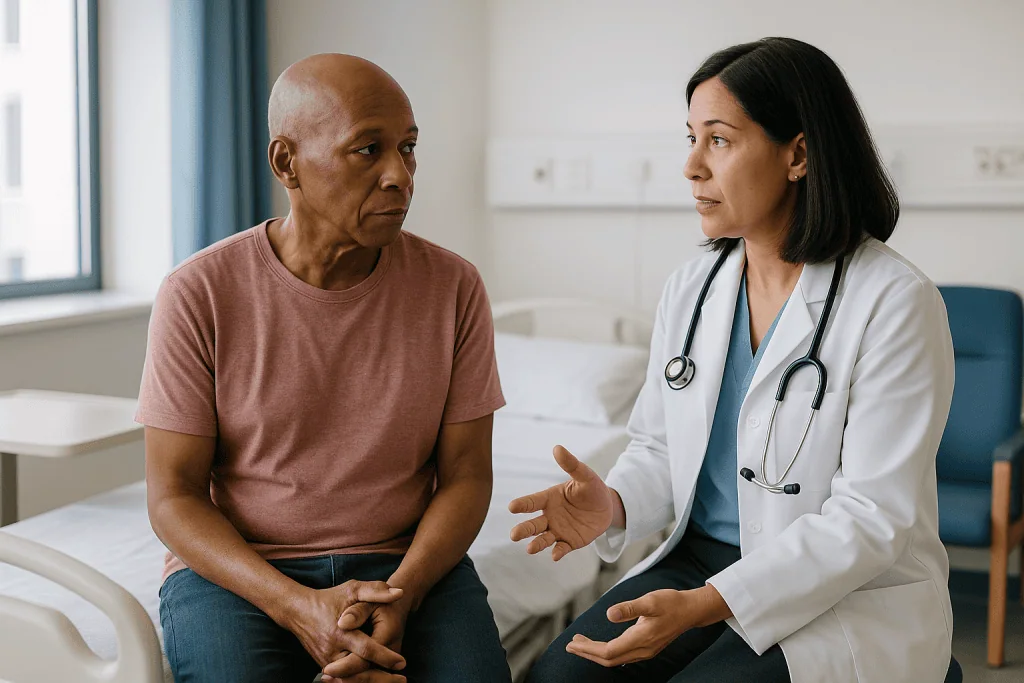
Being eligible on paper is different from being ready. Teams often ask a patient to wait, and the reasons deserve a full hearing. For many leukemias the transplant works best when the disease is in remission, meaning tests can no longer detect it, so more chemotherapy may come first. An active infection, even a quiet one such as a dental abscess, usually has to be cleared because conditioning removes the body’s ability to fight it. Heart, lung, kidney and liver function are checked because conditioning drugs are hard on all four. For a donor transplant there is a practical wait too: a matched donor has to be found, screened and scheduled.
Age is a factor but not a gate. Older adults and people with other health conditions may be offered reduced-intensity conditioning, a gentler preparation that relies more on the new immune system than on chemotherapy to control disease. Whether that trade-off suits a particular person is a judgment the transplant physician makes with the referring hematologist, and it belongs to them, not to a rule of thumb.
If you are told to wait, ask three things: what specifically needs to change, how it will be measured, and whether the window for transplant could narrow while you wait.
Autologous or allogeneic: which one is the team proposing?
Almost every other question depends on this one. An autologous transplant uses your own stem cells, collected and frozen before high-dose treatment, then returned afterwards to rescue your marrow. An allogeneic transplant uses cells from another person, which brings a new immune system along with new blood. The two share a name and a hospital ward and very little else.
| Feature | Autologous (own cells) | Allogeneic (donor cells) |
|---|---|---|
| Cell source | Collected from you before treatment | Sibling, unrelated volunteer, half-matched relative or cord blood |
| Common uses | Multiple myeloma, some lymphomas | Acute leukemias, aplastic anemia, inherited blood disorders |
| Graft-versus-host disease | Does not occur | Main risk; needs preventive immunosuppression |
| Anti-cancer effect of the graft | None; the chemotherapy does the work | Donor immune cells can attack residual disease |
| Rejection risk | Essentially none | Possible, lower with closer matching |
| Medicines after discharge | Fewer, shorter | Immunosuppressants and anti-infectives for months |
The table flattens an important point. In an autologous transplant the active treatment is the chemotherapy; the cells are a lifeline that lets doctors use doses the marrow could not otherwise survive. In an allogeneic transplant the donor’s immune cells are part of the treatment, because they can recognize and attack leftover cancer cells, an effect called graft-versus-tumor. That same recognition causes graft-versus-host disease when the new immune system turns on healthy tissue. Benefit and risk arrive in one bag.
Ask which type is proposed and why. If a donor transplant is planned, ask what the team expects the new immune system to do for you that chemotherapy alone could not.
Bone marrow match odds: what are the chances of finding a donor?
Matching depends on human leukocyte antigens, or HLA: protein markers on the surface of most cells that the immune system uses to tell self from stranger. A transplant works best when donor and recipient share as many of these markers as possible, because mismatches raise the risk of rejection and of graft-versus-host disease.
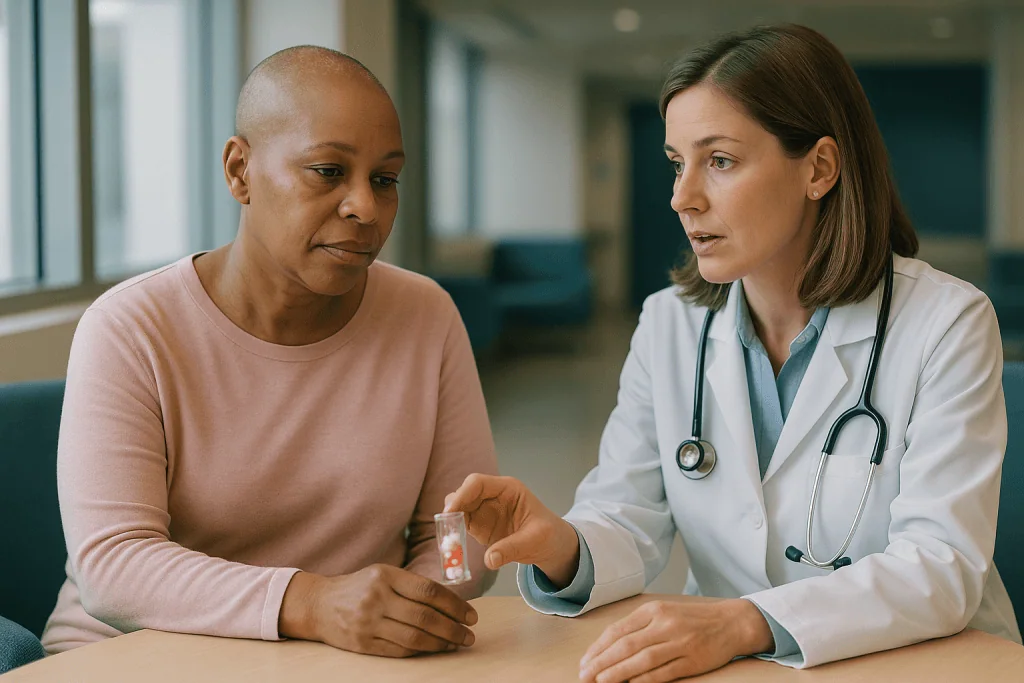
HLA is inherited in blocks, half from each parent, so the first place to look is siblings. Each full brother or sister has roughly a one-in-four chance of being a complete match, according to the NHS, which is why a family with several siblings has better odds than one with a single sibling. Parents and children share exactly half their HLA with you, which makes them unlikely full matches but potential half-matched donors.
When no sibling matches, coordinators search volunteer donor registries, which hold millions of typed donors internationally, and banked cord blood units. The chance of finding a well-matched unrelated donor varies with ancestry, because HLA types cluster within populations and registries have historically enrolled some groups far more than others. People of mixed or under-represented heritage may face a longer search; a good team will say what their own search shows rather than quoting an average.
Two developments have changed this conversation. Haploidentical transplants, which use a half-matched relative such as a parent, child or sibling, have become routine in many programs. Cord blood tolerates more mismatch than adult donor cells. Together they mean most people who need a donor transplant can now find a source, though not always an ideal one.
Ask: how many markers are being tested, how closely does the best available donor match, and what does a less-than-perfect match change about my plan and my medicines afterwards?
Is donating bone marrow painful? What donors should know
This is a question patients often ask on behalf of someone they love, and the honest answer is “uncomfortable, usually briefly, and rarely painful in the way people imagine.” Donating is a medical procedure with a real recovery, but it is not surgery on the spine and it does not leave a lasting hole in the bone.
There are two methods. The more common is peripheral blood stem cell collection. For a few days beforehand the donor receives a growth factor, a medicine that prompts the marrow to release stem cells into the blood. During this time many donors describe aching bones, headache and a flu-like heaviness that settles once the injections stop. On collection day the donor sits for several hours while blood is drawn from one arm, passed through a machine that separates out stem cells, and returned through the other arm, a process called apheresis. The NHS describes this as an outpatient procedure for most donors.
The second method is a marrow harvest. Under general or regional anesthesia, a doctor uses hollow needles to draw liquid marrow from the back of the pelvic bone through several small punctures. The donor feels nothing during the procedure. Afterwards the lower back and hips are typically sore and stiff for a few days, and some donors feel tired for longer as the body replaces the removed marrow, which it does completely. The NHS notes that most people recover within a few weeks.
Which method is used depends on what the recipient needs, not donor preference alone. Donors have their own assessment and consent process, kept separate from the recipient’s team so that nobody feels pressured, and they can withdraw at any point before the recipient’s conditioning begins.
Stem cell transplant disqualification: what the pre-transplant workup looks for
“Disqualified” is a word patients use; teams tend to say “not currently a candidate,” and the difference matters because many barriers are temporary. The pre-transplant workup is a systematic check that your body can carry the load of conditioning and the weeks of low blood counts that follow.
The heart is assessed with an echocardiogram, an ultrasound that measures how well the heart pumps, and usually an ECG. Lung function tests measure how much air you move and how efficiently oxygen crosses into the blood, since some conditioning drugs and infections target the lungs. Blood tests check kidney and liver function, because both organs clear chemotherapy. Screening looks for viruses that can reactivate when immunity is suppressed, including cytomegalovirus, hepatitis B and C, and HIV. A dental review hunts for hidden infection. Most centers also include a psychosocial assessment, which is not a test of character but a check that housing, transport and a caregiver are in place, since recovery at home depends on them.
What tends to pause or stop a transplant: active, uncontrolled cancer that is unlikely to respond to conditioning; organ function below the thresholds the team uses for the planned regimen; an untreated serious infection; and the absence of a suitable donor or caregiver. Age by itself is not a reason, as Mayo Clinic notes, though it influences which regimen is chosen. Frailty, measured by how a person functions day to day, carries more weight than a birthday.
If any result raises concern, ask whether it rules out every transplant approach or only the one first proposed, whether it can be treated or improved, and how much time you have to do so.
Questions to ask before bone marrow transplant about conditioning
Conditioning is the part of the plan patients most often agree to without fully understanding, which is odd, because it is the part that will make them feel ill. The regimen is a combination of chemotherapy drugs, sometimes with total body irradiation, given over several days before the infusion. Its jobs are to destroy remaining disease, empty space in the marrow and suppress the immune system so donor cells are accepted.
Regimens are described by intensity. Myeloablative conditioning wipes out the marrow completely and is typically used for younger, fitter patients and aggressive disease. Reduced-intensity and non-myeloablative regimens leave some marrow behind and rely on the donor immune system to finish the work; they are offered when organ function or age makes the full approach risky. Which intensity and which agents are chosen is a decision for the transplant physician, based on your disease and your test results.
Side effects follow from mechanism. Chemotherapy damages fast-dividing cells, so the lining of the mouth and gut suffers: mucositis, meaning painful mouth and throat ulcers, usually appears within days and can make swallowing hard enough to need intravenous nutrition for a time. Nausea, diarrhea, hair loss and deep fatigue are expected rather than exceptional. Radiation adds skin redness and longer-term risks to the eyes, thyroid and lungs.
Two topics must be raised before conditioning starts because they cannot be raised afterwards. One is fertility: chemotherapy and radiation commonly cause permanent infertility, and sperm banking or egg or embryo freezing has to happen beforehand, as Mayo Clinic advises. The other is the central line, which will be your lifeline for months and which you will be taught to care for.
Ask: which regimen, what intensity, which three side effects you most expect in me, and what has been arranged for fertility?
Worst days after bone marrow transplant: what the first weeks look like
Patients ask about the worst days because they want to know when to brace. The honest timeline, drawn from how MedlinePlus and the NHS describe the inpatient course, runs like this.
Day zero, the infusion, is often quiet. Some people notice a garlic or creamed-corn smell for a day, from the preservative used to freeze cells. The following week is when conditioning bites: blood counts fall to their lowest, mucositis peaks, appetite disappears and fevers are common because there are almost no white cells to fight ordinary bacteria. Many patients and nurses point to roughly the first two weeks after infusion as the hardest stretch, when pain control, antibiotics, transfusions of red cells and platelets and sometimes intravenous feeding are all running at once.
Engraftment, the first sign that the new marrow is working, usually shows in blood counts within 2–4 weeks, according to the NHS, with cells collected from the bloodstream tending to engraft faster than cord blood. Some people run a low fever and feel achy as counts climb. Mood often lifts here, though energy lags behind for months.
Discharge typically follows once counts are stable, fever has settled and you can eat and drink enough. For many people that means a hospital stay of several weeks; MedlinePlus describes stays commonly lasting about a month, longer if complications arise. After a donor transplant the first 100 days are a watch period for acute graft-versus-host disease and infection, and many programs treat day +100 as a milestone for reassessment rather than a finish line.
Ask what the team’s own typical stay is for your type of transplant, what would make yours longer, and how pain and nausea will be managed when swallowing is difficult.
Graft-versus-host disease: the risk worth understanding before you sign
Graft-versus-host disease, or GVHD, happens when immune cells from the donor recognize the recipient’s body as foreign and attack it. It is the defining risk of an allogeneic transplant and does not occur after an autologous one. Understanding it before the infusion makes the months afterwards far less frightening.
Doctors describe two forms. Acute GVHD usually appears in the first weeks to months and targets three organs: the skin, producing a rash that often starts on the palms, soles and ears; the gut, causing watery diarrhea, cramps and nausea; and the liver, which shows as jaundice and abnormal blood tests. Chronic GVHD tends to arrive later and can behave like an autoimmune disease, drying the eyes and mouth, tightening the skin, stiffening joints and scarring the lungs. The NHS notes that GVHD ranges from mild and manageable to severe, and that it is more likely when donor and recipient are less well matched.
Prevention starts before symptoms. Patients receive immunosuppressant medicines, drugs that calm the donor immune system, typically beginning around the time of infusion and tapered over months if no GVHD appears. Some programs also remove or modify certain donor T cells before infusion. The exact strategy is part of the protocol your team will walk you through.
Here is the paradox to hold onto: a little GVHD is linked to a stronger graft-versus-tumor effect, so teams do not aim for zero. They aim for controlled.
Ask what match grade you have and how it changes your risk, which preventive strategy is planned, how long immunosuppression is likely to last, and which first signs, from a new rash to a change in bowel habit, you should report the same day.
Infection, isolation and what daily life in the unit is really like
For a stretch of weeks you will have almost no neutrophils, the white cells that kill bacteria and fungi, a state called neutropenia. Infection, not the cancer, is the day-to-day worry on a transplant unit, and the rules of the ward make more sense once you see them as a wall built around that gap.
Rooms usually have filtered air to keep out airborne fungal spores. Visitors are limited in number and asked to stay away with any cough, cold or stomach upset; many units restrict young children, who carry viruses cheerfully and often. Fresh flowers and potted plants are typically banned because soil and standing water harbor mold and bacteria. Food is handled carefully: thoroughly cooked, no unpasteurized dairy, no raw sprouts or undercooked eggs, with the exact list varying by center.
Personal routines matter as much as building design. Mouth care several times a day with a soft brush or sponge and a prescribed rinse reduces the bacteria that can enter through mucositis ulcers. Showering daily and keeping the central line dressing clean and dry are taught early and checked often. Gentle movement, even laps of the room, protects lungs and muscles, and physiotherapists usually visit.
You will also take preventive antimicrobial medicines, meaning antibiotics, antifungals and antivirals started before any infection appears, because waiting for symptoms is too slow when there are no white cells. Any fever triggers blood cultures and intravenous antibiotics promptly, as MedlinePlus describes.
Ask the practical things: who can visit and when, whether your children can come, whether you can bring your own pillow or laptop, whether there is Wi-Fi, how far you can walk, and what food family may bring in. Small comforts carry people through long weeks.
Questions to ask before bone marrow transplant about going home
Discharge is not the end of treatment; it is the moment the hospital hands part of the monitoring to you and your household. Programs ask for a committed adult caregiver, usually available around the clock for the first several weeks, because the person recovering cannot reliably judge their own fever, fluid intake or confusion. Ask exactly what the caregiver will be expected to do and for how long, and whether the role can be shared between two or three people.
Distance comes next. Many centers require patients to stay within a short drive during the early outpatient phase, when clinic visits may happen several times a week for blood tests, transfusions and line care. Ask how often you will be seen, what the visits involve, and whether any can move closer to home as time passes.
Your immune system is new and untrained. Conditioning erases the protection from childhood vaccines, so recipients are revaccinated on a schedule that typically begins months after transplant, with live vaccines held until the immune system has recovered enough to handle them safely, in line with CDC guidance. Ask when your revaccination plan starts, who coordinates it, and whether household members should update their own vaccines.
Everyday questions deserve plain answers too: when can I drive, eat in a restaurant, garden, swim, return to work or school, be in a crowd, have sex, travel, or be around pets. The answers change with your blood counts and medicines, so ask for the sign that each restriction can lift, not just a date.
Finally, ask about the long game: which late effects the team monitors for years, such as thyroid, bone, heart and second-cancer risks, and how survivorship follow-up is organized once the transplant team steps back.
What people often get wrong about bone marrow transplants
Transplant collects myths because the name is misleading and the stories people hear are secondhand. A few corrections save real anxiety.
“It is a major operation.” The infusion is a drip through a line, done awake in a hospital bed. The hard part is the chemotherapy before it and the weeks of low counts after, not a surgical wound.
“The donor has to be a relative.” Siblings are checked first, but most donor transplants now use unrelated volunteers, half-matched relatives or cord blood. An only child is not out of options.
“Blood type has to match.” HLA markers are what count. Donor and recipient can have different ABO groups; in fact the recipient’s blood type usually changes to the donor’s after engraftment, a detail that surprises almost everyone.
“Donating removes part of the spine.” Marrow is taken from the back of the pelvis, not the spinal column, and the body replaces it within weeks.
“Once counts recover, I am back to normal.” Engraftment restores blood production, not energy, immunity or appetite. Fatigue commonly lasts many months, and the NHS notes that the immune system can take a year or more to mature. Planning for a long convalescence is realistic, not pessimistic.
“A transplant guarantees the disease will not return.” It cannot. Relapse remains possible after any transplant, which is why follow-up testing continues for years and why the team talks about control and monitoring rather than certainties.
“Asking lots of questions annoys the team.” Coordinators report the opposite. A patient who understands the plan notices problems earlier and follows instructions more easily, which is exactly what the team wants from the person in the bed.
Questions to ask your care team: the list to bring
Consultations run long and memory runs short, so bring the list on paper, bring a second person to listen, and ask whether you may record the conversation. Group the questions by stage so the team can answer in order, and leave space to write down who gave each answer.
Before the decision:
- Why is a transplant recommended for me now, and what happens if I choose not to have one or to wait?
- Which type is planned, autologous or allogeneic, and what would change your mind?
- What are the alternatives, including newer non-transplant treatments, and how do they compare for my disease?
- Is there a clinical trial I could be considered for?
About the donor and the preparation:
- How closely matched is my donor, and what does that mean for rejection and GVHD?
- Which conditioning regimen and intensity are you proposing, and why that one for me?
- What should I do about fertility preservation, dental work and vaccinations before we start?
About the hospital stay:
- How long do patients like me typically stay, and what tends to prolong it?
- How will pain, nausea and nutrition be managed when I cannot eat?
- Who can visit, and how do I reach a doctor overnight?
About going home and beyond:
- What will my caregiver need to do, and for how many weeks?
- How often will I come to clinic, and how far away may I live?
- Which symptoms must I report immediately, and to which number?
- Which late effects will you monitor, and for how long?
None of these questions has a universal answer. The point is to hear your team’s answer, in their words, for your situation. If anything is unclear, say so; a plan you can repeat back is a plan you can follow.
When to call your doctor
After a transplant the usual rule of “wait and see” is suspended, because a body without white cells cannot wait. Your team will give you a 24-hour number and a fever threshold; MedlinePlus and most programs use a temperature of 100.4°F (38°C) or higher as the trigger to call immediately, even in the middle of the night, and even if you feel reasonably well. Do not take medicines to bring a fever down before calling unless your team has told you to, because they can hide the only warning sign you have.
Call the same day, or go to an emergency department if you cannot reach the team, for any of the following:
- Fever at or above the threshold you were given, or shaking chills with or without a fever
- Redness, swelling, pain or discharge at the central line site, or a line that will not flush
- A new rash, especially on the palms, soles or ears, or skin that is yellowing
- Watery diarrhea several times a day, vomiting that stops you keeping fluids down, or severe abdominal cramps
- Bleeding that does not stop, blood in urine or stool, or a spreading pattern of tiny red or purple dots on the skin
- Shortness of breath, a new cough, or chest pain
- Confusion, severe headache, a stiff neck, or sudden weakness or numbness
- Painful or burning urination, or passing very little urine
- Sores in the mouth that stop you drinking, or pain that your prescribed medicines no longer control
These signs do not mean something has gone wrong; they mean something needs checking quickly, which is a different thing. The transplant team would far rather hear from you about a fever that turns out to be nothing than learn about it a day later. Whatever you read here, their instructions for your situation take precedence, and every decision about treatment rests with them.
Frequently asked questions
What are the bone marrow match odds with a sibling or a stranger?
Each full sibling has roughly a one-in-four chance of being a complete HLA match, according to the NHS, because HLA markers are inherited in blocks from each parent. If no sibling matches, coordinators search international volunteer registries and cord blood banks, where the odds depend heavily on ancestry. Half-matched relatives such as parents or children are now a routine option, which means most people can find a usable donor.
Is donating bone marrow painful?
Donating is uncomfortable rather than severely painful for most people. Peripheral blood collection follows a few days of growth factor injections that commonly cause bone aches and flu-like tiredness, then several hours attached to an apheresis machine. A marrow harvest is done under anesthesia, so nothing is felt during it; the lower back is typically sore for a few days afterwards. The NHS notes most donors recover within a few weeks.
What disqualifies you from a stem cell transplant?
The most common reasons a team declines or delays a transplant are active disease that is unlikely to respond to conditioning, heart, lung, kidney or liver function below the thresholds for the planned regimen, an untreated serious infection, and the lack of a suitable donor or a committed caregiver. Age alone is not a disqualifier, as Mayo Clinic notes; frailty and organ function matter more. Many barriers are temporary and can be revisited.
What are the worst days after a bone marrow transplant?
Most patients describe the first two weeks after infusion as the hardest, when blood counts reach their lowest, mouth and throat ulcers peak, appetite disappears and fevers are common. Engraftment, when new cells begin to appear in the blood, usually follows within 2–4 weeks according to the NHS, and symptoms ease from there. Fatigue, however, often lasts months after the counts themselves have recovered.
How long will I be in the hospital for a bone marrow transplant?
MedlinePlus describes a hospital stay that commonly lasts about a month, covering conditioning, the infusion and the wait for engraftment, with longer stays when infection or graft-versus-host disease complicates recovery. Some programs run parts of an autologous transplant as an outpatient with daily clinic visits. Ask your team what their typical stay is for your type of transplant and what tends to extend it.
Can I have children after a bone marrow transplant?
High-dose chemotherapy and total body irradiation commonly cause permanent infertility in both men and women, which is why Mayo Clinic advises discussing fertility preservation before conditioning starts. Sperm banking, egg freezing or embryo freezing must happen beforehand, since the damage cannot be undone afterwards. Some people treated with reduced-intensity regimens retain fertility, but nobody should count on it; ask the team for a referral early.
Why do I need a full-time caregiver after transplant?
In the first weeks at home your blood counts are fragile and your immune system is new, so a fever, dehydration or confusion can escalate within hours. A caregiver watches for those changes, manages medicines, drives you to frequent clinic visits and handles line care, all of which are hard to do for yourself while exhausted. Programs usually ask for around-the-clock cover initially, and the role can often be shared.
Do I need my childhood vaccines again after a bone marrow transplant?
Yes. Conditioning wipes out the immune memory built by earlier vaccines, so recipients are revaccinated on a schedule that typically starts months after transplant, with live vaccines held until the immune system has recovered enough to handle them safely, following CDC guidance. Your transplant team or primary care clinician coordinates the plan, and household contacts are often advised to keep their own vaccines current.
What is the difference between a bone marrow transplant and a stem cell transplant?
They describe the same treatment, replacing blood-forming stem cells, and differ only in where the cells are collected. A bone marrow transplant draws cells directly from the pelvic bone; a peripheral blood stem cell transplant collects them from the bloodstream after a growth factor; a cord blood transplant uses cells banked at birth. Because the bloodstream is now the most common source, many teams use the terms interchangeably.
Should I get a second opinion before a bone marrow transplant?
A second opinion is reasonable and common for a decision this large, and transplant teams generally expect it. It can confirm that a transplant is the right next step, explore non-transplant alternatives or clinical trials, and clarify timing. Ask your current team how long a second opinion can safely take without closing the window for treatment, and request copies of your records so the review is efficient.
References
This article is for general information only and is not a substitute for professional medical advice. Please consult a qualified doctor about your individual situation.

More from the Blog
Chemotherapy Before or After Breast Cancer Surgery? How Oncologists Choose the Order
Chemotherapy can be given before breast cancer surgery (neoadjuvant) or after it (adjuvant), and pooled data from randomized trials show the order does not…

Surgical Oncology Preparation: Staging Scans, Blood Tests and the Anesthesia Assessment
Preparing for cancer surgery usually means three things happening in parallel: staging scans such as CT, MRI or PET-CT to map where the cancer…
What Neck Cancer Follow-Up Looks Like: Physical Exams, Imaging and Side-Effect Reviews
Follow-up after neck cancer treatment usually combines a hands-on physical exam of the neck, mouth and throat at each visit, a camera check of…
Follow-Up After Cervical Cancer Treatment: Pelvic Exams, Imaging and Recurrence Checks
Cervical cancer follow up after treatment usually combines a review of symptoms, a pelvic exam and, depending on the treatment given, cytology or HPV…

What a Chemotherapy Cycle Looks Like: Treatment Days, Low-Count Days and Recovery
A chemotherapy cycle is one treatment session (or a short run of sessions) followed by a planned rest period, commonly repeating every one to…

Living With Multiple Myeloma: Bone Protection, Kidney Care and Staying Active Safely
People living with multiple myeloma can protect their bones and kidneys through a combination of bone-strengthening medicines chosen by their hematology team, regular dental…