

Radiation for Cervical Cancer: Expected Side Effects and the Signs That Need a Call
Key Takeaways
- External beam radiation for cervical cancer is typically given on weekdays for around five weeks, followed by a few brachytherapy sessions, so the full course usually spans six to eight weeks.
- Most acute side effects, including diarrhea, bladder irritation and skin soreness, build from the second or third week, peak near the end, and ease within a few weeks of finishing.
- Neither external beam radiation nor temporary brachytherapy leaves any radiation in your body, so hugging, sharing a bed and holding children are safe immediately after a session.
- Vaginal dilators are recommended after pelvic radiation regardless of sexual activity because scarring can narrow the vagina and make follow-up examinations difficult.
- A full course of pelvic radiation usually stops the ovaries working permanently, so fertility preservation and menopause planning need to be discussed before the first session.
- A temperature of 38°C (100.4°F) or higher during treatment is the most urgent red flag and warrants a same-day call, particularly when weekly chemotherapy is lowering blood counts.
Radiation for cervical cancer commonly causes tiredness, loose stools or diarrhea, bladder irritation, skin soreness in the groin and buttocks, and vaginal discharge or dryness. Most of these build over the course, peak near the end, and ease within a few weeks of finishing. Fever, heavy bleeding, inability to pass urine, severe pain, or unrelenting vomiting or diarrhea need a same-day call to the treating team.
The planning appointment is where it usually becomes real. You lie on a hard table while a CT scanner hums, someone draws on your hips with a marker, and then three tiny permanent dots are inked into your skin so the beam can find the same spot every day for weeks. Nobody has done anything yet, and already you are wondering how your body is going to feel by week three.
That question deserves a straight answer, and it rarely gets one. Cervical cancer radiation side effects are predictable in broad strokes: the pelvis holds the bowel, the bladder, the vagina, the ovaries and a lot of skin folds, and each of them reacts to radiation in its own way and on its own schedule. Some effects arrive in the second week and leave a month after treatment ends. A few can turn up years later.
This guide walks through what typically happens, what usually helps, what the evidence does and does not show, and the specific signs that mean you should stop reading and pick up the phone.
What actually happens during radiation therapy for cervical cancer
Radiation therapy uses high-energy X-ray beams to damage the DNA inside cancer cells so they stop dividing and die. Healthy cells in the path of the beam are damaged too, but they repair themselves more efficiently, which is why treatment is split into many small daily sessions rather than one large one.
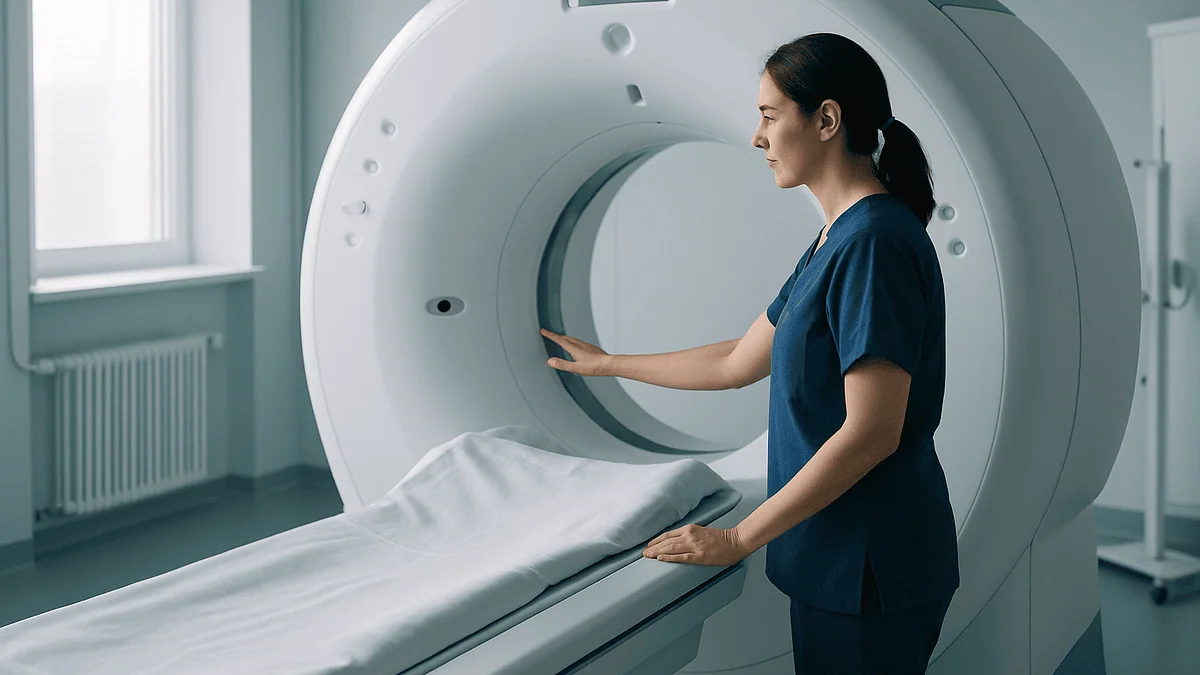
For cervical cancer, treatment usually has two parts. External beam radiation comes from a machine called a linear accelerator that rotates around you while you lie still on a table. Each session lasts around ten to twenty minutes, most of which is positioning; the beam itself is on for only a few minutes and you feel nothing while it runs. You will often be asked to arrive with a comfortably full bladder, which pushes the small bowel up and out of the treatment field.
The second part is brachytherapy, meaning radiation delivered from inside the body. An applicator is placed in the vagina and often through the cervix into the uterus, a radioactive source travels into it for a set number of minutes, and then everything is removed. Because the source sits right against the tumor, the dose falls off sharply within a couple of centimeters, sparing the bladder and rectum.
Many people also receive a low weekly dose of a platinum-based chemotherapy during external beam treatment. Its job here is not to treat the cancer on its own but to make cancer cells more sensitive to radiation. Guidelines from the NHS and the National Cancer Institute describe this combination, called chemoradiation, as the standard approach for cervical cancer that has grown beyond the cervix. The chemotherapy adds its own side effects, mainly nausea and lowered blood counts, which is one reason your team checks bloodwork each week.
Who is radiation usually for, and who is usually asked to wait?
Radiation is the main treatment for what oncologists call locally advanced cervical cancer: disease that has grown into the tissues beside the cervix, the upper vagina, or the pelvic lymph nodes but has not spread to distant organs. For these stages, chemoradiation followed by brachytherapy is typically offered instead of surgery, because removing the tumor completely with an operation is unlikely and the radiation field can cover the nodes as well.

Radiation is also used after a hysterectomy when the pathology report shows features that raise the risk of the cancer returning, such as cancer cells at the edge of the removed tissue or in lymph nodes. For very early tumors confined to the cervix, surgery alone is more common, and for cancer that has spread to distant sites, shorter courses of radiation may be used to control bleeding or pain rather than to treat the whole disease.
Some people are asked to wait, usually for a short and specific reason. Pregnancy changes everything about timing and is discussed case by case. An active pelvic infection is treated first. Low hemoglobin is often corrected before or during treatment, because oxygen-poor tissue responds less well to radiation and studies summarized by the National Cancer Institute link anemia with poorer outcomes. Staging scans sometimes need to be completed so the team knows exactly where to aim.
A few situations call for extra caution rather than a delay: previous radiation to the pelvis, active inflammatory bowel disease, or certain connective tissue conditions can raise the risk of bowel and skin complications. None of these automatically rules radiation out. They change the conversation, and that conversation belongs with your radiation oncologist, who weighs your scans, your general health and your priorities before recommending a plan.
How many rounds of radiation is normal for cervical cancer?
Each daily session is called a fraction, and a full course for cervical cancer is built from many of them. External beam radiation is typically given once a day, Monday to Friday, for around five weeks, according to the NHS description of cervical cancer treatment. Weekends off are not a scheduling convenience; they give normal tissue time to repair.
Brachytherapy adds a small number of further sessions, often three to five, spaced out over the final weeks or shortly after external beam finishes. Put together, the whole course commonly stretches across roughly six to eight weeks from first session to last, though your own schedule may differ depending on the stage of the cancer, whether you had surgery first, and how your body is coping.
People are often surprised that the number of sessions is decided at the start and does not go up or down depending on how the tumor looks midway through. The total dose is planned to a level that the surrounding bowel and bladder can tolerate, and it is divided into fractions to reach that number. The team does track how you are responding, particularly with a scan before brachytherapy to shape the internal treatment, but the plan is a prescription, not a moving target.
Missing a day happens, whether through illness, a machine fault or a holiday. The team will usually add the session to the end rather than skip it, and they try to avoid long gaps because the overall treatment time matters. If you know in advance that a date is a problem, tell the scheduling staff early; small adjustments are far easier than large ones.
Shorter courses of five to ten sessions are used when the goal is to relieve bleeding or pain rather than treat the cancer fully. If your course is short, ask what the aim is, so the number makes sense to you.
Cervical cancer radiation side effects week by week: what the course usually feels like
The first week is often quieter than people fear. Radiation damage accumulates, so most side effects wait until the second or third week to announce themselves, and the NHS notes that many effects start gradually and build as treatment continues.
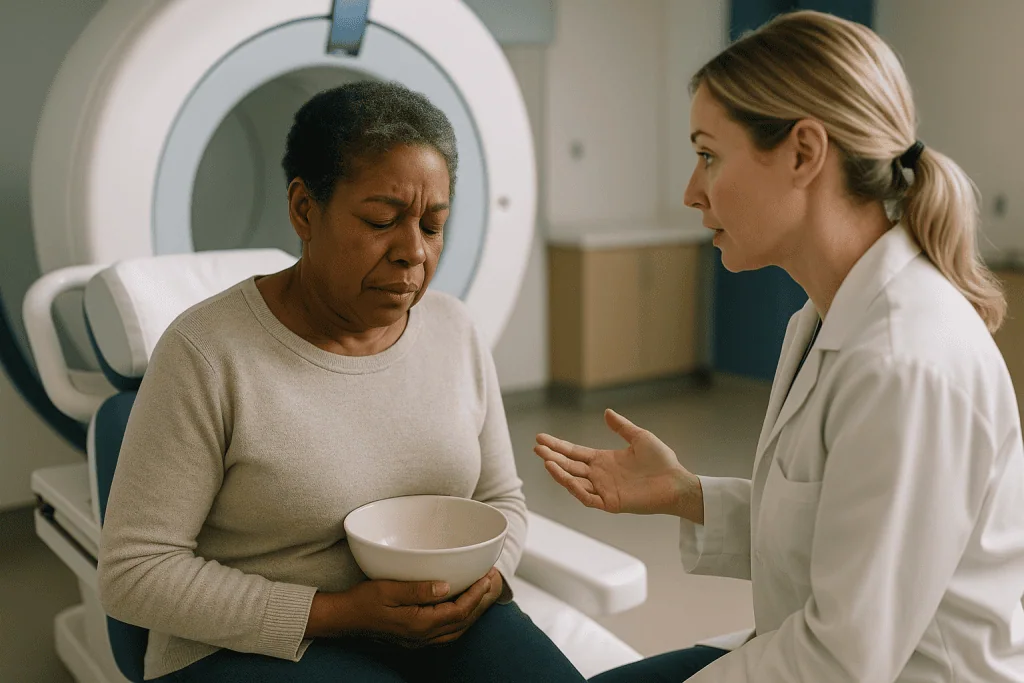
By week two, tiredness typically arrives, less like sleepiness and more like a low battery that does not fully recharge overnight. Stools may loosen and bowel movements become more frequent. Some people notice the first stinging when they urinate or find themselves getting up at night.
Weeks three to five are usually the hardest stretch. Diarrhea can become a daily fact, the bladder may feel irritable and urgent, and the skin between the buttocks and in the groin folds can redden and become sore. If you are also having weekly chemotherapy, nausea often clusters in the day or two after each infusion and then fades until the next one. Appetite dips, and the combination of fatigue, bowel symptoms and daily travel can make the weeks feel long.
Brachytherapy sessions add cramping, spotting and a watery or brownish vaginal discharge for a few days after each one.
The turn usually comes one to two weeks after the final session, when the bowel and bladder lining begins to recover. MedlinePlus patient guidance on pelvic radiation says symptoms typically keep improving for several weeks after treatment stops, and the NHS gives a similar picture: most acute effects settle within a few weeks of finishing. Fatigue tends to be the slowest to lift and can linger for two to three months.
Every timeline here is a typical range drawn from patient information, not a promise. Some people sail through with mild symptoms. Others need medication and diet changes from week two. Both are within the normal spread, and neither tells you anything about how well the treatment is working.
Expected side effects at a glance
The table below summarizes the most common effects of pelvic radiation for cervical cancer, drawn from NHS, MedlinePlus and National Cancer Institute patient information. Timings are typical ranges, not fixed schedules.
| Side effect | Usually starts | Usually eases | What commonly helps |
|---|---|---|---|
| Fatigue | Week 2–3 | 2–3 months after finishing | Short daily walks, planned rest, protecting sleep |
| Diarrhea, loose stools, cramping | Week 2–3 | 2–4 weeks after finishing | Low-fiber eating, fluids, anti-diarrheal medicines if the team advises |
| Bladder irritation, urgency, stinging | Week 2–4 | 2–4 weeks after finishing | Fluids, limiting caffeine and alcohol, urine test to rule out infection |
| Skin redness and soreness (groin, buttocks) | Week 3–4 | 2–4 weeks after finishing | Gentle washing, unscented moisturizer, loose cotton clothing |
| Nausea (mainly with weekly chemotherapy) | Day 1–3 after each infusion | Within a few days of each dose | Small frequent meals, prescribed anti-sickness medicines |
| Vaginal discharge, spotting, dryness | Week 3 onward; after brachytherapy | Discharge settles in weeks; dryness may persist | Pads, water-based lubricants, dilator program from the team |
| Lowered blood counts | Cumulative with chemotherapy | Weeks after the last dose | Weekly bloodwork, infection precautions |
| Menopause symptoms | Weeks to months, if ovaries are in the field | Often permanent | Discussion of hormone or non-hormone options with the team |
Two patterns are worth pulling out of the grid. First, almost everything in the acute column follows the same arc: nothing much, then a slow climb, then a peak around the last week, then recovery. Second, the bottom rows are different in kind. Vaginal dryness and menopause are not irritations that heal; they are changes the team will help you manage over the long term, and they deserve their own sections below.
Bowel and bladder: the pelvic effects people ask about most
The rectum and bladder sit within a centimeter or two of the cervix, so they receive a meaningful share of the dose no matter how carefully the beams are shaped. Their linings are made of fast-dividing cells, the same property that makes cancer cells vulnerable, which is why they react.
Radiation proctitis is inflammation of the rectal lining. It shows up as urgency, cramping, more frequent and looser stools, mucus, and sometimes a small amount of blood or a feeling of not quite emptying. Small bowel that dips into the pelvis contributes the watery diarrhea. MedlinePlus pelvic radiation guidance suggests a low-fiber approach during treatment: white bread and rice rather than whole grain, cooked rather than raw vegetables, skipping nuts, seeds, beans and skins, and going easy on dairy if it worsens symptoms. Small meals sit better than large ones, and clear fluids replace what diarrhea takes away.
Anti-diarrheal medicines slow the gut and are commonly used during treatment, but only on your team’s advice, because they can mask infection and are not right for everyone. Tell the nurses if you are having more than a handful of loose stools a day or if bleeding increases; adjustments are routine, and nobody expects you to tough it out.
Radiation cystitis is the bladder equivalent: burning when you pass urine, going more often, urgency, and getting up at night. It feels exactly like a urinary tract infection, which is a problem, because infections are also more likely during treatment. A quick urine test tells the two apart, so report the symptom rather than assuming. Drinking steadily through the day dilutes the urine and eases stinging; caffeine, alcohol and very acidic drinks tend to make it worse. Cranberry products are popular, but the evidence that they help radiation cystitis is thin, and they are no substitute for a test.
Skin, fatigue and nausea: the effects that wear you down
Skin reactions in pelvic radiation concentrate where skin meets skin: the groin creases, between the buttocks, and along the underwear line. Warmth, moisture and friction all add to the radiation effect, so those folds redden first and can become sore, itchy or, late in the course, weepy.
MedlinePlus skin care guidance for radiation is refreshingly simple. Wash gently with lukewarm water and a mild unscented soap, pat rather than rub, and leave the ink marks alone. Loose cotton underwear beats anything tight or synthetic. Avoid heating pads, ice packs, scented products and adhesive tape in the treated area, and ask your team before using any cream, because some should not be applied within a few hours of a session. Most reactions settle within two to four weeks of finishing, sometimes with the skin turning slightly darker for a while.
Fatigue is the side effect people underestimate most, partly because it looks like ordinary tiredness and partly because it has no visible cause. Radiation fatigue is cumulative: your body is repairing millions of cells every night, weekly chemotherapy lowers red cells, diarrhea drains fluid and salts, and the daily trip to the treatment center eats time and energy. The National Cancer Institute and Mayo Clinic both note that moderate physical activity, even ten to twenty minutes of walking, is one of the few measures with consistent evidence for easing treatment-related fatigue. Bed rest tends to make it worse. Protect sleep, accept help with chores, and expect the fog to lift gradually over the two to three months after treatment rather than the day it ends.
Nausea comes mostly from the chemotherapy rather than the radiation itself, and it usually clusters in the day or two after each weekly infusion. Anti-sickness medicines work best taken before the nausea takes hold, on the schedule your team sets, rather than chased once you already feel ill.
Brachytherapy for cervical cancer side effects: what the internal sessions add
Brachytherapy is the part of treatment people know least about going in, and its side effects are distinct enough to describe on their own.
Each session begins with placement of the applicator, which may involve a speculum examination, a thin rod through the cervix into the uterus, and small holders that sit in the upper vagina. Depending on the technique, this is done under sedation, a spinal anesthetic or general anesthesia, and a urinary catheter is often placed so the bladder stays empty and out of the way. A CT or MRI scan then checks the position, the plan is calculated, and the radioactive source travels into the applicator for a number of minutes before being withdrawn. Cleveland Clinic describes this temporary, high-dose-rate form as the usual approach for gynecologic cancers; the source never stays in your body.
Afterward, cramping similar to a strong period is common for a day or two, along with light bleeding or spotting and a watery, sometimes brownish discharge. The catheter can leave a burning sensation when you pass urine for a day. Some people feel bruised or achy in the pelvis and vagina, and the anesthetic itself can cause grogginess or nausea. Over-the-counter pain relief is often enough, but the type and timing should come from your team, particularly if your platelets are low from chemotherapy.
Brachytherapy also drives most of the longer-term vaginal changes discussed in the next section, because the highest dose lands on the vaginal walls closest to the applicator.
You will be told not to drive yourself home after sedation. Bring someone, plan a slow evening, and expect the session to take most of a day even though the radiation itself lasts only minutes. Heavy bleeding that soaks a pad in an hour, fever, or severe pain that does not respond to the medicine you were given are reasons to call the same day.
Vaginal changes, dilators and intimacy after pelvic radiation
Radiation to the vagina causes inflammation first and scarring later. During and just after treatment the tissue is sore, swollen and prone to a thin discharge. Over the following months, healing can leave the walls thinner, drier, less elastic and, without intervention, shorter and narrower. Clinicians call this vaginal stenosis, meaning a narrowing of the vaginal canal caused by scar tissue.
Stenosis matters for two reasons. It can make penetrative sex painful or impossible, and it can make the follow-up pelvic examinations that check for recurrence difficult and uncomfortable. That second point is why teams recommend vaginal dilators even to people who are not sexually active. A dilator is a smooth tube, usually of graded sizes, inserted for several minutes a few times a week to keep the tissue stretched while it heals. The NHS advises starting once the acute soreness settles, typically a few weeks after treatment, and continuing for months or longer; your team will give the specific program. Water-based lubricant makes the process far more comfortable, and a longer-acting vaginal moisturizer used a few times a week helps with everyday dryness.
Sex during treatment is not forbidden, but tissue is fragile and bleeding after intercourse is common, so many people pause and ask the team when to resume, often a few weeks after finishing. When you do, go slowly, use plenty of lubricant, and know that some spotting can happen. Intercourse, when comfortable, works as a form of dilation in its own right.
None of this is only mechanical. Changes to desire, body image and how you feel about your pelvis are real and common, and pelvic floor physiotherapists, psychosexual counselors and specialist nurses exist precisely for this. Asking is not making a fuss; it is part of recovery.
Fertility, early menopause and what radiation does to the ovaries
The ovaries usually sit within the pelvic radiation field, and they are far more sensitive to radiation than the uterus or bowel. A full treatment course typically stops them working permanently, which means two things: pregnancy is no longer possible with your own eggs afterward, and menopause begins regardless of your age.
This is one of the hardest parts of the conversation for younger patients, and it should happen before the first session. If future pregnancy matters to you, ask about a fertility referral as early as possible. Egg or embryo freezing before treatment is an established route for some people, and ovarian transposition, an operation to move the ovaries higher in the abdomen out of the beam path, is sometimes offered. Neither is right for everyone, and the timing of cancer treatment often limits what is feasible. The uterus itself is also affected by radiation, which is why carrying a pregnancy after full pelvic treatment is not generally possible even with donor eggs.
Menopause symptoms, including hot flashes, night sweats, disturbed sleep, mood changes and vaginal dryness, can begin within weeks of treatment or emerge over the following months. Menopause before around the age of 45 also brings long-term considerations for bone density and heart health, which is why the NHS and Mayo Clinic both note that hormone replacement therapy is commonly discussed after treatment for cervical cancer. Whether it is appropriate depends on the type of cancer, your other medical history and your preferences; some cervical cancer types are not hormone-driven, which changes the calculation. Non-hormonal medicines and lifestyle measures are alternatives. This is a decision for you and your treating team, ideally revisited at follow-up rather than settled once and never raised again.
Pelvic radiation long term effects: what can show up months or years later
Late effects are changes that appear or persist six months or more after treatment. They arise not from acute inflammation but from slower processes: scarring, thickening of small blood vessels, and gradual loss of elasticity in tissues that were in the field. Most people do not develop serious late effects, but knowing what they look like means you report them early rather than assuming they are simply how life is now.
Bowel changes are the most common. Some people have a permanently faster, less predictable bowel, more urgency, or difficulty telling gas from stool. Occasional rectal bleeding from fragile surface vessels can occur years later; it should always be checked rather than attributed to radiation without an examination. Bladder changes include reduced capacity, urgency and occasional blood in the urine.
Lymphedema is swelling of one or both legs caused by damaged lymph drainage, more likely when pelvic lymph nodes were both removed surgically and irradiated. Early treatment with compression and specialist physiotherapy works far better than late treatment, so new leg swelling deserves prompt attention.
Pelvic insufficiency fractures are small cracks in weakened pelvic bones, felt as new, persistent hip or low-back pain. They are often mistaken for arthritis or recurrence and are diagnosed on imaging.
A fistula is an abnormal channel between two organs, for example between the rectum and vagina, allowing stool or urine to pass through the vagina. It is uncommon but serious and always needs assessment.
The National Cancer Institute also lists a small increased risk of a second cancer in irradiated tissue decades later, one reason follow-up does not stop when treatment does.
The practical message is simple: any new pelvic, bowel, bladder or bone symptom after cervical cancer treatment is worth a call, even years down the line. Many late effects are manageable, and all are easier to manage early.
What to do after a radiation session, and can you hug someone afterward?
Start with the question people are often embarrassed to ask. External beam radiation does not make you radioactive. The beam passes through you and stops the moment the machine switches off, in exactly the way a chest X-ray does. You can hug your partner, hold a baby, sit next to a pregnant friend, share a bed and pet the dog the same afternoon. Temporary brachytherapy is the same: once the source is withdrawn and the applicator removed, nothing radioactive remains. The only situations with precautions involve permanent radioactive implants, which are not used for cervical cancer. MedlinePlus radiation therapy information makes this point plainly, and it is worth repeating to anxious relatives.
The rest of the afternoon is about giving your body room to repair. Drink steadily; fluids matter more than usual once diarrhea begins. Eat something small even if appetite is poor, favoring the low-fiber choices your team suggested. Leave the treated skin alone apart from gentle washing and any cream you have been cleared to use. A short walk in fresh air tends to help fatigue more than lying down, but a rest afterward is fair.
Keep a simple daily log: number of bowel movements, any bleeding, how your skin looks, energy on a scale of one to ten, and anything new. Weekly review appointments move faster and go better when you can say “five loose stools on Tuesday, three on Wednesday” rather than “a bit worse.”
If you are the friend rather than the patient, and wondering what to say, the honest answer is that specific offers beat general ones. “I can drive you on Thursdays” or “I’m dropping soup on the doorstep at six” lands better than “let me know if you need anything.” Ask how today went, not how they are coping overall. Sit with silence. Skip stories about other people’s cancers.
What people often get wrong about cervical cancer radiation side effects
Misconceptions about radiation are stubborn, and several of them make treatment harder than it needs to be.
“Radiation burns you from the inside.” The imagery is dramatic and wrong. Modern beams are shaped to the target, and the skin reaction is closer to a sunburn in skin folds than a burn. The inside effects are inflammation of linings, which is uncomfortable but heals.
“Bad side effects mean the treatment is working.” There is no evidence for this. Side effects reflect how your bowel, bladder and skin respond, not how the tumor is responding. Someone with mild symptoms is not being undertreated, and someone with severe diarrhea is not being treated more effectively.
“Diarrhea means the cancer is spreading.” Bowel symptoms during pelvic radiation are an expected reaction of the irradiated bowel. They are not a sign of progression.
“You should rest as much as possible.” Gentle activity is one of the few measures with consistent evidence for easing treatment fatigue, as the National Cancer Institute notes. Bed rest tends to deepen it.
“Once treatment is finished, the side effects are finished.” Acute effects settle over weeks, but fatigue can last months, vaginal changes need active management, and late effects can appear years later.
“Dilators are only for people who want to have sex.” They also keep follow-up examinations possible and comfortable, which is why teams recommend them regardless of sexual activity.
“You can’t be around children or pregnant people.” External beam and temporary brachytherapy leave no radiation in your body. The precaution applies only to permanent implants, which are not used for this cancer.
“Every symptom is just radiation, so there’s no point calling.” Bladder symptoms might be infection, bleeding might need a check, and a fever is never “just radiation.” Reporting is how side effects get managed.
Questions to ask your care team before and during treatment
A good consultation is a conversation, and you steer it better with questions written down. MedlinePlus publishes a general list for radiation therapy; the ones below are tailored to cervical cancer.
Before the first session, it is fair to ask what the aim of treatment is, how many external beam sessions and how many brachytherapy sessions are planned, and how long the whole course is expected to run. Ask whether you will have weekly chemotherapy alongside, and what that adds. Ask whether your ovaries are in the field and, if you are premenopausal, what that means for fertility and menopause, and whether a fertility referral is possible before you start. Ask how brachytherapy will be done at this center, including what kind of anesthesia is used and whether you will stay overnight.
Practical questions matter as much as medical ones. What should you eat during treatment? Are there creams you should or should not use on the skin? Who do you call at night or on a weekend, and at what point? Can you keep working, driving and exercising? Is there a specialist nurse or a helpline number for the weeks in between appointments?
During treatment, bring your symptom log and ask directly: is this level of diarrhea or bladder irritation what you expected at this point? Should any of my medicines be adjusted? Are my blood counts holding up?
Toward the end, ask when to start dilators and who will teach you, when it is reasonable to resume sex, what follow-up looks like and how often, which late effects to watch for, and whether hormone therapy or bone health checks should be part of the plan. Ask who to contact if a new symptom appears a year from now. Write the answers down, or bring someone who will.
When to call your doctor: red-flag signs during and after cervical cancer radiation
Most cervical cancer radiation side effects are expected, uncomfortable and manageable at routine weekly reviews. A shorter list of signs should not wait for the next appointment. Your treatment center will have given you a number to call at any hour; use it.
Call the same day, including nights and weekends, for a temperature of 38°C (100.4°F) or higher, or chills and shaking even without a measured fever. If you are receiving chemotherapy, your white cell count may be low and infection can escalate quickly; this is the single most important red flag.
Call for vaginal bleeding that soaks a pad in an hour or continues heavily for more than a few hours, for blood clots or a large amount of blood in the stool or urine, or for black, tarry stools.
Call if you cannot pass urine for eight hours or more, if urination becomes agonizing, or if you develop pain in one side of the back with fever, which can signal a kidney infection.
Call for diarrhea that does not settle with the measures your team advised, especially with dizziness, a racing heart, very dark urine or passing very little urine, all signs of dehydration. Call for vomiting that prevents you keeping fluids down for more than a day.
Call for severe or rapidly worsening abdominal or pelvic pain, a swollen, painful or red calf, sudden breathlessness or chest pain, since clot risk is raised during cancer treatment. Call for skin in the treated area that is broken, weeping or smells unpleasant, or for stool or urine leaking from the vagina.
After treatment, new leg swelling, new hip or back pain, or any bleeding from the bowel or bladder deserves a prompt appointment, even years later.
None of these mean something is necessarily wrong. They mean a clinician needs to look. Your treating team makes the assessment and the decisions; your job is only to make the call.
Frequently asked questions
What should I do after a radiation session?
Drink fluids steadily, eat something small and low in fiber, and treat the skin in the treated area gently with lukewarm water and only creams your team has approved. A short walk usually helps fatigue more than lying down, followed by rest if you need it. Note any symptoms in a daily log so your weekly review is precise. You are not radioactive after external beam treatment, so normal contact with family is fine.
How many rounds of radiation is normal for cervical cancer?
A typical course is around five weeks of external beam radiation, given once a day on weekdays, plus a small number of brachytherapy sessions, often three to five, according to NHS patient information. The total is planned in advance and does not change based on how the tumor looks midway. Shorter courses of five to ten sessions are used when the goal is relieving bleeding or pain rather than treating the whole cancer. Your own schedule may differ.
Can you hug someone after radiation for cervical cancer?
Yes. External beam radiation passes through the body and stops when the machine switches off, leaving nothing behind, just like a diagnostic X-ray. Temporary brachytherapy is also safe for contact once the source and applicator are removed. Hugging, kissing, sharing a bed, holding babies and sitting beside pregnant people carry no radiation risk. Precautions apply only to permanent radioactive implants, which are not used for cervical cancer.
How long do cervical cancer radiation side effects last?
Acute effects such as diarrhea, bladder irritation and skin soreness usually improve within two to four weeks of the final session, based on NHS and MedlinePlus patient information. Fatigue is slower and can take two to three months to lift. Vaginal dryness and menopause symptoms, if the ovaries were in the field, are longer term and are managed rather than waited out. Late effects can appear months or years afterward and should always be reported.
What are the side effects of brachytherapy for cervical cancer?
Brachytherapy commonly causes period-like cramping for a day or two, light bleeding or spotting, a watery or brownish discharge, and a burning sensation when passing urine from the catheter used during the procedure. Grogginess or nausea from the anesthetic is also common. Over the longer term, brachytherapy contributes most to vaginal dryness and narrowing, which is why dilator use is recommended afterward. Heavy bleeding, fever or severe pain after a session should prompt a same-day call.
What are the long term effects of pelvic radiation?
Possible late effects include a faster or less predictable bowel, occasional rectal bleeding from fragile vessels, reduced bladder capacity, vaginal narrowing and dryness, leg swelling called lymphedema, small pelvic bone fractures felt as new hip or back pain, and permanent menopause. Rarely, an abnormal channel called a fistula can form between organs. Most people do not develop serious late effects, but new symptoms after treatment should always be assessed, even years later.
Does radiation for cervical cancer hurt?
The external beam treatment itself is painless; you feel and see nothing while the machine runs, and each session mostly involves lying still. Discomfort comes later from side effects such as bowel cramping, bladder stinging and sore skin, which build over the course. Brachytherapy applicator placement can be uncomfortable, which is why it is done under sedation or anesthesia, with cramping and soreness for a day or two afterward.
Will I lose my hair with radiation for cervical cancer?
Radiation only affects hair in the treated area, so pelvic radiation can thin or remove pubic hair, but it does not cause hair loss on the head. The weekly platinum-based chemotherapy sometimes given alongside radiation for cervical cancer usually causes little or no scalp hair loss at the low doses used for radiosensitization, though thinning is possible. Ask your team what to expect from your specific regimen.
Can I work during radiation for cervical cancer?
Many people continue working, at least part time, especially in the first two weeks before fatigue and bowel symptoms build. Daily appointments, cumulative tiredness and unpredictable diarrhea make the later weeks harder, and flexible hours or working from home help. Brachytherapy days usually require a full day off and someone to drive you home. Be honest with your team about your job demands; they can help plan session times.
What should I say to someone going through radiation for cervical cancer?
Offer something specific rather than open-ended: a lift on a set day, a meal on the doorstep, an hour of childcare. Ask how today went instead of how they are coping overall, and be comfortable with silence. Avoid comparing their situation to other people’s cancers or promising outcomes. Remind them, if they worry, that they are not radioactive and hugs are safe. Showing up consistently across the weeks matters more than finding perfect words.
References
- NHS: Cervical cancer, Treatment
- NHS: Radiotherapy, Side effects
- MedlinePlus: Pelvic radiation, discharge
This article is for general information only and is not a substitute for professional medical advice. Please consult a qualified doctor about your individual situation.

More from the Blog

Simple, Skin-Sparing or Nipple-Sparing Mastectomy: How the Types Differ and Who Gets Which
The main types of mastectomy differ in how much skin and nipple are kept, not in how much breast tissue is removed. A total…

Sarcoma in Teenagers and Young Adults: How Treatment Planning Considers Growth and School
Sarcoma treatment in teenagers usually combines chemotherapy with surgery, and sometimes radiation, sequenced over many months by a specialist sarcoma team. Because young bodies…

How Do Doctors Judge Whether SBRT Worked? Why the First Follow-Up Scan Waits a Few Months
After stereotactic body radiation therapy (SBRT), the first imaging check usually happens a few months after the final session, because irradiated tumors shrink slowly…

Which Blood and Genetic Tests Guide Lymphocytic Leukemia Treatment Choices?
Treatment choices in chronic lymphocytic leukemia rest on a small set of tests: a complete blood count with flow cytometry to confirm the diagnosis,…

When Is Graft-Versus-Host Disease Suspected? Fever, Rash and Diarrhea After Transplant
Graft-versus-host disease is suspected when someone who has received donor stem cells develops a new rash, persistent watery diarrhea, nausea, or rising liver tests,…

Mohs Surgery Recovery: Pressure Dressing, Stitches and the First Two Weeks of Wound Care
Mohs surgery recovery usually begins with a firm pressure dressing worn for about one to two days, followed by daily gentle cleaning, ointment and…