

Sapphire Hair Transplant Step by Step: Extraction, Channel Opening and Graft Placement
Key Takeaways
- The sapphire blade is used only for channel opening, one of six steps; extraction and placement are identical to standard FUE.
- A follicular unit contains one to four hairs, so a count quoted as hairs will sound roughly two to three times larger than the same result quoted as grafts.
- NHS patient guidance describes transplanted hair shedding two to four weeks after surgery before regrowth, with the full result typically visible at twelve to eighteen months.
- Transection, or shearing the follicle base during extraction, is a key operator-dependent cause of poor growth and has nothing to do with blade material.
- No national guideline recommends sapphire over steel blades; comparative studies are small and often come from practitioners with a commercial interest.
- Mayo Clinic notes that inflammatory or autoimmune hair loss behaves differently from pattern loss and may not be suitable for transplantation.
A sapphire hair transplant is a follicular unit extraction (FUE) procedure in which the recipient incisions are opened with a blade made of synthetic sapphire rather than steel. The steps are consultation and design, local anesthetic, extracting follicular units from the back of the scalp, holding grafts in solution, opening channels with the sapphire blade, and placing grafts. Evidence that sapphire blades improve outcomes over steel is limited.
It usually starts with a photograph someone else took. A cousin’s wedding, a phone held slightly above head height, and there it is: a crown that looks thinner than the one in the mirror every morning. Weeks later the same person is scrolling late at night, reading about something called a sapphire hair transplant and trying to work out whether the word “sapphire” describes a genuinely different operation or just a shinier tool.
The honest answer sits somewhere in between, and it helps to walk through the sapphire hair transplant procedure steps one at a time rather than trusting a glossy summary. Extraction, channel opening and graft placement are the three stages that matter most, and only one of them actually involves the sapphire.
This explainer describes what happens in the room, what the days afterward tend to feel like, where the evidence is solid and where it thins out. It is not a recommendation for or against surgery. That conversation belongs with a treating team who has examined your scalp.
What is a sapphire hair transplant, and how does it differ from standard FUE?
Every modern hair transplant moves hair from a place where it grows reliably to a place where it has stopped. The unit being moved is the follicular unit: a naturally occurring cluster of one to four hairs that share a blood supply and a tiny pocket of skin. Follicular unit extraction, or FUE, is the technique of harvesting those clusters one at a time with a small circular punch, rather than removing a strip of scalp and dividing it under a microscope, which is the older follicular unit transplantation (FUT) method described in MedlinePlus and NHS patient guides.
The sapphire part enters at a later stage. After grafts are harvested, the surgeon has to create small openings in the thinning area for each one. Those openings are called channels, or slits. In conventional FUE they are made with a fine steel blade or a needle. In a sapphire hair transplant they are made with a blade cut from synthetic sapphire, a laboratory-grown crystal of aluminum oxide that can be ground to a very fine, hard edge.
So the skeleton of the operation is unchanged. Consultation, anesthetic, extraction, graft storage, channel opening and placement happen in the same order whether the blade is steel or sapphire. What changes is the material touching the recipient skin for one of those six steps, and the claims made about what that material achieves.
Keeping this straight matters because marketing tends to describe sapphire as a separate “method”. Clinically it is more accurate to call it a variation in instrumentation within FUE. Surgical skill, graft handling time and planning of the hairline are the variables most likely to shape how a transplant looks a year later, and none of them depend on the blade’s mineral composition.
Sapphire hair transplant procedure steps at a glance
Before the detail, a map. The table below lists each stage in the order it happens, what the patient typically experiences, and which team member is usually involved. Timings are typical ranges from published patient guides, not promises; NHS guidance notes that an FUE session can occupy most of a day, and Cleveland Clinic describes sessions lasting several hours depending on how many grafts are moved.
| Step | What happens | What you feel | Who does it |
|---|---|---|---|
| 1. Consultation and design | Scalp examination, donor assessment, hairline drawn | Nothing physical; lots of questions | Surgeon |
| 2. Preparation | Trimming, cleaning, local anesthetic injected | Brief stinging, then numbness | Surgeon and nurse |
| 3. Extraction | Follicular units punched and lifted from donor area | Pressure, vibration, no sharp pain | Surgeon, often with trained technicians |
| 4. Graft holding | Grafts sorted, counted, kept cool in solution | Usually a rest break | Technicians |
| 5. Channel opening | Sapphire blade creates slits at set angle and depth | Pressure; anesthetic topped up if needed | Surgeon |
| 6. Placement | Each graft seated into a channel with forceps or implanter | Light tapping sensation | Surgeon and technicians |
| 7. Dressing and instructions | Donor area covered, aftercare explained | Tightness, mild throbbing | Nurse |
Two things stand out. First, the sapphire blade touches only step five. Second, the steps where things most often go wrong, in the sense of grafts failing or hairlines looking unnatural, are steps one, four and six: design, handling and placement. The rest of this article follows the same order, spending the most time where the stakes are highest.
Step 1: Consultation, donor assessment and hairline design
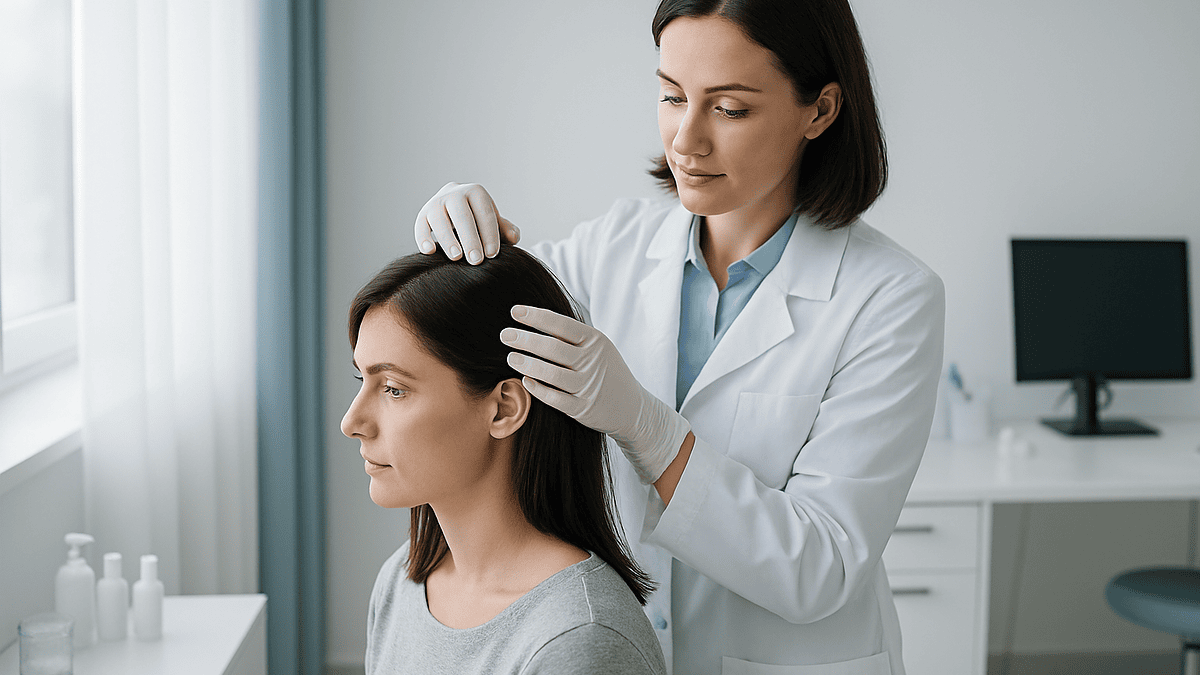
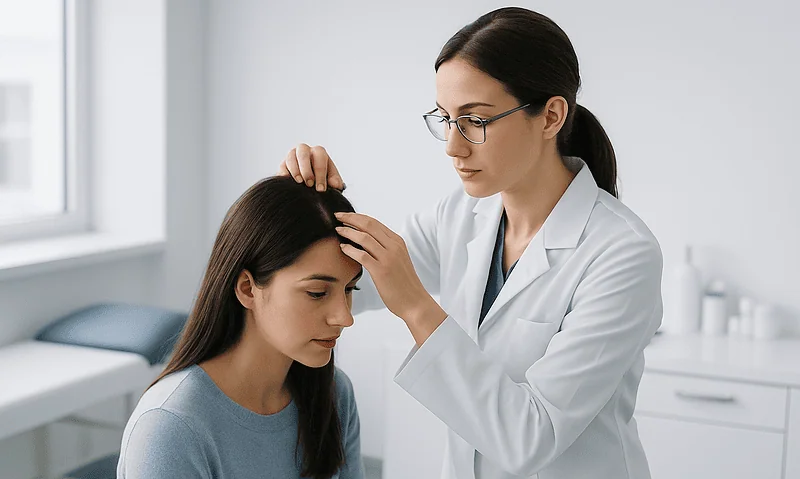
Nothing sharp happens in the first step, yet surgeons often describe it as the one that decides the result. The visit begins with a diagnosis. Male and female pattern hair loss, known medically as androgenetic alopecia, is the usual reason people are candidates, and Mayo Clinic notes that other causes such as autoimmune, scarring or medication-related hair loss behave very differently and may not be suitable for transplantation at all. A clinician will look at the pattern, sometimes use a handheld magnifier to check hair density and miniaturization, and ask about family history and how quickly the change has happened.
Next comes the donor assessment. The donor area is the band of scalp at the back and sides where hair tends to persist for life because those follicles respond differently to the hormone dihydrotestosterone. A surgeon estimates how many follicular units can be safely removed without leaving a visibly thinned or moth-eaten appearance. That number is finite. Grafts taken now cannot be taken again later, so a responsible plan considers where hair loss is likely to be in ten or twenty years, not just where it is today.
Hairline design follows. The surgeon draws a proposed line with a marker, discussing height, shape and the softer, slightly irregular front edge that natural hairlines have. This is also when expectations get calibrated: a transplant redistributes existing hair, it does not create new hair, so a very large bald area with a modest donor supply will look thinner than a small one.
Ask to see the drawing from several angles and in a mirror. Ask what the plan would be if loss progresses. A good consultation ends with you understanding the limits as clearly as the possibilities.
Step 2: Preparation on the day, from trimming to local anesthetic
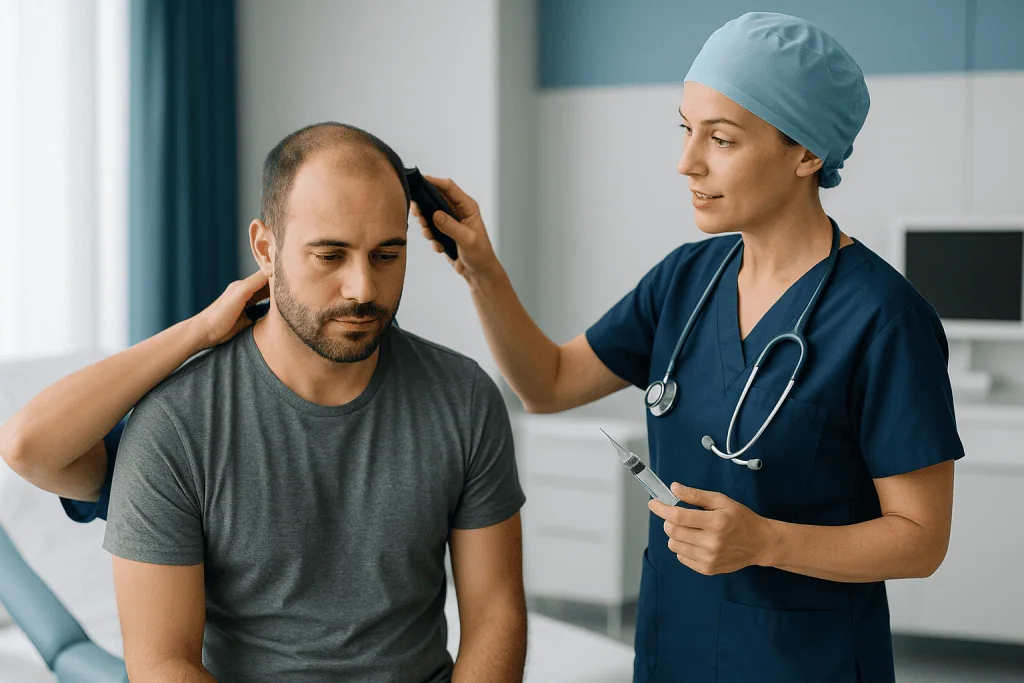
Most people arrive having eaten breakfast, because the procedure is done under local anesthetic and the day is long. NHS guidance describes hair transplantation as a day procedure with no overnight stay. The donor area is trimmed very short so the punch can see each follicular unit clearly. Some teams shave the whole scalp; others trim only a strip that longer hair can cover afterward. The recipient area may be left longer if existing hair there needs to be preserved.
Photographs are taken from standard angles. The hairline drawn at consultation is redrawn or confirmed. The scalp is cleaned with an antiseptic solution.
Then comes the part people worry about most: the anesthetic. Local anesthetic is a medicine injected into the skin that blocks nerve signals in that area while leaving you fully awake. A ring of small injections is placed around the donor zone first. Each one stings for a second or two, roughly like a dental injection, and within minutes the area goes numb and heavy. Some teams add a mild oral sedative to take the edge off nerves; whether that is appropriate is a decision for the clinician, based on your medical history.
Many surgeons also inject a dilute saline mixture under the skin, a technique called tumescence. It firms the scalp, lifts the follicles slightly away from deeper structures and reduces bleeding, which makes extraction more precise. You may feel a spreading tightness as this is done.
Positioning matters for a long day. For extraction you usually lie face down or on your side with a padded head support; for placement you sit semi-reclined. Breaks are built in. Bring nothing that needs both hands, and expect the team to check your comfort repeatedly.
Step 3: Extraction, how follicular units are harvested from the donor area
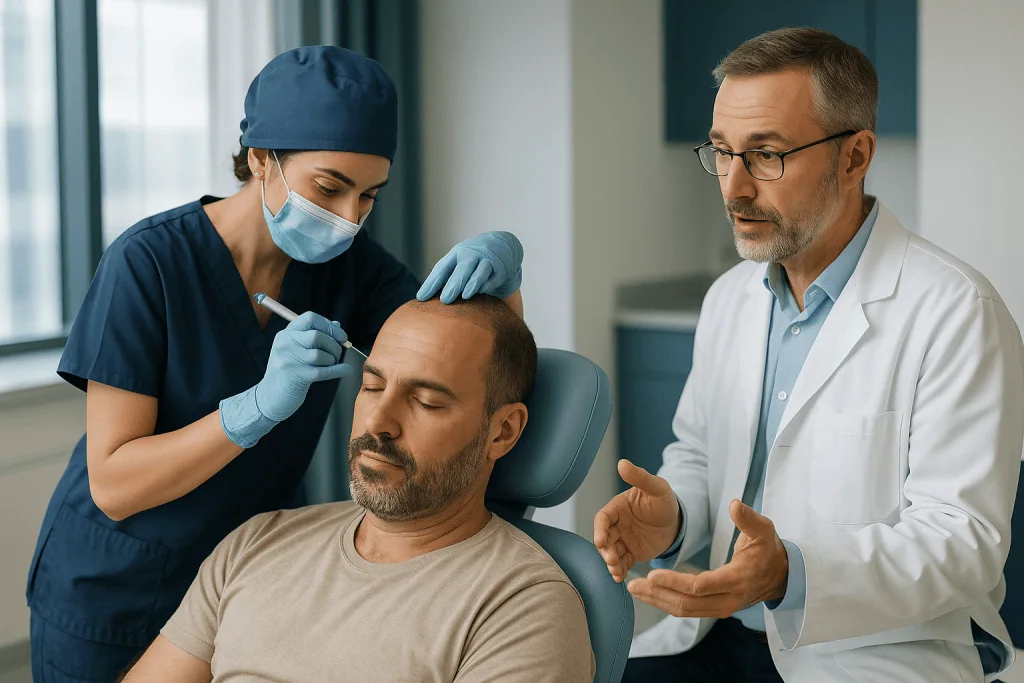
Extraction is FUE’s defining act, and watching it up close is oddly calm. The surgeon holds a handpiece fitted with a hollow circular punch, typically well under a millimeter in diameter, that spins or oscillates. It is lowered over a single follicular unit at the same angle the hair exits the skin, then advanced just deep enough to free the unit from the surrounding tissue without cutting through the follicle’s base. A fine forceps then lifts the graft out.
Angle is everything here. Hair follicles sit obliquely in the scalp, not vertically, and they curve. A punch that enters at the wrong angle shears off the lower portion of the follicle, a mistake called transection, and a transected graft is far less likely to grow. Experienced operators adjust angle constantly as they move across the head, because hair direction changes from the crown to the nape.
The surgeon also spaces extractions deliberately, taking perhaps one in every few units in a given area so that the donor zone thins evenly rather than developing bare patches. The tiny open wounds left behind are not stitched. They contract and crust over, and MedlinePlus notes that FUE leaves small dot scars rather than the single linear scar of the strip method.
From the patient’s side, extraction feels like pressure and a faint vibration, with an occasional tug. Sharp pain means the anesthetic needs topping up, and you should say so. Sessions moving a large number of grafts may spread extraction over two days; NHS guidance describes FUE sessions taking up to a full day or being split.
The sapphire blade plays no role in this step. If someone tells you a “sapphire extraction” was performed, ask what they mean, because the term refers to channel opening, not harvesting.
Step 4: Graft handling and holding, the quiet step that affects survival
Between leaving the scalp and returning to it, a graft is a living piece of tissue with no blood supply. The hours it spends outside the body are the most fragile in the entire procedure, and this stage rarely appears in promotional videos because there is nothing dramatic to film.
As grafts are extracted they are passed to technicians working at a magnified station. Each one is inspected, trimmed of excess fat or skin if needed, and sorted by the number of hairs it contains: singles, doubles, triples. Sorting is not fussiness. Single-hair units go at the very front of the hairline where they mimic nature’s soft edge; multi-hair units go behind them to build density. Placing a three-hair graft at the front edge produces the plug-like look that gave older transplants a bad reputation.
Grafts are stored in a chilled holding solution. Chilling slows metabolism so the cells consume less oxygen while they wait. Different teams use different solutions, from simple saline to specialized preservation fluids, and the evidence comparing them in hair transplantation is limited; what is consistently emphasized in surgical teaching is keeping grafts moist, cool and outside the body for as short a time as possible.
Counting happens here too. You should be able to ask how many grafts were extracted and how many were placed, and the numbers should match closely. A graft count is not a hair count, since each unit contains one to four hairs, so a figure quoted as “hairs” will sound larger than the same result quoted as “grafts”.
For you this stage is mostly a break. Many teams schedule a meal and a walk to the restroom while grafts are prepared. It is a good moment to mention any discomfort before the next phase begins.
Step 5: Channel opening with a sapphire blade, what actually happens
Here, finally, is the sapphire. The recipient area is numbed with local anesthetic in the same way as the donor zone. The surgeon then picks up a handle fitted with a sapphire blade: a small wedge of synthetic aluminum oxide crystal, ground to a fine V-shaped tip, available in several widths to match the size of the grafts prepared in the previous step.
Each channel is a tiny incision made at three deliberate settings. Depth is matched to graft length so the follicle base sits at the correct level, not too shallow where it might pop out, not too deep where it could pit the skin. Angle follows the direction the surrounding or original hair grew, often quite flat at the front and more upright further back. Distribution determines density, and here the surgeon is working against a physical limit: channels placed too close together compromise blood flow between them.
Why sapphire? The argument made by its proponents is that a hard crystal edge stays sharp for longer than steel and can be ground finer, producing a cleaner cut with less surrounding tissue disturbance, which might mean less swelling, less crusting and a shorter time before the scalp looks settled. The V-shaped tip is also said to hold a graft more snugly than a round needle puncture.
What the evidence shows is more modest. Comparative studies are few, small and often reported by practitioners with a commercial interest, and no national guideline from the NHS, NICE or a major professional body recommends one blade material over another. That does not mean sapphire is inferior; it means the claimed advantages remain plausible rather than proven. The channels still depend entirely on the hand that guides the blade.
Step 6: Graft placement, seating each follicular unit in its channel
Placement is slow, repetitive and decisive. Working under magnification, the surgeon or trained technician lifts a single graft by the fatty tissue around its base, never by the follicle itself, and slides it into a prepared channel so that the hair-bearing surface sits level with the surrounding skin. Grafts placed too high dry out and develop small pits or bumps; grafts pushed too deep can trap skin fragments beneath the surface, forming cysts weeks later.
Two tools dominate. Fine forceps are the traditional instrument. Implanter pens, sometimes called Choi implanters, are hollow needles preloaded with a graft that create the channel and deposit the graft in a single motion. In a sapphire transplant the channels already exist, so placement is typically done with forceps or with a blunt implanter that follows the pre-made slit.
Orientation is a detail worth knowing about. Each hair emerges from its follicle with a natural curl direction. Skilled placers rotate the graft so that curl follows the intended direction of the hairline, which is part of why results from careful teams look like hair rather than a lawn.
Bleeding from channels is usually minimal at this stage because the anesthetic contains a medicine that narrows blood vessels and the tumescence fluid has compressed the tissue. Grafts occasionally pop out as neighbors are placed and are simply reseated.
For the patient, placement is a long stretch of light tapping and pressure. The number of grafts determines the duration; NHS patient information describes total session times of several hours to a full day. At the end, the recipient area is left uncovered so grafts are not disturbed, the donor area is dressed, and you are shown how to sleep with your head raised for the first nights.
Is a sapphire hair transplant painful?
The honest answer separates three phases, because they feel quite different.
During the procedure, pain is mostly limited to the anesthetic injections themselves. Each brings a sharp sting lasting a second or two, and there are many of them around the donor area and again around the recipient area. Once the anesthetic takes hold, extraction, channel opening and placement register as pressure, vibration and occasional tugging, not as pain. Anesthetic wears off gradually over hours, so teams top it up as needed; you should say the moment anything becomes sharp rather than waiting.
The first night and the following two or three days are typically the sorest. The donor area feels tight and tender, a little like a sunburn combined with a bruise. The recipient area throbs and swells; fluid from the tumescence and the surgery itself can drift down toward the forehead and around the eyes over the following days, which looks alarming but is expected. NHS guidance describes the scalp feeling tight and sore for a few days and swelling being common. Simple pain relief is commonly advised, and which medicine is appropriate for you, given other health conditions and any blood-thinning medicines, is a decision for the surgical team.
The following weeks bring itching rather than pain as crusts lift and tiny wounds heal. Numbness or tingling in the donor area is common and usually fades over weeks to months as small nerve endings recover, though a minority of people report longer-lasting altered sensation.
Whether sapphire channels are less painful afterward than steel channels is one of the claims that lacks solid comparative evidence. Some surgeons report less crusting; controlled data are sparse. Treat that promise as a hypothesis, not a guarantee.
Who a sapphire FUE hair transplant is usually for, and who is asked to wait
Suitability has less to do with how much hair you have lost than with why you lost it and what is left to work with.
The people most often considered good candidates have pattern hair loss that has stabilized enough for the surgeon to predict where it is heading, a donor area dense enough to supply the planned number of grafts, and realistic expectations about density. Mayo Clinic notes that hair transplantation is most useful for people whose hair loss follows the typical male or female pattern with a preserved band of donor hair.
Several groups are commonly asked to wait or to consider other options first:
- Younger adults whose loss is still progressing rapidly. A hairline that looks right at twenty-five may sit stranded in front of a receding crown at forty, having used up donor hair that would have been needed later.
- People with diffuse thinning across the whole scalp, including the donor area, because the harvest site itself may not be stable.
- People whose hair loss has an active inflammatory or autoimmune cause, such as alopecia areata or scarring alopecias. Grafts placed into skin that is still under immune attack tend not to survive, and Mayo Clinic advises identifying the cause before treatment.
- Anyone with an uncontrolled medical condition affecting healing, or a bleeding tendency, until that is reviewed.
- People with body-image distress out of proportion to visible hair loss, for whom surgery may not address the underlying concern.
Clinicians also often suggest trying or continuing medical treatment for pattern hair loss before or alongside surgery. The commonly used options, described on MedlinePlus, work by different mechanisms: one is a topical agent thought to prolong the growth phase of follicles, the other an oral medicine that lowers dihydrotestosterone. Whether either is right for you, and for how long, is for the prescribing clinician to decide.
What the days and weeks after a sapphire hair transplant usually look like
Recovery unfolds in a fairly predictable sequence, and knowing the order prevents most panicked phone calls.
Days one to three: swelling peaks. The forehead may puff and, in some people, fluid settles around the eyes. The donor area is tender; the recipient area is dotted with tiny crusts around each graft. Sleeping propped up helps. Cleveland Clinic describes the scalp feeling sore and tight and advises against touching the grafts during this window.
Days four to fourteen: crusts loosen and lift, usually with gentle washing as the team directs. NHS guidance indicates most people can return to desk-based work within a few days and describes the overall recovery as taking around two weeks, with strenuous exercise, swimming and direct sun typically avoided during that time.
Weeks two to eight: the phase that alarms people who were not warned. Most transplanted hairs shed. This is called shock loss, and it is expected; the follicle beneath has survived and is entering a resting phase. NHS patient information notes that transplanted hair commonly falls out two to four weeks after the procedure before new growth begins. Some existing hair around the recipient area can also shed temporarily.
Months three to six: fine new hairs begin to appear, often thin and slightly wiry at first, then thickening. Cleveland Clinic describes new growth typically becoming visible over the first several months.
Months six to eighteen: growth matures. NHS guidance suggests the full result is generally not visible until twelve to eighteen months, and a clinician may discuss a second session if further density is wanted and donor supply allows.
Every one of these timings is a typical range from patient guides, not a promise for your scalp. Individual healing varies, and the team that operated is the right group to judge whether your progress is on track.
Is the sapphire method good for hair transplants? Sapphire blade vs steel blade evidence
A fair reading of the evidence lands on a careful answer: sapphire blades are a reasonable, widely used instrument, and the claim that they produce better results than steel has not been established by high-quality studies.
Start with what is mechanically true. Synthetic sapphire is harder than surgical steel and can hold a fine edge through many incisions without dulling, so a surgeon making a large number of channels does not need to change blades as often. The material is also smooth and non-porous. Those are genuine properties, not marketing.
Then look at what is claimed to follow from them: less tissue trauma, less crusting, faster settling of the recipient area, higher graft survival and denser placement. To test those claims you would want randomized comparisons where the same surgeon opened channels on one half of a scalp with sapphire and the other with steel, then measured healing and growth blind to the blade used. Such studies are scarce. The literature indexed on PubMed contains mostly small series, technique descriptions and expert opinion, much of it from clinics with a commercial stake. No major national guideline addresses blade material at all.
Meanwhile the factors that surgical teaching consistently ties to outcomes, low transection during extraction, short time out of the body, correct angle and depth, careful placement and an appropriately conservative hairline, are all operator-dependent and blade-independent.
So how should a reader use this? Treat “sapphire” as one detail among many to ask about, not a reason to choose or avoid a team. A surgeon who can explain why they chose their instruments, how they minimize transection and how they plan for future loss is telling you more than the word on the brochure. The decision about whether any transplant is appropriate remains with you and the clinician examining you.
What people often get wrong about sapphire hair transplants
Myths cluster around this topic because it sits where surgery meets marketing. A few corrections, grounded in what the evidence actually shows.
“Sapphire is a completely different operation.” It is FUE with a different blade for one step. Extraction and placement are unchanged.
“The transplant creates new hair.” It relocates hair you already have. Total hair count on your head does not increase; distribution does. A limited donor supply cannot cover an unlimited area, and MedlinePlus and NHS guidance both make this point plainly.
“Transplanted hair never falls out.” Most of it sheds within the first month or so before regrowing, as NHS patient information describes. The follicle persists; the shaft does not.
“One session is always enough.” Mayo Clinic notes that more than one procedure may be needed to reach the desired coverage, and ongoing pattern loss around the grafts can change the picture over years.
“Elon Musk regrew his hair with a secret product.” Photographs of the entrepreneur from different decades are often used to sell hair-loss remedies. He has made no verified public statement about any treatment, so anything sold on the back of his appearance is speculation. Long-lived hairlines that reverse a receding pattern are, in general, consistent with surgical redistribution rather than a topical or supplement, but no responsible source can tell you what any specific individual did.
“Supplements will do the same job.” The NIH Office of Dietary Supplements notes that biotin supplementation has not been shown to improve hair growth in people who are not deficient, and true deficiency is rare.
“It’s permanent and maintenance-free.” Grafts are usually durable, but untreated pattern loss continues around them. Many clinicians discuss ongoing medical management, a decision that rests with the prescribing team.
Risks, complications and alternatives in neutral terms
Every operation carries risk, and a cosmetic one deserves the same clear-eyed accounting as any other. The complications below are described in MedlinePlus, NHS and Cleveland Clinic patient guides; how likely each is for you depends on your health and the surgical approach, and only your team can put numbers to that.
- Bleeding and bruising, usually minor with local anesthetic containing a vessel-narrowing medicine, but greater in people taking blood thinners.
- Infection of the donor or recipient area, uncommon when wounds are kept clean, and treatable if caught early.
- Folliculitis, an inflammation of individual follicles that appears as small pimples in the weeks after surgery, often when a hair grows in under the skin.
- Swelling of the forehead and around the eyes in the first days.
- Numbness or altered sensation in the donor area, usually temporary.
- Shock loss of existing hair near the grafts, usually reversible.
- Visible scarring: dot scars in the donor area that show if hair is worn very short, or a patchy donor zone if too much was harvested.
- Poor growth or an unnatural appearance from transection, drying, wrong angles or an over-ambitious hairline.
- Rarely, skin necrosis (tissue death) in the recipient area when channels are packed too densely or blood supply is compromised.
Alternatives exist along a spectrum. Medical treatments for pattern loss aim to slow further shedding and sometimes thicken existing hair; they work only while used. Low-level laser devices are marketed for hair growth with mixed evidence. Camouflage products, scalp micropigmentation and hairpieces address appearance without surgery. Some people choose to do nothing, and that is a legitimate option. Mayo Clinic frames treatment choice as a matter of cause, extent, expectations and personal preference, worked through with a clinician rather than settled by advertising.
Questions to ask your care team before a sapphire hair transplant
The most useful consultation is the one where you leave with fewer assumptions than you arrived with. These questions are designed to surface the variables that actually shape results, not the ones that appear in brochures.
- What is the cause of my hair loss, and how have you confirmed it? Has anyone considered causes other than pattern loss?
- How many follicular units do you estimate my donor area can supply over my lifetime, and how many are you proposing to use now?
- If my hair loss keeps progressing, what will this hairline look like in fifteen years, and what is the plan for that?
- Who performs each step? Specifically, who does the extraction, who opens channels, and who places grafts?
- How do you measure and minimize transection during extraction?
- How long will my grafts typically be out of the body, and how are they stored?
- Why do you use a sapphire blade rather than steel or an implanter, and what evidence supports that choice for someone like me?
- What complications have you seen in your own practice, and how were they managed?
- Will I be able to see my graft count on the day?
- Should I be using, or continuing, any medical treatment for hair loss, and who will manage that?
- What is the follow-up schedule, and whom do I contact if something worries me at night or on a weekend?
- What would make you advise me not to have this procedure?
Notice that the last question is often the most revealing. A clinician who can describe the circumstances in which they would decline to operate is demonstrating the judgment that no instrument can replace. Write the answers down, take time to reflect, and remember that the decision to proceed, to wait or to choose an alternative is yours to make with the treating team’s guidance.
When to call your doctor after a hair transplant
Most of what you will notice in the first two weeks is expected: tightness, tenderness, crusting, swelling that drifts toward the eyes, itching as wounds heal, and then the shedding of transplanted hair described earlier. None of those need an urgent call, though your team will usually be glad to reassure you.
Some signs do warrant contacting the surgical team the same day, or emergency services if severe:
- Spreading redness, heat or increasing pain around the donor or recipient area after the first few days, particularly with a fever, which can indicate infection.
- Pus, foul-smelling discharge or a wound that reopens.
- Bleeding that soaks through a dressing and does not slow with gentle pressure.
- Any area of skin in the recipient zone turning dark, gray or black, which can signal compromised blood supply and needs prompt assessment.
- Swelling that closes an eye, or swelling with difficulty breathing, hives or facial swelling, which may indicate an allergic reaction.
- Persistent numbness, worsening pain or new weakness that does not follow the expected pattern your team described.
- Feeling generally unwell, dizzy or faint in the days after surgery.
Later concerns, such as clusters of pimples in the recipient area, patches where growth seems absent after several months, or an appearance you did not expect, are best raised at scheduled follow-up rather than left unmentioned. Keep the after-hours contact details your team gave you somewhere you can find them without thinking.
This article explains what the sapphire hair transplant procedure steps involve and what published evidence says about them. It does not replace an examination, and every decision about whether, when and how to proceed rests with you and the clinicians responsible for your care.
Frequently asked questions
Is a sapphire hair transplant painful?
The main pain is the local anesthetic injections, which sting for a second or two each; after that the procedure feels like pressure and vibration rather than pain. The first two or three days afterward bring tightness, tenderness and swelling, which NHS guidance describes as common. Whether sapphire channels hurt less afterward than steel channels has not been established in controlled studies. Pain relief choices should be discussed with your surgical team.
What is the hair transplant process step by step?
The sequence is consultation and hairline design, trimming and local anesthetic, extraction of follicular units from the donor area with a small punch, sorting and chilled storage of grafts, opening recipient channels (with a sapphire blade in a sapphire transplant), placing each graft into a channel, then dressing and aftercare instructions. NHS and Cleveland Clinic guides describe the whole session taking several hours to a full day.
Is the sapphire method good for hair transplants?
Sapphire blades are a reasonable, widely used instrument with genuine physical advantages, such as holding a fine edge for longer than steel. Claims that they improve graft survival, reduce crusting or heal faster remain plausible but unproven, because comparative studies are few and small. Surgeon skill, graft handling time and hairline planning are the factors most consistently tied to results, and none depend on blade material.
What did Elon Musk use to regrow his hair?
There is no verified public statement from Elon Musk about any hair treatment, so any product marketed using his photographs is relying on speculation. In general, a hairline that reverses a receding pattern over decades is more consistent with surgical redistribution than with a topical or supplement, but no responsible source can say what any particular individual did. Celebrity comparisons are not a basis for medical decisions.
What is the difference between a sapphire blade and a steel blade in FUE?
A sapphire blade is cut from synthetic aluminum oxide crystal, which is harder than surgical steel and can be ground to a very fine V-shaped tip that resists dulling through many incisions. Steel blades and needles are the conventional tools for the same job. Both create the small recipient channels that receive grafts; the extraction and placement steps are unchanged. Evidence of a difference in outcomes is limited.
How long does a sapphire FUE hair transplant take?
NHS patient information describes hair transplantation as a day procedure, with FUE sessions taking several hours to a full day depending on how many grafts are moved, and very large sessions sometimes split over two days. Cleveland Clinic gives a similar range. The time reflects the one-by-one nature of extraction and placement rather than the blade used for channel opening. Your team can estimate your own session length.
Does transplanted hair fall out after a sapphire hair transplant?
Yes, and it is expected. NHS guidance notes that transplanted hair commonly sheds two to four weeks after surgery as the follicle enters a resting phase; the follicle itself survives beneath the skin. New fine hairs typically begin appearing over the following months, and the full result generally takes twelve to eighteen months. Some existing hair near the grafts can also shed temporarily, a phenomenon called shock loss.
Who should not have a sapphire hair transplant?
Clinicians commonly ask people to wait if hair loss is still progressing rapidly, if thinning affects the donor area itself, or if the cause is inflammatory or autoimmune rather than pattern loss, since grafts placed into skin under immune attack tend not to survive. Uncontrolled medical conditions affecting healing or bleeding also need review first. Suitability is a judgment for the examining clinician, not a self-assessment.
What are the risks of a sapphire hair transplant?
Patient guides from MedlinePlus, NHS and Cleveland Clinic list bleeding, infection, folliculitis, swelling around the forehead and eyes, temporary numbness in the donor area, shock loss of existing hair, visible dot scarring if hair is worn very short, poor growth or an unnatural hairline from technical error, and rarely tissue death in an over-packed recipient area. Your individual risk depends on your health and should be discussed with your team.
Can a sapphire hair transplant be repeated?
Often, if the donor area still has enough follicular units to spare, which is why responsible planning keeps some in reserve for future loss. Mayo Clinic notes that more than one session may be needed to reach the desired coverage. Grafts already taken cannot be regrown in the donor area, so the lifetime supply is finite. Timing and feasibility of a second session are decisions for the treating surgeon.
References
This article is for general information only and is not a substitute for professional medical advice. Please consult a qualified doctor about your individual situation.

More from the Blog
Hair Transplant for Women Recovery: Gentle Washing, Sprays and the Shedding Phase Week by Week
Recovery after a hair transplant for women usually follows a predictable arc: swelling and small crusts in the first week, gentle washing and saline…
After a Hair Operation: Normal Swelling vs Signs of Infection Your Clinic Wants to Hear About
After a hair operation, soft, painless swelling of the forehead and around the eyes in the first week is usually part of normal healing.…
Hair Transplants 10 and 20 Years Later: How Results Age, Honestly
Transplanted hair usually survives for decades because it comes from a donor zone whose follicles resist hormone-driven pattern loss. Ten and twenty years on,…
Is PRP for Hair Loss Suited to Diffuse Thinning? Who Tends to Respond and Who Needs More
PRP for diffuse hair thinning can be a reasonable option when the thinning is early pattern hair loss with living, miniaturized follicles still present.…
What Happens During PRP for Hair Loss: From the Blood Draw to the Scalp Injections
During PRP for hair loss, a clinician draws a small tube of your own blood, spins it in a centrifuge to separate a platelet-rich…
How Surgeons Assess Keloid Risk and Scar Tendency Before an Afro Hair Transplant
Before an afro hair transplant, surgeons assess keloid risk by asking about personal and family scar history, examining existing scars anywhere on the body,…