

Sarcoma in Teenagers and Young Adults: How Treatment Planning Considers Growth and School
Key Takeaways
- Osteosarcoma and Ewing sarcoma peak during the teenage growth spurt, and osteosarcoma most often arises in the bones around the knee, right beside the fastest-growing growth plates.
- For high-grade bone sarcomas, chemotherapy is normally given before surgery as well as after it, so the operation sits in the middle of a treatment program that commonly spans most of a school year.
- A hand X-ray to estimate bone age tells the surgeon how much growth remains and steers the choice among fixed implants, expandable implants, rotationplasty and amputation.
- Alkylating chemotherapy drugs can damage sperm- and egg-producing cells, so sperm banking or egg freezing has to be arranged before the first infusion rather than after.
- Sarcoma spreads mainly through the bloodstream to the lungs, and early spread usually causes no symptoms, which is why staging and follow-up rely on chest imaging rather than on how a patient feels.
- A supposed sports injury that keeps enlarging instead of fading over the following weeks is the pattern most often behind delayed sarcoma diagnoses in teenagers.
Sarcoma treatment in teenagers usually combines chemotherapy with surgery, and sometimes radiation, sequenced over many months by a specialist sarcoma team. Because young bodies are still growing, surgeons weigh growth plates and future limb length, oncologists arrange fertility preservation before chemotherapy begins, and hospital education staff keep schooling on track. Every choice, including the order of treatments, rests with the treating team.
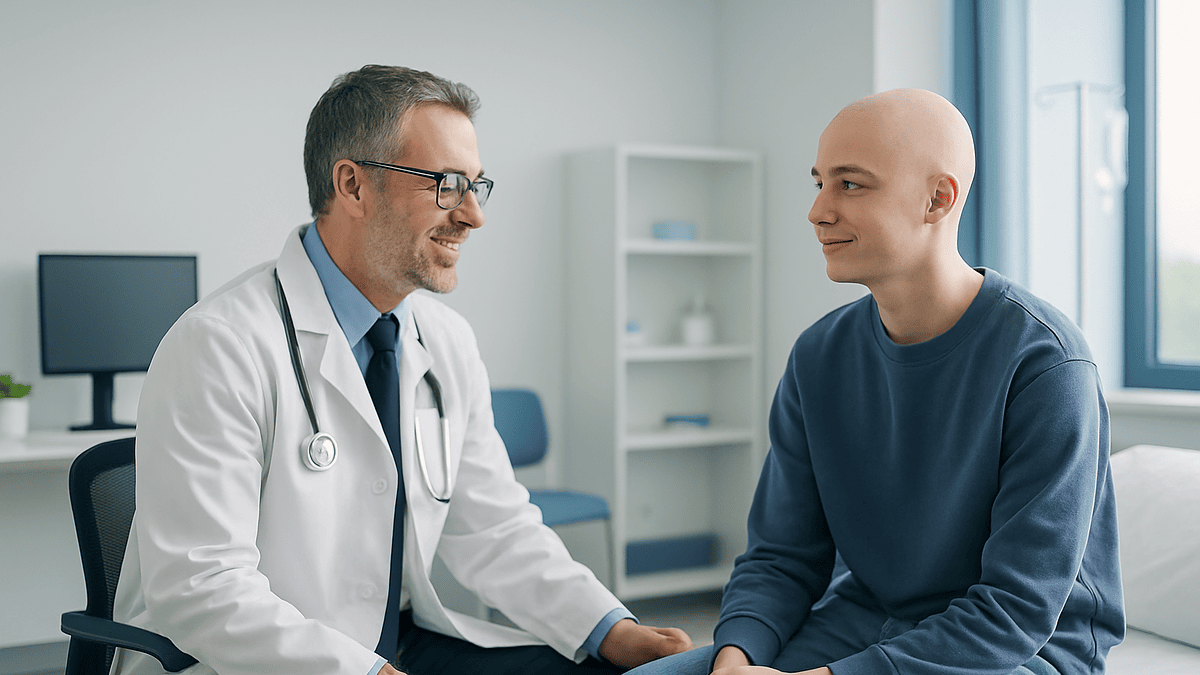
The knee hurt after basketball practice, so nobody thought much of it. Ice, ibuprofen, a week off. Then the pain woke him at night, the swelling did not settle, and an X-ray taken to rule out a stress fracture showed something the radiologist wanted a second opinion on. Three weeks later a fifteen-year-old and his parents sat in a room with an orthopedic oncologist, a pediatric oncologist and a nurse coordinator, hearing the word sarcoma for the first time and trying to picture the tenth grade around it.
That room is where sarcoma treatment in teenagers begins, and it is a different room from the one an adult with the same tumor would sit in. The conversation covers the usual questions about chemotherapy and surgery, but it also covers growth plates that have not finished their work, a fertility clinic appointment that has to happen before the first infusion, and a hospital teacher who wants to know which classes matter most.
This explainer walks through how those pieces fit together, what the evidence actually supports, and which decisions belong to the team caring for your family.
Why is sarcoma treatment in teenagers planned differently from adult cancer care?
A sarcoma is a cancer that starts in the body’s connective tissues: bone, muscle, fat, cartilage, nerve sheath or blood vessel walls. Sarcomas are rare at any age, yet they occupy an outsized place in adolescent cancer because two of the most common types, osteosarcoma and Ewing sarcoma, peak precisely during the teenage growth spurt. The National Cancer Institute groups patients aged 15 to 39 as adolescents and young adults, a bracket it treats as distinct because their tumors, their bodies and their lives differ from both young children and older adults.
Three biological facts shape the plan. First, long bones are still lengthening at growth plates, the soft cartilage zones near each end of the bone where new bone is laid down. A tumor near the knee usually sits right beside one. Second, the reproductive system is maturing, and several chemotherapy classes used against sarcoma can damage eggs and sperm-producing cells. Third, organs such as the heart and kidneys will need to last another sixty or seventy years, so the long-term cost of each treatment weighs more heavily than it might for someone in their seventies.
The social facts matter just as much. A teenager mid-treatment is also mid-education, mid-friendships and mid-identity, often in the process of separating from parents rather than leaning on them. Many teams therefore treat adolescents under pediatric-style protocols, which tend to be more intensive and to include structured support for school and family, even when the patient is legally an adult. Which protocol applies, and where care is delivered, is a clinical decision made case by case.
The rest of this article follows the sequence a family typically experiences, from the first biopsy to the years of follow-up, pausing on the points where growth and school change the calculation.
How does sarcoma treatment actually work, step by step?
Everything starts with a biopsy, a procedure in which a small sample of the tumor is removed with a needle or through a short incision and examined under a microscope. In sarcoma this step is planned by the same surgical team that will later remove the tumor, because the biopsy track is considered contaminated and has to be cut out at the definitive operation. A poorly placed biopsy can turn a limb-sparing operation into a much larger one.
Alongside the biopsy comes staging, the set of scans that shows how big the tumor is and whether it has traveled. An MRI of the whole affected bone or muscle compartment maps the local extent. A CT scan of the chest looks for spread to the lungs, the most common site. A bone scan or PET scan checks the rest of the skeleton, and for Ewing sarcoma a bone marrow sample may be taken too.
For most high-grade bone sarcomas the sequence then runs in three blocks. Chemotherapy is given first, a phase called neoadjuvant therapy, meaning treatment before surgery. Its purpose is to attack microscopic cells that may already be circulating and to make the main tumor easier to remove. Next comes local control: surgery, radiation, or both. Finally, more chemotherapy follows, tailored partly by what the pathologist finds in the removed tumor, including how much of it has died.
Most teenagers have a central line placed early, a thin tube that sits in a large vein near the heart and spares them repeated needle sticks. The National Cancer Institute’s treatment summaries describe chemotherapy given both before and after surgery for osteosarcoma and Ewing sarcoma, and families are usually advised to plan around many months of treatment rather than weeks. Exact schedules are set by the treating oncologist and often follow a clinical trial protocol.
What are the treatment options for high-grade sarcoma?
Grade describes how abnormal the tumor cells look and how quickly they divide. A high-grade sarcoma is one whose cells look very different from normal tissue and multiply fast, which makes it more likely to spread and more likely to respond to chemotherapy. Nearly all osteosarcomas and Ewing sarcomas in teenagers are high grade, as is rhabdomyosarcoma, a cancer of immature muscle cells that is the most common soft tissue sarcoma in children and adolescents.
Chemotherapy for these tumors uses several drugs in combination, each working through a different mechanism. Anthracyclines such as doxorubicin interfere with the enzymes tumor cells need to copy their DNA; because they can strain the heart muscle, an echocardiogram is done before treatment and repeated during it. Platinum agents such as cisplatin cross-link DNA strands and can affect hearing and kidney filtering, so audiology and blood tests are part of the routine. Alkylating agents such as ifosfamide and cyclophosphamide damage DNA in rapidly dividing cells, which includes the cells that make sperm and eggs. Methotrexate, vincristine and etoposide appear in some regimens with their own monitoring needs. None of these is a recommendation; the combination, the sequence and every adjustment belong to the prescribing oncologist.
Surgery aims to remove the tumor with a margin of healthy tissue around it. Radiation therapy, high-energy beams that break DNA in cancer cells, is a standard part of Ewing sarcoma and rhabdomyosarcoma care in many situations and is used for osteosarcoma mainly when surgery cannot achieve clear margins.
Because these cancers are rare, a large share of teenagers are treated within cooperative-group clinical trials, which compare a standard regimen against a modification of it. Targeted drugs that block specific molecular signals are under study for several subtypes, but for most teenage sarcomas they remain investigational rather than proven.
Low-grade soft tissue sarcomas sit at the other end of the spectrum: they grow slowly, rarely spread, and are usually managed with surgery alone.
How do surgeons plan limb sparing surgery for sarcoma around growth plates?
Osteosarcoma most often arises in the bones around the knee or shoulder, exactly where the fastest-growing growth plates sit. Removing the tumor with a safe margin frequently means removing the growth plate with it, and a fourteen-year-old who loses the plate at the lower end of the femur can end up with one leg noticeably shorter than the other by the time growth finishes.
The surgical team therefore starts with a question no adult surgeon has to ask: how much growth is left? A hand X-ray compared against reference standards estimates bone age, and predicted adult height is calculated from it. A girl of fifteen may have little growth remaining; a boy of thirteen may have several centimeters to go. That estimate, together with the tumor’s exact position on MRI, steers the choice among the main reconstruction options.
| Approach | What it involves | Growth consideration | Typical trade-offs |
|---|---|---|---|
| Limb-sparing with fixed metal implant | Tumor and bone segment replaced by a metal endoprosthesis, an internal artificial joint | Best suited when growth is nearly complete | Implant revisions likely over a lifetime; contact sports usually restricted |
| Expandable (growing) implant | Implant lengthened in stages, by minor procedures or an external magnetic device, as the child grows | Designed for substantial remaining growth | More procedures; higher mechanical complication rate |
| Rotationplasty | Knee region removed; lower leg rotated and reattached so the ankle functions as a knee for a prosthesis | Grows with the child, no growth plate mismatch | Unusual appearance; strong function with a below-knee-type prosthesis |
| Amputation | Limb removed above the tumor | Residual limb continues to grow; prosthesis refitted over time | Fewest surgical complications; lifelong prosthesis use |
Each row is a legitimate choice, and orthopedic oncologists describe them as different rather than ranked. The surgeon weighs tumor location, expected growth, the family’s activity goals and the teenager’s own view of appearance and function, then recommends a plan.
Who is usually offered surgery first, and who is asked to wait?
Surgery straight away is the usual path for small, low-grade soft tissue sarcomas and for some adult-type soft tissue sarcomas in young adults where chemotherapy has not been shown to add benefit. In those cases the operation is the main treatment, and radiation may follow if the margin is close.
Most teenagers with a high-grade bone sarcoma or rhabdomyosarcoma are asked to wait. The National Cancer Institute’s summaries for osteosarcoma and Ewing sarcoma both describe chemotherapy before surgery as standard practice, and the wait is deliberate. It gives the drugs time to treat cells that may already have left the primary site, it can shrink the tumor away from nerves and blood vessels so a limb-sparing operation becomes feasible, and it lets the team observe how the tumor responds. When the tumor is finally removed, the pathologist measures the proportion of dead cells, and that figure helps guide the chemotherapy given afterward.
Other reasons to postpone the operation are practical rather than strategic. Fertility preservation, discussed below, generally needs to be completed before the first chemotherapy dose, and sometimes before surgery. Blood counts have to recover from the previous chemotherapy cycle so wound healing and infection risk are acceptable. An active infection at the line site or elsewhere is a reason to delay. For a tumor wrapped around a major artery or nerve, the surgeon may want an extra cycle of chemotherapy and a repeat MRI before committing to a plan.
A few situations push the other way. A bone weakened to the point of fracture, a tumor pressing on the spinal cord, or a soft tissue mass compromising blood flow may require earlier local treatment. These are judgment calls made in the multidisciplinary tumor board, the weekly meeting where surgeons, oncologists, radiation specialists, radiologists and pathologists review each case together.
What does radiation therapy mean for a body that is still growing?
Radiation therapy uses focused high-energy beams to damage the DNA of cancer cells so they can no longer divide. Its role in teenage sarcoma depends heavily on the tumor type. Ewing sarcoma cells are sensitive to radiation, so it is used when surgery would be disfiguring or impossible, for example in the pelvis, spine or chest wall, and sometimes in addition to surgery when margins are not clear. Rhabdomyosarcoma care frequently includes radiation to the original tumor site. Osteosarcoma is relatively resistant, so radiation is reserved for tumors that cannot be fully removed.
The concern in a growing body is that radiation does not distinguish between a cancer cell dividing and a growth plate cell dividing. A treated growth plate may slow or stop, producing a shorter limb, an uneven pelvis or, when the spine is in the field, a curvature that develops over subsequent years. Irradiated muscle can become stiff and fibrous, skin can thin, and joints may lose range of motion. Decades later, tissue in the treated area carries a modestly higher chance of a second cancer, which is one reason pediatric protocols push doses and field sizes as low as they safely can.
Newer delivery methods aim to limit the beam’s reach into surrounding tissue. Proton therapy, which uses charged particles that stop at a set depth rather than passing through the body, is used at some pediatric centers for tumors near critical structures. The evidence shows it reduces the radiation reaching nearby normal tissue; whether that translates into fewer long-term problems for teenage sarcoma specifically is still being studied, and it is not available or appropriate for every case.
The radiation oncologist balances all of this against the alternative, which is often a larger operation. Neither route is free of long-term consequences; the team’s task is to match the compromise to the individual.
How is fertility preservation before chemotherapy arranged for teenagers?
Alkylating agents, the chemotherapy class that includes ifosfamide and cyclophosphamide, work by damaging DNA in cells that divide quickly. The cells that produce sperm and the immature eggs stored in the ovaries fall into that category, which is why the National Cancer Institute lists these drugs among the treatments most likely to affect fertility. Not everyone who receives them becomes infertile, and no test can predict beforehand who will, so the conversation is offered to everyone rather than only to those judged high risk.
For teenagers who have gone through puberty, the established options are sperm banking and egg freezing. Sperm banking can often be arranged within days of diagnosis. Egg freezing requires a hormone stimulation cycle followed by a retrieval procedure under sedation; the National Cancer Institute describes this as taking a matter of weeks, which is why the oncologist and fertility specialist coordinate the calendar so chemotherapy is not delayed unnecessarily. Embryo freezing is an option for young adults with a partner. Ovarian tissue freezing, in which a piece of ovary is surgically removed and stored, is offered in some centers for those who cannot wait or have not reached puberty, and the National Cancer Institute still classifies it as a developing technique. Testicular tissue storage for prepubertal boys remains experimental.
The practicalities can be awkward. A fifteen-year-old may not want a parent in the room for this discussion, and good AYA programs build in private time with a nurse or fertility counselor. Consent rules vary by jurisdiction and age. Insurance coverage differs, and social workers usually help families navigate it.
Two more points belong here. Chemotherapy can harm a developing pregnancy, so sexually active patients are counseled on contraception throughout treatment. And a fertility discussion that happens after the first infusion has largely missed its window, which is why teams try to raise it in the very first planning meeting.
How does school fit around sarcoma treatment in teenagers?
Chemotherapy for sarcoma follows a rhythm: several days of inpatient infusions, then two or three weeks at home while blood counts fall and recover, then back again. School planning is built around that rhythm rather than fighting it.
Most pediatric cancer units employ hospital teachers who work with the home school to identify which courses to prioritize. A student aiming for university may keep math and a science alive while temporarily dropping electives; the goal is continuity in the subjects that carry forward, not a full timetable. In the United States, a 504 plan or an Individualized Education Program gives legal footing to accommodations such as extended deadlines, a reduced course load, elevator access after limb surgery, and permission to leave class for medication or rest. Comparable arrangements exist in other school systems under different names.
Physical attendance is often possible during the recovery weeks of each cycle, once the white blood cell count has climbed back to a level the oncology team considers safe. During the low-count days, a crowded classroom is an infection risk, and remote participation through video links or recorded lessons fills the gap. After a limb-sparing operation, physical education is replaced by physiotherapy, and a teenager on crutches or in a wheelchair may need a rearranged timetable to avoid stairs.
Fatigue and difficulty concentrating during and after chemotherapy are real and widely reported by young patients, though the pronounced cognitive effects seen after brain tumor treatment are not typical of sarcoma care. Teachers who understand this can adjust expectations without lowering them.
The social dimension is often the hardest. Hair loss, a changed gait, and months of absence can make a return to school feel exposing. Teams commonly offer a nurse or psychologist to visit the school or speak with classmates, always with the teenager’s permission and on the teenager’s terms. Whether and how much to tell friends is the patient’s decision.
What do the first weeks after a sarcoma diagnosis usually look like?
The stretch between the biopsy and the first infusion is dense with appointments and, for many families, the most disorienting part of the whole experience. Pathology results from a sarcoma biopsy can take longer than for common cancers because subtyping often requires genetic tests on the tissue, and the team may wait for them before finalizing the regimen.
During this period the baseline tests happen. An echocardiogram records heart function before anthracyclines are given. A hearing test establishes a reference before platinum drugs. Blood tests measure kidney function and blood counts. A dentist may check for infection risks, because mouth ulcers and bleeding gums are common once counts fall. The central line is placed under sedation or general anesthesia. Fertility preservation, if chosen, is squeezed into the same window.
The first chemotherapy cycle is usually given as an inpatient stay lasting several days, with intravenous fluids and anti-nausea medicines given routinely rather than on request. Nausea tends to be most noticeable in the first days of each cycle. Hair typically begins to fall out within the first few weeks. Blood counts reach their lowest point in the second week after each cycle; the oncology team explains the fever rule at this stage, which is that any fever during treatment is treated as an emergency until proven otherwise.
Repeat imaging after the initial chemotherapy block shows whether the tumor has shrunk or stabilized and lets the surgeon finalize the operative plan. The National Cancer Institute describes this chemotherapy, surgery, chemotherapy sequence for both osteosarcoma and Ewing sarcoma, and the overall program commonly occupies the better part of a school year.
Emotionally, families often describe the first weeks as whiplash: a normal life one month, a hospital schedule the next. Social workers, psychologists and, where available, dedicated AYA nurses are part of the team for exactly this reason, and asking for them early is not a sign of struggling.
How fast does soft tissue sarcoma grow, and does speed change the plan?
There is no single growth rate. A low-grade soft tissue sarcoma may enlarge so slowly that a lump present for years is only investigated when it starts pressing on something. A high-grade sarcoma can double in size over weeks to a few months. The NHS describes the classic pattern of a soft tissue sarcoma as a lump that keeps getting bigger over time, and speed of growth is one of the features that raises concern.
In teenagers the fast-growing pattern causes a particular problem: it looks like an injury. A firm swelling in the thigh that appeared around the time of a football tackle is easy to attribute to a hematoma, a collection of blood under the skin. A hematoma should get smaller over the following weeks; a sarcoma does not. That single distinction, a supposed injury that grows instead of fading, accounts for many delayed diagnoses in this age group.
Growth rate feeds into the plan in two ways. It informs grade, because rapid enlargement usually reflects rapid cell division, and grade drives the decision about chemotherapy. It also sets urgency. A tumor visibly changing between two clinic visits is one the team will want to image and treat without delay, and imaging, not the tape measure at home, is how change is documented. MRI shows the true extent of a tumor, which often exceeds what can be felt.
One caution belongs here. Speed is not a self-diagnosis tool, and most lumps in teenagers are benign: lipomas, cysts, swollen lymph nodes. The useful message is narrower. A lump that is enlarging, is deeper than the skin, is bigger than a golf ball, or hurts at rest deserves a medical assessment, and the assessment should happen before anyone attempts to remove it.
What are the signs that a sarcoma has spread, and how do teams check?
Metastasis is the medical term for cancer cells traveling from the original site and forming new tumors elsewhere. Sarcomas spread through the bloodstream far more often than through lymph channels, which is why the lungs, the first filter the blood passes through, are the most common destination. Other bones are the next most frequent site, particularly in Ewing sarcoma and osteosarcoma. Rhabdomyosarcoma is an exception that does spread to lymph nodes, so those nodes are examined and sometimes sampled at staging.
The honest answer about signs is that early spread usually has none. Small lung deposits produce no cough and no breathlessness; they are found on the CT scan performed at diagnosis or on the surveillance scans that continue for years after treatment. This is why families should not read the absence of symptoms as reassurance, and equally why the presence of a cough during a winter of hospital visits is far more likely to be a viral infection than metastasis.
Teams do stay alert to certain changes, and patients are asked to report them rather than interpret them: a new bone pain at a site away from the original tumor, especially pain that wakes someone at night; a cough or shortness of breath that persists beyond a typical infection; unexplained fever or weight loss between cycles; a new lump anywhere. None of these confirms anything. Each simply prompts a scan sooner than the scheduled one.
Surveillance after treatment follows a schedule set by the team, typically with chest imaging and imaging of the original site at intervals that lengthen over the first several years. Sarcoma can recur years after treatment, which is one reason follow-up in a specialist clinic continues into adulthood.
When spread is found at diagnosis or later, treatment is still active. Lung metastases in osteosarcoma are often removed surgically, and additional chemotherapy or radiation is planned according to the pattern of disease. The presence of spread changes the plan; it does not end it.
What is the prognosis for sarcoma in a teenager, honestly?
Prognosis, the expected course of a disease, is the question every family asks and the one that responsible clinicians answer most carefully. The truthful answer is that it depends on a handful of factors that the staging process is designed to establish, and that any number quoted from a website describes a population average, not a person.
The National Cancer Institute’s treatment summaries identify the factors that matter most. Tumor type and subtype come first, because osteosarcoma, Ewing sarcoma, rhabdomyosarcoma and the many rarer soft tissue sarcomas behave differently. Whether the cancer has spread at diagnosis is the single largest divider. Tumor size and location follow: a tumor in a limb, where a wide surgical margin is achievable, generally carries a better outlook than one in the pelvis or spine, where surgeons work around vital structures. For bone sarcomas treated with chemotherapy first, the proportion of tumor cells found dead at surgery is a strong indicator of how well the drugs are working. Completeness of surgical removal and, for rhabdomyosarcoma, the specific genetic pattern of the tumor cells also enter the calculation.
Published statistics lag several years behind current practice, because they describe patients treated on older protocols. They also lump together people whose tumors differ in size, site and spread. The team caring for your teenager has the individual data those statistics lack, and asking them directly for their estimate, and for what would change it, is reasonable and expected.
The long view includes more than the cancer. Survivors of teenage sarcoma live with the consequences of treatment: heart muscle that needs periodic monitoring after anthracyclines, hearing that may have shifted after platinum drugs, kidneys to protect, implants that will need revision, and fertility questions that resurface in their twenties. Survivorship clinics exist to manage exactly these issues, and a good treatment plan considers them from the outset rather than as an afterthought.
What people often get wrong about sarcoma in young people
The injury caused it. A tackle or a fall does not turn healthy bone into cancer. What happens is that the injury draws attention to a site where a tumor was already growing, or a bone weakened by tumor breaks under a force that would not normally break it. The timing feels causal; the biology is not.
Amputation is the worst outcome. Studies comparing function and quality of life after amputation, rotationplasty and limb-sparing surgery have not shown a consistent winner. Each carries a different pattern of later problems. Limb-sparing preserves appearance but brings a lifetime of implant revisions and activity limits; amputation with a modern prosthesis allows running and contact sport that an internal implant usually does not. The right answer is personal.
Once the tumor is out, the hard part is over. Surgery sits in the middle of treatment, not at the end. Months of chemotherapy usually follow, and rehabilitation after a major limb operation is itself a months-long project.
Special diets or supplements shrink sarcomas. No diet, juice, or supplement has been shown to treat sarcoma. Some supplements interfere with chemotherapy metabolism or with clotting before surgery, so anything a teenager takes should be discussed with the team.
Teenagers should be shielded from the details. Guidance from pediatric oncology bodies favors age-appropriate honesty. Adolescents who understand their treatment adhere to it better and report less anxiety than those who sense information is being withheld.
A clinical trial means being a guinea pig. Cooperative-group trials in sarcoma compare the current standard against a modification of it; nobody receives less than standard care. Because these cancers are rare, trials are how the standard has improved over decades.
A metal implant is permanent. Implants placed in teenagers are expected to need revision or replacement over a lifetime as components loosen or wear.
Questions to ask your care team about sarcoma treatment in teenagers
Families often leave the first meeting with more questions than they managed to ask. Writing them down beforehand, and nominating one person to take notes, helps. The list below is a starting point rather than a script; your team will welcome any of them.
- What exact type and grade of sarcoma is this, and has the genetic testing on the biopsy come back?
- What did the staging scans show, and is there any evidence of spread?
- Will treatment follow a clinical trial protocol, and what would being on the trial change?
- What is the planned sequence of chemotherapy, surgery and radiation, and roughly how long is each block expected to last?
- How much growth is left in the affected limb, and how does that affect the surgical options you are considering?
- Which reconstruction options are realistic in this case, and what does each mean for sport, appearance and future operations?
- Which of the chemotherapy drugs can affect fertility, heart, hearing or kidneys, and how will each be monitored?
- Can we see a fertility specialist before the first cycle, and can my teenager have part of that conversation privately?
- Who is the school liaison, and how will you communicate with the school about attendance and accommodations?
- What symptoms should make us call at night or on a weekend, and what number do we use?
- How will you tell us whether the treatment is working, and when?
- Who leads the transition to adult follow-up, and what will long-term survivorship care involve?
- Is there a psychologist, social worker or AYA program my teenager can access, separately from us as parents?
Ask for answers in writing where possible, and ask again if the answer has changed. Plans in sarcoma care are revised as scan and pathology results arrive, and a good team expects to explain each revision.
When to call your doctor
During chemotherapy the single most important rule is about fever. A temperature at or above the threshold your team gives you, at any time of day, is treated as an emergency because it may signal neutropenic fever, an infection occurring while the white blood cells that fight it are at their lowest. Do not wait to see if it settles and do not give fever-reducing medicine before calling; the team needs the real reading. Chills or shaking without a recorded fever count the same way.
Call the oncology line immediately, or go to the emergency department, for any of the following:
- Fever, chills or shaking, or feeling suddenly very unwell even without a fever
- Breathlessness, chest pain, or a cough that is new or worsening quickly
- Pain, swelling or warmth in a calf or arm, which can indicate a blood clot
- Bleeding that does not stop, blood in urine or stool, or widespread bruising
- Vomiting or diarrhea that prevents keeping fluids down for more than a few hours
- Redness, swelling, pus or pain around the central line or a surgical wound
- Severe or sudden pain in the affected limb, or a limb that will not bear weight
- New numbness, weakness, difficulty passing urine or loss of bowel control, which can indicate pressure on nerves or the spinal cord
- Confusion, severe headache, or a seizure
After treatment has finished, the threshold for calling stays low. A new bone pain elsewhere in the body, a lump at or away from the original site, a cough that lingers, or unexplained fever or weight loss should be reported before the next scheduled appointment rather than saved for it. Most such symptoms turn out to have ordinary explanations; the point of calling is to let the team decide that, with a scan if needed.
Your team will give you a card or app with the direct contact numbers. Keep it with the teenager, not only with a parent, and make sure the school has a copy.
Frequently asked questions
How is osteosarcoma treatment in teens different from treatment in adults?
The drug sequence is broadly similar, but teenagers are usually treated on pediatric-style protocols with structured support for school and family, and the surgical plan is shaped by remaining growth. Surgeons estimate bone age to decide between a fixed implant, an expandable one, rotationplasty or amputation, and fertility preservation is arranged before chemotherapy. Long-term monitoring of heart, hearing and kidneys is planned from the start because these organs need to last for decades.
Is Ewing sarcoma in teenagers treated with surgery or radiation?
Often both, and the choice depends on where the tumor sits. Ewing sarcoma cells are sensitive to radiation, so it is used when surgery would be disfiguring or impossible, such as in the pelvis or spine, or when surgical margins are not clear. Chemotherapy is given before and after local treatment in either case. The radiation oncologist weighs effects on growth plates and surrounding tissue against the size of the alternative operation.
How long does fertility preservation before chemotherapy take?
Sperm banking can often be completed within days of diagnosis. Egg freezing requires a hormone stimulation cycle and a retrieval procedure, which the National Cancer Institute describes as taking a matter of weeks, so the oncologist and fertility specialist coordinate timing to avoid delaying treatment. Ovarian tissue freezing is an option in some centers for those who cannot wait. Not everyone who receives chemotherapy becomes infertile, but no test predicts who will.
What is limb sparing surgery for sarcoma?
Limb sparing surgery removes the tumor together with a margin of healthy bone and tissue, then rebuilds the gap, usually with a metal endoprosthesis, an internal artificial joint, or sometimes with bone from elsewhere in the body or from a donor. In growing teenagers an expandable implant that can be lengthened in stages may be used. Implants placed at this age are expected to need revision over a lifetime, and contact sports are usually restricted.
What are the treatment options for high-grade sarcoma?
High-grade sarcomas are treated with combination chemotherapy, surgery to remove the tumor with clear margins, and radiation in selected situations, particularly for Ewing sarcoma and rhabdomyosarcoma. The chemotherapy typically includes anthracyclines, platinum agents and alkylating agents, each monitored for its own side effects. Many teenagers are treated within cooperative-group clinical trials. Targeted drugs are under study for some subtypes but remain investigational for most teenage sarcomas.
What is the prognosis for sarcoma?
It depends on tumor type, grade, size, location, whether the cancer has spread at diagnosis, how completely it can be removed, and, for bone sarcomas treated with chemotherapy first, how much of the tumor has died by the time of surgery. Published figures are population averages from patients treated years ago and cannot describe an individual. The treating team has the specific staging information and can give a personalized estimate and explain what would change it.
What are the signs that a sarcoma has spread?
Early spread usually causes no symptoms and is found on the CT chest scan done at staging or during follow-up, because sarcomas travel mainly through the bloodstream to the lungs. Changes teams ask patients to report rather than interpret include new bone pain away from the original site, a cough or breathlessness that outlasts a typical infection, unexplained fever or weight loss, and any new lump. Each prompts imaging, not a conclusion.
How fast does soft tissue sarcoma grow?
Growth rate varies with grade. Low-grade sarcomas can enlarge slowly over years, while high-grade tumors may double in size over weeks to a few months. The NHS describes the typical soft tissue sarcoma as a lump that keeps getting bigger over time. In teenagers a fast-growing mass is often mistaken for a sports injury; a supposed bruise or hematoma that grows instead of fading over the following weeks should be assessed by a doctor.
Can my teenager keep going to school during chemotherapy?
Usually yes, in a modified way. Chemotherapy cycles alternate inpatient days with two or three weeks at home, and attendance is often possible once blood counts recover to a level the oncology team considers safe. During the low-count days a crowded classroom is an infection risk, so remote lessons fill the gap. Hospital teachers, school liaisons and formal accommodation plans such as a 504 plan or IEP help prioritize the subjects that carry forward.
Will a limb-sparing implant need to be replaced later in life?
Almost certainly. Implants placed in teenagers are expected to require revision or replacement over a lifetime as components loosen, wear or become infected, and expandable implants involve additional procedures during growth. Orthopedic oncologists discuss this openly when comparing limb-sparing surgery with rotationplasty and amputation, which carry fewer surgical complications but require lifelong prosthesis use. The choice depends on tumor location, remaining growth and the teenager’s own goals.
This article is for general information only and is not a substitute for professional medical advice. Please consult a qualified doctor about your individual situation.

More from the Blog

How Do Doctors Judge Whether SBRT Worked? Why the First Follow-Up Scan Waits a Few Months
After stereotactic body radiation therapy (SBRT), the first imaging check usually happens a few months after the final session, because irradiated tumors shrink slowly…
Which Blood and Genetic Tests Guide Lymphocytic Leukemia Treatment Choices?
Treatment choices in chronic lymphocytic leukemia rest on a small set of tests: a complete blood count with flow cytometry to confirm the diagnosis,…
When Is Graft-Versus-Host Disease Suspected? Fever, Rash and Diarrhea After Transplant
Graft-versus-host disease is suspected when someone who has received donor stem cells develops a new rash, persistent watery diarrhea, nausea, or rising liver tests,…
Mohs Surgery Recovery: Pressure Dressing, Stitches and the First Two Weeks of Wound Care
Mohs surgery recovery usually begins with a firm pressure dressing worn for about one to two days, followed by daily gentle cleaning, ointment and…
Why Genetic and Molecular Testing Comes First in Acute Myelogenous Leukemia Treatment
Genetic and molecular testing comes first in acute myelogenous leukemia because the chromosome changes and gene mutations found in the leukemia cells decide which…
Why a Dental Check Comes Before IMRT for Head and Neck Cancer
A dental check comes before IMRT for head and neck cancer because radiation permanently reduces the jawbone's blood supply and its ability to heal.…