

Seizure Videos, Reports and a Clear History: Getting Ready for a Pediatric Epilepsy Visit
Key Takeaways
- Epilepsy is generally defined by the NIH as two or more unprovoked seizures more than 24 hours apart, so a single event does not by itself establish the diagnosis.
- A convulsive seizure lasting five minutes or longer is the widely published threshold for calling emergency services, not the informal three-minute figure that circulates online.
- A safely filmed, full-body seizure video showing the event and the recovery period is often more diagnostically useful than any verbal description.
- Fever-related seizures affect roughly 2 to 5 percent of children between six months and five years and usually do not indicate epilepsy.
- A normal routine EEG does not exclude epilepsy; the recording samples a short window and is always interpreted alongside the history.
- A routine EEG appointment typically takes about an hour, and arriving with clean, product-free hair is the main preparation.
Preparing for a pediatric neurology appointment for epilepsy means arriving with three things: a short seizure video if one can be captured safely, copies of any emergency-room notes, EEG or imaging reports, and a written timeline of every event with dates, duration, triggers and recovery. Bring a medicine and allergy list, your child's developmental history, and your own questions. The neurologist decides which tests come next.
The phone is still in your hand from the night before, the clip you almost didn’t take: forty seconds of your daughter on the kitchen floor, her arm stiff, her eyes fixed on something that wasn’t there. You have watched it a dozen times. You are not sure whether to show it to anyone, and you are very sure you never want to film it again.
That video may turn out to be the most useful thing you carry into the clinic. Preparing for a pediatric neurology appointment for epilepsy is less about studying medicine and more about becoming a reliable witness. Neurologists rarely see a seizure themselves. They reconstruct it from what parents describe, what a phone recorded, what the emergency department wrote down, and what a child’s brain shows on a test that may last an hour.
The better the raw material you bring, the fewer visits it takes to reach a clear plan. Here is what actually happens, what matters most, and what you can safely leave at home.
What to expect at a pediatric neurologist appointment for seizures
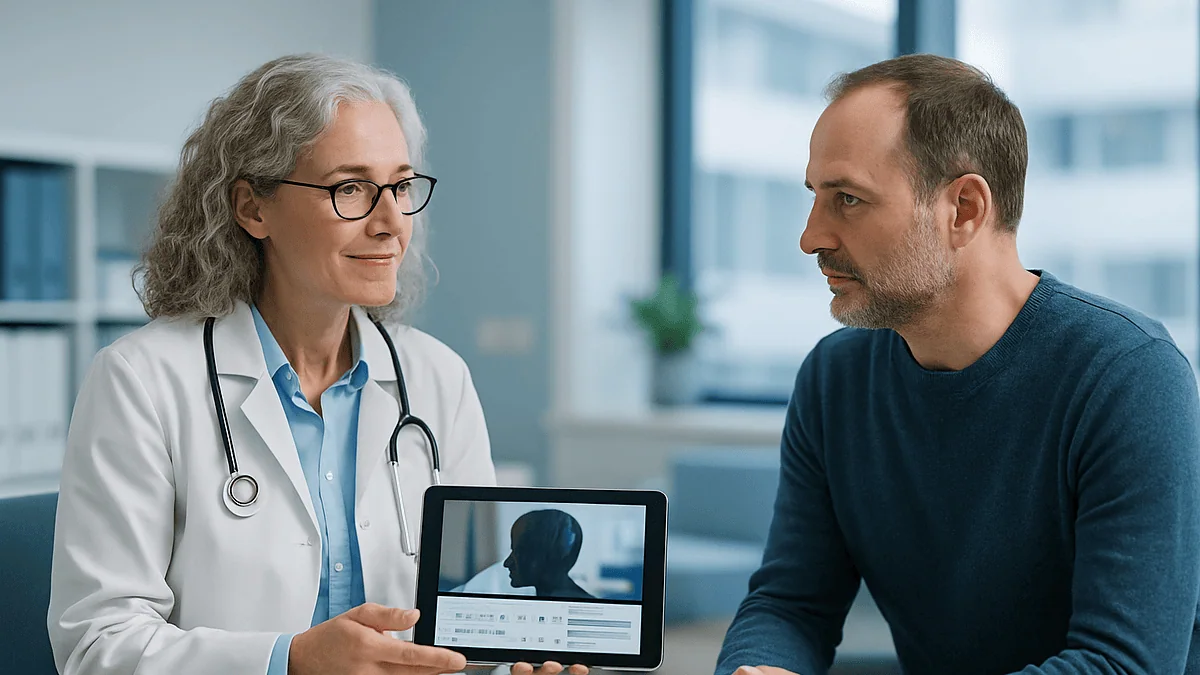
Most first visits are dominated by conversation, not equipment. A pediatric neurologist is a doctor who specializes in the brain and nervous system of children, and the single most powerful diagnostic tool in the room is the history: what happened, in what order, and how your child behaved before and after. Expect a long stretch of questions, some of them oddly specific. Did the head turn to one side? Did the eyes roll up or drift sideways? Was there a smell, a taste, a stomach feeling beforehand? How long until your child recognized you again?
Then comes the examination, which looks less clinical than parents anticipate. The doctor watches your child walk, hop, reach for a toy, follow a light with their eyes, and answer questions suited to their age. Reflexes are tapped. Muscle tone is checked. Head size may be measured in a younger child. Each step tests a different part of the nervous system, and the exam is often normal in children with epilepsy, which is itself useful information.
Only after the story and the exam does testing enter the picture. Some children leave with an order for an EEG, a recording of the brain’s electrical activity through small sensors placed on the scalp. Others are asked to keep a diary and return. A small number are scheduled for imaging. The neurologist may also explain that one seizure does not equal epilepsy: the NIH defines epilepsy as two or more unprovoked seizures occurring at least 24 hours apart, and many children who have a single event never have another.
Do not be surprised if you leave without a firm label. Uncertainty at a first visit is common and honest. What you should leave with is a plan for what happens next and who to call in the meantime.
Preparing for a pediatric neurology appointment for epilepsy: the history that matters most
Neurologists think in timelines. The clearest way to help is to build one before you arrive, on paper or in a phone note, with a line for every event you can remember. Start with the very first thing that looked odd, even if nobody called it a seizure at the time: the staring spells a teacher mentioned, the morning jerks that spilled cereal, the night your child seemed to wake confused and soaked in sweat.

For each entry, capture six details. When it happened, including time of day. How long it lasted, timed if possible rather than guessed, since a frightening thirty seconds can feel like five minutes. What your child was doing beforehand: falling asleep, waking up, watching a screen, running a fever, missing sleep. What you saw during the event, described in ordinary words rather than medical ones. How your child recovered, and how long that took. And whether anyone treated it, and where.
Context around the timeline matters just as much. Write down your child’s birth history, including prematurity or any time in a newborn unit. Note developmental milestones, especially any that came late or were lost. List head injuries, meningitis, and febrile seizures. Fever-related seizures in early childhood affect roughly 2 to 5 percent of children between six months and five years, according to Cleveland Clinic, and they are a routine question at every epilepsy visit.
Family history rounds it out. Ask relatives directly, because seizures in a grandparent or cousin are often never mentioned at family dinners. Some forms of childhood epilepsy run in families, and the answer can shape which tests are ordered.
A one-page summary, handed over at the start, saves fifteen minutes of back-and-forth and lets the doctor spend that time on your questions instead.
How to record a seizure video for the doctor without compromising safety
Filming your child during a seizure feels wrong, and it is worth saying plainly: your child’s safety always comes first, and no clinician expects a recording from a parent who was busy moving a toddler away from a coffee table. When a second adult is present, or the event is already being managed, a video becomes a gift to the diagnostic process. Neurologists often distinguish an epileptic seizure from a fainting spell, a breath-holding episode, or a movement disorder by watching the event itself.
Follow first-aid basics before the phone comes out. Guidance from the CDC is consistent: ease the child to the floor, turn them gently onto one side so saliva can drain, put something soft under the head, loosen anything tight around the neck, and never put anything in the mouth. Note the time the seizure began. Stay until they are fully awake.
If someone can film, these habits make the footage useful:
- Hold the phone horizontally and capture the whole body, not just the face, since the pattern of limb movement carries diagnostic weight.
- Keep the lights on and the camera steady; avoid zooming in and out.
- Speak aloud to your child during the recording and ask simple questions, because whether they respond tells the doctor about awareness.
- Keep filming into recovery. Confusion, sleepiness, weakness on one side, or slurred speech afterward are clues in their own right.
- Do not stop early because the movements seem small. Subtle events are often the hardest to describe.
Afterward, save the clip somewhere you can find it quickly and note the date and duration in your timeline. Most clinics can view video on a phone; ask when you book whether they prefer it uploaded to a patient portal. A recording that is never watched helps nobody.
Which reports and records to bring to the first neurologist appointment for seizures
Paperwork is unglamorous and decisive. A neurologist reading a discharge summary from an emergency department learns what the triage nurse observed, what the temperature was, which blood tests were normal, and whether a scan was done. Without it, the same doctor is guessing from a parent’s understandable memory of a chaotic night.
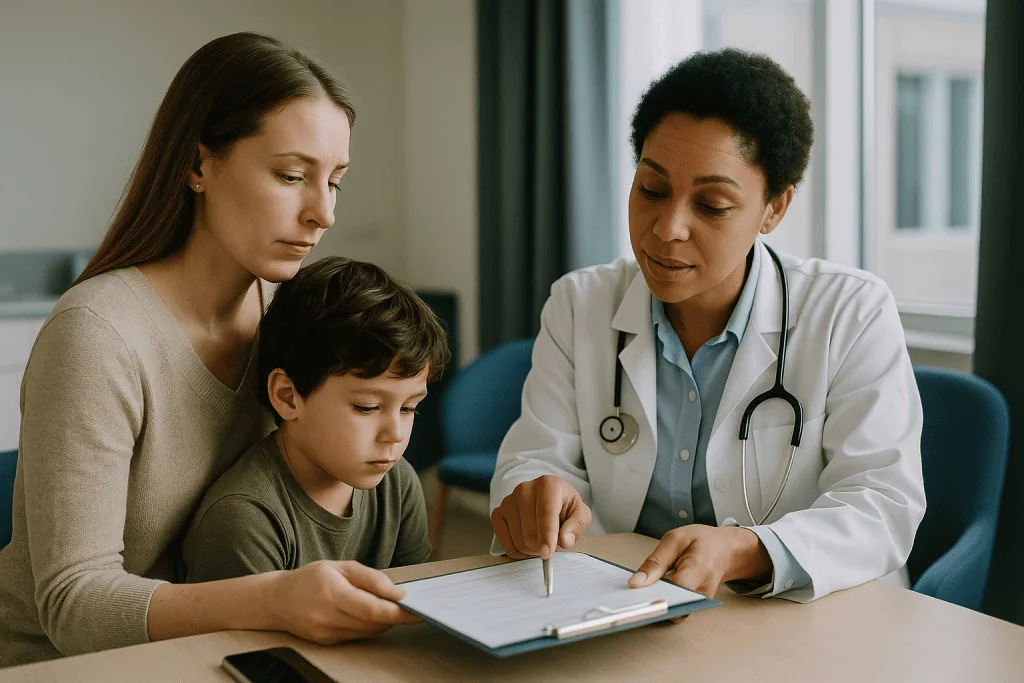
Request copies before the visit rather than assuming records have been transferred; in practice they often have not. The most valuable documents, roughly in order of usefulness, are these:
- Emergency or urgent-care visit notes and discharge summaries from any seizure-related visit.
- Prior EEG reports, ideally with the actual recording if the clinic can share it, because a written summary and the raw tracing can tell different stories.
- Brain imaging reports, whether CT or MRI, and the images themselves on disc or through a records portal if available.
- Blood test results, including any metabolic or genetic testing.
- The referral letter from your child’s primary care clinician.
- Growth and developmental records, or the notes from any developmental assessment or school evaluation.
Bring a current list of every medicine, supplement and herbal product your child takes, with allergies and any past reactions. Include over-the-counter products; some common cold remedies and certain supplements are relevant to seizure threshold, and the neurologist needs the full picture rather than a recommendation from you.
Finally, bring the school. Not literally, but a short note from a teacher describing daytime staring, dropped objects or unexplained tiredness can reveal a pattern parents never witness. Absence seizures, brief lapses in awareness that look like daydreaming, are frequently spotted in classrooms first. The NHS specifically lists eyewitness accounts as part of how epilepsy is diagnosed, and a teacher is an eyewitness with hours of daily observation.
Who is usually referred to pediatric neurology, and who is often asked to wait
Not every child who has a seizure sees a neurologist, and that is by design rather than neglect. Referral pathways exist so that specialist time reaches the children who need it, and so that families are not put through testing that would not change anything.
Referral is typically prompt when a child has had a first unprovoked seizure, meaning one without an obvious trigger such as fever, low blood sugar or a head injury. Recurrent events of any type, seizures that started with one side of the body, prolonged seizures, and events in a child who also has developmental delay or an abnormal examination all tend to move quickly through the system. Infants with clusters of sudden bending or stiffening movements are usually seen urgently, because some infant seizure types are time-sensitive.
Children who may be asked to wait, or who are managed by a pediatrician first, commonly include those with a single simple febrile seizure. A simple febrile seizure lasts less than 15 minutes, involves the whole body, and does not recur within 24 hours; guidance summarized by Cleveland Clinic and MedlinePlus notes that these events do not usually cause harm and do not mean a child has epilepsy. Breath-holding spells in toddlers and fainting in older children are other common look-alikes that a primary care clinician may reasonably observe before referring.
Waiting is not the same as being dismissed. If you are asked to monitor, ask what specifically would change the plan: a second event, a longer event, or a change in your child’s alertness or development. Write that threshold down. If it is crossed, contact the clinician who set it. The decision about referral, and about how quickly your child is seen, rests with the treating team, but a well-documented timeline is often what moves a child up the list.
Which tests might a pediatric neurologist order for epilepsy?
Testing follows the story, not the other way around. A neurologist chooses investigations to answer specific questions: Is this electrical activity typical of seizures? Is there a structural cause? Is there a metabolic or genetic explanation? Some children need none of these at a first visit. Others need several over months. The table below summarizes what each involves, so nothing feels like a surprise.
| Test | What actually happens | How families usually prepare |
|---|---|---|
| Routine EEG | Small sensors are glued or pasted to the scalp to record brain electrical activity; the child rests, breathes deeply and watches flashing lights. Mayo Clinic describes the whole appointment as taking about an hour. | Clean, dry hair without products; a familiar comfort item; a snack for afterward. |
| Sleep-deprived EEG | Same recording, but the child arrives tired so that drowsiness and sleep can be captured, since some patterns appear only then. | The clinic gives specific bedtime instructions; follow those rather than general advice. |
| Prolonged or video EEG | Recording continues for hours or days, often with a camera, to catch an actual event and match behavior to brain activity. | Pack for a hospital stay; bring the seizure diary. |
| MRI of the brain | Magnetic imaging looks for structural causes. No radiation. Young children may need sedation to lie still. | Fasting instructions if sedation is planned; remove metal; discuss hearing protection. |
| Blood or genetic tests | Checks for metabolic, infectious or inherited causes when the history suggests them. | Ask what is being looked for and how results will be shared. |
One point deserves emphasis. A normal EEG does not rule out epilepsy, and an abnormal one does not always confirm it. The NHS notes that the test is read alongside the history, never in isolation. Parents sometimes leave disheartened by a “normal” result; the neurologist usually sees it as one piece of a puzzle rather than a verdict.
What the neurological exam looks for, and what counts as a red flag
Parents often search for red flags in a neurological examination, half hoping to reassure themselves in advance. The honest answer is that these signs are for the clinician to find and interpret, not for families to screen at home. Still, understanding what the doctor is watching for turns a puzzling ten minutes into something you can follow.
The exam is organized around symmetry and development. A neurologist compares left with right: grip strength, reflexes, the way each arm swings during walking, the size of each pupil. Differences between sides can point toward a specific region of the brain and may prompt imaging. In infants, head circumference is plotted against growth charts, and muscle tone is assessed by how the baby feels when lifted and moved. The doctor also observes the things that cannot be tested with a hammer: eye contact, speech, coordination during play, how a child solves a small puzzle.
Findings that tend to accelerate the workup include new weakness on one side of the body, a change in walking, persistent vomiting with headache, a fixed gaze that does not respond, a loss of previously acquired skills such as words or walking, and swelling at the back of the eye seen with an ophthalmoscope, an instrument for looking at the retina. In an infant, an unusually rapid increase in head size is also taken seriously.
Most children with epilepsy have an entirely normal examination. That is not a failure of the visit. Epilepsy is a disorder of electrical function, and the wiring can misfire even when the structure and the child in front of you look completely well. When the exam is normal, the history and the EEG carry more of the diagnostic weight, which is exactly why the preparation in the earlier sections matters so much.
What is the rule of 3 for seizures, and what do guidelines actually say?
Type this question into a search engine and you will find several different answers, which is the first clue that the “rule of 3” is not a formal clinical standard. Some people use it to mean that a seizure lasting three minutes should trigger emergency help. Others use it for three seizures in a day, or three in a lifetime before treatment is considered. None of these appears in mainstream guidance under that name, and the numbers that do appear in guidance are different.
Two thresholds are consistent across the CDC, the NHS and the NIH. The first concerns duration: a convulsive seizure lasting five minutes or longer, or repeated seizures without recovery in between, is an emergency and warrants an ambulance. Five minutes, not three, is the widely published cutoff. The second concerns diagnosis: epilepsy is generally defined as two or more unprovoked seizures more than 24 hours apart, or one seizure with a high estimated likelihood of recurrence based on test results. Two, not three, is the number that matters here.
Why does this distinction matter for a family preparing for a visit? Because informal rules can lead to the wrong action at the wrong moment. A parent who waits for a third seizure before calling may miss a window; a parent who believes three minutes is the emergency threshold may panic during a typical two-minute event that ends on its own. Knowing the published numbers lets you time an event calmly and act at the correct point.
Timing is also something the neurologist will ask about directly. A stopwatch on your phone, started at the first sign and stopped when movements end, produces a number worth far more than an estimate. If the clinic has given you a written plan with specific thresholds for your child, that plan overrides any general rule, including the ones quoted above.
Preparing your child for the pediatric neurology visit: comfort, honesty and the EEG
Children pick up on a parent’s dread. A visit that feels like a courtroom to you will feel like one to them, so the tone you set on the drive matters. For a preschooler, a simple script works: a doctor who knows a lot about brains is going to watch you walk and jump and play some games, and might put some stickers on your head to listen to your brain. For an older child, honesty about why you are there, without alarming detail, respects their intelligence and reduces the sense that something is being hidden.
Practical comfort is easier to control than emotion. Feed your child beforehand unless the clinic has asked otherwise; a hungry child cooperates with nothing. Bring a favorite toy, a tablet with headphones, and a change of clothes for younger children. Schedule the appointment at a time of day when your child is usually at their best, and allow extra time for parking so you are not arriving flustered.
If an EEG is booked, a little preparation prevents most tears. Arrive with clean, dry hair free of oils, gels or braids that would block the sensors. Explain that the paste feels cold and a bit sticky, that nothing hurts, and that they will be asked to breathe fast like blowing out candles and to look at a flashing light. Bring something soothing for afterward, because scalp paste in the hair is a real grievance for a five-year-old.
Teenagers deserve a separate word. Seizures collide with independence, sports, sleepovers and eventually driving, and a teen may have questions they will not ask in front of you. Many clinicians offer adolescents a few minutes alone. Let them take it. The relationship a young person builds with their own care team is part of how epilepsy is managed well through the years ahead.
How anti-seizure medicines work, explained without the jargon
Families often arrive braced for a prescription. Sometimes one is offered at the first visit; often the decision waits for test results or a second event. Either way, understanding the logic helps you take part in the conversation rather than simply receive it.
A seizure is a burst of abnormal, synchronized electrical firing in the brain. Anti-seizure medicines, a group of drugs once called anticonvulsants, work by making that synchronized burst harder to start or sustain. Some do this by stabilizing the channels that let electrical signals travel along nerve cells. Others strengthen the brain’s natural braking system, a chemical messenger that quiets overactive neurons. Still others reduce the release of excitatory messengers that push neurons to fire. Which mechanism suits a given child depends heavily on the seizure type and epilepsy syndrome, which is why the diagnostic work described in earlier sections comes first.
Timelines matter more than most people expect. According to the NHS and the NIH, these medicines are usually introduced gradually and adjusted over weeks, with the aim of finding the lowest amount that controls seizures with the fewest side effects. Early side effects such as sleepiness or irritability often settle as the body adjusts, but any new symptom should be reported rather than endured. Blood tests are sometimes used to monitor certain medicines. None of this involves decisions a parent should make alone; how a medicine is started, adjusted or stopped is entirely a matter for the prescribing clinician, and stopping suddenly can provoke seizures.
Medicine is not the only tool. For children whose seizures are not controlled by drugs, the team may discuss a medically supervised ketogenic diet, a nerve-stimulation device, or evaluation for surgery when seizures start from one identifiable area. Each has its own evidence base and its own risks, laid out neutrally by the treating team when and if they become relevant.
What the following days and weeks usually look like after the first visit
The visit ends, and a new kind of waiting begins. Knowing the ordinary rhythm of the weeks that follow makes the silence between appointments less unsettling.
In the first days, your job is usually observation. Many neurologists ask families to keep a seizure diary: a dated log of every event, its duration, what preceded it, and how recovery went. Apps exist for this, but a notebook by the bed works just as well. Continue recording video when it is safe to do so. If a medicine has been started, the team will typically explain what early side effects to watch for and how to reach them if something worries you.
Test appointments come next. An EEG may be scheduled within days or weeks depending on local waiting times, and results generally return to the neurologist rather than to you directly. Imaging, if ordered, often takes longer to arrange, particularly when sedation is involved. Ask at the first visit how results will be communicated, whether by phone, portal message or a follow-up appointment, so you are not refreshing an inbox for news that was always going to come by letter.
The follow-up visit is where the picture usually sharpens. With a diary, a recording, and test results in hand, the neurologist can often say more clearly whether this is epilepsy, which type it appears to be, and what the options are. Some children are discharged back to their pediatrician after a single unprovoked seizure and a normal workup. Others enter longer-term care with regular reviews.
Throughout, life continues. The NHS and CDC both note that most children with epilepsy attend school, play, and take part in sports with sensible precautions around water and heights. Ask your team for a written seizure action plan that school staff can follow; many clinics provide one, and it turns a frightening classroom moment into a rehearsed response.
What people often get wrong about seizures and the first neurology visit
Some misunderstandings are so common that neurologists spend part of every first visit gently correcting them. Clearing them away beforehand frees the appointment for what matters.
“Putting something in the mouth stops the tongue being swallowed.” It does not, and it can break teeth, injure the person helping, or block the airway. The CDC is unequivocal: nothing goes in the mouth during a seizure. Turn the child on their side and cushion the head instead.
“One seizure means epilepsy.” By the NIH definition, epilepsy requires two or more unprovoked seizures more than 24 hours apart, or one seizure with a high estimated risk of another. A single event, particularly with fever, often stands alone.
“A normal EEG means nothing is wrong.” A routine recording samples a short window of brain activity. Many children with epilepsy have a normal first EEG, which is why sleep-deprived and prolonged recordings exist. The result is interpreted with the history, never instead of it.
“Seizures always involve shaking.” Staring spells, brief lapses in awareness, sudden falls, repeated lip-smacking, or a rising stomach sensation can all be seizures. Describing the exact behavior matters more than deciding whether it “counts.”
“If the doctor doesn’t prescribe something, the visit failed.” Watchful waiting after a first seizure is a legitimate, guideline-supported approach in many cases. Leaving with a diary and a plan is a result.
“Epilepsy is one disease.” It is an umbrella term for many syndromes with different causes, ages of onset and outlooks. Some childhood forms are outgrown; others are lifelong. The neurologist’s early work is largely about figuring out which one your child has, and honest uncertainty at this stage reflects the complexity of the question rather than a lack of skill.
Questions to ask your pediatric epileptologist or neurologist
The question you wish you had asked tends to surface in the parking lot. Write your list before the visit, put the most important three at the top, and hand it to the doctor if time runs short. A pediatric epileptologist, a neurologist with additional training focused on epilepsy, will expect this and often welcome it.
Questions about the diagnosis itself:
- Based on what you have seen so far, do you think these events are seizures, and what else could explain them?
- If this is epilepsy, do you have a sense of which type or syndrome, and how confident are you at this stage?
- Which tests are you ordering, what question does each one answer, and what would a normal result mean?
Questions about safety between now and the next visit:
- What should I do if another event happens, and at what point should I call for emergency help?
- Are there activities we should adjust for now, such as swimming, climbing or baths without supervision?
- Is there anything we should tell school staff, and can you provide a written seizure action plan?
Questions about treatment, if it is raised:
- Why this approach rather than watchful waiting, and what are the alternatives?
- What side effects should we watch for in the first weeks, and which ones warrant a call?
- How will we judge whether it is working, and how long before we review?
Questions about the bigger picture:
- Could this affect learning, sleep or mood, and who can help if it does?
- How often will you see us, and how do we reach the team between visits?
- Is there anything in our family history or my child’s development that changes your thinking?
Record the answers, or ask permission to record the conversation on your phone. Two adults hearing the same explanation remember different halves of it.
When to call your doctor, and when to call an ambulance
Every family leaving a first neurology visit should know two numbers: the clinic’s line for ordinary questions, and the emergency number for the moments that cannot wait. Guidance published by the CDC and the NHS is consistent on where the line falls.
Call emergency services immediately if a convulsive seizure lasts five minutes or longer, if one seizure follows another without your child regaining awareness in between, if your child has trouble breathing or their lips turn blue after the movements stop, if the seizure happened in water, if there was a head injury or a fall from height, if your child has a fever with a stiff neck or an unusual rash, if this is the first seizure your child has ever had, or if they do not begin to wake and respond within a few minutes of the event ending. A seizure in a child with diabetes, or one that leaves weakness on one side of the body afterward, also warrants emergency assessment.
Contact your child’s neurology team or primary care clinician promptly, within the same day where possible, if seizures are becoming more frequent or longer than the pattern you have documented, if a new type of event appears, if your child has started a medicine and develops a rash, persistent vomiting, unusual sleepiness, mood changes or difficulty with balance, if you notice loss of skills your child previously had, or if a seizure occurs after a change in medicine timing. Persistent headaches, especially with morning vomiting, deserve a call rather than a wait.
Between those extremes sits ordinary uncertainty, and it is fine to call about that too. Clinics expect questions from families in the early weeks. The threshold for picking up the phone should be lower, not higher, while you are still learning what is typical for your child. Any written action plan from your team takes precedence over the general guidance above.
Frequently asked questions
What should I expect at a pediatric neurologist appointment for my child's seizures?
Expect a long conversation about exactly what happened, followed by a physical examination that looks like play: walking, hopping, following a light, tapping reflexes. Testing such as an EEG may be ordered afterward rather than done on the spot. You may leave without a firm diagnosis, which is common after a first visit, but you should leave with a plan and a way to contact the team.
What happens at the first neurologist appointment for seizures if I have no video?
Nothing is lost; most families arrive without one. The neurologist relies on your description, any eyewitness accounts, emergency-room notes and the examination. Describe what you saw in plain words, including what happened before and how your child recovered. If events continue, ask whether a recording would help next time, and only film when your child is already safe and another adult is present.
How do I record a seizure video for the doctor safely?
Handle safety first: turn your child onto their side, cushion the head, put nothing in the mouth and note the start time. If someone can film, hold the phone horizontally, capture the whole body, keep lights on, talk to your child to test awareness, and keep recording through recovery. Save the clip with the date and duration, and ask the clinic how they prefer to receive it.
What is the rule of 3 for seizures?
It is not a formal clinical rule, and people use it to mean different things: three minutes, three seizures in a day, or three lifetime events. Published guidance from the CDC and NHS uses five minutes as the emergency threshold for a convulsive seizure, and the NIH defines epilepsy as two or more unprovoked seizures more than 24 hours apart. Follow any written plan your clinic gives you.
What are red flags in a neurological examination for a child?
Clinicians pay particular attention to asymmetry, such as weakness or altered reflexes on one side, a change in walking, loss of skills a child previously had, persistent vomiting with headache, swelling at the back of the eye, and in infants an unusually rapid increase in head size. These findings are for the doctor to identify and interpret. Most children with epilepsy have a completely normal examination.
What records should I bring to a pediatric epilepsy visit?
Bring emergency-department discharge notes, any prior EEG or imaging reports, blood test results, the referral letter, developmental records, and a full list of medicines, supplements and allergies. Request copies yourself rather than assuming they were sent. A short note from a teacher describing daytime staring or unexplained tiredness can also be valuable, since classroom staff often witness events parents never see.
Does my child need an EEG before the first appointment?
Usually not. The neurologist decides which tests are needed after hearing the history and examining your child, and ordering an EEG beforehand can mean the wrong type is done. If one has already been performed elsewhere, bring the report and, where possible, the recording itself. A normal result does not rule out epilepsy, and the doctor will interpret it alongside everything else.
How long does a routine EEG take for a child?
Mayo Clinic describes a routine EEG appointment as taking about an hour, including the time needed to place the sensors and remove them afterward. Sleep-deprived and prolonged video EEGs take longer, sometimes hours or days, because they aim to capture drowsiness, sleep or an actual event. The test is painless, though the scalp paste is cold and a nuisance to wash out.
Will my child be started on medicine at the first neurology visit?
Sometimes, but often the decision waits for test results or a second event. After a single unprovoked seizure with a normal workup, watchful waiting is a recognized approach. If medicine is discussed, the clinician will explain the mechanism, the typical timeline of gradual adjustment over weeks, and the side effects to report. How it is started, changed or stopped is always the prescribing clinician’s decision.
What questions should I ask a pediatric epileptologist?
Prioritize three: what you think these events are and what else could explain them; what I should do if another one happens and when to call for emergency help; and what each test you are ordering is meant to answer. Then ask about school, activities, a written seizure action plan, and how to reach the team between visits. Write answers down or ask to record the conversation.
References
- NIH National Institute of Neurological Disorders and Stroke – Epilepsy and Seizures
- CDC – About Epilepsy
- NHS – Epilepsy: Diagnosis
This article is for general information only and is not a substitute for professional medical advice. Please consult a qualified doctor about your individual situation.

More from the Blog

Do Kids Need Vitamins? Iron, Vitamin D and the Evidence
Most children who eat a reasonably varied diet do not need a daily multivitamin, and trials in well-nourished kids show no measurable benefit. Two…

Baby and Toddler Sleep: What Is Normal at Each Age and the Methods With Evidence
Baby sleep changes fast: newborns sleep in short 50 to 60 minute cycles around the clock, most infants begin consolidating night sleep between 4…

When Do Missed Milestones Call for a Developmental Delay Evaluation? A Calm Guide for Parents
Seek help for a suspected developmental delay as soon as you have a concern, rather than waiting to see if your child catches up.…

What a Pediatric Physical Therapy Session Looks Like: Play, Strength Work and Skill Practice
A pediatric physical therapy session usually blends structured play with strength work and repeated practice of movement skills such as rolling, sitting, walking or…

Cradle Cap, Baby Eczema and Diaper Rash: The Three Baby Skin Problems, Sorted
Cradle cap is a harmless, common form of seborrheic dermatitis that causes greasy yellow or white scales on a baby's scalp in the first…

Supporting a Child Emotionally Through Pediatric Plastic Surgery: Words and Routines
Supporting a child emotionally before surgery works best when honest, age-matched words are paired with steady routines. Tell younger children a day or two…