

Targeted Therapy or Immunotherapy for Melanoma: How Mutation Testing Guides the Choice

Key Takeaways
- BRAF V600 mutation testing on tumor tissue determines whether BRAF and MEK inhibitors are even an option; without the mutation, immunotherapy is the main drug route.
- Roughly half of skin melanomas carry a BRAF change, and people whose tumors do not have it respond to immunotherapy about as well as those whose tumors do.
- Targeted therapy usually acts within weeks but often loses effect as resistance develops, while immunotherapy acts more slowly and its benefit more often persists after treatment ends.
- Randomized sequencing trials in advanced BRAF-mutant melanoma have generally favored starting with immunotherapy and switching to targeted drugs at progression, for people who can safely receive it.
- Immune-related side effects can appear for the first time months after the last infusion, so new symptoms after finishing immunotherapy still warrant a call to the oncology team.
- Many trial protocols planned advanced-disease immunotherapy for up to about two years and adjuvant courses for about one year, after which people with controlled disease typically move to surveillance.
For melanoma, mutation testing checks the tumor for changes in the BRAF gene. If no BRAF V600 mutation is found, targeted BRAF and MEK inhibitors are not an option and immunotherapy is usually the main drug treatment. If a BRAF mutation is present, both approaches are possible, and current evidence generally favors starting with immunotherapy in many situations, with targeted therapy held in reserve or used when a fast response is needed. The treating oncology team makes the final decision.
The pathology report arrives with a line nobody prepared you for: BRAF V600E mutation detected. You are already absorbing the word melanoma, and now a string of letters and numbers seems to be asking you to choose between two kinds of medicine you have never heard of. One oncologist mentions immunotherapy. A friend of a friend swears by pills that shrank her brother’s tumors in weeks. Which is right?
The honest answer is that the targeted therapy vs immunotherapy melanoma question is less a fork in the road than a map with several routes, and the mutation test is what tells your team which routes exist for you. Roughly half of melanomas that start in the skin carry a BRAF change; the other half do not, and for them the map has fewer branches.
This article walks through what the test looks for, how each treatment works in plain language, what the evidence says about order and timing, and what the first weeks usually feel like, so the conversation with your care team starts from understanding rather than dread.
Why targeted therapy vs immunotherapy melanoma is not a simple either-or
People tend to picture the choice as two doors. Behind one, drugs that unleash the immune system. Behind the other, pills that block a faulty growth signal. Pick the better door and you are done.
Melanoma care does not work that way, for three reasons. First, only tumors with a specific BRAF mutation can respond to targeted BRAF and MEK inhibitors at all, so for about half of patients one door is simply not there. Second, the two approaches are not mutually exclusive over the course of an illness; a person may receive one, then the other, or in some settings a planned combination. Third, the right first step depends on far more than the mutation: the stage, how quickly the disease is growing, whether it has reached the brain, what other health conditions someone lives with, and their own tolerance for different kinds of risk.
Immune checkpoint inhibitors are medicines that release brakes on the immune system so it can attack cancer. Targeted therapy in melanoma means medicines that block proteins made by the mutated BRAF gene and its partner protein, MEK, which together tell the cell to keep dividing. The two act by unrelated mechanisms, cause different side effects, and behave differently over time.
The National Cancer Institute’s patient summary describes both as standard options for melanoma that has spread or cannot be removed, and notes that testing for gene changes is part of planning treatment. That sentence is the whole point of mutation testing: it is not a verdict, it is a set of directions your oncology team reads alongside everything else they know about you.
What is mutation testing for melanoma, and what does BRAF mean?
Mutation testing, sometimes called molecular or genomic testing, examines the DNA inside tumor cells taken from a biopsy or surgical specimen. It is not a test of the genes you inherited; it looks for changes that arose inside the cancer itself.
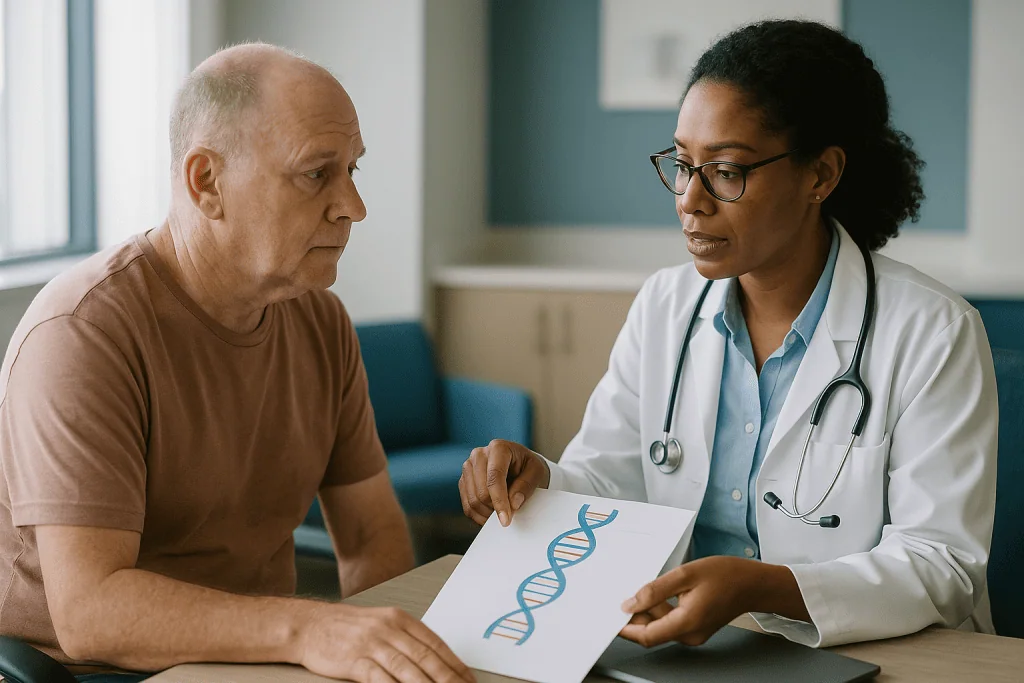
BRAF is a gene that makes a protein acting as a relay switch in a signaling chain, the MAPK pathway, that tells cells when to grow and divide. In many melanomas a single change at position 600 of the protein, most often called V600E or V600K, jams that switch in the on position. The cell no longer waits for a growth signal; it behaves as though one is always arriving.
The lab usually reports one of three findings:
- BRAF V600 mutation present, which opens the possibility of BRAF and MEK inhibitor therapy.
- BRAF wild-type, meaning no BRAF mutation was found. Targeted BRAF drugs are not used because there is no faulty switch to block.
- Other changes, such as in NRAS or KIT, which do not currently lead to standard targeted treatment in most settings but can matter for clinical trial eligibility.
Turnaround varies by laboratory and method, and a result can take days to a few weeks. Sometimes the first sample does not contain enough tumor tissue and the test must be repeated on another specimen. That delay is frustrating but ordinary, and it does not mean anything has gone wrong with your care.
Guidelines from major cancer bodies recommend BRAF testing for anyone with stage III or stage IV melanoma, and increasingly for high-risk earlier disease where adjuvant treatment, meaning treatment after surgery to reduce the chance of recurrence, is being considered.
How immunotherapy for melanoma actually works
Your immune system already patrols for abnormal cells, and melanoma is one of the cancers it recognizes most readily. The trouble is that tumors learn to hide. Melanoma cells display proteins that press molecular brakes on T cells, the white blood cells that would otherwise destroy them. Two of these brakes have names you will hear often: PD-1 and CTLA-4.
Checkpoint inhibitor immunotherapy consists of antibody medicines, given by intravenous infusion, that block those brakes. The drug does not attack the cancer. It removes the disguise, and the immune system does the rest. This distinction explains almost everything about how immunotherapy behaves.
Because the immune system needs time to mount a response, tumors may not shrink for weeks, and occasionally scans look worse before they look better as immune cells flood into a lesion. Because the immune response can persist after the drug is gone, benefit sometimes continues long after infusions stop. And because the brakes being released also protect healthy tissue from friendly fire, the side effects are immune attacks on normal organs: skin, bowel, thyroid, liver, lungs, pituitary gland, and occasionally the heart or nerves.
The NCI describes these as immune-related adverse events, and the point that matters most for patients is that they are treated by damping the immune system, typically with corticosteroids under specialist supervision, and that catching them early makes them far more manageable.
Melanoma immunotherapy can be a single PD-1 inhibitor or a combination of a PD-1 and a CTLA-4 inhibitor. Combination tends to produce responses in more people but with a considerably higher rate of serious immune side effects, a trade-off your team weighs against how aggressive the disease appears.
BRAF and MEK inhibitors for melanoma: switching off the growth signal
If immunotherapy is a general who rallies the army, targeted therapy is a locksmith who disables one specific door. BRAF inhibitors are oral medicines that bind the mutant BRAF protein and stop it from relaying its constant grow-now message. MEK inhibitors block the next protein down the same chain. They are almost always given together, because blocking BRAF alone lets cells reroute the signal through MEK, and the combination both works better and, counterintuitively, causes fewer skin side effects than a BRAF inhibitor by itself.
The defining feature of this approach is speed. Because the drug acts directly on the machinery driving cell division, tumors often begin to shrink within the first few weeks, and symptoms such as pain from a large mass can ease quickly. For someone whose disease is growing fast, or whose tumor is pressing on something important, that speed can matter enormously.
The defining limitation is durability. Cancer cells are prone to new mutations, and over months many tumors find alternative routes around the block. Resistance does not develop in everyone, and some people remain on these medicines for years, but it is common enough that oncologists think about what comes next from the outset.
Common side effects, as summarized by the NCI and Mayo Clinic, include fever, fatigue, rash, joint aches, nausea, light sensitivity, and changes in heart rhythm or eye function that require monitoring. Fever in particular can be recurrent and is a frequent reason for temporary pauses that the prescribing clinician manages.
These medicines are taken at home rather than in an infusion chair, which many people find easier to fit around work and family, though the daily routine and the need for blood tests, skin checks, and eye and heart monitoring is still real.
Targeted therapy vs immunotherapy melanoma: side-by-side comparison
Seeing the two approaches next to each other makes the logic of sequencing easier to follow. Nothing in this table is a recommendation; it describes general patterns reported in guideline-level sources and clinical trials.
| Feature | Immune checkpoint inhibitors | BRAF plus MEK inhibitors |
|---|---|---|
| Who is eligible | Most people with advanced or high-risk melanoma, regardless of mutation | Only tumors with a BRAF V600 mutation |
| How it is given | Intravenous infusion in a clinic, on a cycle set by the team | Oral tablets or capsules taken daily at home |
| Mechanism | Releases brakes so T cells attack the tumor | Blocks the mutated growth signal inside the cancer cell |
| Typical speed of response | Slower; weeks to months, occasionally after initial apparent growth | Faster; often within weeks |
| Durability | Responses can persist long after treatment stops | Resistance commonly develops over time |
| Main side-effect pattern | Immune attacks on normal organs; can appear at any time, even after stopping | Fever, rash, fatigue, joint pain, eye and heart monitoring needs |
| Planned duration | Fixed course in many protocols, often around a year in the adjuvant setting | Continued while it is working and tolerated |
Two takeaways stand out. The immunotherapy column is open to almost everyone, while the targeted column is gated by the mutation test. And the columns trade speed for staying power: targeted drugs usually act fastest, immunotherapy more often keeps working after the last dose.
That asymmetry is why, for a BRAF-mutant tumor that is not in immediate crisis, many oncology guidelines now lean toward immunotherapy first. It is also why, when disease is advancing dangerously, the faster option may be chosen. Which situation applies to you is a clinical judgment only your treating team can make.
What stage of melanoma requires immunotherapy?
Stage describes how far a melanoma has traveled. Stages I and II are confined to the skin, with stage II thicker or ulcerated. Stage III means cancer has reached nearby lymph nodes or skin. Stage IV means distant spread to other organs.
Immunotherapy is not required at any stage in the sense of being automatic. It is a standard option in two broad settings, according to the NCI patient summary and NHS guidance.
The first is stage IV or unresectable stage III disease, meaning melanoma that has spread or cannot be fully removed by surgery. Here drug treatment is the mainstay, and checkpoint inhibitors are usually the first consideration whether or not a BRAF mutation is present.
The second is adjuvant treatment after complete surgical removal of stage III disease, and in some cases high-risk stage II disease, to lower the chance of the melanoma returning. In this setting immunotherapy is given to people who currently have no detectable cancer, which changes the calculation: the potential benefit is reducing a future risk, while the side effects are experienced now. For a BRAF-mutant stage III melanoma, adjuvant BRAF and MEK inhibitors are an alternative adjuvant option, and the two are discussed together.
Increasingly, trials have examined neoadjuvant immunotherapy, given before surgery, for stage III disease that can still be operated on. This is an active area, and whether it is offered depends on the specific situation and local practice.
Early-stage melanoma treated with surgery alone does not usually involve immunotherapy, because the risk of recurrence is low enough that the side effects would outweigh the benefit for most people. The stage on your report is the starting point of that conversation, not the end of it.
At what stage is targeted therapy used, and who is usually asked to wait?
BRAF and MEK inhibitors are used in the same two broad settings as immunotherapy: advanced disease that has spread or cannot be removed, and adjuvant treatment after surgery for stage III melanoma. The difference is the gate. No BRAF V600 mutation, no targeted therapy.
Within the group who do carry the mutation, several patterns tend to nudge a team toward starting with targeted drugs:
- Rapidly growing or bulky disease where waiting weeks for an immune response feels unsafe.
- Symptoms that need quick relief, such as pain or organ compromise from a large tumor.
- A condition that makes immunotherapy riskier, for example an active autoimmune disease or a transplanted organ, where releasing immune brakes could cause serious harm.
- Someone who has already been through immunotherapy and the melanoma has progressed.
Patterns that more often lead teams to hold targeted therapy in reserve include disease that is growing slowly, a good performance status, and no contraindication to checkpoint inhibitors. The reasoning is that immunotherapy responses are more often durable, and that targeted drugs appear to work about as well later as they do first, whereas immunotherapy may work less well after targeted therapy.
Being asked to wait can feel like being denied something. In practice it usually means the team believes the other route offers a better chance of a lasting result and wants to keep targeted therapy available as a next step. Equally, some people who are keen on immunotherapy are steered toward targeted drugs because their disease is moving too quickly to wait. Neither is a downgrade.
A separate group is asked to wait on drug treatment altogether: those with early-stage melanoma completely removed by surgery, for whom active surveillance with regular skin and lymph node checks is the evidence-based path.
Which comes first when melanoma is BRAF-positive? What the evidence shows
For years this was genuinely unsettled. Both approaches had strong trial data on their own, but nobody had directly compared starting with one versus the other and switching at progression.
Randomized trials have since addressed the question in advanced BRAF-mutant melanoma. The consistent signal is that beginning with combination immunotherapy, and moving to BRAF and MEK inhibitors if the disease progresses, is associated with better long-term outcomes than the reverse order for many patients. The proposed explanation fits the mechanisms: immunotherapy needs a functioning immune system and time to work, and it appears to be less effective when introduced after a tumor has already developed resistance to targeted drugs. Targeted drugs, by contrast, tend to work regardless of what came before.
These findings have shaped guideline language, which now generally favors immunotherapy as the first systemic treatment for BRAF-mutant advanced melanoma in people who can safely receive it, with targeted therapy reserved for rapid progression, contraindications to immunotherapy, or later lines.
Three honest caveats belong here. The trials enrolled people well enough to tolerate combination immunotherapy, so their results do not automatically apply to someone frail or with autoimmune disease. The differences are population averages; individuals on either arm did well and poorly. And the sequencing question in the adjuvant setting, after surgery, has not been tested in the same head-to-head way, so both options remain standard there.
There is also ongoing research into giving both approaches at once or in short planned alternations. Results so far have been mixed, with added toxicity and without a clear advantage in most studies, which is why triple combinations are not routine outside trials.
Your team will place your situation against this evidence. Ask them which trial populations you most resemble; it is a fair and useful question.
What the first weeks of treatment usually look like
Whichever route is chosen, the opening weeks follow a recognizable shape, and knowing it in advance takes some of the fear out of the calendar.
With immunotherapy, the first visit involves baseline blood tests that check thyroid, liver, kidney, and blood sugar so that any later immune effect can be spotted against a starting point. Infusions are typically given every few weeks, with the interval set by the protocol your team uses. Many people feel little on infusion day beyond tiredness. Over the first one to three months, the most common immune-related effects to surface are rash, itching, fatigue, and loose stools. Thyroid changes often show up on blood tests before anyone feels them. The first scan to assess response is usually scheduled around the third month, and your team will warn you that an early scan can be hard to interpret.
With BRAF and MEK inhibitors, the first weeks are about establishing routine and watching for fever. Baseline tests include an eye examination and a heart assessment, since these medicines can affect the retina and the heart’s pumping strength. Fever, sometimes with chills, is common enough that clinicians give clear instructions about when to pause and who to call before the first tablet is taken. Rash, fatigue, joint aches, and nausea often ease after the first month as the body adjusts. Because response is faster, a scan may be arranged sooner than with immunotherapy, and symptomatic relief can be noticeable within weeks.
In both cases, side effects are tracked by grade, a standardized severity scale, and it is the grade rather than the presence of an effect that drives decisions about pausing or adjusting treatment. Those decisions rest entirely with the prescribing clinician, which is why reporting symptoms promptly matters more than trying to gauge them yourself.
What happens after 2 years of immunotherapy for melanoma?
This question comes up because many of the trials that established checkpoint inhibitors for advanced melanoma planned treatment for up to about two years, or until the disease progressed or side effects became unacceptable. Adjuvant courses after surgery were generally planned for around one year. Those durations were practical study designs, not biological laws, and clinicians have been learning what happens afterward ever since.
For someone whose melanoma has responded and remains controlled at the two-year mark, the usual plan is to stop treatment and move to surveillance with regular scans and clinic visits. Follow-up data from the major trials suggests that a substantial share of people who stop in this situation stay in remission for years, and that responses that have held for that long tend to be durable. Exact proportions vary across studies, and your oncologist can quote the figures most relevant to your regimen rather than a headline number.
If melanoma later returns after a planned stop, re-treating with the same class of immunotherapy is a recognized option, and many people respond again. If a BRAF mutation is present, targeted therapy becomes a natural next step at that point.
Two things surprise people about the post-treatment period. First, immune-related side effects can appear for the first time months after the last infusion, so a new rash, persistent diarrhea, or unexplained fatigue still warrants a call to the oncology team even when treatment is over. Second, some effects, particularly on hormone-producing glands such as the thyroid or pituitary, can be permanent and require lifelong replacement medication. That is manageable, but it is a real consequence to know about.
Stopping is a shared decision. Some people prefer to continue if they are tolerating treatment well; others are relieved to step away. There is no single correct answer, and your team will weigh the evidence with you.
What is the newest breakthrough in melanoma treatment? An honest look
The phrase invites hype, so it is worth being specific about what has genuinely changed and what is still being tested.
The most consequential shift is not a single drug but the reorganization of treatment around earlier intervention. Trials of neoadjuvant immunotherapy, given before surgery for stage III melanoma, have shown that a short course can shrink disease and that the degree of response seen in the removed tissue helps predict how a person will do afterward. This is changing how some centers approach operable stage III disease, though practice varies and it is not yet universal.
A second development is the addition of a third immune checkpoint target, LAG-3, alongside PD-1. Combinations blocking both have entered standard use for advanced melanoma in some regions, offering an alternative to the older PD-1 plus CTLA-4 pairing with a different side-effect profile. Whether it is better, equivalent, or simply different for a given person is a matter your team will interpret from the trial data.
A third is cell therapy using tumor-infiltrating lymphocytes, or TILs: immune cells extracted from a person’s own tumor, multiplied in a laboratory, and returned by infusion after conditioning chemotherapy. This approach has shown responses in some people whose melanoma progressed after checkpoint inhibitors. It is intensive, requires hospitalization, and is available only at specialized centers, so it is realistically an option for a small proportion of patients.
Research into mRNA-based personalized cancer vaccines combined with immunotherapy has produced encouraging early results and is now in larger confirmatory trials. It is promising and unproven, and any article calling it a breakthrough today is running ahead of the evidence.
What none of these change is the first question. Mutation testing still comes before everything else, because it determines which routes are even open.
Immunotherapy for melanoma side effects versus targeted therapy side effects
People often ask which treatment is gentler. The truthful answer is that they are hard on different systems, in different rhythms, and the better fit depends partly on what a person can most easily live with and most reliably notice.
Immune-related side effects are unpredictable in timing and location. Most people on a single PD-1 inhibitor have mild or no problems; a minority develop serious inflammation of the bowel, liver, lungs, or endocrine glands that needs prompt treatment and sometimes hospital admission. Combination immunotherapy raises that minority substantially. The signature features are that these effects can begin at any time, including after treatment ends, and that they are treated by suppressing the immune system, which occasionally means pausing or permanently stopping the cancer drug.
Targeted therapy side effects are more predictable and more front-loaded. Fever, chills, rash, joint pain, fatigue, and nausea tend to appear in the first weeks and often settle. The medicines can also reduce the heart’s pumping function, affect vision through fluid under the retina, raise blood pressure, and cause light sensitivity. These are monitored on a schedule and are usually reversible when the drug is paused or adjusted by the prescribing clinician.
A practical way to think about it: immunotherapy asks you to be a vigilant reporter for a long time, because the warning signs are varied and can be subtle. Targeted therapy asks you to manage a daily routine and to act quickly on fever, with regular scheduled checks doing much of the vigilance for you.
Neither profile is trivial, and neither should be minimized. What matters is that both are well characterized, that oncology teams have clear protocols for each, and that early reporting is the single behavior most within your control that changes how these effects play out.
What people often get wrong about targeted therapy and immunotherapy for melanoma
Some misunderstandings surface so often in clinic that correcting them saves real distress.
“Having a BRAF mutation means my melanoma is worse.” The mutation describes a growth mechanism, not a prognosis in isolation. Its main practical significance is that it opens an additional treatment route.
“If I test negative, I have fewer chances.” BRAF wild-type melanoma responds to immunotherapy about as well as BRAF-mutant melanoma does. You lose one option, not your prospects.
“Targeted therapy is the modern one, immunotherapy is the old one.” Both entered melanoma care in the same era, and the more recent evidence, if anything, has strengthened the case for immunotherapy first in many situations.
“Pills are milder than infusions.” Route of administration says nothing about intensity. Oral BRAF and MEK inhibitors carry meaningful side effects and require heart and eye monitoring.
“If the scan looks worse after starting immunotherapy, it has failed.” Early apparent growth can reflect immune cells entering the tumor. Your team interprets this against symptoms and later scans, which is why they may continue treatment when a first scan is ambiguous.
“When immunotherapy stops, protection stops.” The immune memory it builds can persist long after infusions end, which is the basis for planned stopping after a period of control.
“Supplements or diets can substitute for either treatment.” No dietary approach has been shown to treat melanoma, and some supplements interact with these medicines or interfere with the immune system. Tell your team about anything you take.
“The newest drug in the news is what I should be on.” Newer is not automatically better for a particular person. Standard treatments have the longest track record, and trials of newer approaches are how that record gets built.
Questions to ask your care team about mutation testing and treatment choice
A good consultation leaves you knowing not just what is planned but why. These questions are designed to draw that reasoning out. Bring someone with you if you can, and do not hesitate to ask for answers in writing.
- Has my tumor been tested for BRAF and other mutations, and what exactly did the report show?
- What stage is my melanoma, and which of the settings we discussed does that put me in: adjuvant after surgery, or treatment for disease that has spread?
- Given my mutation status, which treatments are actually options for me, and which are not?
- If both routes are open, why are you recommending this one first, and what would make you choose the other?
- How quickly do you expect to know whether the treatment is working, and how will you measure that?
- What side effects should I watch for, which ones need a same-day call, and who do I call outside office hours?
- What baseline tests will I have, and how often will monitoring happen?
- How long is treatment planned to continue, and what would lead you to stop or change it?
- If this treatment stops working, what is the likely next step?
- Do any of my other health conditions or regular medicines affect which option is safer?
- Is there a clinical trial I could be considered for, and what would that involve?
- Who coordinates my care between oncology, dermatology, surgery, and my primary clinician?
You are entitled to a second opinion, and asking for one is routine in cancer care rather than a sign of distrust. Whatever you decide, the plan should feel like something you understand and agreed to, not something that happened to you.
When to call your doctor: red-flag signs during melanoma treatment
Both treatment approaches are safest when problems are reported early, and oncology teams would rather hear about a symptom that turns out to be nothing than learn about a serious one late. Contact your team the same day, or use the emergency number they gave you, for any of the following.
On immunotherapy, seek urgent advice for diarrhea that is more frequent than usual or contains blood, severe abdominal pain, new shortness of breath or cough, yellowing of the skin or eyes, dark urine, severe headache with vision change or profound fatigue, confusion, new weakness or numbness, chest pain or palpitations, a widespread or blistering rash, or eye pain and redness. These can signal inflammation of the bowel, lungs, liver, pituitary, nervous system, heart, skin, or eyes and are treatable when caught early.
On BRAF and MEK inhibitors, call promptly for fever, especially with chills or feeling unwell, since it may need the drug to be paused by your clinician; new blurred vision or visual disturbance; shortness of breath, swollen ankles, or a racing heartbeat; a painful or peeling rash; or bleeding that does not stop.
Regardless of treatment, go to an emergency department for chest pain, difficulty breathing, signs of a stroke such as facial drooping or slurred speech, a seizure, fainting, or inability to keep fluids down.
Remember that immune-related effects can begin months after immunotherapy has finished. If you have ever received a checkpoint inhibitor, mention it to any clinician who treats you for a new symptom, including in urgent care settings, because it changes how they should think about the cause.
Every decision about pausing, adjusting, or restarting treatment belongs with your treating team. Your job is to notice and report; theirs is to act.
Frequently asked questions
What stage of melanoma requires immunotherapy?
Immunotherapy is a standard option for stage IV melanoma, for stage III disease that cannot be fully removed, and as adjuvant treatment after surgery for stage III and some high-risk stage II melanoma. It is not automatic at any stage. Early melanoma removed completely by surgery is usually managed with monitoring alone, because the side effects would outweigh the benefit for most people at low recurrence risk.
At what stage of cancer is targeted therapy used for melanoma?
BRAF and MEK inhibitors are used for melanoma that has spread or cannot be removed, and as adjuvant treatment after surgery for stage III disease, but only when the tumor carries a BRAF V600 mutation. Without that mutation the drugs have no target and are not prescribed. Within eligible patients, teams often choose targeted therapy first when disease is growing quickly or immunotherapy is unsafe.
What is BRAF mutation melanoma treatment?
It refers to treatment options available when a melanoma carries a BRAF V600 mutation, a change that jams a growth signal in the on position. These tumors can be treated with oral BRAF plus MEK inhibitors that block the faulty signal, as well as with immunotherapy, which works regardless of mutation. Which comes first depends on stage, pace of disease, other health conditions, and the treating team’s judgment.
What happens after 2 years of immunotherapy for melanoma?
If the melanoma is controlled at that point, treatment is usually stopped and the person moves to regular scans and clinic visits. Follow-up from major trials suggests many people who stop after a sustained response remain in remission, and re-treatment is possible if disease returns. Immune-related side effects can still emerge after stopping, and some hormonal effects may be permanent, so ongoing follow-up matters.
What are the main immunotherapy for melanoma side effects?
The most common are rash, itching, fatigue, diarrhea, and thyroid changes that often show on blood tests before they cause symptoms. Less common but serious effects include inflammation of the bowel, liver, lungs, pituitary gland, heart, or nervous system. Combination immunotherapy raises the risk considerably compared with a single agent. These effects are treated by damping the immune system under specialist care, and early reporting improves outcomes.
How do BRAF and MEK inhibitors for melanoma work?
They are oral medicines that block two proteins in the same growth-signaling chain inside the cancer cell. The BRAF inhibitor binds the mutated protein and stops its constant grow-now message; the MEK inhibitor blocks the next relay, preventing cells from rerouting around the first block. Given together, they act quickly, often within weeks, though many tumors eventually develop resistance and the team plans for a next step.
If my melanoma is BRAF-negative, do I have fewer treatment options?
You have one fewer option, targeted BRAF and MEK inhibitors, but your response to immunotherapy is expected to be similar to that of people with BRAF-mutant tumors. Checkpoint inhibitors remain the main drug treatment for advanced and high-risk melanoma regardless of mutation status. Other mutations found on testing, such as NRAS or KIT, may also open clinical trial possibilities worth asking about.
Can targeted therapy and immunotherapy for melanoma be given at the same time?
Combining them has been studied, but results have been mixed, with added toxicity and no consistent advantage over sequential treatment in most trials. For that reason triple combinations are not routine outside research settings. The more common approach is to use one, then switch to the other if the disease progresses or side effects become unacceptable, with the order decided by the treating team.
What is the newest breakthrough in melanoma treatment?
The most significant recent developments are neoadjuvant immunotherapy given before surgery for stage III disease, combinations that block a third immune checkpoint called LAG-3, and cell therapy using a person’s own tumor-infiltrating lymphocytes for melanoma that progressed after checkpoint inhibitors. Personalized mRNA vaccines are in confirmatory trials and remain unproven. None of these remove the need for mutation testing before treatment planning.
How long does BRAF mutation testing take, and what if there is not enough tissue?
Results typically take from several days to a few weeks depending on the laboratory and method used. If the biopsy contains too little tumor, the test may need to be repeated on another sample, which causes a delay but does not indicate a problem with your care. In urgent situations, teams may begin planning around the most likely scenario while awaiting the result.
This article is for general information only and is not a substitute for professional medical advice. Please consult a qualified doctor about your individual situation.

More from the Blog

When Targeted Therapy Stops Working: Resistance, Repeat Biopsies and the Next Options
When targeted therapy stops working, it usually means the cancer has found a way around the drug, a process called acquired resistance. The care…
Why Cystoscopy Surveillance Continues for Years After Bladder Cancer Treatment
Cystoscopy surveillance after bladder cancer continues for years because the disease has one of the highest recurrence rates of any solid tumor, and new…

Radiation Precautions After Radioiodine Treatment: Distance, Sleeping Alone and Hygiene
Radiation precautions after radioactive iodine usually mean keeping extra distance from other people, sleeping alone, and taking care with urine, saliva and sweat for…

How Acute Lymphocytic Leukemia Treatment Runs in Phases, From Induction to Maintenance
Acute lymphoblastic leukemia is treated in sequential phases rather than one course. Induction, usually about four weeks, aims to clear leukemia cells from the…

What Sarcoma Follow-Up Involves: Scheduled Imaging, Wound Review and Function Checks
Sarcoma follow-up combines scheduled imaging, wound checks and function assessments. Guideline consensus suggests chest imaging by CT or X-ray, plus MRI or ultrasound of…

Flying Home After Radioiodine Treatment: Airport Detectors, Timing and What to Carry
Flying after radioactive iodine treatment is usually possible once your treating team confirms your radiation level has fallen enough for close contact with other…