

The Low-Fat Diet After Pancreatitis: How Eating Changes While the Pancreas Recovers
Key Takeaways
- Fat is the nutrient limited after pancreatitis because nearly all of the body's fat-digesting enzyme, lipase, comes from the pancreas, so fatty meals demand the most from the inflamed gland.
- Current NHS and Mayo Clinic guidance favors eating as soon as pain and nausea allow rather than prolonged fasting, because an unused gut loses its protective barrier.
- MedlinePlus discharge guidance suggests around six small meals a day, plenty of fluids and limited caffeine, with alcohol avoided entirely.
- Alcohol and smoking outrank any food choice: the NHS names alcohol as a leading cause, and the NIDDK lists tobacco as an independent risk factor for pancreatitis.
- People with chronic pancreatitis often need more calories and protein, not less, with pancreatic enzyme replacement allowing them to tolerate fat, according to the NHS.
- Greasy pale stools, ongoing weight loss, fever, jaundice or returning severe pain after discharge are reasons to contact your care team promptly rather than adjust your diet alone.
After a hospital stay for pancreatitis, most people are asked to eat a low-fat, moderate-protein diet in small, frequent meals, drink plenty of fluids, and avoid alcohol completely, with no smoking. Fat is limited because it is the strongest trigger for pancreatic enzyme release. How strict, and for how long, depends on the cause and severity, so the specifics should come from your treating team and dietitian.
The paper comes home in a plastic bag with the hospital bracelet and a half-finished crossword. One side says low-fat diet. The other lists a phone number. Standing at the open refrigerator that first evening, a lot of people realize they have no idea what the sheet means in practice: is cheese out, is the leftover chicken in, does small meals mean six or ten?
That moment is where the pancreatitis diet after discharge actually begins, and it is more confusing than it needs to be. The advice itself is remarkably consistent across major medical sources. What is usually missing is the reasoning: why fat and not sugar, why now and for how long, and why the change that matters most is not on the plate at all.
This explainer walks through that reasoning, phase by phase, with the honesty a one-page diet sheet does not have room for.
How the pancreatitis diet after discharge actually works
The pancreas is a gland about the length of a hand, tucked behind the stomach, and it runs two businesses at once. One produces insulin and other hormones that manage blood sugar. The other makes digestive enzymes: lipase for fat, amylase for starch, and proteases for protein. In a healthy gland those enzymes stay switched off until they reach the small intestine.
Pancreatitis is what happens when the enzymes activate too early, inside the gland, and begin digesting the tissue that made them. Gallstones and alcohol are the two most common triggers, according to the NHS, and the result is swelling, pain and, in some cases, damage to the gland or the organs around it.
Food is the pancreas’s main cue to work. When fat and protein reach the upper intestine, the gut releases a hormone called cholecystokinin, which tells the pancreas to pour out enzymes and the gallbladder to squeeze bile. Fat asks the most, because almost all of the body’s lipase comes from the pancreas; starch and protein digestion at least begin in the mouth and stomach. A large fried meal is, from the gland’s point of view, a shift with heavy overtime. The pancreatitis diet after discharge is built on a simple idea: ask the gland for less while it is inflamed, so pain and nausea are less likely to flare and eating can continue.
That idea has been refined. Older practice kept people fasting for days to rest the pancreas. Current guidance from the NHS and the Mayo Clinic favors resuming oral intake as soon as pain and vomiting allow, because the gut lining stays healthier when it is used. So the diet is not about starving the gland. It is about feeding the person while keeping the gland’s workload moderate, mostly by limiting fat and spreading intake across the day.
What is the best diet for recovery from pancreatitis?
People ask this hoping for a named plan with a book and a shopping list. The honest answer is that no single branded diet has been shown superior in trials. What exists is a consistent pattern that the NIDDK, MedlinePlus and the Mayo Clinic all describe in near-identical terms: low in fat, adequate in protein, built from smaller meals eaten more often, with plenty of fluids and no alcohol.
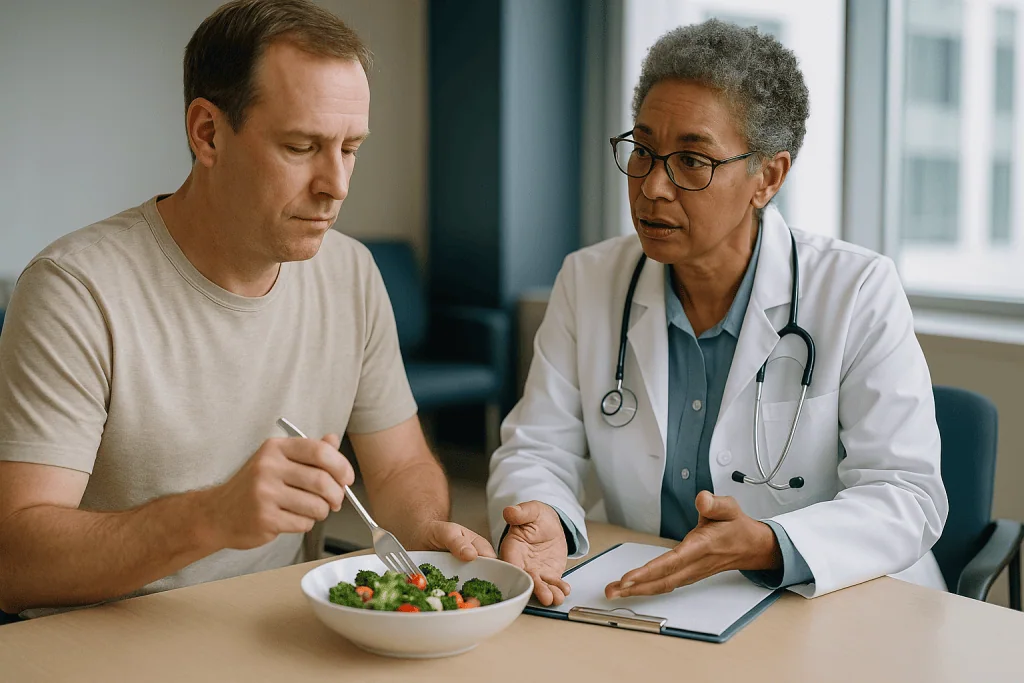
Adequate protein deserves emphasis. Pancreatitis is a catabolic illness, meaning the body breaks down muscle to fuel the inflammatory response. Someone who leaves the hospital lighter than they arrived has usually lost muscle, not just water. Lean protein at each meal, from skinless poultry, white fish, egg whites, legumes, tofu and low-fat dairy, helps rebuild it without loading the gland with fat.
Small, frequent meals do two things. They keep any single dose of fat modest, and they work around early satiety, the feeling of fullness after a few bites that many people report after an attack. MedlinePlus suggests around six small meals a day rather than three large ones.
Fluids matter more than most people expect. Inflammation, vomiting and reduced intake leave many people mildly dehydrated at discharge, and the NIDDK advises drinking plenty of water. MedlinePlus also advises limiting caffeine, largely because it can aggravate the stomach and disturb sleep.
If you want a template, a Mediterranean-style pattern with the oil dialed down fits well: vegetables, fruit, whole grains, legumes, lean protein, and fat added deliberately rather than by default. It is not a special pancreatitis diet. It is ordinary healthy eating, temporarily strict about one nutrient, and that is exactly what makes it something a household can sustain.
What to eat after pancreatitis: a practical low-fat plate
Reading labels is useful, but people eat food, not labels. The swaps below translate the low-fat principle into the aisles of an ordinary grocery store. None are carved in stone; they are the directions of travel that dietitians commonly recommend in the first weeks home.
| Category | Usually easier on the pancreas | Usually saved for later or eaten sparingly |
|---|---|---|
| Protein | Skinless chicken or turkey, white fish, egg whites, lentils, beans, tofu | Fatty cuts of beef or pork, sausage, bacon, fried chicken |
| Dairy | Skim or low-fat milk, low-fat yogurt, low-fat cottage cheese | Whole milk, cream, butter, full-fat cheese, ice cream |
| Grains | Oatmeal, rice, whole-grain bread, pasta, plain crackers | Croissants, pastries, buttered popcorn, fried rice |
| Fruit and vegetables | Nearly all, fresh, frozen, or canned in water or juice | Fried vegetables, creamed spinach, coconut, large amounts of avocado |
| Cooking method | Baking, steaming, boiling, poaching, grilling with a light spray of oil | Deep-frying, pan-frying in butter, cream-based sauces |
| Drinks | Water, herbal tea, diluted juice, low-fat milk | Alcohol of any kind, cream-topped coffee drinks, milkshakes |
Notice what the left column has in common: it is mostly food a family already eats, prepared with less fat rather than replaced by something exotic. That matters for the person doing the cooking, who is often not the patient.
Fruit and vegetables sit almost entirely on the easy side, bringing fiber, potassium and antioxidants with them. The NIDDK’s eating guidance encourages them, with one practical caveat: very high-fiber meals can feel heavy for a gut that is still settling, so cooked vegetables may sit better than raw in the first week or two.
The right-hand column is not a list of forbidden foods for life. Most of it becomes an occasional choice once recovery is well underway, at a pace your care team sets. Treat it as a map of where fat hides, which is usually the sauce, the cooking oil and the pastry rather than the main ingredient.
Foods to avoid with pancreatitis, and the ones that are simply cautious
Lists of foods to avoid with pancreatitis circulate widely, and they mix three different things: foods that reliably provoke symptoms, foods that are high in fat and therefore best limited, and foods that were added because someone once felt unwell after eating them.

The first group is short and firm. Alcohol belongs there for everyone, regardless of what caused the attack, and the NHS advises complete avoidance while the pancreas recovers. Deep-fried food, fatty processed meats and rich cream sauces provoke pain in enough people that dietitians routinely rule them out early.
The second group is about quantity, not category. Nuts, seeds, avocado, olive oil and oily fish such as salmon or mackerel are high in fat but are also among the healthiest fats a person can eat. During the first weeks most dietitians ask you to keep portions small or hold off. Later, they are often reintroduced on purpose, because a diet with no unsaturated fat is not a long-term health strategy.
The third group is where myths thrive. Spicy food does not inflame the pancreas; it can irritate an already sensitive stomach, which feels similar but is a different problem. Coffee is limited in MedlinePlus guidance for the same stomach-related reason, not because caffeine damages the gland. Sugar does not cause pancreatitis, though sweetened drinks add calories without nutrition and can raise triglycerides, the blood fats that the Mayo Clinic lists as a cause of acute pancreatitis when very high.
A useful habit is a short food and symptom diary for the first two or three weeks. Not to hunt for villains, but because a written record helps your dietitian tell the difference between a food that genuinely troubles you and a bad day that happened to include lunch. Patterns show up on paper that memory smooths over.
Who the low-fat diet is for, and who is usually asked to wait
The person handed a low-fat diet sheet is typically someone with mild acute pancreatitis whose pain is controlled, whose nausea has settled and who can keep fluids down. According to the NHS, most people with acute pancreatitis begin to improve within a week, and for this group the diet is the main treatment they take home.
Others are asked to wait, and understanding why prevents a lot of anxiety. In severe pancreatitis, where part of the gland has lost its blood supply or fluid has collected around it, the bowel often slows or stops. Eating into a paralyzed gut causes vomiting and distension. These patients are commonly fed through a thin tube passed through the nose into the stomach or small intestine, an approach the NHS describes as preferable to intravenous feeding because it keeps the gut working. Oral food returns when the bowel does, and the low-fat plan starts later rather than never.
A third group has chronic pancreatitis, in which repeated or long-standing inflammation has scarred the gland and permanently reduced its enzyme output. For them, the low-fat message is softened. The NHS notes that people with chronic pancreatitis often need more calories and protein than average, alongside pancreatic enzyme replacement, and an aggressively low-fat diet can worsen malnutrition. Their plan is individualized and usually involves a specialist dietitian.
Two smaller groups deserve a mention. People whose attack was caused by gallstones and who are waiting for gallbladder removal are often kept strictly low fat until the operation, because fatty meals make the gallbladder contract against the stones. And people whose pancreatitis stemmed from very high triglycerides may continue a fat-restricted pattern well beyond recovery, on their doctor’s advice, as part of preventing recurrence.
Alcohol and smoking: the two changes that outrank any recipe
If a person changed only one thing after pancreatitis, no dietitian would pick switching to skim milk. They would pick alcohol. The NHS identifies alcohol and gallstones as the two leading causes of acute pancreatitis, and continued drinking is the strongest predictor of an acute attack turning into chronic disease.
The mechanism is direct. Alcohol and its breakdown products are toxic to the cells that make enzymes, and they thicken pancreatic secretions so that small ducts plug. Each drink is a small injury on top of an existing one. NHS guidance is to avoid alcohol completely during recovery, and for anyone whose pancreatitis was alcohol-related, permanently. People who find stopping difficult are not weak; alcohol dependence is a medical condition, and your care team can refer you to support rather than leaving you to manage it alone.
Smoking is the change people underestimate. The NIDDK lists tobacco use as a risk factor for pancreatitis in its own right, separate from alcohol, and in chronic pancreatitis it accelerates both scarring and the risk of pancreatic cancer. Smoking also blunts appetite and taste at exactly the moment a recovering person needs to eat well. Stopping is hard, and both nicotine replacement and behavioral support exist; which approach suits you is a decision for you and your clinician.
The reason these two sit above any food advice is arithmetic. A dietary lapse, a slice of cake at a birthday, is a temporary load that the gland processes and moves on from. Alcohol and tobacco are ongoing injuries that keep the inflammatory process alive no matter how carefully the rest of the plate is arranged. Get these two right and the diet becomes a supporting act. Get them wrong and no menu can compensate.
What the first days and weeks at home usually look like
Recovery rarely moves in a straight line, but it does move in phases that most people recognize afterward. The timings here are typical ranges drawn from NHS and Mayo Clinic guidance, not deadlines.
In hospital, once pain and nausea ease, food usually returns in steps: clear fluids, then a soft, bland, low-fat diet, then ordinary low-fat meals. The Mayo Clinic describes this sequence, and for mild cases it often unfolds over a few days. Many people are discharged while still on the soft stage.
The first week home tends to be about tolerance rather than nutrition. Appetite is low, energy is lower, and meals are small and frequent because that is all the stomach accepts. A dull background ache is common; sharp pain returning is not, and belongs in the section on when to call.
Weeks two to four are where the low-fat diet earns its keep. Appetite improves, meals grow, and the temptation to celebrate with a takeout meal grows with them. This is the window in which fat is reintroduced gradually, ideally one change at a time so any reaction can be traced. Weight should be stable or climbing; continued loss is a signal to call your dietitian rather than to push harder.
Beyond a month, the picture diverges. According to the NHS, most people with mild acute pancreatitis are back to normal eating, with alcohol and smoking still off the table. Those with severe disease, chronic pancreatitis or a gallbladder operation pending remain on a modified plan and often have follow-up tests of enzyme function, blood sugar and vitamin levels. Fatigue outlasts the abdominal symptoms in almost everyone. It is the last thing to go, and it is not a sign that you are doing anything wrong.
Can I eat a tuna sandwich with pancreatitis?
This question turns up in search results often enough to deserve a real answer, because it is really a question about how to think through any meal.
Start with the tuna. Canned in water, it is one of the leanest proteins available, with almost no fat, and it fits the low-fat, adequate-protein pattern that MedlinePlus and the NIDDK describe. Canned in oil, the same fish arrives coated in exactly the nutrient you are limiting. Drain thoroughly, or choose the water-packed version.
Now the binder. A traditional tuna salad is held together with mayonnaise, and mayonnaise is essentially emulsified oil; a few generous spoonfuls can carry more fat than the fish itself. Swapping in low-fat plain yogurt, a little mustard, lemon juice, chopped celery and herbs keeps the sandwich moist and drops the fat sharply. The bread matters less than people think: whole-grain or white, plain bread is low in fat. Croissants and cheese-topped rolls are a different story.
Then the sides. A tuna sandwich with an apple and a glass of low-fat milk is a textbook recovery lunch. The same sandwich with potato chips and a milkshake is not, and the sandwich is not the problem.
So: yes, in most cases, a tuna sandwich built this way is a reasonable choice once your team has cleared you for solid food. Two cautions. If you are within the first days home and still on soft foods, ask before adding bread and raw celery. And a small number of people find canned fish sits poorly after an attack for reasons that belong to the stomach rather than the pancreas; if that is you, poached chicken makes the same sandwich. The wider lesson is that fat hides in dressings, oils and sides far more often than in the headline ingredient.
What helps the pancreas repair itself?
Here is where a health magazine has to disappoint some readers. Search engines are full of foods and supplements promising to heal or detox the pancreas. None have good evidence. What the pancreas needs to recover is the removal of whatever injured it, time, and enough nutrition to rebuild.
Removing the injury is the part that is genuinely in your hands, or your surgeon’s. If gallstones caused the attack, the usual definitive treatment is removal of the gallbladder, which the Mayo Clinic notes is often recommended after recovery to prevent recurrence. If alcohol caused it, stopping alcohol is the repair. If triglycerides were the cause, lowering them through diet and, where your doctor advises, lipid-lowering medicines protects the gland. If a medicine triggered the attack, your prescriber may change it; never stop a prescribed medicine on your own.
Time does the rest for most people with mild acute pancreatitis. The gland has some capacity to regenerate its enzyme-producing cells after a single episode, which is why, according to the NHS, most people recover without lasting damage. That capacity shrinks with each repeat attack, and scar tissue does not regenerate, which is the biological argument for preventing the second episode rather than treating it.
Nutrition supports the rebuild. Adequate protein and calories matter more than any specific superfood. Antioxidant supplements have been studied in chronic pancreatitis, mostly for pain, with mixed and inconsistent results; they are not a recommended treatment, and high-dose supplements carry their own risks. Fat-soluble vitamins are replaced when blood tests show a deficiency, not routinely, and your team decides.
The honest summary is that the pancreas repairs itself best when it is left alone by the things that hurt it and fed steadily in the meantime. That is less satisfying than a turmeric shot. It is also what the evidence supports.
Pancreatic enzymes, vitamins and blood sugar: when eating needs more than a menu
For most people after a single mild attack, food is the whole plan. For some, especially those with chronic pancreatitis or a severe episode that destroyed part of the gland, eating well requires a little help.
The most common form is pancreatic enzyme replacement therapy, often shortened to PERT. These are capsules containing the same enzymes the pancreas would normally make, taken with meals and snacks so they mix with food and digest it in the intestine. The NHS describes them as a standard treatment when the gland can no longer produce enough enzymes, a condition called exocrine pancreatic insufficiency. Signs that prompt a clinician to consider them include greasy, pale stools that float, weight loss despite eating, and bloating after meals. How much is taken, and when, is set by the prescriber and adjusted to the fat content of the meal; that is a clinical decision, not something to work out from an article.
When fat is poorly absorbed, the vitamins that dissolve in fat go with it. The NHS notes that people with chronic pancreatitis may need supplements of vitamins A, D, E and K, usually guided by blood tests. Bone thinning is a recognized consequence of long-standing vitamin D and calcium malabsorption, so bone health checks may be part of follow-up.
Blood sugar is the third watch point. The same gland that makes enzymes makes insulin, and damage to it can lead to diabetes, sometimes called type 3c diabetes to distinguish it from the more familiar types. The Cleveland Clinic lists diabetes among the complications of pancreatitis. Your team may check blood glucose during follow-up, and if it rises, dietary advice widens from fat alone to carbohydrate quality as well.
None of this means every patient needs every intervention. It means the menu is one tool among several, and the treating team decides which tools apply.
What should go in your pancreatitis discharge plan?
A good discharge plan for pancreatitis fits on one page and answers five questions. People who leave with those answers written down tend to make fewer frantic phone calls in the first week and do far less guessing at the dinner table.
The first question is what caused this. The answer shapes everything else. Gallstones lead to a surgical referral; alcohol to abstinence and possibly support services; triglycerides to lipid follow-up; a medicine to a prescriber review. If the cause is not yet known, ask what tests are planned, because the NIDDK notes that identifying the cause is central to preventing another attack.
The second is what to eat, in specific terms. Low fat is not enough. Ask for a daily fat ceiling, a list of foods to hold off on for now, and an idea of how and when the restriction will be relaxed. MedlinePlus’s discharge guidance covers meal frequency, fluids and caffeine in plain language; your own sheet should match your severity.
The third is what to avoid outright: alcohol and tobacco, with a clear statement of how long, and where to get help if stopping is hard.
The fourth is follow-up. Who will you see, roughly when, and which tests are expected? Weight checks, blood sugar, vitamin levels and enzyme function are the usual candidates, depending on severity.
The fifth is who to call, and for what. This is the red-flag list, and it should include a daytime number and a plan for nights and weekends.
One more item belongs on the sheet: a dietitian’s contact. Nutrition is not an afterthought in pancreatitis. In severe and chronic disease it is one of the main treatments, and a professional who can adjust your plan as you recover is worth asking for before you leave the ward.
What people often get wrong about the pancreatitis diet after discharge
Some of the most confidently repeated advice about eating after pancreatitis is wrong, or at least wrong for most people. Correcting it matters because bad advice here tends to produce either needless suffering or a second admission.
You should fast to rest the pancreas. This was standard teaching for decades, and it lingers. Current NHS and Mayo Clinic guidance moves the other way: eat as soon as pain and nausea allow, because prolonged fasting weakens the gut barrier and deepens malnutrition. Rest the gland by limiting fat, not by skipping meals.
Low fat means no fat, forever. For mild acute pancreatitis, fat restriction is a phase. The gradual return of healthy fats is part of recovery, and a permanently fat-free diet causes vitamin deficiencies of its own. Long-term restriction applies to specific situations, such as triglyceride-related disease, and your team will say so if it applies to you.
Spicy food causes pancreatitis. It does not. Chili irritates the stomach lining and can feel like a flare, but it does not inflame the pancreas. Confusing the two leads people to avoid whole cuisines while continuing to drink.
If I feel fine, a drink is fine. Feeling well is not the same as being healed. The pancreas can be quietly inflamed for weeks after symptoms fade, and the NHS advises complete alcohol avoidance during recovery regardless of how you feel.
A supplement or juice cleanse will repair the gland. No supplement has good evidence of regenerating pancreatic tissue. Juice cleanses are low in protein at the moment protein is most needed, and fruit-heavy juices can push triglycerides up.
Chronic pancreatitis needs the same strict low-fat diet as acute. Often the reverse. The NHS notes that people with chronic disease frequently need more calories and protein, with enzyme replacement letting them tolerate fat. Over-restriction is a common cause of malnutrition in this group.
Questions to ask your care team
Appointments are short and memories under stress are unreliable. Writing questions down before you see your doctor or dietitian is not fussy; it is how you leave with answers you can act on. These are the ones that tend to change what happens at your kitchen table.
- What caused my pancreatitis, and has that cause been fully addressed or is more treatment planned?
- How severe was my episode, and does that change how strict my diet needs to be?
- What daily fat limit are you suggesting, and when should we review it?
- Which foods should I hold off on for now, and which are simply small portions?
- How long should I avoid alcohol, and if the answer is permanently, what support is available?
- Do I need pancreatic enzyme replacement, and if so, how will you judge whether it is working?
- Should my vitamin levels, blood sugar or bone density be checked, and when?
- What weight would you expect at my next visit, and what loss would concern you?
- Am I still taking any medicine that could have contributed, and should it be reviewed?
- Can I be referred to a dietitian, and how do I reach them between appointments?
Two habits make these questions land. Bring your food and symptom diary, even if it is a few scrawled lines, because it turns a vague sense that dairy feels worse into a pattern a clinician can assess. And ask who to contact if something changes before the next appointment, then write that answer on the diet sheet itself, where you will actually see it.
If an answer is that they do not know yet, that is a legitimate response. Pancreatitis is sometimes idiopathic, meaning no cause is found despite testing, and the plan in that situation is close follow-up rather than false certainty. A team willing to say so is usually one worth trusting.
When to call your doctor
Most people leave the hospital improving and keep improving. A minority develop complications in the days or weeks after discharge, and the signs are worth knowing cold, because early treatment changes the course.
Seek urgent medical care, calling emergency services if symptoms are severe, for any of the following:
- Severe or worsening abdominal pain, especially pain that spreads to the back or returns after it had settled
- Vomiting that stops you keeping fluids down for more than a few hours
- Fever or chills, which can signal infection in or around the pancreas
- Yellowing of the skin or eyes, or dark urine with pale stools, which suggests a blocked bile duct
- Shortness of breath, a racing heartbeat, confusion or feeling faint
- A swollen, tense abdomen
- Black or bloody stools, or vomiting blood
Contact your care team within a day or two, without waiting for the next scheduled visit, for the slower signals: greasy, pale or floating stools that persist; weight loss that continues despite eating; new thirst, frequent urination or blurred vision, which can indicate rising blood sugar; or an inability to tolerate the diet you were sent home on.
The Mayo Clinic and Cleveland Clinic both list infection, pseudocysts (fluid collections that form around the gland), bile duct obstruction, kidney problems and breathing difficulties among the complications of pancreatitis. Several develop after the acute pain has faded, which is why feeling better last week does not rule them out.
One final note. Calling about a symptom that turns out to be nothing is not wasting anyone’s time; it is how the system is meant to work. Every decision about tests, treatment and diet changes rests with the team that knows your case. Your job is to notice and report. Theirs is to decide.
Frequently asked questions
What is the best diet for recovery from pancreatitis?
The pattern that major medical sources agree on is low in fat, adequate in protein, eaten as small frequent meals with plenty of fluids and no alcohol. No branded plan has been proven superior in trials. The NIDDK, MedlinePlus and the Mayo Clinic all describe this same approach, with the fat ceiling and pace of reintroduction set by your treating team according to the cause and severity of your episode.
How long do I need a low fat diet for pancreatitis?
For mild acute pancreatitis, strict fat restriction is usually a matter of weeks, with healthy fats reintroduced gradually as appetite and weight recover; the NHS notes most people improve within a week and return to normal eating over the following weeks. People with chronic pancreatitis, very high triglycerides, or a gallbladder operation pending may stay on a modified plan longer. Your team decides the timeline for you.
Is there a standard pancreatitis recovery diet plan I can follow?
There is a standard set of principles rather than a fixed menu: limit fat, keep protein adequate, eat six or so small meals, drink plenty of water, limit caffeine and avoid alcohol, as MedlinePlus and the NIDDK describe. A dietitian turns those principles into a plan matched to your severity, weight and cause. Generic online meal plans cannot account for those factors, so treat them as inspiration rather than instruction.
Can I eat a tuna sandwich with pancreatitis?
In most cases, yes, once you are cleared for solid food, provided the tuna is packed in water and the binder is low-fat yogurt or mustard rather than mayonnaise, which is essentially emulsified oil. Plain bread of any type is low in fat. Watch the sides, since chips and a milkshake can add more fat than the sandwich. If you are still on soft foods, ask your team first.
What helps the pancreas repair itself?
Removing whatever injured it, time, and steady nutrition. That means treating the cause, such as gallbladder removal for gallstones or complete abstinence for alcohol, along with enough protein and calories to rebuild lost muscle. The NHS notes most people recover from a single mild attack without lasting damage. No supplement, juice or superfood has good evidence of regenerating pancreatic tissue, and antioxidant trials in chronic pancreatitis have shown mixed results.
Can I eat eggs after pancreatitis?
Egg whites are almost fat-free and a good protein source during recovery. The yolk holds nearly all of the egg’s fat, so early on many dietitians suggest egg-white omelets or limiting whole eggs, then reintroducing yolks as your fat allowance rises. How they are cooked matters as much as the egg itself: poached or scrambled with a light spray of oil fits the plan far better than fried in butter.
Is coffee bad for the pancreas?
Coffee does not damage the pancreas, but MedlinePlus discharge guidance advises limiting caffeine because it can irritate a stomach that is still sensitive after an attack and disrupt the sleep recovery depends on. The bigger issue is what goes in the cup: cream, whole milk and syrup-laden coffee drinks add fat and sugar. Black coffee or coffee with skim milk, in modest amounts, is what most dietitians consider reasonable.
What should I do in my discharge plan for pancreatitis?
Make sure it answers five things: what caused the attack and whether more treatment is planned, exactly what to eat including a daily fat ceiling, what to avoid outright and for how long, which follow-up tests and appointments to expect, and who to call for red-flag symptoms day or night. Ask for a dietitian’s contact as well. The NIDDK stresses that identifying the cause is central to preventing another episode.
Can I ever drink alcohol again after pancreatitis?
That depends on the cause, and the answer must come from your treating team. The NHS advises complete alcohol avoidance during recovery for everyone, and permanent avoidance when alcohol caused the pancreatitis, because each drink injures enzyme-producing cells and raises the risk of chronic disease. If alcohol was not the cause, your doctor will advise when, and whether, modest drinking is reasonable. Support is available if stopping is difficult.
Why am I losing weight even though I am eating?
Continued weight loss despite eating can mean the pancreas is not producing enough enzymes to absorb food, especially fat, a condition called exocrine pancreatic insufficiency. Greasy, pale, floating stools and bloating often accompany it. The NHS describes pancreatic enzyme replacement as the standard treatment when this is confirmed. Contact your care team promptly rather than simply eating more, because they may need to test enzyme function, vitamins and blood sugar.
References
- MedlinePlus – Pancreatitis – discharge
- NIDDK (NIH) – Eating, Diet, & Nutrition for Pancreatitis
- NHS – Acute pancreatitis: Treatment
- NHS – Chronic pancreatitis: Treatment
This article is for general information only and is not a substitute for professional medical advice. Please consult a qualified doctor about your individual situation.

More from the Blog

What Hospital Treatment for Pancreatitis Involves: Fasting, IV Fluids and Pain Control
Hospital treatment for acute pancreatitis is mostly supportive: intravenous fluids to protect circulation and the pancreas, medicines to control pain and nausea, a short…
Can Gallstones Be Flushed or Dissolved? Gallstone Myths Corrected by Gastroenterologists
No. Gallstones cannot be flushed out with olive oil, lemon juice, Epsom salt, apple cider vinegar or magnesium. The soft green "stones" people pass…

What Hiatal Hernia Surgery Can Improve: Reflux, Chest Discomfort and Swallowing Explained
Hiatal hernia surgery pulls the stomach back below the diaphragm, narrows the opening it slipped through and usually reinforces the valve at the top…

Does a Peptic Ulcer Need a Follow-Up Test? Confirming Healing and a Cleared Infection
Often, yes. A stomach (gastric) ulcer is usually rechecked with a repeat endoscopy after several weeks of treatment to confirm it has healed and…

How Hepatitis A Is Managed: Supportive Care While the Liver Recovers on Its Own
Hepatitis A has no specific antiviral medicine; it is managed with supportive care while the liver clears the virus on its own. That usually…

When Ongoing Bowel Symptoms Need a Gastroenterologist Rather Than More Self-Care
See a gastroenterologist for IBS when symptoms persist despite months of guideline-based self-care, when the diagnosis is uncertain, or when any red-flag feature appears:…