

The Low-Iodine Diet Before Radioiodine Treatment: What to Eat and What to Avoid

Key Takeaways
- Thyroid cells cannot distinguish radioactive iodine from dietary iodine, so lowering food iodine for one to two weeks lets remaining thyroid tissue absorb more of the treatment.
- The diet targets a handful of major sources, chiefly iodized salt, dairy, seafood, seaweed and egg yolks, while fresh fruit, vegetables, grains and moderate fresh meat remain on the menu.
- You can salt food freely with non-iodized salt; the restriction is about the type of salt, not the quantity.
- Plain balsamic and other vinegars are generally allowed, while soy, dark chocolate and freshwater fish sit in a gray zone where individual center sheets differ.
- Iodinated contrast dye from a recent CT scan, kelp supplements and the heart medicine amiodarone can carry far more iodine than two weeks of eating can offset, so tell your team about them.
- Iodine is an essential nutrient with an adult recommended intake of about 150 micrograms a day, so the diet is a short preparation, and normal eating resumes when your team says so.
A low-iodine diet before radioiodine treatment lowers the iodine in your body so thyroid tissue takes up more of the radioactive iodine. It is usually followed for roughly one to two weeks and centers on fresh fruit, vegetables, unsalted nuts, plain grains, fresh meat in modest amounts and non-iodized salt, while avoiding iodized salt, seafood, seaweed, dairy, egg yolks and iodine-containing supplements. Your care team sets the exact rules and timing.
The grocery list sits on the kitchen counter, and for the first time in her adult life she is reading the back of a salt canister. Iodized. She puts it back. The yogurt she eats every morning, the cheddar in the fridge, the sushi place she was going to visit with friends this weekend: all of it, she has just learned, is on hold for two weeks. Her surgeon removed her thyroid a few weeks ago. Now the nuclear medicine team wants her body as close to iodine-empty as a body can reasonably get.
If you have been handed a sheet about a low iodine diet before radioiodine treatment, you probably have the same two feelings she does. The first is relief that there is something concrete you can do. The second is a quiet worry that you will get it wrong.
This explainer walks through why the diet exists, how strict it really needs to be, what the evidence says about the gray areas, and what to eat so that the fortnight feels like a plan rather than a punishment.
Why does a low iodine diet before radioiodine treatment matter?
Your thyroid has one unusual talent: it hoards iodine. It needs the mineral to make thyroid hormone, so its cells carry a molecular pump, the sodium-iodide symporter, that pulls iodine out of the bloodstream. Differentiated thyroid cancer cells, the papillary and follicular types that make up most thyroid cancers, usually keep that pump. That is the whole basis of radioiodine therapy.
Radioactive iodine (the isotope used for treatment is called I-131) is chemically identical to the iodine in your food. The pump cannot tell them apart. Swallow a capsule or liquid of I-131 and whatever thyroid tissue remains, whether a sliver left behind after surgery or cells that have traveled elsewhere, grabs it and is damaged from the inside by the radiation. The rest of the body, which has little use for iodine, clears it over days, mostly through urine.
Here is the catch. If your bloodstream is already full of ordinary iodine from milk, seafood and salted food, the pump is busy with the wrong molecules. The radioactive iodine competes for the same seats and more of it passes straight through. Lowering dietary iodine for a stretch before treatment leaves thyroid cells hungry, so a larger share of the therapeutic dose is taken up. Mayo Clinic and the NHS both describe this diet as a standard part of preparing for radioiodine after thyroid cancer surgery.
The same logic applies to diagnostic radioiodine scans, which use a much smaller amount of tracer. MedlinePlus notes that iodine-rich foods and medicines can interfere with the radioactive iodine uptake test, which is why the diet often appears before a scan as well as before treatment.
The diet does not treat cancer on its own. It is a way of tilting the odds so the radioiodine reaches its target. Think of it as clearing the runway before the plane lands.
Who is usually asked to follow the diet, and who is asked to wait?
The typical candidate is someone who has had all or most of the thyroid removed for differentiated thyroid cancer and whose team has decided that radioiodine is worthwhile, either to remove leftover normal thyroid tissue, to treat known disease, or to make later blood tests and scans more reliable. People preparing for a diagnostic whole-body radioiodine scan are also asked to follow it. Some people treated for an overactive thyroid receive radioiodine too, though the dietary preparation there varies more between centers.

A separate group is asked to wait, not because the diet is risky but because their bodies are carrying an iodine load that two weeks of careful eating cannot undo:
- Anyone who has recently had a CT scan or other imaging with iodinated contrast dye. Contrast delivers a very large iodine load, and teams commonly delay radioiodine for weeks to months afterward, sometimes checking a urine iodine level first.
- People taking amiodarone, a heart-rhythm medicine that contains iodine and lingers in body fat for a long time. The prescribing cardiologist and the thyroid team weigh this together.
- Anyone who has recently used large amounts of iodine-containing antiseptics, iodine-based cough medicines or kelp supplements.
Radioiodine is not given during pregnancy, and breastfeeding must have stopped well beforehand because the breast also concentrates iodine. Your team will confirm a pregnancy test before treatment.
Following a low iodine diet before radioiodine treatment is not the same as needing one indefinitely. Iodine is an essential nutrient. The NIH Office of Dietary Supplements sets the recommended intake for most adults at 150 micrograms a day, and long-term restriction is not the goal. The diet is a short, deliberate dip, and when it starts and ends is a decision for your treating team.
How strict is a low iodine diet, really?
Strict about the big sources, relaxed about the trivial ones. That distinction saves a lot of anxiety.
Iodine content in food is not evenly spread. A few categories carry most of it. Seaweed can contain thousands of micrograms in a single serving; the NIH Office of Dietary Supplements describes it as by far the richest food source. Dairy is high because iodine is added to cattle feed and used in teat disinfectants, so milk, yogurt and cheese all carry it. Saltwater fish and shellfish are high. Egg yolks are moderately high. Iodized salt, the default table salt in the United States, contributes a meaningful amount with every shake.
By contrast, fresh fruit, most vegetables, unsalted nuts, plain rice and oats, and fresh beef, pork or poultry in normal portions are low. Their iodine content is measured in single-digit or low double-digit micrograms per serving, which is why they form the backbone of the diet.
A low iodine diet is not a no iodine diet. Trace amounts in vegetables or a slice of fresh chicken are expected and accounted for. What defeats the purpose is a daily bowl of cereal with milk, a tuna sandwich, or a handful of seaweed snacks, because each of those alone can exceed a whole day’s target several times over.
This is where the honest answer lands: the diet works because of consistency across the whole period, not perfection in any single hour. A stray crumb of cheese is not a disaster and does not usually mean starting over, though it is worth mentioning to your team. A week of ignoring the dairy rule is a different matter and can genuinely affect how much radioiodine your thyroid tissue absorbs.
Every center writes its own sheet, and they do not all agree on the edges. When your sheet and this article differ, your sheet wins.
What should I eat before radioactive iodine treatment?
More than you fear. Once you know the pattern, the diet resembles a plain, home-cooked way of eating that many people already follow: fresh produce, simple grains, modest portions of fresh meat, and food you salt yourself with non-iodized salt.
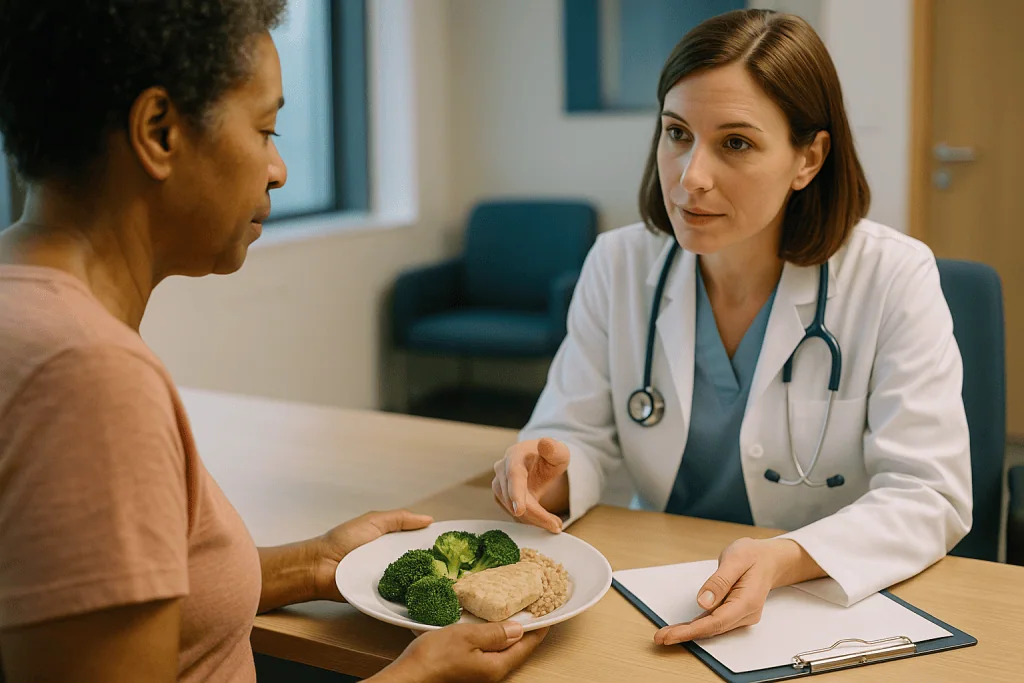
Fruit is essentially unrestricted. Apples, bananas, berries, citrus, melon, grapes and dried fruit without added ingredients are all fine, as are fresh and frozen fruit juices without additives. Vegetables are the same, fresh or frozen, raw or cooked. Potatoes count, with two common exceptions on many center sheets: the skins are sometimes excluded, and canned vegetables are usually avoided because of salt of unknown type.
Grains are straightforward when they are plain. Rice, oats, quinoa, plain pasta, unsalted popcorn, and matzo or bread made without iodized salt or dairy are typical staples. Many people bake a simple loaf at home for the two weeks, or buy a bread whose label lists no milk, whey, butter, eggs or iodate dough conditioner.
Protein is where people worry most. Fresh beef, pork, lamb, chicken and turkey are generally allowed in moderate portions. Freshwater fish appears on some sheets as permitted and on others as excluded, so follow your own. Egg whites are usually allowed; the iodine sits in the yolk. Unsalted nuts, nut butters made without salt, dried beans and lentils cooked from scratch are excellent fillers.
Fats and flavor: vegetable oils, non-iodized salt, black pepper, fresh and dried herbs, garlic, onion, lemon, and most vinegars. Coffee and tea without milk, water and sparkling water are all fine.
The pattern is fresh over packaged, and homemade over restaurant, because homemade is the only place you control the salt.
Low iodine diet food list: what to avoid and why
A single page of what to skip is easier to live with than a dozen scattered warnings. The table below groups the main sources, with typical values from the NIH Office of Dietary Supplements to show why each category matters.
| Category | Examples | Why it is excluded |
|---|---|---|
| Seaweed and sea vegetables | Kelp, nori, wakame, dulse, seaweed snacks, sushi rolls, kelp supplements | Richest source known; one gram of dried seaweed can hold many hundreds of micrograms |
| Iodized salt and salted processed foods | Table salt labeled iodized, chips, pretzels, canned soups, deli meats, sauces | About a quarter teaspoon of iodized salt supplies roughly a third of the daily adult recommendation |
| Dairy | Milk, cheese, yogurt, ice cream, butter, cream, whey protein | One cup of milk carries roughly 85 micrograms; iodine enters through feed and udder disinfectants |
| Seafood | Saltwater fish, shellfish, fish sauce, fish oil, imitation crab | A single serving of cod can exceed a day’s normal intake |
| Egg yolks | Whole eggs, mayonnaise, custards, many baked goods | One large egg provides around 26 micrograms, concentrated in the yolk |
| Soy products | Soy sauce, tofu, edamame, soy milk | Often excluded because of iodine-containing salt and possible effects on uptake |
| Red Dye #3 (erythrosine) | Some maraschino cherries, red candies, colored medicines | The dye molecule itself contains iodine |
| Commercial baked goods | Store bread, cakes, cookies, doughnuts | May contain dairy, eggs, iodized salt or iodate dough conditioners |
Two further items appear on many center sheets: chocolate (because of milk content) and molasses, which some lists exclude. Vitamins and supplements that list iodine or kelp are set aside for the diet period, a decision to confirm with your team.
Notice what is not on the list: fresh meat, fruit, vegetables, grains, oils and herbs. Most of your kitchen survives.
Salt, seaweed and the hidden sources people miss
Ask people what tripped them up on the diet and you rarely hear “I ate a lobster.” You hear about the salt in a bag of tortilla chips, the milk powder in a granola bar, or the nori flakes in a seasoning blend they never thought about.
Start with salt, because it is everywhere. In the United States, iodization is voluntary but very common, and most table salt sold for the kitchen is iodized. The fix is simple: buy a container clearly labeled non-iodized, kosher salt that says it contains no iodine, or plain sea salt whose label makes the same statement. Sea salt is not automatically safe. Some brands add iodine, and sea salt naturally contains small, variable amounts. Read the label rather than the marketing.
Processed and restaurant food is the harder problem, because manufacturers are not required to state whether the salt they used was iodized. That is why most center sheets treat packaged snacks, canned soups, deli meats, frozen dinners and takeout as off-limits regardless of their listed sodium. You are not avoiding salt itself; you are avoiding salt whose origin you cannot verify.
Seaweed hides in plain sight. Sushi is obvious, but seaweed also turns up in some seasoning mixes, ramen broths, vegetable chips, kelp noodles, and the increasingly popular seaweed snack packs marketed to children. Carrageenan and agar, thickeners derived from seaweed, appear in some plant milks, ice creams and desserts; many centers ask you to avoid them out of caution, even though the iodine content varies.
Dairy hides in the words whey, casein, milk solids and lactose on ingredient panels. Egg yolk hides in mayonnaise, many salad dressings and most commercial baked goods.
None of this requires a chemistry degree. It requires reading every label once, then sticking to the handful of products that pass.
Is balsamic vinegar ok on a low iodine diet? Gray zones explained
Balsamic vinegar is one of the most-searched questions about this diet, and the honest answer is: usually yes, with a caveat about reading the label. Vinegar is fermented grape or fruit juice, and neither grapes nor the fermentation process add meaningful iodine. Traditional balsamic, red wine vinegar, white vinegar and apple cider vinegar are fine on most center sheets. The caveat is that some cheaper balsamic glazes and dressings add caramel color, thickeners or salt of unknown type. Plain vinegar with a short ingredient list is the safe pick.
Other gray zones deserve the same clear-eyed treatment:
- Chocolate. Milk chocolate is out because of the dairy. Dark chocolate and cocoa powder with no milk ingredients are allowed on many sheets, excluded on others as a precaution. Check yours.
- Soy. Some centers exclude all soy; others allow small amounts of soy oil or lecithin. The concern is partly iodized salt in soy sauce and partly older research suggesting soy can affect thyroid function. Ask rather than assume.
- Fresh bread from a bakery. Unknown salt, often milk or egg. Treat as excluded unless the bakery can confirm ingredients.
- Potato skins and rhubarb. These appear on some lists because of older, limited data. The evidence is thin, but the cost of skipping them is low.
- Freshwater fish. Genuinely lower in iodine than ocean fish, but not zero, and centers split on it.
- Tap water. Fine. Iodine in municipal water is negligible for this purpose.
The reason centers disagree is that precise iodine data for many foods are scarce and vary by soil, season and brand. When in doubt, the lower-risk choice is to leave the item out for two weeks. When the item matters to you, ask your team; they would rather answer a question than have you quietly give up on the whole diet.
Reading labels: iodized, sea salt, whey and other words to watch
A label is a short story about a product, and for two weeks you are reading it for one character. Here is what the key words mean in plain terms.
Iodized salt. Table salt with potassium iodide or potassium iodate added. Excluded. If a product lists just “salt,” you cannot know which type was used, which is why packaged foods are usually avoided.
Sea salt. Salt evaporated from seawater. Contains small natural amounts of iodine and may also be iodized. Allowed only when the package states it is not iodized.
Kosher salt. Usually not iodized, but a few brands are. The label will say.
Whey, casein, caseinate, milk solids, lactose, butterfat. All dairy derivatives. Excluded.
Egg, egg yolk, albumen. Whole egg and yolk are excluded; albumen is egg white and is generally allowed.
Carrageenan, agar, alginate. Thickeners extracted from seaweed. Many centers exclude them as a precaution.
Potassium iodate, calcium iodate. Dough conditioners used in some commercial breads. Excluded.
FD&C Red No. 3, erythrosine. A red food dye whose molecule contains iodine. Excluded. Note that Red No. 40 is a different dye and does not contain iodine.
Kelp, bladderwrack, dulse, Irish moss, spirulina blends. Sea vegetables, often in supplements marketed for “thyroid support.” Excluded during the diet, and worth mentioning to your team at any time.
Natural flavors, spices. Ambiguous. Plain dried herbs and single spices are fine; seasoning blends often contain salt of unknown type or dehydrated dairy.
A practical habit: on your first shopping trip, pick one non-iodized salt, one oil, one bread or bread recipe, one plant milk without carrageenan or added iodine if your sheet permits it, and one nut butter. Once those five items pass, most daily cooking becomes routine, and you stop reading labels because you already know the answer.
Good meals to eat on a low iodine diet: a sample day
People do not eat food lists; they eat meals. A day built from allowed foods can look ordinary, even generous, if you plan it before hunger strikes.
Breakfast. Oatmeal cooked with water, topped with sliced banana, cinnamon and a spoonful of unsalted almond butter. Black coffee or tea. An alternative is a scramble of egg whites with spinach, tomato and onion in olive oil, seasoned with non-iodized salt and pepper.
Mid-morning. An apple with a handful of unsalted walnuts, or a homemade fruit smoothie with frozen berries, orange juice and a ripe banana.
Lunch. A grain bowl: quinoa or brown rice, roasted sweet potato, chickpeas cooked from dried, cucumber, shredded carrot, fresh herbs, lemon juice and olive oil. Or a lentil soup made with homemade stock, garlic, celery and carrots, with a slice of homemade bread.
Afternoon. Unsalted popcorn popped in oil at home, or rice cakes with mashed avocado and lime.
Dinner. Roast chicken thighs rubbed with garlic, rosemary and non-iodized salt, alongside oven-roasted potatoes (peeled, if your sheet asks) and green beans. Or a stir-fry of beef strips with broccoli, bell pepper and ginger, using a splash of rice vinegar and a little brown sugar in place of soy sauce, over jasmine rice.
Dessert. Baked apple with cinnamon and raisins, a fruit sorbet made from frozen mango, or dark chocolate if your center allows it.
Two practical notes. First, portions of meat are usually kept moderate on center sheets because meat carries some iodine, so let vegetables and grains take up more of the plate than usual. Second, cook in batches. A pot of rice, a tray of roasted vegetables and a container of cooked beans on Sunday turns the week’s meals into assembly rather than invention, which matters when fatigue from thyroid hormone withdrawal sets in.
Low iodine diet recipes, eating out and feeding a household
The diet is easiest when the whole household eats the same dinner, so the best low iodine diet recipes are the ones everyone actually wants. Roast chicken with herbs, a big pot of vegetable and lentil soup, chili made with dried beans and fresh tomatoes, oven-baked potatoes with chives, and a simple stir-fry with rice all pass with minor swaps. The swaps are always the same three: non-iodized salt instead of table salt, oil instead of butter, and no dairy or soy sauce at the table. Family members who want cheese or a fried egg can add them to their own plate.
Baking is where people get creative. A no-knead bread of flour, water, yeast and non-iodized salt takes five minutes of effort. Banana bread made with egg whites, oil and mashed banana works surprisingly well. Oat cookies with dried fruit and unsalted nut butter cover the sweet tooth.
Eating out is the genuine weak spot. Restaurant kitchens rarely know which salt they use, and butter, cream, stock cubes and soy sauce are everywhere. Most center sheets advise avoiding restaurants for the diet period, and the evidence-based reason is uncertainty rather than any single ingredient. If a meal out is unavoidable, the lowest-risk order is plain grilled meat with no seasoning, a plain baked potato and steamed vegetables, with your own small container of non-iodized salt in your bag. Salad bars work if you skip cheese, egg and dressing and bring your own oil and vinegar.
Work lunches are simpler than they sound: leftovers in a container, fruit, unsalted nuts. Travel days call for packing food, because airport and gas station options almost never qualify.
Vegetarians and vegans manage well with beans, lentils, nuts, grains and vegetables, though they should check with their team about soy and about plant milks. People managing diabetes should mention the diet to their diabetes team, since the shift toward more fruit and grains may change blood glucose patterns.
How long is the low iodine diet, and what do the days around treatment look like?
Timelines vary between centers, and only your team’s instructions are binding, but the shape of the process is fairly consistent. Mayo Clinic and the NHS both describe a low-iodine diet in the one-to-two-week range before radioiodine, and MedlinePlus advises avoiding iodine-rich foods before a radioactive iodine uptake test.
One to two weeks before. The diet begins. In the same window, your team prepares your body in one of two ways to raise thyroid-stimulating hormone (TSH), the pituitary signal that tells thyroid cells to pull in iodine. Either you pause thyroid hormone replacement (levothyroxine) for a period set by your team, which lets TSH rise naturally but often brings fatigue, cold intolerance and sluggish thinking, or you receive injections of recombinant human TSH (thyrotropin alfa) over the two days before treatment while continuing your usual hormone. Which path you take is a clinical decision made by your team; do not change your thyroid medicine on your own.
The day before and the day of treatment. Blood tests may check TSH, and a pregnancy test is confirmed where relevant. You may be asked to fast for a few hours. Radioiodine is swallowed as a capsule or liquid. Depending on the amount given and local rules, you may go home the same day with radiation-safety instructions or stay in a shielded room for a night or more.
The days after. Radioiodine that was not absorbed leaves mostly in urine over several days. Teams give instructions about distance from others, especially children and pregnant people, separate bathroom use where possible, and hydration. Some people notice neck tenderness, a dry mouth, altered taste or nausea, usually short-lived. A follow-up whole-body scan is often done within roughly a week.
Ending the diet. Most centers release you from the diet within a day or two after the radioiodine is given, once uptake has occurred. Ask specifically when you may return to normal eating and when to restart thyroid hormone if it was paused.
Supplements, medicines and the diet: what to tell your team
Food is only one route for iodine. Several everyday products carry more of it than a week of careful eating removes, and none of them should be adjusted on your own; the point is to make sure your team knows about each one.
Multivitamins and minerals. Many contain iodine at or above the full daily recommended amount. Most center sheets ask you to set these aside during the diet. Check the supplement facts panel for iodine or potassium iodide.
Kelp, seaweed and “thyroid support” supplements. These can contain very large, poorly controlled amounts of iodine. The NIH Office of Dietary Supplements notes wide variation in kelp products. Tell your team if you have taken them in recent months, not just weeks.
Iodinated contrast dye. Used in many CT scans and some other imaging. A single dose delivers a very large iodine load that can take weeks to months to clear. If you have had a CT scan with contrast since your thyroid surgery, your team needs to know; they may delay treatment or measure urinary iodine.
Amiodarone. A heart-rhythm medicine that is roughly one-third iodine by weight and stored in fat for months. Radioiodine planning around it involves the cardiologist and the thyroid team together.
Cough and cold products. Some older expectorants contain potassium iodide. Read the active ingredients.
Topical antiseptics. Povidone-iodine skin preparations and some wound dressings release iodine that is absorbed through skin and mucous membranes. Mention recent surgery or wound care.
Thyroid hormone. Levothyroxine itself contains iodine as part of its molecule. Whether you pause it before radioiodine is a decision your team makes as part of the TSH-raising plan described above.
Red-colored medicines. A few liquid medicines and capsules use erythrosine dye. Your pharmacist can check.
Bring every bottle, or a photo of every label, to your pre-treatment visit. It is the fastest way to catch a hidden source.
What people often get wrong about the low iodine diet before radioiodine treatment
Myths gather around any diet, and this one has a particular set. Correcting them makes the two weeks easier and, in a couple of cases, safer.
“Low iodine means low sodium.” No. You can salt food freely with non-iodized salt. The restriction is about the type of salt, not the amount. People with high blood pressure should keep their usual sodium limits, but that is separate advice.
“Sea salt is natural, so it is fine.” Sea salt contains natural iodine and may also be iodized. Only a label stating it is not iodized settles the question.
“One slip ruins everything.” A single small lapse rarely changes the plan. The diet works through sustained reduction over the whole period. Tell your team about any slip and let them decide; do not extend or restart the diet on your own.
“If low iodine is good before treatment, it must be good long term.” Iodine deficiency causes real harm, including goiter and, in pregnancy, effects on fetal brain development. The diet is a short preparation, not a lifestyle. Return to normal eating when your team says so.
“Bottled water and filtered water are needed.” Tap water contains negligible iodine for this purpose. Drink normally.
“Fish is fine if it is fresh.” Freshness has nothing to do with it. Saltwater fish is high in iodine whether fresh, frozen or canned.
“Egg whites are as bad as eggs.” The iodine is concentrated in the yolk. Whites are generally permitted.
“I should stop my thyroid tablets to help the diet work.” Pausing or continuing thyroid hormone is a specific medical decision tied to how your team raises TSH. Some people continue hormone and receive recombinant TSH instead. Changing your medicine on your own can undermine the plan and make you unwell.
“The diet treats the cancer.” It does not. It helps the radioiodine reach its target. The treatment is the radioiodine, and its role sits within a wider plan your team has designed.
Questions to ask your care team
A ten-minute conversation before you shop can save two weeks of guesswork. Take this list, cross off what your sheet already answers, and ask the rest.
- Exactly which day should I start the diet, and which day may I stop?
- Does your center allow freshwater fish, egg whites, dark chocolate, soy oil, potato skins or plant milks? Which brands of salt do you suggest patients look for?
- Will I pause my thyroid hormone or receive TSH injections, and how will that affect how I feel during the diet?
- Which of my current medicines, vitamins or supplements contain iodine, and which should I set aside for now? Who decides the timing?
- I had a CT scan with contrast dye recently. Does that change the plan or the date?
- Will you check a urine iodine level before treatment, and what happens if it is higher than expected?
- If I accidentally eat something on the excluded list, whom do I call and does it change anything?
- Can I speak with a dietitian who knows this diet, especially if I am vegetarian, vegan, managing diabetes, pregnant recently or have a food allergy?
- What will treatment day involve, will I stay overnight, and what radiation-safety steps will I follow at home afterward?
- When is my follow-up scan, and when will we discuss what it showed?
- How should I manage fatigue or low mood if my thyroid hormone is paused?
- Is there anything about my particular situation that makes the diet more or less important?
Write the answers down or record them with permission. Thyroid hormone withdrawal can blur memory for a couple of weeks, and the person who asked the question may not be the person who remembers the answer. A partner, friend or family member at the appointment helps for the same reason.
Every one of these decisions, from the start date to whether to delay for contrast, belongs to your treating team. The purpose of asking is understanding, not negotiation.
When to call your doctor
The diet itself is very safe. The period around radioiodine, though, includes hormone changes and a radioactive treatment, so a few situations warrant a call rather than waiting for the next appointment.
During the preparation period, contact your team promptly if you develop:
- Severe fatigue, confusion, marked slowing of speech or thinking, or extreme sensitivity to cold that makes daily tasks difficult, especially if thyroid hormone has been paused
- Swelling of the face, hands or legs, or a noticeable drop in urine output
- A slow or irregular heartbeat, chest pain or breathlessness
- Persistent vomiting or inability to keep food and fluids down
- Any possibility that you are pregnant
- An accidental large iodine exposure, such as a contrast scan arranged by another clinic or a course of iodine-containing medicine
After radioiodine has been given, seek urgent advice for:
- Neck swelling that makes breathing or swallowing difficult
- Fever, or severe pain and swelling of the salivary glands
- Vomiting within a few hours of swallowing the radioiodine, since the treatment may not have been absorbed and the vomit itself is radioactive
- Signs of dehydration despite drinking
- Any symptom that frightens you or seems out of proportion to what your team described
Call emergency services for chest pain, severe breathing difficulty, fainting or a seizure.
Less urgent, but still worth a phone call: a dietary slip you are unsure about, difficulty finding compliant foods, low mood that is not lifting, or questions about when to restart thyroid hormone. Nuclear medicine and endocrinology teams expect these calls and would rather answer them than have you guess. If you are unsure whether something counts, that uncertainty is itself a reason to ask.
Frequently asked questions
What should I eat before radioactive iodine treatment?
Build meals from fresh fruit, fresh or frozen vegetables, plain rice, oats and pasta, dried beans and lentils, unsalted nuts, egg whites, moderate portions of fresh beef, pork or poultry, vegetable oils, herbs and non-iodized salt. Homemade bread without dairy, eggs or iodized salt works well. Coffee, tea without milk and water are fine. Your center’s sheet decides the gray areas such as dark chocolate or freshwater fish.
Is balsamic vinegar ok for a low iodine diet?
Usually yes. Balsamic vinegar is fermented grape juice, and neither the fruit nor fermentation adds meaningful iodine. Choose a plain product with a short ingredient list, because some balsamic glazes and dressings add salt of unknown type, thickeners or coloring. The same applies to red wine, white and apple cider vinegar. If your center’s instruction sheet excludes it, follow the sheet.
How strict is a low iodine diet?
Strict about major sources and relaxed about trace amounts. Dairy, seafood, seaweed, egg yolks and iodized salt each carry enough iodine to exceed a day’s target on their own, so they are avoided consistently. Trace iodine in vegetables or fresh meat is expected. A single small slip rarely changes the plan, but repeated lapses reduce how much radioiodine your thyroid tissue absorbs. Report any slip to your team.
What are some good meals to eat on a low iodine diet?
Oatmeal with banana and unsalted nut butter; egg-white scramble with vegetables; a quinoa bowl with roasted sweet potato, chickpeas and lemon oil; lentil soup with homemade bread; roast chicken with herbs, potatoes and green beans; beef and broccoli stir-fry with rice vinegar instead of soy sauce; baked apple with cinnamon for dessert. Cook in batches, since fatigue is common if thyroid hormone is paused.
How long is the low iodine diet before radioiodine?
Mayo Clinic and the NHS both describe a low-iodine diet in the range of one to two weeks before radioiodine treatment, and most centers release patients from it within a day or two after the radioiodine has been swallowed. The exact start and stop dates come from your treating team and may differ if you have had recent contrast imaging or take iodine-containing medicines.
Can I use sea salt or kosher salt on a low iodine diet?
Only if the label states the salt is not iodized. Sea salt contains small natural amounts of iodine and some brands add more. Most kosher salt is not iodized, but a few brands are. Look for wording such as “this salt does not supply iodide” or “non-iodized.” Packaged foods that list only “salt” are avoided because the type cannot be verified.
What is on a low iodine diet food list to avoid?
Iodized salt and salted processed foods, all dairy including cheese, yogurt and whey, saltwater fish and shellfish, seaweed in any form including sushi and kelp supplements, egg yolks and foods made with them, soy products, commercial baked goods, Red Dye #3 (erythrosine), and vitamins or supplements that list iodine. Many centers also exclude chocolate with milk, molasses, potato skins and seaweed-derived thickeners such as carrageenan.
Do I need to stop my thyroid medicine for the diet to work?
No, and you should not change it on your own. The diet lowers iodine; a separate step raises thyroid-stimulating hormone (TSH) so thyroid cells pull in radioiodine. Your team does that either by pausing levothyroxine for a set period or by giving recombinant TSH injections while you continue your usual tablet. Which approach you follow is a decision for your treating clinicians.
I had a CT scan with contrast recently. Does that affect the diet?
Yes, potentially. Iodinated contrast dye delivers a very large iodine load that can take weeks to months to clear, far more than diet alone can offset. Tell your nuclear medicine or endocrinology team about any recent contrast scan. They may delay treatment, check a urine iodine level or adjust timing. The diet still matters, but the schedule may change.
Can I follow a low iodine diet if I am vegetarian or vegan?
Yes. Beans, lentils, grains, nuts, seeds, fruit and vegetables are all low in iodine and make up most of the diet anyway. The main points to check with your team are soy products, which many centers exclude, plant milks that may contain carrageenan or added iodine, and nutritional yeast or seaweed-based products. Ask for a dietitian referral if planning feels difficult.
References
- Iodine in diet (MedlinePlus Medical Encyclopedia)
- Radioactive iodine uptake (MedlinePlus Medical Encyclopedia)
- Thyroid cancer – Treatment (NHS)
This article is for general information only and is not a substitute for professional medical advice. Please consult a qualified doctor about your individual situation.

More from the Blog
Is a Second Opinion Worth Seeking for a Testicular Cancer Plan? What to Ask First
A second opinion is usually reasonable before a testicular cancer plan begins, and most care teams expect the request. It is most useful when…

Tingling and Dizziness After Therapeutic Apheresis: Why They Happen and What to Report
Tingling and dizziness after therapeutic apheresis are usually short-lived and traceable to two mechanisms: citrate, the anticoagulant that keeps blood from clotting in the…

Gastrectomy for Stomach Cancer: Partial or Total Removal and How Digestion Is Rerouted
A gastrectomy for stomach cancer removes part of the stomach (partial or subtotal gastrectomy) or all of it (total gastrectomy), together with nearby lymph…

Questions to Ask Your Radiation Oncologist Before Choosing Brachytherapy
Before choosing brachytherapy, ask your radiation oncologist why it suits your tumor, whether the plan is high dose rate or low dose rate, how…
What Pancreatic Cancer Follow-Up Includes: Imaging, Blood Tests and Supportive Care
Pancreatic cancer follow-up after surgery usually combines regular clinic visits, CT scans of the chest and abdomen, and blood tests including the CA 19-9…

Getting Ready for Mohs Surgery: Medicines to Mention, Allergies, Implanted Devices and the Wait
Preparing for Mohs surgery is mostly about information and logistics. Give your team a complete list of prescription medicines, blood thinners, supplements and allergies;…