

The Sleep Study: What a Night of Polysomnography Actually Records
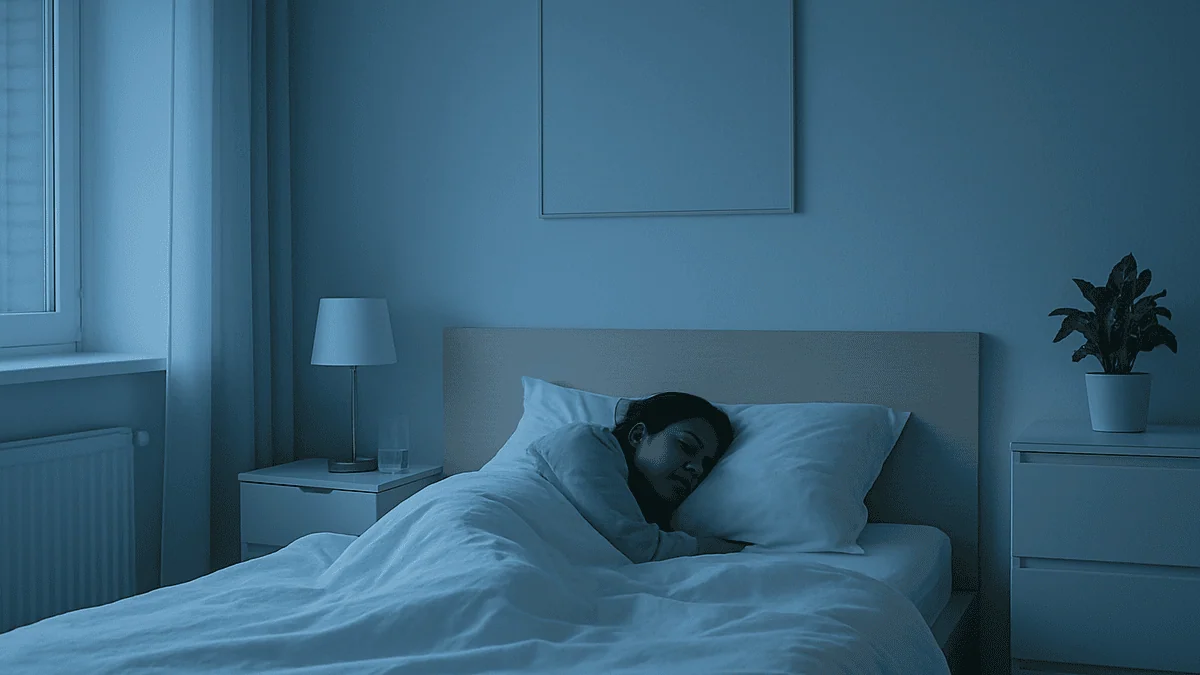
Key Takeaways
- A full in-lab polysomnogram records roughly two dozen simultaneous channels, brain waves, eye movements, muscle tone, heart rhythm, airflow, breathing effort, oxygen saturation, snoring, and video, with no needles involved.
- Technologists score the night in 30-second epochs, and it's the pairing of airflow sensors with chest and abdominal effort belts that distinguishes obstructive apnea from central apnea.
- An apnea is a breathing pause of at least 10 seconds; an AHI of 5–14 events per hour is classified as mild sleep apnea, 15–29 moderate, and 30 or more severe.
- You don't need a perfect night, labs generally need only about two to four hours of recorded sleep, and people reliably underestimate how much they slept while wired up.
- Home sleep apnea tests can underestimate the AHI because they divide events by total recording time rather than true sleep time, so a negative home test with real symptoms should be followed by an in-lab study.
- The first-night effect is well documented, the brain sleeps lighter in unfamiliar surroundings, and sleep physicians account for it when interpreting your results.
A sleep study, or polysomnography, is an overnight test that records brain waves, eye movements, muscle tone, heart rhythm, breathing effort, airflow, blood oxygen, snoring, and body position while you sleep. Technologists score the data in 30-second segments to identify sleep stages and breathing events, helping doctors evaluate conditions such as sleep apnea, narcolepsy, and unusual nighttime movements or behaviors.
You pack a toothbrush and your own pillow, drive to a building that looks more like a hotel than a hospital, and by 10 p.m. a technologist is parting your hair to glue small gold discs to your scalp. Then comes the strangest bedtime instruction you’ll ever hear: sleep normally.
It sounds impossible. Yet every night, thousands of people manage exactly that, and the data they generate is remarkable: a second-by-second recording of what the brain, heart, lungs, and legs are doing during hours the sleeper will never remember. Most people leave in the morning surprised by two things: how much they actually slept, and how much the machines saw.
Here’s an honest walk-through of what those sensors capture, why an imperfect night still counts, and what the numbers in your report actually mean.
Why would a doctor order a sleep study?
The classic referral starts with a bed partner. Loud snoring punctuated by silences, then a gasp: that pattern of witnessed pauses is one of the strongest reasons to test for obstructive sleep apnea. But polysomnography answers a wider set of questions than most people realize.
Doctors also order the test for daytime sleepiness that persists despite adequate time in bed, for suspected narcolepsy (usually paired with a daytime nap test the following morning), for legs that kick rhythmically through the night, and for people who act out vivid dreams, punching, shouting, or leaping from bed, a pattern known as REM sleep behavior disorder. Sleepwalking and other unusual nighttime behaviors sometimes warrant a study too, especially when they begin in adulthood.
What a sleep study is not for, in most cases, is garden-variety insomnia. Trouble falling or staying asleep is usually diagnosed by history, not by wires; the Mayo Clinic notes polysomnography is reserved for cases where another underlying disorder is suspected. That distinction matters, because an unnecessary night in the lab is a poor use of anyone’s time, and a normal result can falsely reassure someone whose real problem is anxiety about sleep itself.
Untreated sleep apnea is worth finding: it’s associated with high blood pressure, atrial fibrillation, and drowsy driving. A single monitored night is a modest investment against risks like those.
What does polysomnography actually record?
A full in-lab study runs roughly two dozen channels at once: a level of physiologic surveillance you’ll rarely experience outside an intensive care unit, minus the needles. Every channel earns its place.
| Sensor | Where it goes | What it captures |
|---|---|---|
| EEG electrodes | Scalp (about six sites) | Brain waves that define sleep stages |
| EOG electrodes | Near the outer corners of the eyes | Eye movements, including the darting bursts of REM sleep |
| Chin EMG | Under the jaw | Muscle tone, which drops sharply in REM |
| Leg EMG | Shins | Periodic limb movements and kicks |
| ECG leads | Chest | Heart rate and rhythm |
| Airflow sensors | Under the nose | Pauses and reductions in breathing |
| Effort belts | Chest and abdomen | Whether the body is trying to breathe during a pause |
| Pulse oximeter | Fingertip | Blood oxygen saturation, continuously |
| Microphone & video | Room | Snoring volume, body position, behaviors |
The pairing of airflow sensors with effort belts is the clever part. If airflow stops while the chest and belly keep heaving, the airway has collapsed, obstructive apnea. If airflow stops and the effort belts go quiet too, the brain briefly stopped sending the signal to breathe, central apnea. Same silence at the nose, entirely different problem, and the belts are what tell them apart.
What can I expect during a sleep study?
Most labs ask you to arrive in the evening, typically between 8 and 10 p.m. The room usually resembles a plain hotel room: a real bed, a nightstand, a private or nearby bathroom, and a camera you’ll forget about faster than you expect.
After you change into your own pajamas, the hookup begins: the longest part of the evening, often 45 to 60 minutes. The technologist measures your head, marks electrode sites, cleans each spot with a gritty gel, and attaches sensors with paste and tape. Wires gather into a ponytail behind your head and plug into a small box, so you can still roll over, sit up, and walk to the bathroom.
Before lights-out comes a short calibration: look left, look right, blink, hold your breath, flex your feet. This gives the scorer a labeled sample of what each signal looks like when you do a known thing.
Then the lights go off, and a technologist in a separate control room monitors your signals all night, often watching more than one patient at once. If a sensor peels loose at 2 a.m., someone will slip in quietly and reattach it. In the morning, usually around 6 a.m., the sensors come off, you wash the paste out of your hair (bring shampoo), and most people head straight to work. There are no needles at any point, and nothing about the test hurts.
Does the hookup hurt? What all those wires actually feel like
The honest answer: it’s odd, not painful. The scalp electrodes are attached with a water-soluble paste that feels like cold toothpaste; the skin-prep gel is mildly abrasive, like a facial scrub applied to a coin-sized spot. Nasal sensors rest under the nostrils the way oxygen tubing does, and the belts around chest and abdomen stretch like soft elastic waistbands.
What surprises people most is mobility. First-timers often lie rigidly on their backs all night, assuming any movement will rip something loose. It won’t. The wires bundle into a single tether with generous slack, and technologists expect you to roll over, in fact, they want to see you sleep on your back and your side, because obstructive apnea is often two to three times worse supine. Sleep however you naturally do.
A few genuine minor annoyances are worth knowing in advance:
- The paste dries stiff and takes a thorough shampoo (sometimes two) to remove completely.
- The fingertip oximeter glows faintly red; a few people find it distracting for the first minutes.
- Side sleepers may feel the chin electrodes press against the pillow at first.
People with sensitive skin occasionally notice small red marks from tape the next day; they fade quickly. If you have adhesive allergies, mention it when you book, labs carry alternatives. Compared with almost any other diagnostic test in medicine, this one is gentle. The hardest part is psychological, and that’s the next section.
How technologists score your sleep, 30 seconds at a time
After you leave, the real labor starts. A registered sleep technologist divides the entire night into 30-second windows called epochs, a full night yields roughly 800 to 960 of them, and assigns each one a sleep stage based on the brain-wave, eye-movement, and muscle-tone patterns on screen. A physician then reviews the scored study.
The stages tell a story. N1 is the drifting-off phase, so light that people awakened from it often insist they were never asleep. N2, marked by distinctive EEG signatures called spindles and K-complexes, occupies about half of a typical adult night. N3 is deep slow-wave sleep, the physically restorative stage, concentrated in the first third of the night. REM, where most vivid dreaming happens, arrives roughly 90 minutes after sleep onset and returns in progressively longer episodes toward morning, which is why you often wake mid-dream.
Scorers also flag arousals: abrupt shifts in brain waves lasting a few seconds, too brief to remember but long enough to fragment sleep. This is the finding that explains a common paradox, someone who “slept eight hours” yet feels wrecked. If breathing events trigger an arousal every two minutes, the brain surfaces dozens of times per hour without a single conscious memory of it. The arousal index quantifies exactly that, and it’s often the number that finally makes a diagnosis feel real to the person holding the report.
What is the AHI, and what do the numbers mean?
One number dominates most sleep study reports: the apnea-hypopnea index, or AHI. It counts breathing events per hour of sleep.
An apnea is a near-complete stop in airflow lasting at least 10 seconds. A hypopnea is a partial reduction, airflow drops substantially and either blood oxygen falls or the brain briefly arouses. Add them up, divide by hours slept, and you get the AHI. Widely used adult thresholds:
- Under 5: within the normal range
- 5 to 14: mild sleep apnea
- 15 to 29: moderate
- 30 or more: severe
Context matters as much as the raw count. An AHI of 40 means breathing is disrupted roughly every 90 seconds, all night. But two people with an AHI of 12 can look very different: one dips to 92% oxygen saturation, the other to 78%. That’s why reports also list the oxygen nadir, the time spent below 90% saturation, and whether events cluster during REM sleep or while lying on the back: a pattern called positional apnea that sometimes opens gentler treatment options.
A word of honest caution: the AHI is a useful but imperfect summary. Night-to-night variability is real, and a borderline number on one night doesn’t settle the question forever. Good sleep physicians read the whole report, symptoms, oxygen data, sleep architecture, rather than treating a single integer as a verdict.
How to fall asleep during a sleep study
This is the question that keeps people up before the test: a nicely ironic form of performance anxiety. The most useful reframe: your job is not to sleep well. It’s to sleep enough, and the bar is lower than you think.
Practical moves that genuinely help:
- Keep your normal schedule that day, wake at your usual time and skip naps entirely, so sleep pressure is high by evening.
- Cut caffeine after lunch. Its effects can linger six hours or more.
- Skip alcohol. It may hasten sleep onset but fragments the second half of the night and can distort breathing data.
- Bring your own pillow, your usual pajamas, and whatever your wind-down routine involves: a book, a podcast, a specific pair of socks. Familiar cues do real work.
- Ask the lab about room temperature, white noise, and lights; most will accommodate preferences.
Then accept the physiology: sleeping worse in a strange bed is so predictable that researchers have a name for it, the first-night effect, and evidence suggests one half of the brain literally sleeps lighter in unfamiliar surroundings, likely an old protective instinct. Technologists interpret every study knowing this.
If you’re truly worried you won’t sleep at all, raise it with your doctor beforehand rather than improvising with an over-the-counter sleep aid the night of the test, some substances change sleep architecture and muddy the data. Planned ahead, there are usually workable options.
What happens if you wake up during a sleep study?
Nothing bad, and it will happen, probably several times. Waking during the night is normal even at home; most adults surface briefly between sleep cycles and forget it by morning. In the lab, with sensors on your face and a mattress that isn’t yours, a few conscious awakenings are fully expected and priced into the test.
If you need the bathroom, just speak up. The room’s intercom means the technologist hears you; they’ll come in, unplug the single cable connecting your wire bundle to the headboard box, and you walk to the bathroom trailing a ponytail of leads. It takes about a minute in each direction. Nobody restarts anything: the recording simply resumes when you’re back in bed.
Here’s the reassuring math: a diagnostic study generally doesn’t need a full eight hours. Labs typically want a minimum of around two hours of recorded sleep, and something closer to four gives a comfortable margin, ideally including some REM and some time on your back. Even a night that feels ruined usually clears that bar, because people reliably underestimate how much they slept. It’s common for someone to apologize at 6 a.m. for “barely sleeping,” only to learn the EEG logged five hours. The brain is a poor witness to its own unconsciousness.
Rarely, a night yields too little data to interpret. In that case the lab may recommend a repeat, inconvenient, but not a failure on your part.
Home sleep apnea test vs. in-lab polysomnography: which one, and why
Not every sleep study involves a lab bed anymore. A home sleep apnea test is a stripped-down kit, usually a nasal airflow sensor, one or two effort belts, and a fingertip oximeter: that you wear in your own bed. No scalp electrodes, no video, no technologist down the hall.
The trade-off is precise. Home tests are convenient, generally less expensive, and let you sleep in familiar surroundings, which some argue produces a more representative night. But without EEG, the device can’t tell whether you were actually asleep. It divides breathing events by total recording time rather than true sleep time, so if you lay awake for two of seven hours, the denominator is inflated and the AHI is underestimated. Home kits also can’t diagnose narcolepsy, limb-movement disorders, or dream-enactment behaviors, and they distinguish obstructive from central events less reliably.
That’s why guidelines steer home testing toward one specific scenario: adults with a high pretest likelihood of moderate-to-severe obstructive sleep apnea and no significant heart, lung, or neuromuscular disease. For that person, a positive home test is trustworthy. The critical caveat runs the other direction: a negative or inconclusive home test in someone with real symptoms doesn’t rule apnea out, and standard practice is to follow it with in-lab polysomnography.
Think of the home kit as a targeted screening rifle and the lab study as the full survey. Both are legitimate tools; the mistake is asking the simpler one to answer questions it was never built for.
What is a split-night study?
Sometimes a single night does double duty. In a split-night study, the first hours run as standard diagnostic polysomnography. If the data quickly shows clear, significant obstructive sleep apnea, typically frequent events piling up within the first two to three hours, the technologist wakes you gently, fits a positive airway pressure mask, and spends the remainder of the night on treatment calibration.
That second half is called a titration. Starting from a low air pressure, the technologist gradually adjusts upward from the control room, watching in real time as obstructive events thin out and, ideally, disappear. The goal is the lowest pressure that keeps the airway open across sleep stages and body positions: REM sleep and back-sleeping usually demand the most, so a good titration tries to capture both.
The appeal is efficiency: one night, one copay-sized disruption to your life, and you may walk out with both a diagnosis and a working prescription pressure. The honest downside is compression. If severe apnea doesn’t declare itself early, or if you sleep poorly in the first half, there may not be enough clean data for either purpose, and a second night gets scheduled anyway.
People who’ve already been diagnosed, by a home test, for instance, sometimes come in for a full titration-only night instead. And a growing number of patients skip the lab titration altogether, using auto-adjusting pressure devices that find their own settings at home, with a clinician reviewing the downloaded data. Your sleep physician will match the format to your situation.
How to prepare: what to bring and what to skip
Good preparation is mostly about making the sensors’ job easy and your night boring, in the best sense.
On the day of the study:
- Wash your hair with plain shampoo and skip conditioner, gels, oils, and sprays; residue keeps scalp electrodes from adhering, and reapplying them at midnight helps no one.
- Skip lotion on your face, chest, and legs for the same reason.
- Avoid naps, and stop caffeine by early afternoon.
- Take your regular medications unless the sleep clinic tells you otherwise, and bring a written list, because some medications shift sleep architecture and the interpreting physician needs to know.
- Eat dinner beforehand; most labs don’t provide meals.
Worth packing:
- Two-piece pajamas or a T-shirt and shorts (sensors and belts route more easily than through a nightgown or onesie)
- Your own pillow, toiletries, and morning shampoo: the electrode paste is stubborn
- Phone charger, a book, reading glasses
- Work clothes if you’re heading to the office at 6 a.m.
Leave the nightcap at home. Alcohol suppresses REM early in the night, causes rebound fragmentation later, and can exaggerate breathing events: the goal is a night that represents your ordinary sleep, not a distorted version of it. If a bed partner usually helps you settle, ask the lab about their policy; most studies are solo, but a few facilities have companion arrangements, especially for patients with disabilities or dementia. Children’s studies routinely include a parent.
Reading your results: what happens after the study
Don’t expect answers at checkout. The morning technologist can’t discuss findings, not out of secrecy, but because scoring hasn’t happened yet. Over the following days, a technologist stages every epoch and marks every breathing event, arousal, and limb movement; a sleep physician then reviews the study and writes an interpretation. Most people get results within one to two weeks, usually at a follow-up visit or through a patient portal.
The report itself rewards a little literacy. Beyond the AHI, look for:
- Sleep efficiency: the percentage of time in bed actually spent asleep; 85% or higher is typical for healthy adults, and lab nights often run lower.
- Sleep latency: minutes to fall asleep. Under about 20 is unremarkable; dramatically short latency can hint at severe sleep deprivation or another disorder.
- Stage percentages: roughly how the night divided among N1, N2, N3, and REM. Fragmented breathing often steals deep sleep and REM.
- Oxygen nadir and time below 90% saturation: the severity data that raw event counts can hide.
- Arousal index and limb-movement index: the fragmentation story.
A normal study is a genuinely useful result too: it redirects attention toward insomnia, circadian misalignment, medication effects, or mood, rather than closing the case. And if the numbers point to a disorder, the report becomes the baseline against which treatment gets measured. Ask for a copy. It’s your data, and future clinicians will thank you for having it.
What is the newest treatment for sleep apnea?
People often arrive at a sleep study having already read about the latest gadget, so let’s be evidence-first about what’s genuinely established and what’s genuinely new.
Positive airway pressure remains the best-supported treatment for obstructive sleep apnea, decades of evidence, effective across severity levels, and modern machines are quieter and smarter than the ones your uncle abandoned in 2005. Auto-adjusting devices, heated humidification, and a far wider range of mask designs have meaningfully improved comfort. For people who can’t tolerate pressure therapy, custom-fitted oral appliances made by a dentist reposition the lower jaw forward and have solid evidence in mild to moderate disease.
The headline-grabbing newer option is hypoglossal nerve stimulation: a surgically implanted device, first approved by U.S. regulators in 2014 and refined since, that senses each breath and delivers a mild pulse to the nerve controlling the tongue, moving it forward to keep the airway open. It’s not for everyone, candidacy depends on your AHI range, anatomy, body-mass index, and documented inability to use pressure therapy, but for the right patient, studies show substantial reductions in events.
Also legitimate, if less flashy: positional therapy devices for people whose apnea occurs mainly on the back, weight management when it applies, and treating nasal obstruction. What the evidence does not support are mouth-taping trends and unregulated gadgets sold online. The genuinely honest answer to “what’s newest” is that the best treatment is the one matched to your specific study results, which is exactly why the study comes first.
When to see a doctor about your sleep
Snoring alone, absent other symptoms, isn’t automatically a medical problem. But certain patterns deserve a conversation with your primary care clinician, and often a referral to sleep medicine, sooner rather than later:
- Someone has witnessed you stop breathing, gasp, or choke during sleep.
- You’re regularly sleepy during the day despite seven-plus hours in bed, nodding off in meetings, at movies, or worst of all, at red lights.
- You wake with morning headaches, a dry mouth, or a racing heart on most days.
- You have hard-to-control high blood pressure or atrial fibrillation; sleep apnea is a common and treatable contributor to both.
- You physically act out dreams, or a bed partner reports you shouting, punching, or leaving the bed asleep.
- You experience sudden muscle weakness with laughter or strong emotion, or overwhelming sleep attacks, possible signs of narcolepsy.
- Your legs feel restless and creepy-crawly at night, or a partner reports rhythmic kicking.
Two situations warrant urgency. If drowsiness has ever caused you to drift out of a lane or miss an exit without remembering it, treat that as the emergency it nearly was and stop driving while sleepy until you’ve been evaluated. And in children, loud snoring with pauses, restless sleep, or daytime behavior problems should be raised with a pediatrician, sleep-disordered breathing in kids can masquerade as attention difficulties.
None of this is meant to alarm. It’s meant to shorten the timeline: the average person with sleep apnea lives with symptoms for years before testing, and the test itself, as this article hopefully shows, is one of medicine’s least intimidating nights.
Frequently asked questions
How do I fall asleep during a sleep study?
Arrive sleepy on purpose: wake at your normal time, skip naps that day, stop caffeine after lunch, and avoid alcohol. Bring your own pillow, familiar pajamas, and your usual wind-down routine. Then lower the stakes, labs typically need only about two to four hours of recorded sleep, not a perfect night. If you’re genuinely worried you won’t sleep at all, discuss it with your doctor before the test rather than self-medicating that night.
What happens if you wake up during a sleep study?
Nothing is ruined, brief awakenings are expected and normal, even at home. The technologist sees your signals in real time and simply keeps recording when you fall back asleep. If you need anything, speak up; the room intercom means they’ll hear you. Most people wake several times during a lab night and still generate more than enough usable data, partly because we consistently underestimate how much we actually slept.
Can I go to the bathroom during a sleep study?
Yes, anytime. Tell the technologist through the room intercom, and they’ll unplug the single cable that connects your bundled wires to the bedside box: the sensors themselves stay attached to you. You walk to the bathroom normally, come back, get reconnected, and the recording continues. The whole interruption takes a couple of minutes and has no meaningful effect on the study’s validity.
What if I barely sleep at all during the test?
It happens less often than people fear. Diagnostic studies generally need around two hours of sleep at minimum, and most anxious sleepers clear that bar without realizing it: the EEG frequently shows hours of sleep the person swears never happened. The first-night effect, where sleep runs lighter in an unfamiliar bed, is well documented and factored into interpretation. In the rare case of truly insufficient data, the lab schedules a repeat night.
Do they watch you on camera all night?
Yes: a low-light video camera and microphone record the room, and a technologist monitors your signals from a separate control room. The video isn’t about surveillance for its own sake; it lets scorers link data to body position, confirm snoring, and document behaviors like sleepwalking or dream enactment that sensors alone can’t capture. Recordings are part of your confidential medical record, handled under the same privacy rules as any other health information.
Can I sleep in my normal position with all the wires on?
Yes, and you should. The wires gather into a single flexible bundle with plenty of slack, so rolling onto your side or stomach is fine, technologists reattach anything that loosens. They actually hope to record you in multiple positions, especially on your back, because obstructive sleep apnea is often significantly worse supine. Sleeping the way you normally do produces the most representative and useful data.
How long does it take to get sleep study results?
Typically one to two weeks. The morning technologist can’t share findings because the study hasn’t been scored yet: a technologist must first stage every 30-second epoch and mark each breathing event, and then a sleep physician reviews and interprets the full record. You’ll usually receive results at a follow-up appointment or through a patient portal, along with recommendations if the study shows a disorder.
Is a home sleep test as accurate as an in-lab study?
For one specific job, it’s good enough: confirming obstructive sleep apnea in adults who very likely have moderate-to-severe disease and no major heart, lung, or neuromuscular conditions. But home kits lack EEG, so they can’t measure actual sleep time and tend to underestimate the AHI, and they can’t diagnose narcolepsy or movement disorders. A negative home test in someone with real symptoms should be followed by in-lab polysomnography.
What is the newest treatment for sleep apnea?
The most notable newer option is hypoglossal nerve stimulation: an implanted device, first approved in the U.S. in 2014, that gently activates the tongue’s nerve with each breath to keep the airway open. It’s reserved for selected patients who can’t tolerate positive airway pressure and meet specific criteria. That said, pressure therapy remains the best-supported first-line treatment, and custom oral appliances and positional therapy are solid evidence-based alternatives for the right candidates.
Does a sleep study hurt or involve needles?
No needles, and no pain. Sensors attach with water-soluble paste, adhesive patches, and stretchy belts; the oddest sensations are cold paste on the scalp and a slightly gritty prep gel. Some people notice small temporary red marks from tape the next morning, and the paste takes a good shampoo to wash out. If you have sensitive skin or adhesive allergies, tell the lab when scheduling, alternatives are available.
References
- Sleep Study (Polysomnography): Cleveland Clinic
- Polysomnography: MedlinePlus Medical Encyclopedia
- Sleep Studies: NIH National Heart, Lung, and Blood Institute
- Sleep apnoea: NHS
This article is for general information only and is not a substitute for professional medical advice. Please consult a qualified doctor about your individual situation.

More from the Blog
Malaria Tablets and Vaccines: What Exists and Who Needs Them
Yes. Since 2021 the World Health Organization has recommended two malaria vaccines, but only for young children living in parts of Africa with moderate…
DNA and Paternity Testing During Pregnancy: What Is Possible
Yes. A paternity DNA test can be done during pregnancy using a blood sample from the pregnant person, which carries small fragments of the…

Retinal Scans: What an Eye Photo Reveals About Diabetes, Blood Pressure and the Brain
A retinal scan is a photograph or light-based scan of the back of the eye. It can show early blood-vessel damage from diabetes and…
The BRCA Gene Test: Who Should Consider It and What Results Change
The BRCA gene test is a blood or saliva test that looks for inherited changes in the BRCA1 and BRCA2 genes, which can substantially…
Prostate MRI: How It Changed Prostate Cancer Diagnosis
Prostate MRI, a detailed magnetic scan of the prostate gland, is now widely used before biopsy when a PSA test or examination raises concern.…
Ovarian Cancer Screening and CA-125: Why There Is Still No Routine Test, and Who Is Monitored
No routine ovarian cancer screening test is recommended for women at average risk. Two large randomized trials, PLCO and UKCTOCS, found that annual CA-125…