

Transfusions and Infection Precautions During Acute Myeloid Leukemia Treatment
Key Takeaways
- Neutrophils live less than a day in the blood, so once chemotherapy stops the marrow, the body's bacterial defenses can disappear within days, while red cells decline over weeks.
- Red cells and platelets can be replaced by transfusion, but neutrophils in routine practice cannot, which is why infection prevention relies on behavior rather than a bag on a pole.
- Cleveland Clinic defines severe neutropenia as an absolute neutrophil count below 500 per microliter; many AML patients spend weeks near zero with no symptoms to warn them.
- Transfused platelets last only days and may need repeating every few days during the nadir, whereas a red cell transfusion typically carries a person for weeks.
- Most neutropenic infections arise from bacteria already living on the patient's own skin and gut, so mouth care and catheter care matter as much as controlling visitors.
- A single oral temperature of 100.4 F (38 C) during neutropenia is treated as an emergency because, without neutrophils, fever may be the only sign of a rapidly progressing infection.
During acute myeloid leukemia treatment, chemotherapy drives red cells, platelets and infection-fighting white cells to very low levels for weeks. Red cell and platelet transfusions replace what the marrow cannot yet make, while infection precautions (hand hygiene, food safety, avoiding sick contacts, prompt reporting of any fever) protect against the main danger of that period. Your care team sets the thresholds and rules for your situation.
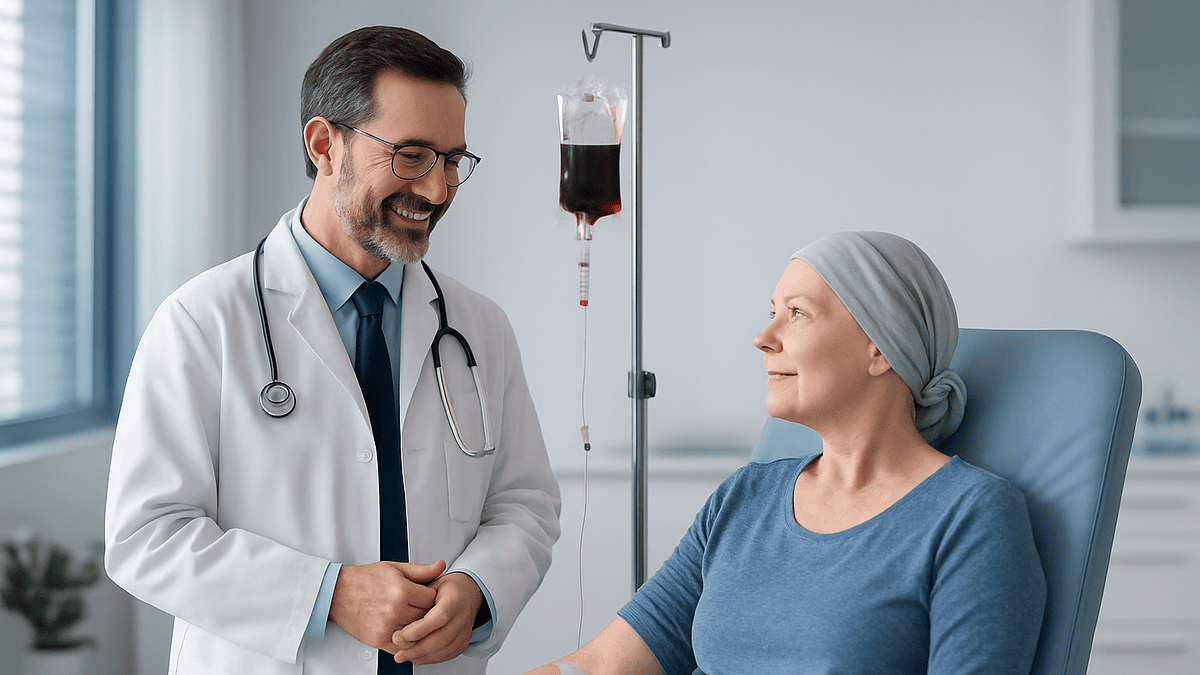
The first thing many people notice on an AML ward is the quiet. Doors stay closed. Visitors wash their hands at the threshold. A nurse hangs a bag of something the color of weak tea and says, matter-of-factly, “platelets.” For someone who was mowing the lawn ten days earlier, the whole scene can feel like stepping into a different climate.
That climate exists for one reason. Treatment for acute myeloid leukemia works by clearing the bone marrow, and for a stretch of weeks the marrow makes almost nothing. The blood that keeps you oxygenated, stops you bleeding and fights off germs runs thin all at once. So the practical questions crowd in: what do the numbers on the chart mean, why is a transfusion offered one day and not the next, and which of the rules about food, flowers and grandchildren really matter?
This guide walks through aml treatment low blood counts precautions the way a good hematology nurse would explain them, with the evidence behind each rule and honesty about where the evidence is thin.
What actually happens to your blood counts during AML treatment
Acute myeloid leukemia is a cancer of the bone marrow, the spongy tissue inside bones that manufactures blood. In AML, immature white cells called myeloblasts multiply faster than they mature, and they crowd out the healthy cells the marrow would normally release. MedlinePlus describes the result: too few red cells, too few platelets and too few working white cells, even before any treatment begins.
Induction chemotherapy, the first intensive phase of treatment, aims to kill those blasts. The catch is that the medicines cannot tell a leukemia cell from a healthy stem cell that happens to be dividing. Both are cleared. For a period the marrow is nearly empty, a state doctors call aplasia. The NHS notes that people usually stay in the hospital for several weeks during this phase precisely because the counts fall so far.
Three cell lines matter here, and they behave differently:
- Red blood cells carry oxygen. They live around 120 days, so their numbers drift down gradually and you feel it as fatigue, breathlessness on stairs or a racing heart.
- Platelets are cell fragments that plug leaks in blood vessels. They survive only about a week, so their count drops fast and bleeding risk rises quickly.
- Neutrophils are the white cells that swallow bacteria and fungi. They live less than a day in the bloodstream, which means that once the marrow stops, the supply vanishes within days.
Everything else in this article follows from that arithmetic. Red cells and platelets can be replaced from a donor bag. Neutrophils, in routine practice, cannot. That is why transfusions handle two of the three problems and behavior, hygiene and vigilance handle the third.
What blood count is low with leukemia?
People often ask for a single number that means danger. There isn’t one, because each cell line has its own scale and its own consequences. Below are the ranges clinicians commonly work with, drawn from Cleveland Clinic and Mayo Clinic patient references; your own team may use slightly different local values.

Hemoglobin, the oxygen-carrying protein in red cells, is measured in grams per deciliter. Mayo Clinic gives normal adult ranges of roughly 12 to 17.5 depending on sex. During AML treatment it commonly falls well below 10, and many people notice fatigue and shortness of breath somewhere in the 7 to 9 range.
Platelets are counted per microliter of blood. A normal count runs from about 150,000 to 450,000. Bleeding risk climbs meaningfully as counts drop into the tens of thousands, and spontaneous bleeding becomes a concern at very low levels, though the exact point varies from person to person.
Neutrophils are reported as the absolute neutrophil count, or ANC. Cleveland Clinic defines neutropenia as an ANC below 1,500 per microliter, with severe neutropenia below 500. Many AML patients spend weeks with an ANC near zero. At that level, the body has essentially no first responders against bacteria.
Two things are worth holding onto. First, symptoms do not always match the number. A person with a hemoglobin of 8 who has drifted there slowly may feel reasonably well, while someone whose count dropped overnight feels awful at 9. Second, the trend often matters more than any single result. Teams look at whether counts are still falling, have flattened, or have begun the climb back, because that direction tells them where you are in the recovery arc.
How a blood transfusion for leukemia actually works
A transfusion is the infusion of a blood component from a screened donor through a vein. In AML care it is almost never whole blood. Donated blood is separated into parts so each patient receives only what they lack.
Before the first unit, a sample of your blood is typed for ABO group and Rh factor and cross-matched against the donor unit. Mayo Clinic describes this as the essential safety step: giving mismatched red cells can trigger the immune system to destroy them. A second sample is often drawn by a different staff member as a check, which is why you may be asked your name and date of birth more times than seems reasonable. That repetition is deliberate.
The component then runs through a line, usually a central venous catheter placed at the start of treatment, or a peripheral cannula. Mayo Clinic gives a typical duration of one to four hours for a unit of red cells; platelets run faster, often within 30 to 60 minutes. A nurse checks temperature, pulse and blood pressure before starting, again after the first 15 minutes when reactions are most likely, and at intervals until finished.
Many hematology units irradiate or leukocyte-reduce components for leukemia patients. Leukocyte reduction filters out most donor white cells, which lowers the chance of fever reactions and certain viral transmissions. Irradiation prevents any surviving donor lymphocytes from attacking a recipient whose own immune system is suppressed, a rare but serious complication. You do not need to request these; they are standard practice in most centers for this patient group.
Reactions are uncommon and usually mild: chills, a low fever, itching or hives. Nurses will stop the infusion, assess, and often restart after treatment for the symptoms. Serious reactions are rare, and the monitoring schedule exists to catch them early.
AML treatment low blood counts precautions at a glance: what gets replaced and what does not
The table below summarizes how each low count is managed in routine AML care. Thresholds are described in general terms because the actual number that triggers a transfusion depends on your symptoms, your bleeding history, whether you have a fever, and your team’s protocol.

| Cell line | What it does | Can it be transfused? | How long the benefit typically lasts | Main precaution while low |
|---|---|---|---|---|
| Red blood cells | Carry oxygen to tissues | Yes, as packed red cells | Weeks; transfused cells survive close to a normal lifespan | Pace activity, report breathlessness or chest discomfort |
| Platelets | Plug vessel leaks, prevent bleeding | Yes, pooled or single-donor platelets | Days; often repeated every few days during aplasia | Soft toothbrush, no razors or hard-contact activities, report bruising or bleeding |
| Neutrophils | Engulf bacteria and fungi | Not in routine practice | Not applicable; recovery waits for the marrow | Hand hygiene, food safety, avoid sick contacts, treat any fever as urgent |
The asymmetry in the third row shapes the whole experience. Granulocyte transfusions exist but are used only in select circumstances, because donor neutrophils survive briefly and the evidence for benefit is limited. So while the first two rows are problems the ward can fix with a bag on a pole, the third is managed by preventing exposure and by treating infections early and aggressively.
Notice also the difference in the fourth column. A red cell transfusion can carry you for weeks. A platelet transfusion may need repeating within a few days because transfused platelets clear from the circulation quickly, faster still if you have a fever or an enlarged spleen. This is why platelet counts get checked so often and why the bag reappears more frequently than the red cells do.
Who usually receives transfusions, and who is asked to wait
A common frustration is watching your count dip below a number you have started to think of as “the line” and hearing that today there will be no transfusion. Understanding how teams decide takes some of the sting out.
For red cells, most hematology services use a restrictive approach: they transfuse when hemoglobin falls below a set threshold, or earlier if symptoms are significant, rather than aiming to keep the count near normal. Trials across many patient groups have generally found that restrictive thresholds are as safe as liberal ones and expose people to fewer units. Someone with heart disease or who is markedly breathless may be transfused at a higher hemoglobin than someone young and comfortable.
For platelets, teams distinguish between prophylactic transfusion, given to prevent bleeding when the count is very low, and therapeutic transfusion, given because bleeding is happening. A stable patient with no bleeding is often asked to wait until the count reaches a protocol threshold. A patient with a fever, a fresh nosebleed, an upcoming procedure or a headache that raises concern may be transfused at a higher count. The NHS treatment page for AML notes that transfusions are given as needed rather than on a fixed schedule.
Who is usually asked to wait, then? People whose counts are low but who are stable, symptom-free and not bleeding. Waiting is not neglect; each unit carries a small risk of reaction and, over many transfusions, of the immune system developing antibodies that make future platelet transfusions less effective, a problem called alloimmunization. Fewer units now can mean better-matched, more effective units later.
None of this is a formula you should try to apply yourself. If you feel worse than your number suggests, say so; symptoms move the threshold.
What precautions should I take if I have a low white blood cell count?
When the neutrophil count is near zero, ordinary bacteria become the threat. Most infections during neutropenia come not from a stranger’s cough but from organisms already living on your own skin and gut. Precautions aim to keep those numbers down and to keep new ones out.
Hand hygiene comes first, and it applies to everyone, not just you. The CDC’s guidance for cancer patients puts washing with soap and water or using an alcohol-based rub at the center of infection prevention. Ask visitors and staff to clean their hands on entering the room. It is not rude. Most people appreciate being told what helps.
Skin and mouth care matter more than they sound. The lining of the mouth and gut is damaged by chemotherapy, and small breaks become entry points. Brush gently with a soft toothbrush after meals, use the mouth rinse your team recommends, and skip flossing if your platelets are low. Shower daily with mild soap, pat dry, and check skin folds and the catheter site for redness or tenderness. Avoid tampons and rectal thermometers, which can introduce bacteria through fragile tissue.
Take your temperature as often as your team advises, typically at least twice daily and any time you feel unwell, chilled or simply “off.” Do not take acetaminophen or other fever-reducers without asking first, because they can mask the one sign you most need to see.
The catheter deserves its own routine. Keep the dressing dry and intact, and tell the nurse immediately if it lifts, if the site hurts, or if you notice a chill during or soon after a flush; that pattern can point to a line infection.
Finally, cover cuts promptly, avoid gardening or handling soil without gloves, and save any dental work for after count recovery unless your team says otherwise.
Neutropenic precautions at home: food, water and the kitchen
The strict “neutropenic diet” of a generation ago, which banned fresh fruit and vegetables entirely, has softened. Reviews have not shown that those rigid diets reduce infection compared with ordinary food-safety practice, and they made eating harder for people who were already struggling with appetite. Most centers now recommend safe food handling rather than a list of forbidden foods, though local protocols vary and your team’s advice takes precedence.
The practical rules are the ones the CDC recommends for anyone at higher risk of foodborne illness:
- Cook meat, poultry, fish and eggs thoroughly; no runny yolks, rare steak or raw shellfish.
- Avoid unpasteurized milk, juice and cheese, including soft cheeses made from raw milk.
- Wash fruit and vegetables under running water and peel where possible; skip pre-cut produce and salad bars where handling is uncertain.
- Keep raw and cooked foods on separate boards, and refrigerate leftovers within two hours.
- Eat leftovers within a day or two rather than the usual three to four.
- Drink tap water if your supply is municipally treated; use bottled or boiled water if you rely on a private well.
Buffets, street vendors and takeout where food has sat under a heat lamp are reasonable to avoid during the deepest neutropenia. Restaurant meals cooked to order and served hot are generally acceptable; ask your team how they view eating out.
Appetite often collapses during treatment, and the mouth may be sore. In that situation the priority is calories and protein in whatever safe form you can tolerate: smoothies made from washed fruit and pasteurized dairy, soups, eggs cooked firm, nut butters. A dietitian on the hematology team can help build meals around what you can manage. Weight loss during induction is common, and eating enough matters for recovery of both marrow and muscle.
Visitors, crowds, pets and plants: what the evidence supports
Some of the most emotionally charged rules on a leukemia ward concern the people and things patients love most. Here is where the evidence is firm and where it is more about caution than proof.
Sick visitors are a clear no. Anyone with a cough, cold, fever, diarrhea, rash or recent exposure to chickenpox or shingles should stay away until fully recovered. Respiratory viruses that would give a healthy adult a bad week can become pneumonia in someone with no neutrophils. Children in daycare and school pick up viruses constantly, so many units ask that young children visit only when clearly well.
Healthy visitors are generally encouraged. Isolation harms mood and can slow recovery through poor sleep and low appetite. The compromise is small numbers, clean hands, and a mask if your unit requests one.
Crowds during the neutropenic window are worth avoiding: shopping malls, public transit at rush hour, cinemas, places of worship at full capacity. Once counts recover, these restrictions typically lift.
Fresh flowers and potted plants are commonly banned on hematology units. Standing water and soil harbor bacteria and mold spores, particularly the fungus Aspergillus, which can cause serious lung infection in profoundly neutropenic patients. The direct evidence that a vase causes infection is limited, but the fungal risk is real enough that most centers keep the rule.
Pets are usually fine to live with once you are home, with caveats. Avoid handling litter boxes, bird cages, reptile tanks and aquariums, all of which carry organisms such as Salmonella and Toxoplasma. Let someone else clean up after animals, wash your hands after petting, and keep pets off open wounds and the catheter site. Adopting a new animal or handling stray or farm animals is best postponed until your immune system recovers.
What should AML patients avoid during treatment?
Beyond germs, a low platelet count leukemia patient carries a second set of risks that depend on bleeding rather than infection. A single list of what to avoid, grouped by reason, helps keep things straight.
Because platelets are low, avoid anything that causes cuts, blows or internal pressure. That means no contact sports, no straining on the toilet (ask about stool softeners if constipated), no forceful nose-blowing, and an electric razor instead of a blade. Aspirin and non-steroidal anti-inflammatory pain relievers such as ibuprofen interfere with the platelets you do have and are generally avoided unless your team specifically approves; check before taking any over-the-counter product. Alcohol also affects platelet function and interacts with several medicines, and most teams advise avoiding it during intensive treatment.
Because neutrophils are low, avoid raw and undercooked food, unpasteurized products, soil, standing water, sick contacts, crowded indoor spaces, hot tubs and public pools, and construction or renovation dust, which can carry fungal spores.
Because your immune response is suppressed, avoid live vaccines, which can cause the illness they normally prevent. Inactivated vaccines may be given at times your team considers appropriate; ask rather than assume.
Because of medicine interactions, avoid starting supplements, herbal products or grapefruit juice without checking. Several herbal products alter how chemotherapy is metabolized, and the NIH Office of Dietary Supplements cautions that “natural” does not mean risk-free during cancer treatment.
None of this is meant to shrink your life to a hospital bed. The restrictions are heaviest during the weeks of deepest aplasia and lift as counts return. Ask your team which rules apply at each stage, and ask again when your numbers change.
Why a temperature of 100.4 changes everything in neutropenia
Fever during neutropenia is treated as a medical emergency, and understanding why turns a rule into something you will act on without hesitation.
Neutrophils are what produce the familiar signs of infection: the redness, swelling, pus and pain that tell you something is wrong. Without them, a serious infection can be almost silent. No pus forms in a wound. A urinary infection may cause no burning. Pneumonia may show almost nothing on an early chest X-ray. Frequently the only clue the body can still generate is a rise in temperature, and sometimes not even that; some people feel chills, a racing heart, confusion or simply a sense of being unwell before the thermometer moves.
The CDC and most oncology guidelines define fever in this setting as a single oral temperature of 100.4 F (38 C) or higher, or a sustained lower-grade rise over an hour. The NHS advises people on chemotherapy to contact their team urgently at 37.5 C or above, a deliberately lower bar. Your unit will tell you which threshold it uses; write it on the card you carry.
Speed matters because bacterial infection in neutropenia can progress to sepsis, a dangerous whole-body response, within hours. Standard practice is to start broad-spectrum intravenous antibiotics quickly, ideally within an hour of arrival, after drawing blood cultures, rather than waiting to identify the organism. Antibiotics are then narrowed or stopped once cultures and the clinical picture clarify.
Do not wait to see if it settles. Do not take a fever-reducer and recheck. Do not drive yourself if you feel faint. Call the number your team gave you, say you are a chemotherapy patient with neutropenia, and follow their instructions. Most units would far rather assess ten fevers that turn out to be nothing than miss one that was not.
What the following weeks usually look like
Induction chemotherapy follows a fairly predictable arc, and knowing the shape of it helps the low days feel less endless. The timeline below is typical of intensive regimens and is drawn from NHS and Mayo Clinic descriptions; less intensive treatments used in older or frailer adults follow a gentler curve, and your own course will differ in detail.
Days 1 to 7. Chemotherapy is given. Counts may already be low from the disease itself. Nausea and fatigue are the main issues; infection risk is beginning to rise.
Roughly days 7 to 21. This is the nadir, the period of lowest counts. The NHS notes that the drop in white cells after chemotherapy typically reaches its deepest point one to two weeks after treatment. Neutrophils often sit at or near zero. Platelet transfusions are frequent, red cell transfusions periodic. Mouth soreness, hair loss and profound tiredness are common. A fever at some point during this window is more likely than not, and most units expect and plan for it.
Roughly days 21 to 35. Counts begin to recover. Neutrophils usually reappear first, then platelets, with hemoglobin lagging. Transfusion needs taper. A bone marrow biopsy is commonly performed around this stage to assess how the leukemia has responded. The NHS describes hospital stays of several weeks for this whole phase, and discharge typically follows count recovery rather than a fixed date.
After discharge. Consolidation chemotherapy, given to eliminate residual disease, brings a repeat of the cycle, often somewhat shorter and sometimes with time at home between courses. Each cycle carries its own nadir and its own precautions, then its own recovery.
People often describe the third week as the hardest, physically and emotionally. It is also usually the turning point. Ask your team to show you your count trend; watching the first neutrophils reappear on the chart is a moment many patients remember.
Growth factors and preventive antibiotics: how they fit in
Two classes of medicine sometimes sit alongside transfusions and hygiene during the neutropenic window. Neither is universal in AML, and whether either is used is a decision for your hematology team.
Granulocyte colony-stimulating factors, often shortened to G-CSF, are injectable proteins that mimic the body’s own signal to the marrow to produce neutrophils faster. In many solid tumors they shorten the neutropenic period. In AML their use is more nuanced, because the leukemia cells themselves are myeloid and some clinicians prefer not to stimulate the marrow until the disease is under control. Some protocols use G-CSF after consolidation; others do not. If it is offered, the mechanism is simply acceleration of a recovery that would happen anyway, not replacement of the cells.
Prophylactic antimicrobials are given to prevent infection rather than to treat one. Many centers prescribe an antibacterial agent during the deepest neutropenia, an antifungal to guard against mold and yeast infections, and an antiviral to prevent reactivation of herpes viruses that most adults carry silently. Which agents, and whether any are used, depends on local infection patterns, your history and the intensity of your regimen. Ask what each tablet or infusion is for; knowing that one is protecting against fungus and another against a virus makes the pill burden easier to accept.
Transfusion-related medicines may also appear: an antihistamine or a fever-reducer before a unit if you have reacted previously, or a medicine to bind excess iron after many red cell transfusions over months.
The consistent thread is that these are supports, not shortcuts. They lower the odds of a bad outcome during a dangerous window, but they do not replace hand hygiene, food safety and the phone call at the first sign of fever. Never adjust or stop any of them without speaking to the prescribing clinician.
How quickly does AML progress, and why treatment starts fast
The word “acute” is not decorative. Mayo Clinic explains that AML progresses rapidly, over weeks rather than years, which distinguishes it from chronic leukemias that can be watched for long periods. That pace is why many people move from a routine blood test to a hospital bed within days, and why the transfusion and infection questions arrive so suddenly.
Untreated, the blasts continue to multiply and the counts continue to fall. Infections, bleeding and severe anemia can become life-threatening in a short time. This is the reason induction chemotherapy is usually started as soon as the diagnosis is confirmed and the subtype is characterized, often within a day or two of the bone marrow result. Some genetic subtypes require specific up-front treatment, so there may be a brief pause for those tests, but it is rarely long.
Speed cuts the other way too. Because treatment starts so quickly, the low counts of the disease flow straight into the low counts of chemotherapy without a gap, and patients often arrive already needing transfusion. Some are transfused before the first chemotherapy dose is given, to bring platelets or hemoglobin to a safer starting point.
What this means for precautions is that they begin at diagnosis, not at the first chemotherapy bag. If you have just been told you have AML and your neutrophil count is already low, the hand hygiene, food safety and fever rules apply now.
Progression after treatment is a different question. Once a response is achieved, follow-up focuses on detecting relapse early, and the tempo of monitoring is set by your team based on your subtype and response. The NHS describes this as ongoing blood tests and, at intervals, marrow assessment. Ask what your schedule will look like and what changes in counts they will be watching for.
What people often get wrong about low counts and infection prevention
Even careful families absorb ideas that do not hold up. Correcting them saves worry and, sometimes, prevents harm.
“A transfusion will make me feel normal.” Red cells often bring a real lift in energy within a day, and platelets stop bleeding. Neither touches the fatigue caused by chemotherapy itself, poor sleep, low appetite and the illness, so feeling tired the morning after a transfusion does not mean it failed.
“Transfusions are dangerous.” Donated blood in high-income countries is screened for HIV, hepatitis B and C and other infections; Mayo Clinic notes that transmission of infection is now extremely rare. The more common risks are mild reactions and, over many units, antibody formation. For most AML patients the danger of not transfusing when bleeding or severely anemic far outweighs these.
“Infections come from visitors.” Most neutropenic infections originate from bacteria already on the patient’s own skin and gut lining, which is why mouth care and catheter care matter as much as door signs.
“If I feel fine, the count must be OK.” Neutropenia itself has no symptoms. You will not feel your ANC drop. Only the lab result tells you.
“A low-grade fever can wait until morning.” In neutropenia, it cannot. See the section above.
“Fresh fruit is forbidden.” Washed, peeled fruit is acceptable in most modern protocols; the restriction is on raw or poorly handled food, not produce as a category.
“Masks protect me from everything.” A mask in crowded places reduces respiratory virus exposure. It does nothing for foodborne bacteria or catheter infections, so it complements the other measures rather than replacing them.
“Supplements will boost my immune system.” No supplement has been shown to raise neutrophil counts during chemotherapy, and several interact with treatment. The NIH Office of Dietary Supplements advises telling your oncology team about every product you take.
Questions to ask your care team about transfusions and infection precautions
Ward rounds move quickly, and the question you meant to ask has a way of surfacing after the team has left. Keeping a running list on your phone or a notepad helps. These are the ones patients and families most often wish they had raised earlier.
- What hemoglobin and platelet thresholds are you using for my transfusions, and what symptoms would move those thresholds?
- Roughly how often do you expect I will need platelets during this cycle?
- Are my blood components leukocyte-reduced and irradiated, and should any family members avoid donating blood for me?
- What is my neutrophil count today, and which direction is it moving?
- Which temperature should trigger a call, and exactly which number do I call, day or night?
- Am I on any preventive antibiotics, antifungals or antivirals, and what is each one for?
- Will I receive a growth factor injection, and if not, why is it not part of my protocol?
- What are your specific rules on fresh fruit, eating out, pets and visitors at each stage of my counts?
- Which over-the-counter medicines should I avoid while my platelets are low?
- How should I care for my central line at home, and what does a line infection look like?
- Which vaccines, if any, should my household members have, and when will I be able to have vaccines again?
- When do you expect my counts to recover, and what will tell you it is safe for me to go home?
- Who do I contact if I develop a fever after discharge, and should I go straight to an emergency department or call first?
Write the answers down. If two members of the team give slightly different advice, ask which applies to you; local protocols vary, and it is reasonable to want one clear set of rules.
When to call your doctor: red-flag signs during low counts
Some symptoms during AML treatment need a same-day, and often same-hour, response. Do not wait for a scheduled appointment, and do not try to judge whether it is serious enough. Call your hematology team’s emergency number or go to the emergency department you have been directed to if you notice any of the following:
- A temperature at or above the threshold your team gave you (commonly 100.4 F / 38 C), or shaking chills even without a measured fever.
- Feeling suddenly unwell, faint, confused, drowsy or short of breath, or a heart that is racing at rest; these can signal sepsis even when the temperature is normal.
- Bleeding that does not stop within about ten minutes of pressure, blood in urine, black or bloody stools, vomiting blood, or a sudden shower of pinpoint red spots on the skin.
- A severe or sudden headache, vision change, weakness on one side, or difficulty speaking, which can indicate bleeding inside the head when platelets are very low.
- Redness, swelling, pain, pus or a cracked dressing at the central line site, or chills during or shortly after the line is flushed.
- New cough, chest pain, or breathlessness at rest.
- Burning on urination, new diarrhea, or belly pain, all of which can mask infection when neutrophils are absent.
- Mouth sores or a sore throat severe enough to prevent drinking, or any sign of dehydration.
- A rash, especially a painful blistering rash on one side of the body, or contact with someone who has chickenpox or shingles.
Say clearly on the phone that you are being treated for acute myeloid leukemia and may be neutropenic. That sentence moves you to the front of the queue in most emergency systems. Bring your treatment summary card and a list of your medicines. The team you speak to will decide what happens next; your job is only to make the call early.
Frequently asked questions
What precautions should I take if I have a low white blood cell count?
Focus on hand hygiene for you and everyone around you, careful mouth and skin care, thorough food cooking and washing, avoiding sick contacts and crowds, and checking your temperature at least twice a day. Report any fever, chills or feeling unwell immediately rather than waiting to see if it passes. Keep the central line dressing clean and dry, and ask your team which specific rules apply at your current count.
What should AML patients avoid during treatment?
Avoid raw or undercooked meat, eggs and seafood, unpasteurized dairy and juice, soil and standing water, hot tubs and public pools, crowded indoor spaces and anyone who is unwell. Because platelets are low, also avoid contact sports, blade razors, aspirin and ibuprofen-type pain relievers unless your team approves them, and alcohol. Do not start supplements or herbal products, or receive live vaccines, without checking with your hematology team first.
How quickly does AML leukemia progress?
AML progresses over weeks rather than months or years, which is why Mayo Clinic describes it as acute and why treatment usually begins within days of diagnosis. Without treatment, immature cells crowd the marrow and blood counts fall quickly, raising the risk of infection, bleeding and severe anemia. After treatment, the pace of any relapse varies by subtype, and your team sets a monitoring schedule to detect changes early.
What blood count is low with leukemia?
Each cell line has its own scale. Cleveland Clinic defines neutropenia as an absolute neutrophil count below 1,500 per microliter and severe neutropenia below 500. Normal platelets run about 150,000 to 450,000 per microliter, and bleeding risk rises as counts fall into the tens of thousands. Hemoglobin below about 10 grams per deciliter is common during treatment, with symptoms often appearing in the 7 to 9 range.
What are neutropenic precautions at home after discharge?
At home the same principles apply as on the ward: clean hands, safe food handling, daily showers, gentle mouth care, careful line care, and avoiding sick people, crowds, soil, litter boxes and standing water. Take your temperature as instructed and keep the emergency number visible. Healthy visitors and household pets are generally fine with hand washing. Your team will tell you when counts have recovered enough to relax specific rules.
Why is my low platelet count with leukemia not being transfused today?
Most teams transfuse platelets when the count reaches a protocol threshold or when bleeding, fever or a procedure raises the risk, rather than whenever the number looks low. A stable patient without bleeding is often asked to wait because each unit carries a small reaction risk and, over many transfusions, can prompt antibodies that make future platelets less effective. If you notice new bruising or bleeding, tell the team; symptoms change the decision.
How long does a blood transfusion for leukemia take?
Mayo Clinic gives a typical range of one to four hours for a unit of red blood cells. Platelets usually run faster, often within 30 to 60 minutes. Before starting, your blood is typed and cross-matched, and a nurse checks temperature, pulse and blood pressure before, shortly after the start and at intervals throughout. Mild reactions such as chills or itching are uncommon and are managed by pausing the infusion.
Can I eat fresh fruit and salad while my counts are low?
In most modern protocols, yes, provided produce is washed under running water and peeled where possible. The rigid neutropenic diets that banned all raw fruit and vegetables have not been shown to reduce infection compared with ordinary food-safety practice. Salad bars, pre-cut produce and buffet items are still worth avoiding because handling is uncertain. Ask your own team, since some centers keep stricter rules during the deepest neutropenia.
Is neutropenia infection prevention the same as isolation?
No. Prevention focuses on hand hygiene, food safety, skin and mouth care, line care and avoiding people who are unwell, not on cutting off contact with everyone. Healthy visitors in small numbers are usually encouraged because isolation harms mood, sleep and appetite. Some units use single rooms, masks in corridors or air filtration, but these are additions to the basics, not substitutes for them.
When do blood counts usually recover after AML induction chemotherapy?
The NHS describes counts reaching their lowest point roughly one to two weeks after chemotherapy, with recovery typically beginning in the third to fourth week. Neutrophils usually return first, then platelets, with hemoglobin lagging. Hospital stays of several weeks are common, and discharge generally follows count recovery rather than a fixed date. Your team can show you your trend and explain what they are waiting to see.
References
- MedlinePlus: Acute Myeloid Leukemia
- NHS: Acute myeloid leukaemia, Treatment
- Cleveland Clinic: Neutropenia
- NHS: Chemotherapy, Side effects
This article is for general information only and is not a substitute for professional medical advice. Please consult a qualified doctor about your individual situation.

More from the Blog

Radiation Therapy Side Effects by Treated Area: What Is Expected and When to Call the Team
Radiation side effects are expected and follow the treated area: skin changes, fatigue, and local effects such as a sore mouth or loose stools.…

What Happens During Wilms Tumor Surgery? A Parent’s Guide to the Operation and Anesthesia
Wilms tumor surgery usually means a nephrectomy: the surgeon removes the affected kidney, the tumor inside it, and nearby lymph node samples through an…

What a Bone Marrow Test Shows Before Leukemia Treatment and How It Shapes the Plan
A bone marrow test before leukemia treatment samples the spongy tissue inside the hip bone to confirm the diagnosis, count immature cells called blasts,…
Active Surveillance for Prostate Cancer: When Watching Is the Plan and When It Changes
Active surveillance for prostate cancer means closely monitoring a low-risk, slow-growing tumor with regular PSA blood tests, MRI scans and periodic biopsies, and starting…

After Sarcoma Surgery: Physiotherapy Milestones From the First Days to Full Movement
Physiotherapy after sarcoma surgery usually begins within the first day or two with breathing, circulation and gentle assisted movement, then progresses through protected range-of-motion…

Why Intravesical Therapy Often Follows TURBT and How the Treatment Course Runs
Intravesical therapy usually follows TURBT because the operation removes visible bladder tumours but cannot reliably clear microscopic cancer cells, and non-muscle-invasive bladder cancer tends…